8 Ways to Make the Best Spicy Korean Cucumber Salad Right in Your Own Kitchen
Korean cuisine has seen a 47% surge in global search interest over the past five years, and one dish sits at the center of that curiosity more than almost any other: oi muchim, the fiery, crunchy, deeply satisfying spicy cucumber salad that appears on virtually every Korean table. If you have been scrolling through food videos and wondering how a handful of cucumbers can taste that bold, that layered, and that addictive, you are in the right place. This guide covers 8 ways to make the best spicy Korean cucumber salad right in your own kitchen, walking you through every decision, from cucumber variety to dressing ratios to storage hacks, so your first attempt tastes like it came from a Korean grandmother’s kitchen rather than a hesitant first try.
Disclosure: This post contains affiliate links. As an Amazon Associate, we earn from qualifying purchases, and at no extra cost to you.
I made my first batch of oi muchim on a Tuesday night with whatever I had on hand, and it was fine. It was not great. The cucumbers were watery, the heat was flat, and the garlic was too raw. After testing the recipe dozens of times and studying techniques from Korean culinary sources, I finally cracked the code. These 8 ways to make the best spicy Korean cucumber salad right in your own kitchen are the distilled result of that journey.
Key Takeaways
- Persian cucumbers are the superior choice for this salad because their lower water content keeps the texture crisp and the dressing concentrated
- Salting cucumbers before dressing them is a non-negotiable step that prevents a watery, diluted final dish
- Gochugaru (Korean red chili flakes) is the irreplaceable flavor backbone of an authentic dressing, but it can be adjusted for heat preference
- The accordion slicing method is a simple technique that dramatically improves both texture and visual appeal
- This salad is best eaten fresh but holds in the refrigerator for up to two days in a sealed container
Why This Korean Cucumber Salad Deserves a Permanent Spot in Your Rotation
Before diving into the specific techniques, it helps to understand why oi muchim has earned such devoted fans worldwide. A typical serving contains approximately 80 calories, 5 grams of total fat, 2 grams of dietary fiber, and 2 grams of protein [4]. That nutritional profile makes it one of the lightest, most guilt-free side dishes you can put on a table, yet it punches far above its weight in flavor.
The salad pairs beautifully with Korean BBQ, grilled meats, and rice dishes, providing a cool, spicy contrast that cuts through rich, fatty flavors [3]. It is also fast, most versions come together in under 20 minutes once you understand the process. The 8 ways to make the best spicy Korean cucumber salad right in your own kitchen outlined below are not eight separate recipes. They are eight interconnected decisions, each one building on the last, that collectively determine whether your salad is forgettable or extraordinary.
The 8 Essential Techniques for a Perfect Spicy Korean Cucumber Salad
1. Choose the Right Cucumber Variety
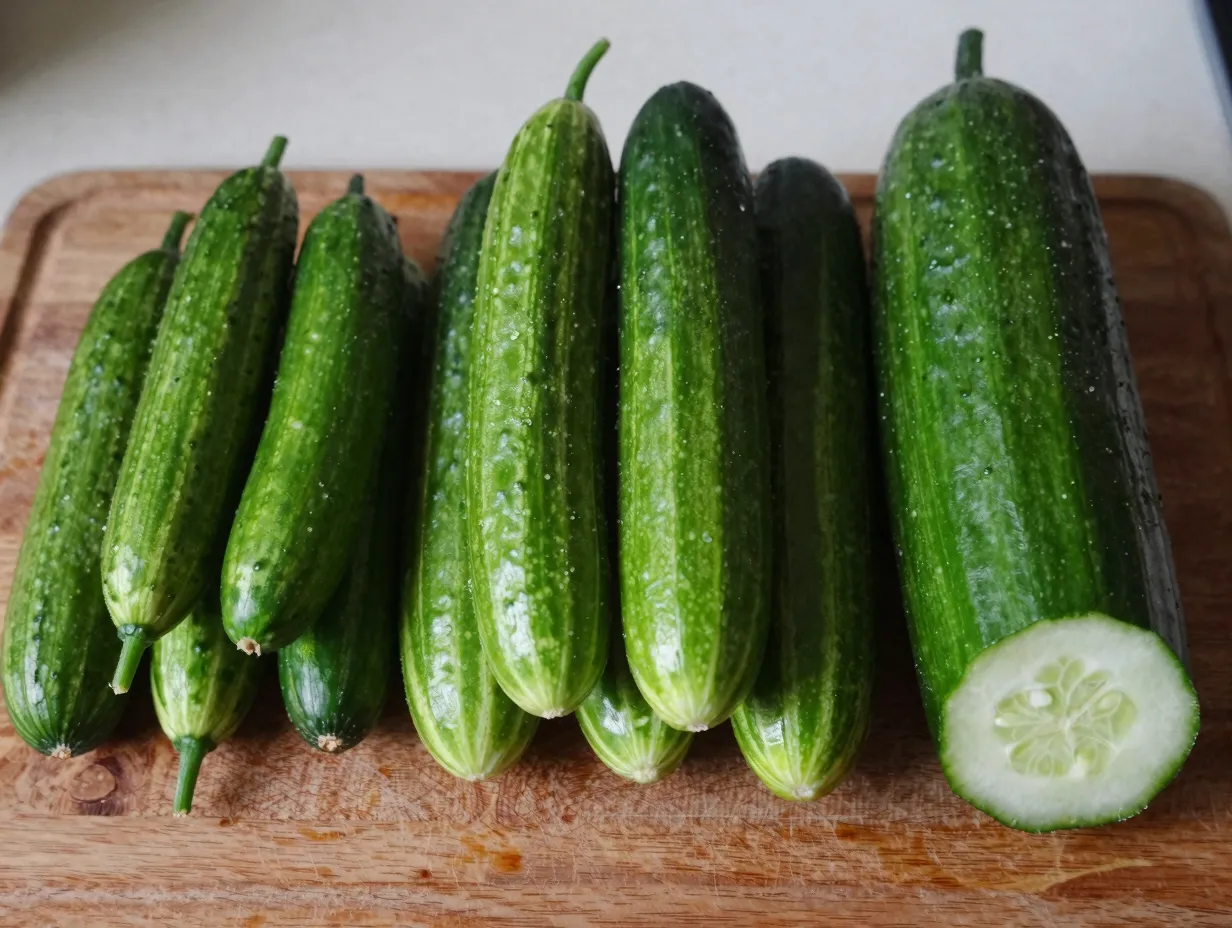
The single most impactful decision you will make for this salad happens before you even pick up a knife. Persian cucumbers are the top recommendation for oi muchim because of their naturally lower water content and compact size [1]. Their thin skin does not need to be peeled, their seed cavity is minimal, and their flesh stays firm even after salting and dressing.
English cucumbers are an acceptable substitute if Persian cucumbers are unavailable. They are longer, so you will need to cut them into more manageable sections, but their low seed count and mild flavor work well. Standard American garden cucumbers are the least ideal choice, their thick skin, large seed cavity, and high water content all work against the crisp, bold result you are aiming for.
Quick cucumber comparison:
| Cucumber Type | Water Content | Skin Texture | Ideal for Oi Muchim |
|---|---|---|---|
| Persian | Low | Thin, tender | Yes, top choice |
| English | Medium | Thin | Yes, good substitute |
| Korean (Oi) | Low | Thin | Yes, traditional choice |
| American Garden | High | Thick | No, avoid |
If you can find Korean cucumbers (also called oi) at an Asian grocery store, use them. They are the traditional choice and deliver an authentic crunch that is hard to replicate.
2. Master the Accordion Slicing Method
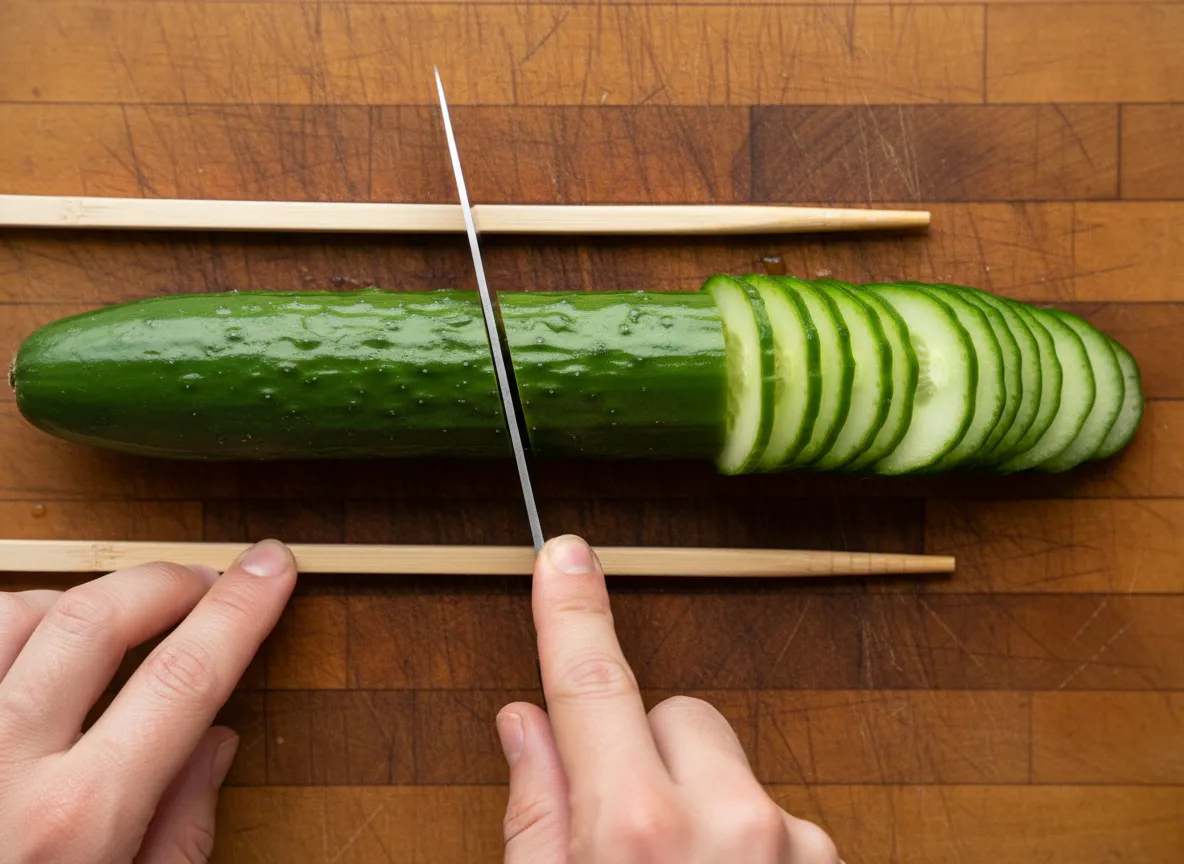
Once you have your cucumbers, how you cut them matters as much as which variety you chose. The accordion-style slicing method is a technique that enhances both texture and visual presentation in a way that simple rounds cannot match [1].
To execute the accordion cut, place a cucumber between two chopsticks laid flat on your cutting board. The chopsticks act as depth guides. Make diagonal cuts at a roughly 45-degree angle every quarter inch, cutting down until your knife hits the chopsticks, this prevents you from slicing all the way through. Flip the cucumber over and repeat the diagonal cuts in the opposite direction. When you gently stretch the cucumber, it fans out like an accordion.
This method does more than look impressive. The increased surface area means the dressing coats every crevice, and the thin, connected slices create a layered texture that is simultaneously crunchy and tender. If the accordion method feels too advanced for a weeknight, simple half-moon slices or thin rounds work fine, but the accordion cut is worth practicing.
3. Salt the Cucumbers Properly
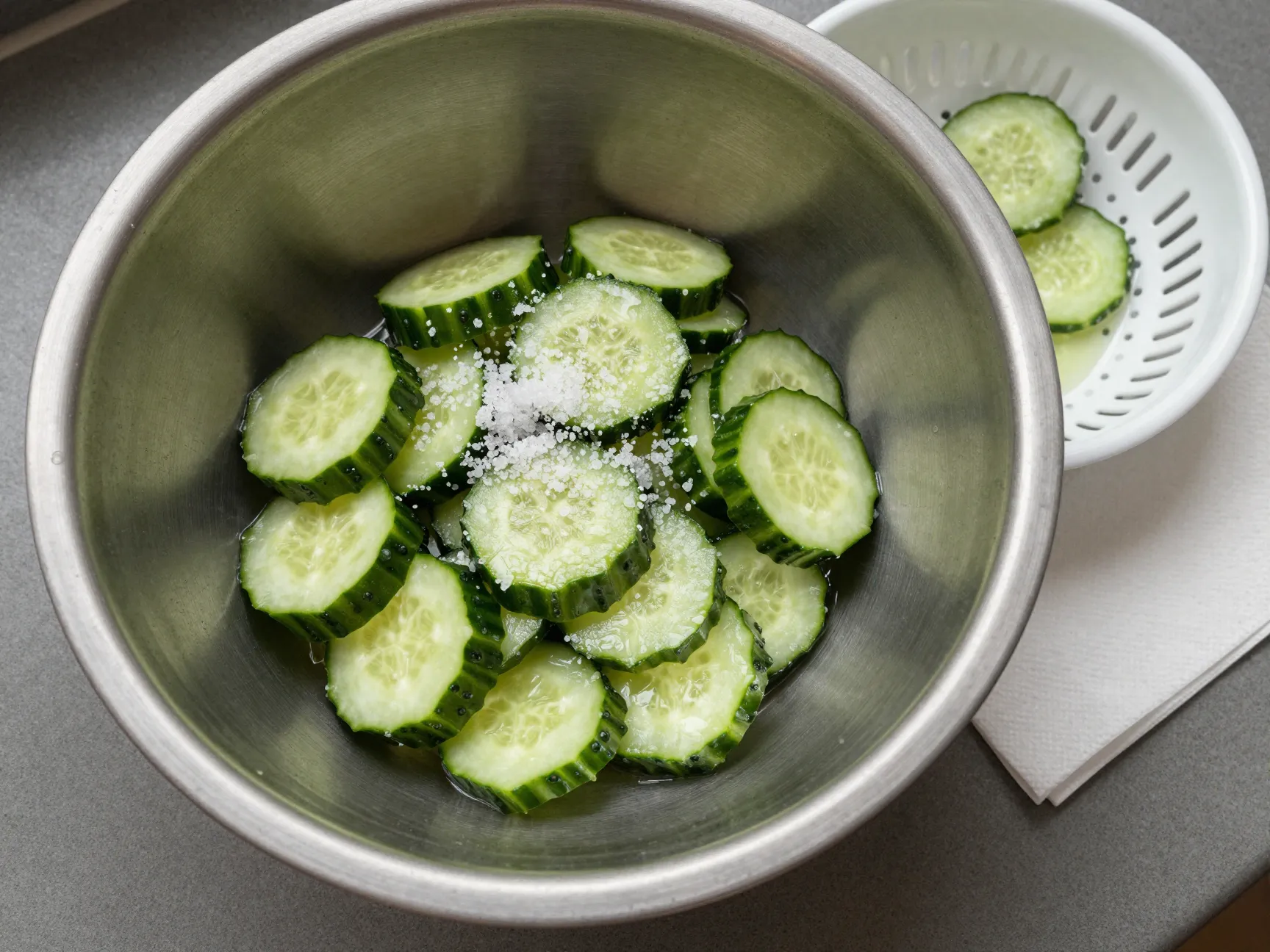
Skipping the salting step is the most common mistake home cooks make with this salad, and it is the reason so many batches end up watery and bland. Lightly salting cucumber slices and allowing them to rest draws out excess moisture before the dressing is applied [2].
The process is straightforward. After slicing, toss the cucumbers with about half a teaspoon of kosher salt per pound of cucumber. Spread them in a single layer or toss them in a colander and let them sit for 15 to 20 minutes. You will see a noticeable amount of liquid pool at the bottom, that is exactly what you want to remove from the salad.
Here is the critical detail that most guides overlook: after salting, drain the released water but do not squeeze the cucumbers [2]. Squeezing compresses the flesh and destroys the crisp texture you worked to preserve by choosing the right variety in the first place. A gentle shake in the colander or a light pat with a paper towel is all you need.
“The salting step is not optional. It is the difference between a salad that stays crisp for hours and one that turns into a puddle within minutes.”
4. Build a Balanced, Authentic Dressing
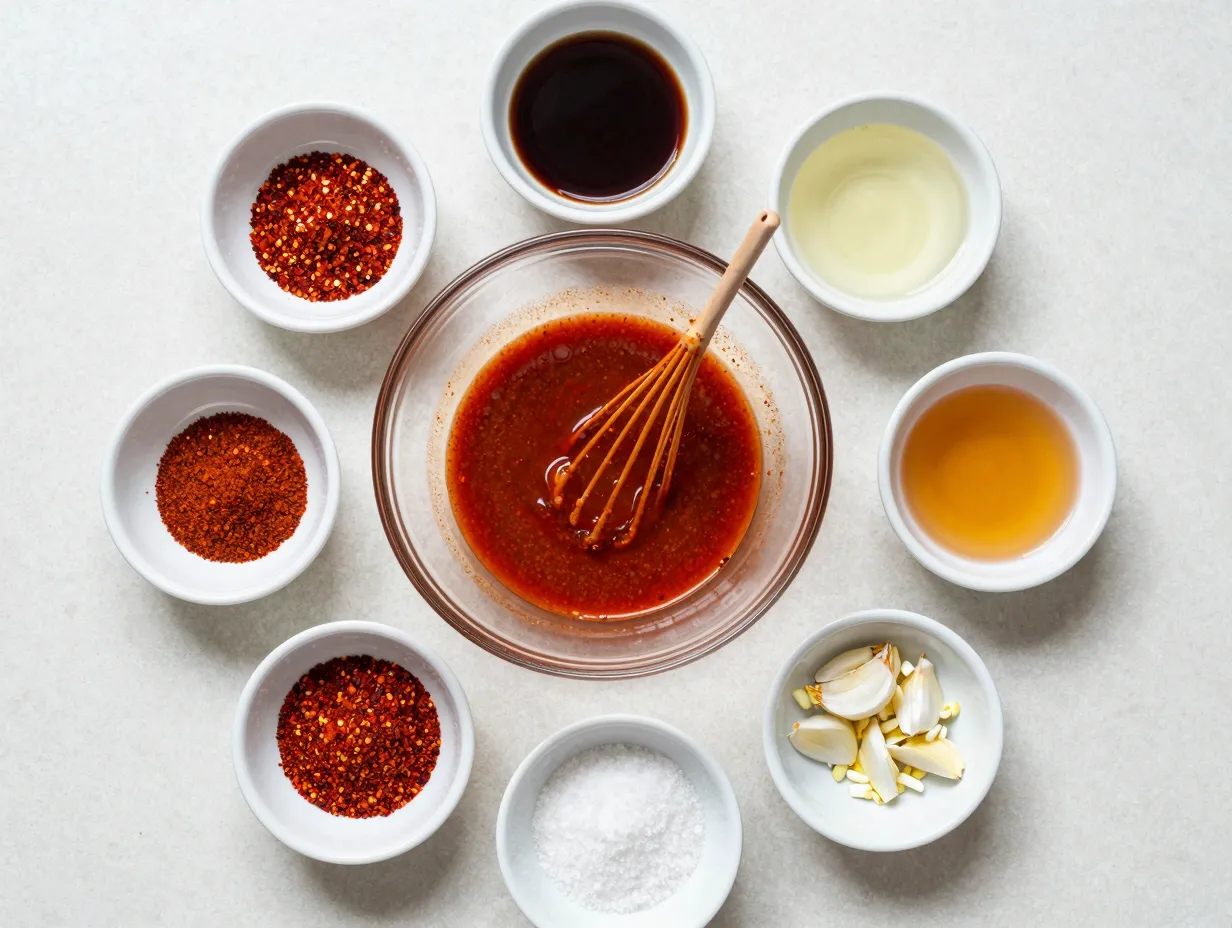
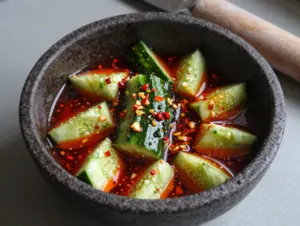
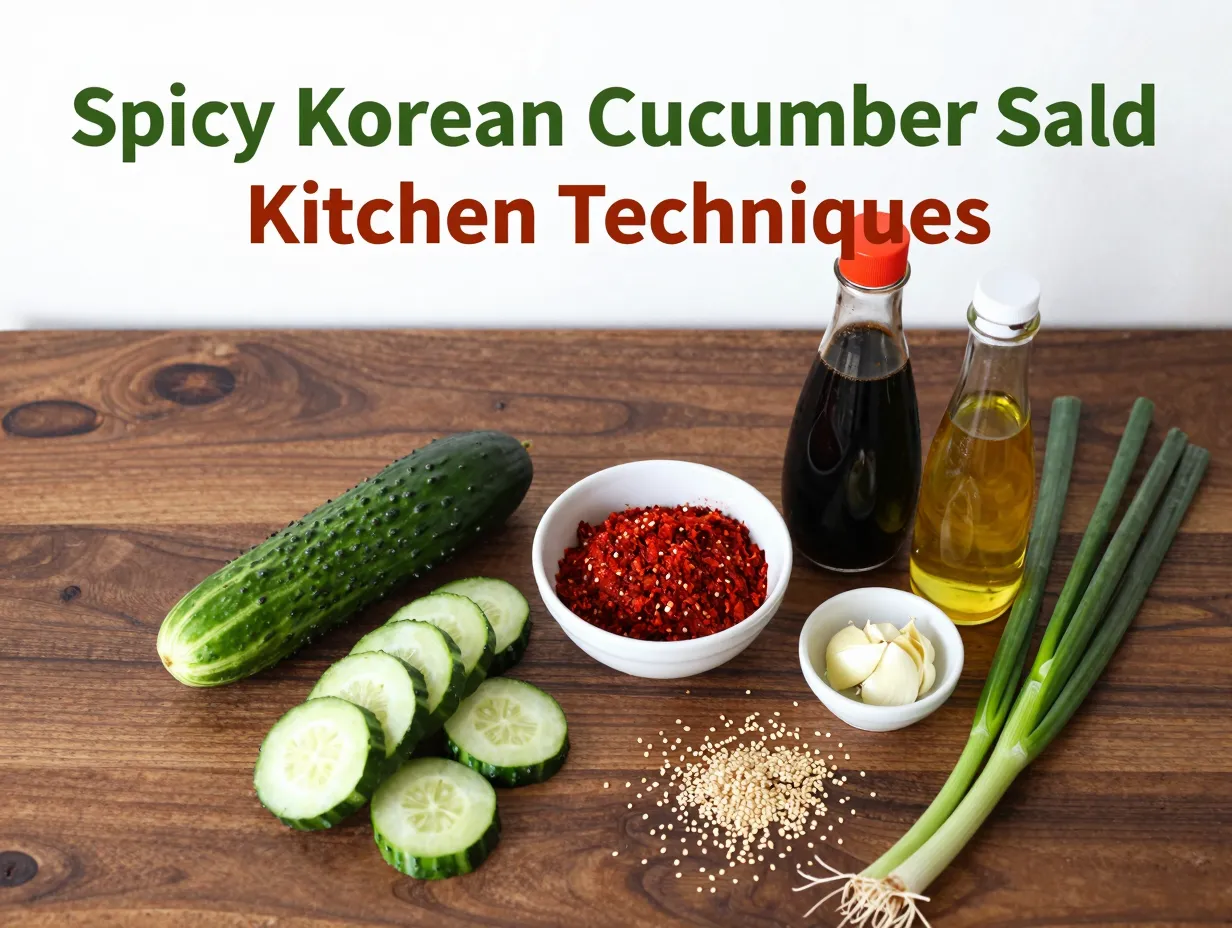
The dressing is where oi muchim becomes distinctly Korean rather than just another cucumber salad. A well-balanced dressing typically includes gochugaru (Korean red chili flakes), soy sauce, rice vinegar, sesame oil, sugar, and minced garlic [2]. Each ingredient plays a specific role.
Dressing ingredient breakdown:
- Gochugaru, the heat and color foundation; use 1 to 2 tablespoons depending on your spice tolerance
- Soy sauce, adds umami depth and saltiness; 1 tablespoon is a good starting point
- Rice vinegar, provides the bright acidity that lifts the whole dish; 1 tablespoon
- Sesame oil, delivers the nutty, toasty finish; use sparingly, about 1 teaspoon
- Sugar, balances the heat and acid; half a teaspoon to 1 teaspoon
- Minced garlic, adds pungency and complexity; 1 to 2 cloves
Mix the dressing separately before adding it to the cucumbers. This ensures even distribution and lets you taste and adjust before committing. If the dressing tastes flat, it likely needs more rice vinegar. If it tastes sharp, add a touch more sugar. If it lacks depth, a few drops more of soy sauce or sesame oil will bring it together.
5. Adjust the Spice Level Strategically
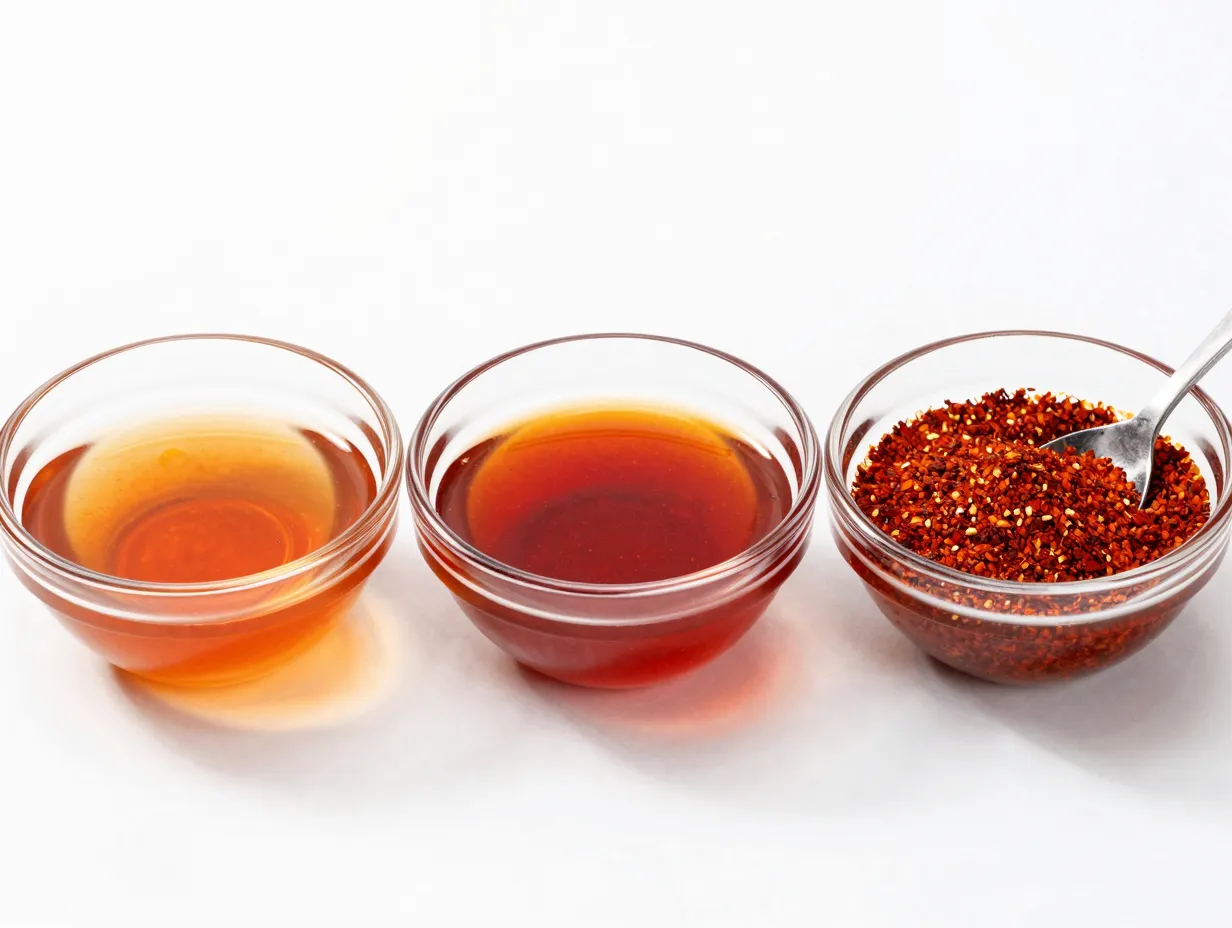
One of the most practical aspects of 8 ways to make the best spicy Korean cucumber salad right in your own kitchen is understanding that gochugaru is adjustable, and that adjustments do not have to compromise authenticity. The quantity of gochugaru you use directly controls the heat level [2].
For a mild version that still carries the characteristic Korean flavor, start with 1 teaspoon of gochugaru. For a medium heat level that most people find comfortable, use 1 tablespoon. For the full, bold heat that Korean food enthusiasts crave, use 2 tablespoons or more.
If gochugaru is completely unavailable, a combination of paprika and a small amount of cayenne pepper can approximate the color and heat, though the flavor will not be identical [4]. Korean red chili powder, when available, is the closest substitute and can replace the gochugaru directly [4]. I would strongly encourage sourcing gochugaru from an Asian grocery store or online before settling for substitutes, the flavor difference is significant enough to matter.
6. Enhance the Flavor Profile with Smart Add-Ins
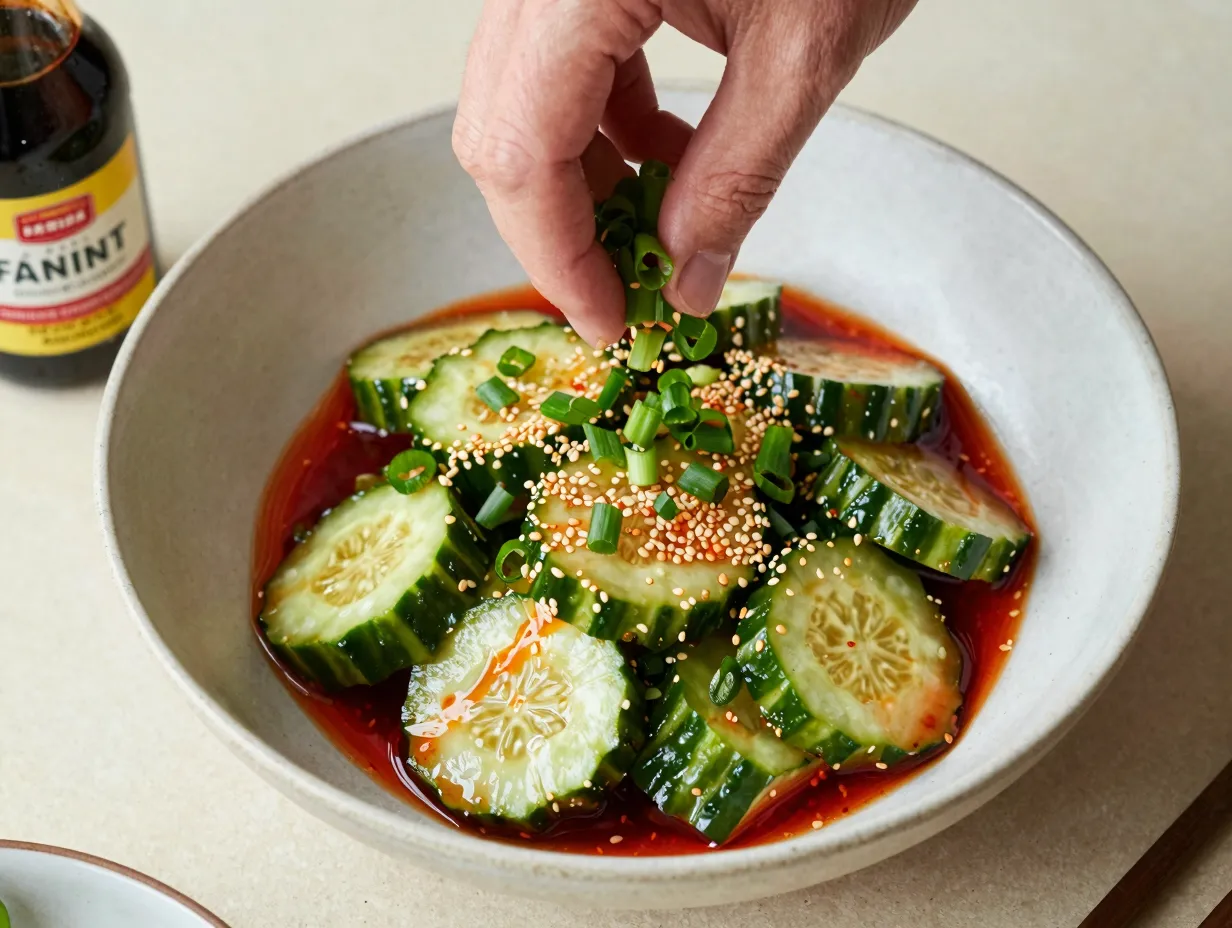
The core recipe is excellent on its own, but a few strategic additions can elevate it from good to genuinely memorable. Chef Chris Cho recommends adding chives and scallions to deepen the salad’s flavor profile [5]. Both ingredients add a mild allium note that complements the garlic without overpowering it.
Scallions, cut into one-inch pieces, also add visual contrast, the green against the red of the gochugaru is striking. Toasted sesame seeds are another standard addition that provide a subtle crunch and nutty aroma. Sprinkle them on just before serving to keep them crisp.
For those who want a more savory, umami-forward profile, a small amount of fish sauce can replace or supplement the soy sauce [5]. Fish sauce is a common ingredient in traditional Korean banchan (side dishes) and adds a fermented depth that soy sauce alone does not fully replicate. If you are making the salad for vegetarians, stick with soy sauce or add a small piece of dried kelp to the dressing for a similar umami effect.
Optional add-ins and their effects:
| Add-In | Flavor Effect | Amount |
|---|---|---|
| Scallions | Mild allium freshness | 2-3 stalks, chopped |
| Chives | Delicate onion note | 2 tablespoons, chopped |
| Toasted sesame seeds | Nutty crunch | 1 teaspoon |
| Fish sauce | Deep umami, fermented | 1 teaspoon |
| Ginger (minced) | Warm, spicy complexity | Half teaspoon |
7. Time the Dressing and Serving Correctly
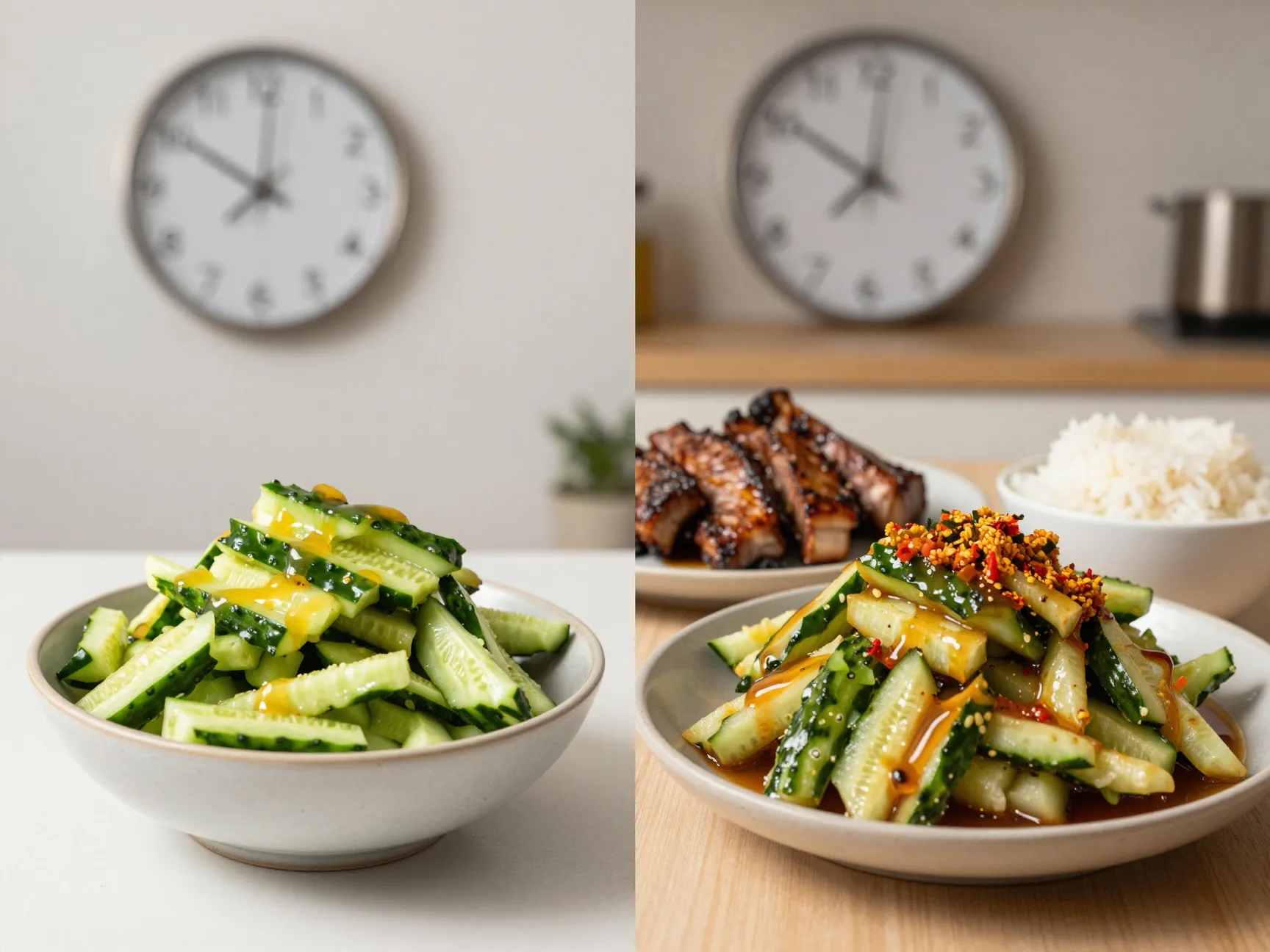
Timing is an underappreciated variable in Korean cucumber salad. The salad is best enjoyed fresh, ideally within 30 minutes of dressing [1]. This is when the cucumbers are at peak crunch, the dressing flavors are bright and distinct, and the sesame seeds still have texture.
That said, a brief resting period of 10 to 15 minutes after dressing actually improves the flavor. The cucumbers absorb the dressing slightly, the garlic mellows, and the flavors meld. The sweet spot is between 10 minutes and 1 hour after dressing.
If you need to prepare the salad in advance, keep the components separate. Salt and drain the cucumbers, mix the dressing, and store both in the refrigerator. Combine them no more than 30 minutes before serving. This approach works well for dinner parties or meal prep situations where timing is difficult to control.
For storage, the dressed salad can be kept in a sealed container in the refrigerator for up to two days [1]. Be aware that cucumbers will continue to release moisture over time, which gradually dilutes the dressing flavors. By day two, the salad will be noticeably softer and less vibrant. It is still edible and flavorful, but the texture will not match a freshly dressed batch.
8. Plate and Serve with Intention
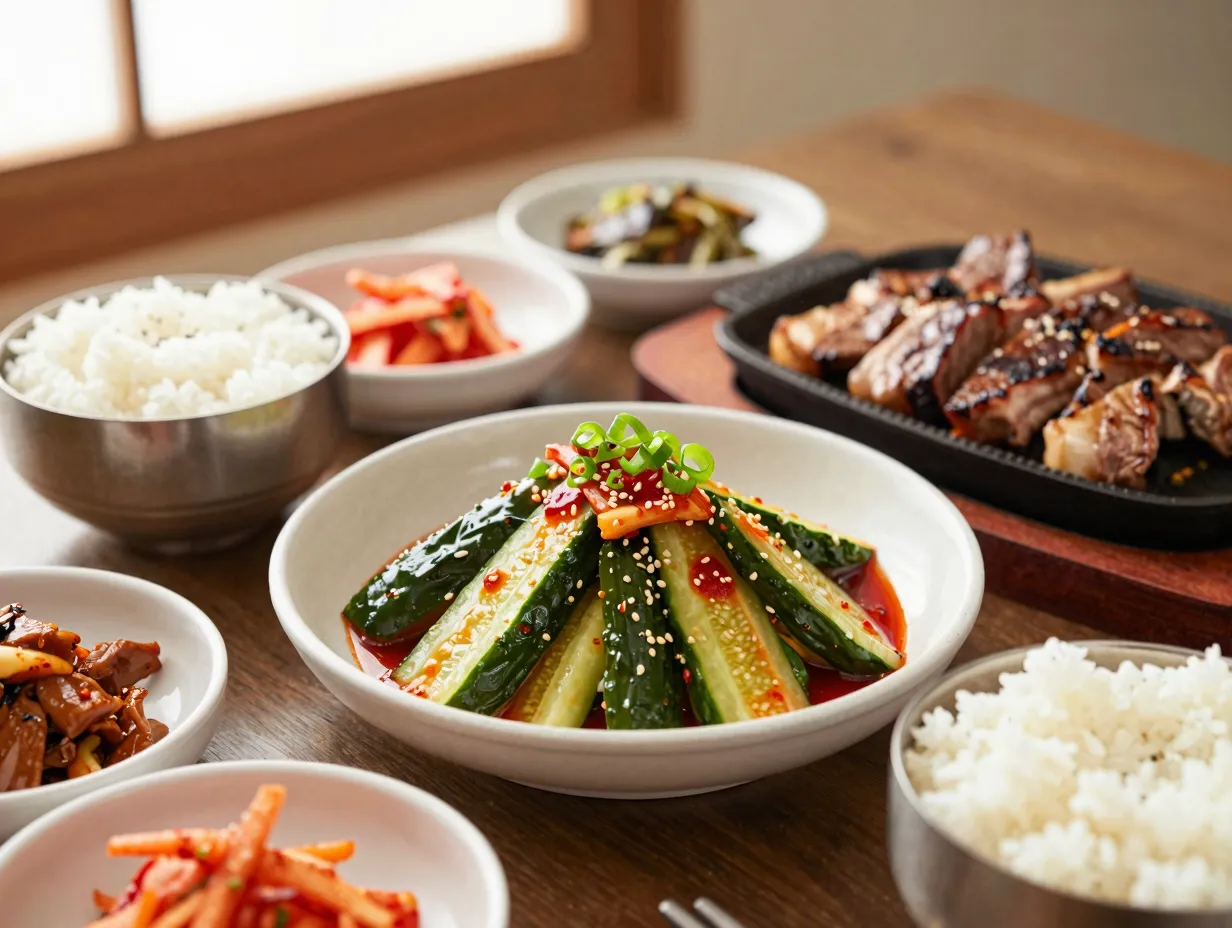
The final technique in these 8 ways to make the best spicy Korean cucumber salad right in your own kitchen is about presentation and pairing, because how you serve this dish affects how it is perceived and enjoyed.
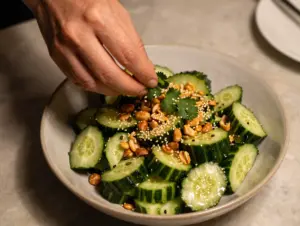
Transfer the dressed salad to a shallow bowl or plate rather than a deep bowl. The shallow vessel allows the accordion-cut cucumbers to fan out attractively and makes it easier for guests to serve themselves. A final drizzle of sesame oil and a scatter of toasted sesame seeds just before serving adds visual polish and reinforces the nutty aroma.
This salad belongs on the table alongside Korean BBQ, grilled short ribs (galbi), spicy pork belly (samgyeopsal), or any grilled meat dish [3]. The cool, acidic, spicy profile of the cucumber salad provides exactly the contrast needed to balance rich, fatty proteins. It also works as a standalone side with steamed rice and a fried egg for a simple weeknight meal.
For a non-Korean pairing, the salad holds its own alongside grilled chicken, fish tacos, or even a simple bowl of ramen. The bold flavors are versatile enough to complement a wide range of cuisines.
Common Mistakes to Avoid
Even with the right techniques in hand, a few pitfalls can undermine an otherwise well-executed batch. Here are the most frequent errors and how to sidestep them.
Using the wrong salt for the salting step. Iodized table salt can leave a slightly bitter aftertaste on cucumbers. Use kosher salt or sea salt for a cleaner result.
Adding the dressing too early. If you dress the cucumbers and then let them sit for hours before serving, the salad will be waterlogged and the flavors will be muted. Dress close to serving time.
Skipping the garlic rest. Raw garlic is sharp and aggressive. If you find the garlic flavor too harsh, let the minced garlic sit in the rice vinegar for five minutes before mixing the full dressing. The acid takes the edge off without eliminating the garlic flavor.
Using old gochugaru. Gochugaru loses its vibrant color and heat over time. If your chili flakes look brownish rather than deep red, they are past their prime. Fresh gochugaru should be a rich, brick red color with a slightly fruity aroma.
A Simple Base Recipe to Get You Started
For those who want a concrete starting point before experimenting with the techniques above, here is a foundational recipe that incorporates all eight principles.
Ingredients (serves 4 as a side dish):
- 1 pound Persian cucumbers (about 6-8 small cucumbers)
- Half teaspoon kosher salt (for salting step)
- 1.5 tablespoons gochugaru
- 1 tablespoon soy sauce
- 1 tablespoon rice vinegar
- 1 teaspoon sesame oil
- 1 teaspoon sugar
- 2 cloves garlic, minced
- 2 scallions, cut into 1-inch pieces
- 1 teaspoon toasted sesame seeds
Method:
- Slice cucumbers using the accordion method or into thin half-moons.
- Toss with kosher salt and let rest 15 minutes in a colander.
- Drain without squeezing.
- Whisk together gochugaru, soy sauce, rice vinegar, sesame oil, sugar, and garlic.
- Toss cucumbers with dressing and scallions.
- Let rest 10 minutes, then top with sesame seeds and serve.
Conclusion
The 8 ways to make the best spicy Korean cucumber salad right in your own kitchen outlined in this guide are not complicated, but they are deliberate. Every step, from choosing Persian cucumbers to timing your dressing, exists for a specific reason, and understanding those reasons is what separates a mediocre batch from one that disappears from the table in minutes.
Start with the salting step if you take nothing else from this guide. That single technique will improve your results more than any other change. From there, invest in quality gochugaru, practice the accordion cut, and build your dressing with balance in mind. Once you have made the base recipe two or three times, begin experimenting with the add-ins: fish sauce, chives, ginger. The recipe rewards curiosity.
Your actionable next steps: buy a bag of gochugaru and a pound of Persian cucumbers this week. Make the base recipe on a weeknight alongside grilled chicken or rice. Taste it at the 10-minute mark and again at the 30-minute mark to understand how the flavors evolve. By your third batch, you will be adjusting the recipe instinctively, and that is when oi muchim truly becomes yours.
References
[1] Spicy Korean Cucumber Salad Recipe – https://www.tastingtable.com/1389114/spicy-korean-cucumber-salad-recipe/?utm_source=openai
[2] Oi Muchim Korean Style Cucumber Salad – https://www.koreanbapsang.com/oi-muchim-korean-style-cucumber-salad/?utm_source=openai
[3] Spicy Korean Cucumber Salad – https://www.beyondkimchee.com/spicy-korean-cucumber-salad/?utm_source=openai
[4] Spicy Korean Cucumber Salad – https://www.splenda.com/recipe/spicy-korean-cucumber-salad/?utm_source=openai
[5] Spicy Cucumber Salad – https://chefchrischo.com/spicy-cucumber-salad/?utm_source=openai
[6] Watch – https://www.youtube.com/watch?v=hJTqOltRfDE&utm_source=openai