8 Steps to Nail the Best Korean Cucumber Salad Kimchi Recipe at Home
Korean home cooks have been making oi kimchi, cucumber kimchi, for centuries, yet most Western recipes strip out the techniques that make the difference between a soggy, bland side dish and one that delivers a genuine, restaurant-quality crunch. This guide walks you through 8 Steps to Nail the Best Korean Cucumber Salad Kimchi Recipe at Home, drawing on tested methods and trusted sources so you can replicate authentic flavor in your own kitchen, starting today in 2026.
Disclosure: This post contains affiliate links. As an Amazon Associate, we earn from qualifying purchases, and at no extra cost to you.
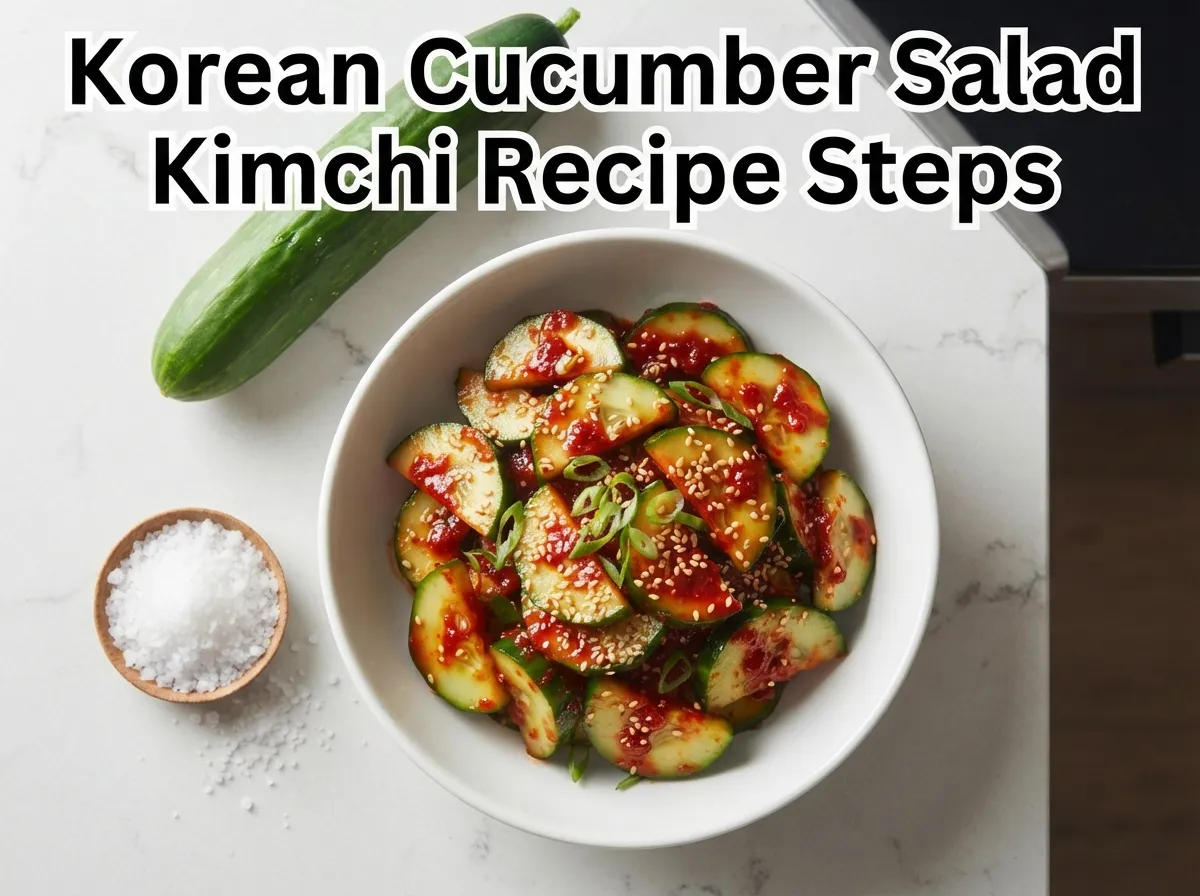
The first time I attempted this dish, I skipped the salting step because I was in a hurry. The result was watery, flat, and deeply disappointing. That single mistake taught me more about Korean cucumber salad kimchi than any cookbook ever had. The process is forgiving once you understand the logic behind each stage.
Key Takeaways
- Choosing the right cucumber variety, thin-skinned Korean, Persian, or Kirby, is the single most important decision before you begin
- Aggressive salting and proper draining are non-negotiable steps that determine final texture
- The gochugaru-based seasoning paste must be balanced between heat, umami, and acidity before it touches the cucumbers
- Korean cucumber salad kimchi can be served fresh within minutes or fermented briefly for a deeper, tangier flavor
- Small adjustments in garlic, fish sauce, and sesame oil allow you to personalize the recipe without losing authenticity
Why Cucumber Choice and Preparation Define the Entire Dish
Before diving into the 8 Steps to Nail the Best Korean Cucumber Salad Kimchi Recipe at Home, it is worth understanding why the foundational choices matter so much. Korean cucumber salad kimchi is not a forgiving dish when the base ingredient is wrong. Thick-skinned cucumbers like the standard American garden variety hold too much water and turn soft within hours of seasoning. They lack the structural integrity that makes a proper oi kimchi satisfying to eat.
The best cucumber varieties for this recipe:
| Variety | Skin Thickness | Crunch Level | Availability |
|---|---|---|---|
| Korean (Oi) | Very thin | Excellent | Asian grocery stores |
| Persian | Thin | Very good | Most supermarkets |
| Kirby | Thin-medium | Good | Farmers markets, supermarkets |
| English | Medium | Acceptable | Widely available |
Persian cucumbers are my personal go-to when Korean cucumbers are unavailable. They are widely stocked in 2026 and hold their crunch beautifully even after a brief fermentation period [1].
The Complete 8 Steps to Nail the Best Korean Cucumber Salad Kimchi Recipe at Home
1. Select and Wash Your Cucumbers
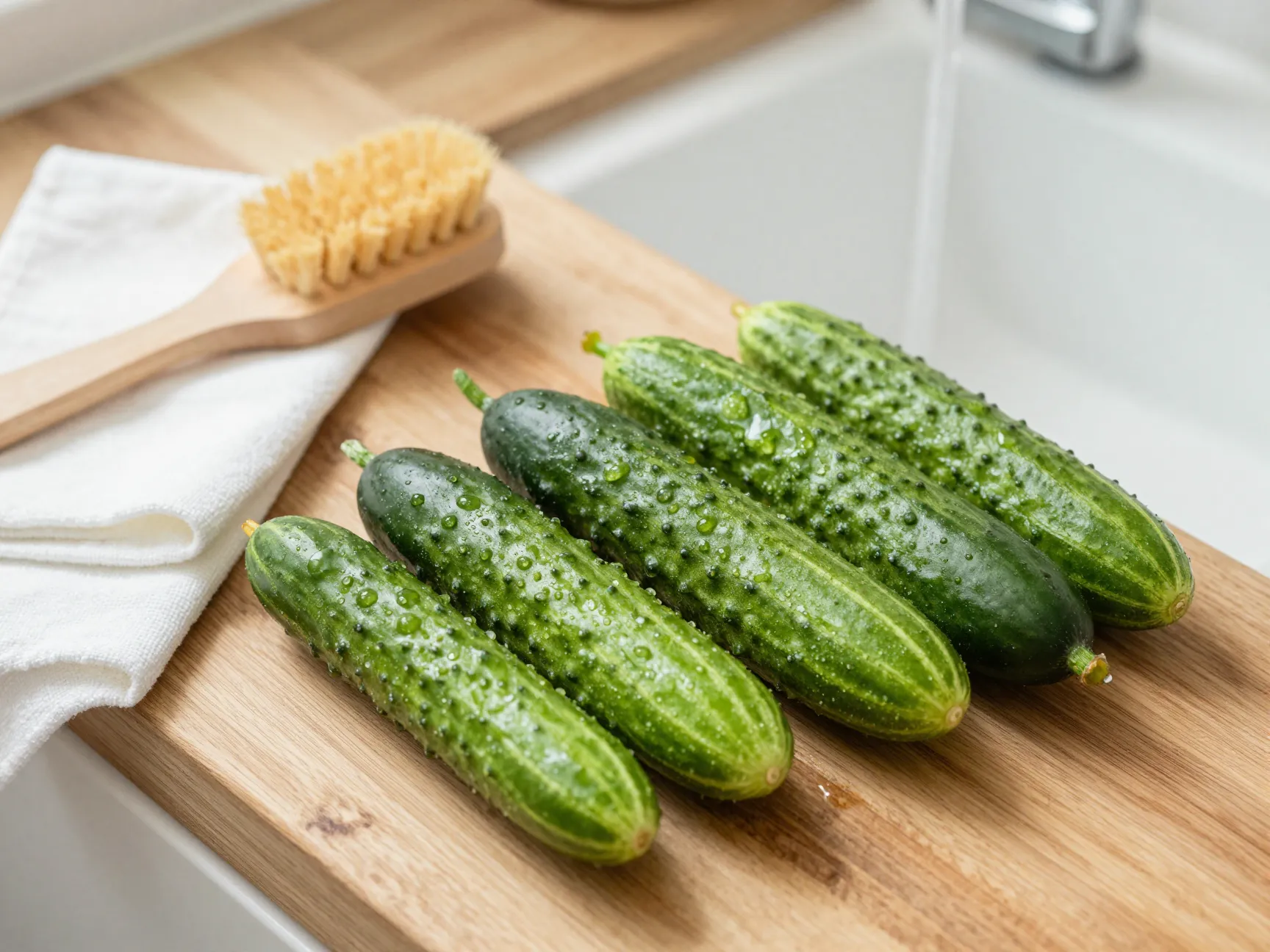
Start with small, firm cucumbers. Look for ones that feel dense and heavy for their size, with no soft spots or yellowing at the tips. Wash them thoroughly under cold running water, scrubbing lightly with a vegetable brush to remove any wax coating or surface residue. Pat them dry with a clean kitchen towel.
For a standard batch serving four people, use approximately four to six Persian cucumbers or three to four Kirby cucumbers. If you can find Korean oi cucumbers at an Asian grocery store, use six to eight of them since they are smaller [1].
Pro tip: Avoid pre-waxed cucumbers sold in shrink-wrap packaging. The wax coating can interfere with the salting process and dull the final flavor.
2. Cut Into Uniform Bite-Size Pieces
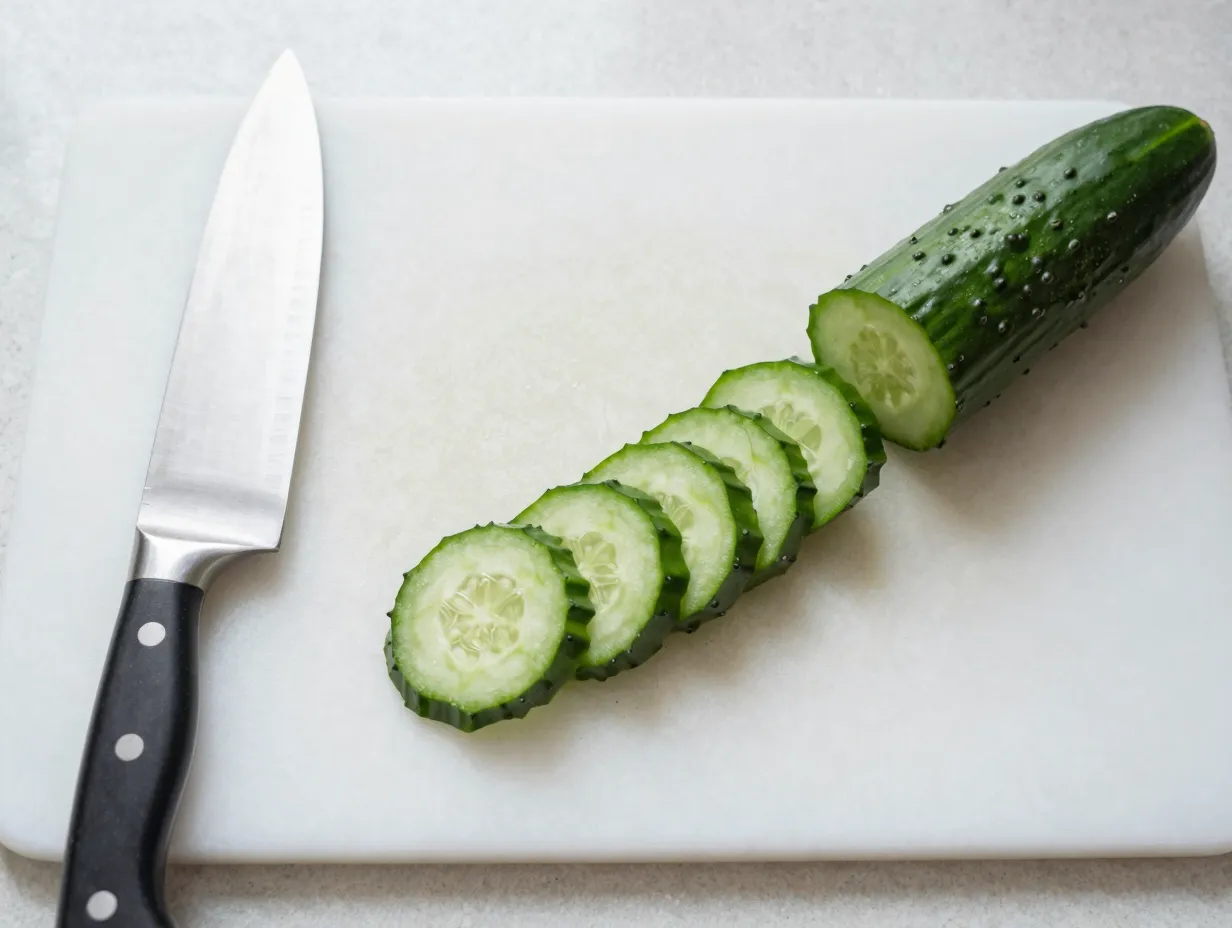
Uniform cutting is not just about aesthetics. When every piece is the same size, the salt draws moisture out evenly, and the seasoning coats each piece consistently. Inconsistent cuts mean some pieces are over-salted and mushy while others remain under-seasoned and bland.
The most common cutting styles for Korean cucumber salad kimchi are:
- Half-moon slices: Cut the cucumber in half lengthwise, then slice crosswise into pieces about half an inch thick. This is the most popular method for a salad-style preparation [5].
- Spears: Quarter the cucumber lengthwise and cut into two-inch segments. This style works well for a more fermented oi kimchi [1].
- Diagonal rounds: Slice at a 45-degree angle for a slightly larger surface area that holds more seasoning.
For the salad-style version of this recipe, half-moon slices are ideal. They create a generous surface area for the gochugaru paste to cling to while keeping each bite manageable [6].
3. Salt Aggressively to Draw Out Moisture
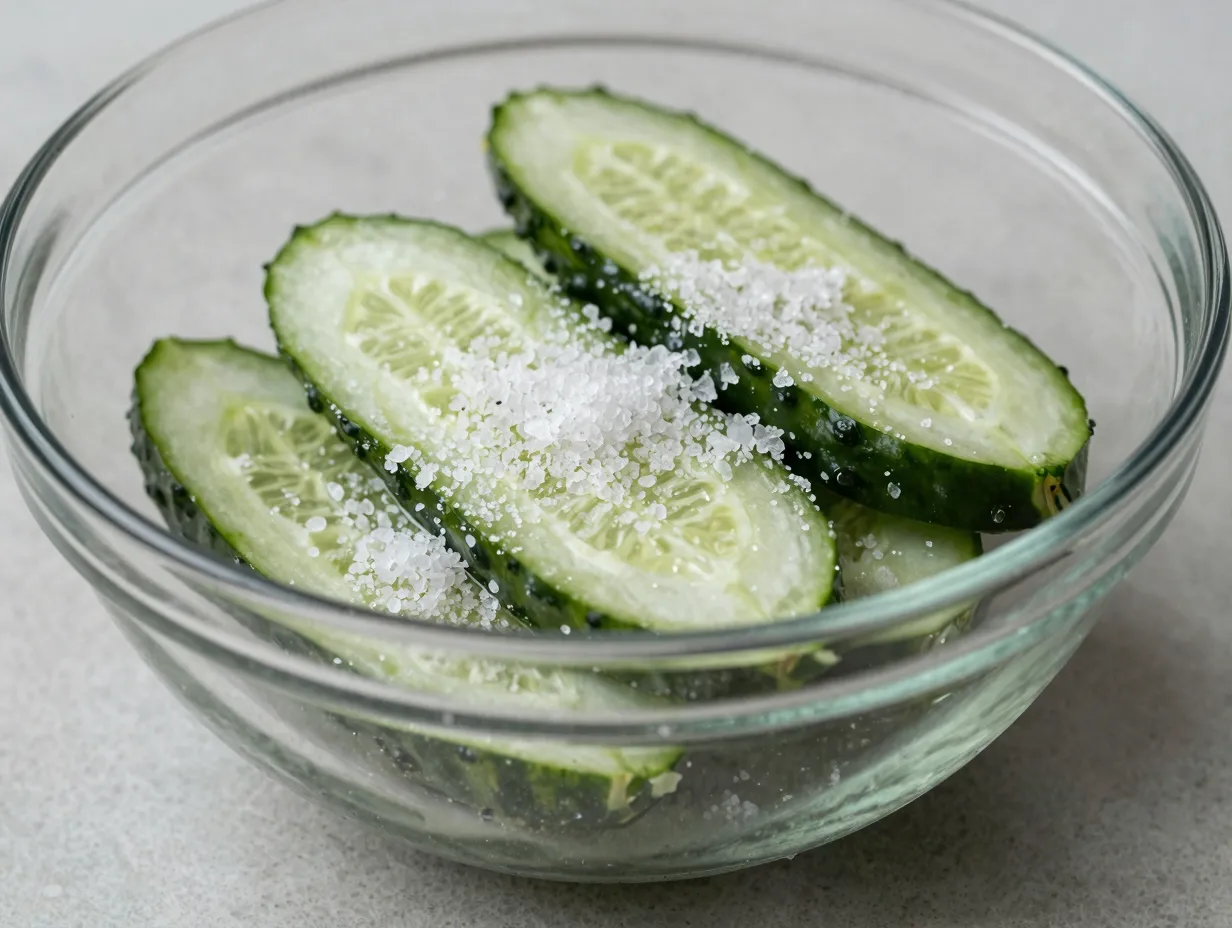
This is the step most beginners skip or rush, and it is the single biggest reason homemade Korean cucumber salad kimchi turns watery. Salting draws excess moisture out of the cucumber cells through osmosis. If you skip it, that moisture releases into your seasoning paste during mixing, diluting every flavor you worked to build.
Place your cut cucumbers in a large bowl. Add approximately two tablespoons of coarse sea salt for every four to six cucumbers [1]. Toss well so every piece is coated, then let the bowl sit at room temperature for 10 to 30 minutes [1]. You will see a noticeable pool of liquid form at the bottom of the bowl. That liquid is exactly what you do not want in your finished dish.
“The salting step is not optional. It is the foundation of texture in any cucumber kimchi preparation.”
After the initial rest, transfer the cucumbers to a colander and let them drain for another 20 minutes [1]. This second drain removes even more residual moisture. Rinse the cucumbers under cold water to wash off excess salt, then taste a piece. It should taste pleasantly seasoned, not aggressively salty. If it is too salty, rinse again and taste once more [1].
Important: After rinsing, squeeze handfuls of cucumber pieces gently over the sink to press out as much remaining water as possible. This manual squeeze step is often overlooked but makes a significant difference in the final texture [7].
4. Prepare the Gochugaru Seasoning Paste
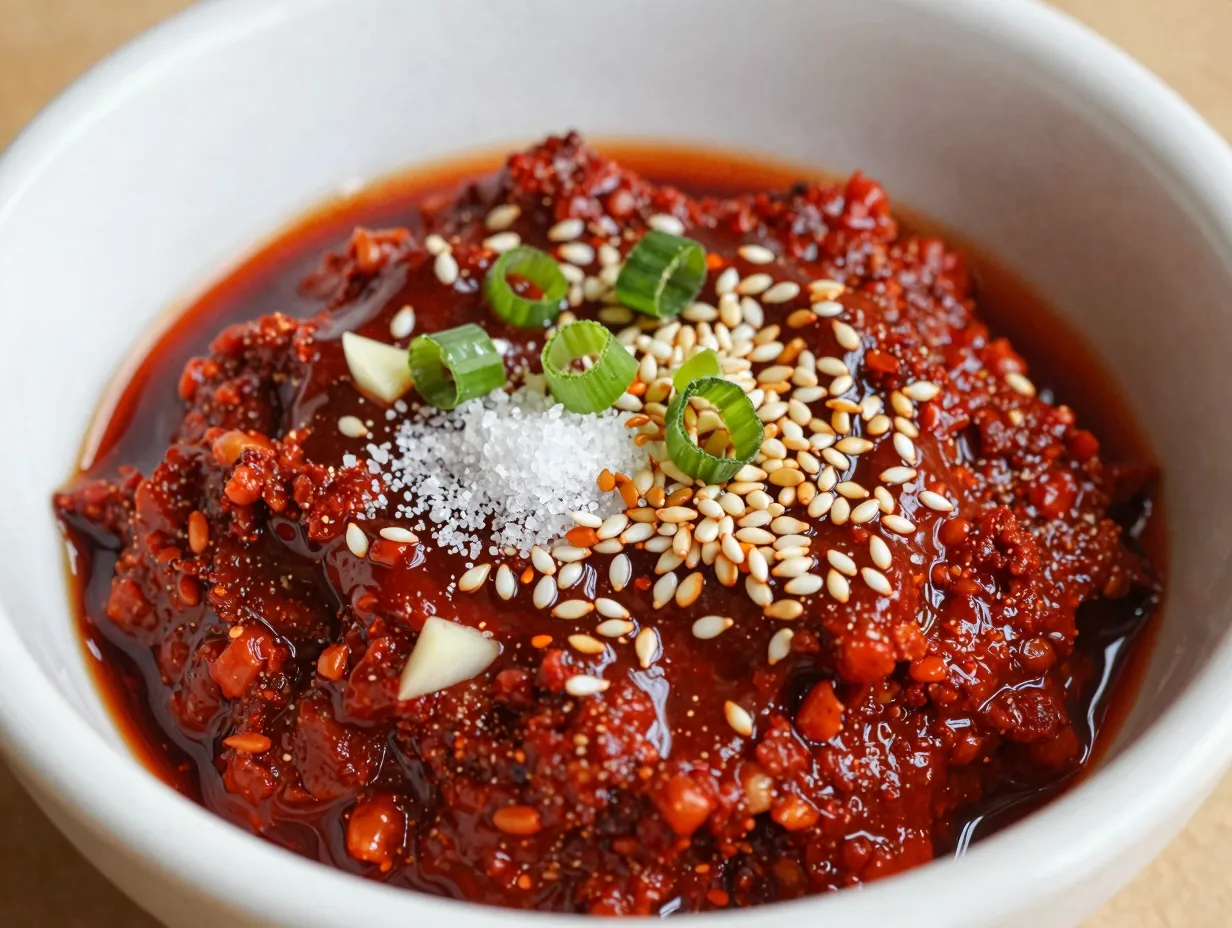
While the cucumbers are draining, prepare the seasoning paste. Gochugaru, Korean red pepper flakes, is the heart of this recipe. It is not interchangeable with cayenne pepper or standard chili flakes. Gochugaru has a fruity, slightly smoky heat that is distinctly different from other chili products. Find it at any Korean or Asian grocery store, or order it online.
Standard seasoning paste ingredients for one batch:
- 1 to 2 tablespoons gochugaru (adjust to your heat preference)
- 3 to 4 cloves garlic, minced or grated
- 1 teaspoon fish sauce (or soy sauce for a vegan version)
- 1 teaspoon rice vinegar or apple cider vinegar
- 1 teaspoon sesame oil
- 1 teaspoon sugar or honey
- 2 to 3 green onions, thinly sliced
- 1 tablespoon toasted sesame seeds
Mix these ingredients together in a bowl until they form a cohesive paste [5][6]. Taste the paste before it touches the cucumbers. It should be bold, slightly sweet, tangy, and hot. Adjust the balance now rather than after mixing, because the cucumbers will dilute the flavors slightly once combined [7].
For a richer, more traditional flavor, some recipes include a small amount of salted fermented shrimp (saeujeot) in place of or alongside the fish sauce [1][3]. This ingredient is optional but adds genuine depth.
5. Combine Cucumbers and Seasoning Paste
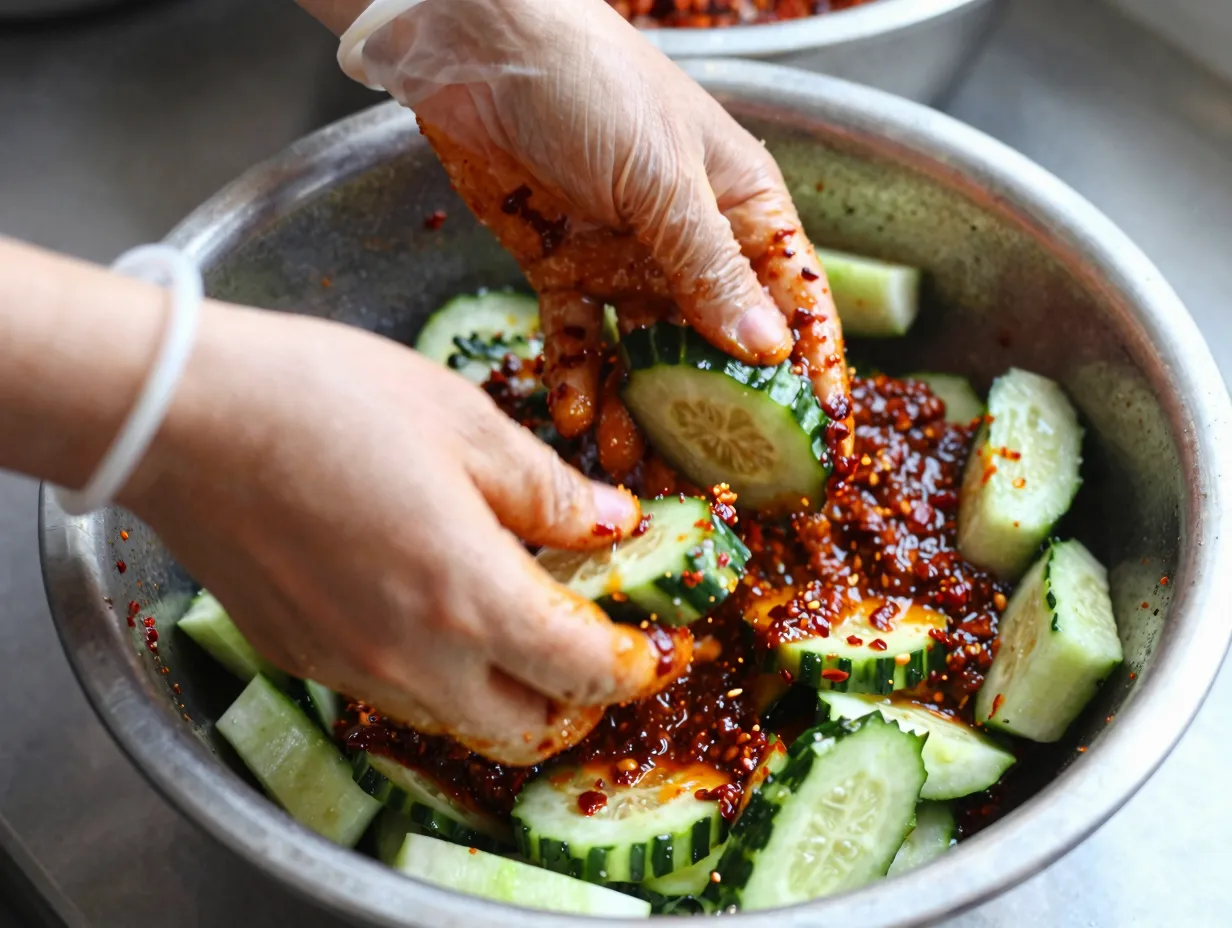
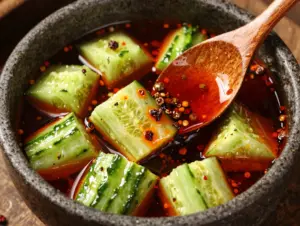
Once the cucumbers are drained, rinsed, and squeezed, add them to the bowl with the seasoning paste. Use clean hands or tongs to toss everything together. If you use your hands, which is the traditional Korean method, wear food-safe gloves to protect your skin from the gochugaru, which can stain and irritate.
Work the paste into the cucumbers thoroughly so every piece is coated in the red seasoning [5]. This step should take about two to three minutes of active mixing. Do not rush it. Uneven coating means some bites will be intensely flavored and others will taste plain.
At this point, taste the mixture again. The cucumbers will have absorbed some of the paste’s salt and heat. If it needs more acidity, add a small splash of rice vinegar. If it needs more depth, add a few more drops of fish sauce. If the heat is too intense, a small amount of additional sugar will round it out [6].
6. Add Aromatics and Finishing Ingredients
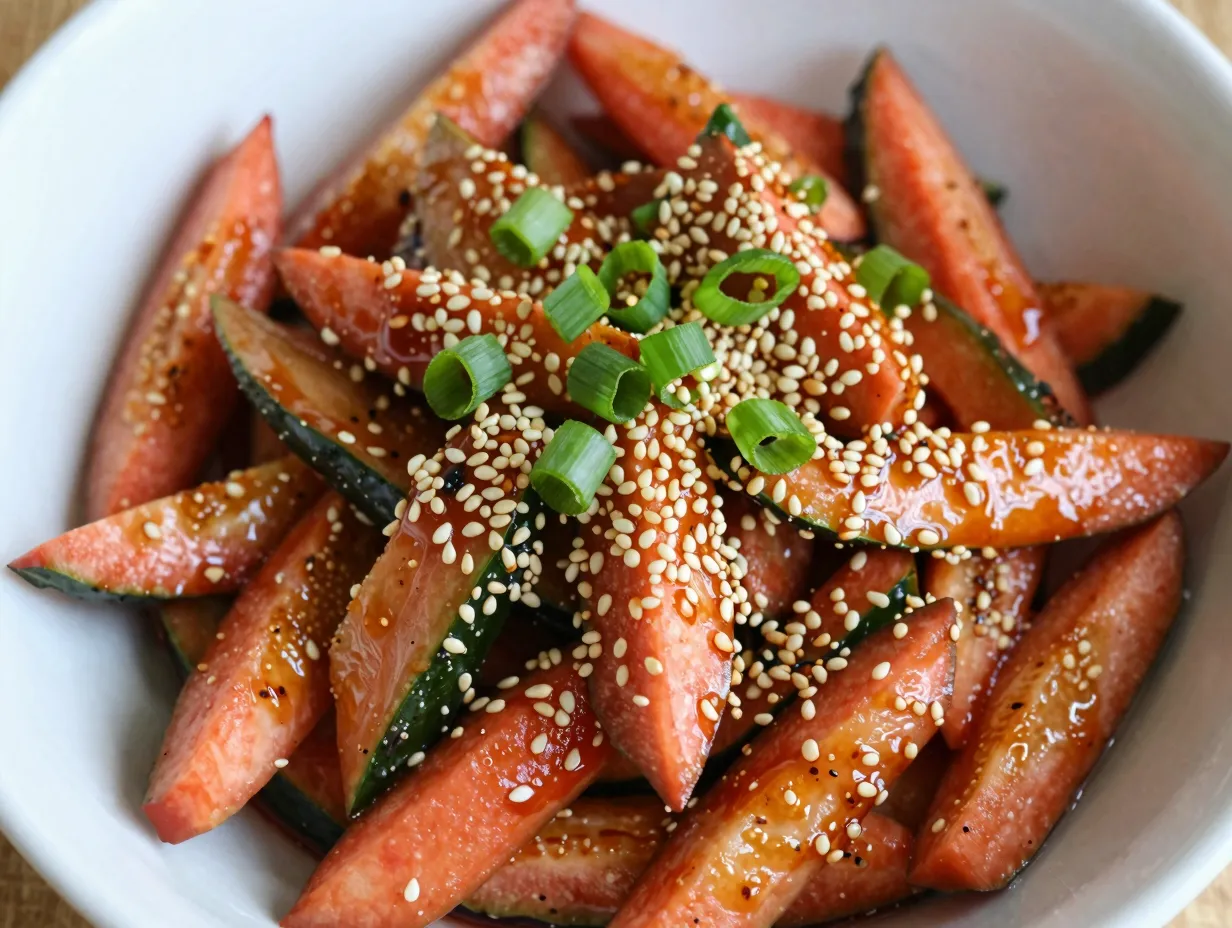
The base paste is complete, but the aromatics added at this stage are what elevate a good Korean cucumber salad kimchi into a great one. My mother’s version always included a generous amount of freshly grated garlic and a handful of thinly sliced green onion tops for color and mild sharpness [3].
Optional finishing additions:
- Toasted sesame seeds for nuttiness and visual appeal
- A small amount of grated fresh ginger for warmth
- Thinly sliced red chili for extra heat and color
- A drizzle of additional sesame oil just before serving for aroma
One recipe variation I find particularly compelling uses a small amount of rice vinegar combined with a pinch of sugar to create a slightly sweet-sour balance that makes the dish more approachable for those who are new to gochugaru-based preparations [7]. This approach bridges the gap between a traditional Korean cucumber kimchi and a lighter cucumber salad style.
7. Rest, Taste, and Adjust
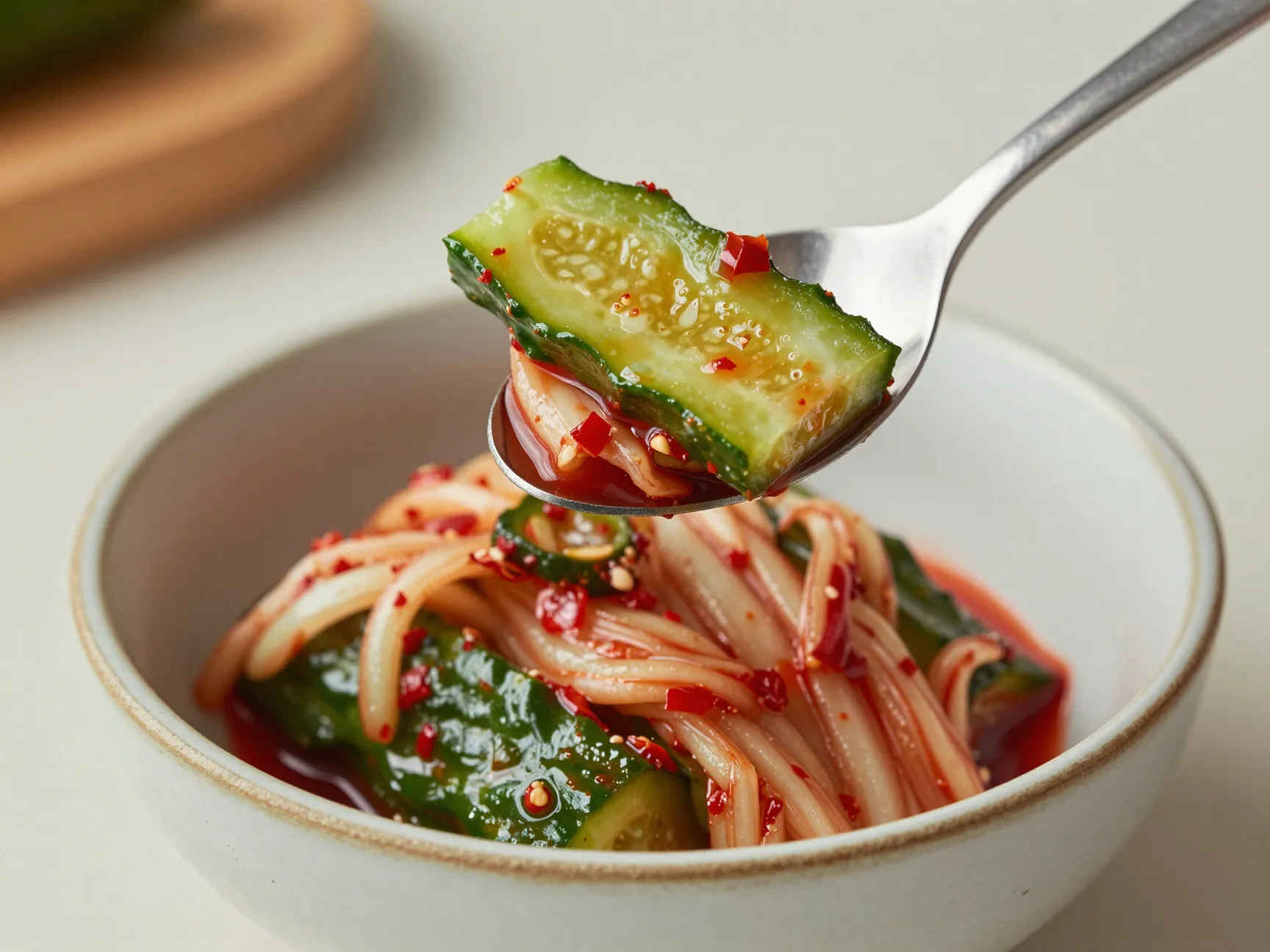
Do not serve immediately after mixing. Let the combined dish rest for at least 10 to 15 minutes at room temperature. During this rest, the cucumbers continue to release a small amount of moisture, the garlic mellows slightly, and the flavors begin to meld together. The difference between a freshly mixed bowl and one that has rested for 15 minutes is noticeable.
After the rest period, taste again with a clean spoon. This final tasting is your last opportunity to correct the seasoning before serving. The most common adjustments at this stage are:
- More salt if the cucumbers taste flat
- More rice vinegar if the dish lacks brightness
- More sesame oil if it needs richness
- More gochugaru if the heat has faded
For a fermented version: If you prefer a tangier, more complex flavor profile, cover the bowl loosely and leave it at room temperature for one to two hours before refrigerating. The natural fermentation process will develop over the next 24 to 48 hours in the refrigerator [1]. The cucumbers will soften slightly but the flavor will deepen considerably.
8. Serve and Store Properly
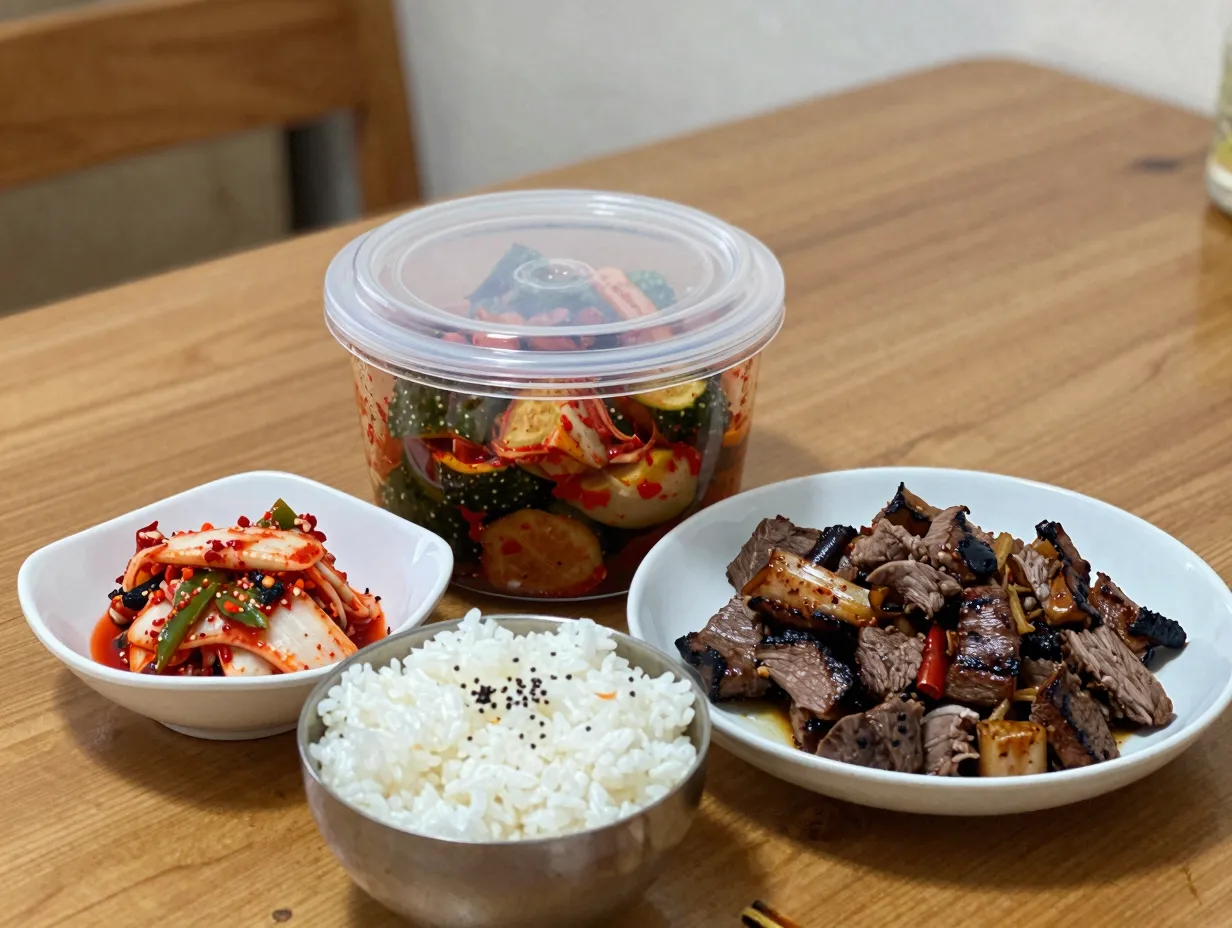
Korean cucumber salad kimchi is best served the same day it is made, particularly if you prefer maximum crunch. Serve it cold, straight from the refrigerator, as a banchan (side dish) alongside steamed rice, grilled meats, or Korean barbecue [5][6].
Serving suggestions:
- As a banchan alongside steamed white rice and grilled bulgogi
- As a topping for Korean-style rice bowls or bibimbap
- Alongside Korean fried chicken as a cooling, acidic counterpoint
- As a side dish with any grilled protein
Storage guidelines:
| Storage Method | Duration | Texture Result |
|---|---|---|
| Refrigerator (airtight) | 2 to 3 days | Slightly softer, more fermented |
| Room temperature (1-2 hrs) | Same day only | Crisp, fresh |
| Freezer | Not recommended | Mushy upon thawing |
Store leftovers in a glass airtight container rather than plastic, as gochugaru will stain plastic containers permanently. Press a piece of plastic wrap directly onto the surface of the kimchi before sealing the lid to minimize air exposure and slow oxidation [7].
Common Mistakes That Ruin Korean Cucumber Salad Kimchi
Even experienced home cooks make errors with this dish. Understanding the most frequent pitfalls helps you avoid them before they happen.
Mistake 1: Using the wrong cucumber. As discussed, thick-skinned varieties turn soft quickly. Always choose thin-skinned cucumbers [1][5].
Mistake 2: Insufficient salting time. Rushing the salting step leaves too much water in the cucumbers. This water dilutes the paste and creates a soupy result rather than a vibrant, coated salad.
Mistake 3: Substituting cayenne for gochugaru. Cayenne is significantly hotter and lacks the fruity complexity of gochugaru. The flavor profile of the finished dish will be completely different and far less authentic [6].
Mistake 4: Over-mixing after adding the paste. Aggressive over-mixing breaks down the cucumber structure and releases more moisture. Mix until coated, then stop.
Mistake 5: Serving immediately without resting. The 10 to 15 minute rest period is essential for flavor development. Do not skip it.
Mistake 6: Storing in plastic containers. Gochugaru stains plastic and the porous surface can absorb odors. Use glass storage containers exclusively [7].
Variations Worth Exploring
Once you have mastered the core technique, several variations are worth trying.
Vegan Korean cucumber salad: Replace fish sauce with soy sauce or tamari and omit the fermented shrimp. The result is lighter but still deeply flavorful [5].
Quick-pickled version: Add an extra tablespoon of rice vinegar and a teaspoon of sugar to the paste, then let the finished salad sit for 30 minutes before serving. This creates a more pickle-like flavor without any fermentation time [7].
Spicy-sweet version: Double the sugar and add a small amount of gochujang (Korean chili paste) alongside the gochugaru for a thicker, sweeter coating that pairs especially well with grilled pork [6].
Sesame-forward version: Increase the sesame oil to one tablespoon and add two tablespoons of toasted sesame seeds. This version has a nuttier, more aromatic character that works well as a standalone salad [3].
Frequently Asked Questions
Can I make Korean cucumber salad kimchi without gochugaru?
Technically yes, but the result will not taste like Korean cucumber kimchi. Gochugaru is the defining ingredient. If you genuinely cannot find it, a combination of sweet paprika and a small amount of cayenne can approximate the color and mild heat, but the fruity complexity will be missing.
How long does it take to make this recipe from start to finish?
The active preparation time is about 20 minutes. Add 30 minutes for salting and draining, plus 15 minutes of resting time after mixing. Total elapsed time is roughly one hour, though most of that is hands-off waiting.
Is Korean cucumber salad kimchi the same as oi kimchi?
They are closely related but not identical. Oi kimchi typically refers to a fermented preparation that develops over 24 to 48 hours. Korean cucumber salad kimchi is often a fresher, quicker version that is served the same day. Both use the same core technique and seasoning [1].
Can I use regular table salt instead of coarse sea salt?
Coarse sea salt or kosher salt is strongly preferred. Table salt is finer and dissolves faster, which can over-salt the cucumbers before adequate moisture has been drawn out. If table salt is your only option, use about half the quantity and check the cucumbers after 10 minutes.
Conclusion
The 8 Steps to Nail the Best Korean Cucumber Salad Kimchi Recipe at Home are not complicated, but each one carries real weight. Choosing the right cucumber, salting it properly, building a balanced gochugaru paste, and giving the finished dish time to rest, these are the decisions that separate a mediocre attempt from something genuinely worth making again.
My own journey with this recipe started with a failed batch and a watery bowl of regret. After understanding why each step exists, the dish became one of the most reliable, satisfying things I make at home. It takes about an hour from start to finish, costs very little, and delivers flavors that feel both deeply traditional and immediately accessible.
Your actionable next steps:
- Pick up Persian or Kirby cucumbers and a bag of gochugaru on your next grocery run
- Follow the salting and draining steps without shortcuts, give the cucumbers the full 30 minutes
- Taste the seasoning paste before it touches the cucumbers and adjust it to your preference
- Let the finished salad rest for 15 minutes before serving
- Store leftovers in a glass airtight container and enjoy them within two to three days
Start with a single batch. Once you taste the difference that proper technique makes, you will find yourself making this dish regularly throughout 2026 and beyond.
References
[1] Cucumber Kimchi Oi Kimchi – https://mykoreankitchen.com/cucumber-kimchi-oi-kimchi/
[3] Moms Cucumber Kimchi Salad – https://kat-chao.com/2025/09/04/moms-cucumber-kimchi-salad/
[5] Korean Cucumber Salad – https://cjeatsrecipes.com/korean-cucumber-salad/
[6] Korean Cucumber Salad – https://littleferrarokitchen.com/korean-cucumber-salad/
[7] Cucumber Kimchi Salad – https://thenewbaguette.com/cucumber-kimchi-salad/