
The single most common reason home-cooked food tastes flat compared to restaurant food has nothing to do with expensive ingredients or professional equipment. It comes down to seasoning — specifically, the confidence to season boldly, intuitively, and at the right moments. Studies in sensory science consistently show that salt perception alone accounts for up to 30% of overall flavor satisfaction in savory dishes. Yet most home cooks either under-season out of fear or dump everything in at the end and wonder why it still tastes dull.
Learning how to season food perfectly every time (without measuring) is one of the most liberating skills you can develop in the kitchen. It replaces anxiety with instinct. It turns a recipe into a conversation rather than a contract. In this guide, I will walk you through the principles, techniques, and mental frameworks that professional chefs use every single day — none of which involve a measuring spoon.
Key Takeaways
- Seasoning is a process that happens in layers throughout cooking, not a single step at the end
- Salt is the foundation of all seasoning; learning to use it by feel and taste is more reliable than measuring
- Acid, fat, heat, and time all interact with salt to change how flavor is perceived
- Tasting as you cook is the single most important habit for perfect seasoning every time
- Understanding the role of each seasoning element lets you diagnose and fix under- or over-seasoned dishes
Why Most Home Cooks Get Seasoning Wrong
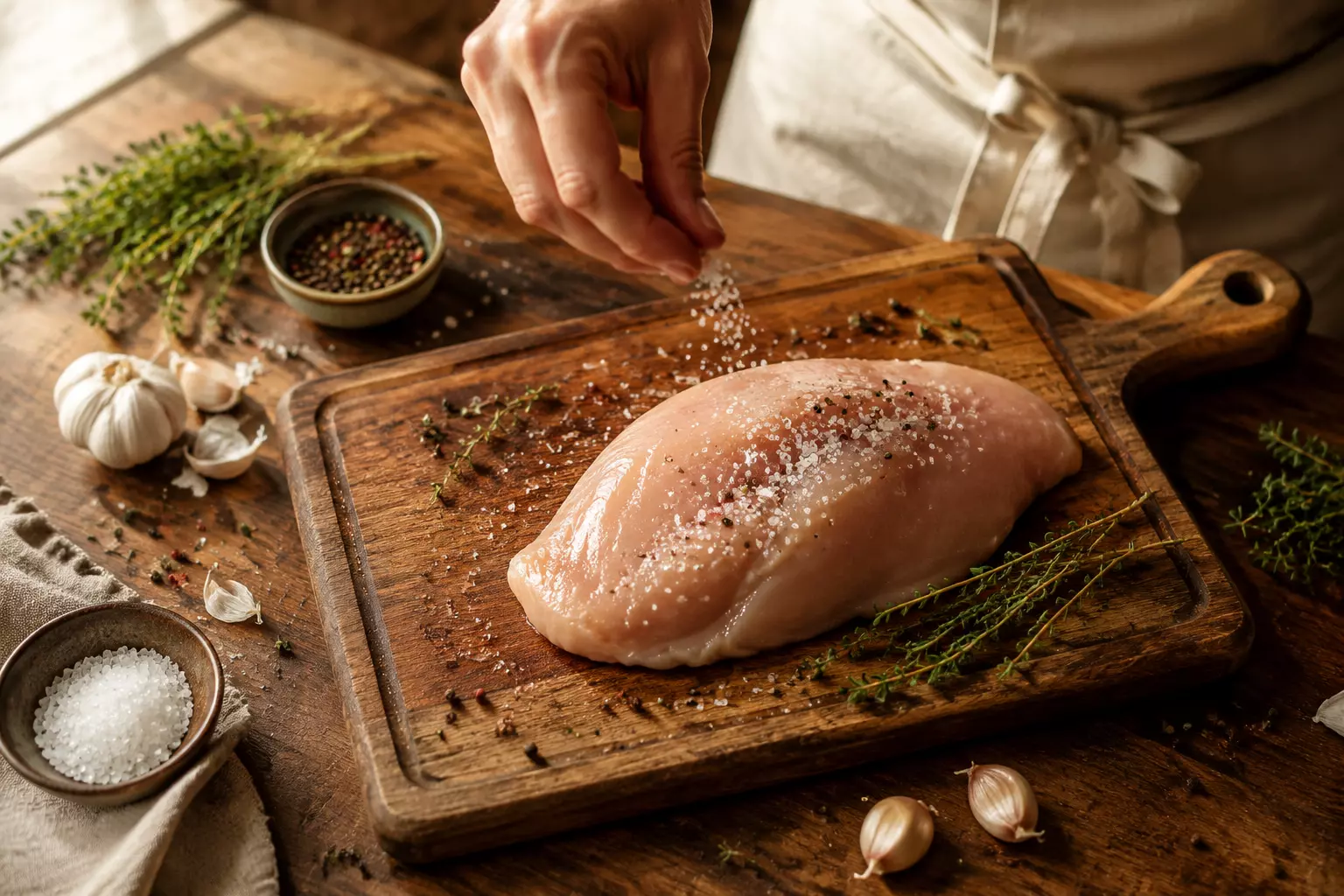
Most of us were taught to follow recipes exactly. Add one teaspoon of salt here, a quarter teaspoon of pepper there. The problem is that recipes are written for an average — an average batch size, an average salt brand, an average palate. Your kitchen is not average. Your ingredients vary. Your taste buds are your own.
I spent years following recipes to the letter and still producing food that tasted somehow incomplete. The turning point came when a chef friend watched me cook pasta and said, “You’re not tasting anything. How do you know what it needs?” I had no answer. I was cooking on autopilot, trusting numbers on a page instead of my own senses.
Here is what most home cooks do wrong:
- Season only at the end. Flavor is built in stages. Adding salt only at the finish means you are coating the surface rather than developing depth.
- Fear over-salting. This leads to chronic under-seasoning, which is far more common than the reverse.
- Use the wrong salt at the wrong time. Kosher salt, fine sea salt, and table salt behave very differently. Volume measurements mean nothing without specifying the type.
- Ignore acid and fat. Salt is not the only seasoning. A squeeze of lemon or a drizzle of good olive oil can transform a dish that seems to need more salt.
- Never taste during cooking. This is the most critical mistake. You cannot season well without tasting constantly.
The good news: every one of these errors is fixable once you understand the underlying principles.
The Science Behind Perfect Seasoning
Understanding a little food science goes a long way toward learning how to season food perfectly every time (without measuring). You do not need a chemistry degree. You just need to understand a few key relationships.
Salt and Flavor Perception
Salt does not just make food taste salty. At low concentrations, it suppresses bitterness and amplifies sweetness and savory notes. This is why a pinch of salt in chocolate cake batter makes the chocolate taste richer, not saltier. Salt also draws moisture out of ingredients through osmosis, which concentrates flavor and changes texture.
The key insight: Salt added early has time to penetrate and season from within. Salt added late sits on the surface and hits your tongue immediately, tasting sharper and more intense for the same actual quantity.
The Four Flavor Pillars
Professional chefs think about seasoning in terms of balance across four sensory pillars:
| Pillar | What It Does | Common Sources |
|---|---|---|
| Salt | Amplifies all other flavors | Kosher salt, sea salt, soy sauce, miso, anchovies |
| Acid | Brightens and lifts flavor | Lemon juice, vinegar, wine, tomatoes |
| Fat | Carries and rounds flavor | Butter, olive oil, cream, tahini |
| Heat/Spice | Adds complexity and contrast | Black pepper, chili, ginger, mustard |
When a dish tastes flat, the answer is rarely “more salt.” Often it needs acid to lift it, fat to round it, or a hit of spice to add contrast. Training yourself to identify which pillar is missing is the core skill of intuitive seasoning.
How Cooking Changes Salt Needs
Water evaporates as food cooks. This concentrates flavors — including salt. A braise or sauce that tastes perfectly seasoned early in cooking may taste too salty by the time it reduces. Conversely, starchy foods like pasta, rice, and potatoes absorb salt and need more than you might expect. Always taste after major cooking milestones, not just at the beginning and end.
Building the Habit: How to Season Food Perfectly Every Time (Without Measuring)
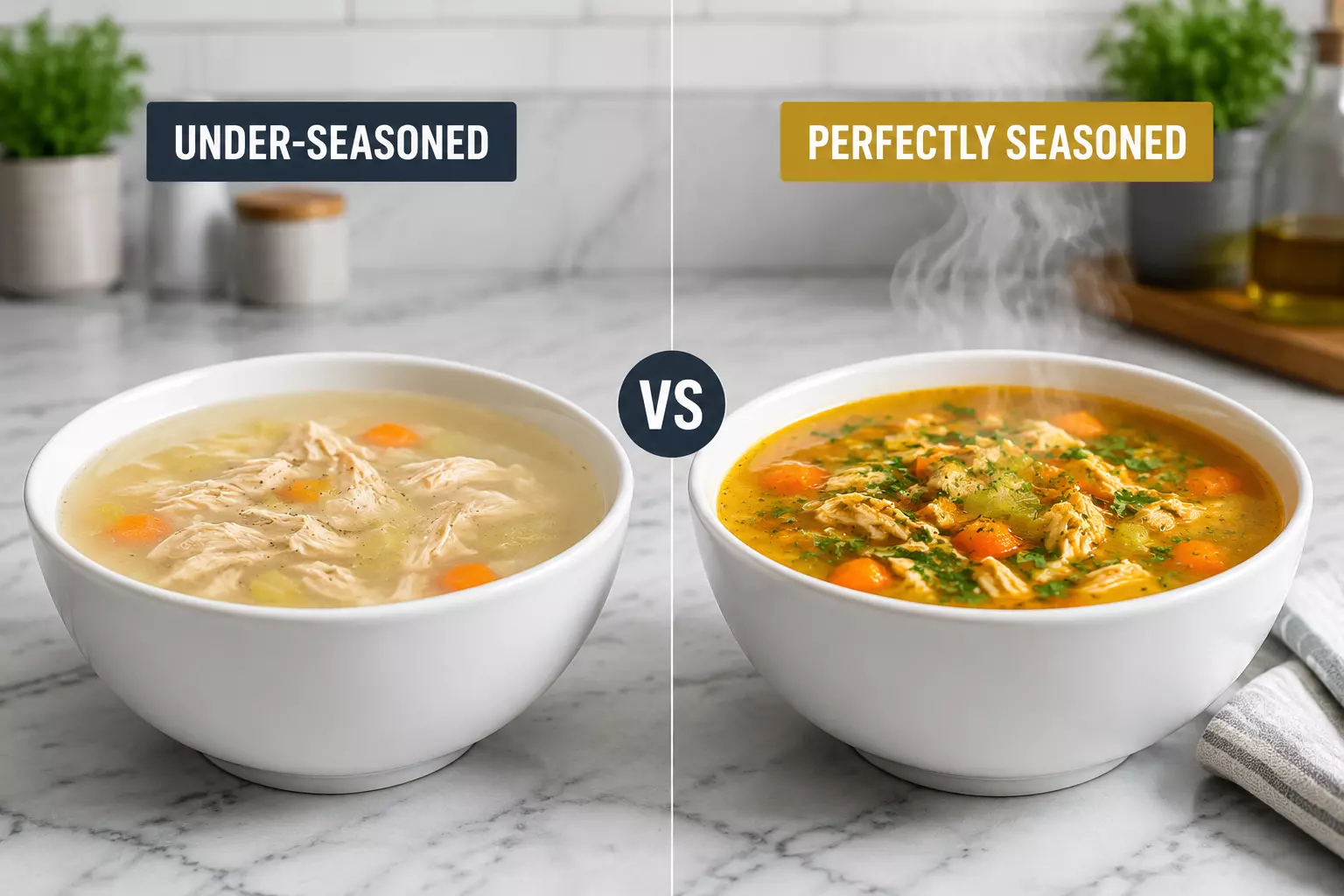
The single most important practice for learning to season without measuring is systematic tasting. Not occasional tasting. Constant, deliberate, analytical tasting at every stage of cooking.
Here is the framework I use and teach:
The Taste-Diagnose-Adjust Cycle
Step 1: Taste with intention. Before you add anything, taste the raw ingredients. Understand their baseline flavor. Is the tomato sweet or acidic? Is the chicken bland or does it have some natural salinity?
Step 2: Diagnose what is missing. Ask yourself: Is it flat? (Needs salt.) Is it heavy or muddy? (Needs acid.) Is it sharp or harsh? (Needs fat or more cooking time.) Is it one-dimensional? (Needs spice or an aromatic layer.)
Step 3: Adjust in small increments. Add a little, stir, wait 30 seconds, taste again. Never dump a large amount of any seasoning in at once. You can always add more; you cannot take it away.
Step 4: Taste again after every major change. Adding a new ingredient, changing the heat, finishing with butter — all of these shift the flavor balance. Each one requires a new taste.
“The best seasoning tool in any kitchen is not a measuring spoon. It is a clean palate and the willingness to use it constantly.”
Learning Your Hand
Professional cooks talk about “learning your hand” — developing an intuitive sense of how much seasoning a pinch or a pour delivers. This is not magic. It is repetition.
Start by actually measuring a pinch of your most-used salt with a measuring spoon once or twice, just to calibrate your sense of volume. A three-finger pinch of Diamond Crystal kosher salt is roughly half a teaspoon. A two-finger pinch of fine sea salt is closer to a quarter teaspoon. Once you know what your hand delivers, you can trust it.
Practical calibration exercise: Season a pot of plain boiling water for pasta until it tastes like mild seawater. Note how much salt you used relative to the water volume. Do this three times over a week. By the third time, your hand will know the amount without thinking.
Seasoning in Layers: The Professional Approach
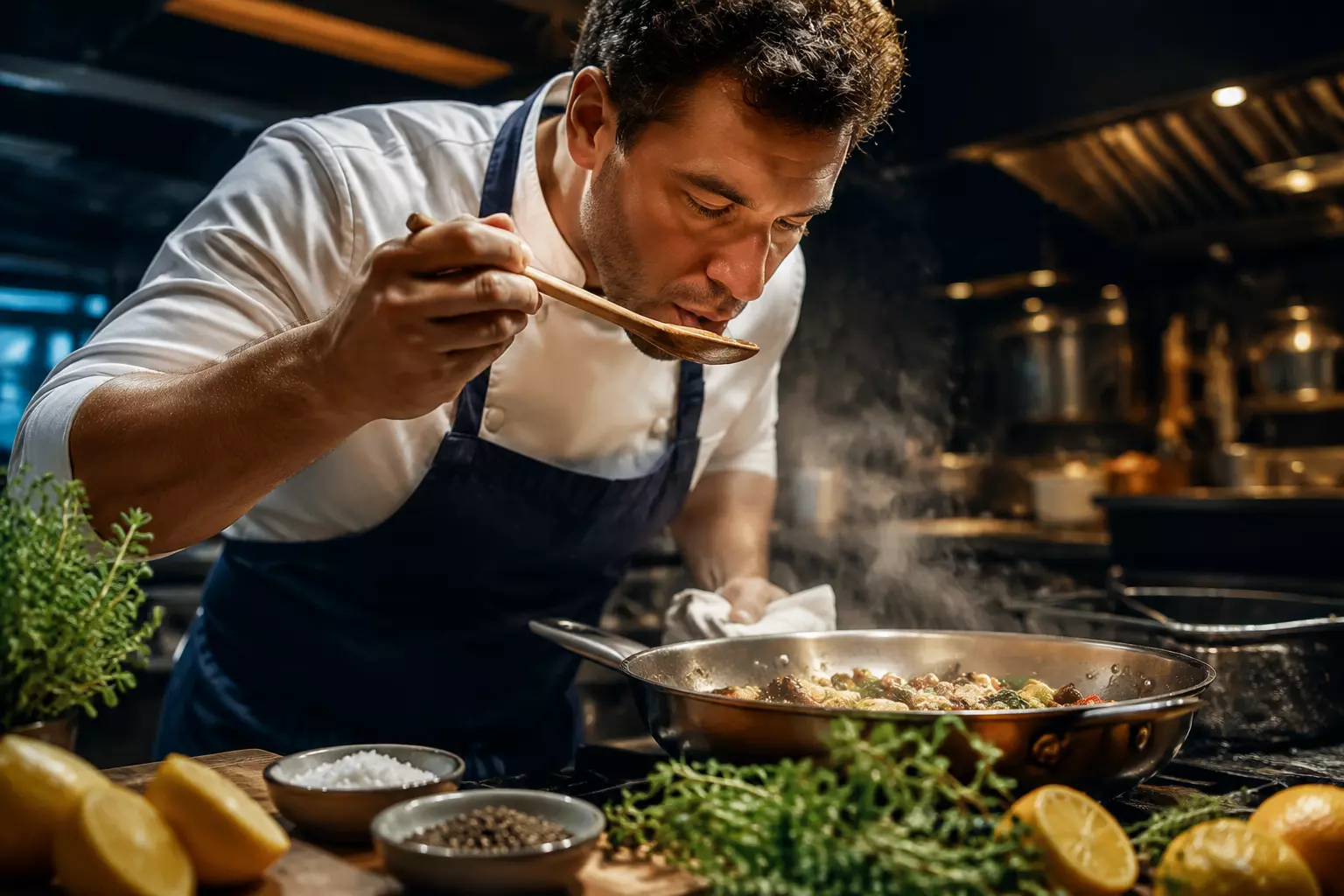
One of the most important concepts in learning how to season food perfectly every time (without measuring) is the idea of layering. Every stage of cooking is an opportunity to build flavor, and seasoning at each stage produces a fundamentally different — and better — result than seasoning only at the end.
Layer 1: Before Cooking Begins
Salt proteins early. When you season meat, fish, or poultry with salt 30 minutes to 24 hours before cooking, the salt draws out moisture, dissolves in it, and gets reabsorbed — effectively brining the protein from the outside in. This results in more evenly seasoned, juicier results.
For vegetables, salting before roasting draws out excess moisture, which helps them caramelize rather than steam. Salting cucumber or zucchini before using them in a salad removes bitterness and improves texture.
Layer 2: Building the Base
When you start cooking aromatics — onions, garlic, shallots, celery — add a small pinch of salt immediately. This speeds up softening and starts building flavor from the first minute. The same applies to any fat you are cooking in: a pinch of salt in the oil before adding ingredients wakes up the whole pan.
Layer 3: Mid-Cook Adjustments
This is where most of the real seasoning work happens. As your dish develops, taste it every five to ten minutes. This is when you can:
- Add herbs and spices (earlier for dried, later for fresh)
- Adjust acidity with a splash of wine, vinegar, or citrus juice
- Deepen savory notes with a small amount of soy sauce, fish sauce, or miso
- Balance sweetness with a tiny pinch of sugar if the acid is too sharp
Layer 4: Finishing Seasoning
The final seasoning is about precision and brightness. This is where finishing salts (like flaky Maldon sea salt) add texture and a burst of salinity. Fresh herbs, a squeeze of citrus, a drizzle of high-quality olive oil, or a crack of fresh black pepper — these are the elements that make a dish feel alive and complete.
A note on finishing salt: Never use expensive flaky salt during cooking. Heat dissolves its delicate crystal structure and you lose the textural effect entirely. Save it for the plate.
Diagnosing and Fixing Common Seasoning Problems
Even experienced cooks run into seasoning problems. The difference is that they know how to diagnose and fix them quickly. Here is a practical reference for the most common issues.
The Dish Tastes Flat
This is the most common problem. Before reaching for more salt, try adding a small amount of acid first. A squeeze of lemon juice or a splash of red wine vinegar often reveals flavors that were already there but muted. If acid does not help, then add salt in small increments, tasting after each addition.
The Dish Is Too Salty
This is harder to fix but not impossible. Options include:
- Add a starchy element. Potatoes, bread, or cooked rice absorb salt. Add them to the dish and remove before serving, or serve alongside.
- Add more of the unsalted base. If a sauce is too salty, add more unsalted tomatoes, stock, or cream to dilute.
- Add acid or fat. These do not reduce salt, but they can balance the perception of it by adding competing flavors.
- Add a small amount of sugar. In some dishes, a pinch of sugar counterbalances excessive saltiness.
The Dish Tastes Bitter
Bitterness often comes from overcooked aromatics, burnt fond, or too much of a bitter ingredient like coffee, dark chocolate, or certain greens. Salt suppresses bitterness, so a small addition can help. Fat also coats the palate and reduces the perception of bitterness — a pat of butter or a drizzle of cream can smooth out a bitter edge.
The Dish Tastes Too Sweet
Balance sweetness with acid (lemon juice, vinegar) or salt. In savory dishes, unexpected sweetness often comes from caramelized onions or roasted root vegetables. A small amount of acid brings the dish back into balance quickly.
The Dish Lacks Depth
If a dish tastes one-dimensional despite adequate salt, it usually needs umami — the savory, meaty quality that comes from glutamate-rich ingredients. Add a small amount of:
- Soy sauce or tamari (even in non-Asian dishes)
- Fish sauce (just a few drops)
- Worcestershire sauce
- Parmesan rind simmered in a sauce
- A small spoonful of tomato paste
These ingredients do not make a dish taste like soy sauce or fish — they simply add a savory backbone that makes everything else taste more complete.
Practical Tips for Mastering Intuitive Seasoning in 2026
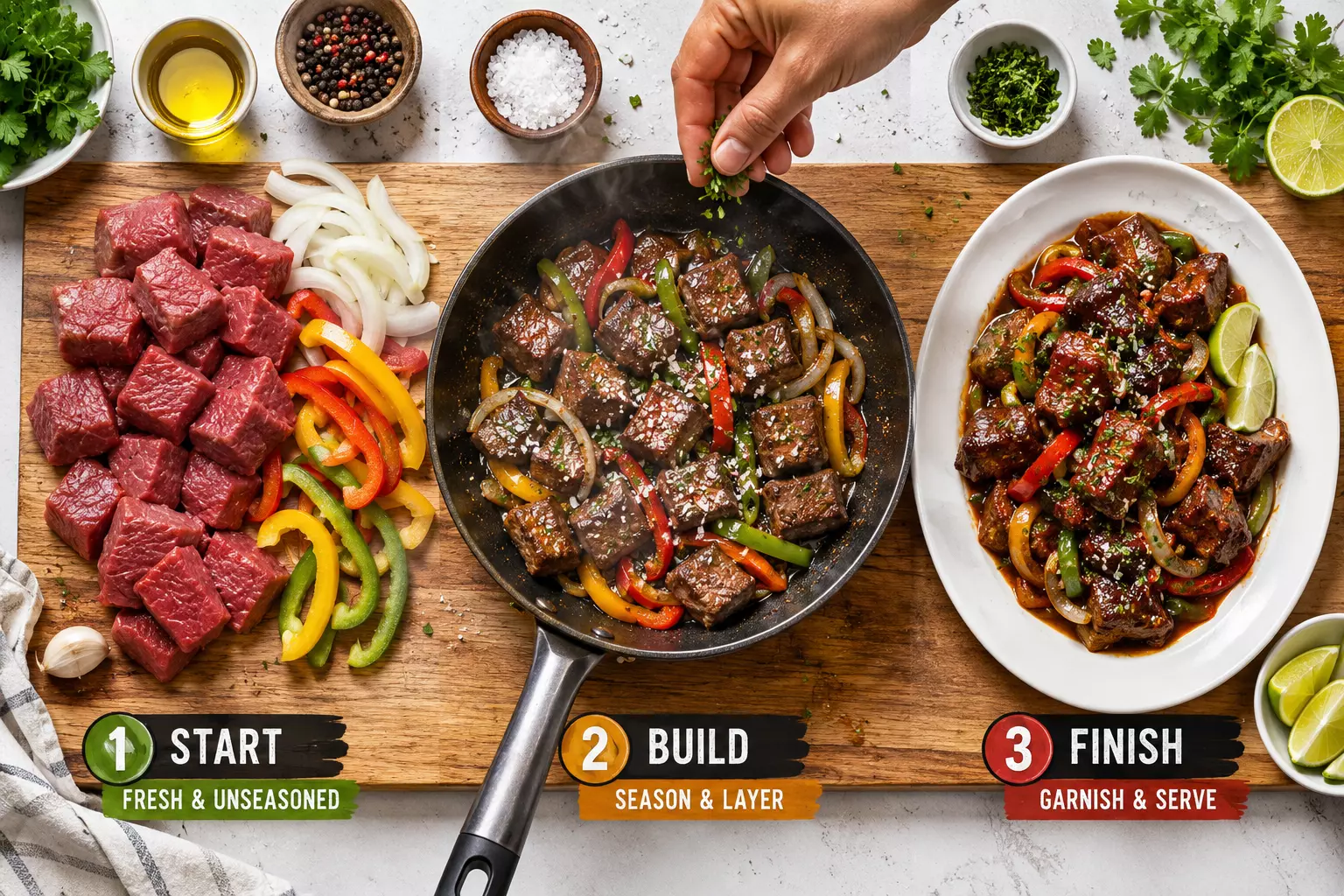
Learning how to season food perfectly every time (without measuring) is ultimately a practice, not a destination. Here are the habits that will accelerate your progress most effectively.
Keep a Seasoning Journal
For the next 30 days, write one sentence after each meal you cook: “What did it need?” or “What worked?” This builds pattern recognition faster than any other method. You will start to notice that your roasted vegetables always need more acid at the end, or that your soups consistently need a second pinch of salt after the potatoes go in.
Cook the Same Dish Repeatedly
Repetition with a single dish teaches you more about seasoning than cooking 30 different recipes once each. Pick one dish — a simple pasta sauce, a roast chicken, a vegetable soup — and make it five times in a month. Each time, adjust your seasoning approach based on what the previous version needed. By the fifth iteration, you will season it instinctively.
Taste Ingredients Before You Cook Them
Different brands, seasons, and varieties of the same ingredient can vary dramatically in saltiness, sweetness, and acidity. A ripe summer tomato needs almost no seasoning. A February hothouse tomato needs significant help. Tasting before you cook tells you where you are starting from.
Understand Your Salt
The three most common salts in home kitchens behave very differently by volume:
| Salt Type | Relative Saltiness by Volume | Best Use |
|---|---|---|
| Table salt | Most salty | Baking (precise, consistent) |
| Fine sea salt | Moderately salty | General cooking |
| Diamond Crystal Kosher | Least salty by volume | General cooking, seasoning proteins |
| Morton Kosher | More salty than Diamond Crystal | General cooking |
| Flaky sea salt (Maldon) | Variable | Finishing only |
If you switch salt brands or types, your instinctive pinch will deliver a different amount of sodium. Recalibrate your hand whenever you change salts.
Trust the Discomfort
The most common feedback I hear from people learning intuitive seasoning is: “It feels wrong not to measure.” That discomfort is normal and temporary. Every professional cook felt it once. The only way through it is to keep tasting, keep adjusting, and accept that a few imperfect dishes are the price of building a skill that will serve you for the rest of your cooking life.
Conclusion
Knowing how to season food perfectly every time (without measuring) is not a talent reserved for professional chefs. It is a learnable skill built on a handful of clear principles: season in layers, taste constantly, understand the four flavor pillars, and learn to diagnose what a dish is missing rather than reflexively adding more salt.
The shift from measuring to intuitive seasoning is less about abandoning precision and more about developing a more sophisticated form of it — one that responds to the actual ingredients in front of you rather than an average written down months ago by someone else.
Here are your actionable next steps:
- This week: Cook one dish and taste it at every single stage. Write down what you noticed.
- This month: Pick one recipe and make it five times, adjusting your seasoning approach each time.
- Ongoing: Keep a short seasoning journal. One sentence per meal is enough.
- Right now: Calibrate your hand. Measure your standard pinch of salt once, just to know what it delivers.
The kitchen rewards those who pay attention. Start paying attention to seasoning, and everything you cook will improve — not because the recipes changed, but because you did.
References
- Breslin, P. A. S. (2013). An evolutionary perspective on food and human taste. Current Biology, 23(9), R409–R418.
- Dötsch, M., Busch, J., Batenburg, M., Liem, G., Tareilus, E., Mueller, R., & Meijer, G. (2009). Strategies to reduce sodium consumption: A food industry perspective. Critical Reviews in Food Science and Nutrition, 49(10), 841–851.
- Keast, R. S. J., & Breslin, P. A. S. (2003). An overview of binary taste–taste interactions. Food Quality and Preference, 14(2), 111–124.
- Lopez-Alt, J. K. (2015). The Food Lab: Better Home Cooking Through Science. W. W. Norton & Company.
- Myhrvold, N., Young, C., & Bilet, M. (2011). Modernist Cuisine: The Art and Science of Cooking. The Cooking Lab.
- Nosrat, S. (2017). Salt, Fat, Acid, Heat: Mastering the Elements of Good Cooking. Simon & Schuster.
- Shepherd, G. M. (2012). Neurogastronomy: How the Brain Creates Flavor and Why It Matters. Columbia University Press.