8 Mustard Pickles Recipe Variations That Belong in Every Home Cook’s Pantry
Fewer than 10% of home cooks realize that mustard pickles were once considered a staple of every well-stocked American and European pantry, not a specialty item, but a daily condiment as common as ketchup. Somewhere along the way, commercial relishes pushed this bold, tangy preserve off kitchen shelves. That is a genuine loss, because the 8 mustard pickles recipe variations that belong in every home cook’s pantry cover a remarkable range of flavors, textures, and culinary traditions that no store-bought jar can replicate.
Disclosure: This post contains affiliate links. As an Amazon Associate, we earn from qualifying purchases, and at no extra cost to you.
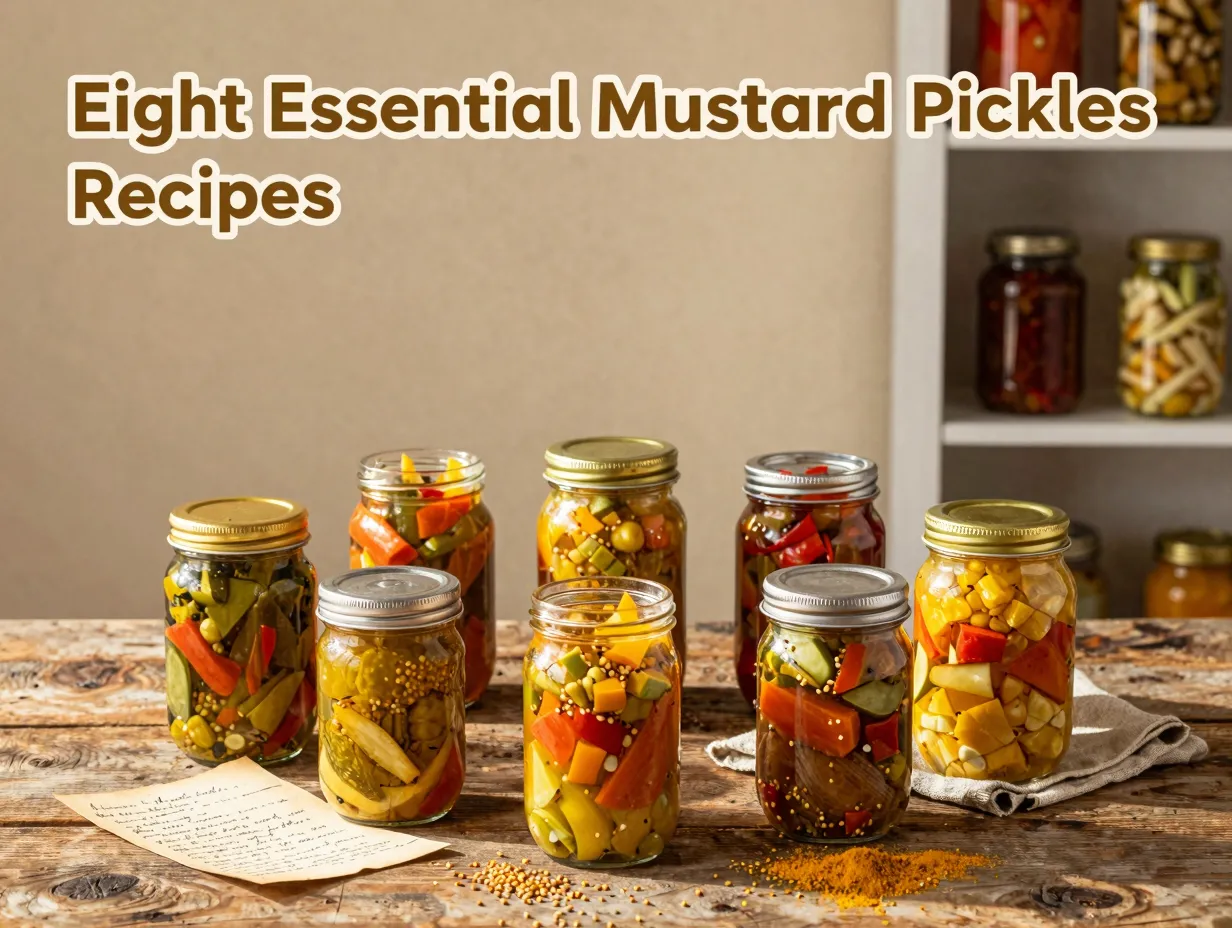
I made my first batch of mustard pickles on a rainy October afternoon, following a handwritten card from my grandmother. The kitchen smelled like vinegar, turmeric, and warm spice, and the finished jars looked like edible gold. Since then, I have tested dozens of variations, from German farmhouse recipes to quick refrigerator versions for beginners. This article brings together the eight best, each one distinct enough to earn its own place on your shelf.
Key Takeaways
- Mustard pickles span multiple culinary traditions, including American, German, British, and Canadian styles, each with a unique flavor profile.
- The core formula, vegetables brined in a mustard-and-vinegar sauce, is highly adaptable to whatever produce you have on hand.
- Some variations require traditional water-bath canning for long-term storage, while others are quick refrigerator pickles ready in under 24 hours.
- Proper salting, brine ratios, and vegetable preparation are the three factors that most affect the final texture and taste.
- Even beginners can master at least two or three of these variations without special equipment.
What Makes Mustard Pickles Different From Regular Pickles
Before diving into the 8 mustard pickles recipe variations that belong in every home cook’s pantry, it helps to understand what separates mustard pickles from a standard dill or bread-and-butter pickle.
The defining element is the mustard-based brine. Where dill pickles rely on vinegar, salt, and fresh herbs, mustard pickles use a cooked sauce that typically includes:
- Dry mustard powder or prepared mustard
- Mustard seeds
- Turmeric (for color and mild earthiness)
- Vinegar (usually white or apple cider)
- Sugar (ranging from a little to a lot, depending on the style)
- A thickening agent such as flour or cornstarch
This cooked sauce clings to the vegetables rather than simply soaking into them. The result is a condiment with body, something you can spoon onto a plate rather than just pour from a jar.
Pull quote: “Mustard pickles are not just pickled vegetables. They are a cooked condiment that happens to be preserved, and that distinction changes everything about how you use them.”
Mustard pickles pair well with cold meats, cheese boards, sandwiches, and roasted vegetables. In Canada and the American Northeast, they are a traditional accompaniment to holiday meals. In Britain, a close cousin called piccalilli appears on nearly every pub table.
The 8 Mustard Pickles Recipe Variations That Belong in Every Home Cook’s Pantry
1. Traditional Mixed Vegetable Mustard Pickles
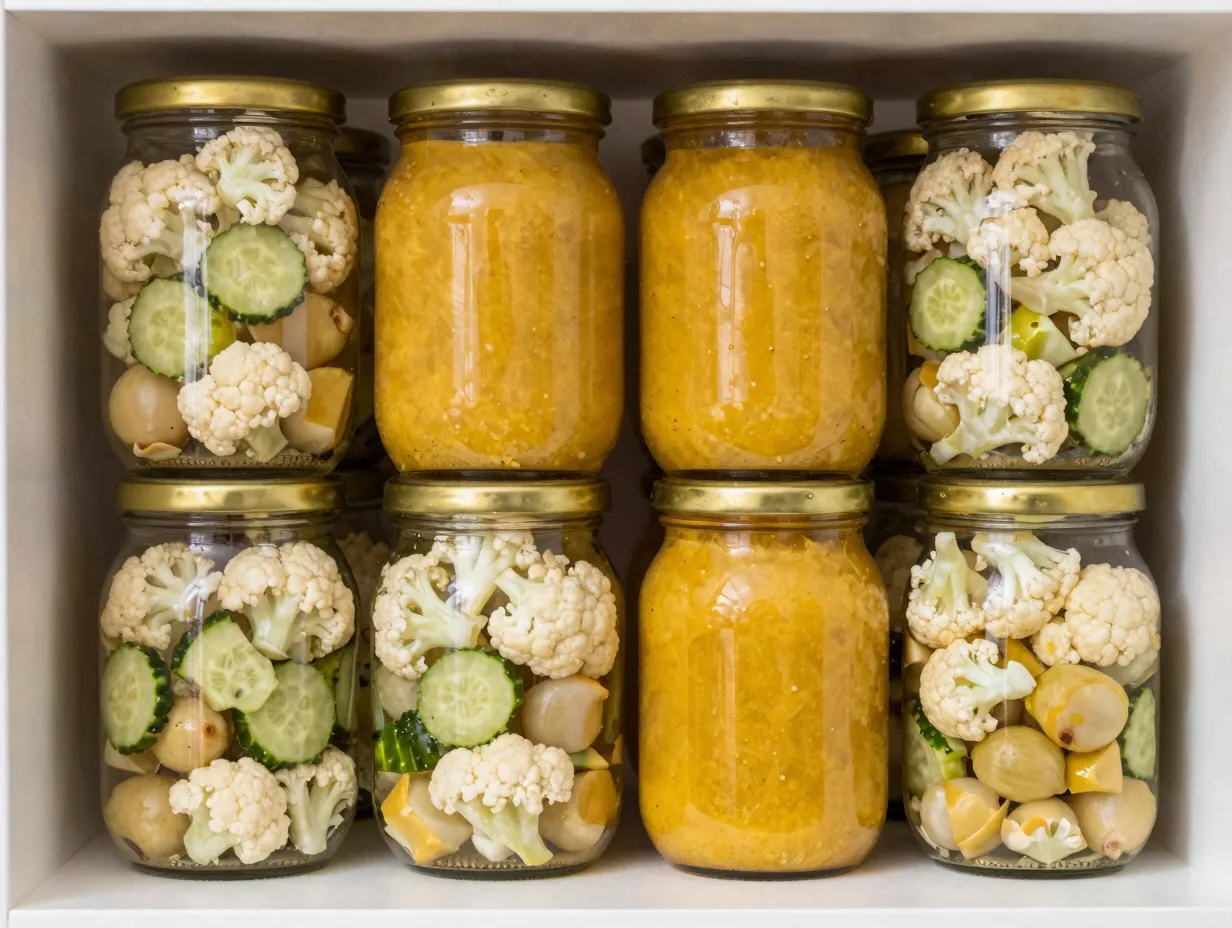
This is the version most North American home cooks recognize, the one that likely appeared in your grandmother’s recipe box. It combines cucumbers, cauliflower, and pearl onions in a thick, golden mustard sauce made with dry mustard, turmeric, vinegar, and sugar [1].
Key characteristics:
- Thick, golden-yellow brine
- Chunky vegetable mix with varied textures
- Sweet-tangy flavor with a mild mustard heat
- Shelf-stable when properly water-bath canned
The preparation process involves salting the vegetables overnight to draw out excess moisture, which is a step many beginners skip, and then wonder why their pickles turn out watery. Do not skip it. After rinsing and draining, the vegetables are folded into the hot mustard sauce and ladled into sterilized jars.
This variation is the best starting point for anyone new to mustard pickling. The flavor is familiar, the technique is forgiving, and a single batch typically yields six to eight pints, enough to last through winter and still have jars left to give away [1].
Best used for: Holiday gift giving, cold cut platters, cheese boards.
2. Uncle Bill’s Family-Style Mustard Pickles
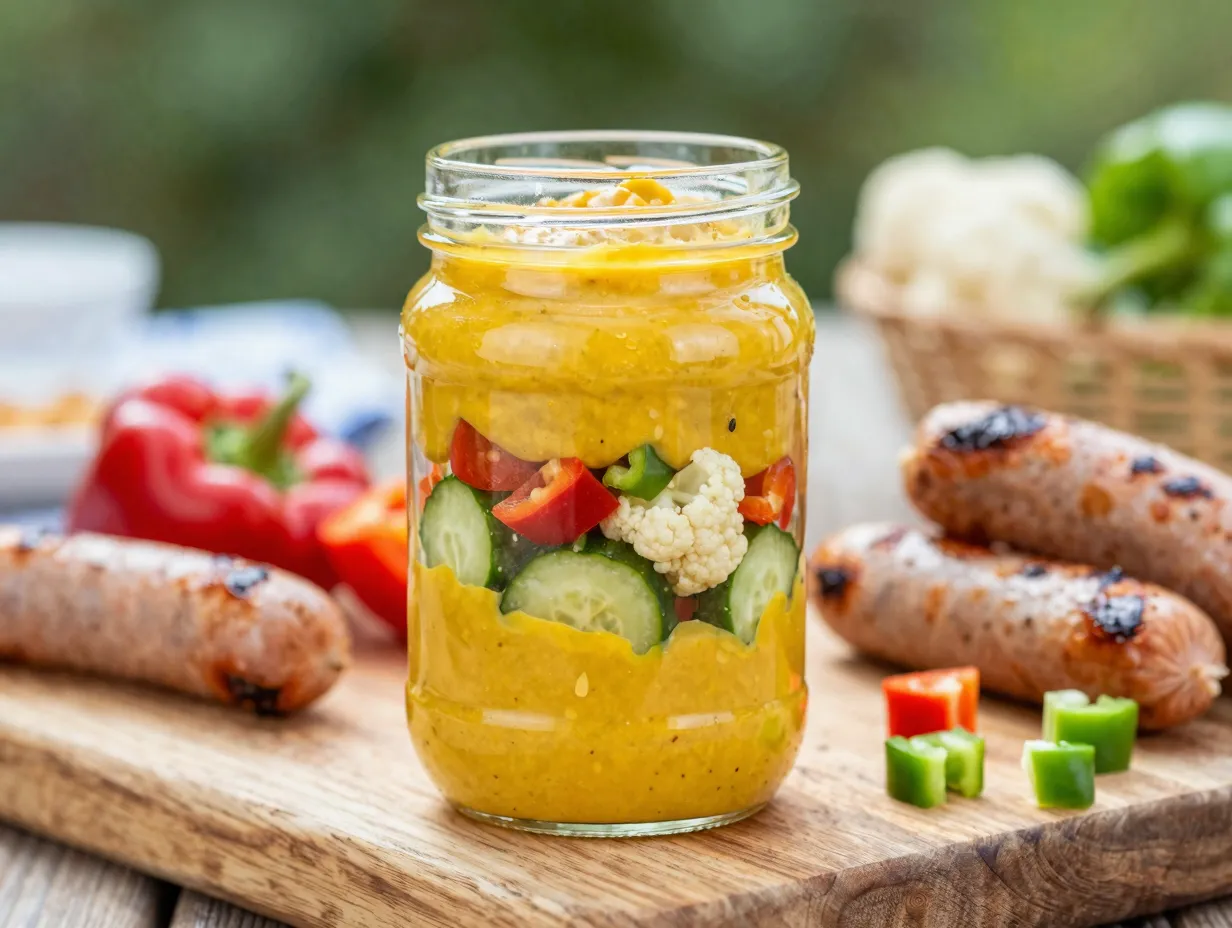
Some recipes carry the personality of the person who created them, and this one does exactly that. Uncle Bill’s version expands the vegetable mix to include sweet red and green bell peppers alongside the standard cucumbers and cauliflower, adding color and a gentle sweetness that balances the mustard’s sharpness [2].
The brine in this recipe leans slightly sweeter than the traditional version, which makes it more approachable for people who find straight mustard pickles too aggressive. The peppers also give the finished jar a visual appeal that makes it a natural choice for entertaining.
What sets it apart:
- Bell peppers add color and sweetness
- Slightly sweeter brine ratio
- More complex vegetable texture
- Excellent visual presentation in the jar
I have served this version at summer gatherings alongside grilled sausages, and it consistently draws more compliments than any commercial relish on the table. The red and green peppers against the yellow brine look almost festive [2].
Best used for: Barbecues, charcuterie boards, gifting.
3. German Senfgurken (Mustard Cucumber Pickles)
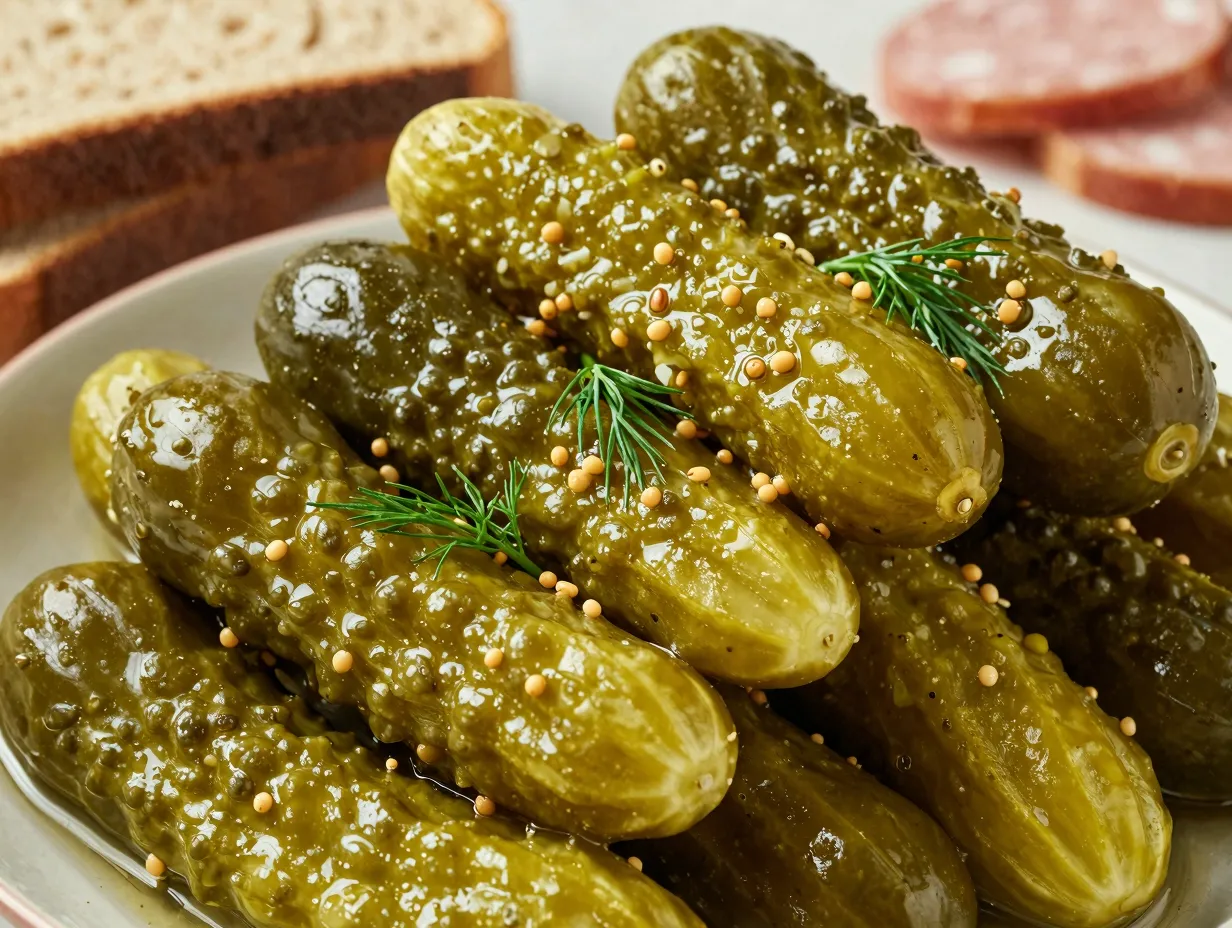
Germany has its own long tradition of mustard pickling, and Senfgurken is the most well-known expression of it. Unlike North American versions that use small pickling cucumbers, the German approach calls for large, overripe cucumbers, the kind most gardeners would otherwise discard [3].
The cucumbers are peeled, seeded, and cut into thick spears or chunks. They are then pickled in a brine infused with whole mustard seeds, dill, and sometimes horseradish. The result is a crisper, less sweet pickle with a more assertive mustard-seed flavor than the cooked-sauce versions [3].
Key differences from North American styles:
- Uses large, mature cucumbers instead of small pickling varieties
- Relies on whole mustard seeds rather than a cooked mustard sauce
- Less sweet, more savory
- Crisper texture due to the cucumber’s firmer flesh
A note on cucumber selection: If you grow cucumbers in a home garden, Senfgurken is the perfect recipe for the oversized ones that hide under leaves and get discovered too late. What would otherwise be compost becomes a pantry staple.
This variation is particularly popular in German-American communities in the Midwest, where it appears on deli counters alongside cold cuts and rye bread [3].
Best used for: Deli-style sandwiches, bratwurst, potato salads.
4. Piccalilli (English-Style Mustard Pickles)
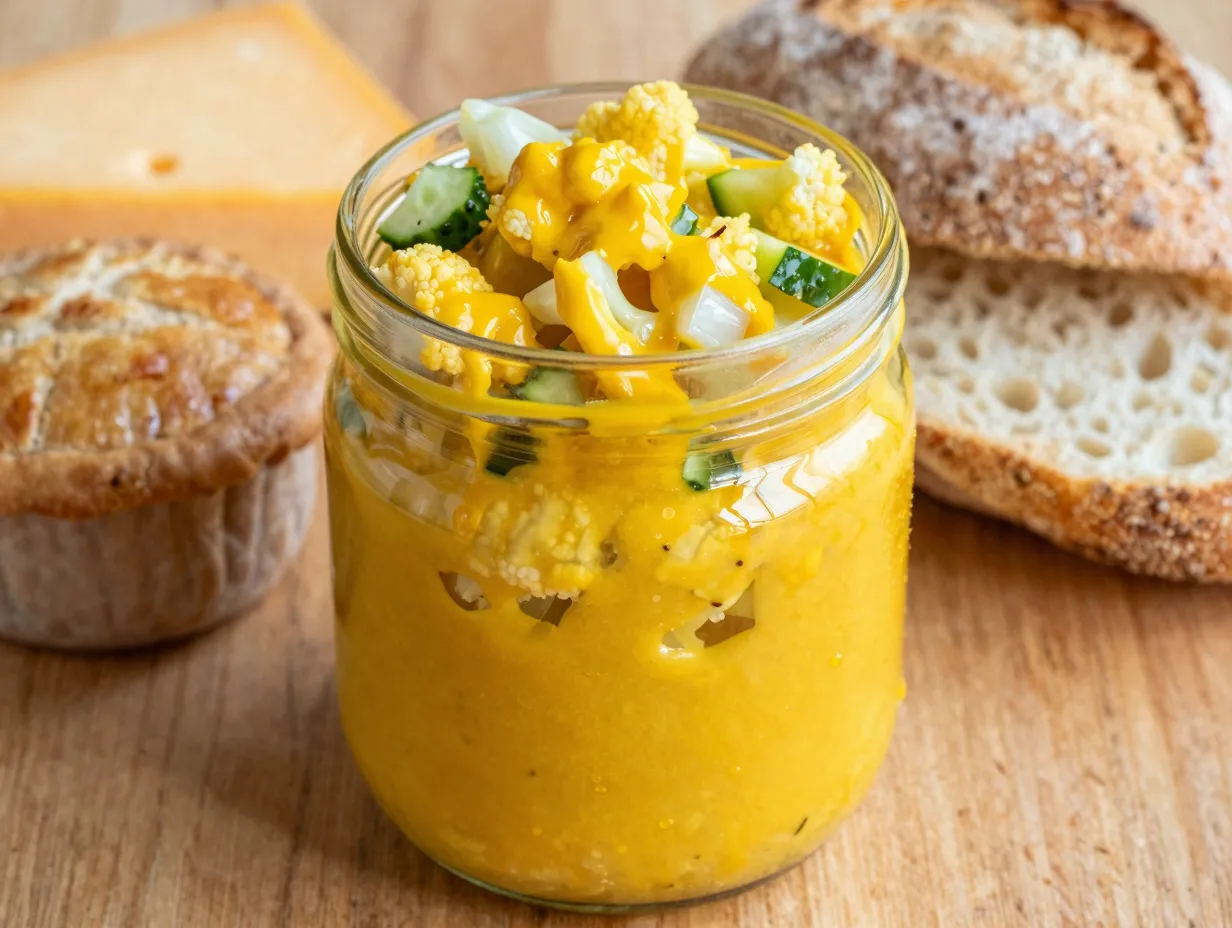
Piccalilli is Britain’s answer to mustard pickles, and it deserves its own entry because it differs meaningfully from the North American style. The British version uses a higher proportion of turmeric, which gives it a vivid, almost neon-yellow color. The vegetables, typically cauliflower, onions, and cucumbers, are cut smaller and coated in a thicker, more pungent mustard sauce [4].
The flavor profile is sharper and more vinegar-forward than American mustard pickles, with less sweetness and more bite. Piccalilli is a condiment with strong opinions about itself, and that is part of its appeal.
Classic piccalilli characteristics:
- Intense yellow-orange color from turmeric
- Sharper, more vinegar-forward taste
- Finely cut vegetables
- Thicker sauce consistency
- Traditional accompaniment to ploughman’s lunches and cold pies
Christina’s Cucina notes that authentic piccalilli should have a noticeable heat from the mustard and a tartness that cuts through rich, fatty foods, which is exactly why it works so well alongside pork pies and strong cheddar [4].
If you have British family members or friends, a jar of homemade piccalilli is one of the most appreciated gifts you can bring. Many British expats describe it as a taste of home that is genuinely difficult to find in North American grocery stores.
Best used for: Ploughman’s platters, cold pies, strong aged cheese.
5. Small-Batch Mixed Vegetable Mustard Pickles
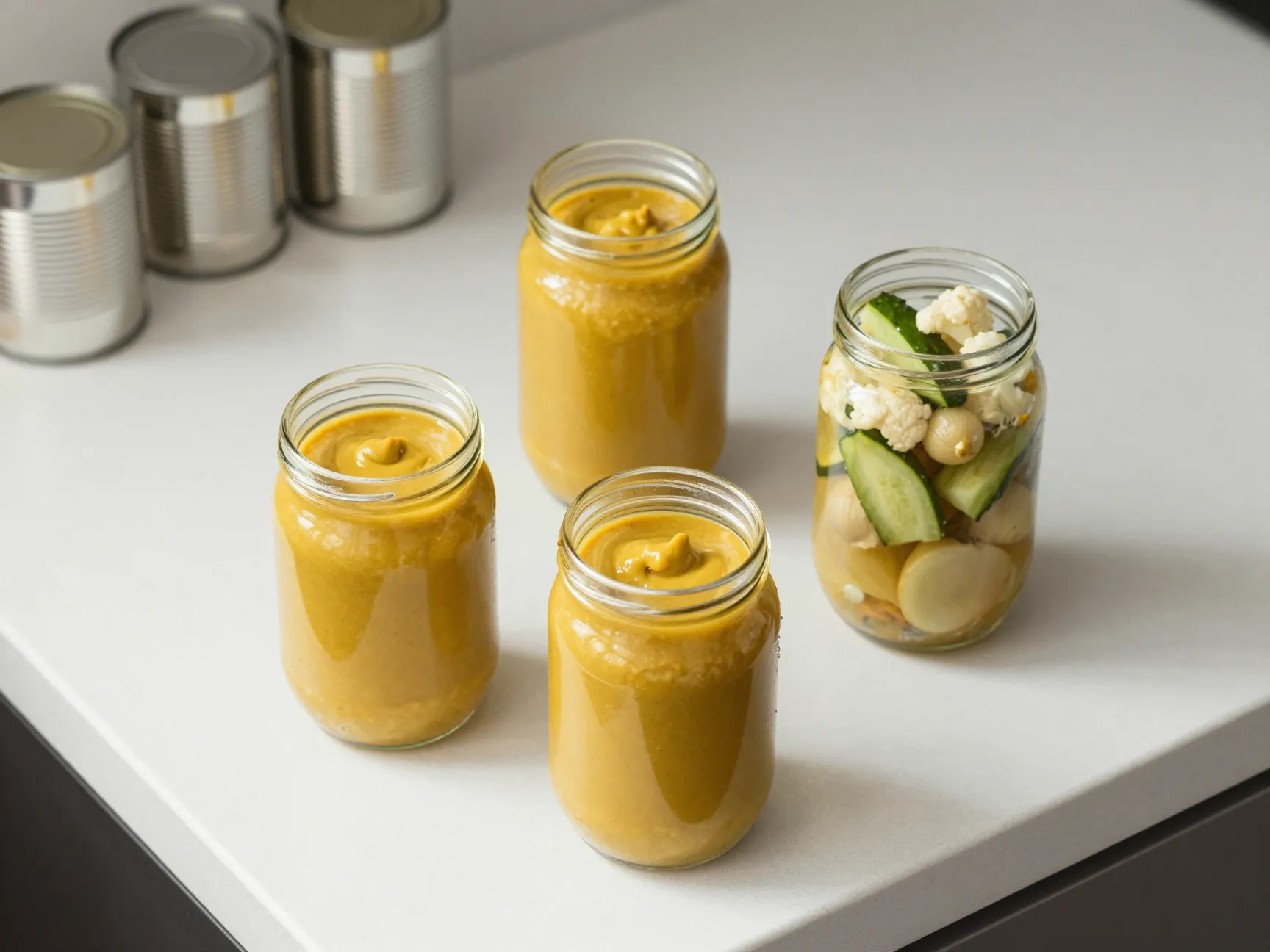
Not every home cook wants to spend a full day canning eight pints of pickles. This variation solves that problem by scaling the traditional recipe down to a manageable two to three pint yield, enough to fill two or three jars without overwhelming a small kitchen [5].
The ingredient list mirrors the classic version (cucumbers, cauliflower, pearl onions, mustard sauce), but the quantities are reduced proportionally. This makes it an ideal entry point for first-time canners who want to test the recipe before committing to a large batch.
Why small-batch matters:
- Lower ingredient cost for testing
- Less time commitment (roughly two hours total)
- Easier to manage the canning process safely
- Allows experimentation with flavor adjustments
Batch size comparison:
| Variation | Typical Yield | Time Required | Skill Level |
|---|---|---|---|
| Traditional Mixed | 6-8 pints | 4-5 hours | Intermediate |
| Small-Batch Mixed | 2-3 pints | 2-3 hours | Beginner |
| German Senfgurken | 4-6 pints | 3-4 hours | Intermediate |
| No-Can Refrigerator | 1-2 quarts | 30 minutes | Beginner |
| Piccalilli | 4-5 pints | 3-4 hours | Intermediate |
The small-batch approach also lets you experiment with flavor additions, a pinch of celery seed here, a bit more sugar there, without wasting a large quantity of produce if the adjustment does not work out [5].
Best used for: First-time canners, apartment kitchens, recipe testing.
6. No-Canning Refrigerator Mustard Pickles
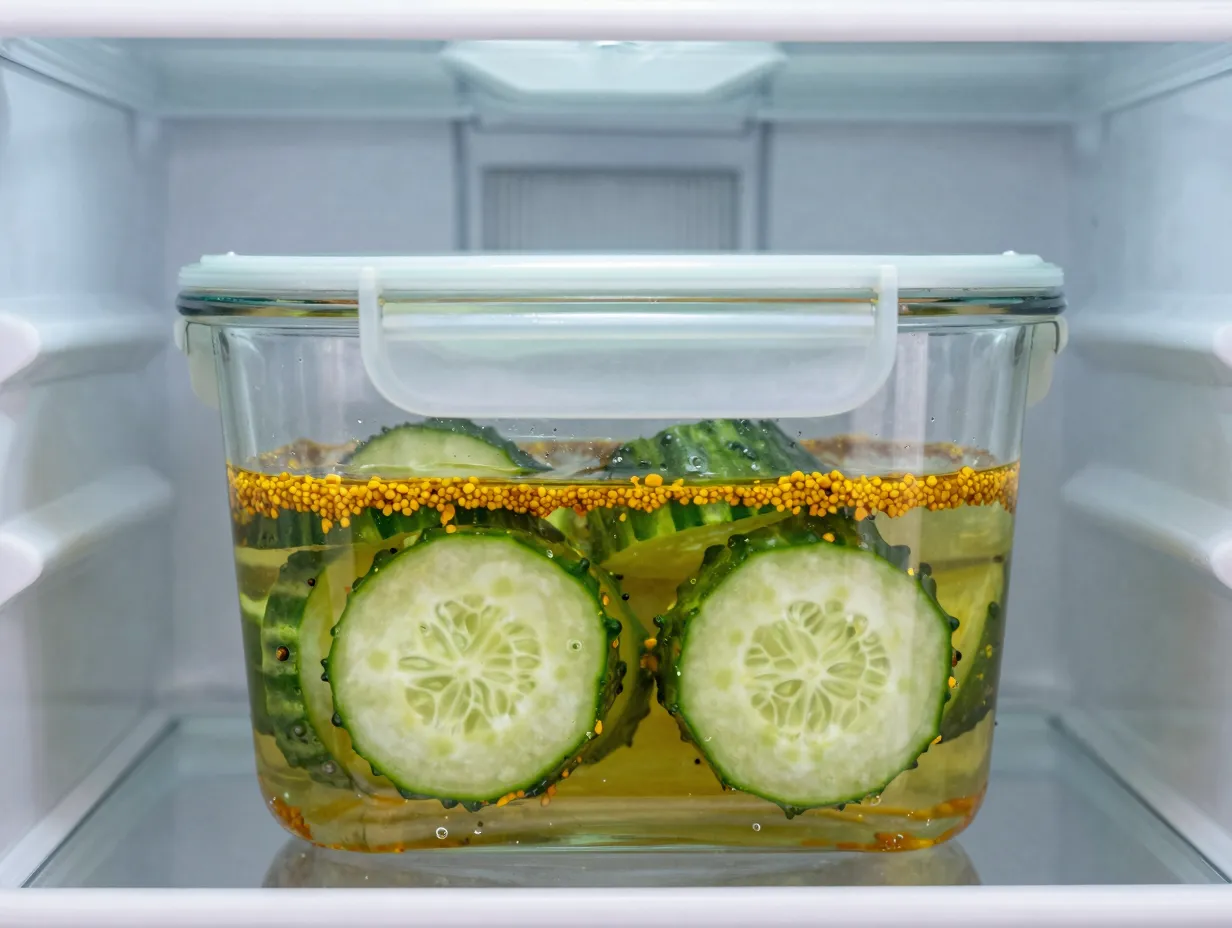
This variation removes the most intimidating part of mustard pickling, the water-bath canning process, and replaces it with simple refrigerator storage. The result is a quick, accessible version that anyone can make in about 30 minutes [6].
The process involves mixing sliced cucumbers with a mustard brine (vinegar, dry mustard, turmeric, sugar, salt) and refrigerating the mixture in a sealed container. Within 24 hours, the cucumbers absorb the brine and develop a genuine mustard pickle flavor. They keep in the refrigerator for up to four weeks [6].
Advantages of the no-can method:
- No special equipment needed
- Ready to eat within 24 hours
- No risk of improper sealing or spoilage from canning errors
- Easy to adjust flavor before serving
Disadvantages:
- Shorter shelf life (weeks, not years)
- Must be refrigerated at all times
- Cannot be given as shelf-stable gifts
For home cooks in 2026 who live in smaller spaces or simply want to test the flavor before committing to a full canning session, this is the smartest entry point into mustard pickling [6].
Best used for: Quick weeknight condiment, testing flavors, small households.
7. Old-Fashioned Zucchini Mustard Pickles
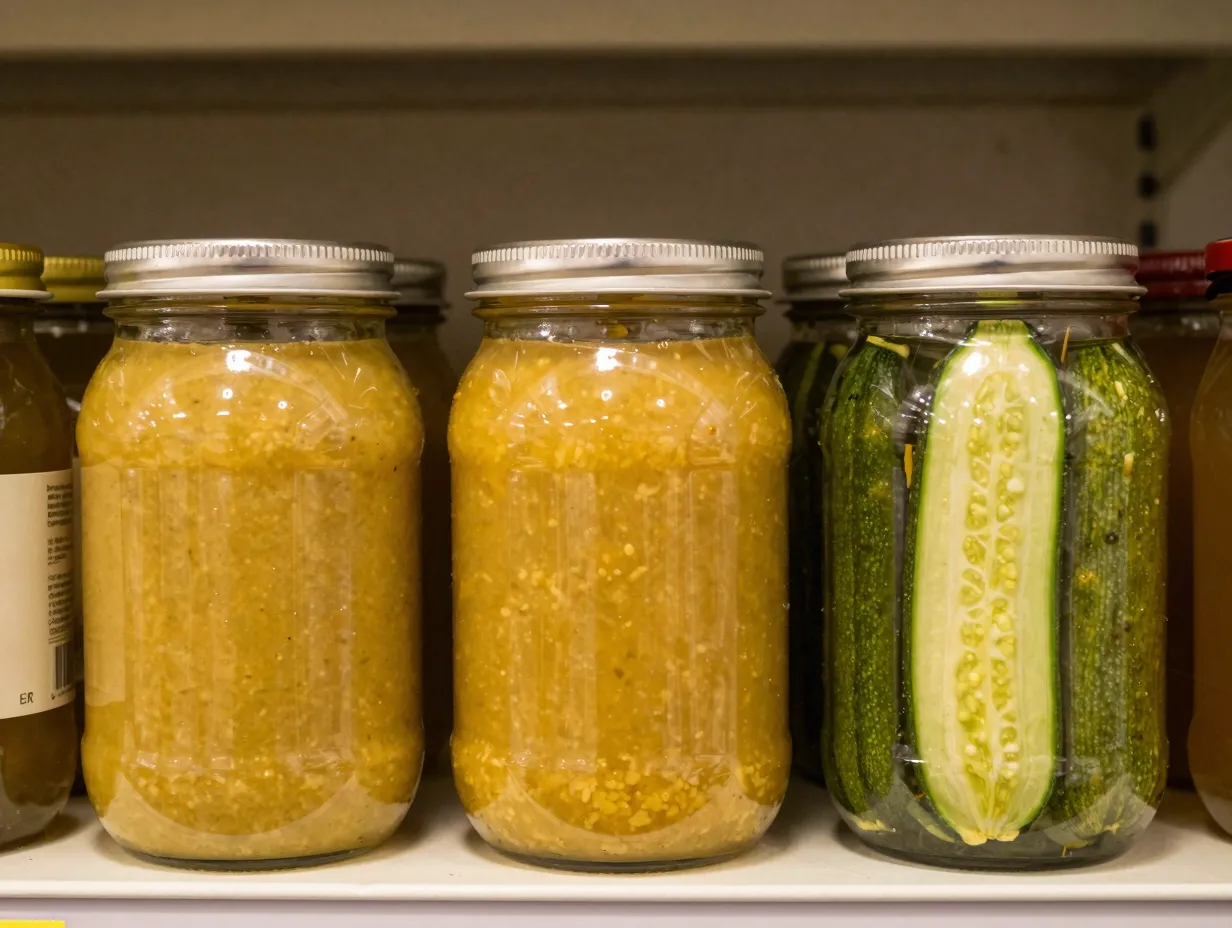
Every gardener who has grown zucchini knows the problem: by mid-August, you have more than you can possibly eat. Old-fashioned mustard pickles solve this problem elegantly. This generational recipe substitutes zucchini for cucumbers, or uses a combination of both, in a classic mustard brine.
The zucchini holds up well to the overnight salting process and absorbs the mustard sauce beautifully. The finished pickle has a slightly softer texture than cucumber-based versions, which some people actually prefer as a sandwich spread or topping for grilled meats.
Zucchini vs. cucumber in mustard pickles:
- Texture: Zucchini is slightly softer; cucumber stays crisper
- Flavor: Zucchini is more neutral, letting the mustard sauce dominate
- Color: Zucchini gives a greener tint to the finished jar
- Availability: Zucchini is often more abundant in home gardens
This recipe also includes full water-bath canning instructions, making it a shelf-stable option with a storage life of 12 to 18 months when properly processed. The technique is essentially identical to the traditional mixed vegetable version, making it a natural next step for anyone who has already made that recipe.
Best used for: Using up garden surplus, sandwich toppings, grilled meats.
8. Fermented Mustard Pickles (Lacto-Fermented Style)
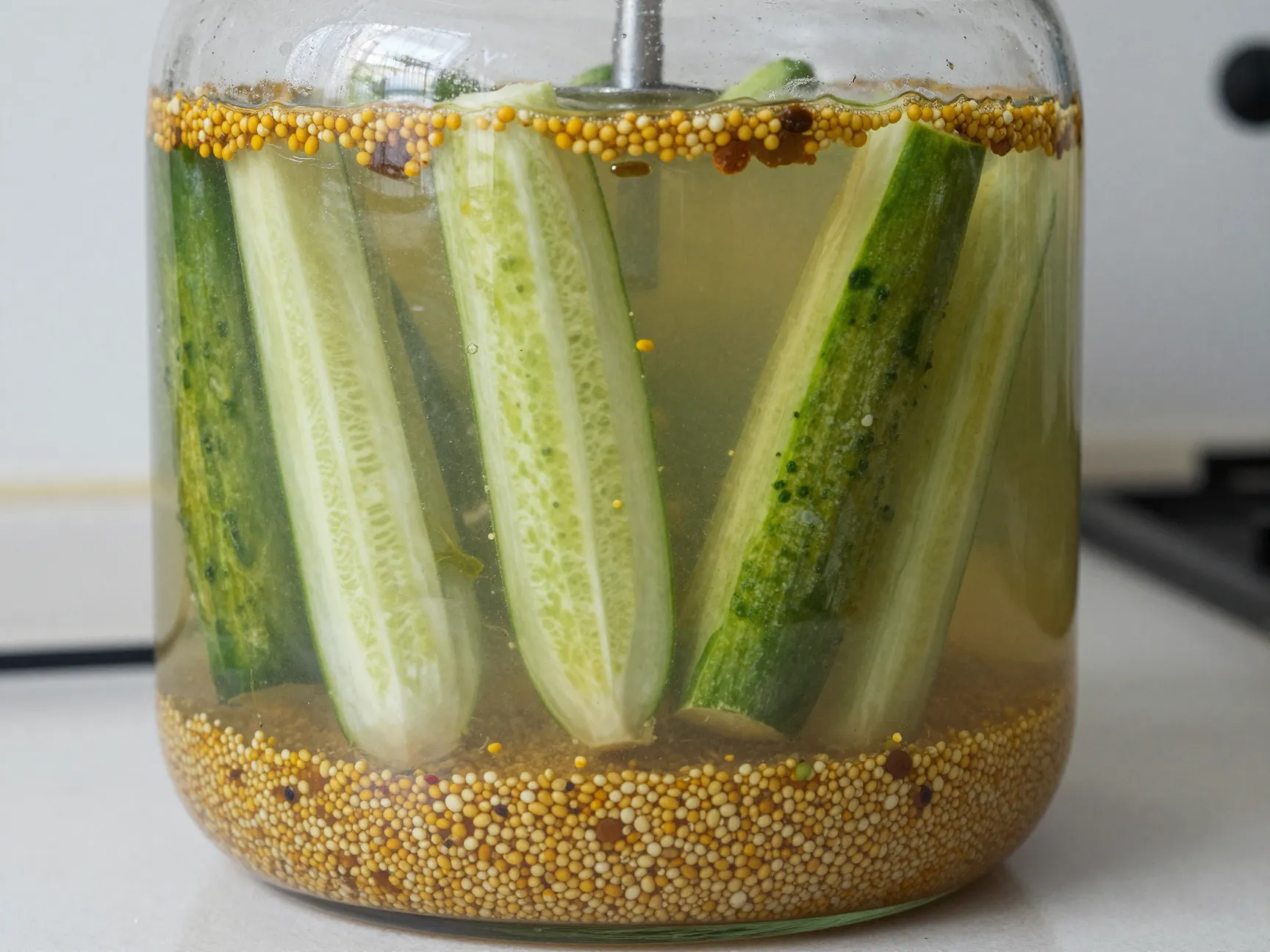
The eighth and most distinctive variation in the 8 mustard pickles recipe variations that belong in every home cook’s pantry moves away from vinegar entirely. Lacto-fermented mustard pickles use salt and naturally occurring bacteria to create acidity, rather than added vinegar. Mustard seeds and dry mustard are added to the fermentation vessel, producing a pickle with a complex, funky depth that vinegar-based versions simply cannot replicate.
The fermentation process takes five to seven days at room temperature, after which the jars are moved to cold storage to slow fermentation [7].
Why fermented mustard pickles are worth the extra time:
- Contain live probiotic cultures
- Develop a more complex, layered flavor
- No vinegar required
- Shelf life of several months in cold storage
Pull quote: “Fermented mustard pickles taste like something that has been alive, and in the best possible way. The mustard seeds bloom in the brine over days, creating a flavor no quick-pickle method can touch.”
The technique requires attention to the salt-to-water ratio (typically 2% salinity by weight) and clean equipment to prevent unwanted mold. A visual guide and step-by-step tutorial from Wyse Guide covers the fermentation and storage process in detail, which is particularly helpful for first-time fermenters [7].
Best used for: Gut health focus, flavor complexity, charcuterie boards.
Essential Tips for Making Any Mustard Pickle Variation Successfully
Regardless of which variation you choose, several principles apply across all 8 mustard pickles recipe variations that belong in every home cook’s pantry.
1. Salt your vegetables first. Almost every recipe calls for an overnight salt soak. This draws out moisture, prevents a watery brine, and improves the final texture. Do not rush this step.
2. Use fresh spices. Dry mustard and turmeric lose potency over time. If your spice jars have been sitting in the cabinet for more than a year, buy fresh ones. The color and flavor difference is significant.
3. Maintain proper vinegar acidity. For canned versions, use vinegar with at least 5% acidity. Do not substitute homemade or raw vinegar, which may have inconsistent acidity levels and create food safety risks.
4. Sterilize your jars properly. Run jars through a dishwasher cycle or boil them for 10 minutes before filling. Lids should be simmered (not boiled) to soften the sealing compound.
5. Process times matter. Water-bath processing times vary by altitude. At sea level, most pint jars of mustard pickles process for 10 to 15 minutes. Add two minutes for every 1,000 feet above sea level.
6. Wait before tasting. Freshly canned mustard pickles taste sharp and raw. Give them at least two to three weeks in the jar before opening. The flavors mellow and integrate significantly during this resting period.
How to Choose the Right Variation for Your Kitchen
With eight options available, the choice can feel overwhelming. Here is a simple framework for deciding where to start.
If you are a complete beginner: Start with the no-canning refrigerator version (Variation 6). No special equipment, no food safety concerns, ready in 24 hours. Once you love the flavor, move to the small-batch canned version (Variation 5).
If you have a garden: The zucchini version (Variation 7) is designed for surplus produce. The German Senfgurken (Variation 3) is perfect for oversized cucumbers.
If you are cooking for a crowd: The traditional mixed vegetable version (Variation 1) or Uncle Bill’s family-style version (Variation 2) produce large yields and have broad appeal.
If you want something distinctive for entertaining: Piccalilli (Variation 4) is visually striking and pairs exceptionally well with cheese and charcuterie. Fermented mustard pickles (Variation 8) will generate genuine conversation.
If you are focused on gut health: The lacto-fermented version (Variation 8) is the only one that delivers live probiotic cultures.
Conclusion
The 8 mustard pickles recipe variations that belong in every home cook’s pantry represent more than just preserved vegetables. They represent a living culinary tradition that spans continents and generations, from German farmhouses to British pub tables to Canadian holiday dinners. Each variation has a distinct personality, a specific set of best uses, and a technique that teaches you something new about the art of preserving.
Actionable next steps for 2026:
- Choose one variation that matches your current skill level and available equipment. If you are new to this, start with the no-canning refrigerator version.
- Source fresh, high-quality spices before you begin. Old turmeric and flat dry mustard will undermine any recipe.
- Make a small batch first, taste it after two weeks, and adjust sweetness or acidity before scaling up.
- Label every jar with the date and variation name. You will thank yourself when you open the pantry in January and cannot remember which jar is which.
- Share a jar with someone. Mustard pickles have always been a communal food, something passed between neighbors and across tables. That tradition is worth continuing.
The pantry shelf that holds a row of homemade mustard pickles is not just organized. It is stocked with something genuinely useful, deeply flavorful, and connected to a history worth preserving.
References
[1] Mustard Pickles 42866 – https://www.food.com/recipe/mustard-pickles-42866?utm_source=openai
[2] Uncle Bills Mustard Pickles 97570 – https://www.food.com/recipe/uncle-bills-mustard-pickles-97570?utm_source=openai
[3] Senfgurken German Mustard Pickles – https://creativecanning.com/senfgurken-german-mustard-pickles/?utm_source=openai
[4] Piccalilli English Style Pickles – https://www.christinascucina.com/piccalilli-english-style-pickles/?utm_source=openai
[5] Small Batch Mixed Vegetable Mustard Pickles 388027 – https://www.food.com/recipe/small-batch-mixed-vegetable-mustard-pickles-388027?utm_source=openai
[6] Mustard Pickles – https://iamhomesteader.com/mustard-pickles/?utm_source=openai
[7] Watch – https://www.youtube.com/watch?v=f7TJPRyrXwQ&utm_source=openai