9 Fried Pickles Recipe Variations That Will Make You Ditch the Restaurant Version
The average American spends over $3,000 a year eating out, and a surprising chunk of that goes toward appetizers that are shockingly easy to replicate at home. Fried pickles are one of the best examples. That basket of golden, tangy, crunchy bites you order at a sports bar or Southern diner? You can make a better version in your own kitchen for a fraction of the price. These 9 Fried Pickles Recipe Variations That Will Make You Ditch the Restaurant Version are not just good imitations, they are genuine upgrades, giving you full control over crunch level, spice, coating style, and dipping sauce.
Disclosure: This post contains affiliate links. As an Amazon Associate, we earn from qualifying purchases, and at no extra cost to you.
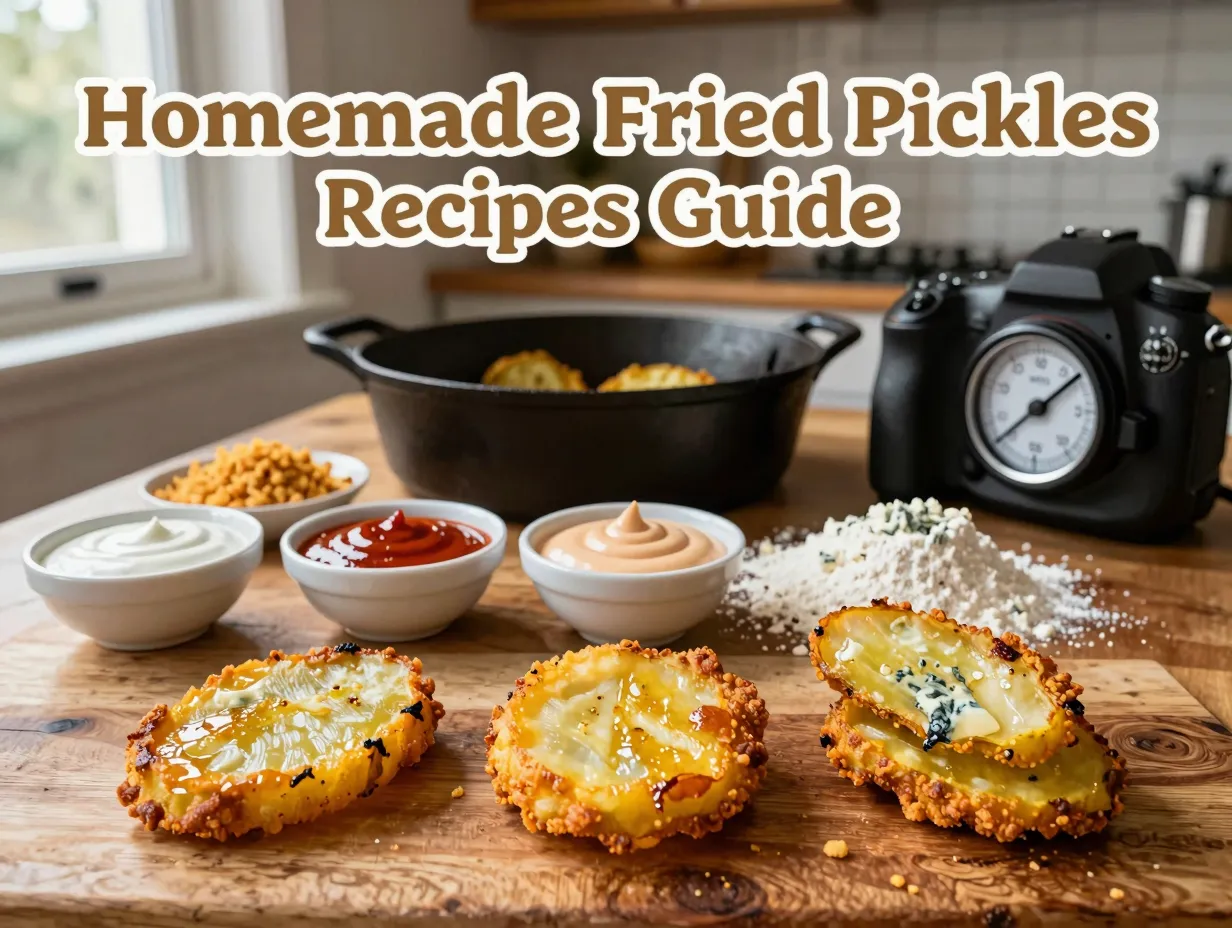
I first made fried pickles at home after a disappointing bar experience where the coating had gone soggy before the plate even hit the table. After some testing and research, I discovered that the gap between restaurant and homemade versions comes down to a few key techniques, and once you nail those, you will never overpay for a soggy appetizer again.
Key Takeaways
- Maintaining oil temperature between 350°F and 375°F is the single most important factor in achieving restaurant-quality crispiness at home
- The double-dredge technique (flour, then buttermilk, then flour again) creates a thick, durable crust that holds up even after plating
- Panko breadcrumbs consistently outperform standard breadcrumbs for crunch and texture
- Drying your pickle slices on paper towels before dredging prevents soggy coatings
- These nine variations cover every flavor profile from classic Southern to spicy Cajun, so there is a version for every palate and occasion
Why Homemade Fried Pickles Beat the Restaurant Every Time
Before diving into the variations, it is worth understanding why home versions have a structural advantage over restaurant ones. Restaurants fry in bulk, often letting batches sit under heat lamps, which destroys the crust. At home, you fry small batches and serve immediately.
The two non-negotiables for crispy fried pickles:
- Oil temperature: Keep it between 350°F and 375°F consistently. A drop below 350°F causes the batter to absorb oil rather than crisp up [2]
- Oil depth: Use at least 2 to 3 inches of oil in a heavy-bottomed Dutch oven or cast iron pot for even heat distribution [1]
A candy or deep-fry thermometer is worth every penny here. Guessing oil temperature is the number one reason home fried pickles turn out greasy.
Pickle selection also matters. Dill pickle chips or spears work best. Bread-and-butter pickles are too sweet and tend to burn faster. Drain your pickles well and pat them dry with paper towels before any dredging, excess moisture is the enemy of a crispy crust [10].
The 9 Fried Pickles Recipe Variations That Will Make You Ditch the Restaurant Version
1. Classic Southern Double-Dredge Fried Pickles
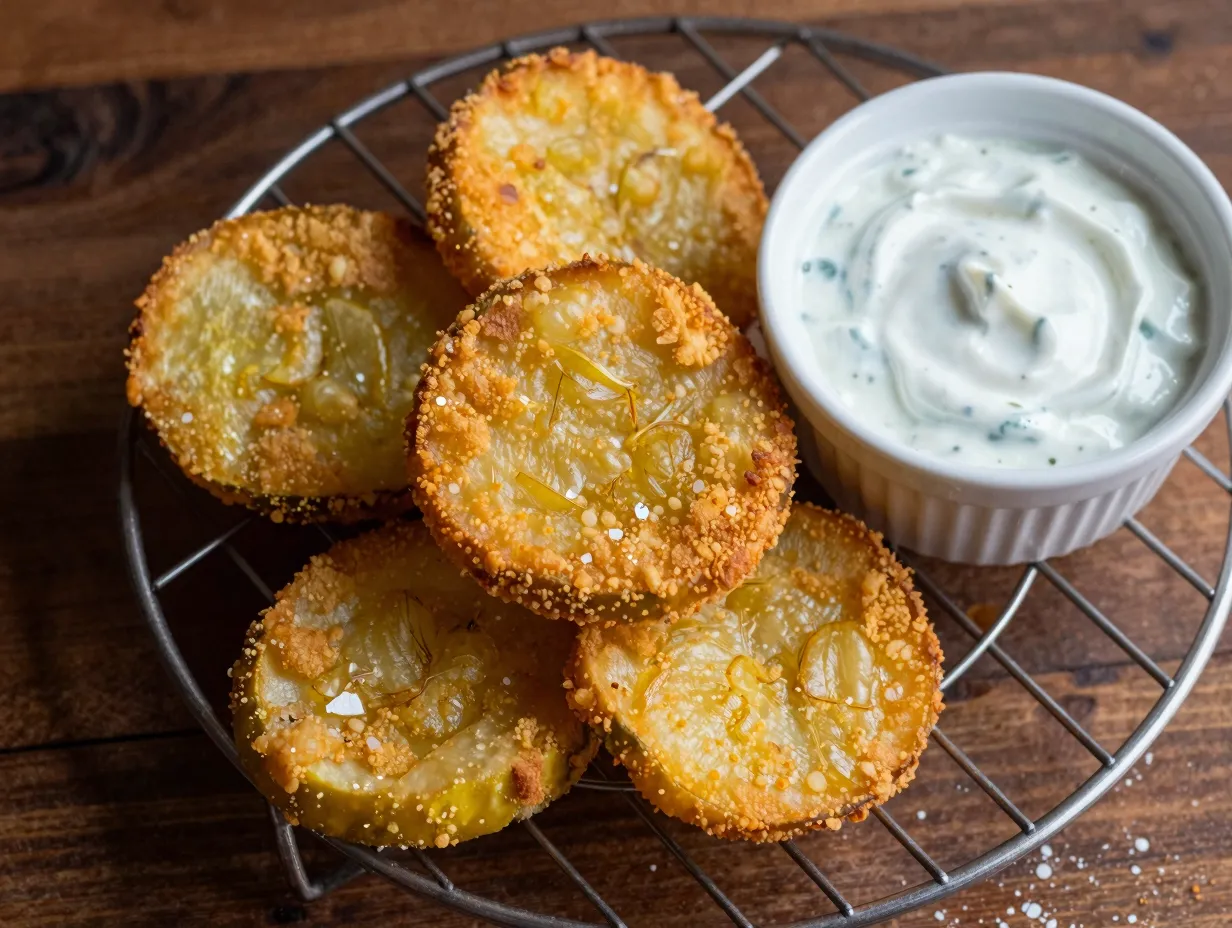
This is the foundational recipe that everything else builds on. The double-dredge method, flour, then a buttermilk and egg wash, then flour again, creates a thick, layered crust that mimics what you get at a proper Southern diner [7].
What you need:
- Dill pickle chips, drained and dried
- All-purpose flour seasoned with salt, pepper, and garlic powder
- Buttermilk whisked with one egg
- Vegetable or peanut oil for frying
The method: Dredge each pickle slice in seasoned flour, dip it into the buttermilk-egg mixture, then back into the flour. Press gently to make the second coat stick. Fry in batches at 375°F for 2 to 3 minutes per side until deep golden [4].
The double layer of flour creates a crust with real structural integrity. It does not peel off when you dip it in sauce, which is a common complaint about single-coat versions.
Best dipping sauce: Classic ranch or honey mustard.
2. Panko-Crusted Ultra-Crispy Fried Pickles
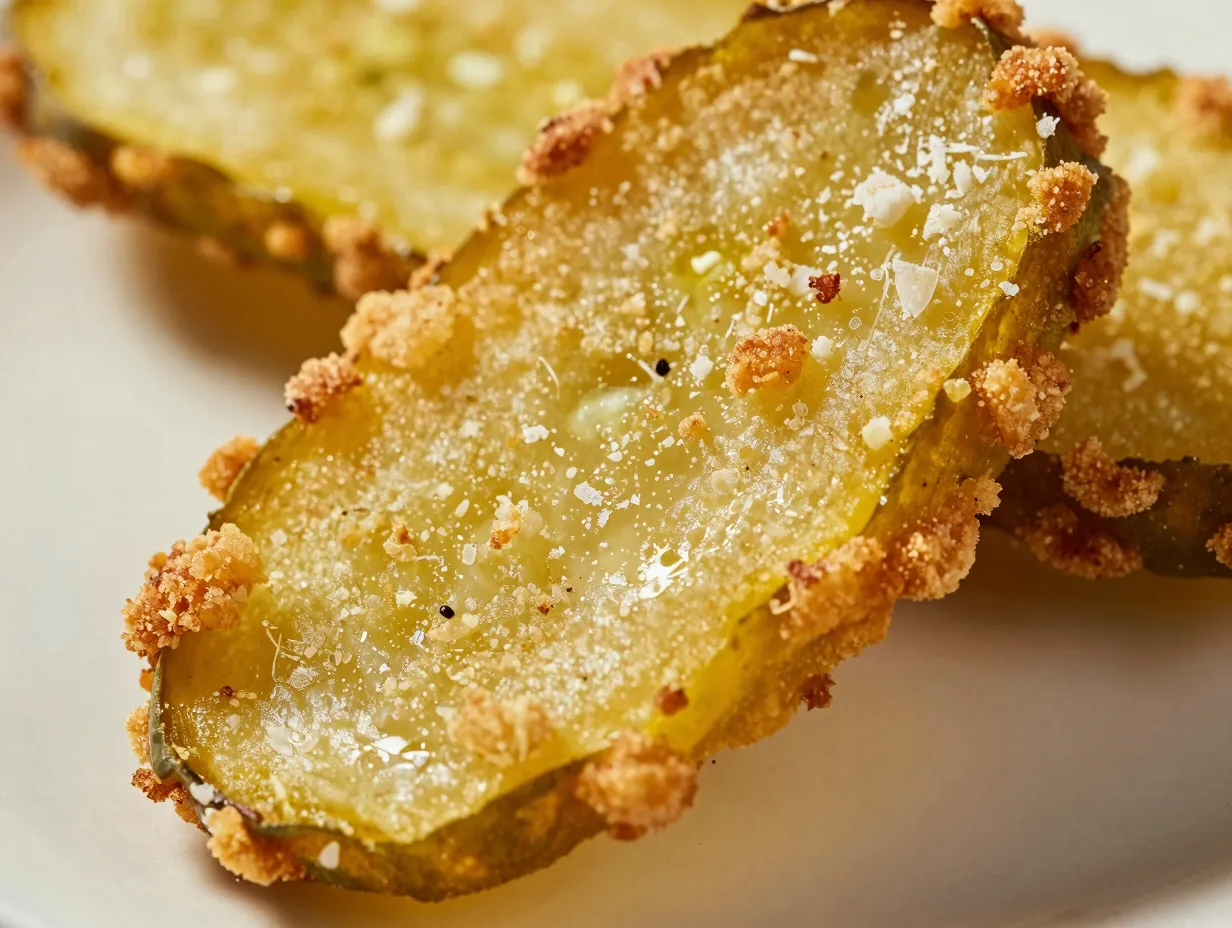
If maximum crunch is your goal, panko breadcrumbs are the answer. Japanese-style panko is coarser and drier than standard breadcrumbs, which means it fries up with a texture closer to a shatter than a crunch [6].
The upgrade: After the buttermilk dip, roll your pickle slices in panko instead of a second flour coat. Press firmly so the panko adheres. Fry at 350°F to 360°F, slightly lower than the double-dredge method, because panko browns faster than flour [9].
The result is a dramatically different texture. Where the double-dredge gives you a smooth, diner-style crust, the panko version gives you a jagged, highly textured exterior that holds its crunch for longer after plating. This is the variation I reach for when I am serving guests, because it stays crispy through conversation and refills.
Pro tip: Mix a tablespoon of grated parmesan into the panko for an extra savory note.
3. Beer-Battered Fried Pickles
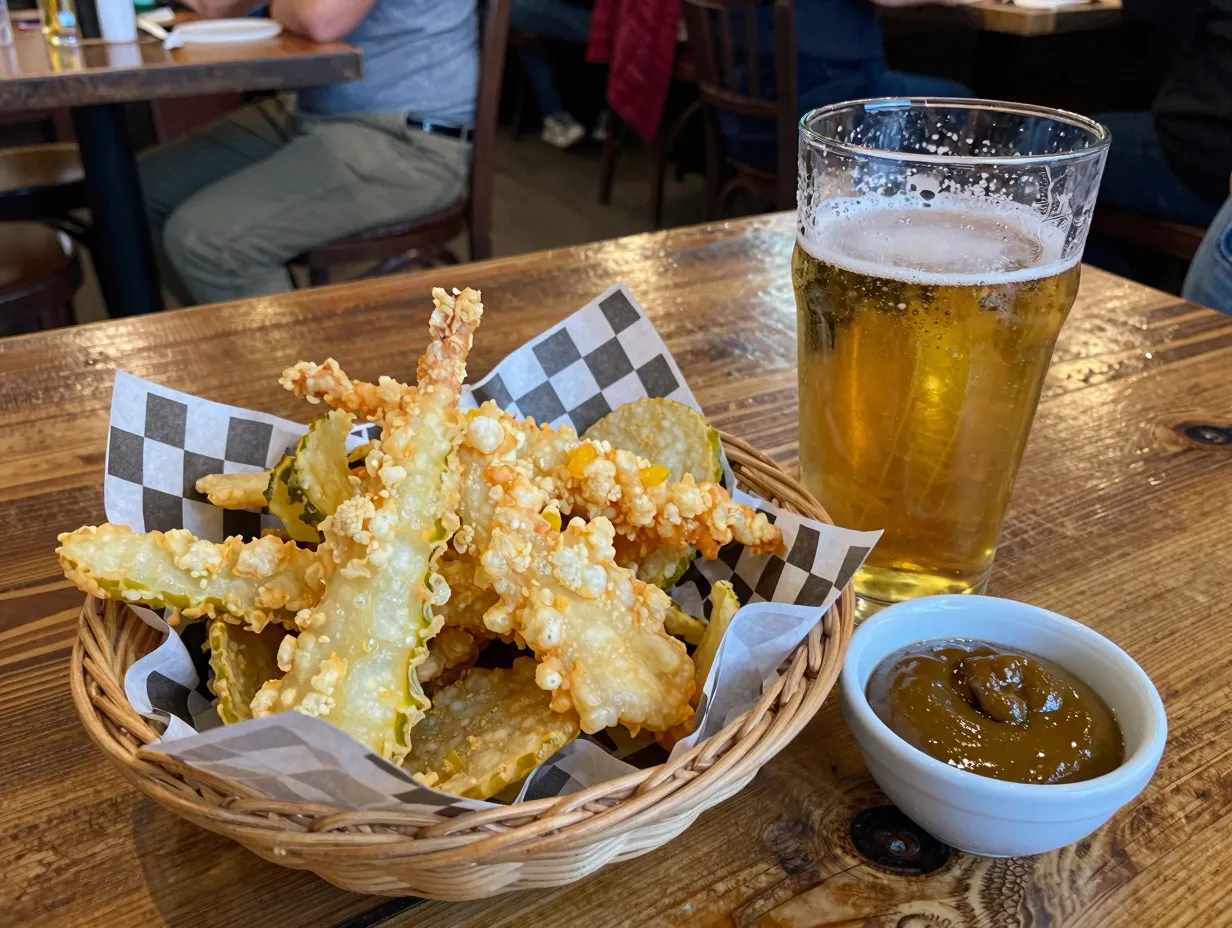
Beer batter produces a completely different eating experience, lighter, more airy, and with a slight yeasty depth of flavor that flour-only coatings cannot match. The carbonation in the beer creates tiny bubbles in the batter as it fries, resulting in a puffed, tempura-like shell [7].
The batter formula:
- 1 cup all-purpose flour
- 1 teaspoon baking powder
- Salt, garlic powder, and paprika to taste
- 3/4 cup cold lager or pale ale
Mix until just combined, lumps are fine. Overmixing develops gluten and makes the batter tough. Dip dried pickle chips directly into the batter and lower them carefully into 375°F oil [2].
Important: Keep your batter cold. Set the bowl over ice while you fry. Cold batter hitting hot oil creates better puff and a lighter texture.
Best pairing: Serve with a cold beer and a spicy mustard dipping sauce. This variation is the most pub-appropriate of the nine.
4. Spicy Cajun Fried Pickles with Garlic Blue Cheese Dip
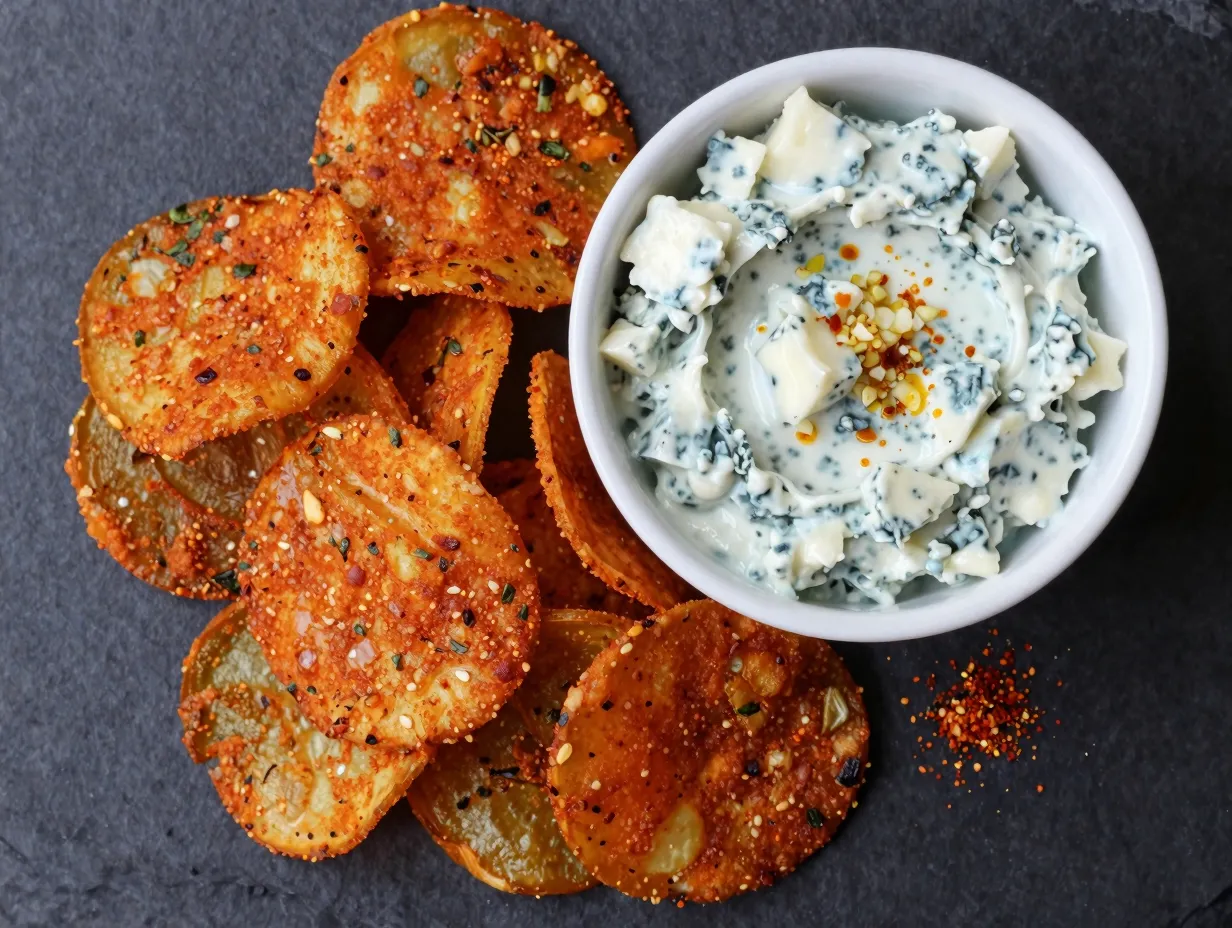
This variation layers heat into both the coating and the dipping sauce, creating a full-flavor experience that most restaurant versions never bother to attempt [8].
The Cajun seasoning blend for the flour:
- 1 teaspoon smoked paprika
- 1/2 teaspoon cayenne pepper
- 1/2 teaspoon dried thyme
- 1/2 teaspoon garlic powder
- 1/4 teaspoon onion powder
- Salt and black pepper
Use this blend in both the flour dredge and the buttermilk wash. The double exposure to spice means the heat is present in every layer of the crust, not just on the surface [8].
The garlic blue cheese dip: Combine crumbled blue cheese, sour cream, minced garlic, a squeeze of lemon, and a pinch of cayenne. The cool, creamy, pungent dip is the perfect counterbalance to the spicy crust.
5. Ranch-Seasoned Fried Pickle Spears
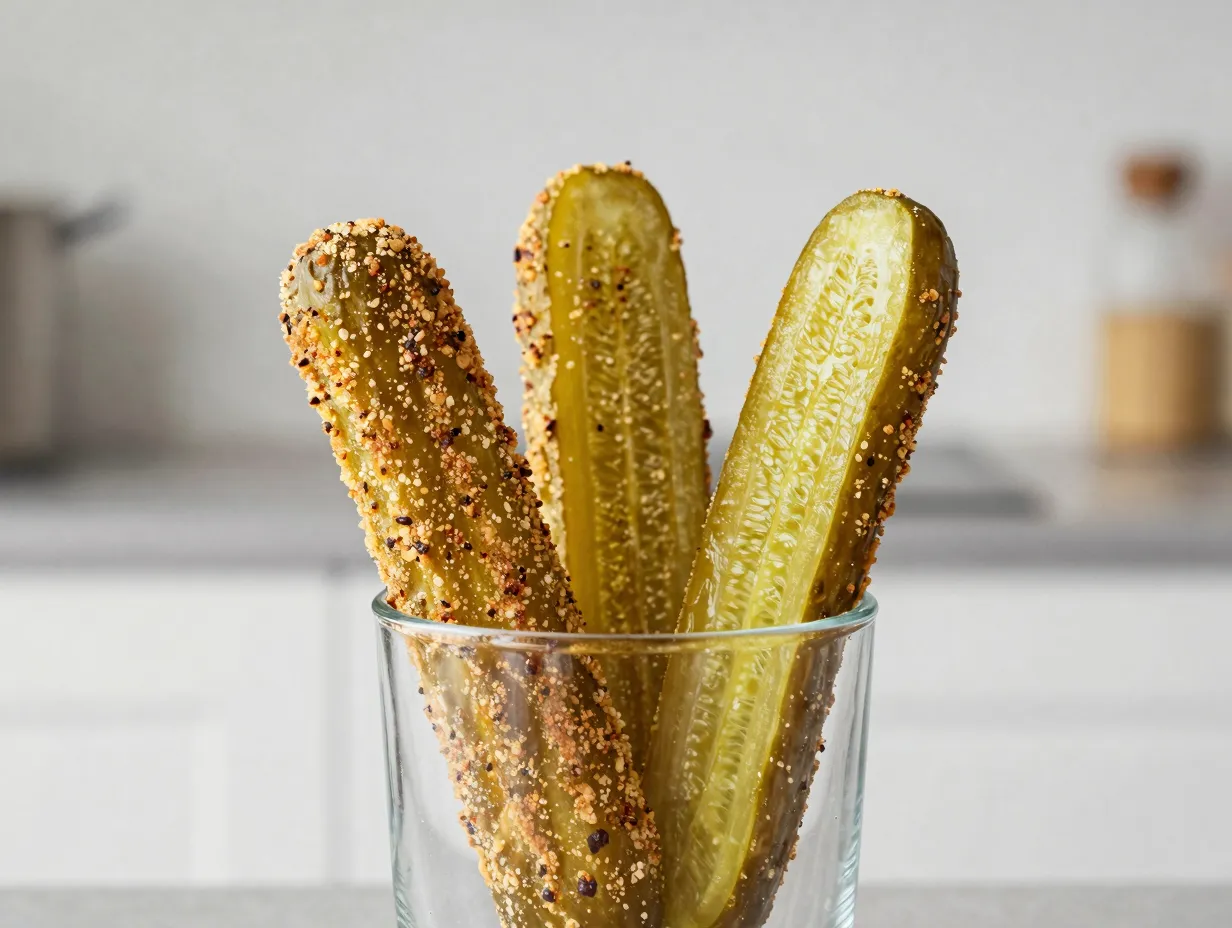
Spears change the entire eating experience compared to chips. You get more pickle per bite, a higher ratio of interior to crust, and a more satisfying crunch when you bite through the thicker coating [9].
The ranch seasoning method: Mix a packet of dry ranch seasoning directly into your flour dredge. The blend of dill, garlic, onion, and buttermilk powder in ranch seasoning is a natural match for dill pickles.
Technique adjustment for spears: Because spears are thicker, they need slightly longer in the oil, about 3 to 4 minutes at 365°F. Turn them once halfway through. Make sure the oil temperature recovers between batches, because adding cold spears drops the temperature more than thin chips do [1].
Cut your spears from whole dill pickles rather than buying pre-cut ones. You get more control over thickness, and thicker spears hold up better in the oil without the interior getting too hot and mushy.
6. Parmesan-Herb Fried Pickles
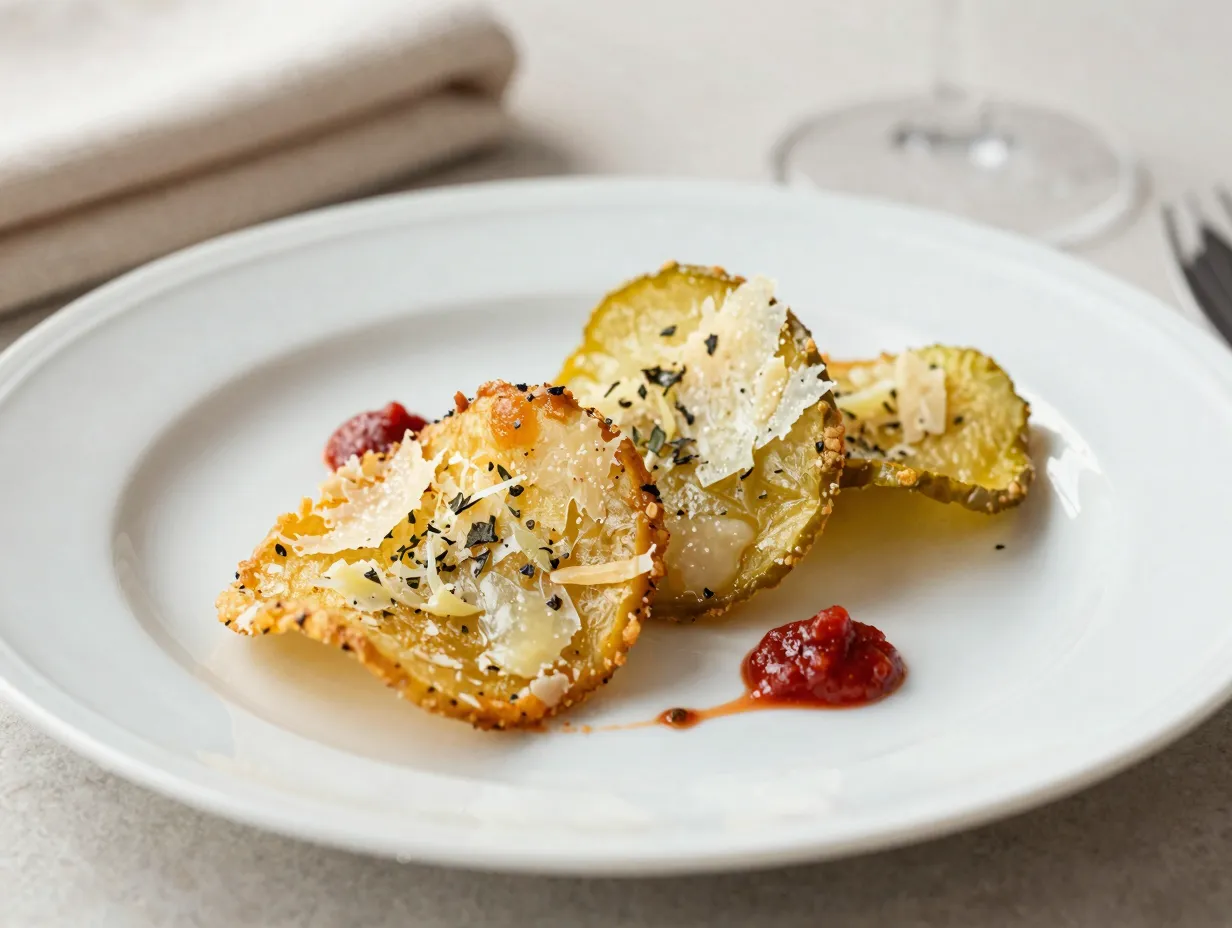
This variation moves fried pickles into more sophisticated territory, the kind of appetizer you could serve at a dinner party without apology. The combination of finely grated parmesan and dried Italian herbs in the coating creates a savory, almost bruschetta-like flavor profile [6].
The coating mix:
- 1/2 cup all-purpose flour
- 1/2 cup finely grated parmesan (not the powdery kind, use real parmesan)
- 1 teaspoon dried oregano
- 1 teaspoon dried basil
- 1/2 teaspoon garlic powder
- Black pepper
The parmesan melts slightly during frying, creating golden, lacy edges on each pickle slice. Fry at 360°F, parmesan can burn at higher temperatures [4].
Best dipping sauce: Marinara or a simple garlic aioli. This variation pairs surprisingly well with a glass of dry white wine.
7. Nashville Hot Fried Pickles
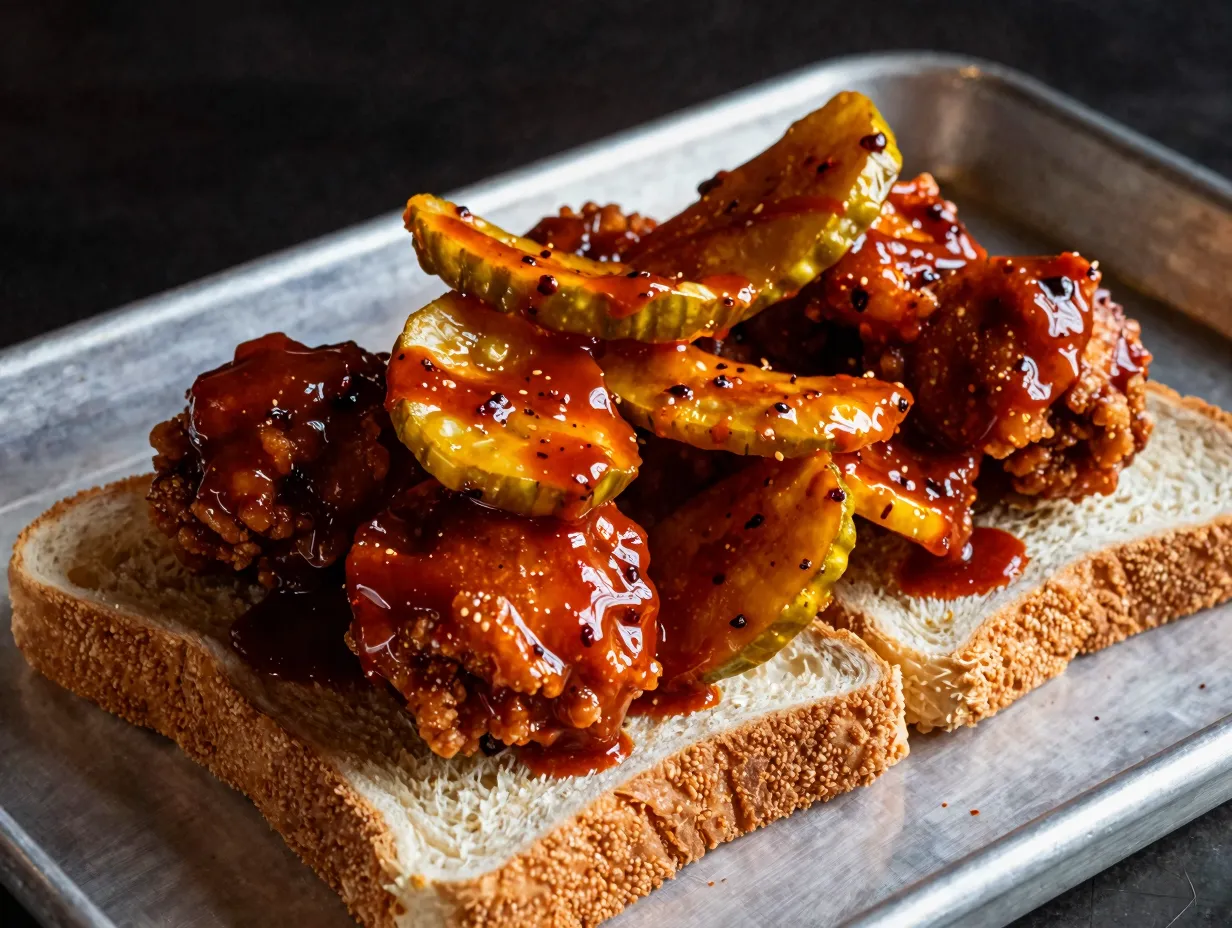
Nashville hot chicken has taken over the food world in recent years, and applying that same cayenne-butter-spice paste to fried pickles produces something genuinely addictive [5].
The process: Fry your pickles using the standard double-dredge method. While they are still hot from the oil, brush or toss them in a Nashville hot paste made from:
- 2 tablespoons cayenne pepper (adjust to tolerance)
- 1 tablespoon brown sugar
- 1 teaspoon smoked paprika
- 1/2 teaspoon garlic powder
- 3 tablespoons of the hot frying oil, carefully ladled out
The hot oil carries the spice mixture and helps it adhere to the crust. Serve over white bread with pickle slices on top, the traditional Nashville presentation [5].
Heat level warning: Nashville hot is genuinely spicy. Start with 1 tablespoon of cayenne if you are heat-sensitive and work up from there.
8. Air-Fryer Lightened-Up Fried Pickles
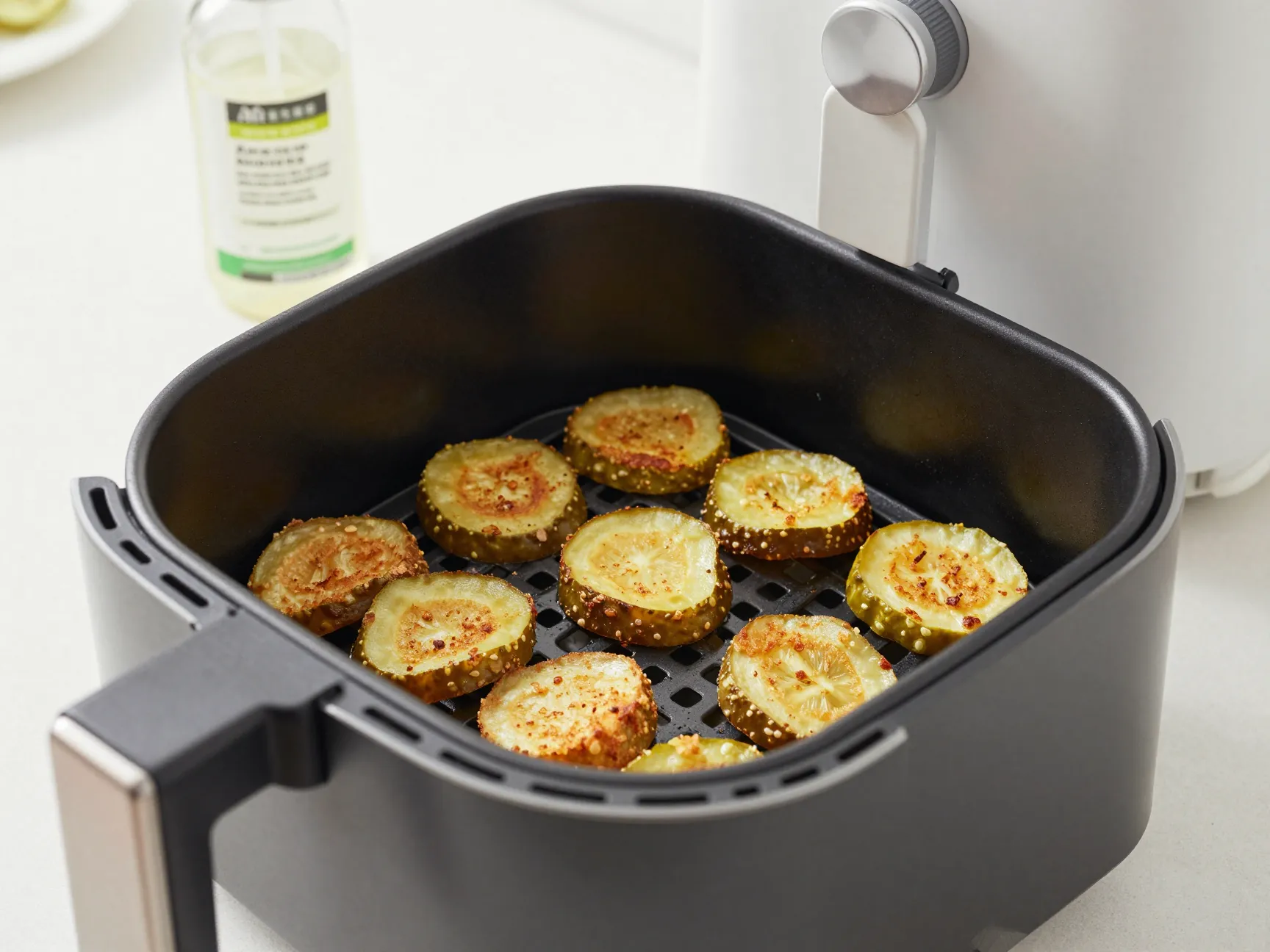
Not every situation calls for a pot of hot oil. The air fryer version sacrifices a small amount of crunch in exchange for significantly less mess, less fat, and a faster cleanup [3].
The key adjustments for air frying:
- Use panko breadcrumbs, they crisp up far better than flour in an air fryer
- Spray both the basket and the coated pickles generously with cooking spray before and halfway through cooking
- Cook at 400°F for 8 to 10 minutes, flipping once at the halfway point
- Do not overcrowd the basket, a single layer is mandatory for even crisping [6]
The result is genuinely good. The crust will not shatter the way a deep-fried version does, but it has a satisfying crunch and the tangy pickle flavor comes through cleanly without the richness of oil.
Best for: Weeknight snacking, health-conscious guests, or situations where you simply do not want to deal with hot oil cleanup.
9. Tempura-Style Fried Pickles with Sriracha Aioli
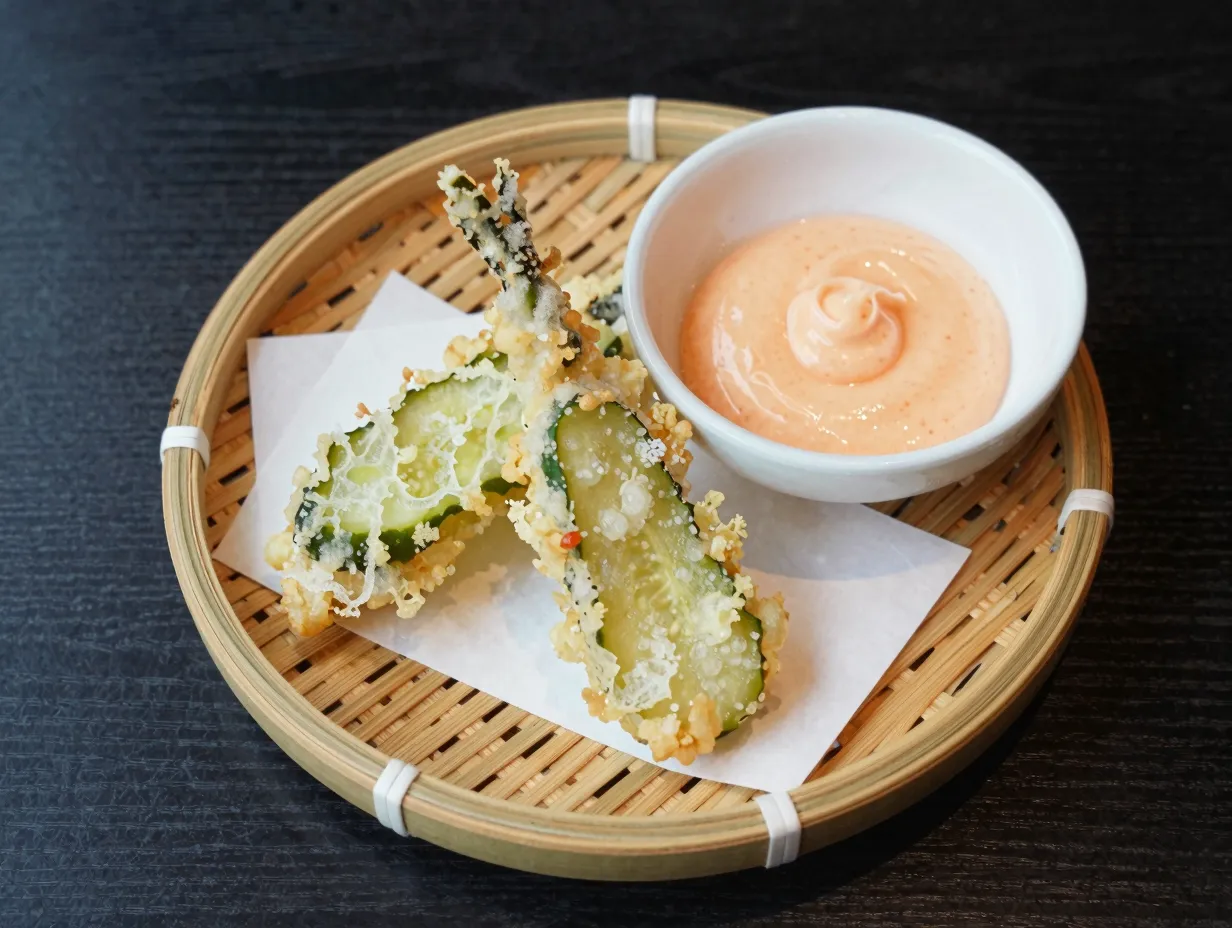
The final variation in these 9 Fried Pickles Recipe Variations That Will Make You Ditch the Restaurant Version takes inspiration from Japanese tempura technique. The goal is a paper-thin, almost translucent batter that is more about texture than flavor, letting the pickle’s tanginess dominate [7].
The tempura batter:
- 1 cup ice-cold water (use ice cubes to keep it cold)
- 3/4 cup all-purpose flour
- 1/4 cup cornstarch
- 1 egg yolk
- A pinch of salt
Mix with chopsticks or a fork, do not whisk. Lumps are intentional. The cold temperature and minimal mixing prevent gluten development, which is what makes tempura so light [10].
Fry at 375°F for 90 seconds to 2 minutes. The batter will be pale gold rather than deep brown, that is correct for tempura.
The sriracha aioli: Mix mayonnaise, sriracha, a squeeze of lime, and a pinch of garlic powder. The creamy heat of the aioli complements the delicate tempura crust beautifully.
Quick Comparison: All 9 Variations at a Glance
| Variation | Coating Style | Heat Level | Best For |
|---|---|---|---|
| 1. Classic Southern Double-Dredge | Flour + buttermilk + flour | Mild | Crowd-pleasing classic |
| 2. Panko Ultra-Crispy | Flour + buttermilk + panko | Mild | Maximum crunch seekers |
| 3. Beer-Battered | Beer batter | Mild | Pub-style gatherings |
| 4. Spicy Cajun | Cajun-spiced double-dredge | Medium-Hot | Spice lovers |
| 5. Ranch-Seasoned Spears | Ranch flour dredge | Mild | Pickle-forward eating |
| 6. Parmesan-Herb | Flour + parmesan + herbs | Mild | Dinner party appetizer |
| 7. Nashville Hot | Double-dredge + hot paste | Very Hot | Heat enthusiasts |
| 8. Air-Fryer Lightened-Up | Panko + cooking spray | Mild | Lower-fat option |
| 9. Tempura-Style | Tempura batter | Mild | Light texture preference |
Common Mistakes to Avoid Across All Variations
Even with a great recipe, a few consistent errors will ruin your results. Here are the most frequent problems and their fixes:
Skipping the drying step. Wet pickles create steam inside the coating, which makes it peel away from the pickle surface. Always pat dry with paper towels before dredging [10].
Overcrowding the pot. Adding too many pickles at once drops the oil temperature dramatically. Fry in small batches of 6 to 8 chips at a time and let the oil recover between batches [2].
Using the wrong oil. Oils with low smoke points (like olive oil) will burn before reaching frying temperature. Use vegetable oil, canola oil, or peanut oil, all of which have smoke points above 400°F [1].
Letting coated pickles sit too long before frying. Once dredged, fry immediately. Letting coated pickles sit allows the moisture from the pickle to soak through the coating, making it gummy [4].
Skimping on seasoning. The coating is your only opportunity to add flavor beyond the pickle itself. Season every layer, the flour, the egg wash, and any breadcrumbs, generously [9].
Dipping Sauce Pairings: A Quick Reference
The right dipping sauce elevates any variation. Here is a fast guide:
- Classic ranch pairs with variations 1, 2, 5, and 8
- Garlic blue cheese pairs with variation 4 (Cajun) specifically but works with any spicy version
- Sriracha aioli pairs with variations 7 and 9
- Honey mustard pairs with variations 1 and 3
- Marinara or garlic aioli pairs with variation 6 (Parmesan-Herb)
- Spicy mustard pairs with variation 3 (Beer-Battered)
Conclusion
These 9 Fried Pickles Recipe Variations That Will Make You Ditch the Restaurant Version prove that the best version of this appetizer is almost always the one you make yourself. The restaurant has the advantage of professional equipment, but you have the advantage of serving immediately, controlling every ingredient, and customizing flavor to your exact preferences.
Your actionable next steps:
- Start with Variation 1 (Classic Southern Double-Dredge) to build your foundational technique before experimenting with others
- Invest in a deep-fry thermometer, it costs less than a restaurant appetizer and will improve every variation you make
- Try the Panko Ultra-Crispy version (Variation 2) for your next gathering, it holds its crunch longer than any other coating and consistently impresses guests
- If you own an air fryer, Variation 8 is a genuinely satisfying weeknight option that requires almost no cleanup
- Work through all nine variations over the course of a month and keep notes on which coatings, seasonings, and dipping sauces your household prefers
The gap between a mediocre restaurant fried pickle and a great homemade one is smaller than you think. It comes down to temperature, technique, and the willingness to dry your pickles before you dredge them. Master those three things, and you will have a repertoire of fried pickle recipes that genuinely outclass anything on a bar menu.
References
[1] Easy Fried Pickles Recipe – https://kitchenfunwithmy3sons.com/easy-fried-pickles-recipe/
[2] Deep Fried Pickles – https://www.eatingonadime.com/deep-fried-pickles/
[3] My Partner And I Made The Best Fried Pickles – https://www.reddit.com/r/FoodPorn/comments/r312kh/my_partner_and_i_made_the_best_fried_pickles/
[4] Easy Homemade Fried Pickles – https://cookingwithcasey.com/recipes/easy-homemade-fried-pickles
[5] Spicy Fried Pickles – https://pepperscale.com/spicy-fried-pickles/
[6] Easy Crispy Fried Pickles – https://bsugarmama.com/easy-crispy-fried-pickles/
[7] Fried Pickles – https://bakedbree.com/fried-pickles
[8] Cajun Fried Pickles Garlic Blue Cheese Dip – https://www.thechunkychef.com/cajun-fried-pickles-garlic-blue-cheese-dip/
[9] Fried Pickles – https://houseofyumm.com/fried-pickles/
[10] Fried Pickles – https://sugarspunrun.com/fried-pickles/