9 Cafe Menu Board Ideas That Attract More Customers and Boost Daily Sales
A restaurant industry study found that customers spend an average of just 109 seconds reading a menu before placing their order. That is less than two minutes for your menu board to do its entire job. If your cafe’s board is cluttered, outdated, or visually flat, you are losing sales every single hour the doors are open.
Disclosure: This post contains affiliate links. As an Amazon Associate, we earn from qualifying purchases, and at no extra cost to you.
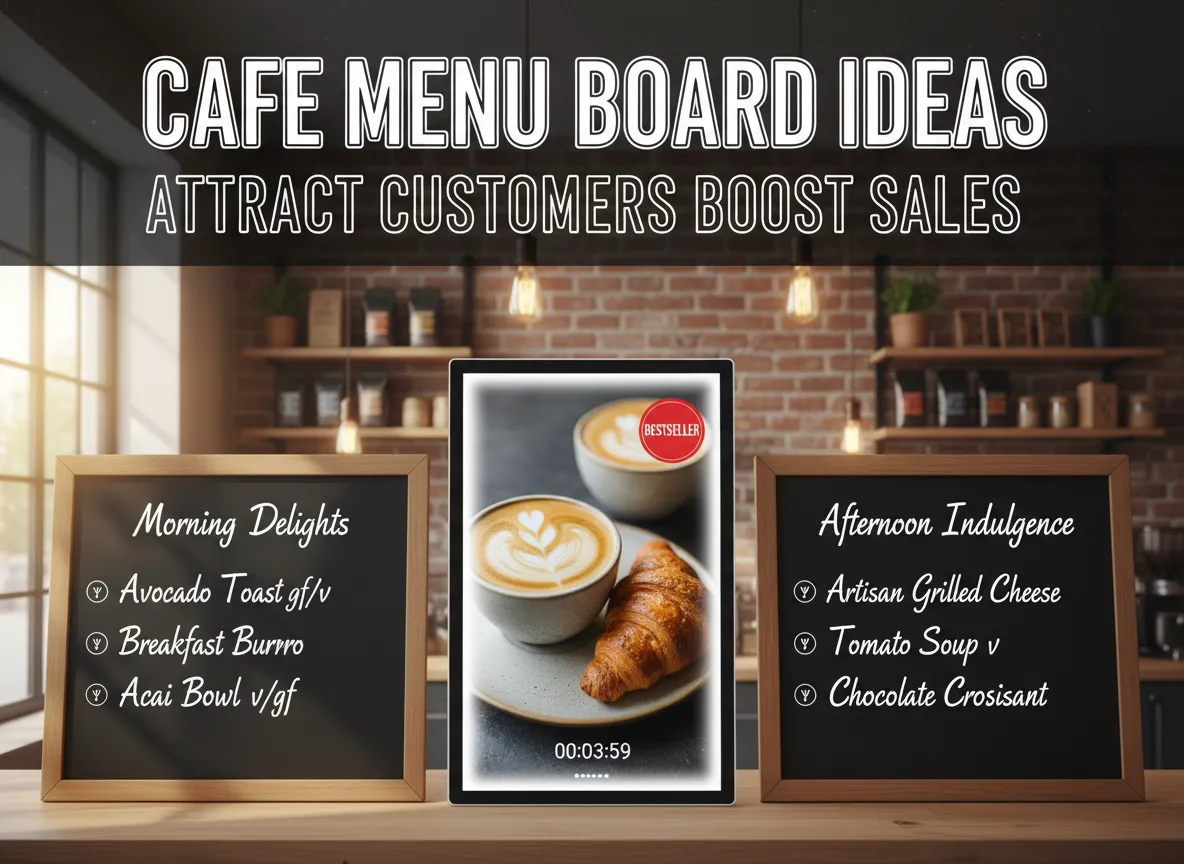
The good news is that smart, strategic menu board design is one of the highest-return investments a cafe owner can make. The 9 cafe menu board ideas that attract more customers and boost daily sales covered in this article are drawn from real design principles, behavioral psychology, and digital signage best practices. Whether you run a cozy neighborhood coffee shop or a high-volume urban cafe, these ideas can reshape how customers see, choose, and spend.
Key Takeaways
- Where you place high-margin items on your board directly affects how often customers order them
- Removing dollar signs and using strategic pricing language reduces price sensitivity
- Digital menu boards allow real-time updates that keep your offerings fresh and relevant
- Social proof labels like “Bestseller” and “Chef’s Choice” guide customers toward profitable items
- A hybrid approach combining digital and traditional boards balances warmth with flexibility
Why Your Menu Board Is Your Most Powerful Sales Tool
Before diving into the 9 cafe menu board ideas that attract more customers and boost daily sales, it is worth understanding why the board matters so much in the first place.
Your menu board is not just a list of items and prices. It is a silent salesperson working every minute your cafe is open. It sets expectations, communicates your brand personality, and nudges customers toward specific choices without a single word from your staff.
I once visited a small cafe in Portland that had genuinely excellent coffee but a handwritten chalkboard so cramped and faded that I could barely read it. I ordered the first thing I recognized, paid, and left. Later, I found out they had a signature lavender oat latte that had won a local award. I never saw it on the board. That cafe was leaving money on the table every single day.
The difference between a board that informs and one that sells comes down to design, psychology, and strategy. Let us get into each of the nine ideas.
9 Cafe Menu Board Ideas That Attract More Customers and Boost Daily Sales
1. Use Professional Food Photography to Drive Visual Appetite
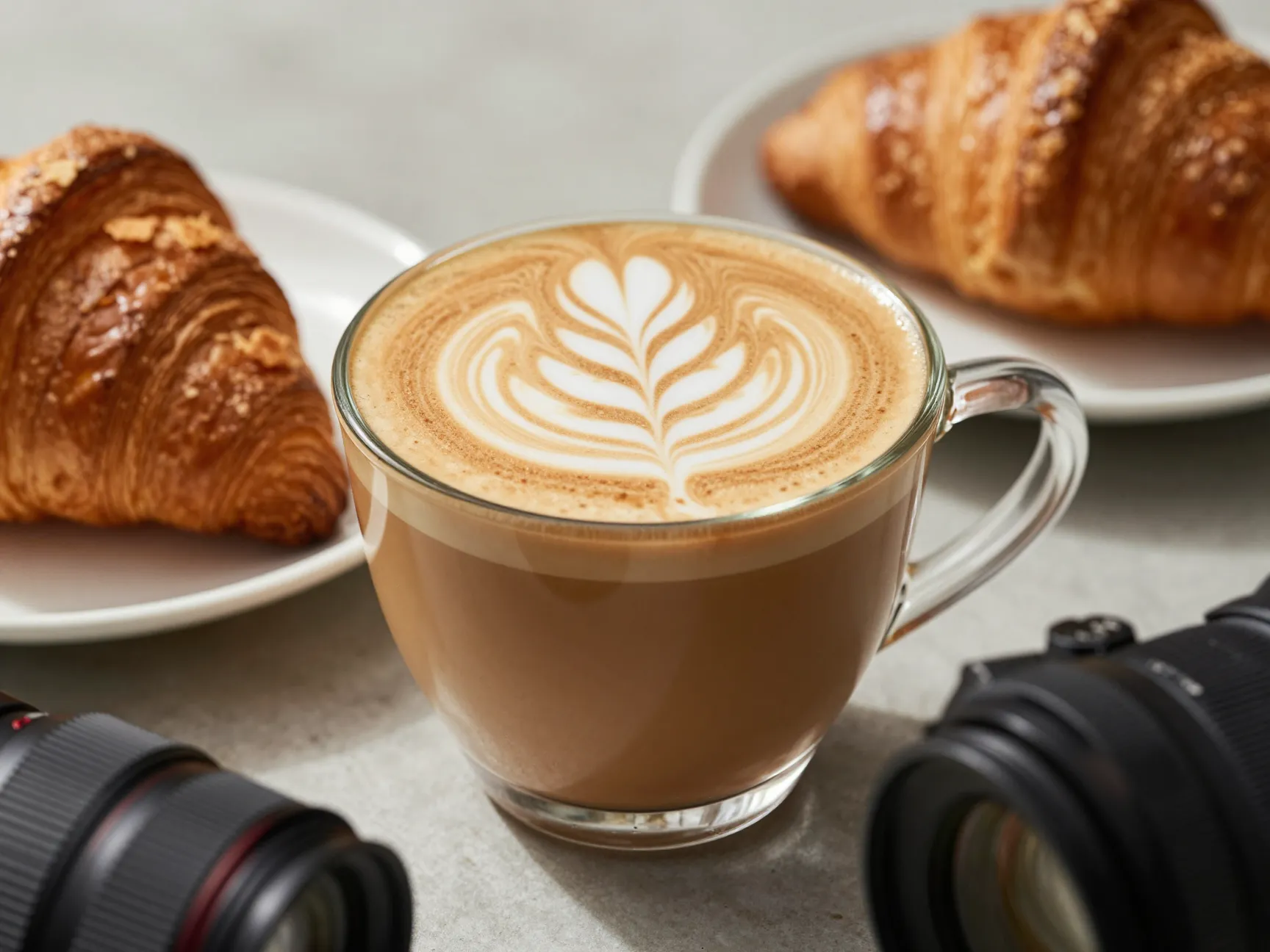
High-quality images of your menu items can increase sales by over 30%, because customers are far more likely to order something they can visualize [1]. This is not a minor bump in revenue. For a cafe doing 200 transactions a day, that kind of lift is transformational.
Professional food photography does not have to mean hiring an expensive studio. Many cafes today work with local photographers for a half-day shoot that covers their top 10 to 15 items. The investment pays back quickly.
What makes food photography work on a menu board:
- Natural lighting that makes colors pop
- Tight shots that emphasize texture (the crema on an espresso, the flakiness of a croissant)
- Consistent style across all images so the board feels cohesive
- Images sized and placed to complement text, not overwhelm it
If you are using a digital board, rotating images of your most profitable items during peak hours is a smart tactic. A slow-motion video of a latte being poured can stop a customer mid-step and pull their attention directly to that item.
2. Switch to Digital Menu Boards for Real-Time Flexibility
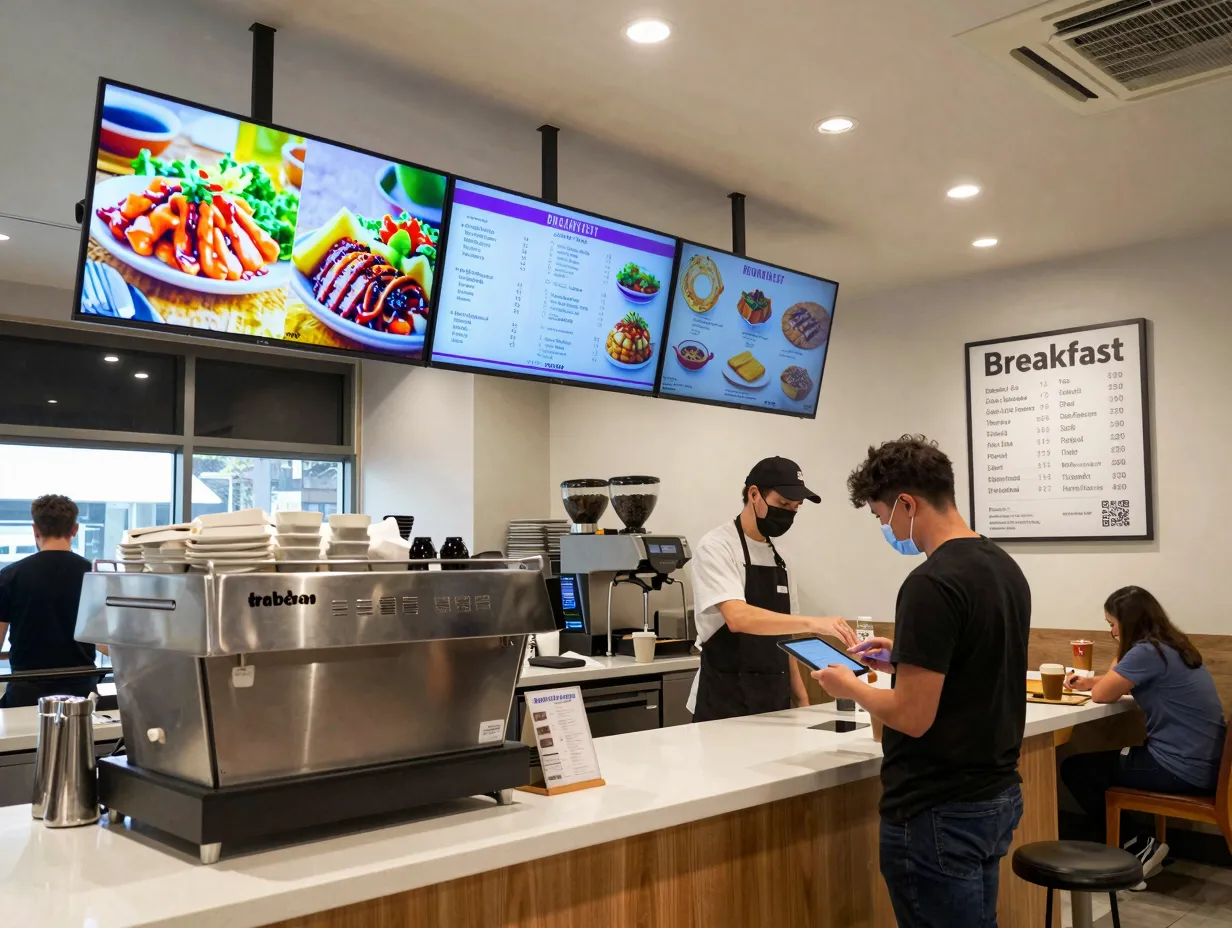
Digital displays allow cafes to update their menus in real time, making it easy to switch between breakfast and lunch offerings seamlessly [1]. This is especially valuable for high-traffic establishments where the menu needs to shift multiple times throughout the day.
Think about what this means practically. At 10:59 AM, your breakfast board is live. At 11:00 AM, with a single click, your lunch menu appears. No chalkboard erasing, no printed insert swaps, no staff confusion.
Digital boards also allow you to:
- Remove sold-out items instantly so customers are never disappointed
- Push promotional content during slow periods to drive traffic
- Display weather-triggered content (hot soup specials on cold days, iced drinks on hot ones)
- Run video content that makes your food look irresistible
The upfront cost of digital signage hardware has dropped significantly. Many cafes use commercial-grade screens with cloud-based software that costs less per month than a single printed menu reprint. Over a year, the savings and revenue gains make the switch an easy decision.
3. Apply Eye-Tracking Layout Principles to Highlight High-Margin Items
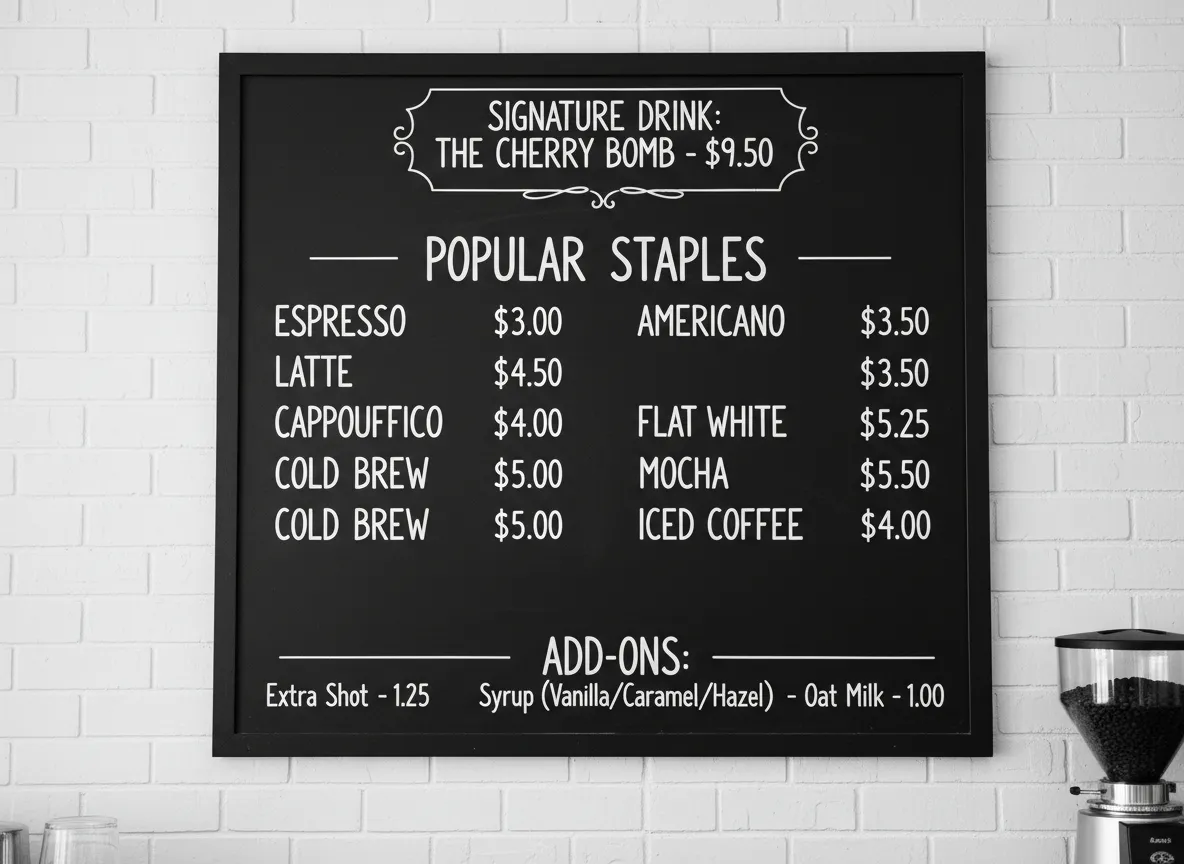
Not all spots on your menu board are created equal. Research on eye-tracking shows that customers naturally look at the top-left, center, and top-right sections of a menu first [2]. These are your prime real estate zones.
Place your highest-margin items in these positions. That might be a signature drink with a strong markup, a seasonal special, or a combo that bundles a low-cost item with a high-value one.
Menu board layout zones ranked by visibility:
| Zone | Location on Board | Best Use |
|---|---|---|
| Prime | Top-left, center, top-right | High-margin items, signature drinks |
| Secondary | Middle-left, middle-right | Popular staples, combos |
| Supporting | Bottom sections | Add-ons, extras, beverages |
This layout strategy requires no new hardware or design software. It is purely about intentional placement, and it works.
4. Remove Dollar Signs to Reduce Price Sensitivity
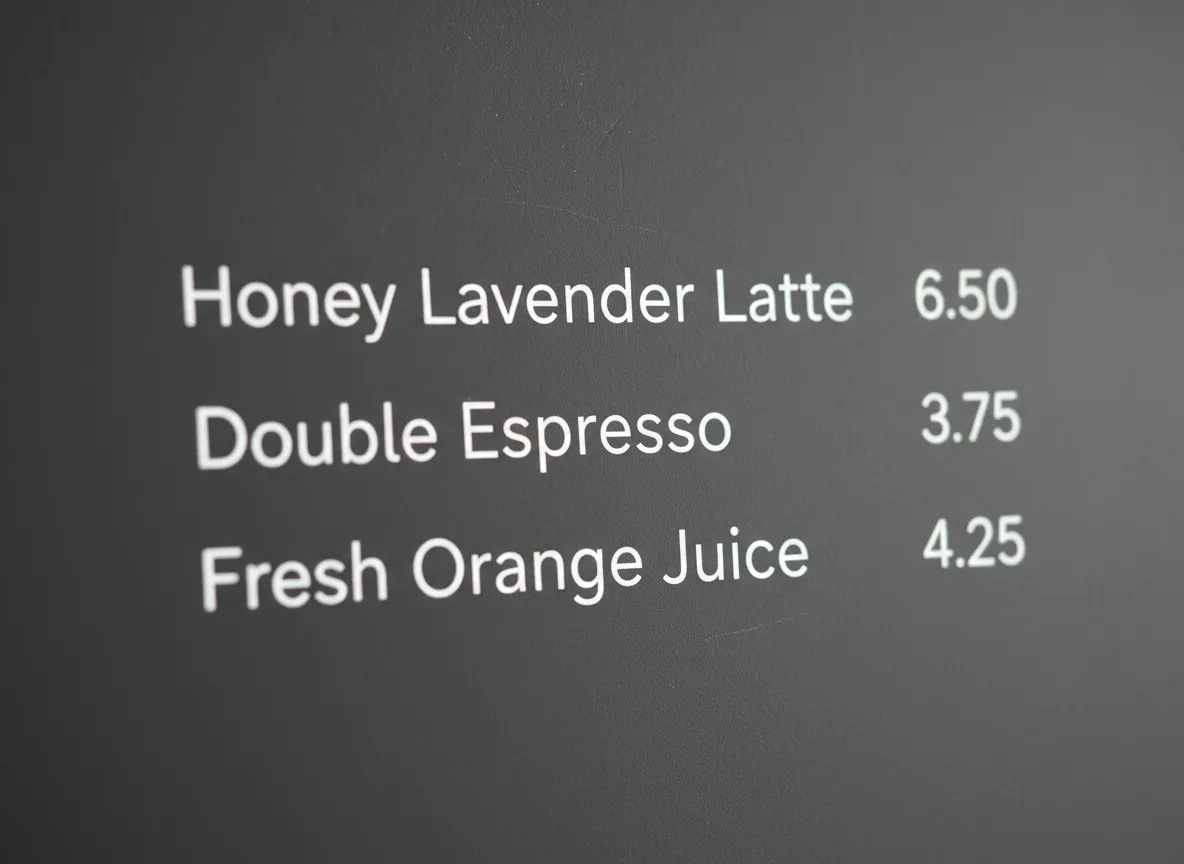
This one surprises most cafe owners when they first hear it. Omitting the currency symbol from your prices can reduce price sensitivity, making customers more likely to focus on the item rather than the cost [2].
The psychological principle here is called “pain of paying.” When customers see a dollar sign, it activates the part of the brain associated with loss. Removing it softens that response. Instead of seeing “$6.50,” the customer sees “6.50” and processes it more neutrally.
Some cafes go further by writing prices in a smaller font size than the item name and description, further de-emphasizing cost. Others list prices at the end of a description rather than directly next to the item name, so the customer reads the appealing description first.
“The menu is a marketing document. Every design choice, including how you display prices, either helps or hurts your sales.”
This is a zero-cost change that you can implement today on any board format, digital or physical.
5. Use Visual Cues and Icons to Speed Up Decision-Making
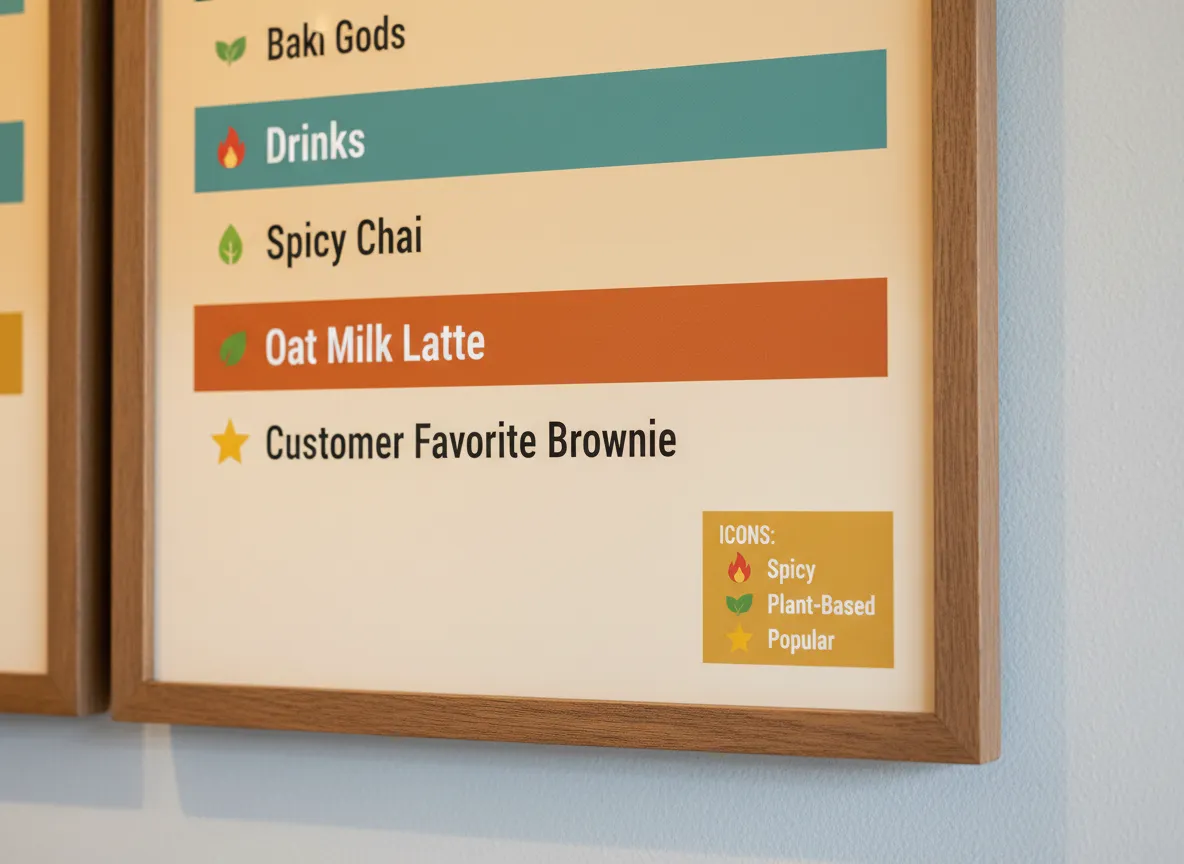
Icons are a powerful but underused tool in cafe menu board design. Incorporating small visual markers for attributes like spiciness, popularity, or dietary information can speed up decision-making and improve the overall ordering experience [2].
When a customer can scan a board and instantly identify which items are vegan, which are gluten-free, and which are the most popular, they feel confident and in control. That confidence leads to faster ordering, shorter lines, and higher satisfaction.
Common icon categories that work well:
- Flame icon for spicy items
- Leaf icon for vegan or plant-based options
- Star or ribbon for bestsellers
- Wheat crossed out for gluten-free
- Heart for staff favorites
Keep icons simple, consistent, and accompanied by a small legend somewhere on the board. Customers should never have to guess what a symbol means.
6. Highlight Daily Specials with Countdown Timers
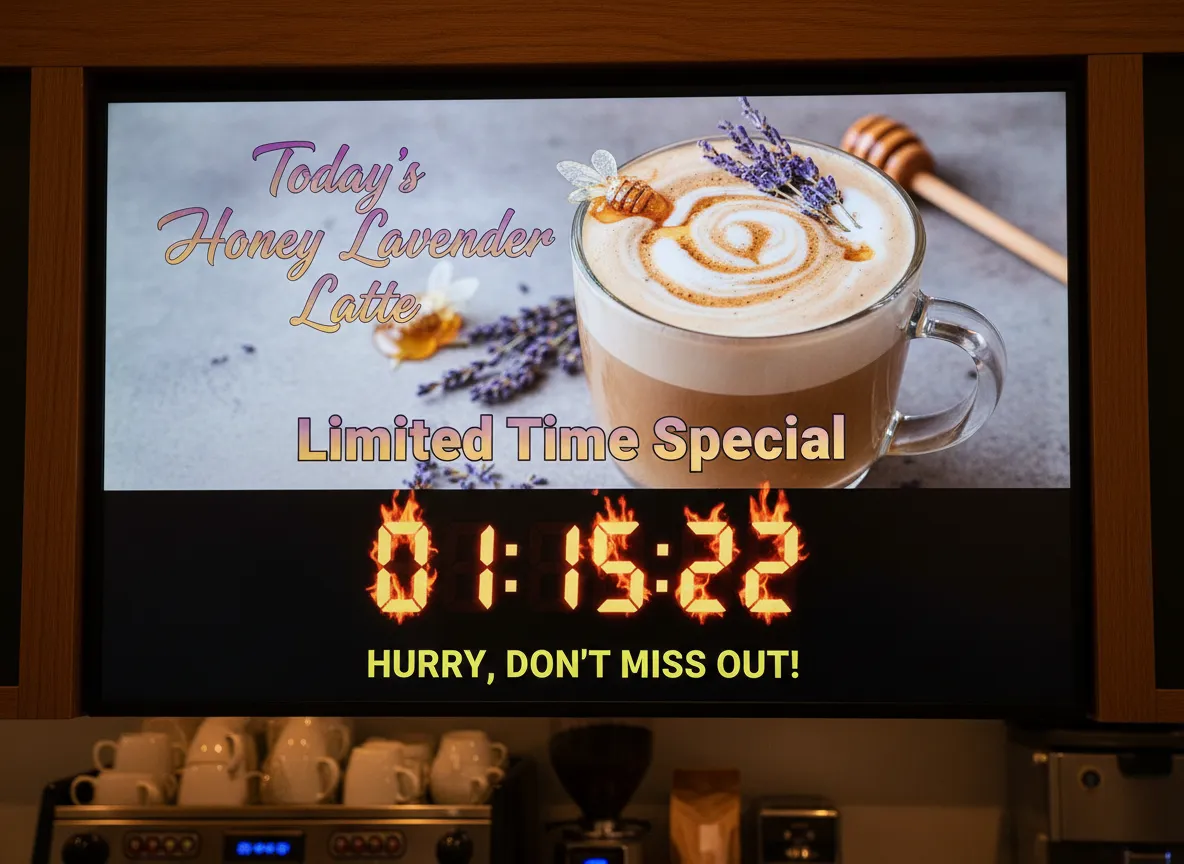
Displaying limited-time offers with countdown timers creates a sense of urgency that encourages immediate purchases [2]. This tactic works because of a well-documented behavioral principle called scarcity bias. When people believe something is available for only a limited time, they assign it higher value and act faster.
On a digital menu board, a countdown timer for a daily special is easy to implement. “Today’s Honey Lavender Latte – Available Until 2 PM” paired with a live timer creates a compelling reason to order now rather than later.
Even on a static board, you can achieve a similar effect with language. Phrases like “Today Only,” “Limited Batch,” or “While Supplies Last” carry urgency without requiring a digital display.
Tips for effective daily specials promotion:
- Feature the special in your prime board zone (top-center)
- Use a contrasting color or design element to make it stand out
- Pair the special with a clear, appetizing image
- Train staff to verbally reinforce the limited availability at the point of order
7. Promote Combo Meals to Increase Average Order Value
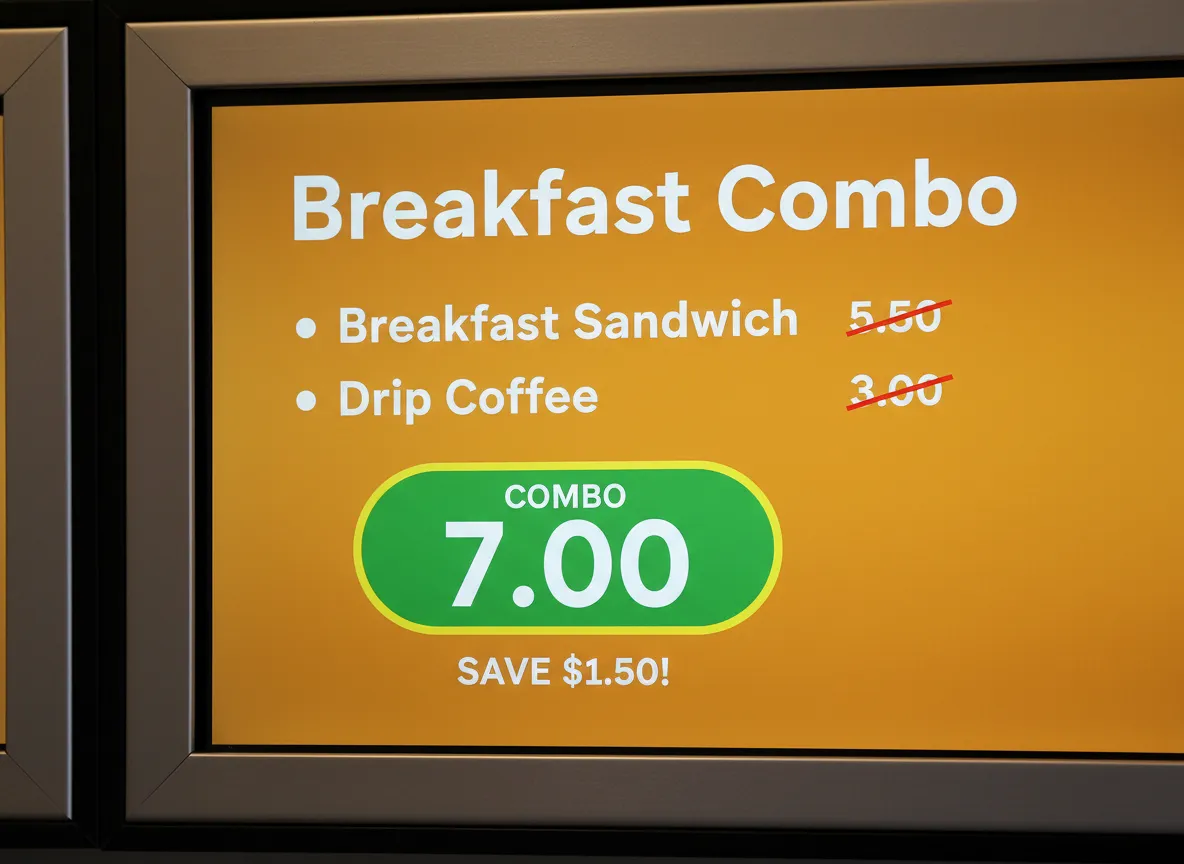
Clearly presenting combo deals can increase the average order value by bundling items together in a way that feels like a smart choice for the customer [2]. The key word here is “clearly.” A combo that is buried in small text at the bottom of your board will not perform. A combo that is featured prominently with a clear value proposition will.
A well-designed combo promotion does three things at once. It increases the size of each transaction, it moves items you want to sell more of, and it simplifies the decision for the customer.
Example combo structures that work in cafes:
- Espresso drink plus a pastry at a bundled price
- Breakfast sandwich plus drip coffee for a flat rate
- Seasonal drink plus a loyalty stamp bonus
When building combos, pair a high-margin item with a lower-cost item. The perceived value goes up for the customer while your actual cost increase is minimal. Present the original individual prices alongside the combo price so the savings are obvious.
8. Add Social Proof Badges to Guide Customer Choices
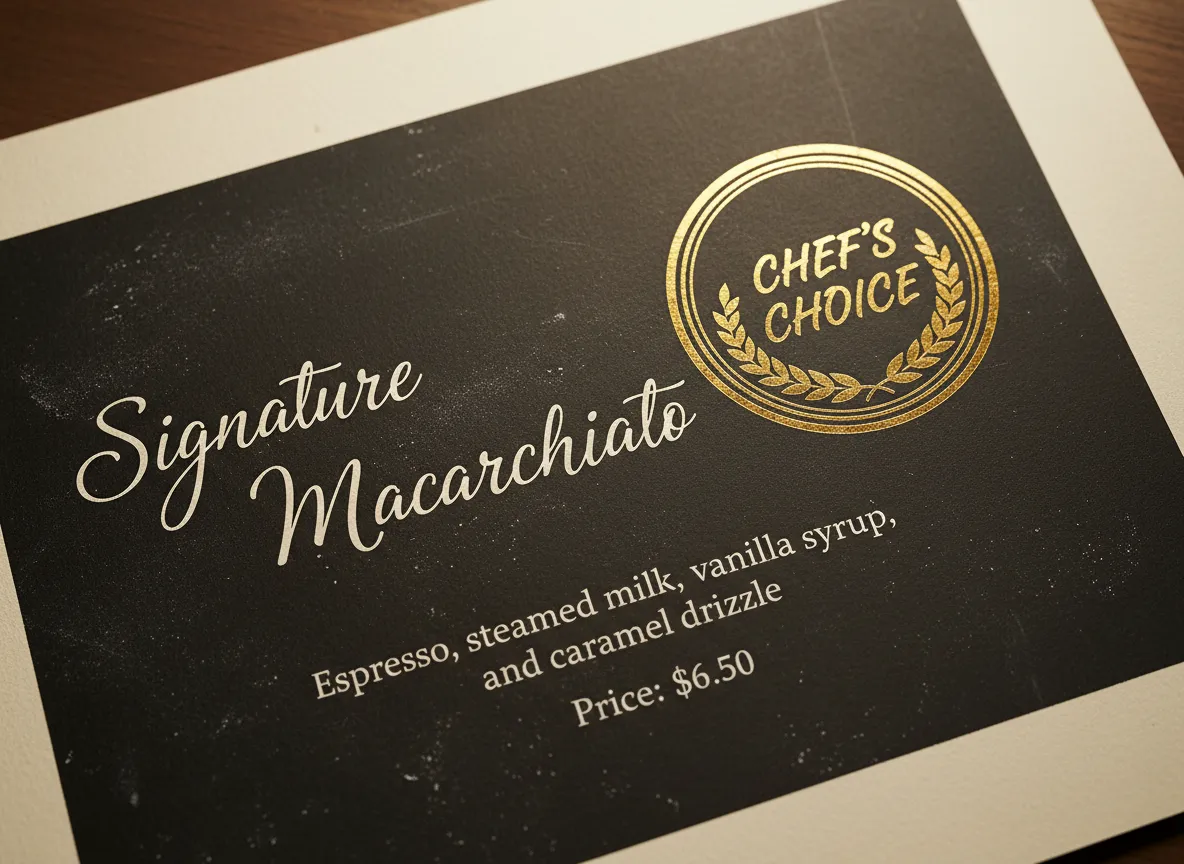
Labels like “Chef’s Choice,” “Bestseller,” or “Most Loved” can guide customers toward popular items by leveraging social proof [2]. Social proof is one of the most reliable principles in consumer psychology. When people are uncertain about what to choose, they look for signals that others have already made a good decision.
A badge on a menu item does exactly that. It tells the customer: other people ordered this and liked it. That small signal can be the deciding factor between a customer choosing your high-margin signature drink versus a standard drip coffee.
Social proof badge ideas for cafe menu boards:
- “Bestseller” for your top-selling item in each category
- “Chef’s Choice” for items the kitchen is most proud of
- “New” for recently added items you want to introduce
- “Award Winner” if any item has received local or regional recognition
- “Fan Favorite” based on loyalty program data or reviews
Use badges sparingly. If everything is labeled a bestseller, none of them are. Limit badges to two or three items per board section to maintain credibility and impact.
9. Combine Digital and Traditional Board Elements for a Hybrid Approach
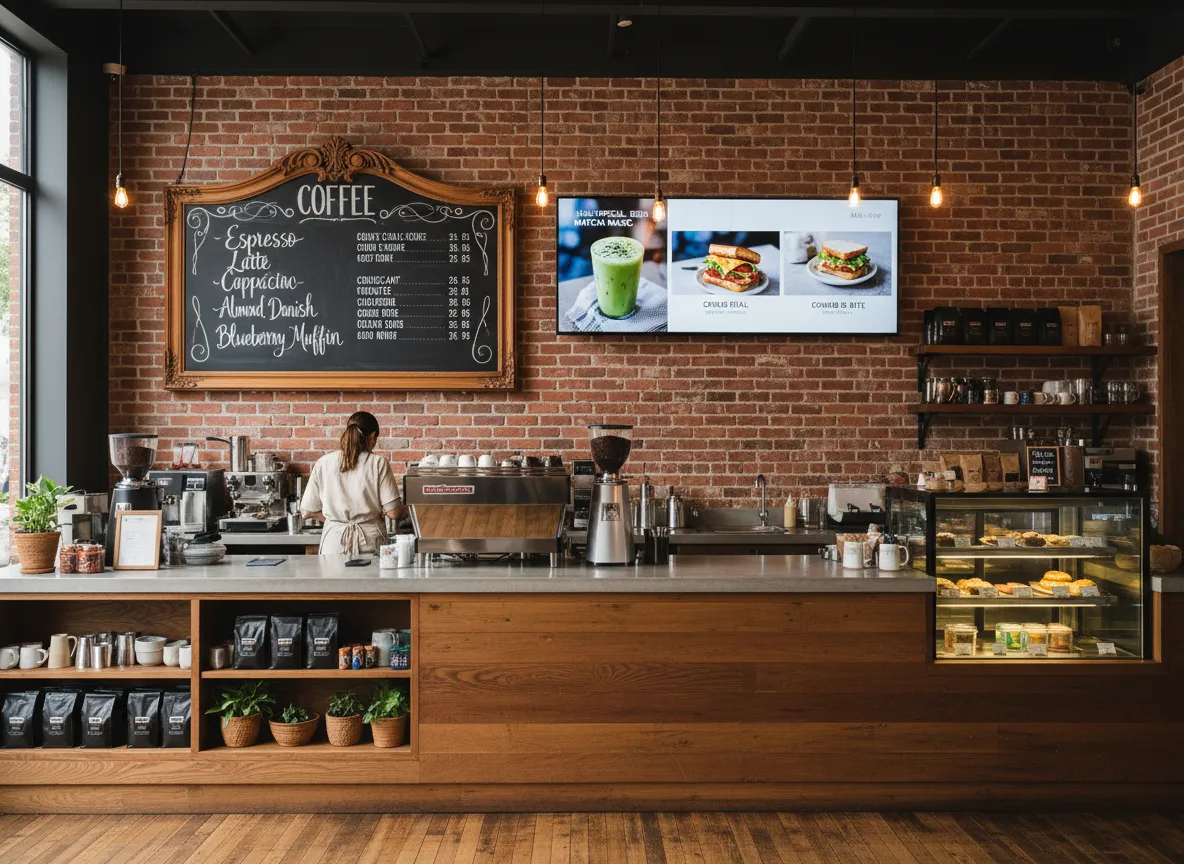
A hybrid approach, such as using a static board for the core menu and a digital display for specials, balances warmth with flexibility [1]. This is one of the most practical and cost-effective strategies for cafes that want the benefits of digital signage without losing the character of a handcrafted aesthetic.
Many customers associate chalkboard menus with authenticity and artisanal quality. Replacing them entirely with screens can sometimes feel cold or corporate. The hybrid model lets you keep that warmth while still gaining the real-time update capability of digital.
How to structure a hybrid menu board setup:
- Use a chalkboard or printed board for your core, stable menu items (espresso drinks, standard pastries, regular food items)
- Use a digital screen for rotating specials, seasonal items, combo promotions, and countdown timers
- Position the digital screen at eye level in your prime viewing zone
- Keep the visual style of both boards consistent in terms of color palette and typography
This approach also reduces the cost of going fully digital. You invest in one or two screens rather than a full wall of displays, and you still get the most important benefits.
Bringing the 9 Cafe Menu Board Ideas Together
The 9 cafe menu board ideas that attract more customers and boost daily sales work best when they are applied together as a system rather than in isolation. Food photography drives appetite. Eye-tracking layout directs attention. Price psychology reduces hesitation. Digital flexibility keeps content fresh. Social proof builds confidence. Urgency triggers action.
No single tactic will transform your cafe overnight. But layering two or three of these ideas into your current setup will produce measurable results within weeks. Start with the changes that require the least investment: remove dollar signs, add social proof badges, and reposition your highest-margin items to prime board zones. Those three moves cost nothing and can be done today.
Then build toward the bigger investments: professional photography, a digital display, and a hybrid board setup. Track your average order value and your top-selling items before and after each change. The data will tell you exactly which ideas are working hardest for your specific customer base.
Conclusion
Your menu board is working every hour your cafe is open, whether you have designed it intentionally or not. The difference between a board that informs and one that actively sells comes down to the deliberate application of design, psychology, and technology.
The 9 cafe menu board ideas covered in this article give you a clear, actionable roadmap. Here are your next steps:
- Audit your current board this week. Identify which high-margin items are buried in low-visibility zones and move them.
- Remove currency symbols from all prices on your board immediately.
- Add two to three social proof badges to your most profitable items.
- If you do not already have a digital display, research entry-level commercial screens and cloud-based signage software.
- Plan a food photography session for your top 10 items within the next 30 days.
Small cafes that treat their menu board as a strategic sales tool consistently outperform those that treat it as a simple information display. In 2026, with competition for customer attention higher than ever, that distinction matters more than it ever has.
References
[1] Cafe Menu Board Design Tips That Drive Sales – https://www.mydigimenu.com/post/cafe-menu-board-design-tips-that-drive-sales?utm_source=openai
[2] Commercial Menu Board – https://nento.com/commercial-menu-board/?utm_source=openai
[3] Menu Boards For Cafes Design Ideas – https://nento.com/menu-boards-for-cafes-design-ideas/?utm_source=openai
[4] Best Cafe Menu Ideas – https://www.aiscreen.io/digital-menu-board/best-cafe-menu-ideas/?utm_source=openai