9 Rich People Food Recipes You Can Actually Make at Home on a Budget
A single plate of beef Wellington at a high-end London restaurant costs upward of $65 — yet the core ingredients to make it at home run closer to $18. That gap between restaurant markup and actual food cost is one of the best-kept secrets in the culinary world, and it is exactly why this guide to 9 rich people food recipes you can actually make at home on a budget exists.
Disclosure: This post contains affiliate links. As an Amazon Associate, we earn from qualifying purchases, and at no extra cost to you.

I have spent years testing so-called “luxury” dishes in a modest apartment kitchen, and the truth I keep discovering is the same: most of what signals wealth on a dinner plate is technique and presentation, not price. Once you understand a few key methods, you can recreate dishes that feel genuinely indulgent without draining your grocery budget.
Key Takeaways
- Most luxury restaurant dishes rely on technique and presentation, not expensive ingredients
- Classic rich-people foods like beef Wellington, lobster bisque, and duck confit can be made at home for a fraction of the restaurant price
- Simple swaps — such as using chicken thighs instead of duck legs, or canned lobster instead of live lobster — preserve flavor while cutting cost dramatically
- Mastering five core techniques (searing, emulsifying, braising, tempering, and reducing) unlocks nearly every dish on this list
- Batch cooking and smart sourcing from discount grocery chains or warehouse stores can cut ingredient costs by 30 to 50 percent
Why Luxury Food Is More Accessible Than You Think
The fine-dining industry is built on perceived scarcity. Restaurants charge premium prices partly because of overhead — rent, staff, ambiance — and partly because diners associate high prices with high quality. Strip away the overhead, and you are often left with surprisingly humble ingredients transformed by skill.
Consider truffle pasta. At a Michelin-starred restaurant, a small bowl might cost $45. At home, a jar of truffle paste (about $8) combined with good pasta, butter, and Parmesan produces something remarkably close for under $4 per serving.
The same logic applies across the board. Foie gras techniques can be approximated with chicken liver mousse. Wagyu beef flavor profiles can be mimicked by dry-aging a grocery-store ribeye for 48 hours in the refrigerator. Lobster bisque can be made rich and silky using lobster tails on sale or even langoustines.
The three pillars of budget luxury cooking:
- Source smart — buy proteins on sale and freeze them
- Master the technique — most luxury dishes hinge on one or two key skills
- Plate with intention — presentation elevates even a simple dish dramatically
9 Rich People Food Recipes You Can Actually Make at Home on a Budget
Below, each recipe is broken down with a cost estimate, a difficulty rating, and the one technique that makes or breaks the dish.
| Recipe | Est. Cost (4 servings) | Difficulty | Key Technique |
|---|---|---|---|
| Beef Wellington | $22-$28 | Advanced | Duxelles preparation |
| Lobster Bisque | $14-$18 | Intermediate | Shell stock reduction |
| Duck Confit | $16-$20 | Intermediate | Low-and-slow fat poaching |
| Truffle Pasta | $8-$12 | Beginner | Emulsification |
| Beef Bourguignon | $18-$22 | Intermediate | Wine braising |
| Seared Scallops | $16-$20 | Beginner | Dry searing |
| Chicken Liver Mousse | $6-$9 | Beginner | Blending and clarifying |
| Crème Brûlée | $5-$8 | Intermediate | Custard tempering |
| Oysters Rockefeller | $12-$16 | Beginner | Broiling with compound butter |
1. Beef Wellington
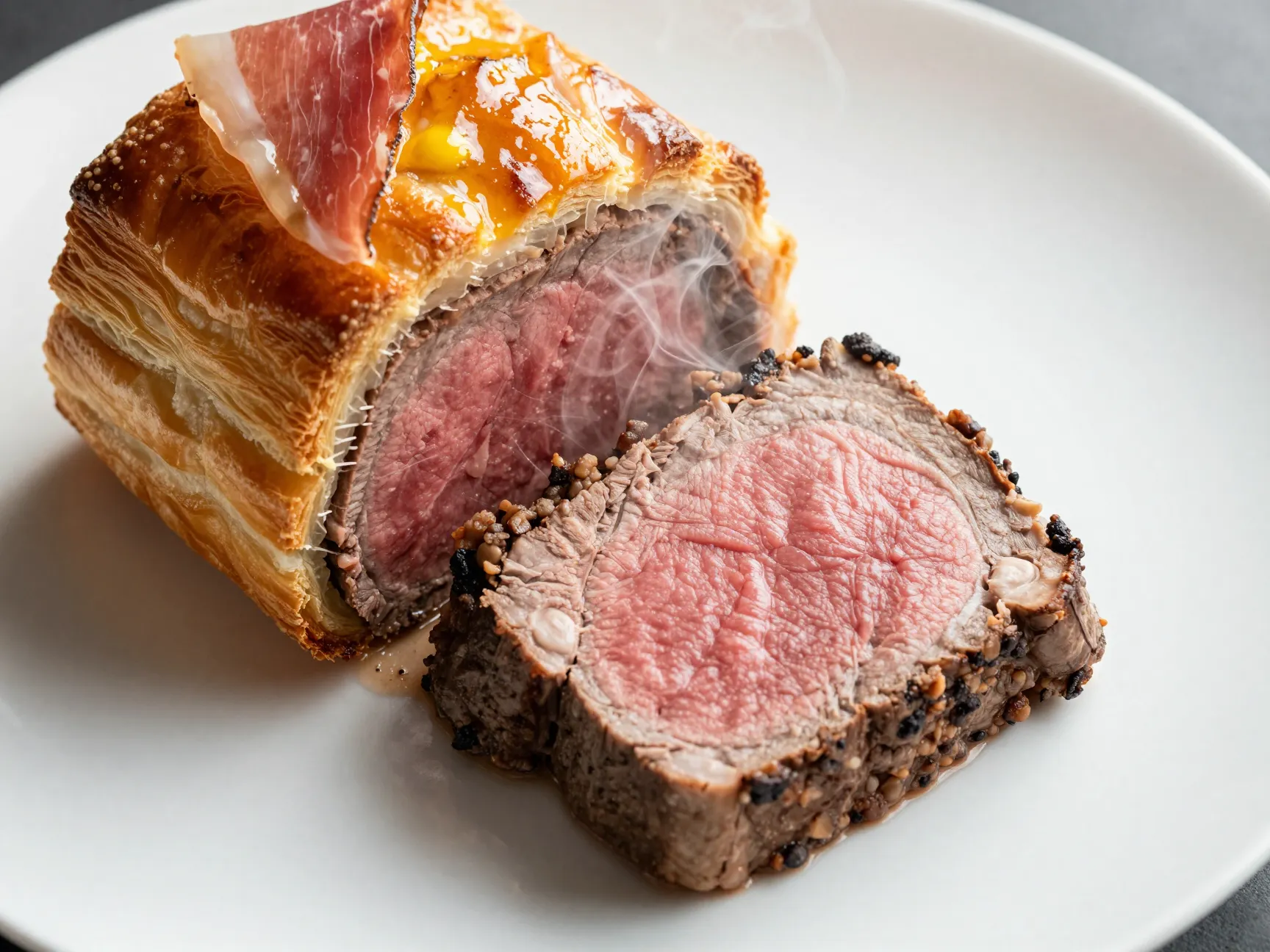
Why it feels luxurious: A perfectly pink beef tenderloin wrapped in mushroom duxelles and golden puff pastry is one of the most visually dramatic dishes in Western cuisine.
Budget strategy: Use center-cut beef tenderloin when it goes on sale, or substitute a trimmed beef eye of round for a leaner, more affordable version. Frozen puff pastry (Pepperidge Farm or store brand) works beautifully.
The one technique to master: Duxelles — finely chopped mushrooms cooked down until all moisture evaporates. Wet duxelles will make your pastry soggy. Cook them low and slow for 15 to 20 minutes until they resemble a dry paste.
Quick method overview:
- Sear the beef on all sides until deeply browned, then refrigerate for 30 minutes
- Spread duxelles on plastic wrap, lay prosciutto over it, roll the beef tightly, and chill again
- Wrap in puff pastry, brush with egg wash, and bake at 425F until golden
Cost per serving: approximately $6
2. Lobster Bisque
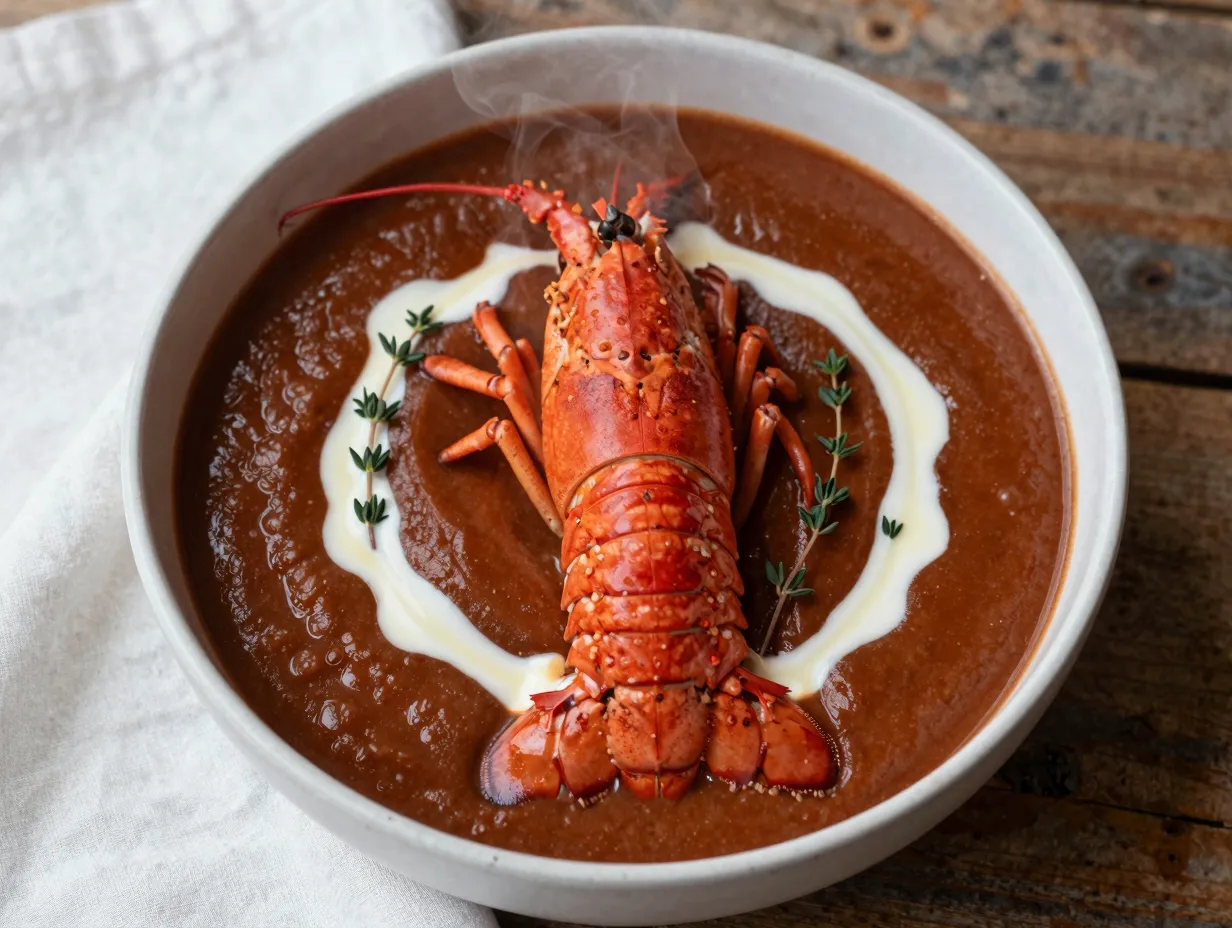
Why it feels luxurious: Velvety, deeply flavored, and rich with cream — lobster bisque is the soup equivalent of a cashmere sweater.
Budget strategy: Buy frozen lobster tails when they go on sale (often $6 to $8 each at warehouse stores). Use the shells to make the stock. Alternatively, langoustines or large shrimp with their shells produce a bisque that is nearly indistinguishable to most palates.
The one technique to master: Roasting the shells before making the stock. This step, which most home cooks skip, is what creates that deep, rust-colored, intensely flavored base. Roast shells at 400F for 10 minutes before simmering.
Quick method overview:
- Roast shells, simmer with aromatics, strain, and reduce the stock by half
- Sauté shallots, add tomato paste, deglaze with brandy or dry sherry
- Add stock, blend until smooth, finish with heavy cream and a pinch of cayenne
Cost per serving: approximately $4
3. Duck Confit
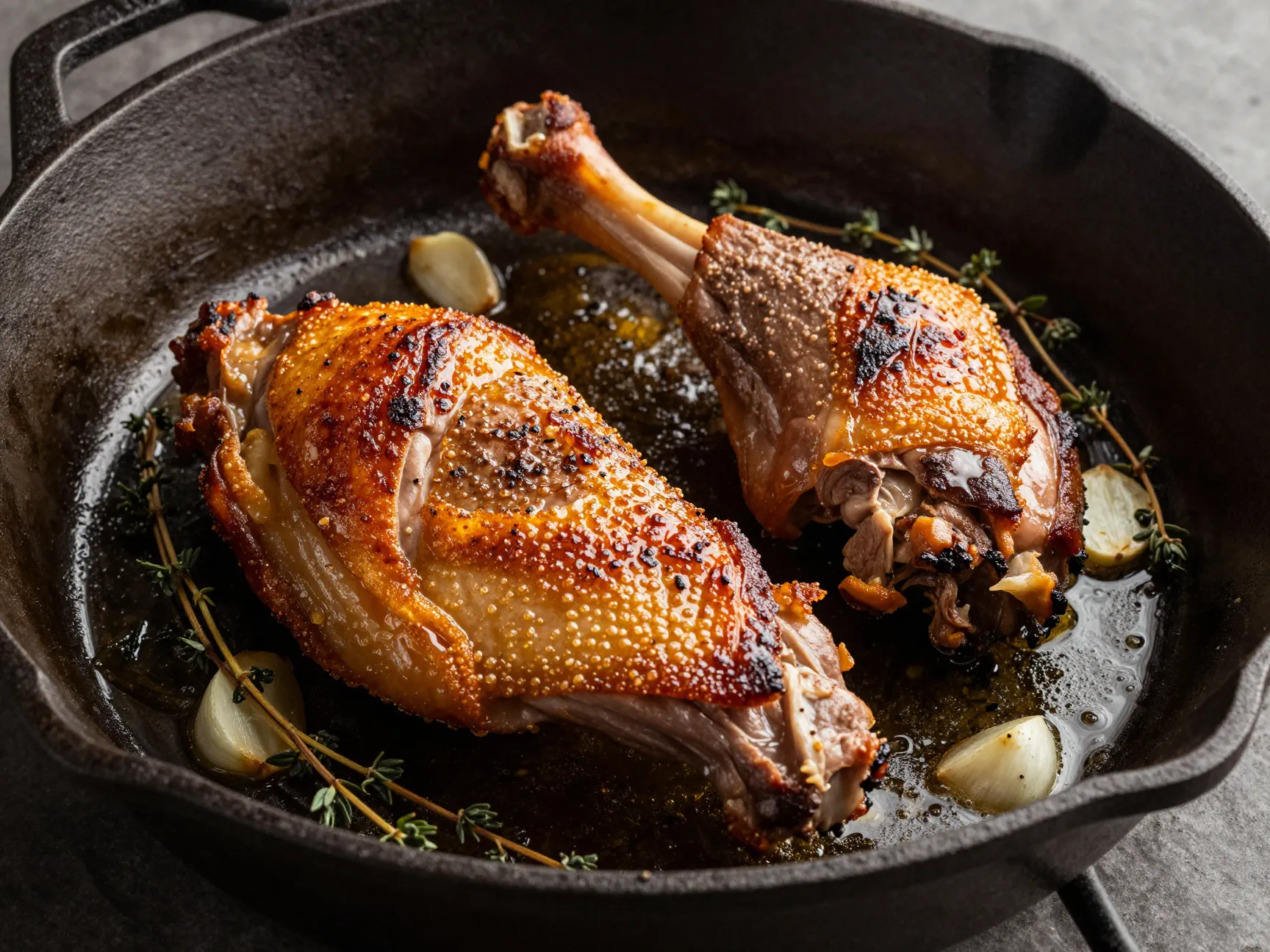
Why it feels luxurious: Confit duck legs — crispy skin, impossibly tender meat, rich flavor — appear on the menus of French bistros at $28 to $40 per plate.
Budget strategy: Duck legs are often found at Asian grocery stores for $3 to $5 each, significantly cheaper than specialty butchers. If duck is unavailable, chicken thighs cooked confit-style in olive oil and duck fat deliver a similar result at a fraction of the cost.
The one technique to master: Low-and-slow fat poaching. The legs must cook at 180 to 200F — never a rolling boil — submerged in fat for two to three hours. This breaks down collagen without drying the meat.
Quick method overview:
- Salt-cure the legs overnight with thyme, garlic, and bay leaf
- Rinse, pat dry, submerge in melted duck fat or olive oil in a Dutch oven
- Cook at 200F for 2.5 hours, then sear skin-side down in a hot skillet until crackling
Cost per serving: approximately $5
4. Truffle Pasta
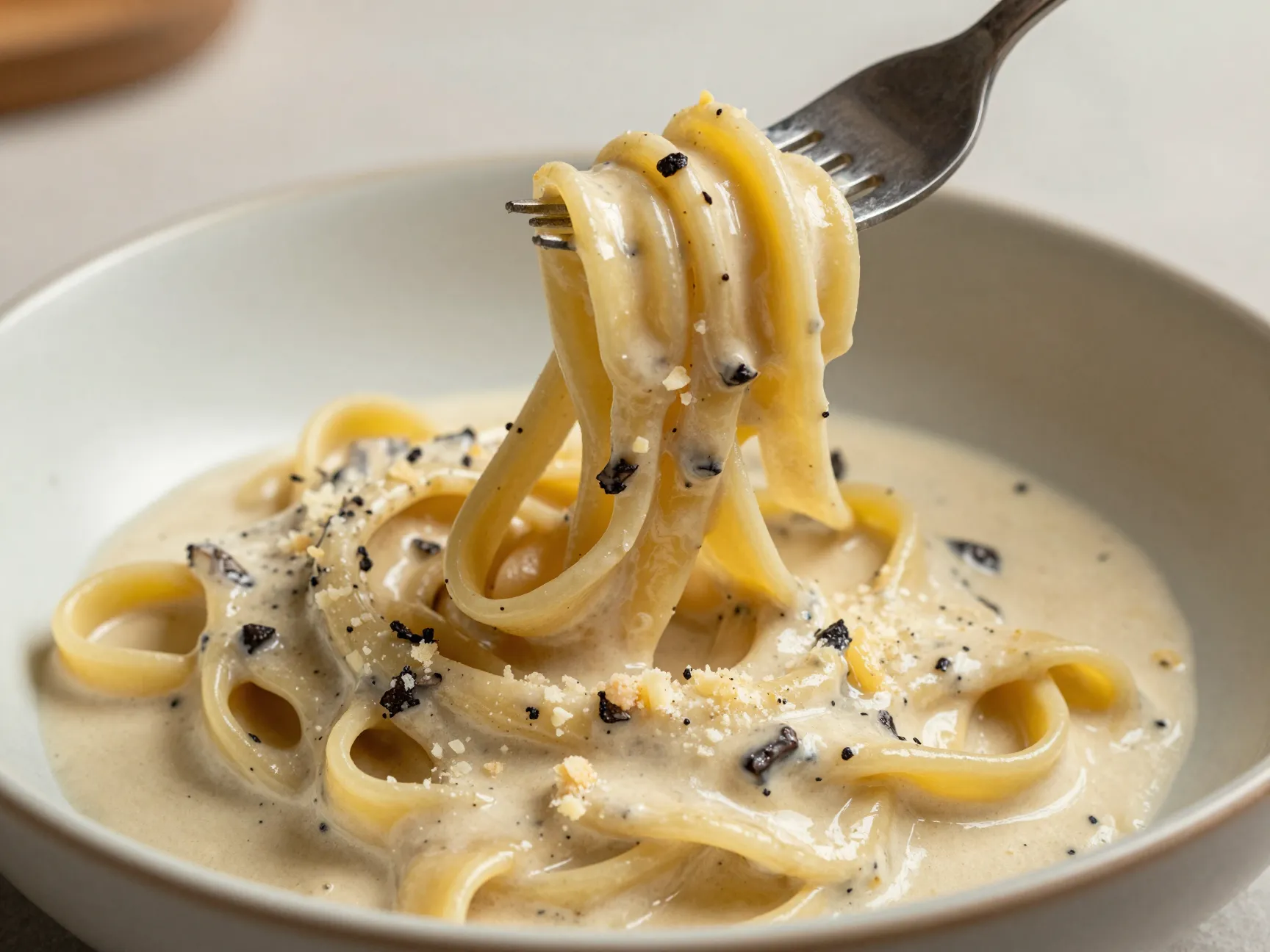
Why it feels luxurious: The earthy, musky aroma of truffle transforms simple pasta into something that feels genuinely decadent.
Budget strategy: Skip fresh truffles entirely. A jar of black truffle paste or truffle salt (available on Amazon or at specialty stores for $8 to $12) delivers real truffle flavor. Truffle oil is an option, but choose one that lists actual truffle in the ingredients rather than synthetic aroma compounds.
The one technique to master: Emulsification. Toss hot pasta with cold butter and a splash of pasta water, moving the pan constantly. This creates a glossy, cohesive sauce that clings to every strand rather than pooling at the bottom of the bowl.
Quick method overview:
- Cook fresh or high-quality dried pasta to al dente
- In a warm pan, toss pasta with butter, pasta water, and grated Parmesan
- Stir in truffle paste, adjust seasoning, finish with a drizzle of truffle oil
Cost per serving: approximately $3
5. Beef Bourguignon
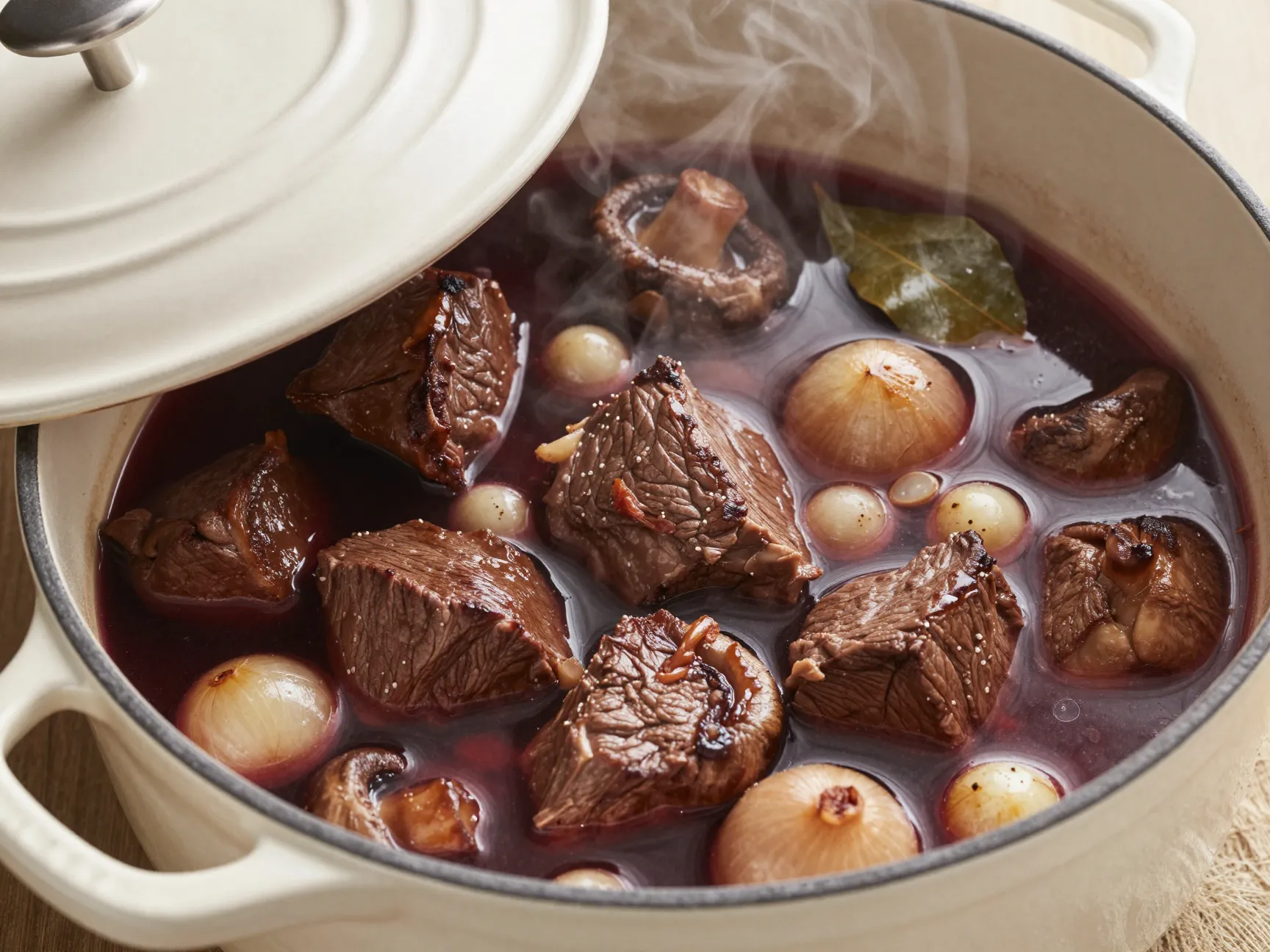
Why it feels luxurious: Julia Child made this dish famous for a reason. Slow-braised beef in red wine with pearl onions and mushrooms is deeply satisfying and unmistakably French.
Budget strategy: Use chuck roast instead of the traditionally specified boeuf de boeuf. Chuck has more connective tissue, which melts into gelatin during braising and actually produces a richer sauce than leaner cuts. A $10 bottle of drinkable Burgundy or Pinot Noir works perfectly — you do not need expensive wine for cooking.
The one technique to master: Proper browning. Brown the beef in batches, never crowding the pan. Crowding causes steaming rather than searing, and you lose the Maillard reaction that gives the dish its depth of flavor.
Quick method overview:
- Brown beef cubes in batches, set aside
- Sauté lardons, pearl onions, and mushrooms
- Deglaze with wine, add stock and herbs, braise covered at 325F for 2.5 to 3 hours
Cost per serving: approximately $5.50
6. Seared Scallops
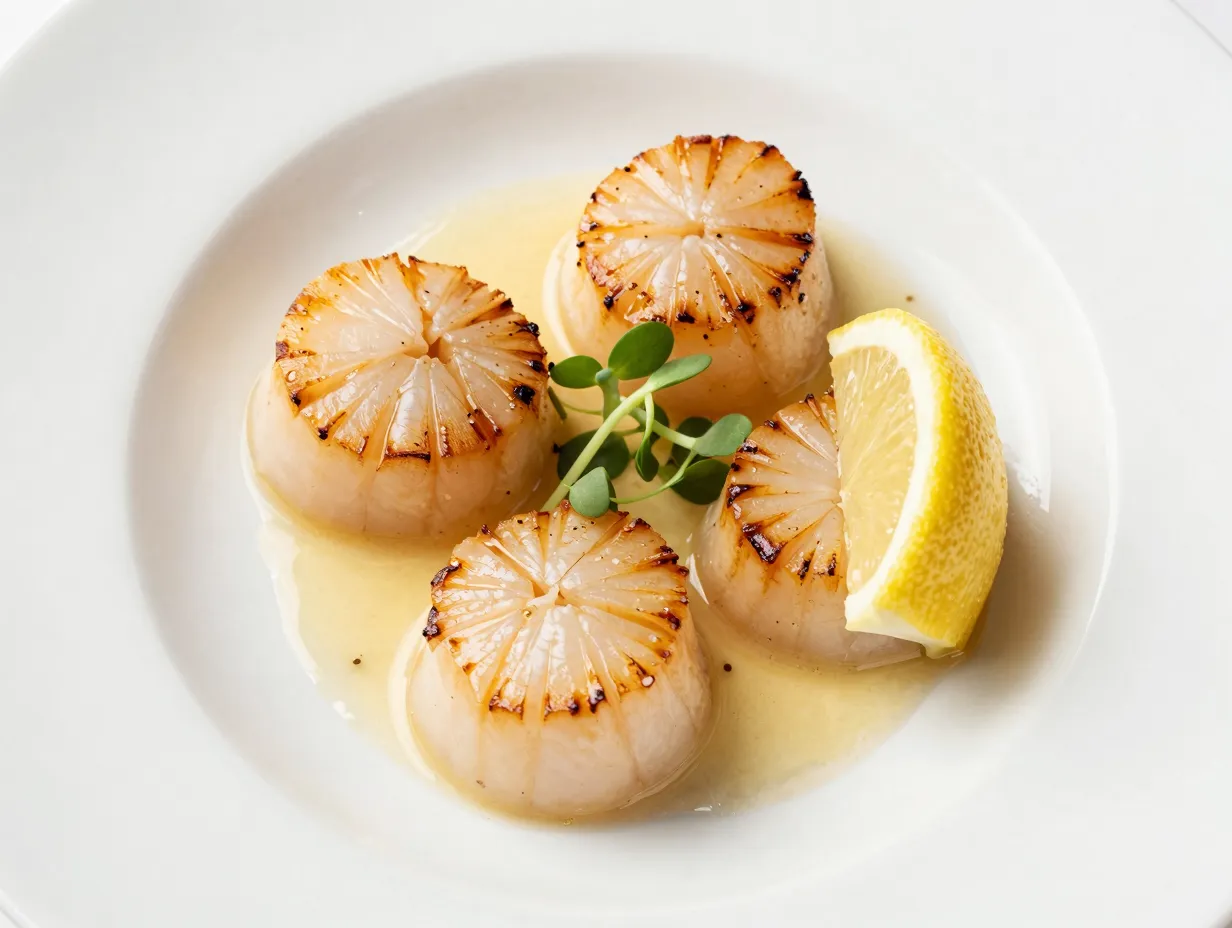
Why it feels luxurious: A perfectly seared scallop — golden crust, translucent center, served with a silky sauce — is one of the most impressive things you can plate in under 10 minutes.
Budget strategy: Buy dry-packed (not wet-packed) sea scallops. Wet-packed scallops are treated with sodium tripolyphosphate, which causes them to release water during cooking and steam instead of sear. Dry-packed scallops cost slightly more per pound but deliver dramatically better results. Watch for sales at seafood counters, or buy frozen and thaw overnight in the refrigerator.
The one technique to master: Dry searing. Pat scallops completely dry with paper towels. Use a stainless steel or cast iron pan preheated until it is almost smoking. Do not move the scallops for 90 seconds. The crust that forms is what separates a restaurant-quality scallop from a rubbery disappointment.
Quick method overview:
- Pat scallops dry, season with salt only just before cooking
- Sear in a screaming hot pan with a neutral oil for 90 seconds per side
- Deglaze with white wine or lemon juice, swirl in cold butter for a pan sauce
Cost per serving: approximately $5
7. Chicken Liver Mousse
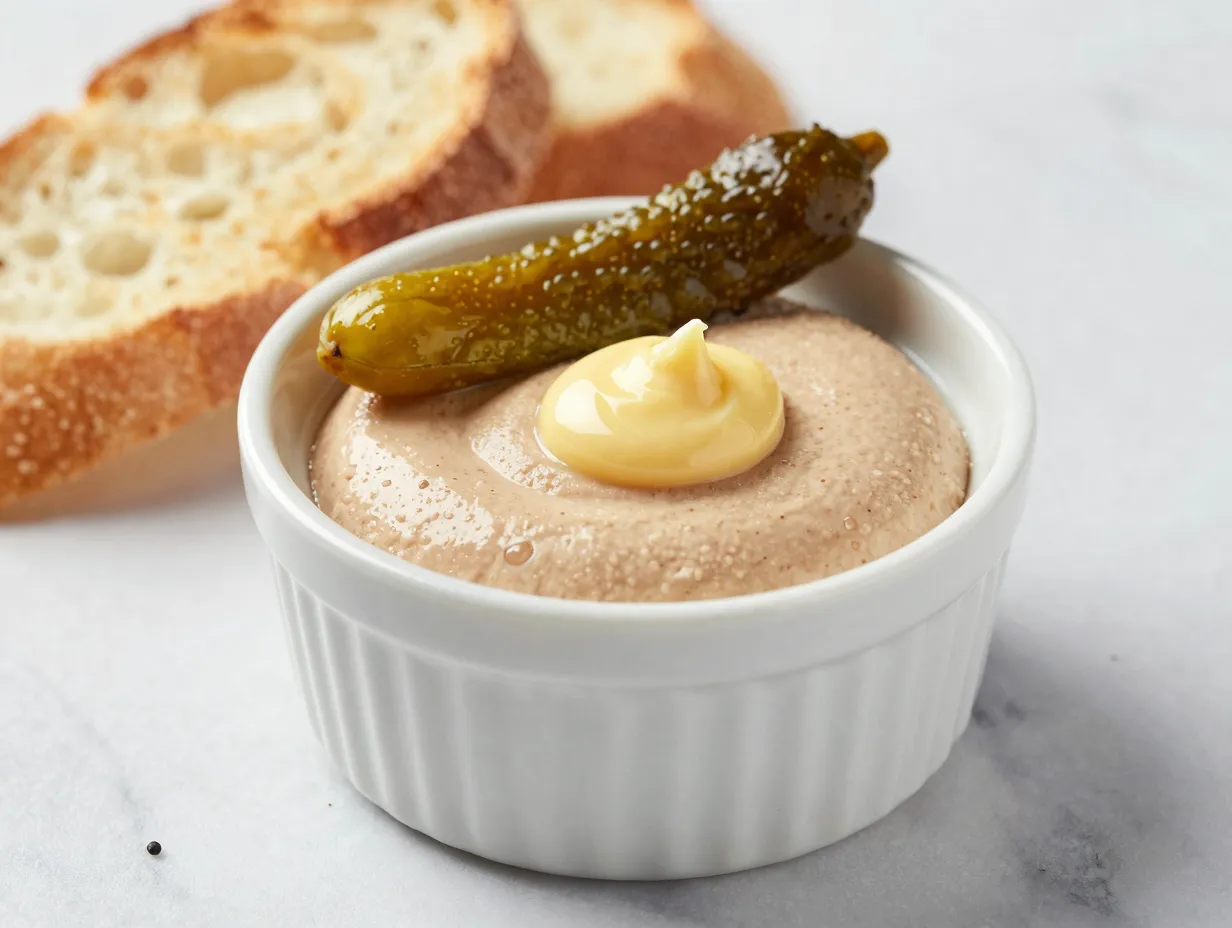
Why it feels luxurious: Served in a small ramekin with cornichons, Dijon mustard, and toasted baguette, chicken liver mousse is the budget cook’s answer to foie gras. The flavor is rich, buttery, and complex.
Budget strategy: Chicken livers are one of the most affordable proteins at any grocery store — typically $1.50 to $2.50 per pound. A pound of livers makes enough mousse to serve eight people as an appetizer.
The one technique to master: Removing the sinew and any green-tinged spots from the livers before cooking. Skipping this step introduces bitterness that no amount of butter can fix. Take five minutes to trim carefully.
Quick method overview:
- Sauté cleaned livers with shallots, thyme, and a splash of brandy until just cooked through
- Blend with softened butter until completely smooth, season generously
- Press plastic wrap against the surface and refrigerate for at least four hours before serving
Cost per serving: approximately $1.50
8. Crème Brûlée

Why it feels luxurious: The theatrical crack of a caramelized sugar crust, the cool vanilla custard beneath — crème brûlée is one of the most beloved desserts in fine dining.
Budget strategy: The ingredients are genuinely inexpensive: heavy cream, egg yolks, sugar, and vanilla. A kitchen torch (about $15 to $20 online) is the only equipment investment, and it pays for itself after one dinner party. If you do not have a torch, the broiler works in a pinch.
The one technique to master: Tempering the egg yolks. Pour hot cream into the yolks slowly while whisking constantly. Pour too fast and you get scrambled eggs in cream. Go slowly, and you get a silky custard base.
Quick method overview:
- Heat cream with vanilla bean to just below a simmer
- Whisk egg yolks with sugar, temper in the hot cream slowly
- Strain, pour into ramekins, bake in a water bath at 325F for 35 to 40 minutes
- Chill completely, top with sugar, and torch until amber
Cost per serving: approximately $1.75
9. Oysters Rockefeller
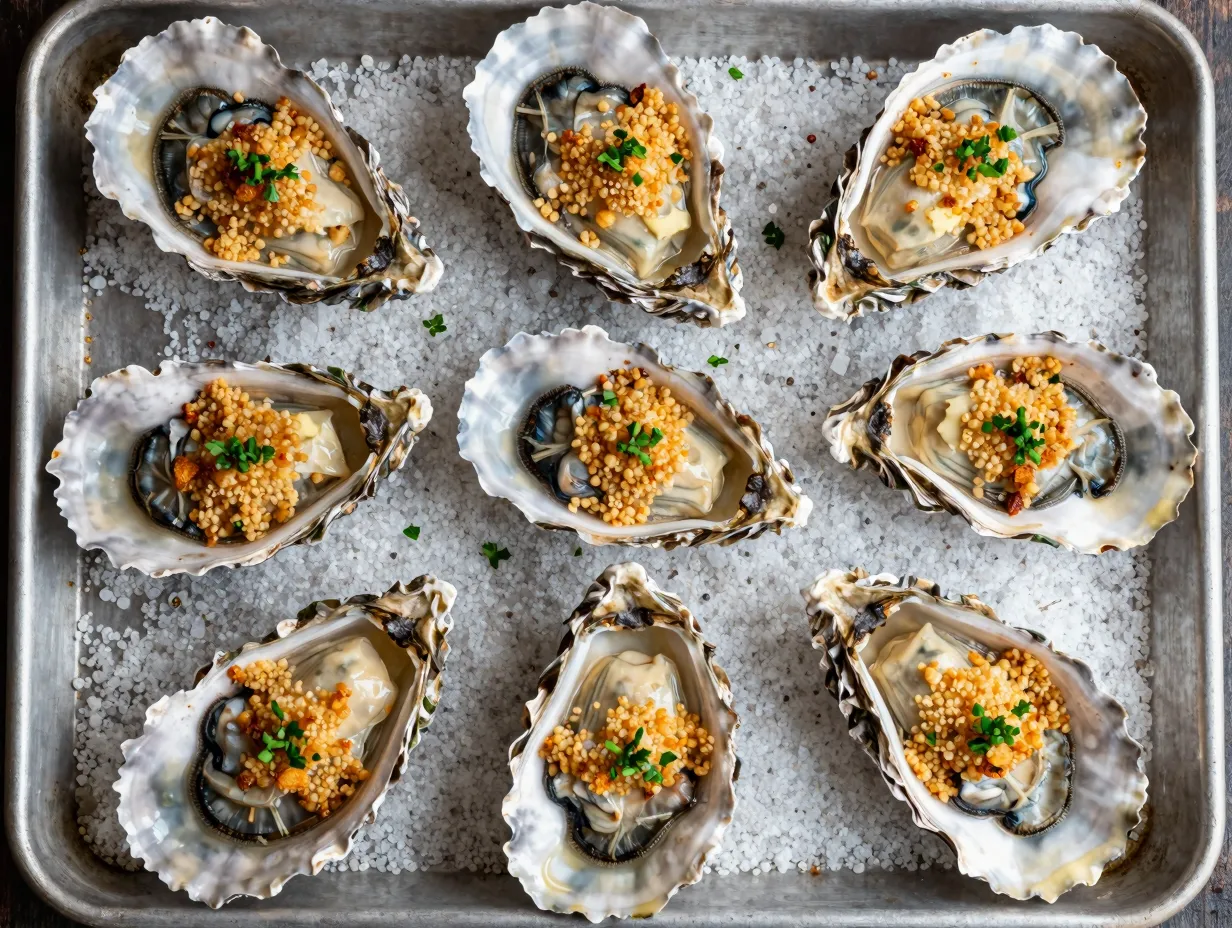
Why it feels luxurious: Baked oysters topped with a rich, herbed, buttery gratin are a classic New Orleans luxury appetizer that dates back to 1899.
Budget strategy: Fresh oysters can be purchased by the dozen from fish markets or warehouse stores for $8 to $15 per dozen, far less than the $3 to $5 per oyster charged at raw bars. The topping — butter, shallots, spinach, Pernod, and breadcrumbs — costs almost nothing.
The one technique to master: Shucking safely. Use a proper oyster knife and a folded kitchen towel to protect your hand. Insert the knife at the hinge, twist, and slide along the top shell to sever the adductor muscle. It takes practice, but after a dozen oysters, most people have it down.
Quick method overview:
- Shuck oysters, place on a baking sheet on a bed of rock salt to stabilize
- Blend softened butter with shallots, spinach, Pernod, and breadcrumbs
- Top each oyster with a teaspoon of the butter mixture, broil for 4 to 5 minutes until golden and bubbling
Cost per serving (3 oysters): approximately $3.50
Smart Sourcing: Where to Buy Ingredients for These 9 Rich People Food Recipes You Can Actually Make at Home on a Budget
One of the biggest barriers people cite when attempting luxury cooking at home is ingredient cost. Here is how I consistently keep costs low without compromising quality.
Warehouse stores (Costco, Sam’s Club): The best source for sea scallops, lobster tails, beef tenderloin, and heavy cream. Buying in bulk and freezing portions cuts per-serving costs by 30 to 40 percent.
Asian grocery stores: Exceptional for duck legs, fresh seafood, specialty mushrooms, and fresh herbs at prices that undercut mainstream supermarkets significantly.
Discount grocery chains (Aldi, Lidl, WinCo): Ideal for pantry staples — butter, cream, wine for cooking, puff pastry, and canned goods. Aldi’s puff pastry, for example, performs comparably to premium brands at half the price.
Online specialty retailers: For truffle paste, truffle salt, and other luxury flavor enhancers, Amazon and specialty food sites often offer better prices than local gourmet shops.
Timing your purchases: Most grocery stores mark down proteins on their sell-by date — typically early morning. Buy, portion, and freeze immediately. This single habit can cut your protein costs by 25 to 35 percent over time.
“The difference between a $65 restaurant plate and a $7 home-cooked version is almost never the ingredient — it is the rent, the labor, and the markup. Cook at home, and you keep that difference in your pocket.”
The Five Techniques That Unlock Every Recipe on This List
Mastering these five foundational skills makes every one of the 9 rich people food recipes you can actually make at home on a budget significantly more achievable.
- Searing — A screaming hot, dry pan and patience. Do not move the protein until it releases naturally.
- Emulsification — Combining fat and water into a smooth, cohesive sauce using heat and agitation (constant stirring or tossing).
- Braising — Low heat, covered, in liquid. Time does the work. Tough, cheap cuts become tender and flavorful.
- Tempering — Gradually raising the temperature of eggs or chocolate by adding hot liquid slowly, preventing curdling or seizing.
- Reducing — Simmering a liquid until it concentrates in flavor and thickens naturally. This is how you build depth without adding more ingredients.
Practice these five techniques on inexpensive ingredients first. Scramble eggs to practice heat control. Make a simple pan sauce to understand emulsification. Once these feel natural, every recipe above becomes far less intimidating.
Common Mistakes to Avoid
Even experienced home cooks make these errors when attempting luxury dishes for the first time.
- Skipping the dry step: Wet proteins do not sear — they steam. Pat everything dry before it hits the pan.
- Crowding the pan: One of the most common mistakes. Cook in batches, always.
- Using cheap vanilla extract in crème brûlée: The vanilla flavor is front and center in this dessert. Use a real vanilla bean or high-quality paste.
- Rushing the braise: Beef bourguignon and duck confit cannot be rushed. Low heat and time are non-negotiable.
- Using wet-packed scallops: As noted above, this single mistake ruins seared scallops. Always check the label.
Conclusion
The 9 rich people food recipes you can actually make at home on a budget covered in this guide prove a simple but powerful point: luxury on the plate is mostly a matter of skill, not spending. Beef Wellington, lobster bisque, duck confit, truffle pasta, beef bourguignon, seared scallops, chicken liver mousse, crème brûlée, and oysters Rockefeller — every one of these dishes can be made in a home kitchen in 2026 for a fraction of what a restaurant charges.
Your actionable next steps:
- Start with the easiest recipes first — truffle pasta, chicken liver mousse, and crème brûlée require minimal technique and deliver immediate results
- Invest one afternoon in practicing the five core techniques on cheap ingredients before attempting the more advanced dishes
- Set up a sourcing routine: check warehouse store deals weekly, visit your local Asian grocery store for proteins, and buy on sale to freeze
- Invite someone to dinner and plate with intention — a warm bowl, a garnish of fresh herbs, a clean rim on the plate transforms the experience completely
- Work your way through all nine recipes over the course of a month, and by the end you will have a repertoire that rivals many restaurant menus
The gap between restaurant luxury and home cooking has never been smaller. The only thing standing between you and a plate of perfectly seared scallops or a crackling duck confit is the decision to try.