9 Summer Healthy Recipes That Are Fresh, Light, and Perfect for Hot Days
A 2023 survey by the International Food Information Council found that 52% of Americans actively change what they eat during summer, gravitating toward lighter meals that do not weigh them down in the heat. That shift is not just about comfort. It is about energy, hydration, and making the most of the season’s best produce. These 9 Summer Healthy Recipes That Are Fresh, Light, and Perfect for Hot Days are built on exactly that principle: maximum flavor, minimal effort, and ingredients that work with your body rather than against it when temperatures climb.
Disclosure: This post contains affiliate links. As an Amazon Associate, we earn from qualifying purchases, and at no extra cost to you.
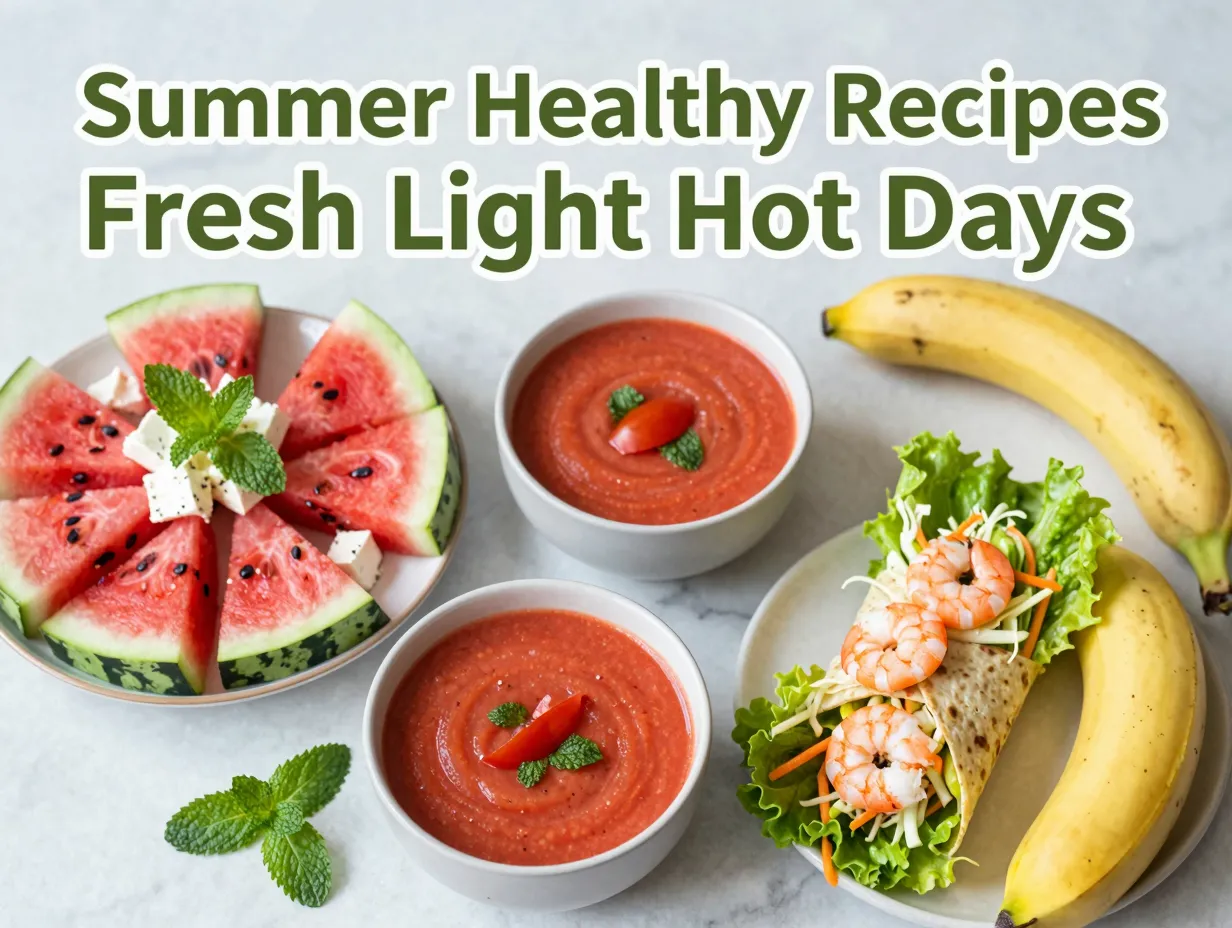
I remember the first summer I stopped reaching for heavy pasta bakes and started leaning into cold salads, chilled soups, and grain bowls. My energy levels changed noticeably. I felt lighter by mid-afternoon instead of sluggish. These recipes reflect years of testing what actually works on a hot day, both nutritionally and practically.
Key Takeaways
- Eating lighter, water-rich foods in summer supports hydration and sustained energy levels.
- These nine recipes use seasonal produce that is widely available, affordable, and nutrient-dense.
- Most recipes require little to no cooking, which keeps your kitchen cool.
- Each dish can be prepped ahead of time, making weekday meals faster and easier.
- Swapping heavy sauces and refined carbs for fresh herbs, lean proteins, and whole grains delivers real nutritional benefits.
Why Summer Calls for a Different Approach to Eating
Before diving into the recipes themselves, it helps to understand why hot weather genuinely changes what your body needs. When you sweat, you lose not just water but electrolytes. Your digestive system also works differently in heat, processing heavy, fatty meals more slowly, which is part of why a big cheeseburger on a 95-degree day can leave you feeling drained rather than fueled.
Foods with high water content, like cucumbers, watermelon, tomatoes, and leafy greens, contribute to hydration while delivering vitamins and minerals. Lean proteins such as grilled fish, shrimp, and legumes provide sustained energy without the heaviness of red meat. Whole grains like quinoa and farro offer fiber and complex carbohydrates that keep blood sugar stable.
The 9 Summer Healthy Recipes That Are Fresh, Light, and Perfect for Hot Days featured here are designed around these principles. They are not diet food. They are smart food for the season.
The 9 Summer Healthy Recipes That Are Fresh, Light, and Perfect for Hot Days
1. Watermelon and Feta Salad with Mint and Lime
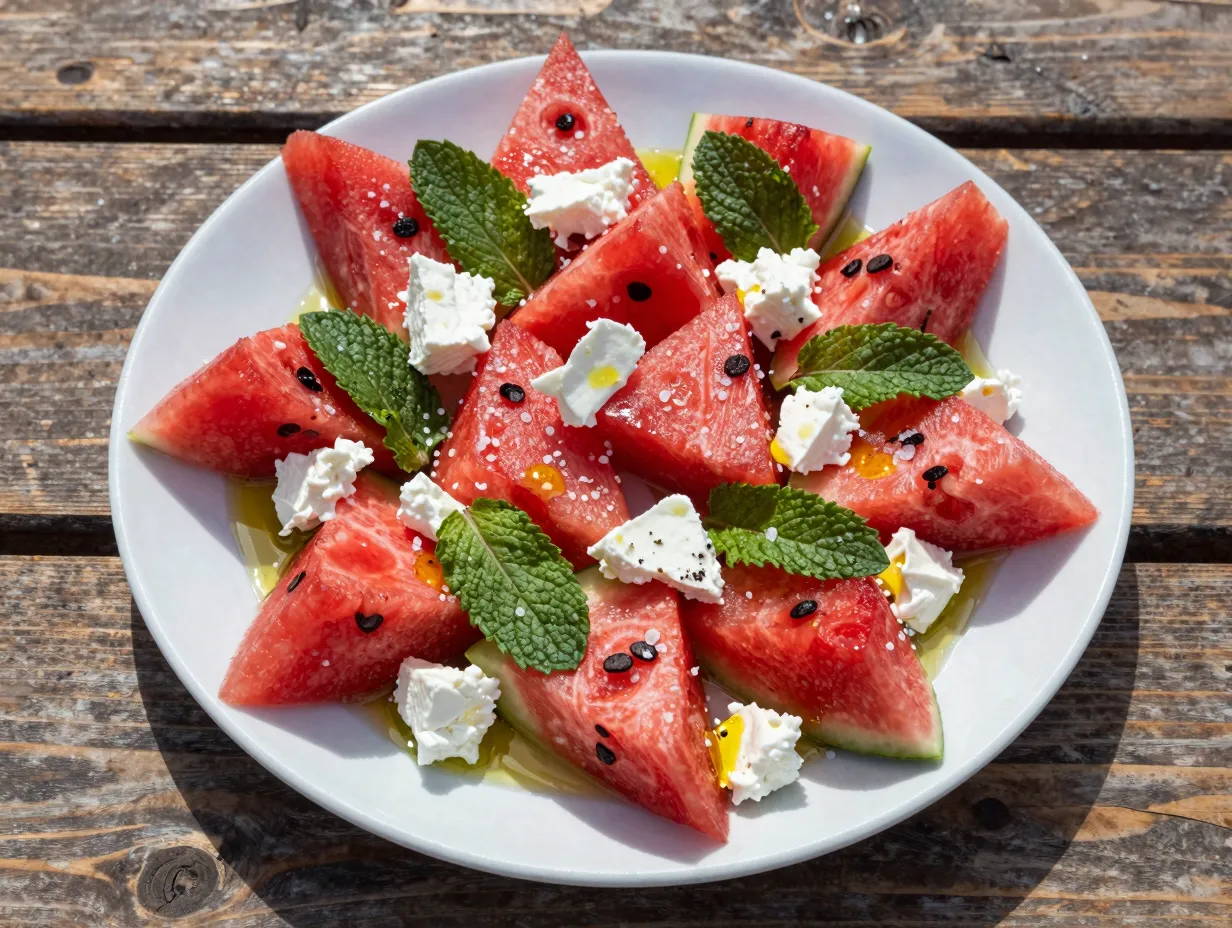
Few combinations capture summer as cleanly as watermelon and feta. The sweetness of ripe watermelon against the salty, creamy bite of feta is a contrast that works every single time.
Ingredients:
- 4 cups cubed seedless watermelon
- 1/2 cup crumbled feta cheese
- 1/4 cup fresh mint leaves, torn
- Juice of 1 lime
- 1 tablespoon extra-virgin olive oil
- Pinch of flaky sea salt
Instructions: Arrange watermelon cubes on a wide, shallow plate. Scatter feta and mint over the top. Drizzle with lime juice and olive oil. Finish with a pinch of sea salt and serve immediately.
Why it works: Watermelon is 92% water by weight, making it one of the most hydrating foods available. Feta adds calcium and protein, while mint aids digestion. This salad comes together in under five minutes and requires zero heat.
Nutritional snapshot per serving: Approximately 120 calories, 5g protein, 15g carbohydrates, 5g fat.
2. Chilled Gazpacho with Garden Vegetables
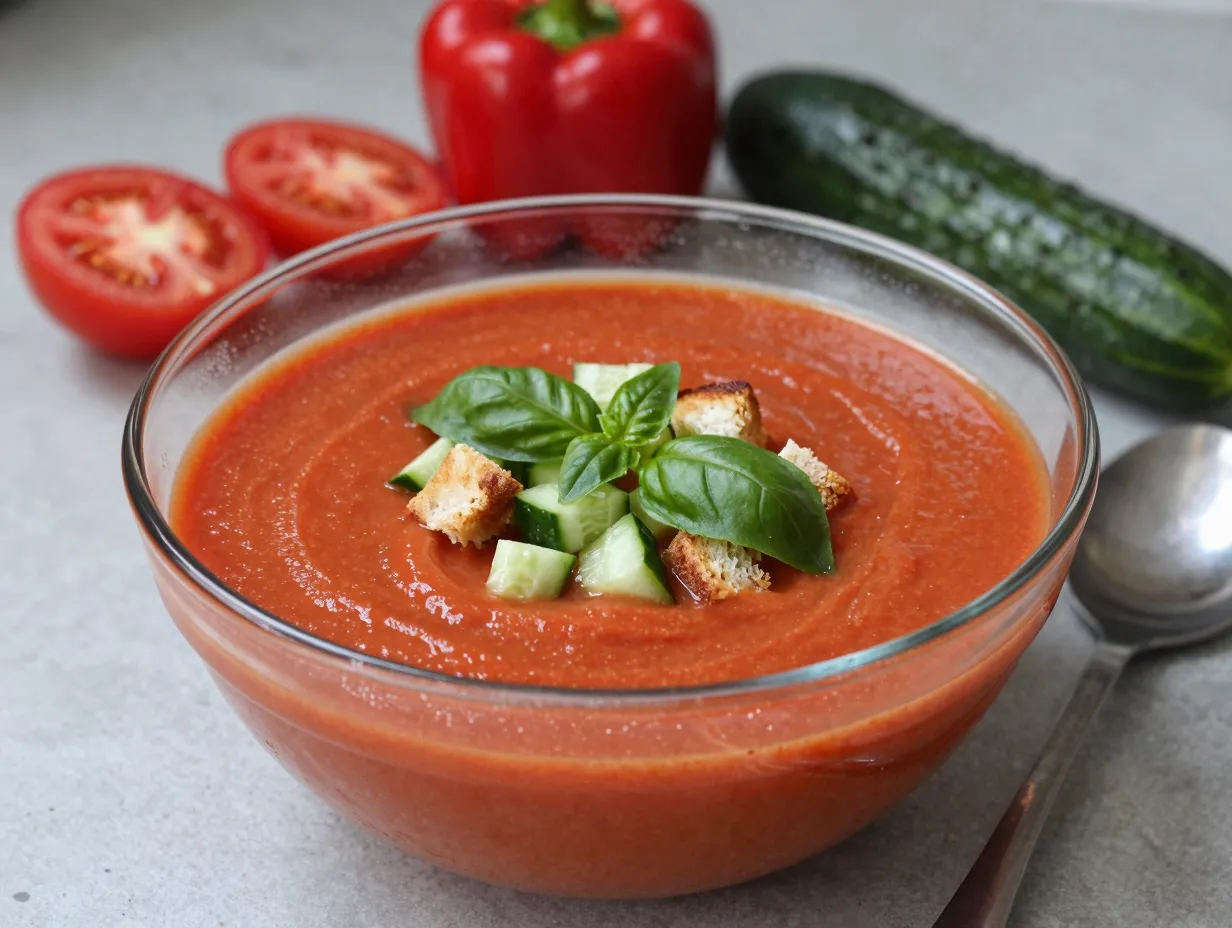
Gazpacho is the original no-cook summer soup, and it deserves far more attention than it typically gets outside of Spanish cuisine. Made entirely from raw vegetables blended together, it is refreshing, deeply savory, and genuinely filling.
Ingredients:
- 6 ripe Roma tomatoes, roughly chopped
- 1 English cucumber, peeled and chopped
- 1 red bell pepper, seeded and chopped
- 2 garlic cloves
- 3 tablespoons red wine vinegar
- 3 tablespoons extra-virgin olive oil
- Salt and black pepper to taste
- Optional garnish: diced cucumber, croutons, fresh basil
Instructions: Combine all vegetables and garlic in a blender. Add vinegar, olive oil, salt, and pepper. Blend until smooth. Taste and adjust seasoning. Refrigerate for at least two hours before serving. Serve cold with garnishes.
Why it works: Tomatoes are rich in lycopene, a powerful antioxidant. This soup is virtually fat-free apart from the olive oil and delivers a full serving of vegetables in one bowl. Chilling it enhances the flavor and makes it genuinely cooling to eat.
“Eating cold, vegetable-forward meals in summer is one of the simplest ways to stay hydrated and energized without spending time over a hot stove.” – Registered Dietitian perspective
3. Grilled Salmon with Mango Avocado Salsa
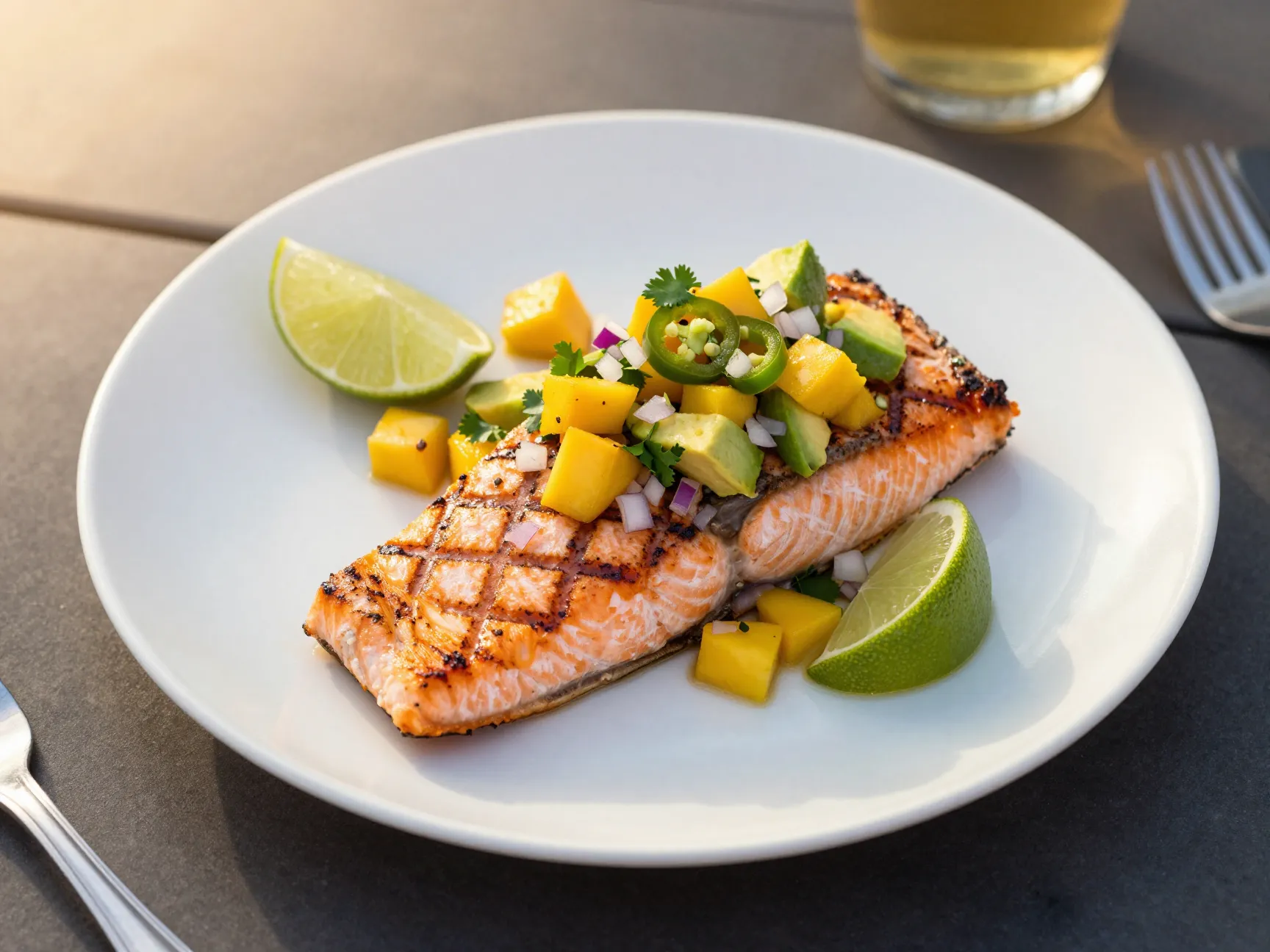
This recipe does require a grill or grill pan, but the actual cooking time is under 10 minutes. The mango salsa can be prepared entirely ahead of time and refrigerated, meaning dinner comes together fast even on the hottest evenings.
Ingredients:
- 4 salmon fillets (about 6 oz each)
- 1 tablespoon olive oil
- Salt, pepper, and smoked paprika for seasoning
- 1 ripe mango, diced
- 1 avocado, diced
- 1/2 red onion, finely diced
- Juice of 1 lime
- 2 tablespoons fresh cilantro, chopped
- 1 small jalapeño, seeded and minced (optional)
Instructions: Brush salmon with olive oil and season with salt, pepper, and smoked paprika. Grill over medium-high heat for 4-5 minutes per side until cooked through. Combine mango, avocado, red onion, lime juice, cilantro, and jalapeño in a bowl. Spoon salsa generously over each fillet and serve.
Why it works: Salmon is one of the richest sources of omega-3 fatty acids, which support heart health and reduce inflammation. Mango provides vitamin C and beta-carotene, while avocado adds healthy monounsaturated fats. Together, this dish is a nutritional powerhouse that feels indulgent without being heavy.
4. Zucchini Noodles with Pesto and Cherry Tomatoes
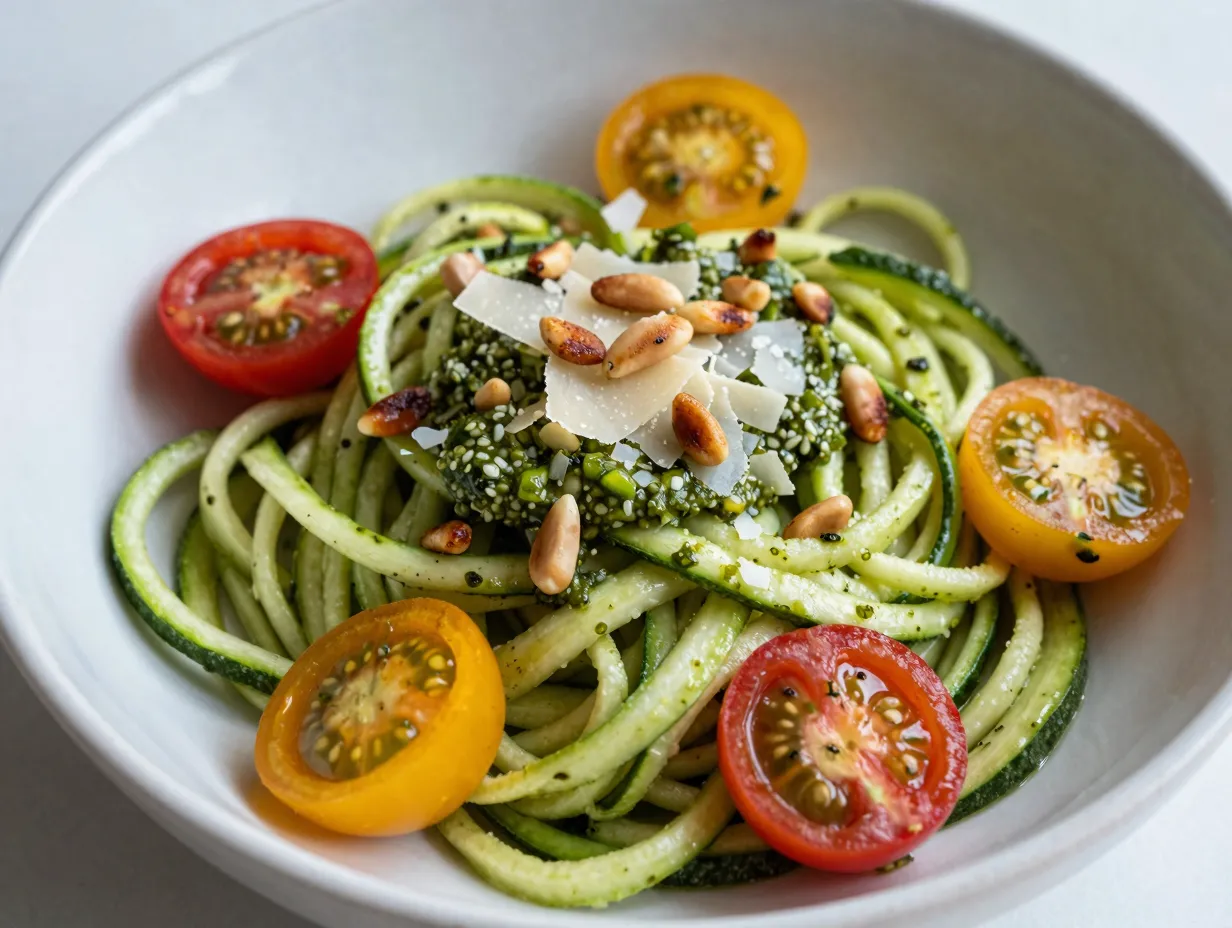
Zucchini noodles, often called “zoodles,” have become a staple in light summer cooking for good reason. They mimic the texture of pasta without the caloric density, and they pair beautifully with fresh pesto.
Ingredients:
- 4 medium zucchini, spiralized
- 1/2 cup store-bought or homemade basil pesto
- 1 cup cherry tomatoes, halved
- 2 tablespoons pine nuts, toasted
- Shaved Parmesan for serving
- Salt and pepper to taste
Instructions: Place spiralized zucchini in a large bowl. Add pesto and toss to coat evenly. Fold in cherry tomatoes. Top with toasted pine nuts and shaved Parmesan. Season with salt and pepper. Serve at room temperature or slightly chilled.
Why it works: One medium zucchini contains only about 33 calories and provides potassium, vitamin C, and B vitamins. This dish requires no cooking at all if you use store-bought pesto. It is ready in under 10 minutes and feels satisfying without the post-meal heaviness of traditional pasta.
| Recipe | Prep Time | Cook Time | Calories (approx.) |
|---|---|---|---|
| Watermelon Feta Salad | 5 min | 0 min | 120 |
| Chilled Gazpacho | 15 min | 0 min | 95 |
| Grilled Salmon with Mango Salsa | 15 min | 10 min | 380 |
| Zucchini Noodles with Pesto | 10 min | 0 min | 210 |
| Greek Yogurt Parfait | 5 min | 0 min | 240 |
| Cucumber Avocado Rolls | 15 min | 0 min | 160 |
| Quinoa Tabbouleh | 20 min | 15 min | 195 |
| Shrimp Lettuce Wraps | 10 min | 8 min | 175 |
| Frozen Banana Nice Cream | 5 min | 0 min | 130 |
5. Greek Yogurt Parfait with Seasonal Berries and Granola
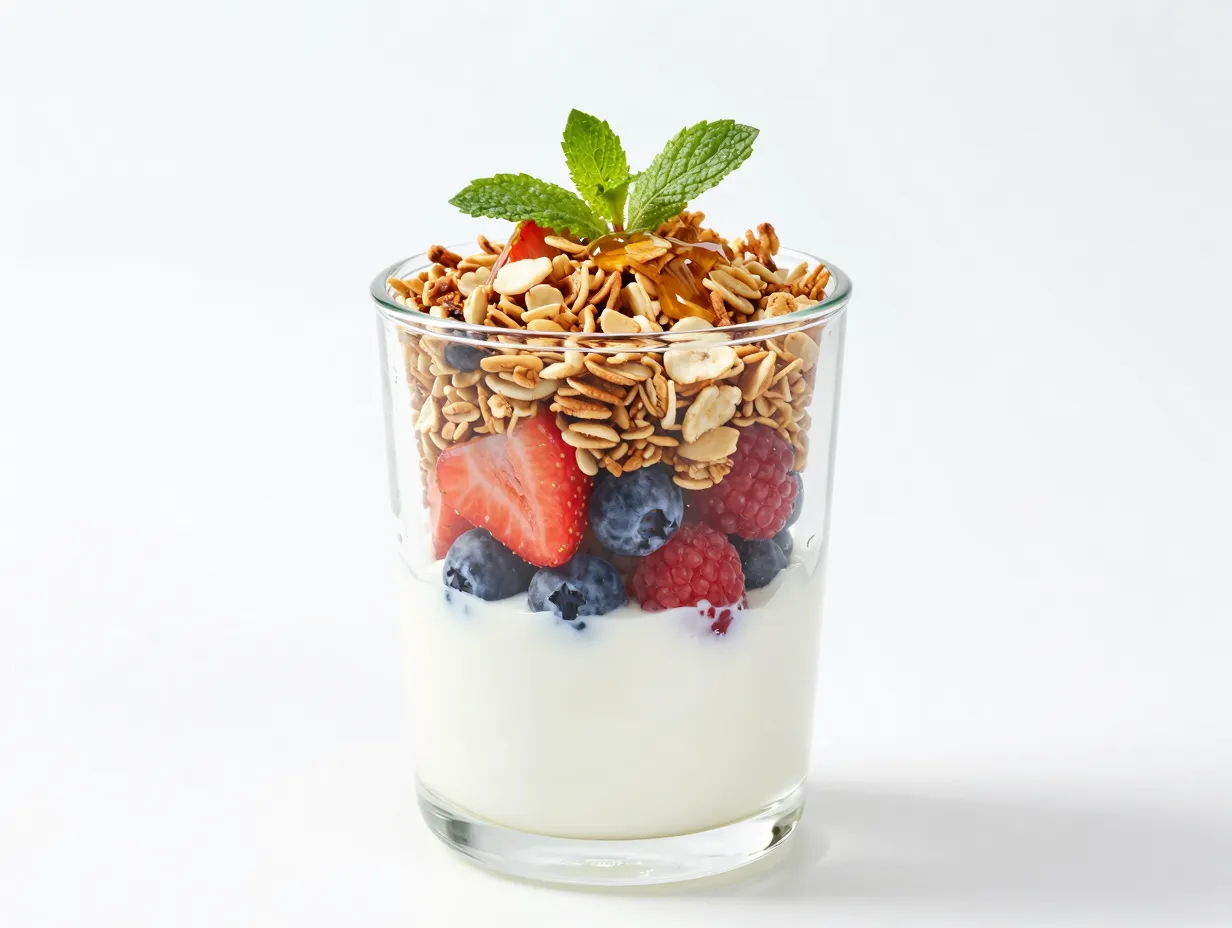
This one doubles as breakfast, a midday snack, or a light dessert. The combination of protein-rich Greek yogurt, antioxidant-packed berries, and crunchy granola hits multiple nutritional targets in a single bowl.
Ingredients:
- 1 cup plain full-fat or 2% Greek yogurt
- 1/2 cup mixed berries (strawberries, blueberries, raspberries)
- 1/4 cup low-sugar granola
- 1 teaspoon honey
- Fresh mint leaves for garnish
Instructions: Spoon Greek yogurt into a glass or bowl. Layer berries over the yogurt. Top with granola and drizzle with honey. Garnish with mint and serve immediately, or refrigerate without the granola and add it just before eating to maintain crunch.
Why it works: Greek yogurt delivers roughly 17-20 grams of protein per cup, which supports muscle maintenance and keeps you full longer. Berries are among the highest antioxidant foods available, and their natural sweetness means you need very little added sugar. This parfait is ready in five minutes flat.
6. Cucumber Avocado Rolls with Sesame Dipping Sauce
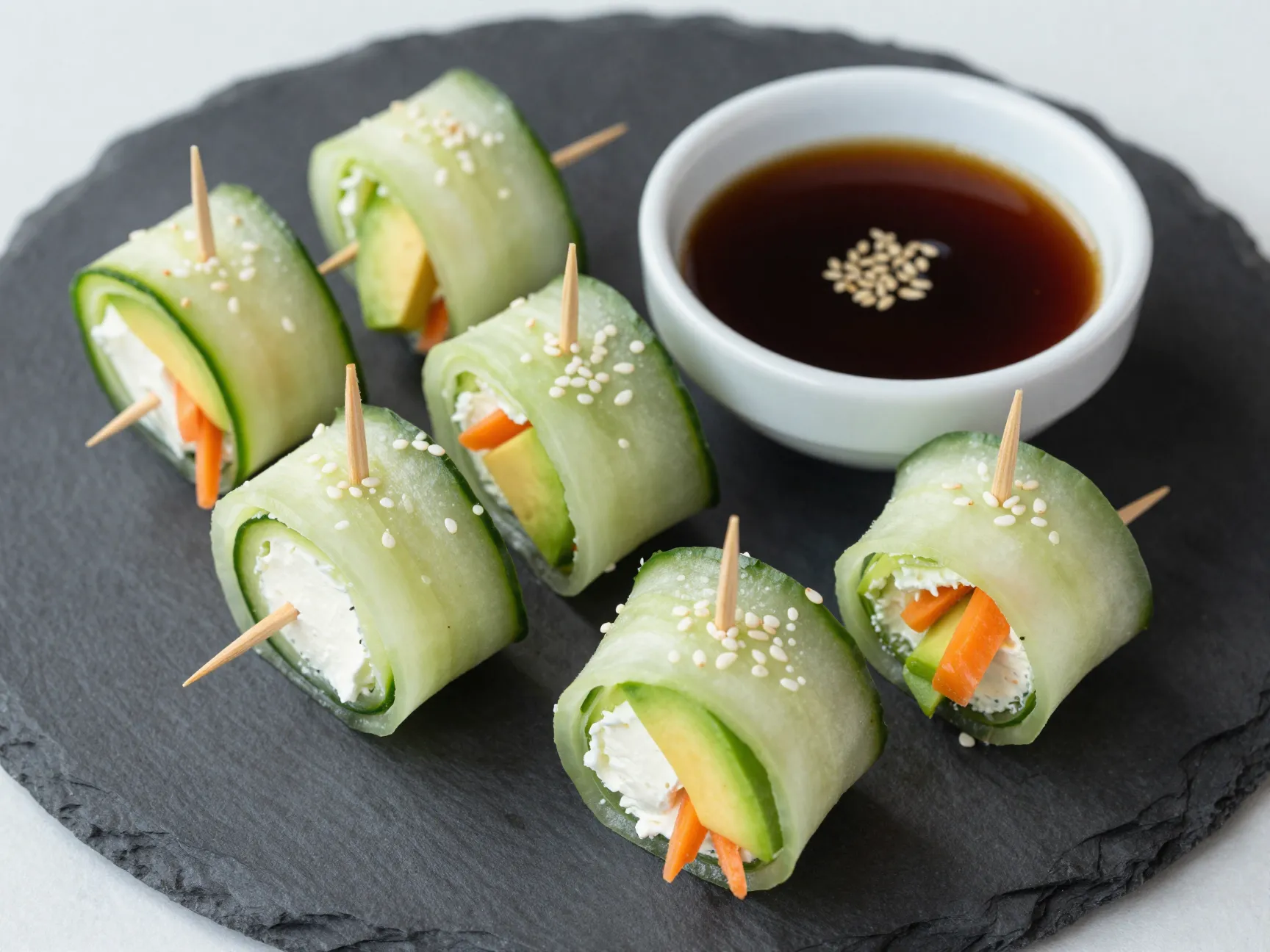
These no-carb rolls are one of my personal favorites for summer entertaining. They look impressive, require no cooking, and disappear from the plate within minutes at any gathering.
Ingredients:
- 2 large English cucumbers
- 1 ripe avocado, thinly sliced
- 4 oz cream cheese or hummus
- 1 medium carrot, julienned
- 2 tablespoons sesame seeds
- For the dipping sauce: 2 tablespoons low-sodium soy sauce, 1 teaspoon sesame oil, 1 teaspoon rice vinegar, 1/2 teaspoon honey
Instructions: Use a vegetable peeler or mandoline to slice cucumbers into long, thin ribbons. Spread a thin layer of cream cheese or hummus on each ribbon. Place a slice of avocado and a few carrot strips at one end. Roll tightly and secure with a toothpick. Sprinkle with sesame seeds. Whisk together dipping sauce ingredients and serve alongside.
Why it works: Cucumbers are 96% water and extremely low in calories. Avocado provides heart-healthy fats and potassium. These rolls are naturally gluten-free and can be adapted for vegan diets by swapping cream cheese for hummus.
7. Quinoa Tabbouleh with Lemon and Fresh Herbs
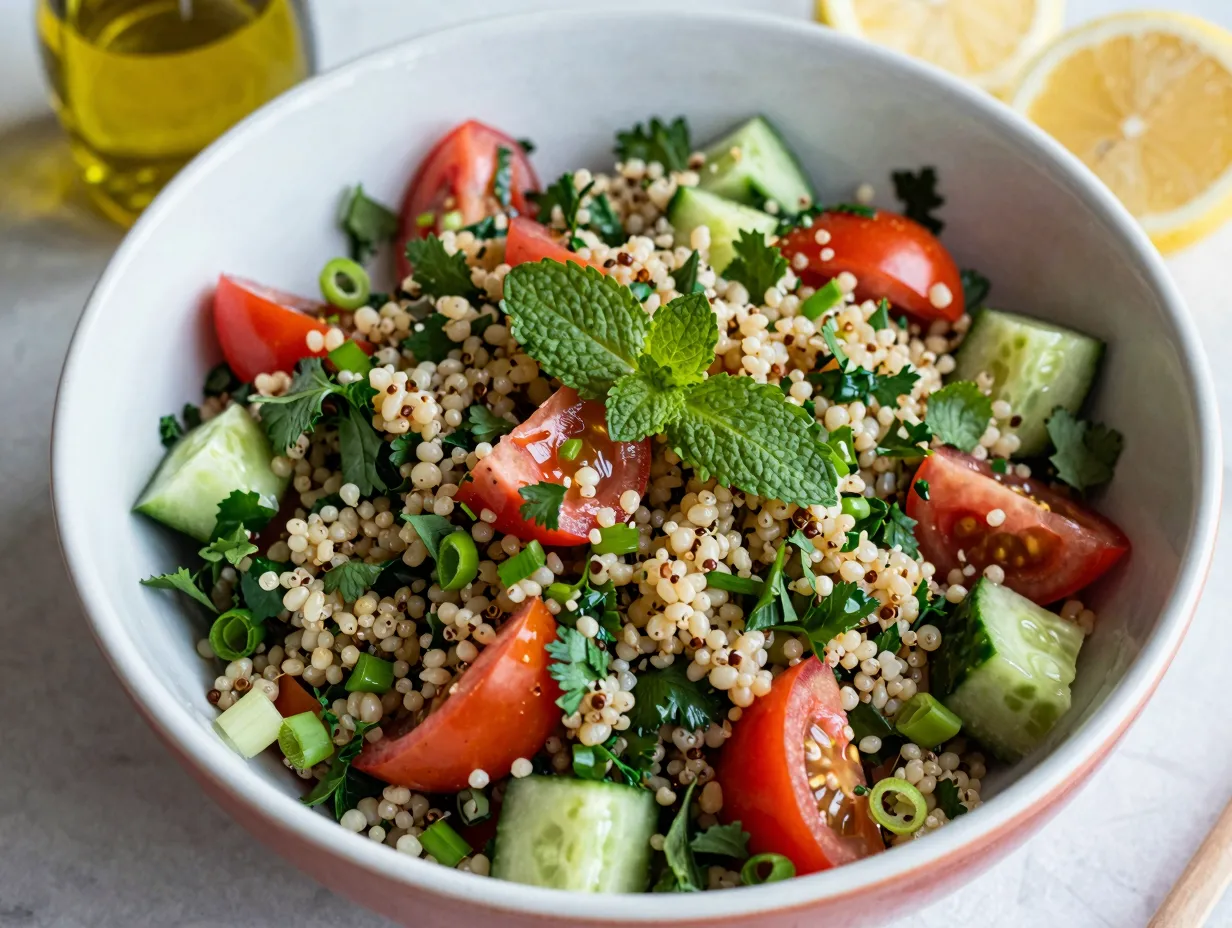
Traditional tabbouleh uses bulgur wheat, but swapping it for quinoa makes this version higher in protein and naturally gluten-free. The result is a grain salad that travels well, tastes better after a day in the refrigerator, and works as a side dish or a main course.
Ingredients:
- 1 cup dry quinoa, cooked and cooled
- 2 cups fresh flat-leaf parsley, finely chopped
- 1/2 cup fresh mint, finely chopped
- 2 medium tomatoes, diced
- 1 English cucumber, diced
- 4 green onions, thinly sliced
- Juice of 2 lemons
- 3 tablespoons extra-virgin olive oil
- Salt and pepper to taste
Instructions: Cook quinoa according to package directions. Spread on a baking sheet to cool completely. Combine cooled quinoa with parsley, mint, tomatoes, cucumber, and green onions in a large bowl. Whisk together lemon juice, olive oil, salt, and pepper. Pour over salad and toss well. Refrigerate for at least 30 minutes before serving.
Why it works: Quinoa is one of the few plant-based complete proteins, meaning it contains all nine essential amino acids. Parsley is extraordinarily rich in vitamin K and vitamin C. This salad improves with time, making it ideal for meal prep.
Pro tip: Make a double batch on Sunday. It keeps well in the refrigerator for up to four days and works as a quick lunch throughout the week.
8. Chilled Shrimp Lettuce Wraps with Ginger Peanut Sauce
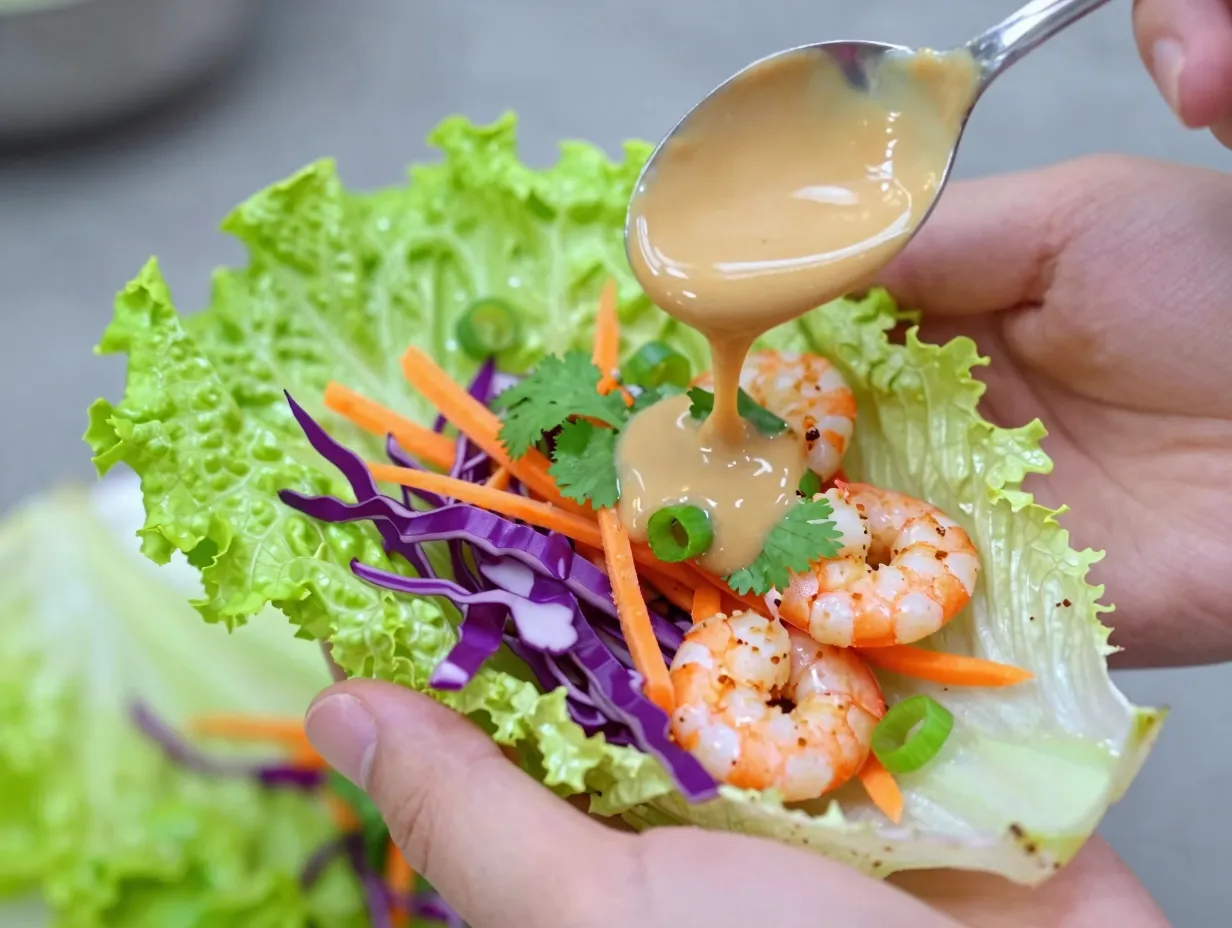
Lettuce wraps are the ultimate hot-weather meal. They are light, crunchy, and endlessly adaptable. This version uses quickly sauteed shrimp and a bold ginger peanut sauce that brings everything together.
Ingredients:
- 1 lb medium shrimp, peeled and deveined
- 1 tablespoon coconut oil
- 1 teaspoon garlic powder
- Salt and pepper
- 1 head butter lettuce, leaves separated
- 1 cup shredded purple cabbage
- 1 medium carrot, shredded
- Fresh cilantro and sliced green onions for topping
- For the sauce: 3 tablespoons natural peanut butter, 1 tablespoon low-sodium soy sauce, 1 tablespoon lime juice, 1 teaspoon fresh ginger (grated), 1 teaspoon honey, 2 tablespoons warm water
Instructions: Season shrimp with garlic powder, salt, and pepper. Heat coconut oil in a skillet over medium-high heat. Cook shrimp for 2-3 minutes per side until pink and opaque. Remove from heat and allow to cool slightly. Whisk together all sauce ingredients until smooth. Assemble wraps by layering cabbage, carrot, and shrimp in each lettuce leaf. Drizzle with peanut sauce and top with cilantro and green onions.
Why it works: Shrimp is one of the leanest protein sources available, with roughly 20 grams of protein per 3-ounce serving and very few calories. Butter lettuce is delicate and mild, making it a perfect vessel. The ginger in the sauce has documented anti-inflammatory properties.
9. Frozen Banana Nice Cream with Berries
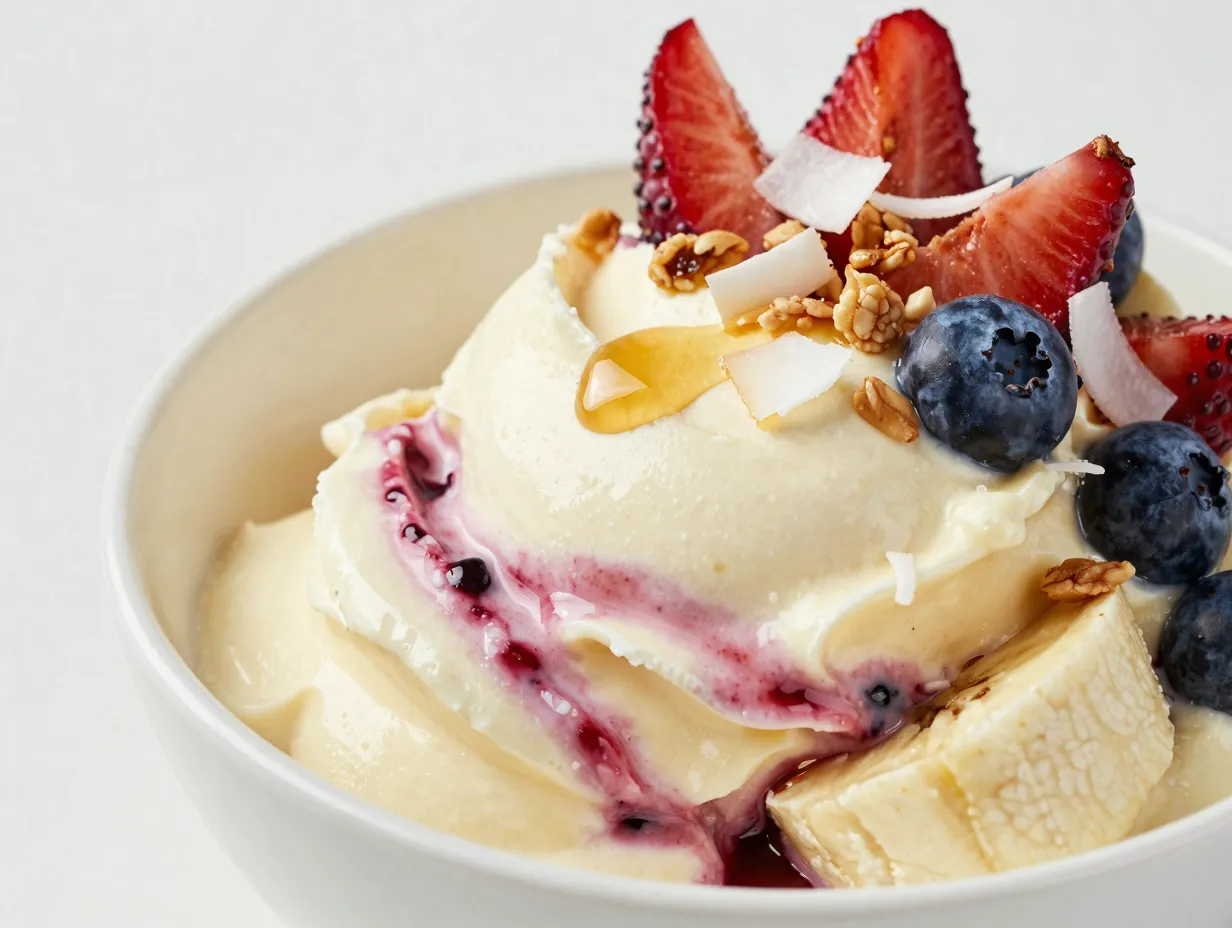
This is the dessert that convinced me I did not need ice cream in summer. Frozen bananas, when blended, take on a creamy, scoopable texture that is remarkably similar to soft-serve ice cream. The best part is that it contains only one ingredient at its base.
Ingredients:
- 4 ripe bananas, peeled, sliced, and frozen overnight
- 1/2 cup fresh or frozen mixed berries
- 1 tablespoon almond butter (optional)
- Toppings: sliced fresh fruit, granola, coconut flakes, a drizzle of honey
Instructions: Remove frozen banana slices from the freezer and let them sit for 2-3 minutes. Place in a high-powered blender or food processor. Blend, scraping down the sides as needed, until completely smooth and creamy. Add berries and almond butter if using, and pulse a few more times to swirl in. Serve immediately as soft-serve or transfer to a freezer-safe container and freeze for 1-2 hours for a firmer scoop.
Why it works: Bananas provide natural sugars, potassium, and vitamin B6. Unlike commercial ice cream, this version contains no added sugar, no artificial ingredients, and no dairy. It is suitable for vegan, dairy-free, and refined sugar-free diets. At roughly 130 calories per serving, it satisfies a sweet craving without derailing a healthy eating pattern.
Tips for Making These Summer Recipes Work for You
Getting the most out of these 9 Summer Healthy Recipes That Are Fresh, Light, and Perfect for Hot Days comes down to a few practical habits.
Shop seasonally. Farmers markets in summer are stocked with the exact ingredients these recipes call for, often at lower prices and higher quality than grocery stores. Ripe, in-season tomatoes for gazpacho and peak-sweetness watermelon for the feta salad make a noticeable difference.
Batch prep on cooler mornings. If you live somewhere that gets genuinely hot, cooking or prepping in the early morning hours before temperatures peak makes the whole process more comfortable. The quinoa tabbouleh, gazpacho, and peanut sauce can all be made in advance and refrigerated.
Keep your freezer stocked with ripe bananas. Whenever bananas start to get very ripe, peel and slice them into a zip-lock bag and freeze them. You will always have the base for nice cream ready to go.
Hydrate alongside your meals. Even with water-rich foods, drinking adequate water throughout the day remains essential. Infused water with cucumber, mint, and lemon is a natural companion to these recipes.
Scale up for gatherings. Most of these dishes scale easily. The watermelon feta salad, cucumber avocado rolls, and shrimp lettuce wraps are particularly well-suited for outdoor entertaining because they require no reheating and hold up well at room temperature for short periods.
Conclusion
Summer eating does not have to mean deprivation or complicated meal planning. The 9 Summer Healthy Recipes That Are Fresh, Light, and Perfect for Hot Days covered in this article prove that the season’s best meals are often the simplest ones, built from fresh produce, lean proteins, and bright, clean flavors.
Start with one or two recipes this week. The watermelon feta salad and frozen banana nice cream are the easiest entry points, requiring no cooking at all. Once you see how satisfying and genuinely delicious light summer eating can be, adding the others becomes natural.
Actionable next steps:
- Write a shopping list based on two or three recipes from this list and shop at your local farmers market this weekend.
- Freeze four ripe bananas today so you have nice cream ready by tomorrow.
- Make a double batch of quinoa tabbouleh on Sunday for easy weekday lunches.
- Try the gazpacho at least once before summer ends. It takes 15 minutes to prepare and will likely become a seasonal staple.
Eating well in summer is genuinely one of the easiest times of year to do it. The produce is exceptional, the cooking is minimal, and the results speak for themselves.
References
- International Food Information Council. (2023). Food and Health Survey. IFIC Foundation.
- Bhupathiraju, S. N., & Tucker, K. L. (2011). Coronary heart disease prevention: nutrients, foods, and dietary patterns. Clinica Chimica Acta, 412(17-18), 1493-1514.
- Dreher, M. L., & Davenport, A. J. (2013). Hass avocado composition and potential health effects. Critical Reviews in Food Science and Nutrition, 53(7), 738-750.
- Mozaffarian, D., & Wu, J. H. (2011). Omega-3 fatty acids and cardiovascular disease: effects on risk factors, molecular pathways, and clinical events. Journal of the American College of Cardiology, 58(20), 2047-2067.
- Benzie, I. F., & Wachtel-Galor, S. (Eds.). (2011). Herbal Medicine: Biomolecular and Clinical Aspects (2nd ed.). CRC Press/Taylor and Francis.
- Slavin, J., & Lloyd, B. (2012). Health benefits of fruits and vegetables. Advances in Nutrition, 3(4), 506-516.