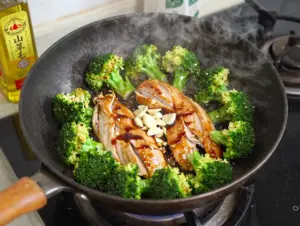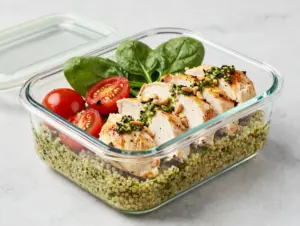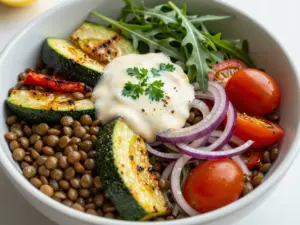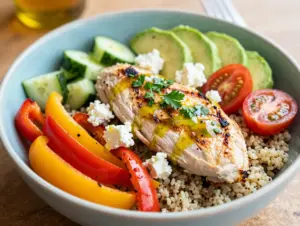
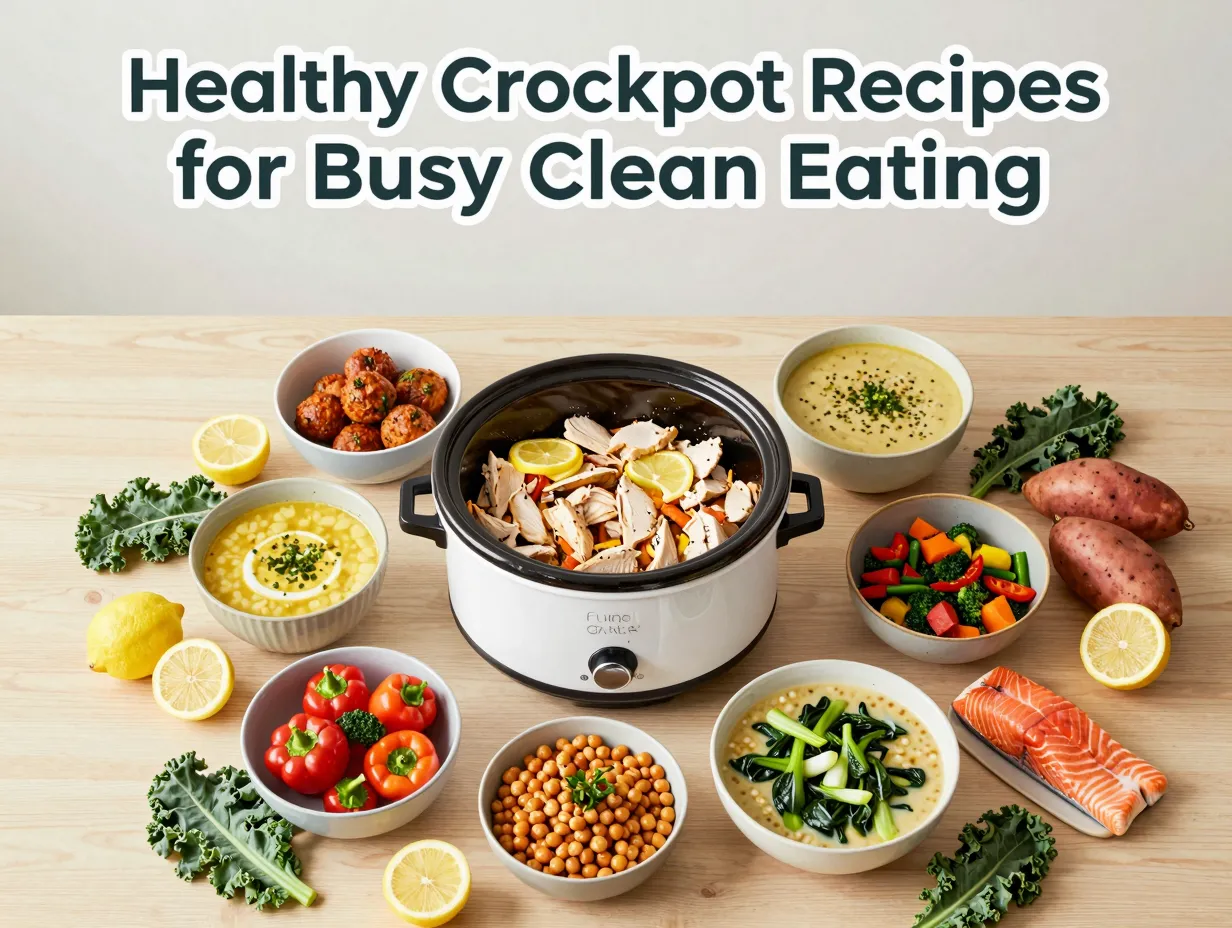
8 Healthy Crockpot Recipes for Clean Eating That Basically Cook Themselves
Only 1 in 10 Americans meets the daily recommended intake for vegetables and fruits, according to the CDC, yet most people say lack of time is the biggest barrier to eating well. That gap between intention and action is exactly where a slow cooker becomes one of the most powerful tools in your kitchen. These 8 healthy crockpot recipes for clean eating that basically cook themselves are designed to close that gap. You load the ingredients in the morning, walk away, and come home to a nourishing, whole-food meal that required almost zero active effort.
Disclosure: This post contains affiliate links. As an Amazon Associate, we earn from qualifying purchases, and at no extra cost to you.
I started using my crockpot consistently about three years ago after a particularly chaotic work stretch left me relying on takeout five nights a week. My energy was low, my grocery budget was wrecked, and I felt like healthy eating was something that happened to people with more time. The slow cooker changed that story. These eight recipes are the ones I keep coming back to, and they are built on clean, minimally processed ingredients that support real nutrition goals.
Key Takeaways
- All eight recipes use whole, minimally processed ingredients that align with clean eating principles.
- Slow cooker meals require minimal active prep time, making healthy eating realistic on busy schedules.
- The recipes cover a range of dietary needs: high-protein, vegetarian, plant-based, and omega-3-rich options.
- Most dishes are meal-prep friendly and store well for three to five days in the refrigerator.
- Clean eating does not require expensive or hard-to-find ingredients, these recipes use accessible staples.
What Clean Eating Actually Means for Crockpot Cooking
Before diving into the recipes, it helps to define what “clean eating” means in a practical sense. Clean eating is not a rigid diet. It is a framework focused on choosing whole, minimally processed foods, vegetables, lean proteins, legumes, whole grains, and healthy fats, while limiting refined sugars, artificial additives, and heavily processed packaged foods.
The slow cooker is a natural fit for this approach because:
- Long, low heat preserves the natural flavors of whole ingredients without requiring added fats or heavy sauces.
- Batch cooking is built into the format, most recipes yield four to six servings.
- Minimal intervention means you are less tempted to reach for shortcuts like processed flavor packets.
A clean eating crockpot meal typically follows this simple formula:
| Component | Clean Eating Examples | What to Avoid |
|---|---|---|
| Protein | Chicken breast, turkey, salmon, lentils, chickpeas | Processed deli meats, canned meats with additives |
| Carbohydrates | Sweet potatoes, quinoa, brown rice, white beans | White pasta, refined flour products |
| Vegetables | Kale, bok choy, bell peppers, tomatoes, spinach | Canned vegetables with high sodium |
| Flavor | Fresh garlic, herbs, spices, lemon, salsa verde | Flavor packets, artificial seasonings |
| Fat | Coconut milk, olive oil, salmon’s natural oils | Butter-heavy sauces, cream-based soups |
With that foundation in place, here are the 8 healthy crockpot recipes for clean eating that basically cook themselves.
The 8 Healthy Crockpot Recipes for Clean Eating That Basically Cook Themselves
1. Lemon Garlic Chicken with Sweet Potatoes
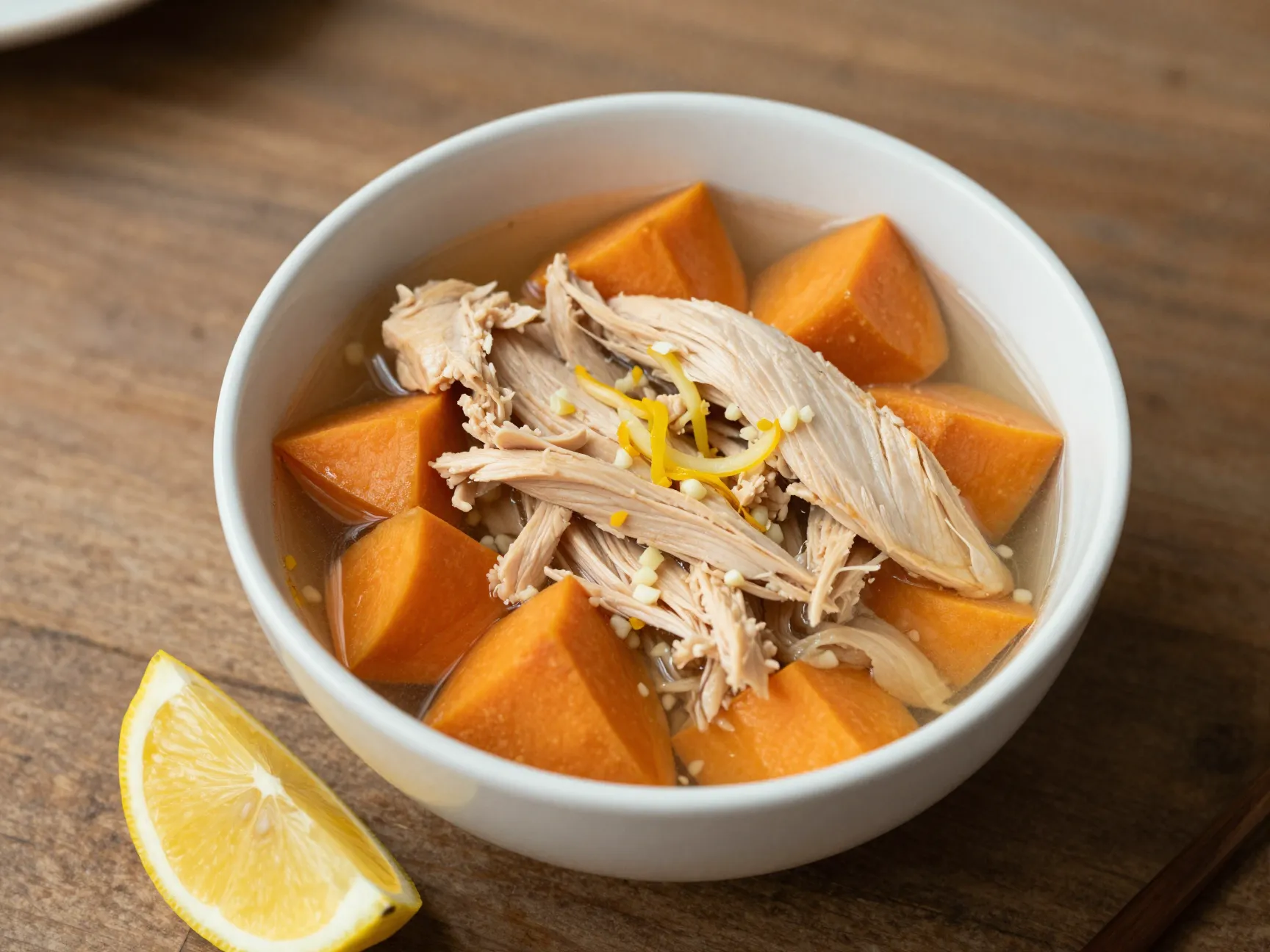
This is the recipe I recommend to anyone who is new to clean eating crockpot cooking. It is straightforward, deeply satisfying, and delivers a balanced plate without any complicated steps.
What goes in: Lean chicken breasts, cubed sweet potatoes, minced garlic, fresh lemon juice, lemon zest, dried thyme, olive oil, salt, and black pepper.
Why it works nutritionally: Chicken breast is one of the leanest protein sources available, providing roughly 31 grams of protein per 100 grams. Sweet potatoes deliver complex carbohydrates, vitamin A, and potassium. Lemon and garlic add antioxidant compounds without adding calories or sodium. [1]
Cook time: 6 to 8 hours on low, or 3 to 4 hours on high.
Pro tip: Add the lemon juice in the last 30 minutes of cooking to keep the citrus flavor bright rather than bitter.
This dish stores well for up to four days and reheats without losing texture, making it ideal for weekly meal prep.
2. Mediterranean Turkey Meatballs in Tomato Sauce
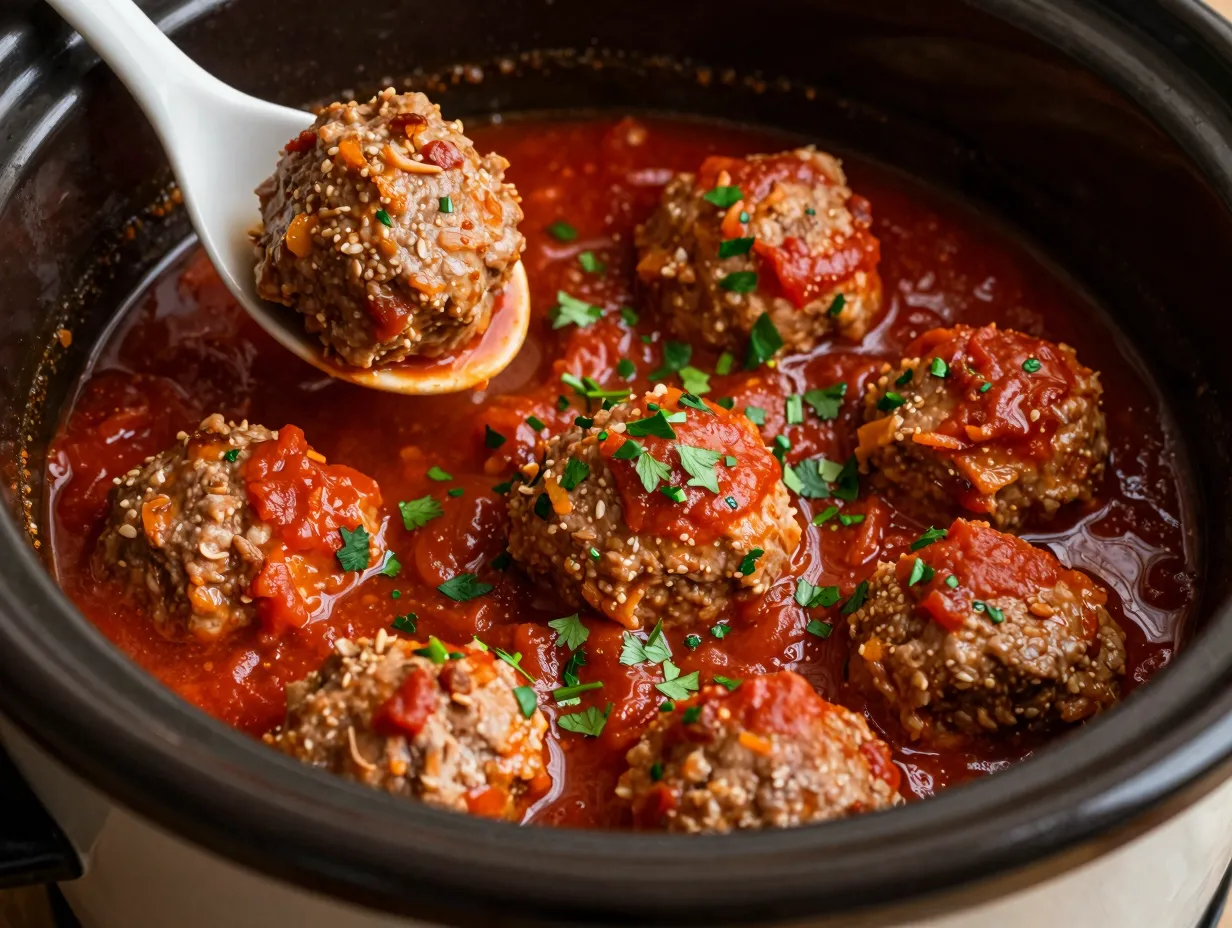
Turkey meatballs often get overlooked in favor of beef, but lean ground turkey delivers a high-protein, low-fat result that holds up beautifully in a slow cooker. Paired with a herb-forward tomato sauce, this dish brings the flavors of the Mediterranean to a weeknight dinner with almost no hands-on time. [1]
What goes in: Ground turkey, egg, almond flour (as a binder), garlic, fresh parsley, dried oregano, crushed tomatoes, diced onion, and a pinch of red pepper flakes.
Why it works nutritionally: Ground turkey is lower in saturated fat than ground beef while still providing complete protein. Crushed tomatoes are rich in lycopene, an antioxidant linked to reduced inflammation. Using almond flour instead of breadcrumbs keeps the recipe grain-free and adds a small dose of healthy fat.
Cook time: 4 to 5 hours on low.
Serving suggestion: Serve over zucchini noodles or alongside a large green salad to keep the meal light and vegetable-forward.
“The slow cooker does something to turkey meatballs that no oven can replicate, it keeps them tender and moist all the way through.”
3. Coconut Curry Lentil Soup
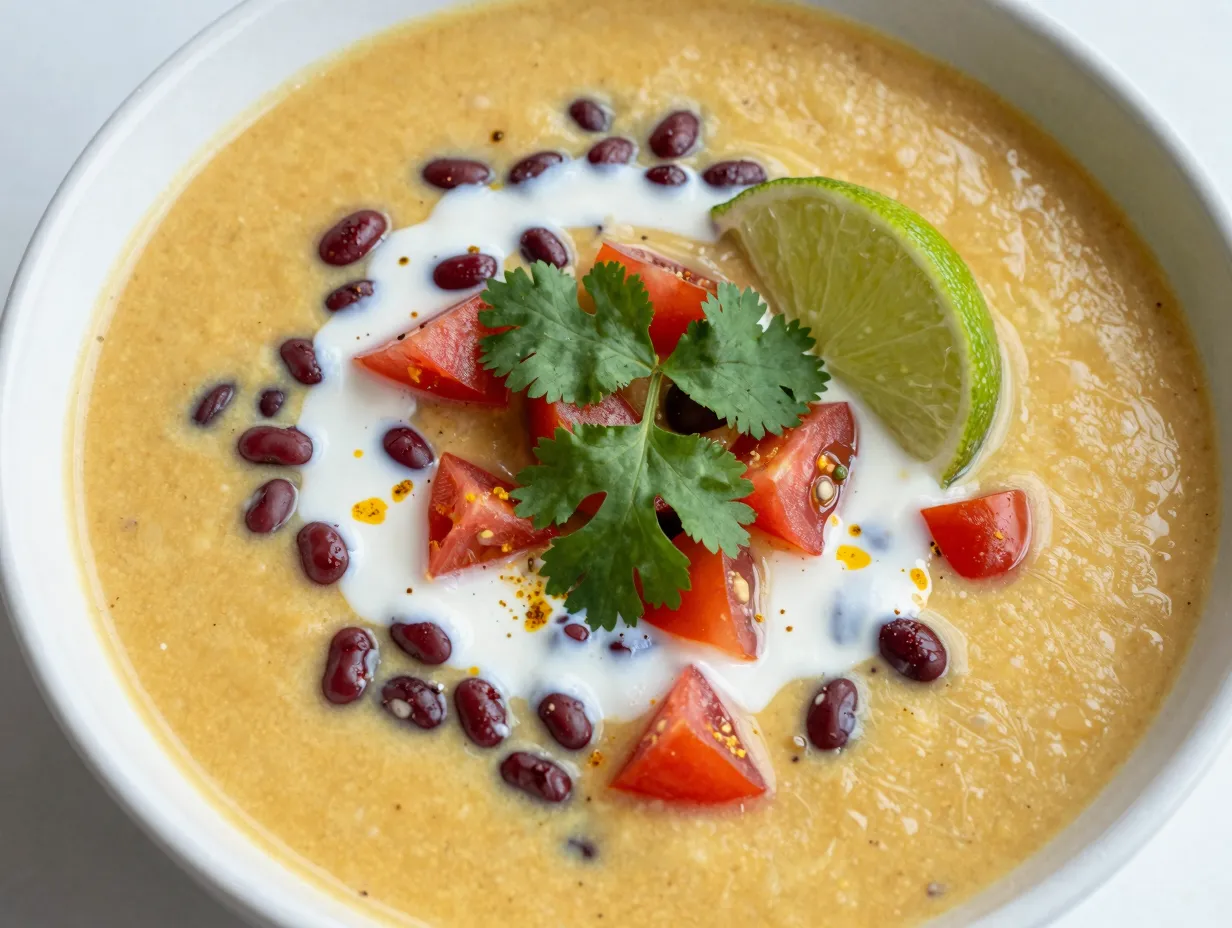
This is the recipe that converted several of my meat-eating friends to the idea that plant-based meals can be genuinely filling. Lentils are a nutritional powerhouse, and simmering them in coconut curry broth for hours creates a depth of flavor that tastes like it took all day, because it did, just without your involvement. [1]
What goes in: Red or green lentils, full-fat coconut milk, diced tomatoes, vegetable broth, yellow onion, garlic, fresh ginger, curry powder, turmeric, cumin, and a squeeze of lime at the end.
Why it works nutritionally:
- Lentils provide approximately 18 grams of protein per cooked cup along with 16 grams of fiber.
- Turmeric contains curcumin, a compound with well-documented anti-inflammatory properties.
- Coconut milk adds healthy medium-chain triglycerides (MCTs) and makes the soup satisfying enough to serve as a complete meal.
Cook time: 6 to 8 hours on low.
Make it a meal: Serve with a small portion of brown rice or a slice of whole-grain bread to round out the amino acid profile.
4. Salsa Verde Chicken Bowls
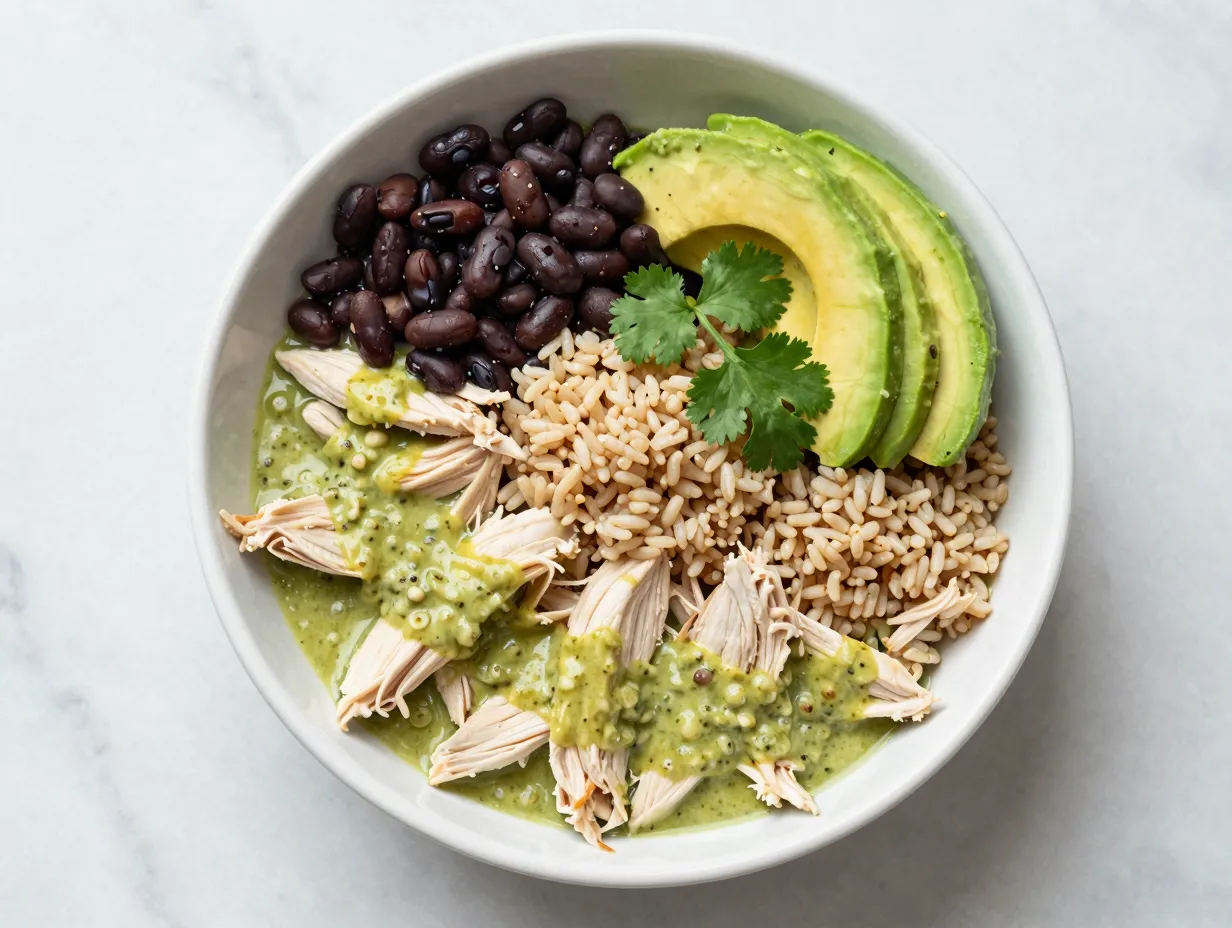
If you want the simplest recipe on this list, this is it. The ingredient list is short, the prep time is under five minutes, and the result is a versatile protein that works in bowls, wraps, tacos, or on its own. [1]
What goes in: Boneless skinless chicken breasts, jarred salsa verde (look for one with no added sugar or artificial ingredients), cumin, garlic powder, and a pinch of salt.
Why it works nutritionally: Salsa verde is made primarily from tomatillos, which are low in calories and high in vitamin C. The chicken absorbs the tangy, slightly spicy sauce during the long cook, eliminating any need for added oils or heavy seasonings.
Cook time: 6 to 8 hours on low, then shred with two forks directly in the pot.
Serving suggestion: Spoon over brown rice or quinoa, add black beans, sliced avocado, and fresh cilantro for a complete clean eating bowl that hits every macronutrient target.
Meal prep note: This chicken freezes exceptionally well. Make a double batch and freeze half in portion-sized containers.
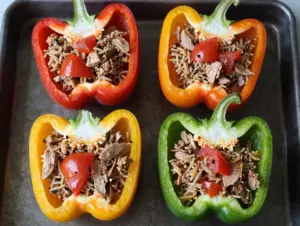
5. Herb Quinoa and Veggie Stuffed Peppers
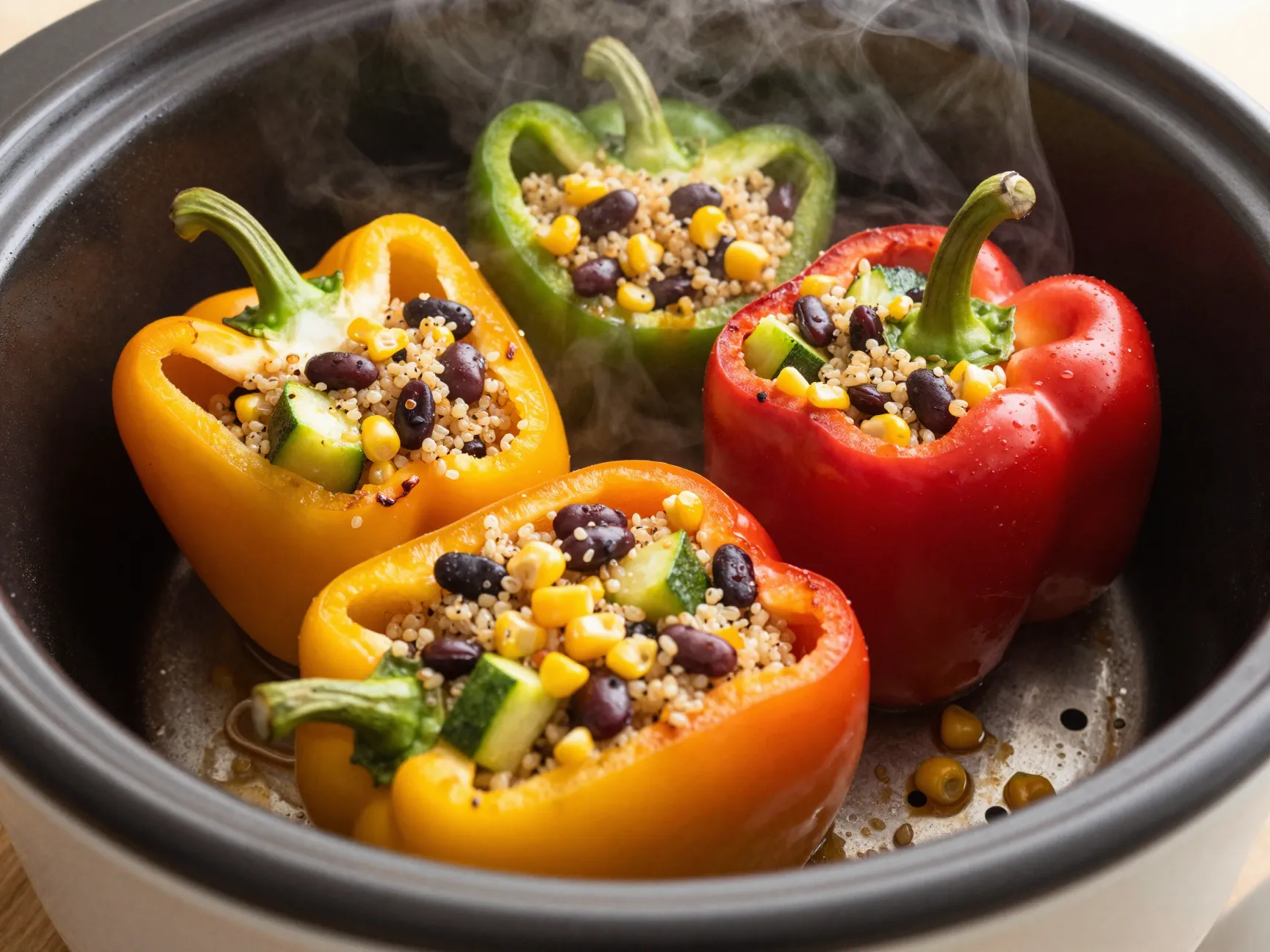
Stuffed peppers are a classic for a reason, they are visually appealing, portion-controlled by nature, and endlessly adaptable. The slow cooker version is particularly forgiving because the gentle heat softens the peppers to a perfect tender texture without any risk of burning. [1]
What goes in: Bell peppers (any color), cooked quinoa, diced zucchini, corn kernels, black beans, diced tomatoes, garlic, cumin, smoked paprika, fresh parsley, and a small amount of vegetable broth in the bottom of the crockpot to create steam.
Why it works nutritionally: Quinoa is one of the few plant foods that contains all nine essential amino acids, making it a complete protein. Combined with black beans, this filling provides both protein and fiber in a single serving. Bell peppers are among the highest vegetable sources of vitamin C.
Cook time: 4 to 5 hours on low.
Tip: Pre-cook the quinoa before adding it to the filling. This prevents the peppers from becoming waterlogged during the long cook.
6. Moroccan Chickpea Stew
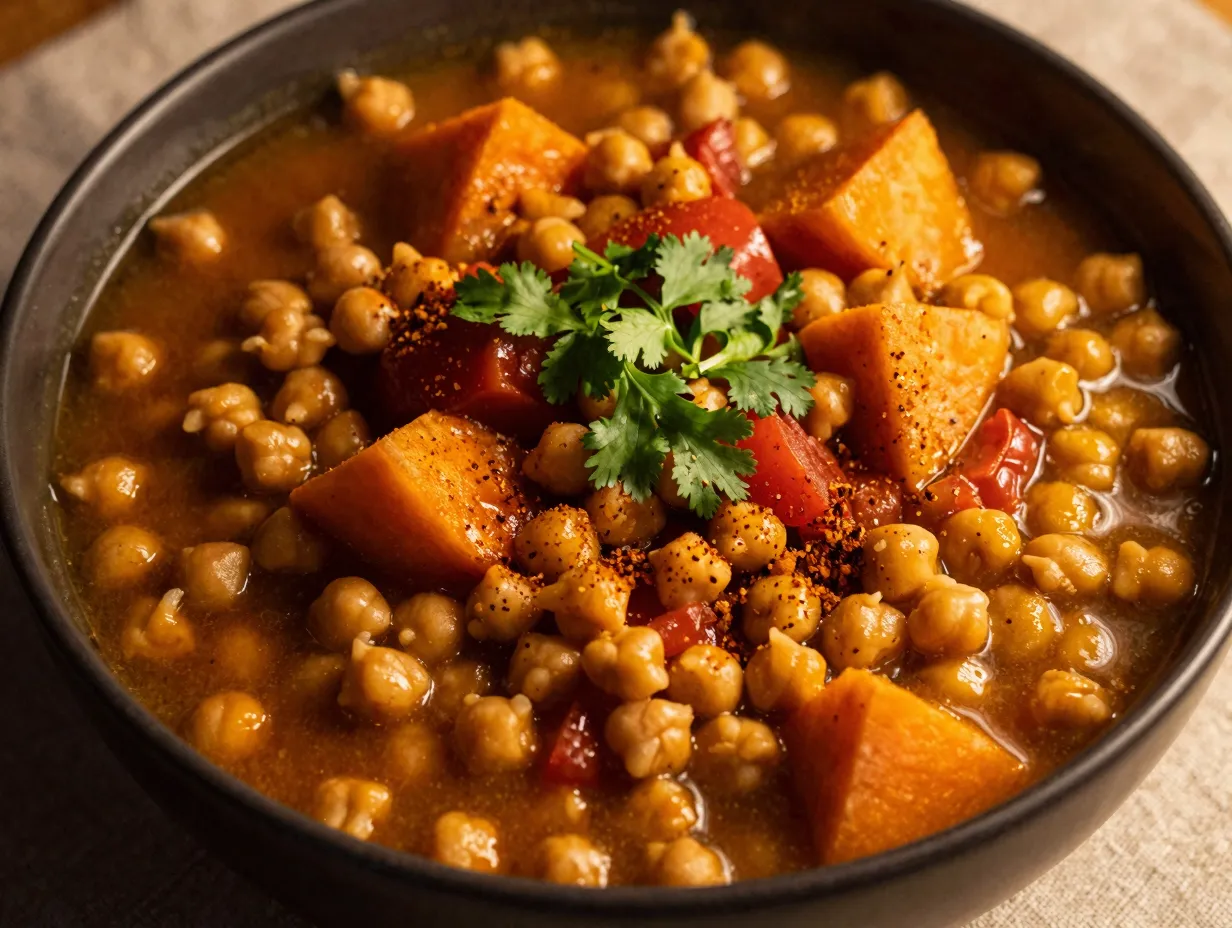
Moroccan cuisine is built on bold spices that transform humble ingredients into something extraordinary. This stew is proof that plant-based eating does not have to be bland or boring. The combination of warming spices, cinnamon, cumin, coriander, and paprika, creates a complex flavor profile that makes this one of the most requested recipes in my rotation. [1]
What goes in: Canned chickpeas (drained and rinsed), diced tomatoes, vegetable broth, diced sweet potato, yellow onion, garlic, ground cinnamon, cumin, coriander, smoked paprika, cayenne, and fresh cilantro to finish.
Why it works nutritionally:
- Chickpeas provide approximately 15 grams of protein and 13 grams of fiber per cooked cup.
- Cinnamon has been studied for its potential role in supporting blood sugar regulation.
- The combination of chickpeas and sweet potato delivers both protein and slow-digesting carbohydrates for sustained energy.
Cook time: 6 to 8 hours on low.
Serving suggestion: Serve over cauliflower rice for a lower-carb option, or with a small portion of whole-grain couscous for a more traditional presentation.
7. Honey Sesame Salmon with Bok Choy
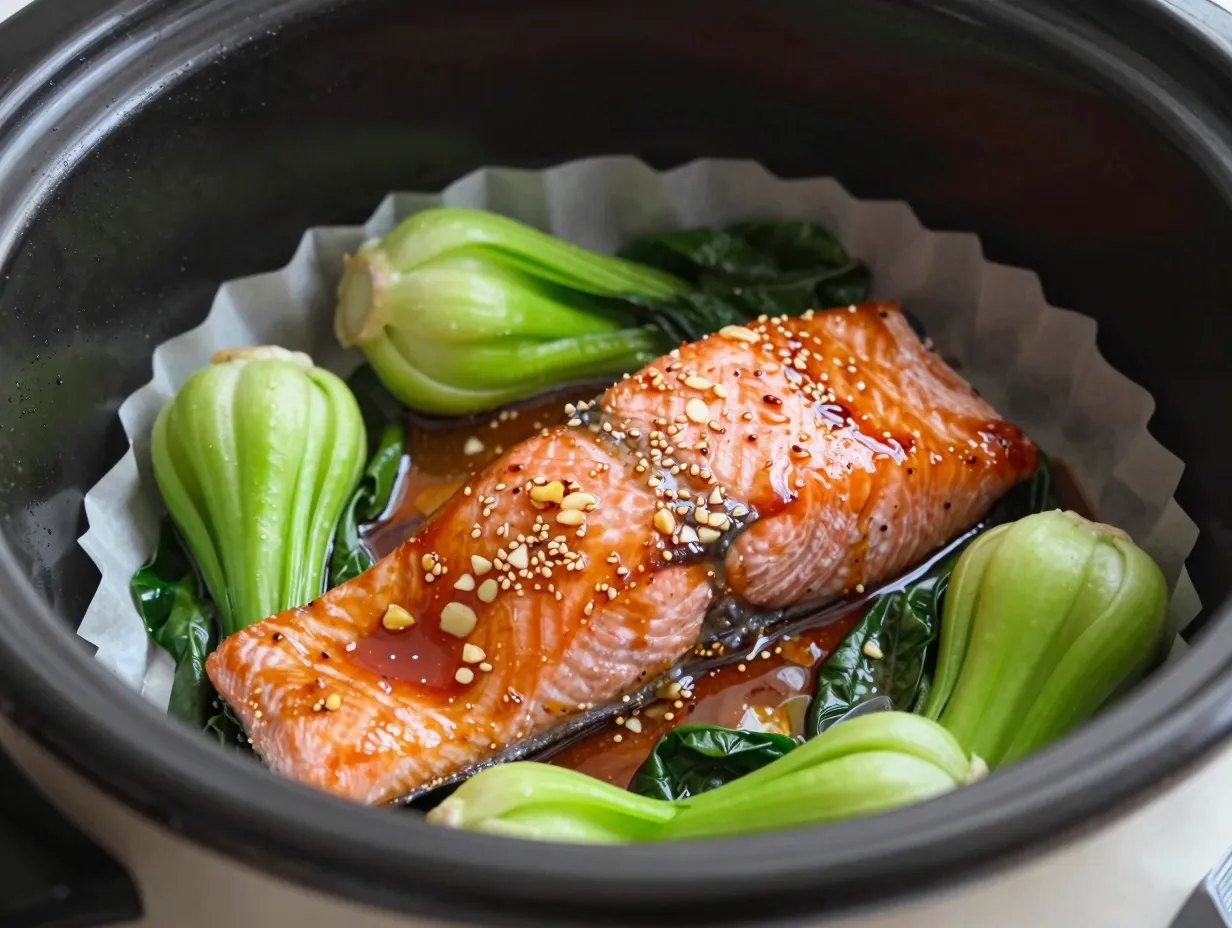
Salmon in a slow cooker might sound unconventional, but it works remarkably well when done correctly. The key is a shorter cook time and a glaze that caramelizes gently around the fillet. This recipe delivers restaurant-quality results with about three minutes of active prep. [1]
What goes in: Salmon fillets, raw honey, low-sodium tamari or soy sauce, sesame oil, minced garlic, fresh ginger, and bok choy placed around the salmon.
Why it works nutritionally: Salmon is one of the richest dietary sources of omega-3 fatty acids, specifically EPA and DHA, which support cardiovascular health, brain function, and inflammation reduction. Bok choy is a cruciferous vegetable packed with vitamins K and C, calcium, and folate.
Cook time: 1.5 to 2 hours on low. This is the one recipe on the list where timing matters more, overcooking salmon makes it dry.
Important note: Use raw honey rather than processed honey to keep this recipe clean. Raw honey retains its natural enzymes and antioxidants.
Pro tip: Line the crockpot insert with parchment paper for easy cleanup and to prevent the glaze from sticking.
8. Tuscan White Bean and Kale Soup
This soup is the definition of comfort food done clean. It is hearty enough to serve as a full meal, deeply savory from the combination of Italian herbs and white beans, and loaded with greens. I make this one almost every week from October through March. [1]
What goes in: Canned white beans (cannellini or great northern), chopped kale, diced tomatoes, vegetable or chicken broth, diced onion, garlic, dried rosemary, dried thyme, Italian seasoning, and a parmesan rind (optional, for depth of flavor).
Why it works nutritionally: White beans are an excellent source of plant-based protein and iron. Kale is one of the most nutrient-dense foods on the planet, a single cup provides more than 100% of the daily recommended intake for vitamins K and A. Together, these ingredients create a soup that is low in calories but extremely high in micronutrients.
Cook time: 6 to 8 hours on low.
Tip: Add the kale in the last 30 minutes of cooking to preserve its color, texture, and nutrient content. Kale that cooks for eight hours becomes mushy and loses its vibrant green color.
How to Make the Most of These Clean Eating Crockpot Meals
Getting the most out of these 8 healthy crockpot recipes for clean eating that basically cook themselves comes down to a few practical habits.
Batch cook strategically. Most of these recipes yield four to six servings. Cook two or three recipes on Sunday and you have lunches and dinners covered for the first half of the week. This approach, often called “Sunday meal prep,” dramatically reduces the likelihood of reaching for processed convenience foods on busy weeknights.
Invest in the right equipment. A 6-quart slow cooker handles all eight of these recipes comfortably. Look for a model with a programmable timer so it can switch to “warm” mode automatically when the cook time ends, this prevents overcooking if you are away longer than expected.
Keep a clean eating pantry stocked. Most of these recipes draw from the same core pantry staples:
- Canned chickpeas, white beans, and lentils
- Low-sodium vegetable and chicken broth
- Diced and crushed tomatoes
- Quinoa and brown rice
- Core spices: cumin, turmeric, smoked paprika, coriander, cinnamon, oregano
When these items are always on hand, pulling together a slow cooker meal becomes a five-minute task rather than a planning project.
Layer ingredients correctly. Root vegetables and dense proteins go on the bottom of the crockpot where heat is most intense. Delicate vegetables like kale or bok choy go in last. Acids like lemon juice and fresh herbs are best added at the end of cooking to preserve their brightness.
Nutritional Snapshot: All 8 Recipes at a Glance
| Recipe | Primary Protein Source | Dietary Fit | Cook Time (Low) |
|---|---|---|---|
| Lemon Garlic Chicken | Chicken breast | High-protein, gluten-free | 6-8 hours |
| Mediterranean Turkey Meatballs | Ground turkey | High-protein, low-fat | 4-5 hours |
| Coconut Curry Lentil Soup | Lentils | Vegan, high-fiber | 6-8 hours |
| Salsa Verde Chicken Bowls | Chicken breast | Gluten-free, dairy-free | 6-8 hours |
| Herb Quinoa Stuffed Peppers | Quinoa + black beans | Vegetarian, complete protein | 4-5 hours |
| Moroccan Chickpea Stew | Chickpeas | Vegan, anti-inflammatory | 6-8 hours |
| Honey Sesame Salmon | Salmon | Omega-3 rich, gluten-free | 1.5-2 hours |
| Tuscan White Bean Kale Soup | White beans | Vegetarian, high-iron | 6-8 hours |
Common Mistakes to Avoid with Clean Eating Slow Cooker Recipes
Even simple recipes can go sideways. Here are the most common errors and how to avoid them:
Adding dairy too early. Milk, cream, and cheese break down and curdle over long cook times. If a recipe calls for any dairy, stir it in during the last 15 to 20 minutes.
Overfilling the crockpot. Fill the insert no more than two-thirds full. Overfilling prevents proper heat circulation and can result in uneven cooking.
Lifting the lid during cooking. Every time you remove the lid, you lose 15 to 20 minutes of accumulated heat. Resist the urge to check on your meal unless the recipe specifically calls for it.
Using too much liquid. Slow cookers trap moisture. Ingredients release liquid as they cook, so most recipes require significantly less liquid than stovetop versions. Start with less and adjust at the end if needed.
Skipping the browning step for meat. While these recipes are designed to be hands-off, taking two minutes to sear chicken or brown turkey before adding it to the crockpot adds a layer of flavor that slow cooking alone cannot replicate. It is optional but worth it when you have the time.
Conclusion
The promise of these 8 healthy crockpot recipes for clean eating that basically cook themselves is not just convenience, it is sustainability. Eating well over the long term requires systems that work with your real life, not against it. A slow cooker loaded with whole ingredients before you leave for work is one of the most effective systems I have found.
Here are your actionable next steps to get started in 2026:
- Choose one recipe from this list that matches what you already have in your pantry and make it this week.
- Invest in a 6-quart programmable slow cooker if you do not already own one.
- Stock your pantry with the core staples listed above so you can pull together any of these recipes with minimal shopping.
- Set aside 30 minutes on Sunday to prep ingredients for two or three recipes, chop vegetables, measure spices, and store them in labeled containers in the refrigerator.
- Rotate through all eight recipes over the next two months to identify your personal favorites and build a reliable clean eating rotation.
Healthy eating does not require hours in the kitchen. It requires the right recipes, the right tools, and a small commitment of time upfront. These eight slow cooker meals deliver on all three counts. [1]
References
[1] Clean Eating Crockpot Meals – https://mealprepify.com/clean-eating-crockpot-meals/?utm_source=openai