9 Ways to Perfect a Sweet and Spicy Cucumber Salad That Wows Every Time
Cucumbers are the most underestimated vegetable in the produce aisle. A 2023 survey by the Specialty Food Association found that cucumber-based dishes ranked among the top ten fastest-growing side dish categories in American restaurants, yet most home cooks still treat them as an afterthought, a few slices tossed on a plate with nothing more than salt. That gap between what cucumbers can do and what most people actually do with them is exactly where this guide lives.
Disclosure: This post contains affiliate links. As an Amazon Associate, we earn from qualifying purchases, and at no extra cost to you.
This article walks you through 9 ways to perfect a sweet and spicy cucumber salad that wows every time. Whether you are a seasoned cook looking to sharpen your technique or a beginner who wants to impress guests at a summer cookout, these methods cover every angle, from ingredient selection and cutting techniques to dressing chemistry and storage. By the time you finish reading, you will have a clear, repeatable system for making a cucumber salad that people talk about long after the bowl is empty.
Key Takeaways
- The cucumber variety you choose and how you cut it dramatically affect flavor absorption and texture.
- Balancing sweet, spicy, and acidic components is a science, small adjustments make a measurable difference.
- Techniques like smashing and accordion slicing are not just visual gimmicks; they serve real culinary purposes.
- Cultural influences from Korean, Thai, and Southeast Asian cuisines offer proven flavor blueprints worth borrowing.
- Proper salting, draining, and storage keep your salad crisp and flavorful rather than watery and flat.
Why Getting a Sweet and Spicy Cucumber Salad Right Actually Matters
Before diving into the nine methods, it helps to understand why this particular salad rewards careful attention. A cucumber salad sits at the intersection of four flavor dimensions: sweet, spicy, salty, and acidic. Getting all four in balance is harder than it sounds. Too much sweetness and the dish tastes like dessert. Too much heat and it overwhelms the fresh, clean quality that makes cucumbers appealing in the first place. Too little acid and everything falls flat.
Cucumber salads are also nutritionally compelling. They are low in calories and high in vitamins K and C, along with minerals like potassium and antioxidants that support overall health [4]. That makes this dish a rare combination: genuinely healthy and genuinely delicious, as long as you build it correctly.
The nine ways outlined below are not random tips. Each one addresses a specific failure point that separates a forgettable cucumber salad from one that earns recipe requests.
9 Ways to Perfect a Sweet and Spicy Cucumber Salad That Wows Every Time
1. Choose the Right Cucumber Variety for the Job
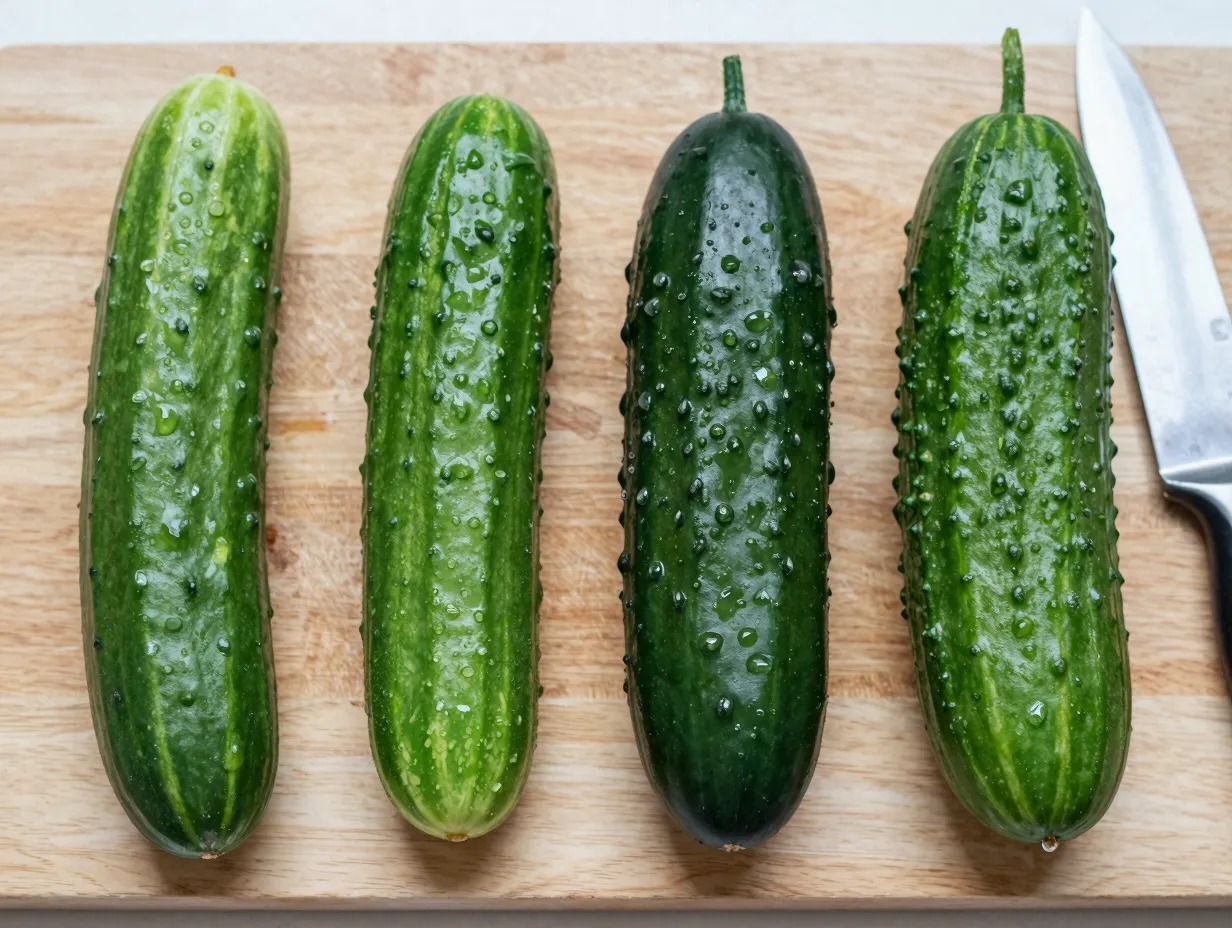
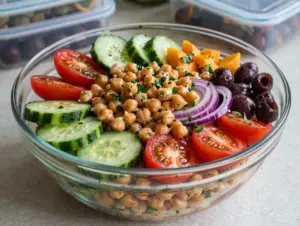
Not all cucumbers behave the same way in a salad. English cucumbers have thin skins and mild flavor, which makes them a reliable all-purpose choice. Persian cucumbers are smaller, crunchier, and slightly sweeter, they are the preferred option in many professional kitchens and hold up particularly well when smashed or sliced thin [2]. Standard American garden cucumbers work in a pinch, but their thick, waxy skins and large seeds can make the texture unpleasant unless you peel and seed them first.
A quick comparison of common cucumber types:
| Cucumber Type | Skin | Texture | Best Use |
|---|---|---|---|
| Persian | Thin | Very crisp | Smashing, thin slicing |
| English | Thin | Crisp | General purpose |
| Garden/American | Thick, waxy | Softer | Best peeled and seeded |
| Kirby | Bumpy, thin | Very crisp | Pickling, Korean-style |
My personal go-to is Persian cucumbers. Their natural sweetness complements the spicy elements in the dressing without needing as much added sugar to achieve balance.
2. Master the Smashing Technique for Maximum Flavor Absorption
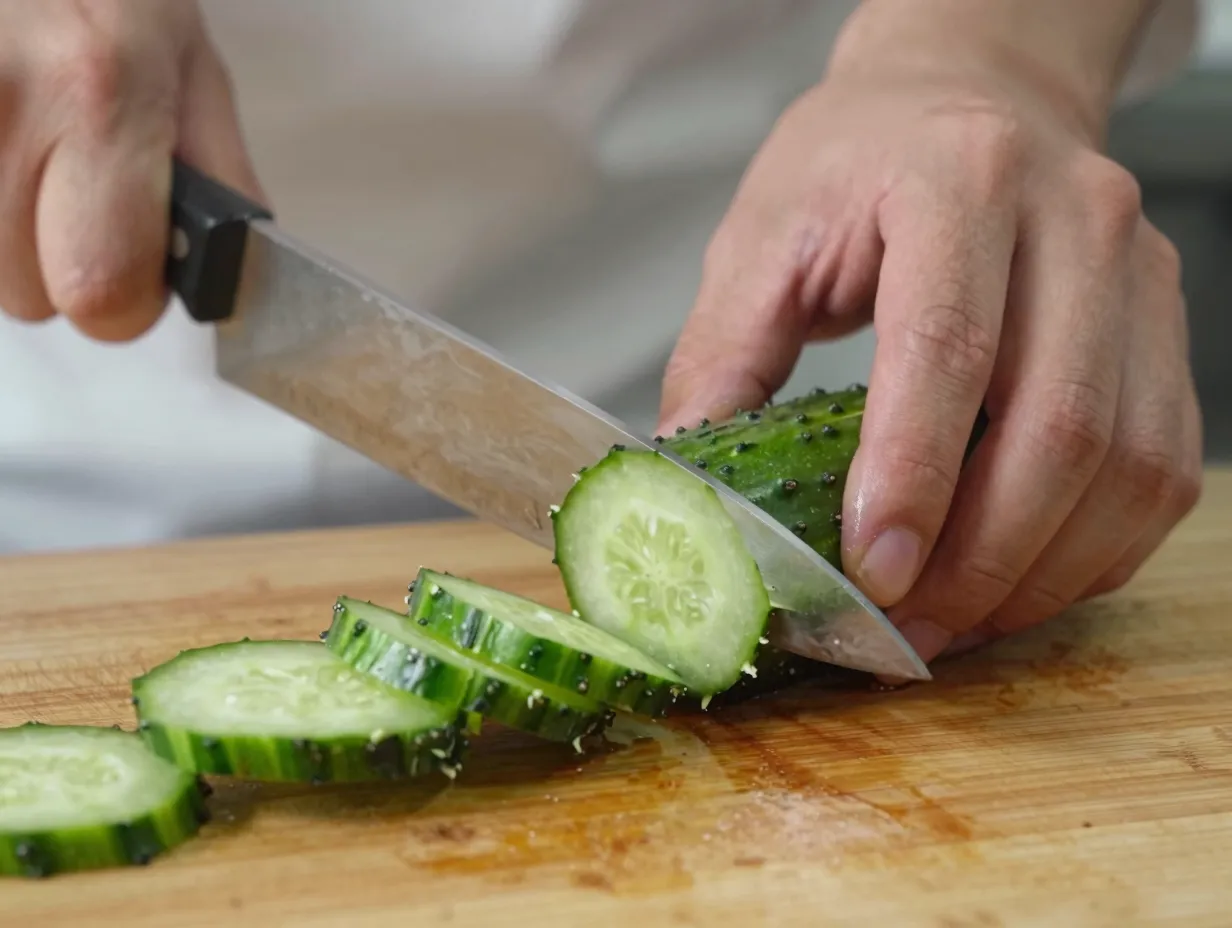
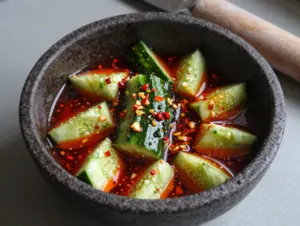
The smashed cucumber method is one of the most effective preparation techniques in this style of cooking. Instead of slicing cucumbers cleanly, you place them on a cutting board and press down firmly with the flat side of a large knife or the bottom of a heavy pan. The cucumber splits and cracks, creating jagged, irregular surfaces with significantly more area for the dressing to cling to and penetrate [2].
The science behind it is straightforward. A smooth, clean slice presents a relatively small surface area to the dressing. A smashed cucumber, by contrast, has dozens of tiny crevices and broken cell walls that act like sponges. The result is a cucumber piece that is fully saturated with flavor rather than just coated on the outside.
How to smash cucumbers properly:
- Cut the cucumber into manageable sections, roughly three to four inches long.
- Place each section on a stable cutting board.
- Press down firmly and evenly with the flat side of a cleaver or chef’s knife.
- The cucumber should split but not disintegrate. If it falls apart completely, you are pressing too hard.
- Tear the smashed pieces into bite-sized chunks by hand rather than cutting them.
After smashing, salt the pieces and let them drain for at least fifteen minutes before adding the dressing. This step removes excess water and concentrates the cucumber’s natural flavor.
3. Try Accordion Slicing to Elevate Visual Appeal and Dressing Penetration
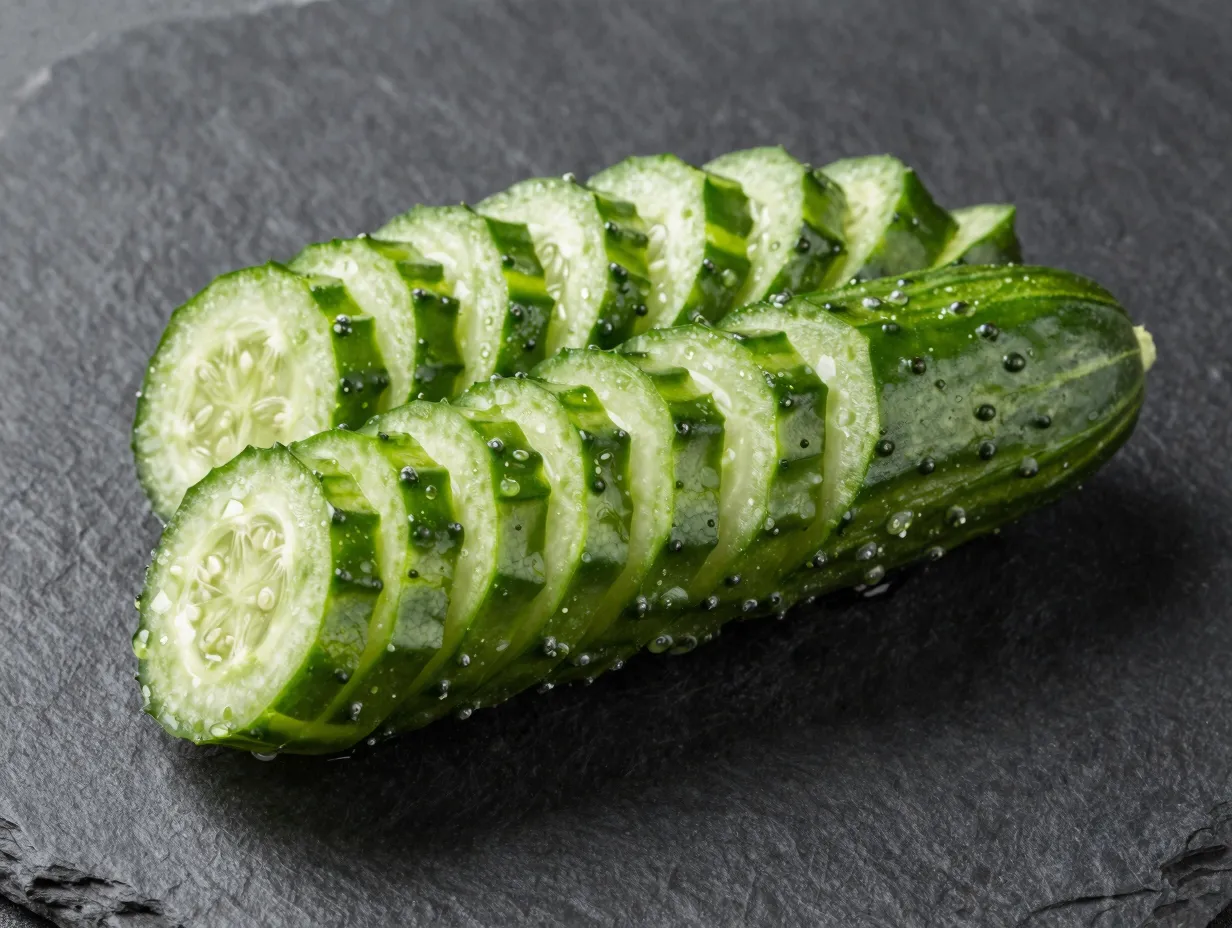
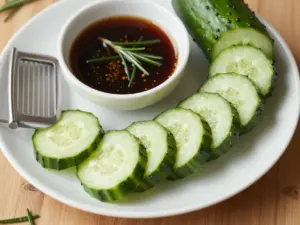
Accordion-style slicing has gained significant traction in Korean cuisine and across social media food communities in recent years [3]. The technique involves making a series of diagonal cuts almost all the way through the cucumber from one side, then flipping it and making another series of diagonal cuts from the other side. When you pick up the cucumber, it fans out like an accordion.
Beyond the visual drama, accordion slicing serves the same functional purpose as smashing: it dramatically increases surface area. The dressing flows into every fold and cut, meaning every bite carries the full flavor profile of the salad rather than just the outer layer.
This technique works best with smaller cucumbers like Persian or Kirby varieties. It does require a steady hand and some practice, but once you get the rhythm, it takes only a few seconds per cucumber. For dinner parties or potlucks, the visual effect alone makes the extra effort worthwhile.
“The way you cut a cucumber is not an aesthetic choice, it is a flavor decision.”
4. Build a Dressing That Balances All Four Flavor Pillars
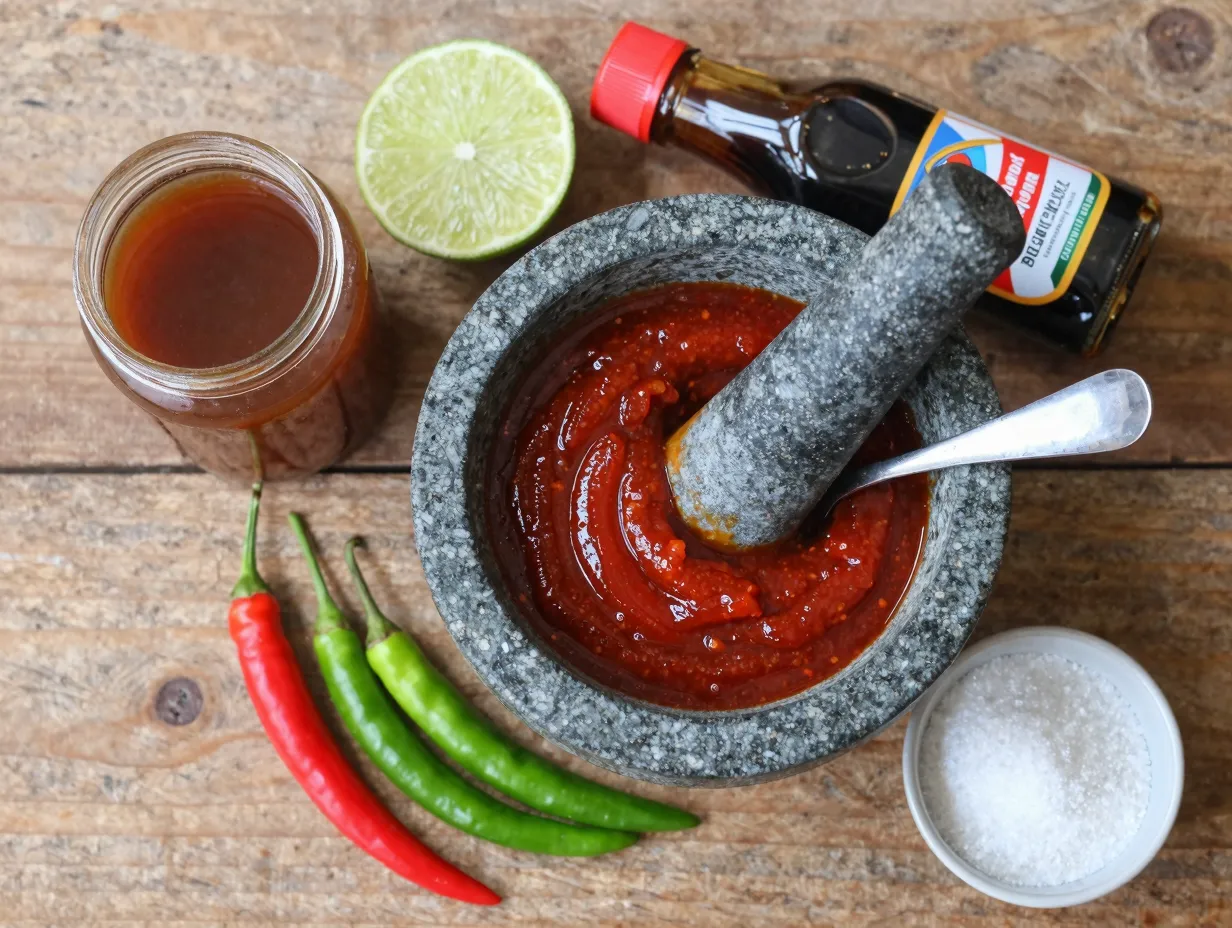
The dressing is the heart of any sweet and spicy cucumber salad. Getting it right means deliberately addressing each of the four flavor pillars: sweet, spicy, salty, and acidic.
A well-tested approach from Bon Appétit uses tamarind concentrate, lime juice, fish sauce, and Thai chiles to achieve this balance [1]. Each ingredient plays a specific role:
- Tamarind concentrate delivers a deep, fruity sweetness with a natural tartness that keeps the sweetness from becoming cloying.
- Lime juice provides bright, sharp acidity that lifts the entire dish.
- Fish sauce supplies salt and a savory umami depth that ties the other flavors together.
- Thai chiles bring clean, direct heat without muddying the other flavors.
The key is tasting as you go and adjusting incrementally. Add a small amount of each element, taste, and identify which pillar is missing or dominant. A dressing that seems too spicy often just needs more acid, not less chile. A dressing that seems flat usually needs more salt, not more sweetness.
For those avoiding fish sauce for dietary reasons, a combination of soy sauce and a small amount of miso paste provides a comparable umami depth [6].
5. Incorporate Unexpected Sweetness Sources Beyond Plain Sugar
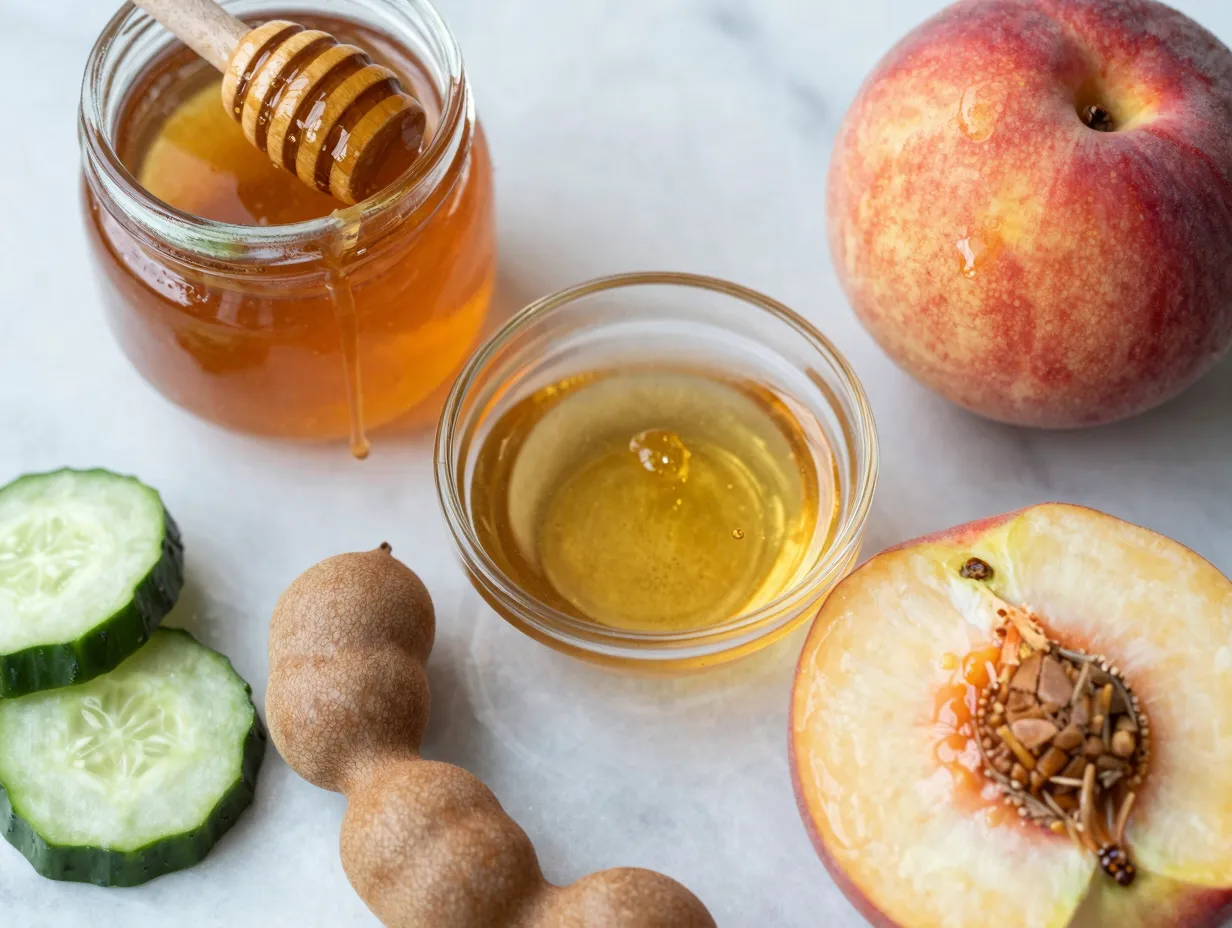
Refined sugar is the default sweetener in many cucumber salad recipes, but it is rarely the best option. Sugar dissolves quickly and delivers a one-dimensional sweetness that lacks complexity. Swapping it out for a more nuanced sweetener can elevate the entire dish.
Sweetener options worth exploring:
- Maple syrup: Adds a mild caramel undertone. Rainbow Plant Life uses it effectively in a smashed cucumber salad that combines Persian cucumbers with peaches and red pepper flakes [2].
- Honey: Provides floral notes and a slightly thicker dressing consistency.
- Tamarind: As mentioned above, offers sweetness with built-in tartness.
- Ripe peaches: Diced fresh peaches introduce natural fruit sugars along with a juicy, soft texture that contrasts beautifully with the crunch of cucumber [2].
- Rice vinegar with a touch of mirin: A Japanese-influenced approach that keeps sweetness subtle and well-integrated.
The peach addition deserves special attention. When I first tried it, I was skeptical, fruit in a savory salad felt like a gimmick. It is not. The peach softens the sharpness of the chiles and adds a summery quality that makes the salad feel genuinely seasonal and fresh.
6. Select Your Heat Source Strategically
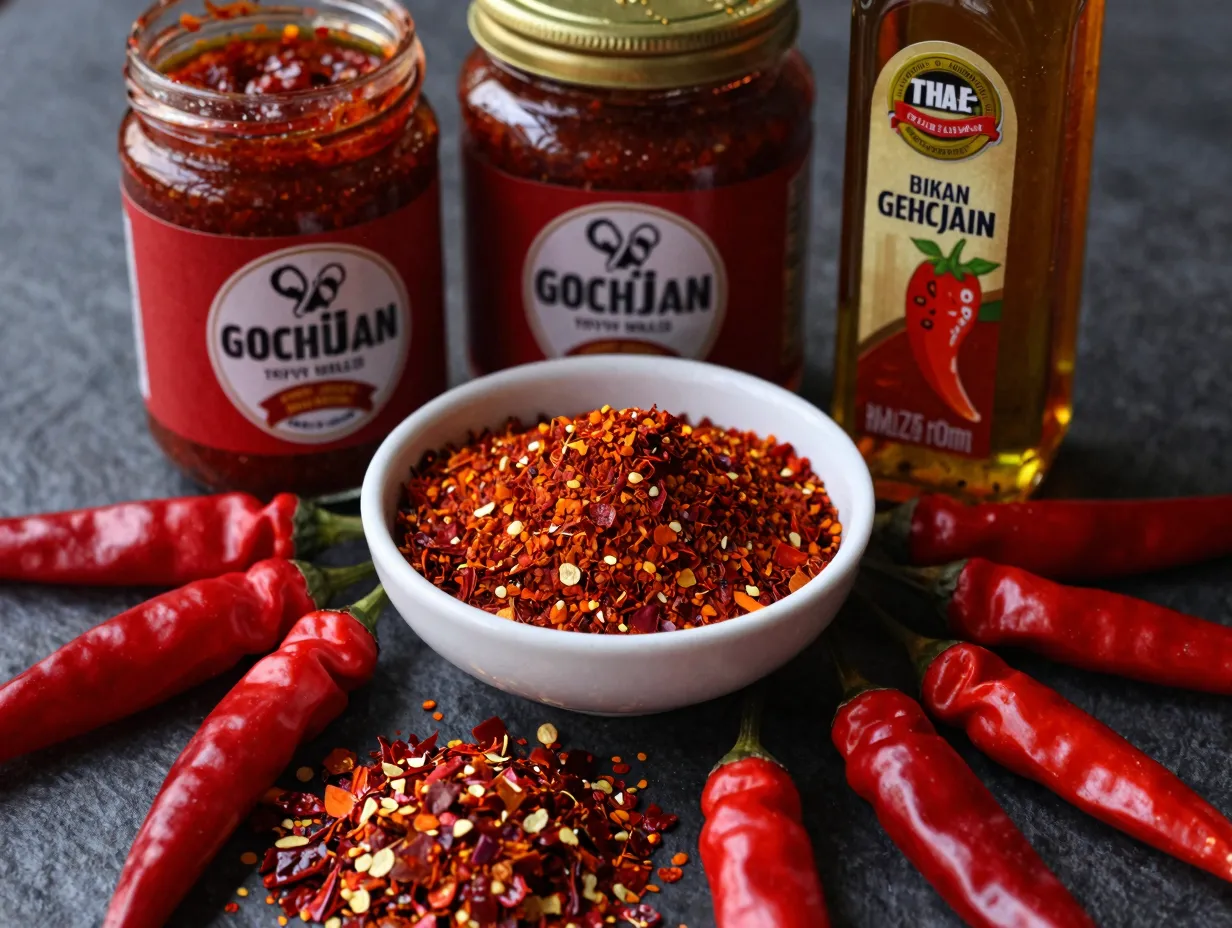
Not all chiles and spicy ingredients behave the same way in a cold salad. The heat source you choose affects not just the level of spice but the character of the heat, whether it is immediate and sharp, slow-building and deep, or warm and smoky.
Common heat sources and their profiles:
- Thai bird’s eye chiles: Immediate, clean, bright heat. Best used fresh and thinly sliced.
- Gochugaru (Korean chili flakes): Fruity, moderately hot, with a slightly smoky quality. This is the defining ingredient in Korean Oi Muchim, a traditional spicy cucumber salad [5].
- Gochujang (Korean chili paste): Fermented, complex, with a deep savory heat. Adds body to the dressing as well as spice [5].
- Red pepper flakes: Widely available, consistent heat level, slightly less complex than gochugaru.
- Serrano chiles: Sharper and hotter than jalapeños, with a clean vegetal flavor.
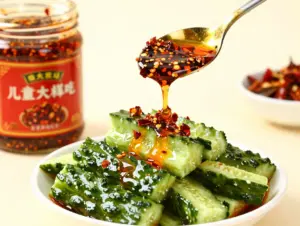
- Chili oil: Delivers heat along with a rich, oily mouthfeel that coats the palate.
For a first attempt, gochugaru is the most forgiving option. It is harder to overdo than fresh chiles, and its fruity undertone naturally complements the sweetness in the dressing. As you grow more comfortable with the recipe, layering two heat sources, say, gochugaru in the dressing and a few slices of fresh Thai chile on top, creates a more complex spice profile.
7. Salt and Drain Your Cucumbers Before Dressing Them
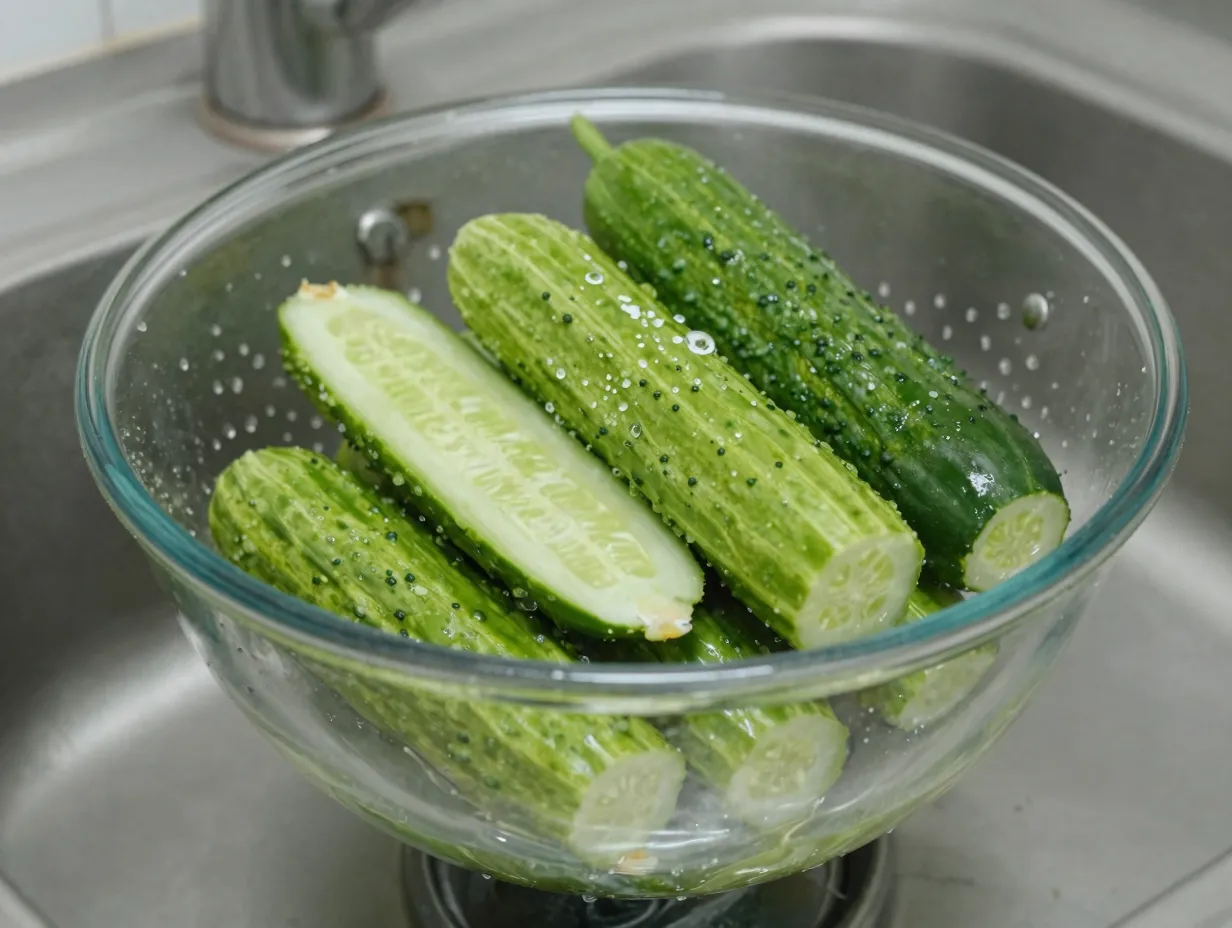
This step is skipped more often than any other, and it is the most common reason a cucumber salad turns watery and diluted within minutes of being dressed. Cucumbers are approximately 95 percent water by weight. Without pre-salting, that water releases into the dressing as soon as the salad is mixed, thinning it out and washing away the flavors you worked to build.
The correct pre-salting process:
- After cutting or smashing your cucumbers, place them in a colander set over a bowl.
- Sprinkle generously with kosher salt, roughly one teaspoon per pound of cucumber.
- Toss to coat and let sit for fifteen to thirty minutes.
- Rinse briefly under cold water to remove excess salt, then pat dry with a clean kitchen towel or paper towels.
The cucumbers will have released a surprising amount of liquid. The pieces will also be slightly more pliable, which helps them absorb the dressing rather than repelling it. This single step is the difference between a salad that holds up for an hour and one that turns into a puddle before guests finish their first serving.
8. Add Textural Contrast with Toasted Nuts and Seeds
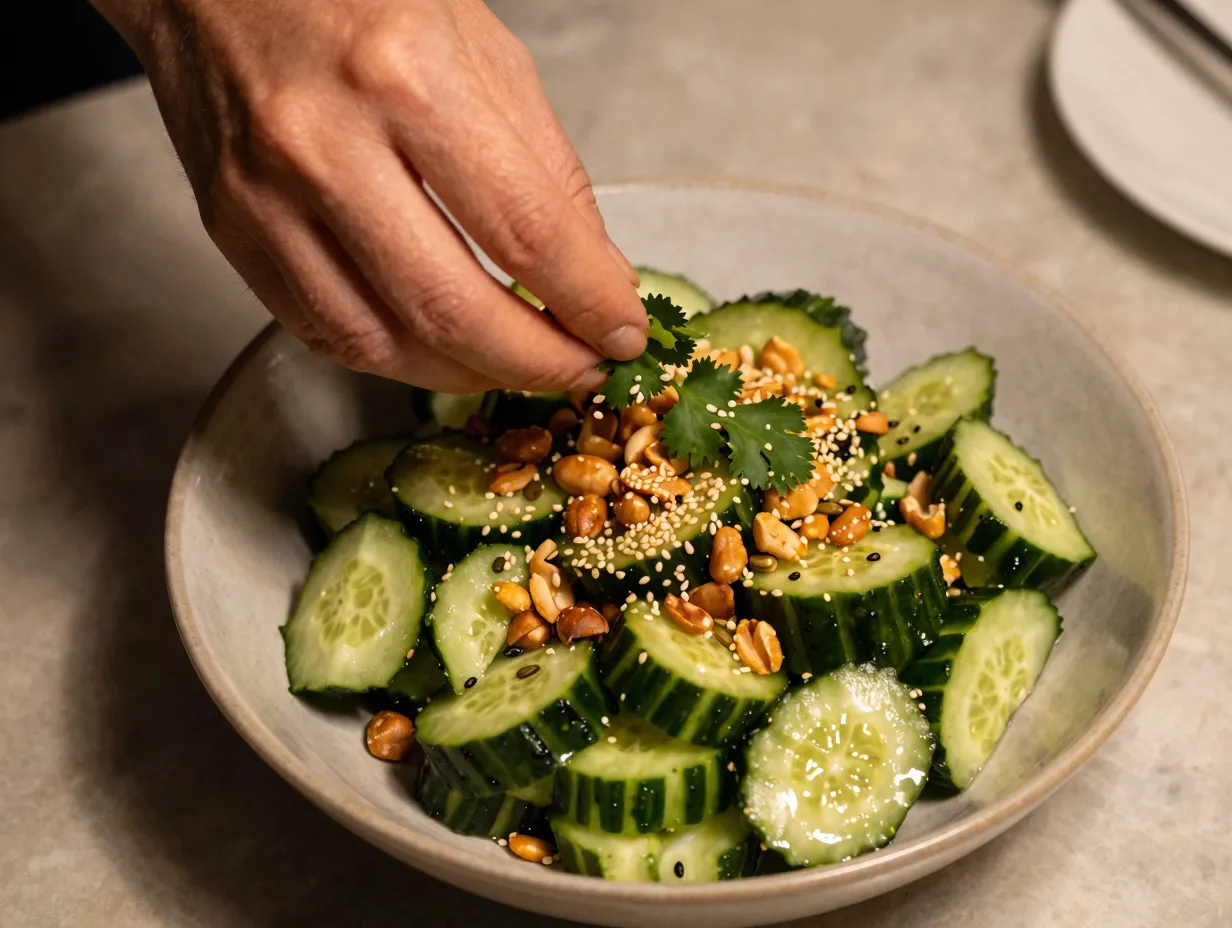
A sweet and spicy cucumber salad that wows every time is not just about flavor, texture plays an equally important role. Cucumbers are crisp and juicy, which is wonderful, but a salad composed entirely of one texture becomes monotonous quickly. Introducing a crunchy, toasted element breaks that monotony and makes each bite more interesting.
Effective textural additions:
- Toasted peanuts: The most common choice in Southeast Asian-inspired versions. Their fat content also helps carry fat-soluble flavor compounds from the chiles [2].
- Pine nuts: More delicate and buttery, better suited to lighter, less intensely spiced dressings.
- Sesame seeds: Toasted sesame seeds add a nutty, slightly bitter note that works especially well with gochugaru-based dressings.
- Crispy shallots: Fried shallots add crunch along with a savory, caramelized sweetness.
- Crushed wonton strips: A less traditional but effective option for adding crunch without nuts.
Toast nuts and seeds in a dry skillet over medium heat, stirring constantly, until they are golden and fragrant. This takes two to four minutes and makes a significant difference in flavor intensity compared to raw nuts. Add them just before serving to preserve their crunch.
9. Time Your Assembly and Storage for Peak Quality
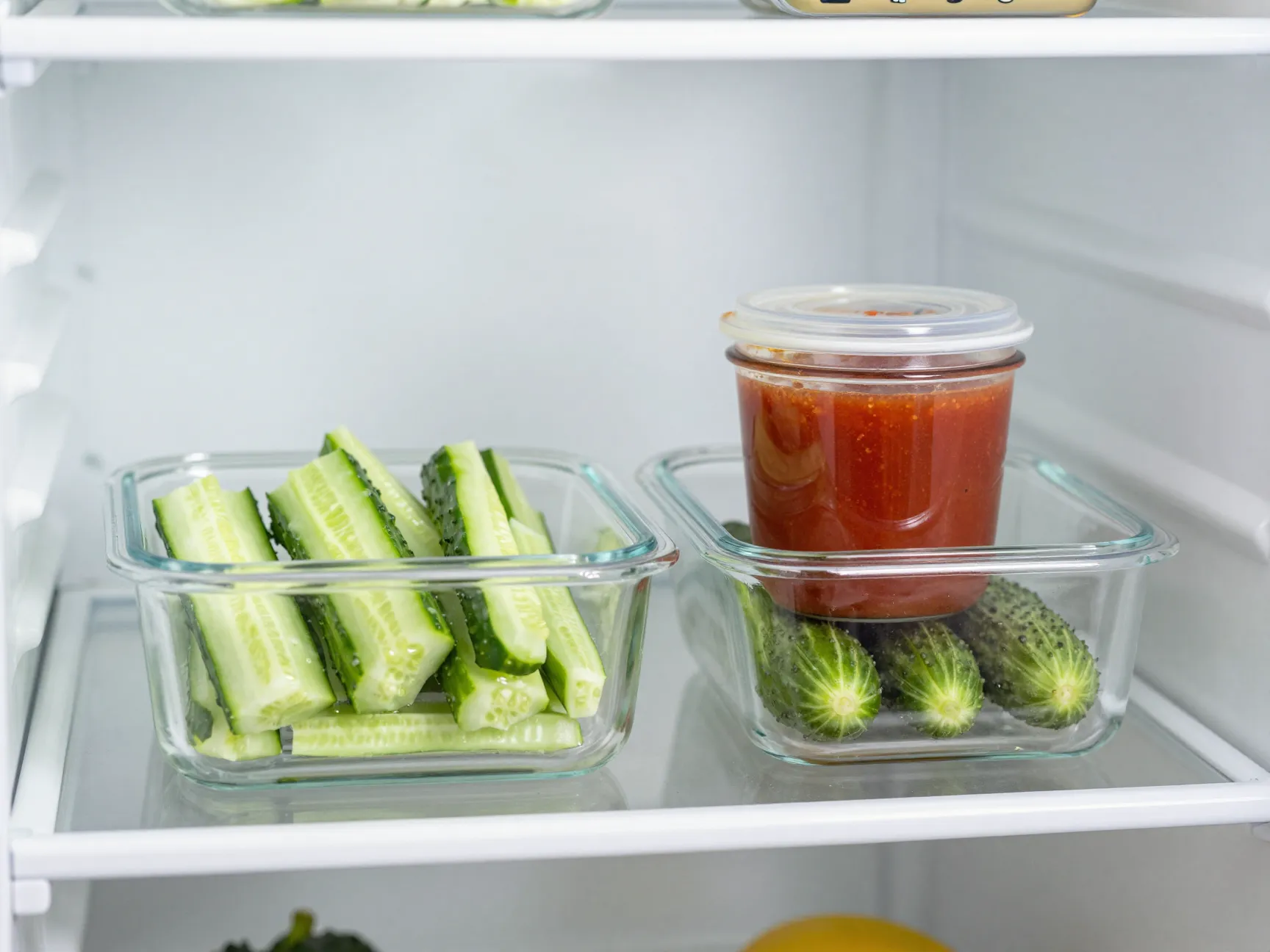
Timing is the final variable that separates a great cucumber salad from a merely good one. This is a dish that rewards thoughtful sequencing rather than simply mixing everything together at once and hoping for the best.
Optimal assembly sequence:
- Pre-salt and drain cucumbers at least thirty minutes before serving.
- Prepare the dressing separately and let it sit for ten minutes so the flavors meld.
- Combine cucumbers and dressing no more than fifteen to twenty minutes before serving.
- Add toasted nuts, seeds, and fresh herbs at the very last moment.
For storage, these salads are best consumed the same day they are made. If you need to prepare in advance, store the drained cucumbers and the dressing separately in the refrigerator and combine them just before serving [3]. When stored already dressed, cucumbers will continue releasing water and the salad will become progressively more diluted. Most recipes can be stored in the refrigerator for up to two days if necessary, though the texture and flavor intensity will diminish noticeably after the first day [3].
A practical tip I use for meal prep: make a double batch of dressing and keep it in a sealed jar in the refrigerator for up to a week. That way, fresh cucumber salad is only fifteen minutes away on any given night.
Cultural Traditions That Inform the Best Sweet and Spicy Cucumber Salads
Understanding where these flavor combinations come from helps you make better decisions when building your own version. Several culinary traditions have developed sophisticated cucumber salad techniques over centuries, and borrowing from them is not just acceptable, it is smart cooking.
Korean Oi Muchim is perhaps the most direct ancestor of the sweet and spicy cucumber salads popular in Western kitchens today. The dish relies on gochugaru and gochujang for heat, rice vinegar for acidity, and a small amount of sugar for balance [5]. Garlic and sesame oil are nearly always present. The result is bold, deeply savory, and intensely spicy in a way that is immediately distinctive.
Thai cucumber salads take a different approach, leaning on fish sauce, lime juice, and fresh chiles for a brighter, more acidic profile [1]. Palm sugar or tamarind provides sweetness. The overall effect is lighter and more refreshing than the Korean version, with a heat that hits quickly and fades cleanly.
Chinese smashed cucumber salads (Pai Huang Gua) use black rice vinegar, sesame oil, and dried chiles for a nutty, tangy profile. The smashing technique originated in Chinese home cooking and spread from there into other Asian culinary traditions.
Each of these traditions offers a tested, proven framework. Rather than inventing a dressing from scratch, you can start with one of these cultural blueprints and adjust from there. That approach reduces guesswork and gives you a reliable foundation to build on.
Dietary Adaptations That Keep the Salad Accessible
One of the practical strengths of a sweet and spicy cucumber salad is how easily it adapts to different dietary needs without sacrificing flavor. Many versions are already naturally gluten-free, and vegan adaptations are straightforward [6].
Common substitutions:
- Fish sauce to vegan: Replace with a combination of soy sauce (or tamari for gluten-free), a small amount of nori powder or seaweed flakes, and a drop of rice vinegar. This replicates the umami and salinity without animal products.
- Honey to vegan: Swap with maple syrup or agave nectar in equal quantities.
- Gluten-free soy sauce: Use tamari or coconut aminos instead of standard soy sauce.
- Nut-free: Replace toasted peanuts with toasted pumpkin seeds or sunflower seeds for a similar crunch without tree nuts or peanuts.
These swaps are not compromises. In several cases, the substitution actually improves the dish for a broader audience. Tamari, for instance, has a slightly richer, less sharp flavor than standard soy sauce, which can make the dressing more rounded.
Serving Suggestions That Maximize Impact
A well-made sweet and spicy cucumber salad is versatile enough to serve in multiple contexts. Knowing how to deploy it effectively makes the difference between a side dish that gets politely eaten and one that generates genuine enthusiasm [5].
Best pairings:
- Grilled meats: The acidity and heat of the salad cut through the richness of grilled chicken thighs, pork belly, or beef short ribs. This is the most natural pairing and the one that consistently draws the most compliments at cookouts.
- Rice dishes: Served alongside steamed jasmine rice or bibimbap, the salad adds brightness and contrast that makes the overall meal feel more complete.
- Noodle dishes: Cold sesame noodles or rice noodle bowls benefit from the crunch and heat of a cucumber salad as a side or topping.
- As a standalone appetizer: Served in small bowls with chopsticks or small forks, this salad works as a light, refreshing starter before a heavier main course.
- Tacos and wraps: A spoonful of sweet and spicy cucumber salad inside a fish taco or lettuce wrap adds a layer of complexity that elevates simple dishes considerably.
For presentation, serve in a wide, shallow bowl rather than a deep one. This allows the dressing to pool at the bottom where it can be scooped up with each serving, and it shows off the colors and textures of the salad more effectively.
Conclusion
Perfecting a sweet and spicy cucumber salad that wows every time is less about following a single recipe and more about understanding the principles that make the dish work. The nine methods covered here, choosing the right cucumber, mastering smashing and accordion techniques, building a balanced dressing, selecting strategic heat sources, pre-salting, adding textural contrast, timing assembly carefully, drawing on cultural traditions, and adapting for dietary needs, form a complete system rather than a collection of isolated tips.
Your actionable next steps:
- Start with Persian cucumbers and the smashing technique on your first attempt. These two choices alone will produce a noticeably better result than standard sliced cucumbers.
- Build your dressing around the four flavor pillars: sweet, spicy, salty, and acidic. Taste and adjust each one independently before combining with the cucumbers.
- Try a Korean-inspired version using gochugaru and rice vinegar for your first batch, then experiment with a Thai-style tamarind and lime dressing for your second.
- Pre-salt your cucumbers every single time without exception. This step takes fifteen minutes and prevents the most common failure in cucumber salad preparation.
- Keep a batch of dressing in your refrigerator so that a fresh, impressive side dish is always within reach.
The gap between a forgettable cucumber salad and one that earns genuine praise is smaller than most people think. These nine methods close that gap reliably, and they are worth putting into practice starting with your next meal.
References
[1] Sweet And Spicy Cucumber Salad – https://www.bonappetit.com/recipe/sweet-and-spicy-cucumber-salad?utm_source=openai
[2] Sweet And Spicy Smashed Cucumber Salad – https://rainbowplantlife.com/web-stories/sweet-and-spicy-smashed-cucumber-salad/?utm_source=openai
[3] Spicy Korean Cucumber Salad Recipe – https://www.tastingtable.com/1389114/spicy-korean-cucumber-salad-recipe/?utm_source=openai
[4] Sweet Spicy Cucumber Salad – https://bluehill.coop/sweet-spicy-cucumber-salad/?utm_source=openai
[5] Spicy Korean Cucumber Salad – https://www.beyondkimchee.com/spicy-korean-cucumber-salad/?utm_source=openai
[6] Spicy Cucumber Salad – https://www.maebells.com/spicy-cucumber-salad/?utm_source=openai