8 Foolproof Steps for How to Cook Pasta on Stove Perfectly Every Time
Roughly 320 million pounds of pasta are consumed in the United States every week, yet a surprising number of home cooks still end up with a pot of sticky, mushy, or bland noodles. The gap between a mediocre bowl and a genuinely great one is not talent or expensive equipment. It is technique. These 8 foolproof steps for how to cook pasta on stove perfectly every time will close that gap for good, turning a simple weeknight staple into something worth sitting down for.
Disclosure: This post contains affiliate links. As an Amazon Associate, we earn from qualifying purchases, and at no extra cost to you.
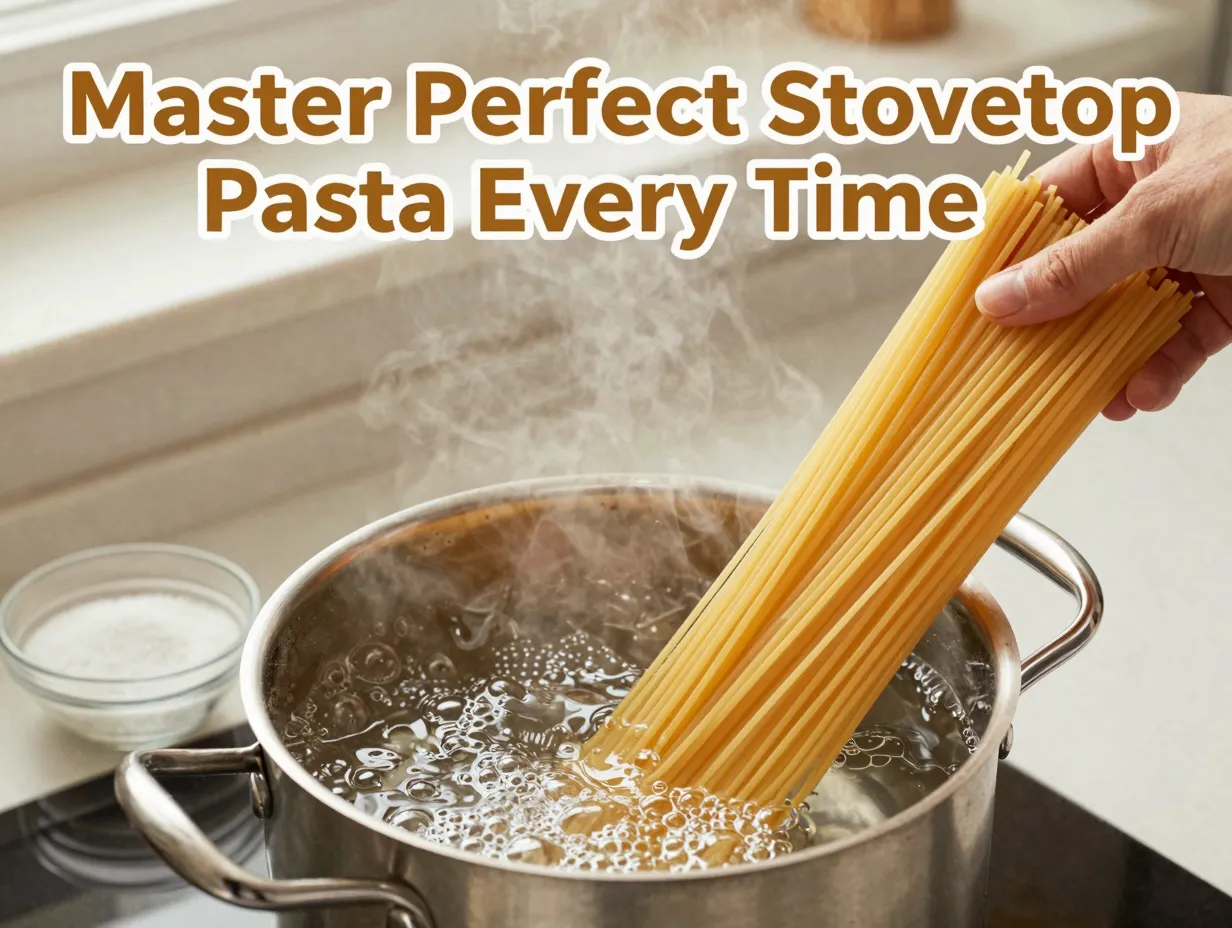
I remember the first time I made spaghetti for a dinner party. I used a small pot, skipped the salt, and rinsed the noodles under cold water because I thought that was what you were supposed to do. The result was a pale, slippery pile that refused to hold any sauce. That embarrassing plate taught me more about pasta than any cookbook ever did. Since then, I have tested these steps dozens of times, and the difference is remarkable.
Whether you are cooking angel hair for a quick lunch or rigatoni for a Sunday dinner, the same foundational principles apply. Follow these 8 foolproof steps for how to cook pasta on stove perfectly every time, and you will never serve a disappointing bowl again.
Key Takeaways
- Use 4 to 6 quarts of water per pound of pasta to give noodles room to cook evenly
- Always salt the water generously before adding pasta — this is your only chance to season from within
- Never rinse cooked pasta; the surface starch is what makes sauce cling
- Reserve at least half a cup of pasta water before draining to fix and finish your sauce
- Start tasting pasta one to two minutes before the package time to catch the perfect al dente texture
Why Getting Stovetop Pasta Right Actually Matters
Pasta is one of the most forgiving foods on the planet, but it rewards precision more than most people realize. The difference between al dente and overcooked is often just ninety seconds. The difference between a well-seasoned bowl and a flat one is a single tablespoon of salt. These margins are small, but they are meaningful.
Getting the technique right also saves time and money. Overcooked pasta that falls apart in the sauce is often thrown away or masked with extra cheese and butter. When you cook it correctly the first time, you need less sauce to make it taste good, because the pasta itself carries flavor.
Beyond the practical benefits, there is something deeply satisfying about mastering a dish this fundamental. Pasta is cooked in virtually every culture that has access to wheat. When you learn to do it well, you build a foundation for hundreds of recipes.
The 8 Foolproof Steps for How to Cook Pasta on Stove Perfectly Every Time
1. Choose the Right Pot and Fill It with Enough Water
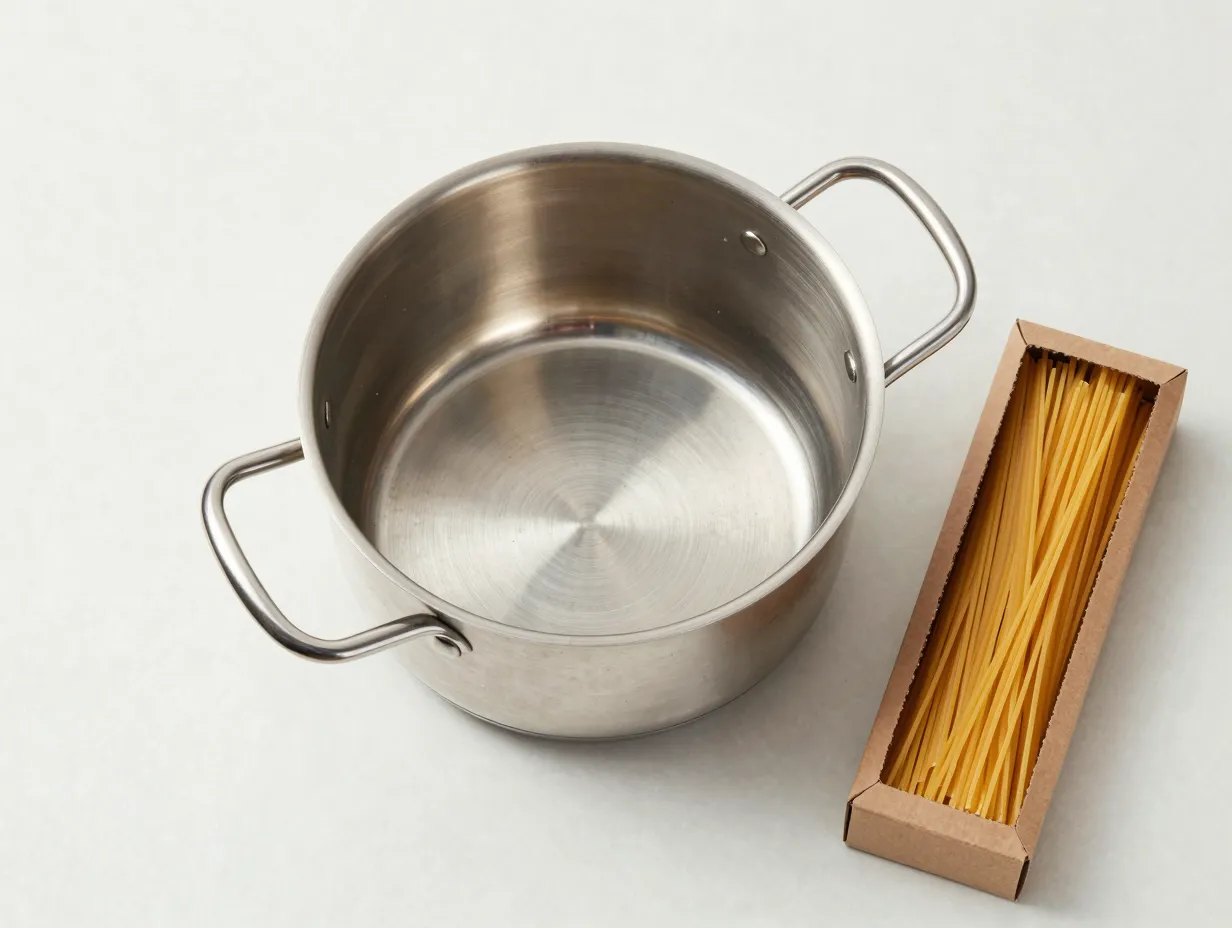
The single most common mistake home cooks make is using a pot that is too small. Pasta needs space. A cramped pot leads to uneven cooking, clumping, and a gummy texture that no amount of sauce can fix.
The rule: Use 4 to 6 quarts of water for every pound of pasta. [1] That typically means a pot with a capacity of at least 6 to 8 quarts.
Why does volume matter so much? When pasta hits the water, it releases starch rapidly. A large volume of water dilutes that starch and keeps the noodles from sticking to each other. It also recovers its boiling temperature faster after you drop in the pasta, which keeps the cooking process consistent.
| Pasta Amount | Minimum Water | Recommended Pot Size |
|---|---|---|
| 0.5 lb (225g) | 2 to 3 quarts | 4-quart pot |
| 1 lb (450g) | 4 to 6 quarts | 6 to 8-quart pot |
| 2 lbs (900g) | 8 to 10 quarts | 12-quart stockpot |
Put a lid on the pot while the water heats up. This traps steam and cuts your wait time significantly, especially on electric stoves.
2. Bring the Water to a True Rolling Boil
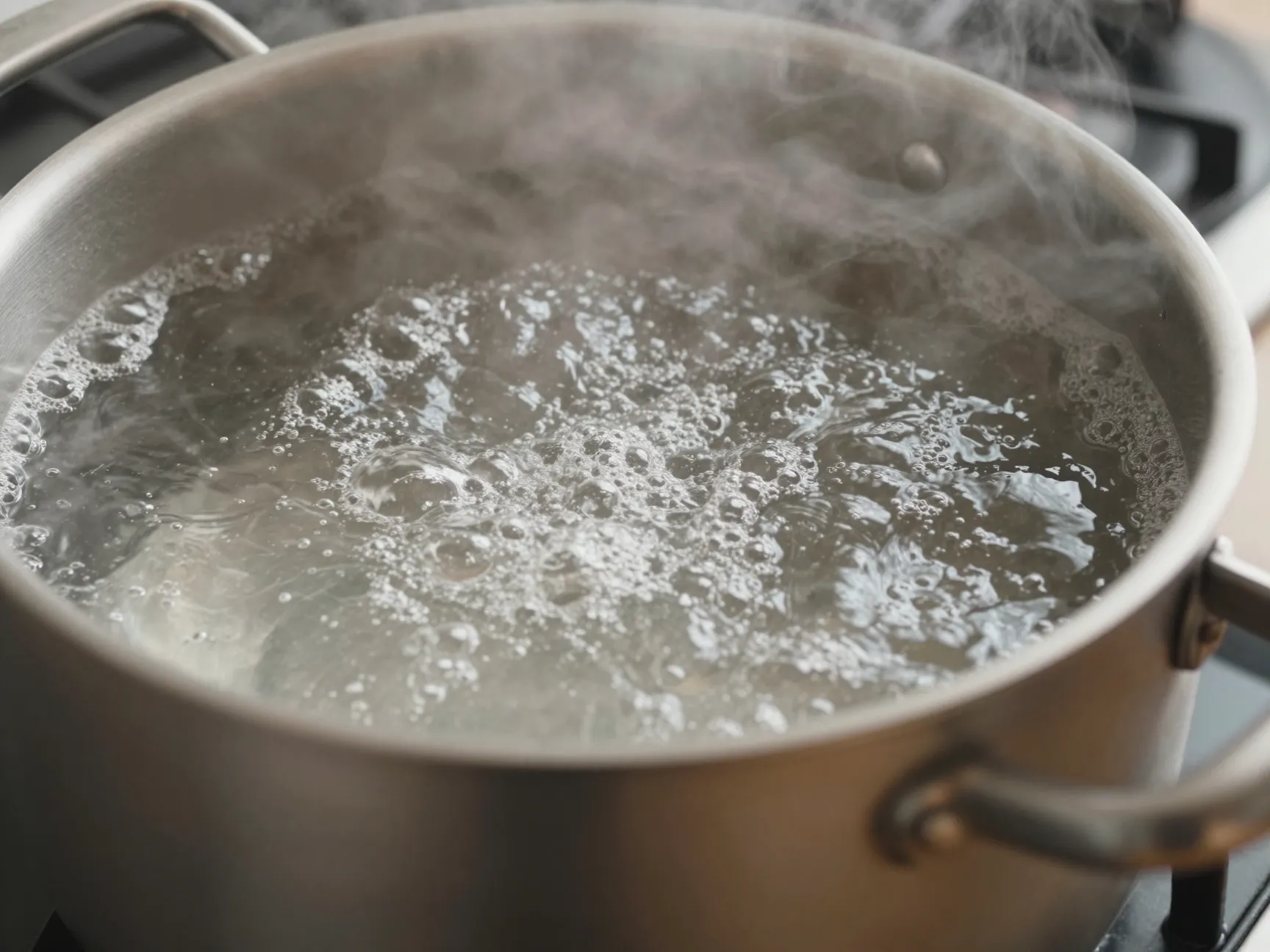
This step sounds obvious, but it is frequently rushed. There is a meaningful difference between water that is just beginning to bubble and water that is at a full, vigorous, rolling boil. [2]
A rolling boil means the water is churning continuously and cannot be stirred down. At this temperature, the pasta cooks evenly because the movement prevents noodles from settling and sticking to the bottom of the pot.
If you add pasta to water that is only simmering, the noodles will sit still in the heat and begin to soften unevenly. The outside gets mushy before the inside is cooked through.
Practical tip: Turn the burner to high and cover the pot. Once you see a vigorous boil, remove the lid and proceed to the next step. Do not turn the heat down to medium to “save energy” at this stage. You want that temperature maintained.
3. Salt the Water Generously — and Do Not Skip This Step
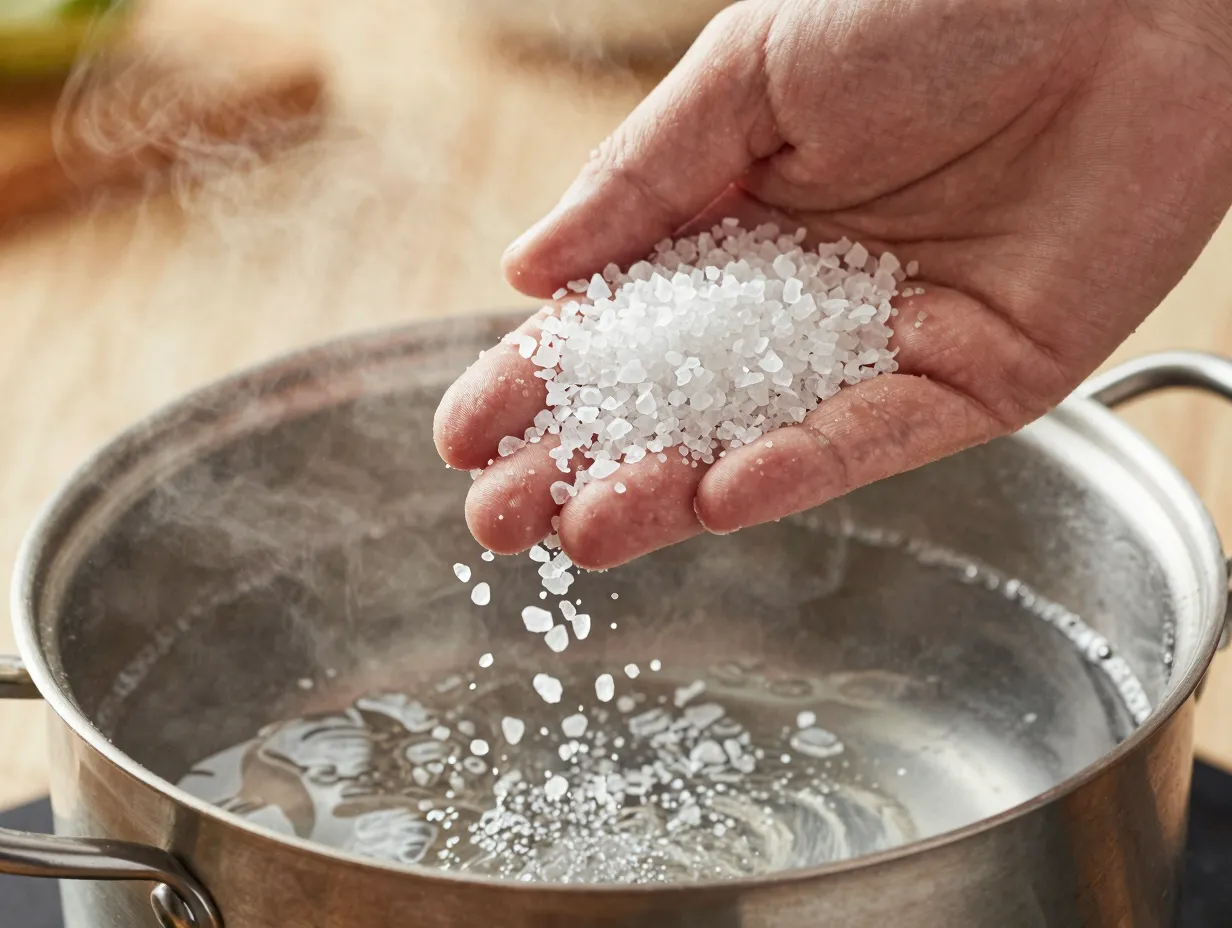
This is the step that separates good pasta from great pasta. Salt is not optional. It is essential.
Add 1 to 2 tablespoons of kosher salt per gallon of water after it reaches a boil. [3] The water should taste pleasantly salty, similar to a light broth. Some Italian cooks describe it as tasting “like the sea,” though that level of salinity is not necessary for most home cooking.
“Salting the water is the only opportunity you have to season the pasta from the inside out. No amount of sauce added later will replicate that.”
Pasta absorbs water as it cooks. If that water is salted, the pasta absorbs seasoning along with it. If the water is plain, the pasta is bland at its core, no matter what you put on top.
A few things worth noting:
- Use kosher salt or sea salt rather than iodized table salt, which can leave a slightly metallic taste
- Add salt after the water boils, not before — it has no meaningful effect on boiling time either way
- Do not add oil to the water; it coats the pasta and prevents sauce from sticking later [4]
4. Add the Pasta Without Breaking It
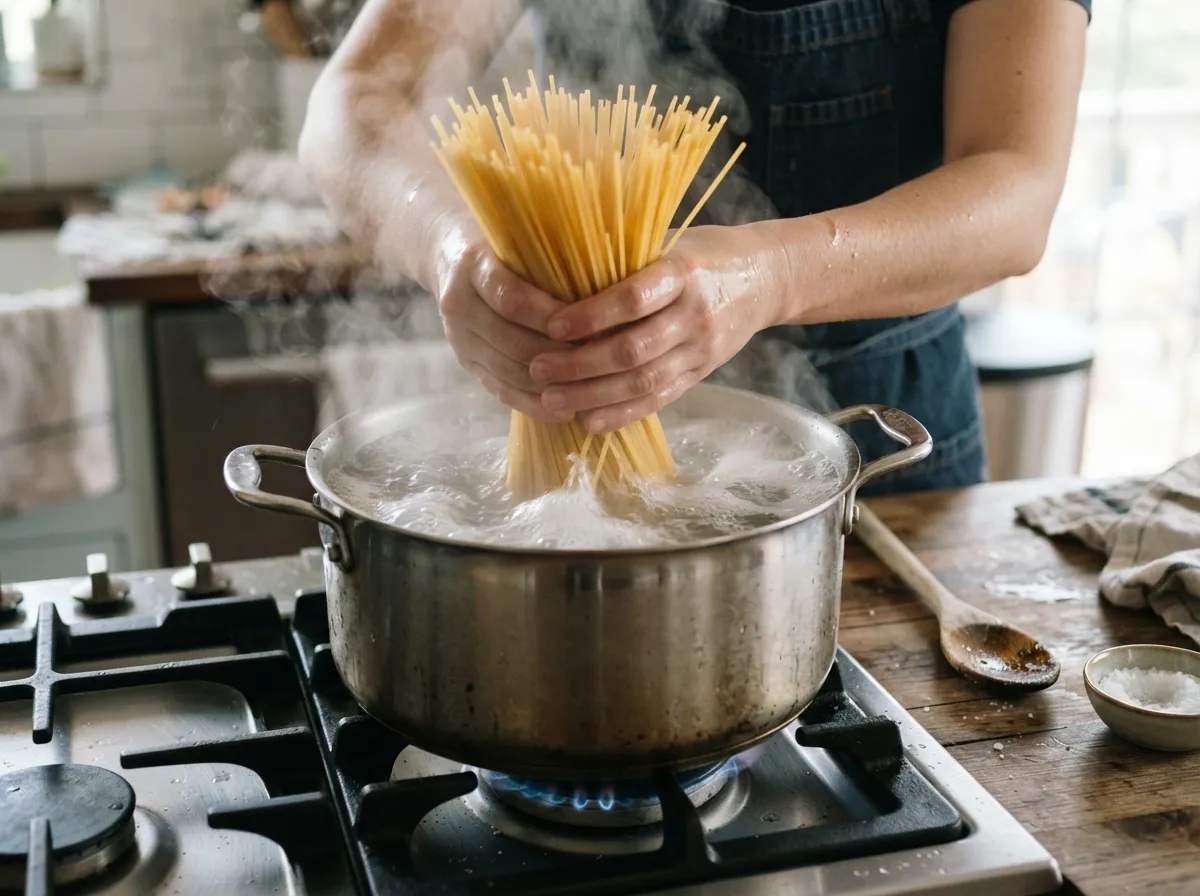
Once the water is boiling and salted, it is time to add the pasta. For long shapes like spaghetti, linguine, or fettuccine, do not break the noodles in half. [4]
I know it is tempting. The noodles stick out of the pot and seem unwieldy. But breaking them ruins the eating experience. Long pasta is meant to be twirled, and shorter broken pieces lose that quality entirely.
Instead, hold the bundle at one end and fan the noodles out slightly as you lower them into the water. Within 30 to 60 seconds, the submerged ends will soften enough that you can gently push the rest of the noodles under the surface with a spoon or tongs.
For short pasta shapes like penne, rigatoni, or farfalle, simply pour them directly into the boiling water in one motion.
Add pasta all at once rather than in stages. Adding it gradually causes uneven cooking because different pieces spend different amounts of time in the water.
5. Stir Immediately and Keep Stirring Periodically
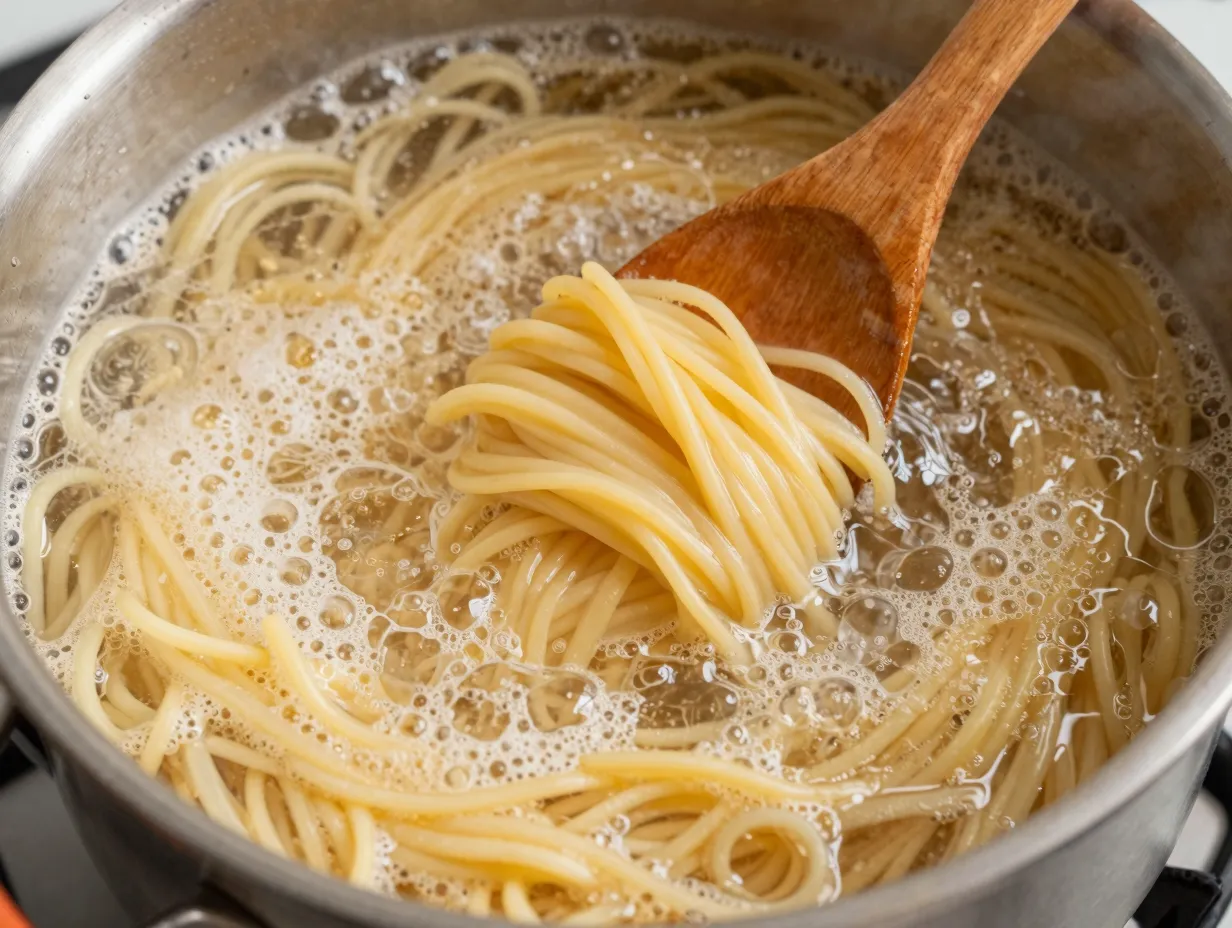
The moment the pasta hits the water, grab a long spoon and stir. This is not optional. [2]
During the first 60 to 90 seconds of cooking, pasta releases a large surge of surface starch. If the noodles are not moving, they will stick to each other and to the bottom of the pot. Once they stick together and begin to cook in that position, they fuse. No amount of later stirring will fully separate them.
After that initial stir, continue to stir every minute or two throughout the cooking process. You do not need to stand over the pot constantly, but check in regularly.
Keep the heat at a strong boil throughout. If the water drops to a simmer, the pasta cooks unevenly and the texture suffers.
Signs you are on track:
- Water is bubbling vigorously throughout cooking
- Pasta moves freely when you stir
- No noodles are clumped together at the bottom
6. Cook Until Al Dente — Taste Before the Timer Goes Off
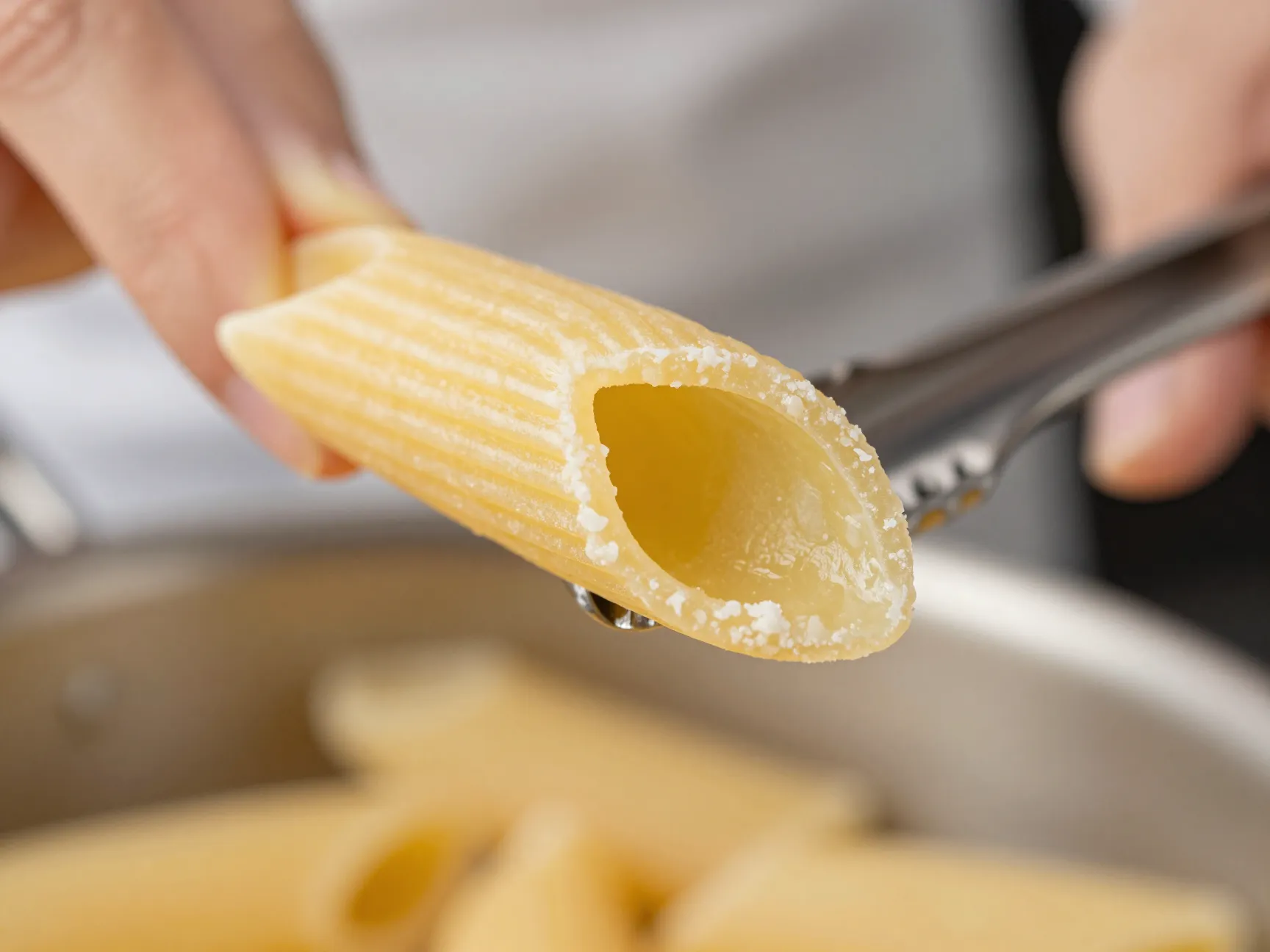
Package instructions are a starting point, not a finish line. [5] Pasta brands vary, stove temperatures vary, and altitude affects boiling point. The only reliable way to know when pasta is done is to taste it.
Start tasting the pasta one to two minutes before the package suggests it will be ready. Pull out a single piece, let it cool for a second, and bite through it. You are looking for a specific texture.
Al dente means “to the tooth” in Italian. It describes pasta that is fully cooked on the outside but still has a very slight firmness at the very center. It should not crunch, but it should offer just a small amount of resistance before giving way cleanly.
Texture Guide:
Undercooked: Crunchy, chalky white center when bitten through
Al dente: Tender outside, very slight firmness at center, no white core
Overcooked: Soft, mushy, no resistance, falls apart when stirred
Once you reach al dente, move quickly. The pasta will continue to cook from residual heat after draining, and it will cook further when it hits a hot sauce. Pull it off the heat about 30 seconds before it reaches your ideal texture if you plan to finish it in a pan with sauce.
7. Reserve Pasta Water Before You Drain
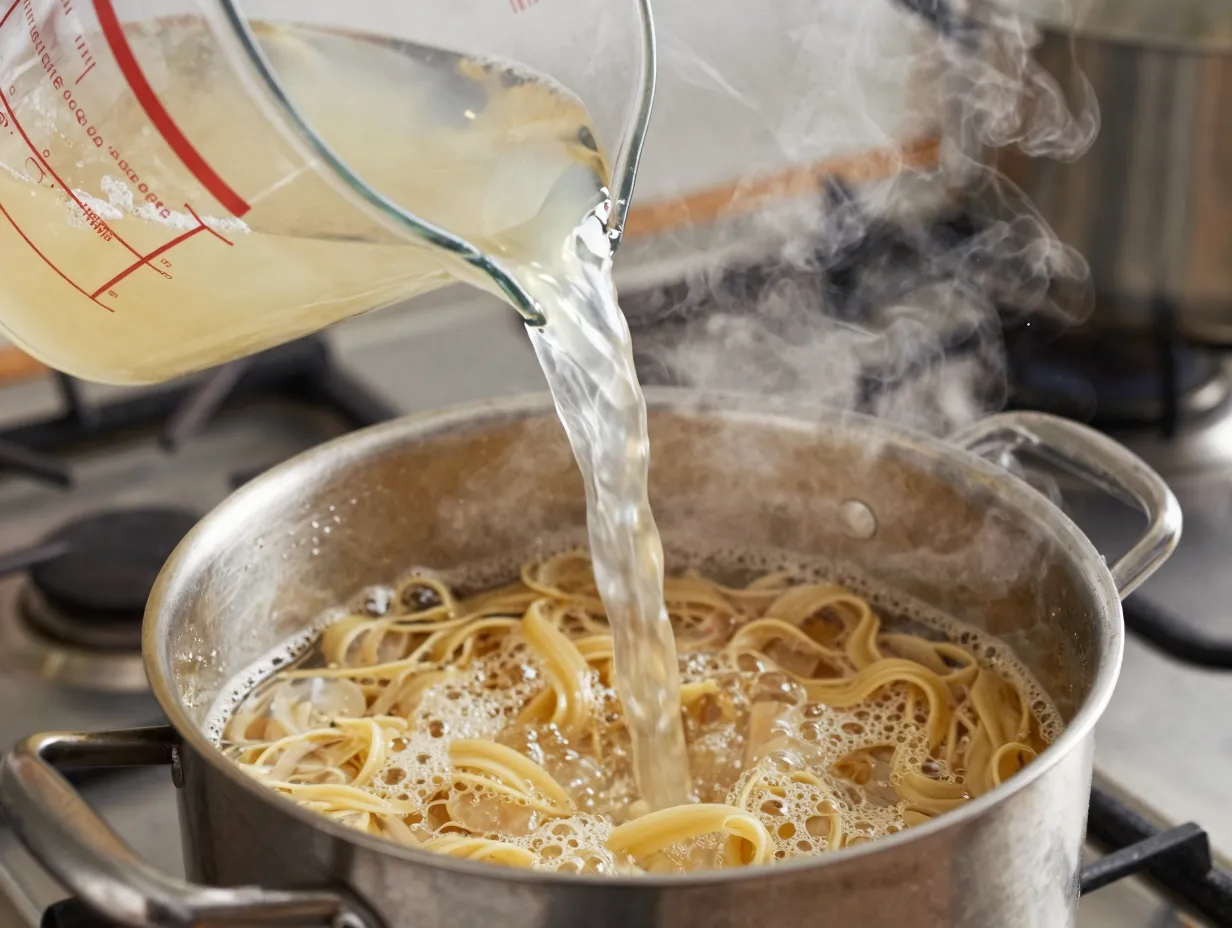
Before you pour that pot of water down the drain, stop. Scoop out at least half a cup to one full cup of the cooking liquid and set it aside. [6]
Pasta water is not just water. It is loaded with dissolved starch from the noodles, which makes it an extraordinary sauce-building tool. When you add a splash of pasta water to a sauce, it does two things simultaneously: it loosens the sauce to the right consistency, and the starch helps the sauce emulsify and cling to the pasta rather than pooling at the bottom of the bowl.
This is the technique behind many classic Italian pasta sauces, including cacio e pepe, carbonara, and aglio e olio. None of those dishes work properly without pasta water. The starch is the binding agent that ties everything together.
How to use it:
- Add pasta water to the sauce a few tablespoons at a time
- Toss the pasta in the sauce over medium heat
- Add more water as needed until the sauce coats every noodle evenly
Even if you are using a jarred tomato sauce, a few tablespoons of pasta water will make it taste noticeably better and more cohesive.
8. Drain Without Rinsing — Then Sauce Immediately
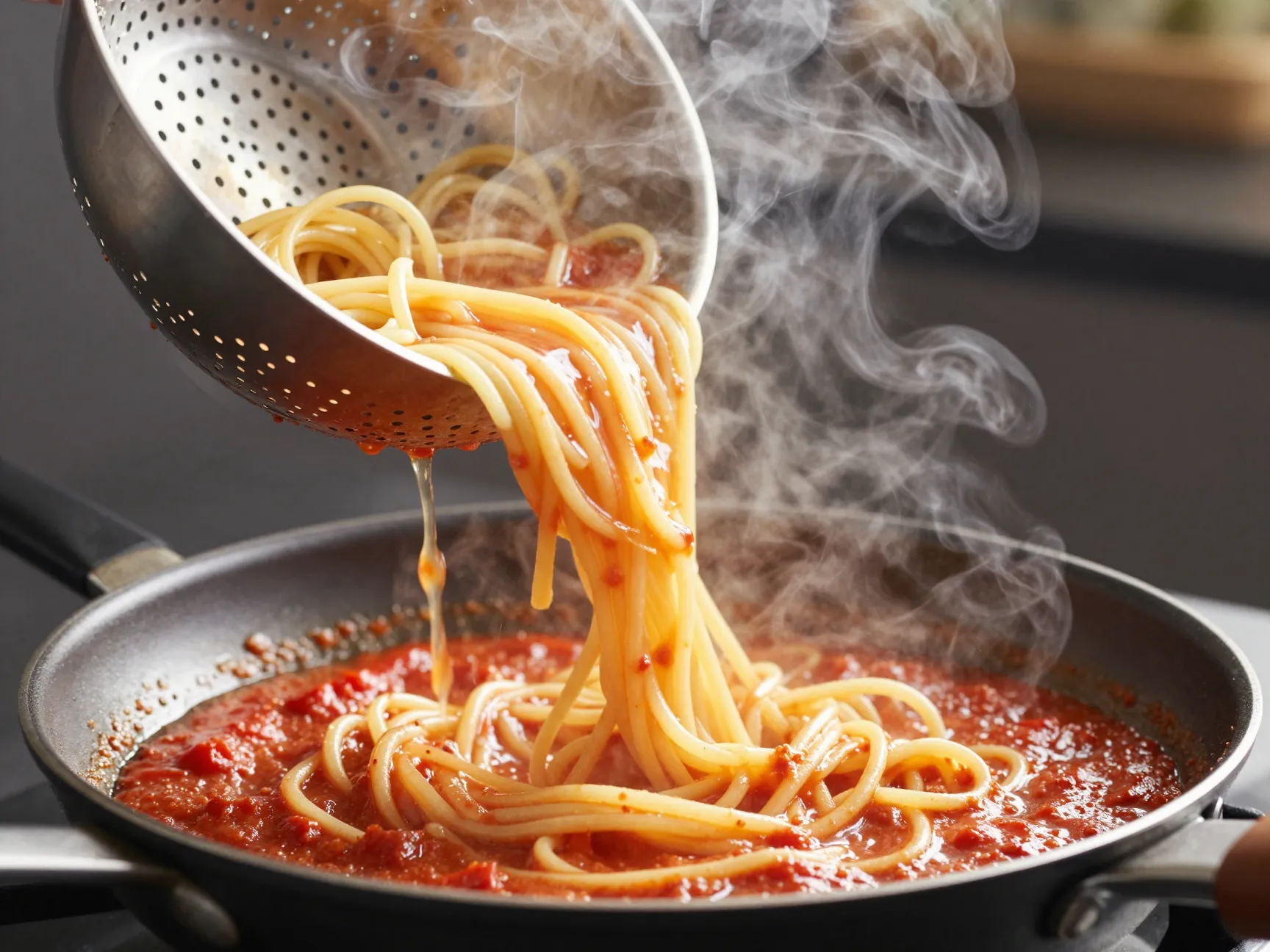
Drain the pasta into a colander over the sink. Shake it a few times to remove excess water, but do not rinse it. [4]
Rinsing cooked pasta is one of the most damaging things you can do to the final dish. The rinse water washes away the surface starch that makes sauce stick. What you are left with is a smooth, slippery noodle that sauce slides right off of. The bowl ends up with a puddle of liquid at the bottom and a pile of under-sauced pasta on top.
There is one exception: if you are making a cold pasta salad, a quick rinse with cold water stops the cooking process and prevents clumping as the pasta cools. But for any hot pasta dish, skip the rinse entirely.
After draining, move immediately. Pasta starts to stick to itself within a minute of leaving the water. Get it into the sauce right away, toss thoroughly, and serve.
Final finishing tips:
- Toss pasta with sauce over low heat for 30 to 60 seconds to help the two meld together
- Add a small knob of butter or a drizzle of olive oil if the pasta seems dry
- Finish with freshly grated cheese, which melts into the sauce and adds body
Common Mistakes That Ruin Stovetop Pasta
Even experienced cooks fall into these traps. Knowing them in advance makes it easy to avoid them.
Using too little water. A small pot is the root cause of most pasta disasters. Sticky, unevenly cooked noodles almost always trace back to insufficient water volume.
Skipping the salt. Unsalted pasta is flat no matter what sauce you use. The seasoning has to come from inside the noodle, and that only happens in the cooking water.
Adding oil to the water. This is a persistent myth. Oil does not prevent sticking during cooking. It only prevents sauce from adhering afterward.
Walking away without stirring. The first two minutes are critical. Neglect them and you will spend the next ten minutes trying to pry noodles apart.
Overcooking. Mushy pasta is the most common complaint, and it almost always happens because the cook trusted the package time without tasting early.
Rinsing the pasta. This one mistake undoes all the work that came before it. Keep the starch on the noodle.
Quick Reference: The 8 Steps at a Glance
- Use 4 to 6 quarts of water per pound of pasta in a large pot
- Bring water to a full, vigorous rolling boil before adding anything
- Add 1 to 2 tablespoons of kosher salt per gallon of water
- Add pasta without breaking long noodles; add all at once
- Stir immediately and every minute or two throughout cooking
- Taste pasta one to two minutes before the package time; cook to al dente
- Reserve half a cup to one cup of pasta water before draining
- Drain without rinsing and sauce the pasta immediately
Conclusion
Mastering these 8 foolproof steps for how to cook pasta on stove perfectly every time does not require special equipment, exotic ingredients, or years of culinary training. It requires attention to a handful of specific details that most people overlook because they seem small.
Start with the right amount of water. Salt it properly. Let it reach a real boil. Stir early and often. Taste before the timer. Save the pasta water. Skip the rinse. These eight steps form a complete system, and each one builds on the last.
Your actionable next steps:
- The next time you cook pasta, measure your water. If you have been using a small pot, size up.
- Taste the water before adding pasta. It should have a noticeable salty flavor.
- Set a timer for two minutes before the package suggests, and start tasting from there.
- Before you drain, scoop out a full cup of pasta water and keep it near the stove.
- Toss the drained pasta directly into the sauce and serve within two minutes.
Apply these steps once and you will notice the difference immediately. Apply them consistently and they will become second nature. A perfect bowl of pasta is not a restaurant privilege. It is a Tuesday night possibility for anyone willing to pay attention to the details.
References
[1] Cooking Techniques – https://sharethepasta.org/cooking-pasta/tips/cooking-techniques/?utm_source=openai
[2] Your Ten Step Guide To Perfect Pasta 946855 – https://www.smithsonianmag.com/arts-culture/your-ten-step-guide-to-perfect-pasta-946855/?utm_source=openai
[3] How To Cook Pasta – https://www.barilla.com/en-us/help-with/pasta-kitchen-tips/how-to-cook-pasta?utm_source=openai
[4] Pasta Cooking Tips – https://www.webstaurantstore.com/blog/5340/pasta-cooking-tips.html?utm_source=openai
[5] How To Cook Pasta Recipe Instructions Tips – https://www.themanual.com/food-and-drink/how-to-cook-pasta-recipe-instructions-tips/?utm_source=openai
[6] How To Boil Cook Pasta Perfectly Every Time – https://www.suziethefoodie.com/how-to-boil-cook-pasta-perfectly-every-time/?utm_source=openai