8 Ways to Perfect Your Chipotle Guacamole Recipe at Home
Chipotle’s guacamole generates more than $100 million in annual revenue for the chain, and yet the full recipe has been publicly available for years. [1] The gap between knowing the recipe and nailing it at home is where most people quietly fail. I know because I spent the better part of a year making batch after mediocre batch before I finally understood what the restaurant actually does differently. This guide covers 8 ways to perfect your Chipotle guacamole recipe at home, breaking down each variable with the precision that separates a good guac from a genuinely great one.
Disclosure: This post contains affiliate links. As an Amazon Associate, we earn from qualifying purchases, and at no extra cost to you.
Key Takeaways
- Avocado ripeness is the single most important factor in the entire recipe, no technique compensates for underripe fruit
- The official Chipotle method calls for lime juice and salt before any other ingredient is added
- Aromatics should be folded, never mashed, to preserve texture and prevent bitterness
- Jalapeño seeds are part of the authentic recipe, but removing them is a legitimate adjustment
- Salt and acid levels should be calibrated to taste after the base is built, not fixed to a single measurement
Why the Chipotle Guacamole Recipe Is Worth Mastering
Chipotle’s guacamole has a cult following for a reason. It is creamy but not mushy, bright but not sour, and carries just enough heat to make each bite interesting. The restaurant charges extra for it without apology, and customers pay without complaint. [3]
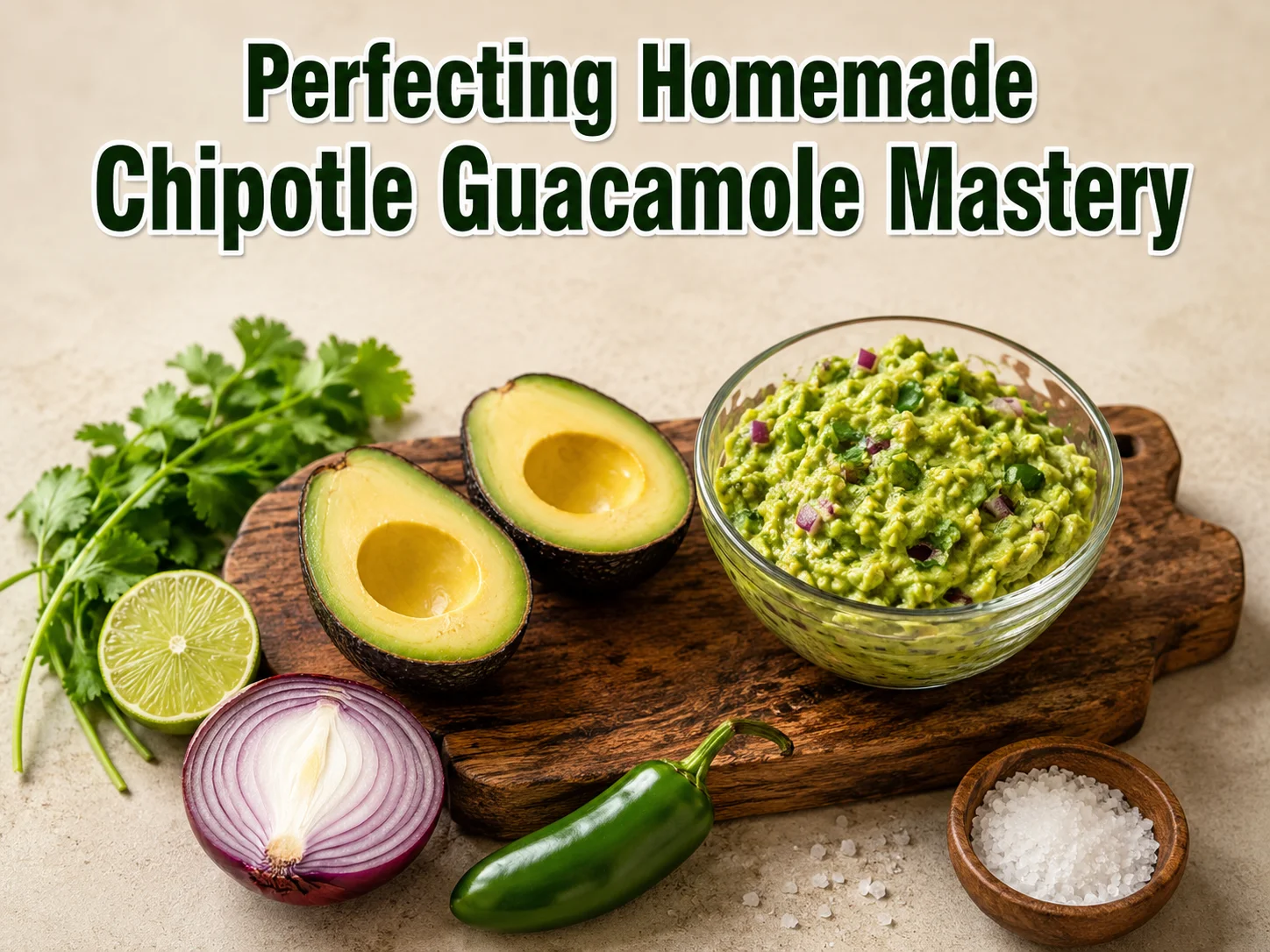
What makes it work is not a secret ingredient. It is discipline. The recipe uses only six components: ripe Hass avocados, lime juice, cilantro, red onion, jalapeño, and kosher salt. [1] Nothing else. No garlic, no cumin, no tomato, no sour cream. The magic is entirely in the execution, which is exactly why so many home cooks miss it.
I have tested this recipe against at least a dozen published versions, and the differences between a forgettable batch and a restaurant-quality one almost always come down to the same handful of controllable variables. The 8 ways to perfect your Chipotle guacamole recipe at home outlined below address each of those variables directly.
1. Start With Perfectly Ripe Hass Avocados
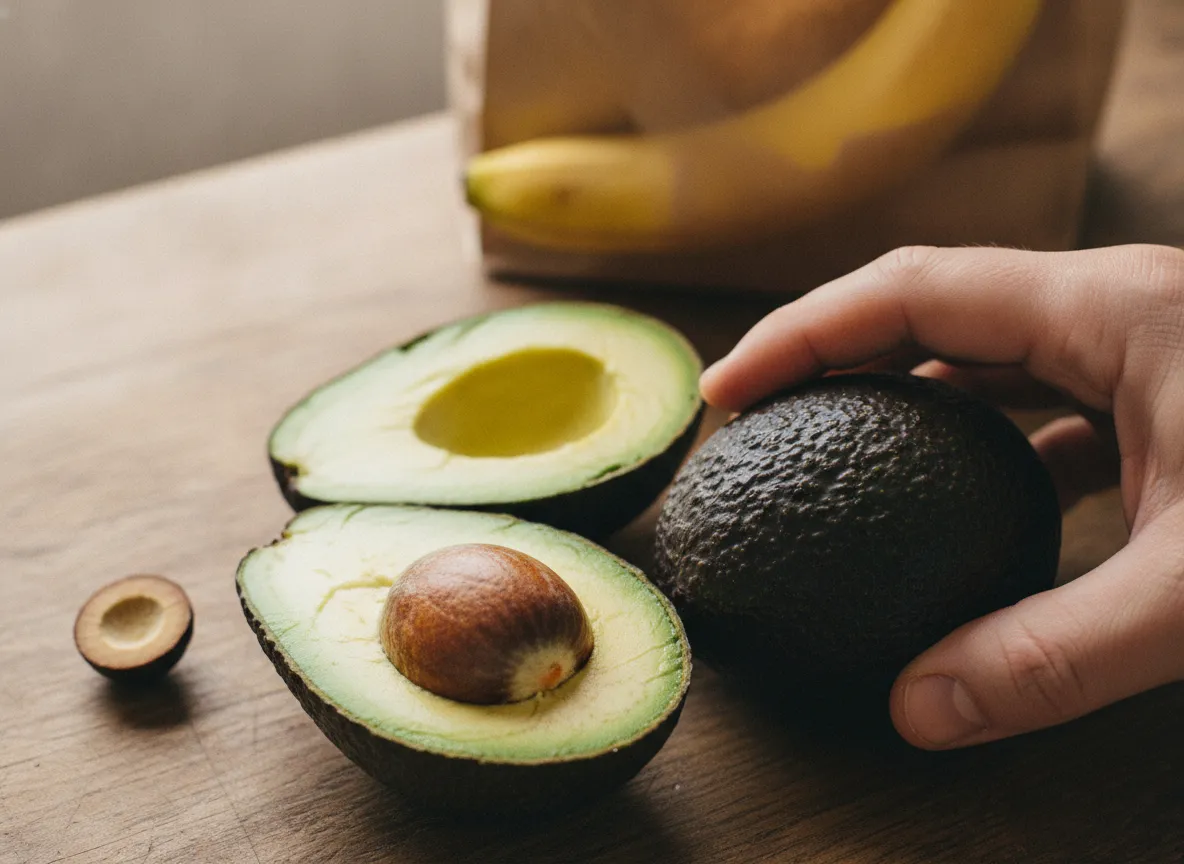
Avocado selection is the single most important quality factor in the entire recipe. [6] No amount of technique, seasoning, or careful folding will rescue guacamole made from underripe or overripe fruit.
How to identify the right avocado:
- The skin should be dark green to nearly black for Hass avocados
- The flesh should yield to gentle thumb pressure without feeling mushy or hollow
- The stem cap should pull away cleanly and reveal green flesh underneath, brown flesh means overripe
If your avocados are not ready, leave them on the counter at room temperature for one to two days. Placing them in a paper bag with a banana speeds up the process. Never refrigerate an avocado before it is ripe, cold temperatures halt the ripening process entirely.
For a batch that serves four to six people, the official Chipotle recipe calls for two large ripe Hass avocados. [2] If you are scaling up, keep the ratio consistent rather than guessing.
“The avocado is doing almost all of the work. If it is not right, nothing else matters.”, A principle repeated by nearly every food professional who has tested this recipe.
2. Use the Official Chipotle Ingredient Ratios as Your Baseline
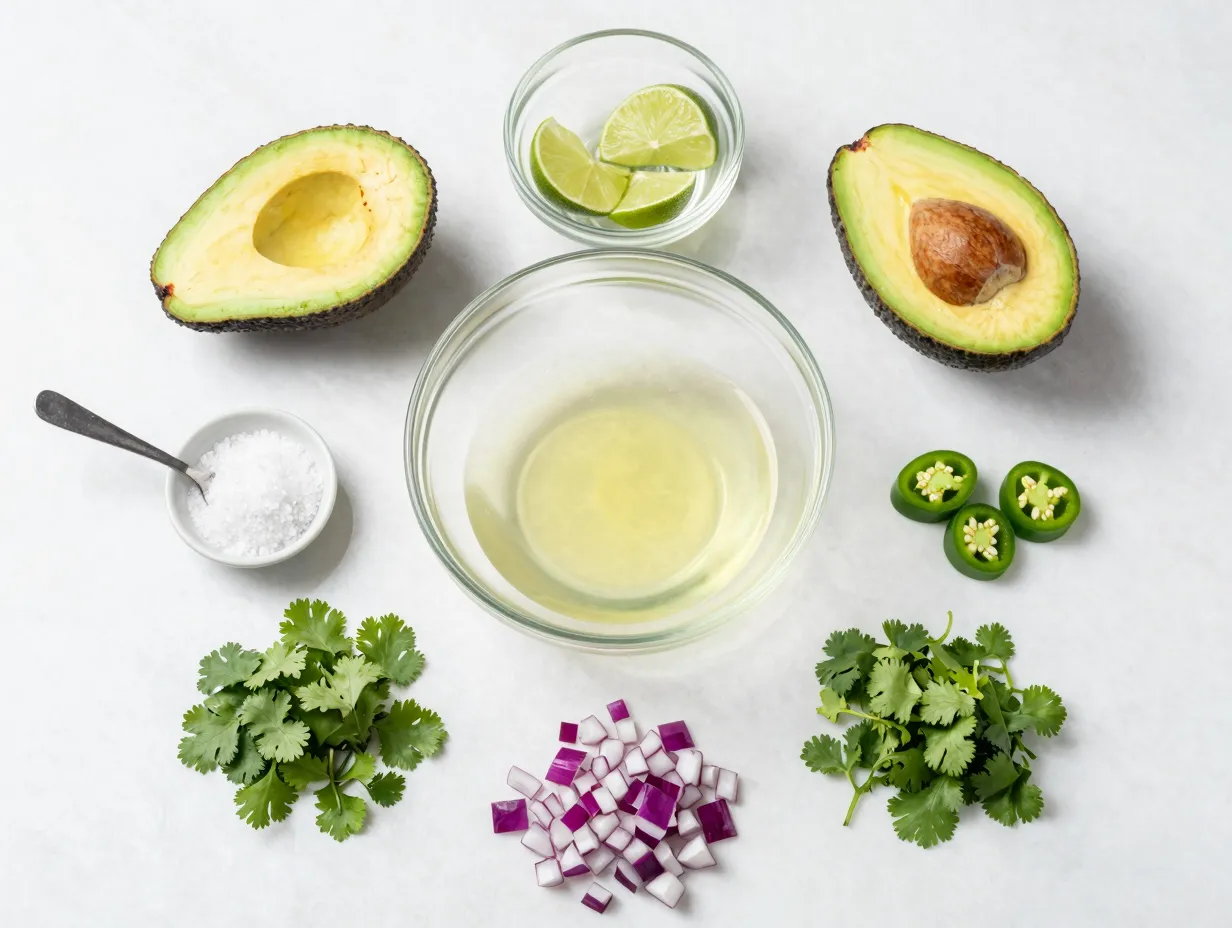
Before you start improvising, it helps to know exactly what the original recipe specifies. Chipotle released its guacamole recipe publicly, and the proportions are more precise than most people realize. [1]
| Ingredient | Official Amount (2 avocados) |
|---|---|
| Ripe Hass avocados | 2 large |
| Lime juice | 3 teaspoons (freshly squeezed) |
| Kosher salt | 1 teaspoon |
| Red onion (diced) | 3 tablespoons |
| Cilantro (chopped) | 3 tablespoons |
| Jalapeño (diced, with seeds) | 2 teaspoons |
These ratios are your starting point, not your finish line. [4] Salt and acidity in particular should be adjusted to taste after the base is assembled, because avocado size and lime juice potency vary. But starting from the published numbers gives you a reliable foundation before you begin calibrating.
3. Follow the Correct Order of Operations
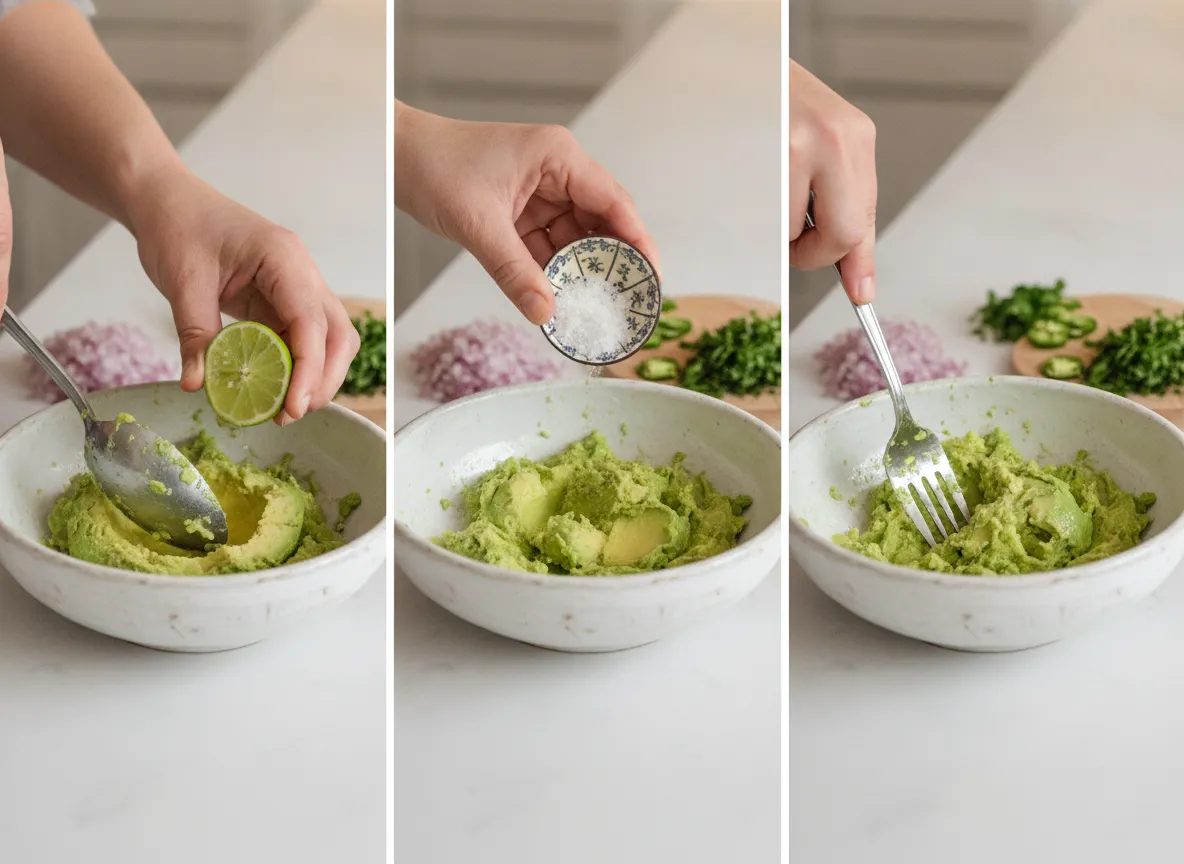
The sequence in which you add ingredients is not arbitrary. It directly affects the final flavor and texture of the guacamole. [9]
The correct order is:
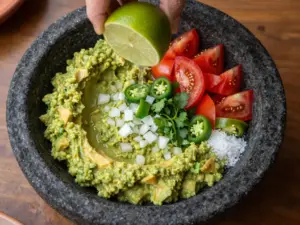
- Halve and pit the avocados, then scoop the flesh into your bowl
- Add the lime juice immediately, this slows oxidation and begins seasoning the flesh
- Add the kosher salt and mash the avocado to your desired texture
- Fold in the red onion, cilantro, and jalapeño last
The reason lime juice and salt go first is practical. Acid and salt both draw moisture from the avocado flesh and begin to break it down at a cellular level. When you season before mashing, the seasoning distributes more evenly throughout the batch. [5] Adding lime juice after the aromatics are already in the bowl means uneven distribution and a guacamole that tastes flat in some bites and sharp in others.
This is the step most home cooks skip or reverse, and it is one of the most impactful adjustments you can make.
4. Master the Mash-Then-Fold Technique
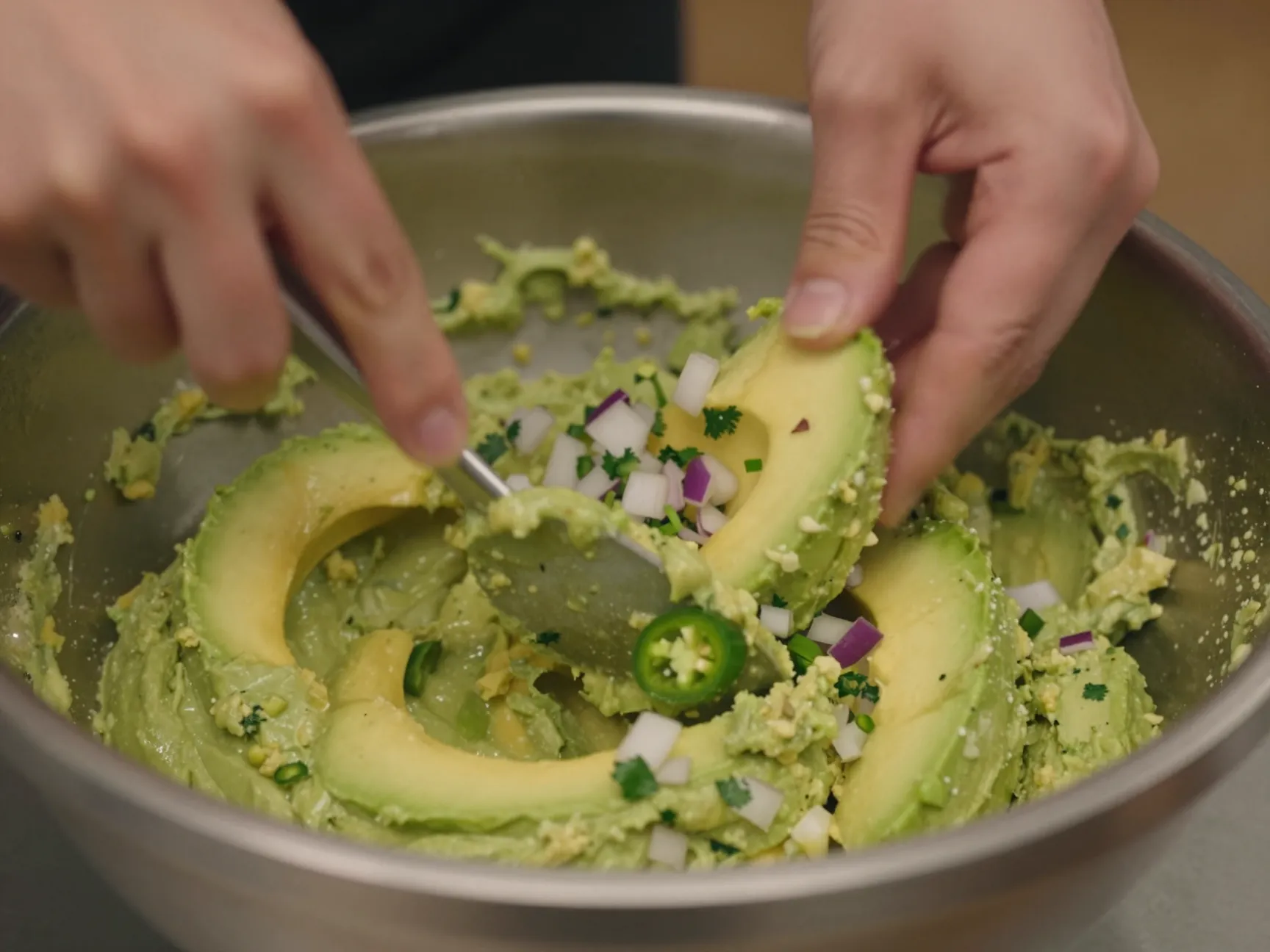
Texture is one of the defining characteristics of Chipotle’s guacamole. It is not a smooth paste, and it is not a chunky salsa. It sits in the middle, creamy with identifiable pieces of avocado throughout.
The two-step technique:
- Mash the seasoned avocado with a fork or the back of a spoon until you reach a mostly smooth consistency with some chunks remaining
- Fold the aromatics in gently using a spatula or large spoon, turning the mixture over rather than stirring it aggressively
Overmixing after the aromatics are added does two damaging things. First, it breaks down the onion and jalapeño into the base, releasing bitter compounds and making the texture uniform in a bad way. Second, it incorporates air, which speeds up browning. [8]
I learned this the hard way during one of my early batches. I stirred the entire mixture like I was making a salad dressing. The result was a pale green, slightly bitter paste that tasted nothing like what I had ordered at the restaurant. Folding is the difference.
Fold the aromatics in, never stir them. This single habit separates home guacamole from restaurant guacamole.
5. Make Smart Decisions About Jalapeño and Heat Level
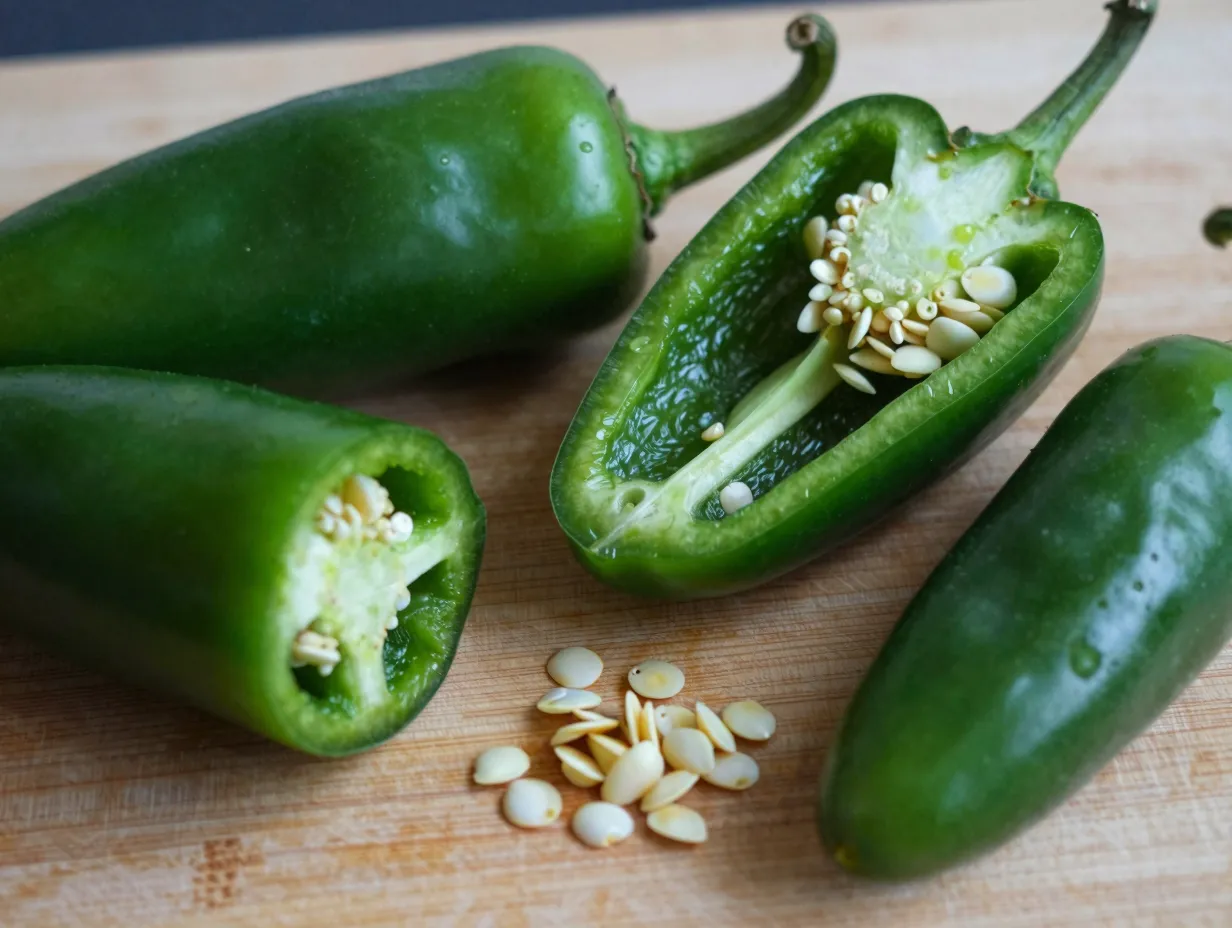
The official Chipotle recipe includes jalapeño with the seeds. [1] Seeds contain a significant portion of the capsaicin in a jalapeño, so leaving them in produces a guacamole with noticeable but not overwhelming heat.
Your options:
- Full seeds included: Closest to the restaurant version, medium heat
- Seeds removed: Milder, still flavorful, good for guests with low heat tolerance
- Seeds removed, extra jalapeño: More jalapeño flavor with controlled heat
- Serrano pepper substitution: A step up in heat for those who want more intensity
The key point is that deseeding is a sanctioned adjustment, not a deviation from the recipe. [6] What matters is that you use fresh jalapeño, not pickled, not jarred, and not dried. The brightness of fresh jalapeño is part of what makes this guacamole taste clean rather than heavy.
Dice the jalapeño as finely as possible. Large chunks create uneven heat distribution, meaning some bites are mild and others are unexpectedly hot.
6. Handle Cilantro and Red Onion With Precision
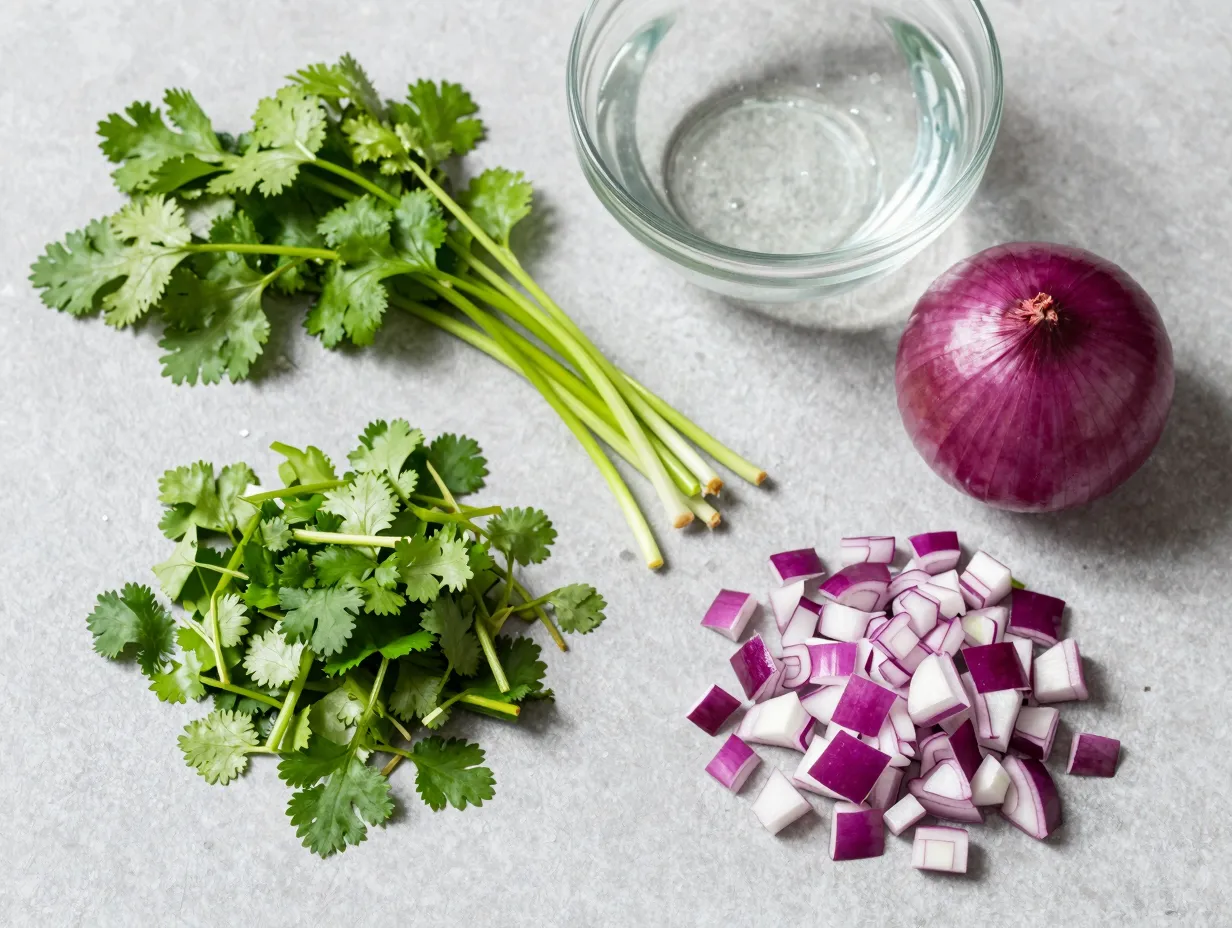
These two aromatics are where a lot of home cooks introduce problems without realizing it.
Cilantro:
Use only the leaves and the thinnest parts of the stems. Thick cilantro stems are tough and can taste slightly soapy when they break down in the mixture. Chop the cilantro roughly, not minced, not torn into large pieces. You want visible flecks throughout the guacamole. [10]
Red onion:
Dice the onion as finely and uniformly as possible. Large onion pieces create an aggressive, sharp bite that overwhelms the avocado. Fine dice distributes the flavor more evenly and softens slightly as it sits in the lime juice. [4]
Some cooks soak diced red onion in cold water for five minutes before adding it to the guacamole. This removes some of the sulfurous sharpness without eliminating the onion flavor entirely. It is a useful trick if your onion is particularly pungent or if you are making the guacamole in advance.
One more note on cilantro: If you or your guests have the genetic variant that makes cilantro taste like soap, flat-leaf parsley is a reasonable substitute that preserves the fresh, herbal quality of the original.
7. Calibrate Salt and Acidity After Building the Base
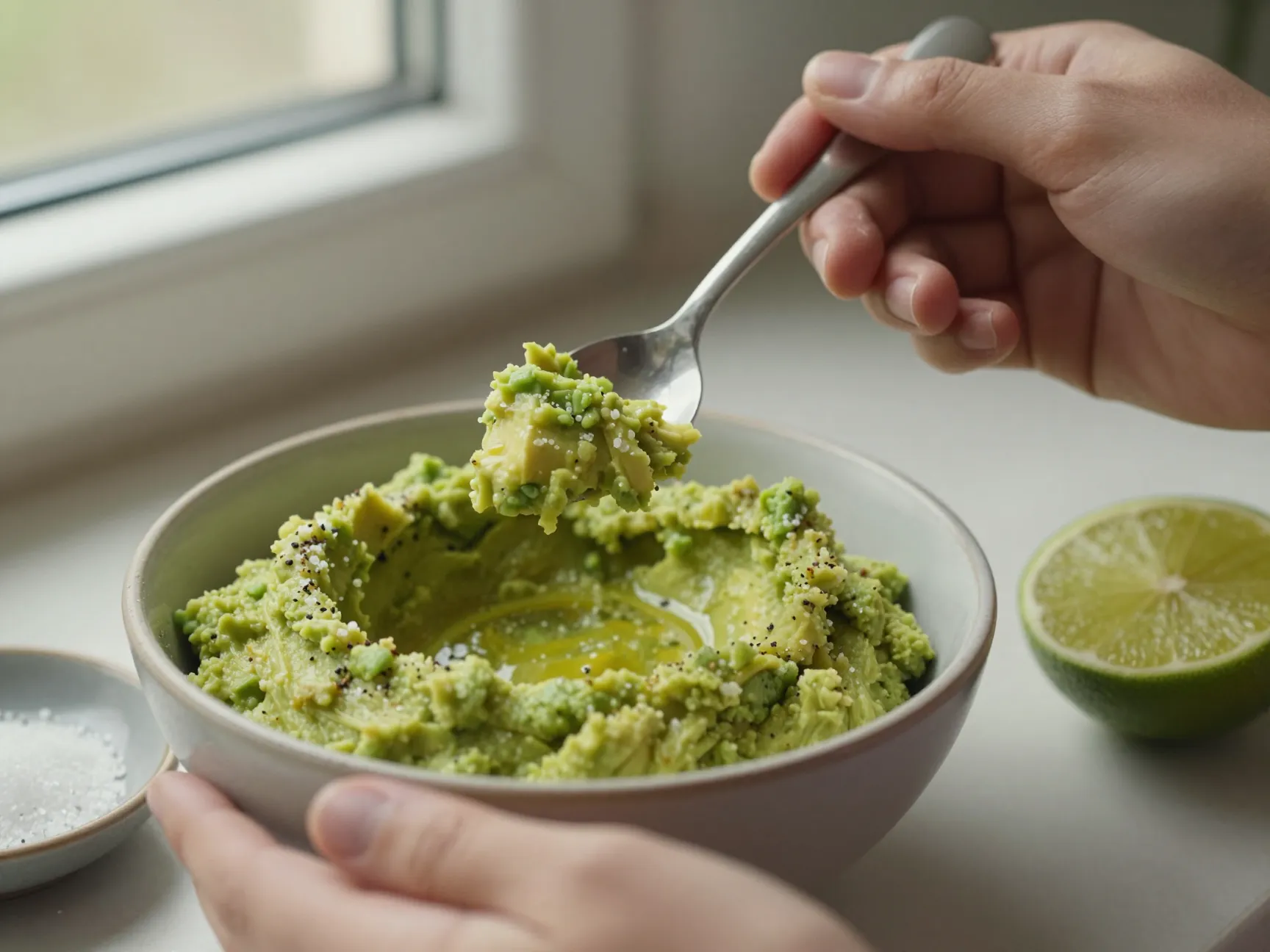
The published recipe specifies one teaspoon of kosher salt and three teaspoons of lime juice for two avocados. [2] These are starting points, not absolutes.
Why you need to adjust:
- Avocados vary significantly in size and water content
- Limes vary in juice yield and acidity depending on the season and variety
- Kosher salt brands differ in crystal size, which affects how salty a given volume actually is (Diamond Crystal is less dense than Morton, for example)
The calibration process:
- Build the base with the published ratios
- Taste the guacamole before adding the aromatics
- If it tastes flat, add a small pinch of salt and stir gently, then taste again
- If it tastes dull or heavy, add a few more drops of lime juice
- After adding aromatics, taste one final time and make micro-adjustments
The goal is a guacamole that tastes bright and clean, where the avocado flavor is the dominant note and the lime and salt amplify rather than compete with it. [5]
A common mistake is adding too much lime juice upfront to prevent browning. Excess acid makes the guacamole taste sharp and thin. Use the correct amount for flavor, and handle browning prevention separately (covered in the next section).
8. Store It Correctly to Prevent Browning
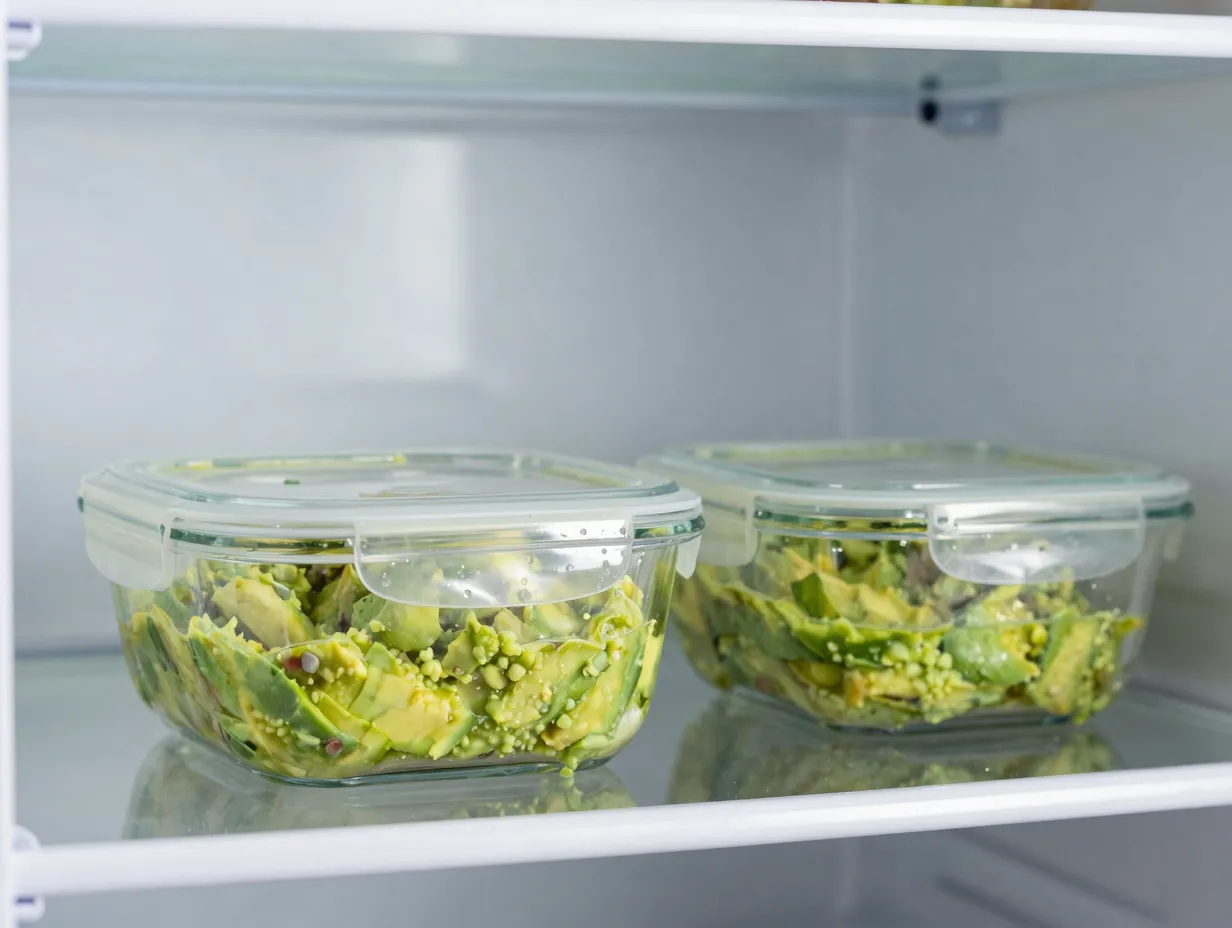
Browning is the most common complaint about homemade guacamole, and it is almost entirely preventable with the right storage technique. [7]
Browning is caused by oxidation, the avocado flesh reacts with oxygen in the air. The lime juice in the recipe slows this process, but it does not stop it completely once the guacamole is exposed to air.
Effective storage methods:
- Plastic wrap contact method: Press plastic wrap directly onto the surface of the guacamole, eliminating any air gap. This is the most reliable method for short-term storage (up to 24 hours).
- Water layer method: Smooth the surface of the guacamole flat in its container, then gently pour a thin layer of cold water on top. Seal the container and refrigerate. Before serving, pour off the water and stir gently. This method works well for up to 48 hours. [7]
- Avocado pit myth: Placing the pit in the guacamole only protects the small area directly beneath it. It does not prevent browning across the surface.
Additional storage tips:
- Store guacamole in a container that matches its volume, too much empty space means more air exposure
- Do not add the aromatics if you plan to store the guacamole for more than a few hours; add them fresh before serving
- Always bring refrigerated guacamole to room temperature for about 10 minutes before serving to restore its full flavor
The water layer method is one I use consistently when making guacamole for a party the night before. It sounds counterintuitive, but it works because water creates a physical barrier against oxygen without altering the flavor of the guacamole underneath.
Putting the 8 Ways to Perfect Your Chipotle Guacamole Recipe at Home Into Practice
Understanding these eight methods individually is useful. Applying them as a connected system is what produces restaurant-quality results consistently.
Here is a condensed workflow that integrates all eight:
- Select two large, perfectly ripe Hass avocados the day before you need them, or ripen them on the counter
- Prepare your aromatics in advance: finely dice the red onion and jalapeño, roughly chop the cilantro leaves, squeeze fresh lime juice
- Scoop the avocado flesh into a wide bowl, add lime juice and kosher salt immediately
- Mash to a creamy-chunky texture with a fork
- Taste and calibrate salt and acid before adding anything else
- Fold in onion, cilantro, and jalapeño with a spatula, do not stir
- Taste one final time and make micro-adjustments
- Serve immediately or store using the plastic wrap contact method or water layer method
The entire process takes about 10 minutes once your ingredients are prepped. The time investment is in the avocado selection and the prep work, not in the assembly.
Common Mistakes That Undermine the 8 Ways to Perfect Your Chipotle Guacamole Recipe at Home
Even with the right approach, a few persistent errors can compromise the final result.
Mistake 1: Using bottled lime juice
Bottled lime juice contains preservatives and lacks the volatile aromatic compounds that give fresh lime its brightness. The difference in flavor is significant. Always use freshly squeezed. [8]
Mistake 2: Over-mashing the avocado
A completely smooth guacamole loses the textural interest that makes Chipotle’s version satisfying. Stop mashing when you still have visible chunks.
Mistake 3: Skipping the final taste
Seasoning is not a set-it-and-forget-it step. Always taste after folding in the aromatics and adjust if needed.
Mistake 4: Making it too far in advance with aromatics included
Onion and jalapeño continue to release compounds into the guacamole over time, making it sharper and more pungent. If you are making it ahead, store the base separately and fold in fresh aromatics before serving.
Mistake 5: Using the wrong salt
Table salt is denser than kosher salt. If you substitute table salt at a one-to-one ratio, the guacamole will be significantly over-salted. Use kosher salt, or reduce table salt by about 25 percent.
Conclusion
The gap between a mediocre homemade guacamole and a genuinely great one is not about exotic ingredients or professional equipment. It is about discipline, sequence, and attention to a small number of high-impact variables.
The 8 ways to perfect your Chipotle guacamole recipe at home covered in this guide give you a complete framework: start with ripe Hass avocados, use the official ratios as a baseline, follow the correct order of operations, mash then fold, manage heat intentionally, handle aromatics with precision, calibrate salt and acid after building the base, and store correctly to prevent browning.
Your actionable next steps:
- Buy Hass avocados two days before you plan to make guacamole and let them ripen at room temperature
- Gather all six ingredients and measure them before you start, mise en place matters here
- Follow the mash-then-fold sequence exactly once, then taste the difference compared to your previous method
- Make a small note of any adjustments after your first batch so you can refine from a known baseline
The recipe is public. The technique is learnable. The only thing standing between you and Chipotle-quality guacamole at home is consistent execution of the steps above.
References
[1] Chipotle Reveals Recipe for Guacamole – https://www.nbcchicago.com/news/national-international/chipotle-reveals-recipe-for-guacamole/56281/
[2] Chipotle Guacamole Recipe – https://www.alyonascooking.com/chipotle-guacamole-recipe/
[3] Chipotle Guacamole Recipe Review How To Make At Home – https://www.thrillist.com/news/nation/chipotle-guacamole-recipe-review-how-to-make-at-home
[4] Chipotles Famous Guacamole Recipe – https://www.kimscravings.com/chipotles-famous-guacamole-recipe/
[5] Chipotle Guacamole – https://www.culinaryhill.com/chipotle-guacamole/
[6] This Is The Trick To Making Chipotles Guacamole At Home – https://www.mashed.com/205159/this-is-the-trick-to-making-chipotles-guacamole-at-home/
[7] How To Make Chipotle Guacamole At Home Recipe Photos 2020 8 – https://www.businessinsider.com/how-to-make-chipotle-guacamole-at-home-recipe-photos-2020-8
[8] Chipotle Guac Recipe – https://www.delish.com/food-news/a32270002/chipotle-guac-recipe/
[9] Chipotle Chef How To Make Original Guacamole Recipe At Home 2020 4 – https://www.businessinsider.com/chipotle-chef-how-to-make-original-guacamole-recipe-at-home-2020-4
[10] Chipotle Guacamole Recipe – https://heatherlikesfood.com/chipotle-guacamole-recipe/