8 Stunning Salmon Dishes Fine Dining Restaurants Don’t Want You to Make at Home
Fine dining restaurants in the United States charge an average of $42 for a single salmon entree, yet the same fish costs roughly $8 to $12 per pound at your local market. That gap is not just about ambiance or table service. It is about technique, presentation, and a handful of closely guarded kitchen secrets that chefs rarely share outside their brigade. This article breaks open that vault.
Disclosure: This post contains affiliate links. As an Amazon Associate, we earn from qualifying purchases, and at no extra cost to you.
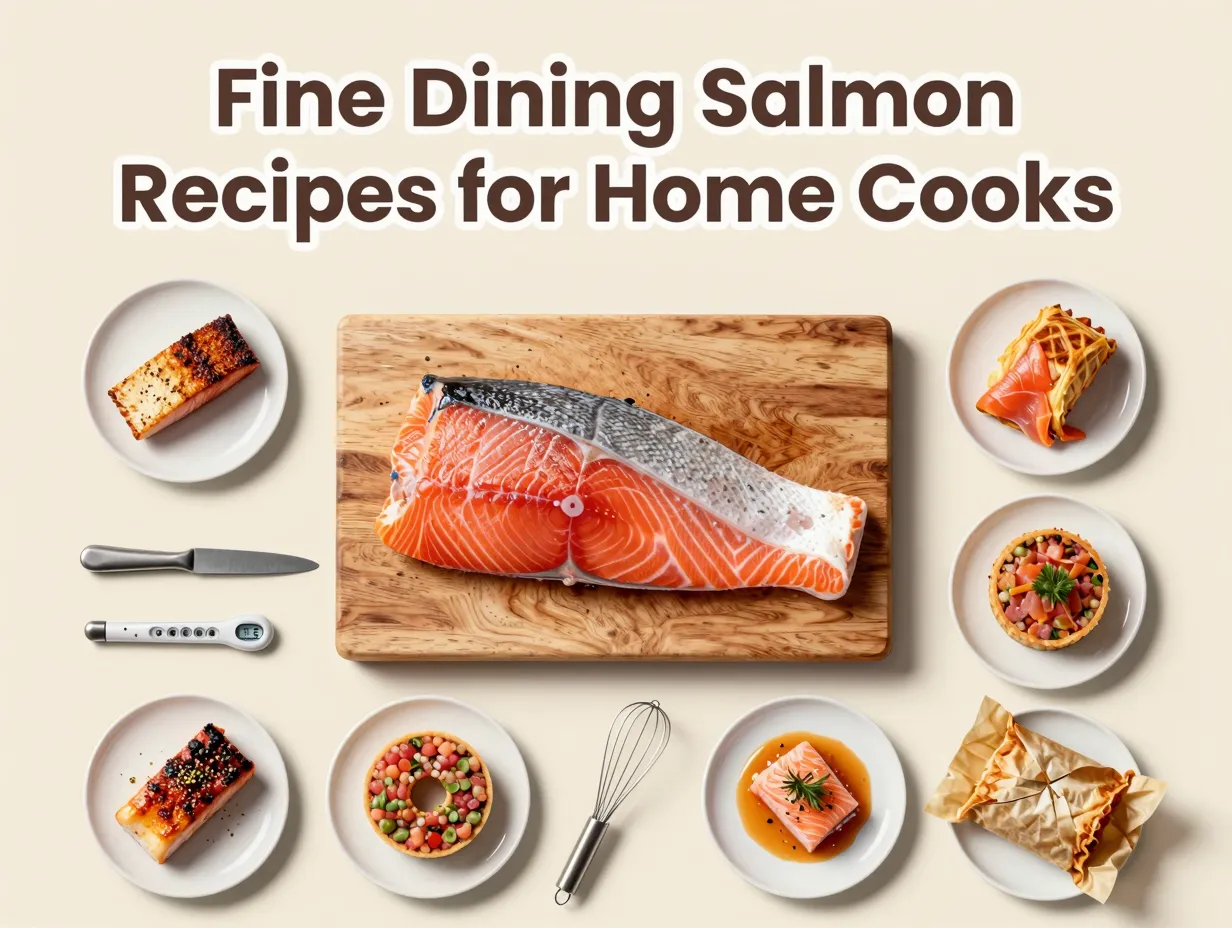
The 8 stunning salmon dishes fine dining restaurants don’t want you to make at home are not mythical. They are achievable in a home kitchen with the right guidance, and in 2026, more home cooks than ever are proving that restaurant-quality salmon is within reach. Whether you are chasing the crispy skin of a perfectly pan-seared fillet or the silky complexity of a house-cured gravlax, this guide walks you through every dish with the precision of a professional tutorial.
Key Takeaways
- Restaurant-quality salmon dishes rely on technique, temperature control, dry-brining, and proper searing, more than exotic ingredients.
- Most of the 8 stunning salmon dishes covered here require only basic kitchen equipment and widely available ingredients.
- Understanding how to build sauces, cure fish, and layer textures transforms an ordinary fillet into a showstopper.
- Home cooks can replicate fine dining results by following the same step-by-step methods professional chefs use.
- Sourcing high-quality, fresh salmon is the single most important variable in achieving restaurant-level flavor.
Why Fine Dining Restaurants Guard These Salmon Recipes
There is a quiet economic logic behind why upscale restaurants prefer you stay in your seat and keep ordering. Salmon is one of the most profitable proteins on any fine dining menu. It photographs beautifully, pairs with a wide range of flavor profiles, and carries a perceived luxury that justifies premium pricing [9].
Chefs train for years to master the nuances of cooking fish, the exact moment a fillet releases from a stainless-steel pan, the ratio of salt to sugar in a cure, the temperature at which a butter sauce breaks. These are learnable skills, not magic.
“The best restaurant salmon you have ever eaten was not better because of the restaurant. It was better because someone paid obsessive attention to detail.”
The good news: obsessive attention to detail is free. The following eight dishes represent the pinnacle of salmon cookery across multiple culinary traditions, and every single one of them belongs in your home kitchen.
The 8 Stunning Salmon Dishes Fine Dining Restaurants Don’t Want You to Make at Home
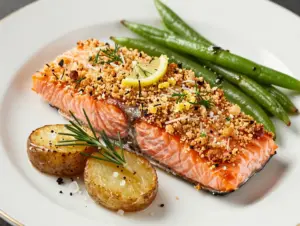
1. Crispy Skin Pan-Seared Salmon with Beurre Blanc
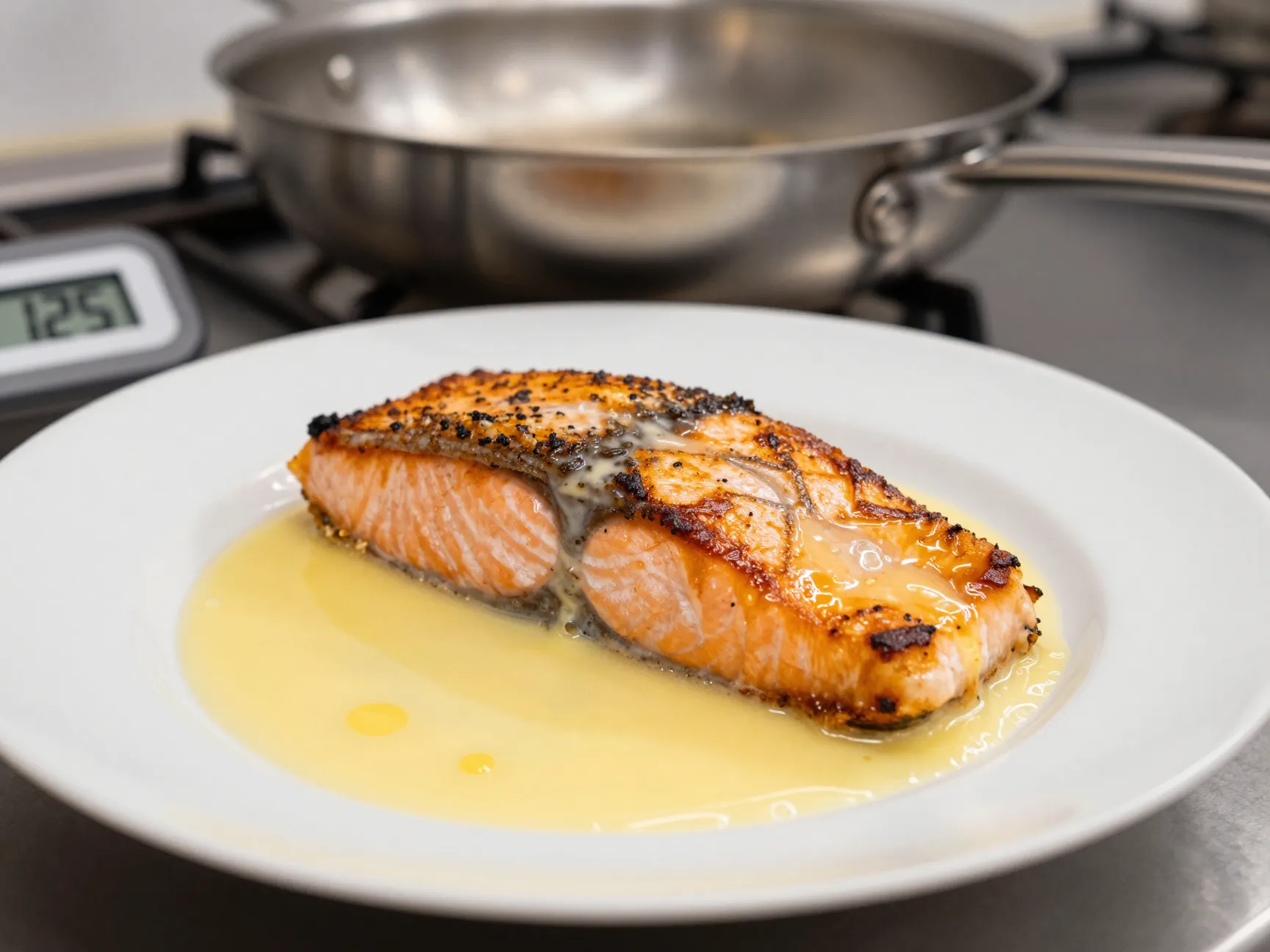
Pan-searing is the backbone of salmon cookery in professional kitchens, and the crispy skin is the detail that separates an amateur effort from a restaurant plate [2]. The technique requires a dry fillet, a screaming-hot pan, and patience.
How to do it right:
- Pat the salmon completely dry with paper towels at least 30 minutes before cooking.
- Season the skin side generously with fine sea salt and let it sit uncovered in the refrigerator for 20 minutes, this is a micro dry-brine that firms the skin.
- Heat a stainless-steel or carbon-steel pan (not nonstick) over high heat until a drop of water evaporates instantly.
- Add a neutral oil with a high smoke point, then lay the fillet skin-side down.
- Press gently with a spatula for the first 30 seconds to prevent curling.
- Cook 70% of the way through on the skin side, then flip for just 60 to 90 seconds.
The beurre blanc, a classic French butter sauce, is built from a reduction of white wine, shallots, and a splash of white wine vinegar, finished with cold butter whisked in off the heat. It is the sauce that makes diners close their eyes at the table [5].
Pro tip: The internal temperature for a restaurant-style salmon is 125°F (52°C), not the 145°F that most home recipes recommend. That lower temperature preserves the silky, translucent center that defines fine dining texture.
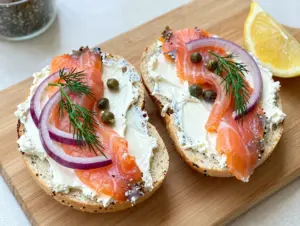
2. House-Cured Gravlax with Mustard Dill Sauce
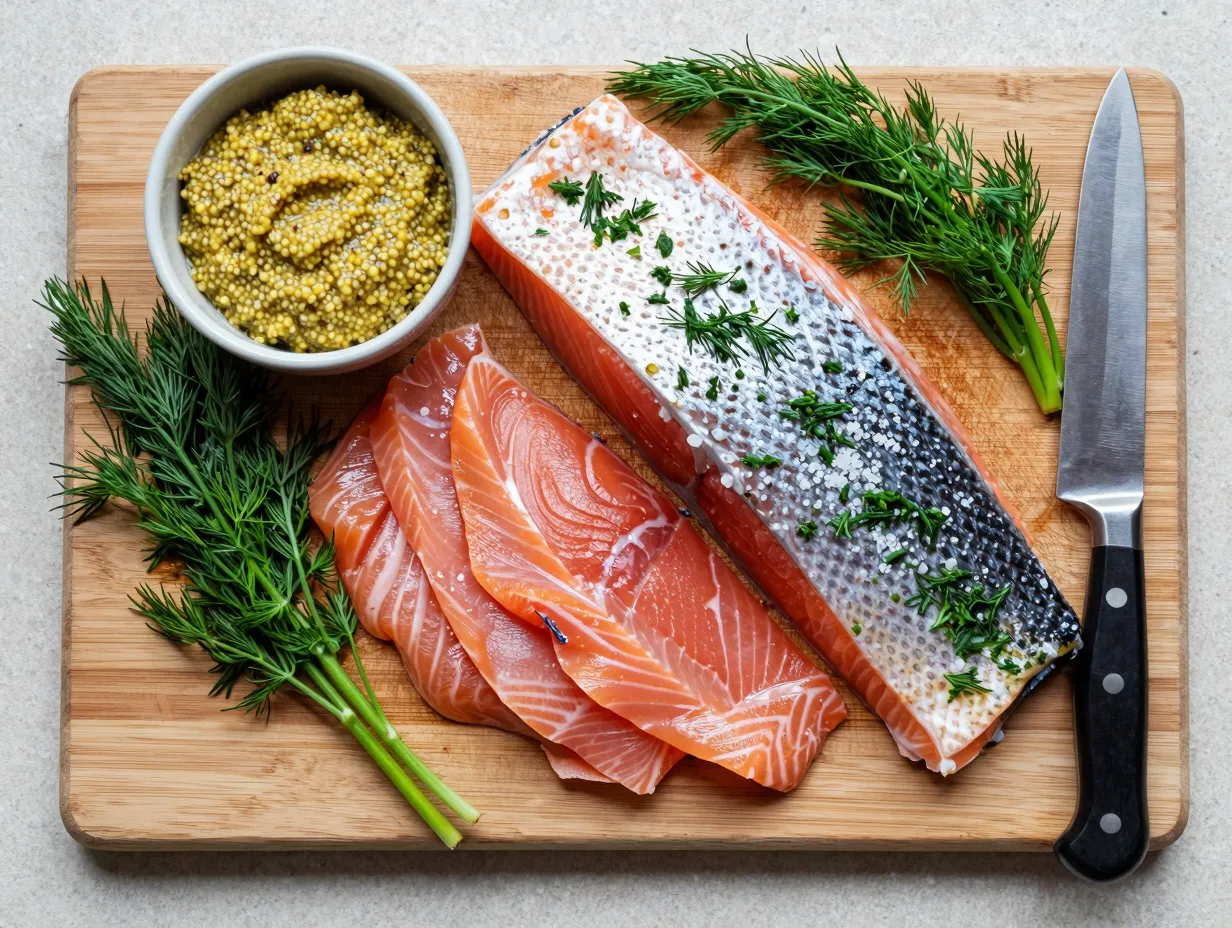
Gravlax is Scandinavian in origin and centuries old in concept, but it remains one of the most impressive dishes a home cook can produce, and one of the simplest once you understand the ratio [3].
The cure ratio:
| Ingredient | Amount per 1 lb salmon |
|---|---|
| Kosher salt | 3 tablespoons |
| Granulated sugar | 2 tablespoons |
| Fresh dill (chopped) | 1/2 cup |
| White pepper | 1 teaspoon |
Pack the cure around a skin-on fillet, wrap tightly in plastic, weight it with a heavy pan, and refrigerate for 48 hours, flipping every 12 hours. The result is a silky, jewel-toned cured fish that costs a fraction of what a restaurant charges for the same preparation [1].
The accompanying mustard dill sauce is a simple emulsion of whole-grain mustard, honey, white wine vinegar, and chopped fresh dill. Slice the gravlax paper-thin at a 45-degree angle for the authentic presentation.
3. Salmon Wellington with Spinach and Mushroom Duxelles
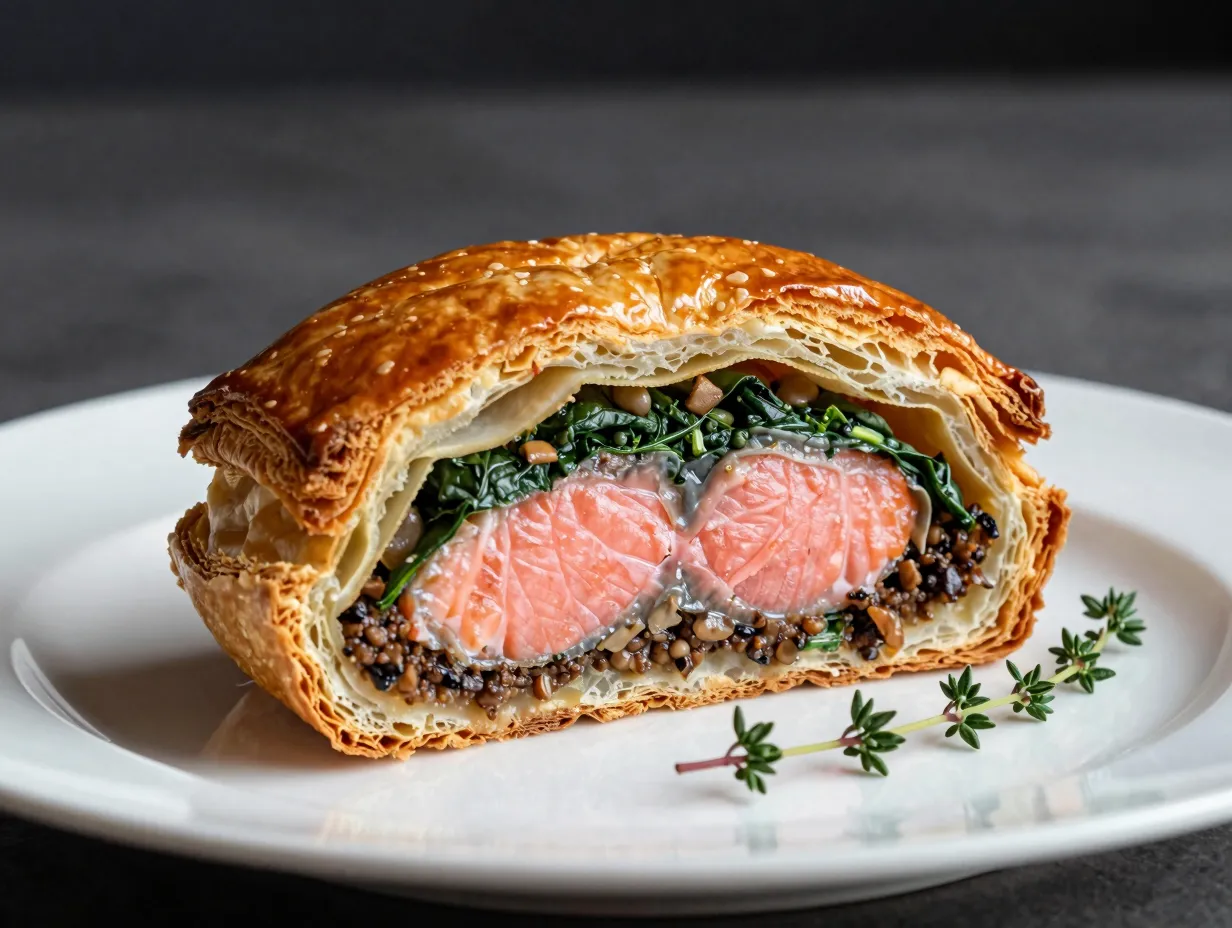
This is the dish that draws gasps when it arrives at the table. A salmon Wellington wraps a seasoned fillet in a layer of mushroom duxelles and wilted spinach, then encases the whole assembly in golden, flaky puff pastry [7].
The construction sequence:
- Make the duxelles by cooking finely chopped mushrooms with shallots and thyme in butter until completely dry, this step prevents a soggy pastry base.
- Wilt fresh spinach, squeeze out every drop of moisture, and season with nutmeg.
- Sear the salmon fillet briefly on all sides to set the exterior, then cool completely.
- Layer the duxelles and spinach on a sheet of puff pastry, place the cooled salmon on top, and roll tightly.
- Brush with egg wash and score the top lightly with a knife.
- Bake at 425°F (220°C) for 20 to 25 minutes until deep golden brown.
The internal temperature should reach 120°F to 125°F at the center for a perfectly cooked, medium-rare salmon interior. Rest for five minutes before slicing with a sharp serrated knife.
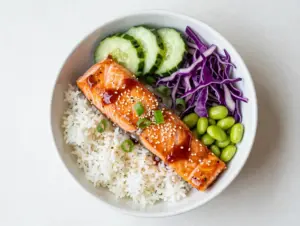
4. Miso-Glazed Salmon (Nobu-Style)
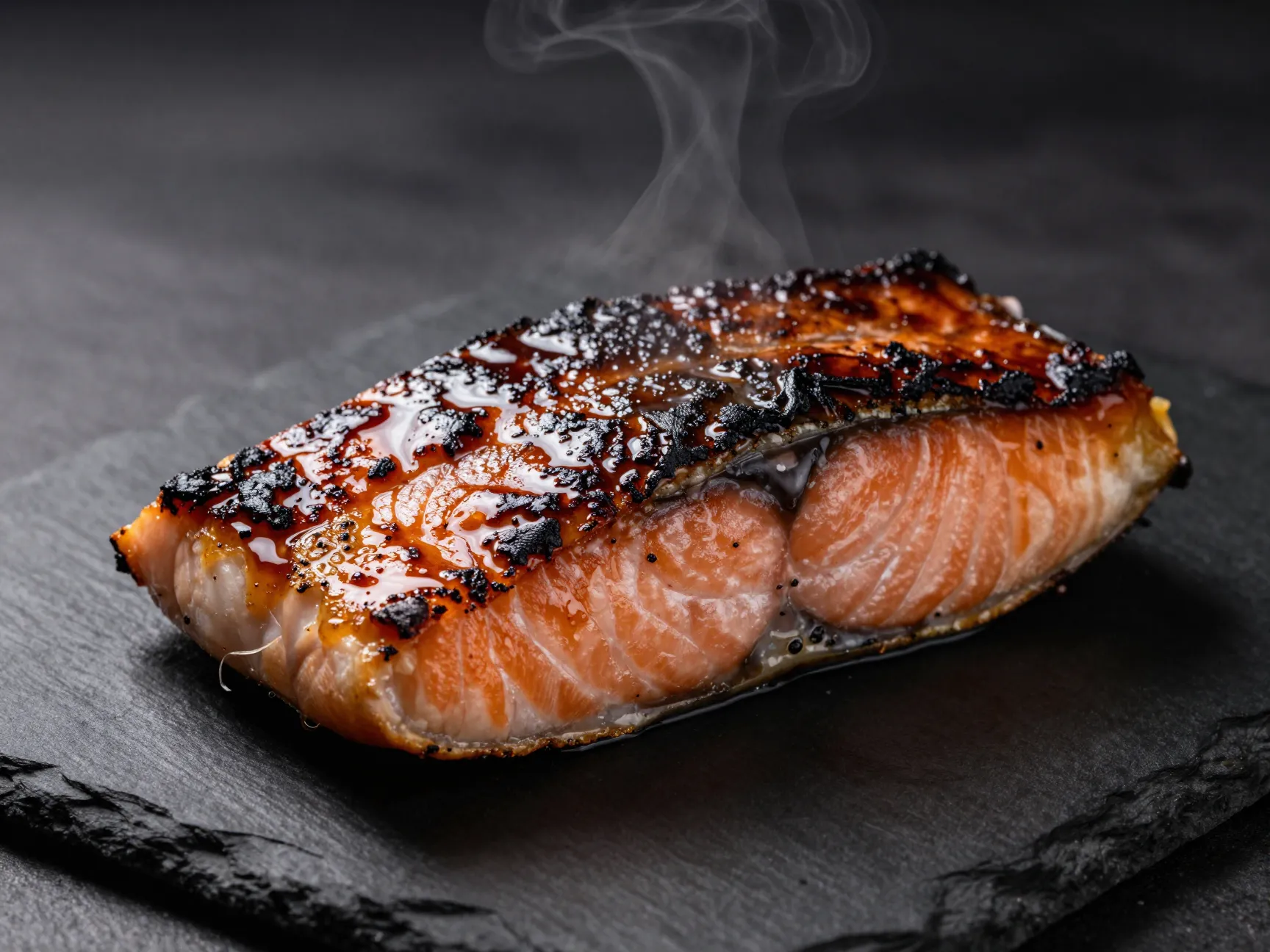
This preparation became famous through high-end Japanese-fusion restaurants and remains one of the most searched restaurant salmon dishes online [4]. The marinade is a three-ingredient wonder that transforms the fillet’s surface into a lacquered, caramelized crust.
The marinade:
- 3 tablespoons white (shiro) miso paste
- 2 tablespoons mirin
- 1 tablespoon sake
- 1 tablespoon sugar (optional, for extra caramelization)
Combine, coat the salmon, and marinate for a minimum of 24 hours, 48 to 72 hours produces a deeper, more complex flavor. Wipe off excess marinade before cooking, as the sugars in miso burn easily. Cook under a broiler on high for 4 to 5 minutes, watching carefully, until the surface is blistered and deeply caramelized [6].
The secret restaurants keep: The long marination time is the entire trick. Most home cooks marinate for one hour and wonder why their version lacks depth. Time is the ingredient.
5. Salmon Tartare with Avocado and Citrus Vinaigrette
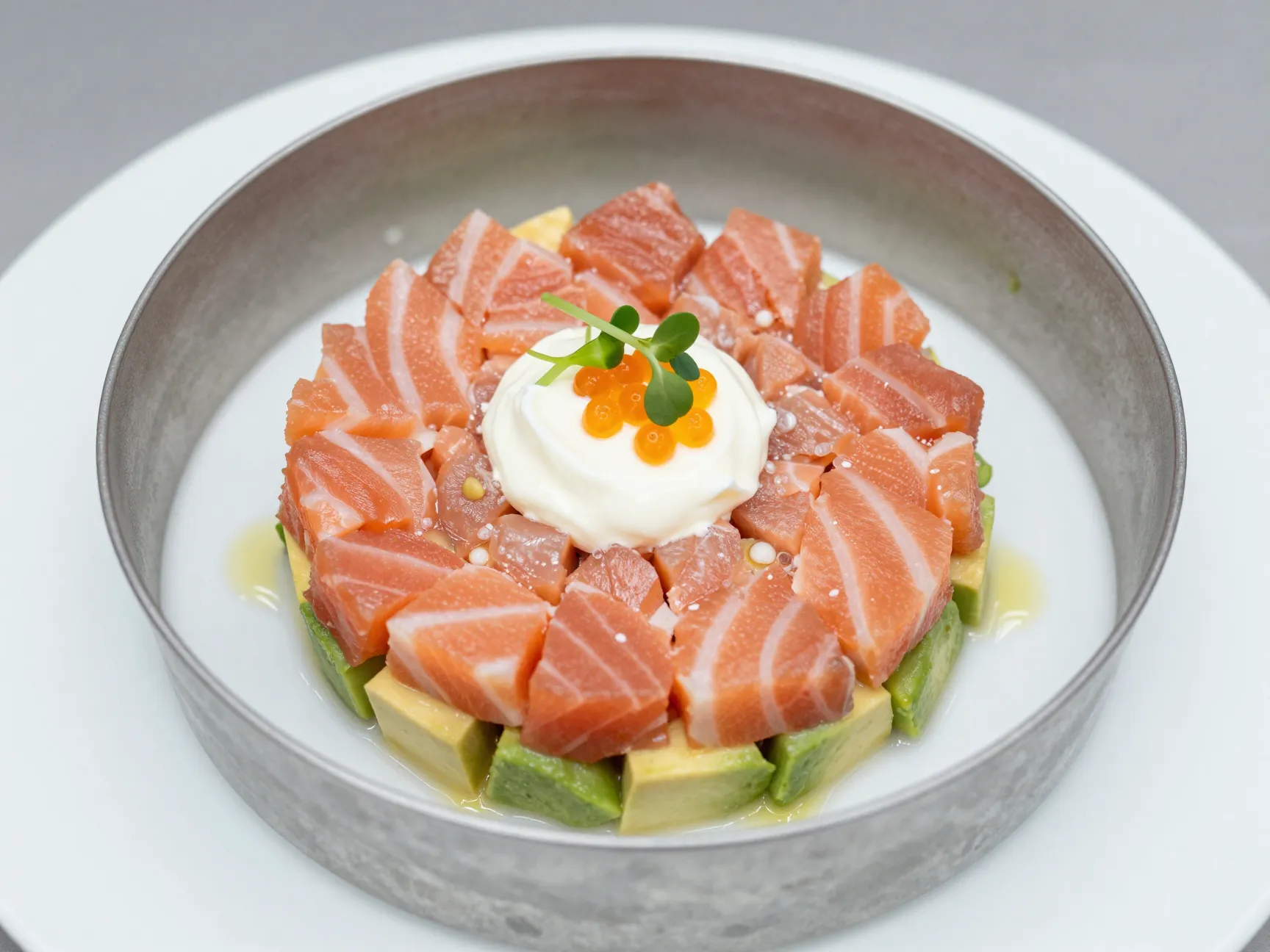
Raw preparations require the highest-quality fish and the most precise knife work, which is why restaurants charge a premium for them. Salmon tartare is achievable at home when you source sushi-grade fish from a reputable fishmonger [9].
Building the tartare:
- Dice the salmon into uniform 1/4-inch cubes, uniformity is a visual signal of care and precision.
- Fold gently with a citrus vinaigrette made from fresh lemon juice, a touch of olive oil, finely minced shallot, and capers.
- Season with fleur de sel and white pepper only.
- Press into a ring mold over a base of diced ripe avocado seasoned with lime juice.
- Garnish with microgreens, a quenelle of creme fraiche, and a few grains of salmon roe for a visual and textural contrast.
The key to a restaurant-quality tartare is restraint. Do not over-season, do not over-mix, and do not let the fish sit in acid for more than five minutes before serving, as the citrus will begin to cook the protein and change the texture.
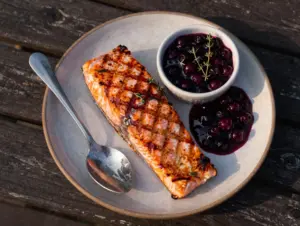
6. Cedar-Plank Salmon with Herb Compound Butter
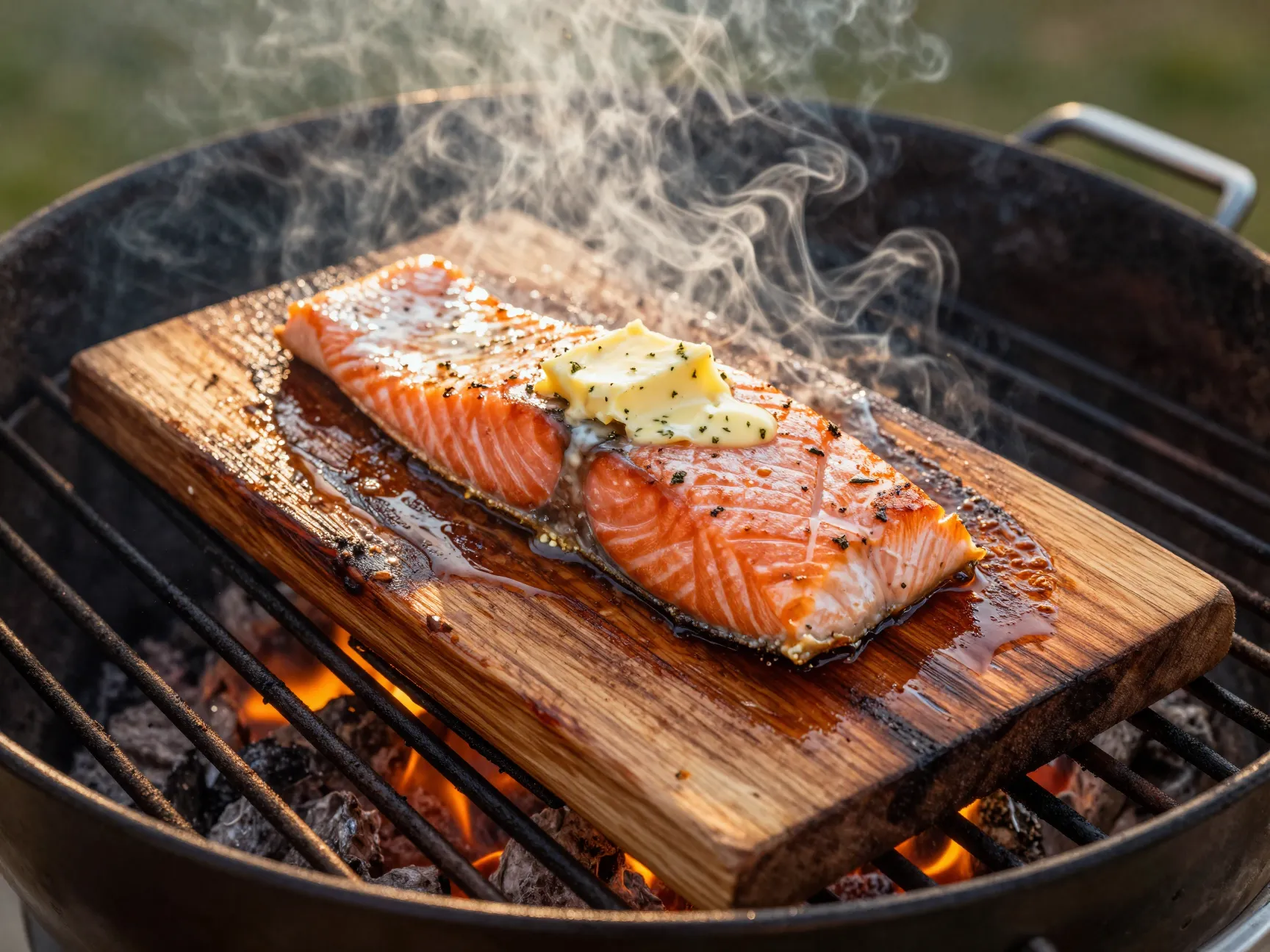
Cedar-plank cooking is a technique borrowed from Pacific Northwest Indigenous culinary traditions and adopted enthusiastically by fine dining chefs for the aromatic complexity it adds to the fish [10]. The plank imparts a subtle, smoky, woodsy flavor that no other cooking method replicates.
The process:
- Soak a food-grade cedar plank in water for at least two hours, or up to four hours for more controlled burning.
- Preheat a grill to medium-high heat (around 400°F).
- Place the soaked plank on the grill, close the lid, and heat for three minutes until it begins to smoke lightly.
- Place the seasoned salmon skin-side down on the plank, close the lid, and cook for 12 to 15 minutes without flipping.
The herb compound butter, softened butter blended with fresh tarragon, chives, lemon zest, and a pinch of smoked paprika, is placed on top of the salmon for the last two minutes of cooking, melting into the flesh as it finishes [1].
Why this works: The plank acts as both a cooking surface and a flavor delivery system. The moisture in the wood creates a gentle steam environment while the heat chars the bottom of the plank, releasing aromatic compounds directly into the fish.
7. Poached Salmon with Hollandaise and Asparagus
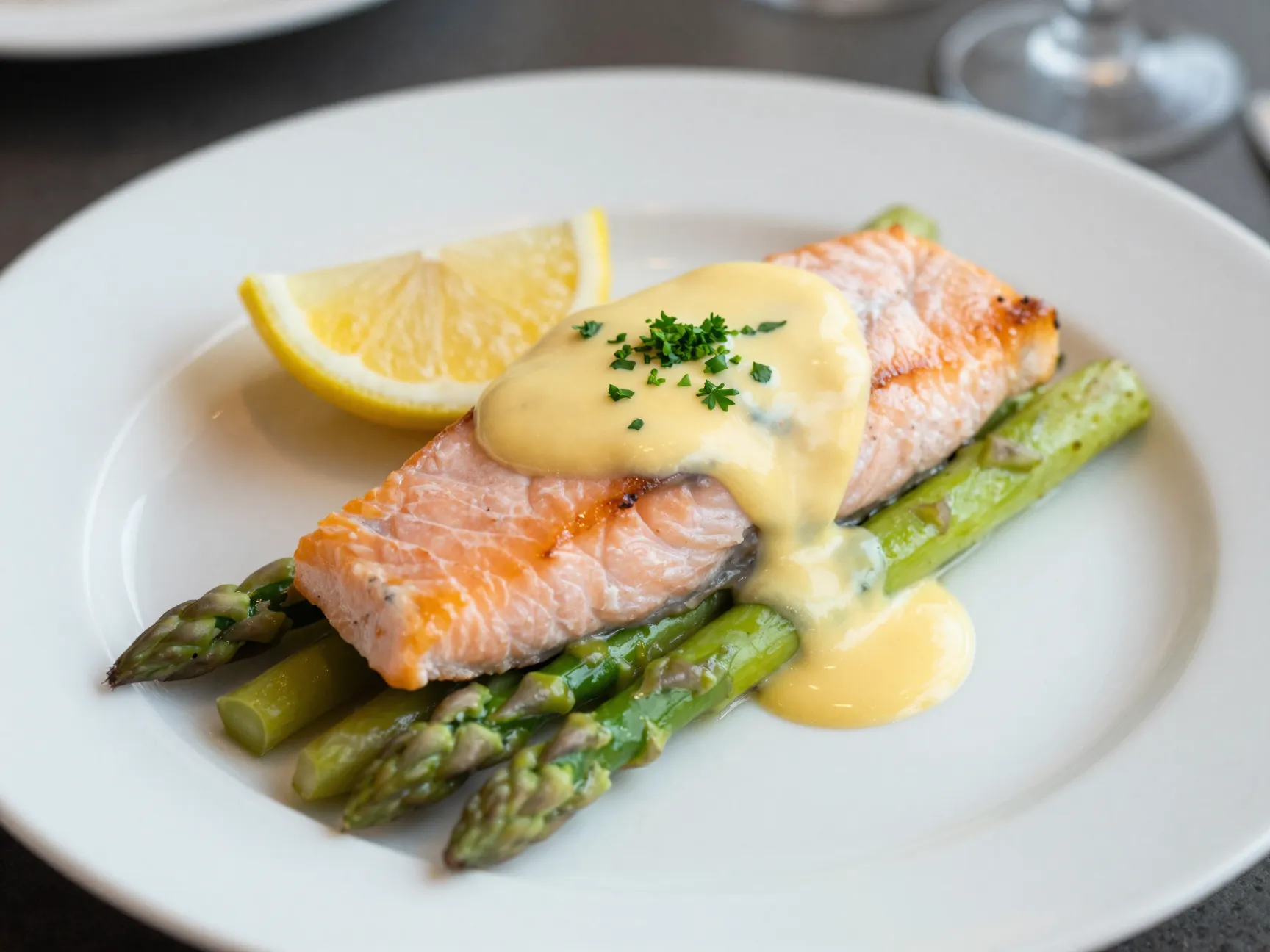
Classical French technique at its most elegant. Court-bouillon poaching produces a salmon fillet of extraordinary tenderness, a texture that is impossible to achieve through dry-heat methods [5]. This dish is a staple of grand hotel dining rooms and classic French restaurants.
The court-bouillon:
- Water, white wine (equal parts)
- Sliced onion, carrot, and celery
- Fresh thyme, bay leaf, and parsley stems
- Black peppercorns and a squeeze of lemon
Bring to a simmer, cook for 20 minutes, then strain. Poach the salmon at 160°F, never a rolling boil, for 8 to 10 minutes depending on thickness. The fish should feel barely firm to the touch.
Hollandaise the right way:
Hollandaise intimidates home cooks, but the technique is straightforward once you understand the science. Whisk egg yolks with a reduction of white wine vinegar and water over a double boiler until the mixture thickens to a ribbon consistency. Remove from heat and stream in clarified butter very slowly while whisking constantly. Season with lemon juice, white pepper, and a pinch of cayenne [3].
The sauce should coat a spoon and hold its shape. If it breaks, whisk in a teaspoon of warm water to bring it back together.
8. Salmon en Papillote with Fennel, Lemon, and Capers
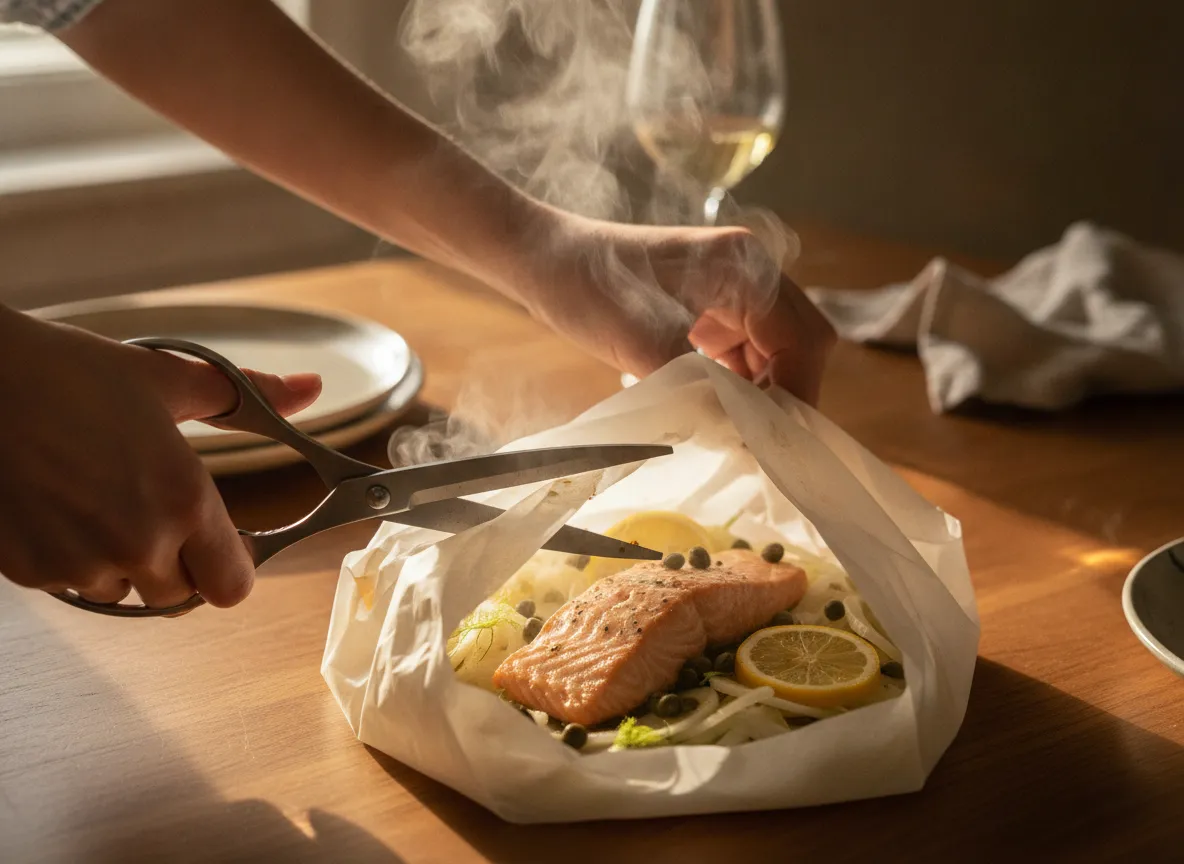
En papillote, French for “in parchment”, is a technique that creates a self-contained steam environment inside a sealed parchment packet. The result is a salmon fillet cooked in its own aromatic juices, impossibly moist, and presented at the table in its sealed packet for a dramatic tableside opening [7].
Building the packet:
- Fold a large sheet of parchment paper in half and cut a half-heart shape, opening it to reveal a full heart.
- Layer thinly sliced fennel, lemon rounds, and capers on one half of the parchment.
- Place the seasoned salmon fillet on top.
- Add a drizzle of good olive oil, a splash of dry white wine, and fresh tarragon sprigs.
- Fold the parchment over and crimp the edges tightly in overlapping folds to seal completely.
Bake at 400°F for 12 to 14 minutes. The packet will puff dramatically as the steam builds inside. Carry it to the table sealed and cut it open with scissors in front of your guests, the release of aromatic steam is a genuine sensory moment that no restaurant presentation can top [4].
The home advantage: En papillote is actually easier to execute at home than in a restaurant, where timing dozens of packets simultaneously is a logistical challenge. At home, you control every variable.
Mastering the 8 Stunning Salmon Dishes Fine Dining Restaurants Don’t Want You to Make at Home
Understanding the individual recipes is only half the equation. The other half is building the foundational skills that make every dish on this list achievable consistently.
Sourcing Salmon Like a Chef
Professional kitchens source fish with obsessive care. The quality difference between fresh, properly handled salmon and a fillet that has been sitting in a display case for three days is enormous.
What to look for:
- Firm, moist flesh with no gaps or separation along the muscle lines
- A clean, ocean-fresh smell, any ammonia or sour odor is a rejection signal
- Bright, vivid color with no brown or gray edges
- Skin that is tight and shiny, not dull or dry
For raw preparations like tartare, always specify sushi-grade or sashimi-grade fish and ask your fishmonger directly about the sourcing and handling chain.
Temperature Is Everything
Every professional chef treats a thermometer as a non-negotiable tool. The difference between a perfectly cooked salmon at 125°F and an overcooked one at 145°F is the difference between a restaurant experience and a disappointing dinner. Invest in an instant-read thermometer, it is the single most impactful piece of equipment a home cook can own.
The Mise en Place Mindset
Restaurant kitchens operate on the principle of mise en place, everything in its place before cooking begins. For salmon dishes specifically, this means:
- All garnishes and sauces are prepared before the fish goes into the pan.
- The plate is warmed.
- The resting surface is ready.
Salmon cooks fast. There is no time to make a sauce after the fish is done.
Building Flavor Through Layering
The depth of flavor in a fine dining salmon dish comes from layering: a well-seasoned fillet, a sauce built on a proper reduction, a garnish that adds textural contrast, and a finishing element, a drizzle of high-quality olive oil, a few grains of fleur de sel, a squeeze of fresh citrus, that brightens and ties the whole plate together [8].
Conclusion
The 8 stunning salmon dishes fine dining restaurants don’t want you to make at home are not protected by secret ingredients or inaccessible equipment. They are protected by the assumption that home cooks will not take the time to learn the techniques. That assumption is wrong.
In 2026, the resources available to home cooks, from detailed culinary tutorials to high-quality ingredients delivered directly to your door, have eliminated most of the barriers that once separated home cooking from professional results.
Your actionable next steps:
- Start with the pan-seared salmon with beurre blanc. It is the foundational technique that underpins half the other dishes on this list, and mastering it builds the confidence to tackle everything else.
- Source your salmon from a reputable fishmonger or specialty grocery store, and always ask about freshness.
- Buy an instant-read thermometer if you do not already own one.
- Work through the list in order of complexity, gravlax and miso-glazed salmon are excellent starting points for curing and marinating techniques before you attempt the Wellington or hollandaise.
- Plate with intention. Use a warm plate, wipe the edges clean, and add a finishing element. Presentation is a learnable skill, not a talent.
The gap between a $42 restaurant salmon and a stunning home-cooked version is smaller than any chef wants you to believe. Close it.
References
[1] Best Salmon Recipes – https://foxeslovelemons.com/best-salmon-recipes/
[2] Watch – https://www.youtube.com/watch?v=hVucbPZxJwY
[3] Best Salmon Recipes – https://themodernproper.com/best-salmon-recipes
[4] Salmon Recipes – https://parade.com/1339428/parade/salmon-recipes/
[5] Top Salmon Recipes – https://www.foodnetwork.com/recipes/photos/top-salmon-recipes
[6] Watch – https://www.youtube.com/watch?v=nBvoe1AjNAk
[7] Showstopping Salmon Recipes – https://www.deliciousmagazine.co.uk/collections/showstopping-salmon-recipes/
[8] Best Salmon Dishes Chain Restaurants – https://www.tastingtable.com/1845235/best-salmon-dishes-chain-restaurants/
[9] Salmon Recipes – https://www.tastingtable.com/1184855/salmon-recipes/
[10] 7 Easy Salmon Recipes Inspired By Restaurants – https://happyfarmbali.com/en/7-easy-salmon-recipes-inspired-by-restaurants/