9 Authentic Italian Spaghetti and Meatballs Recipes That Taste Like Nonna Made Them
The first time I watched my neighbor’s Sicilian grandmother roll meatballs, she never once measured a single ingredient. She worked entirely by feel, a pinch of this, a handful of that, and produced a dish so deeply satisfying that I spent the next three years chasing that exact flavor. That pursuit taught me something critical: most recipes labeled “authentic” online are anything but.
Disclosure: This post contains affiliate links. As an Amazon Associate, we earn from qualifying purchases, and at no extra cost to you.
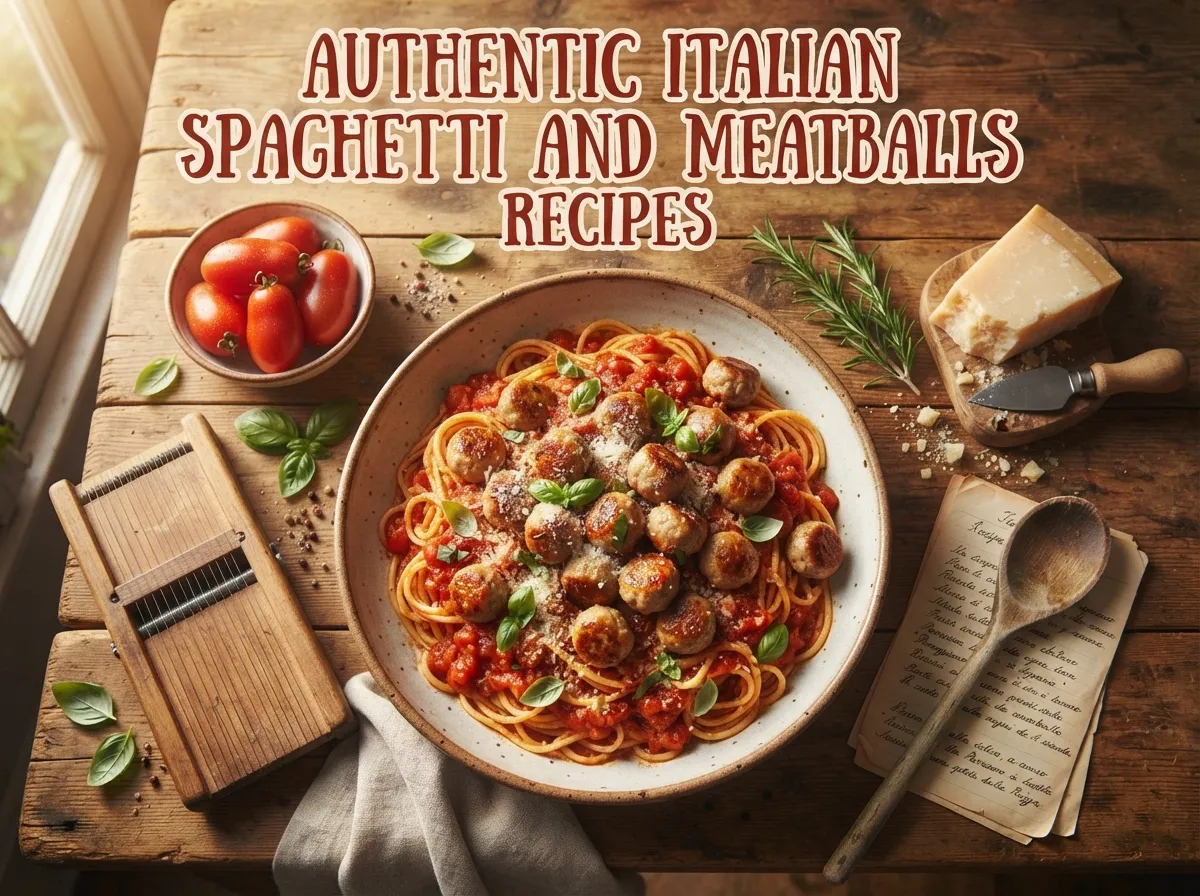
This guide to 9 Authentic Italian Spaghetti and Meatballs Recipes That Taste Like Nonna Made Them cuts through the noise. Whether you are a home cook trying to honor a family tradition or a curious food lover who wants to understand the real history behind this beloved dish, these nine recipes, drawn from regional Italian kitchens, celebrated chefs, and generations of handed-down technique, will get you there.
Key Takeaways
- Spaghetti and meatballs as a single dish is largely an Italian-American invention, though the Abruzzese “spaghetti alla chitarra con le pallottine” is a genuine Italian exception [1][2]
- The quality of your ingredients, San Marzano tomatoes, a blend of beef, pork, and veal, fresh herbs, determines the final flavor more than any technique [6]
- Searing meatballs before simmering them in sauce adds a measurable depth of flavor that cannot be achieved any other way [5]
- Slow-simmering the tomato sauce, sometimes for two hours or more, is the single most important step most home cooks skip
- Regional Italian variations are wide and fascinating, understanding them helps you choose the right recipe for your table
The Real Story Behind Spaghetti and Meatballs
Before diving into the recipes, it helps to understand what you are actually cooking. In Italy, meatballs, called polpette, are traditionally served as a standalone second course, completely separate from pasta [2]. The idea of piling them on top of a bowl of spaghetti is largely an Italian-American creation, born from the immigrant experience of the late 19th and early 20th centuries.
Italian immigrants arriving in the United States found themselves with more access to affordable meat than they had ever known back home. They adapted their culinary traditions accordingly, creating a dish that became a powerful symbol of cultural identity and the promise of abundance [3]. The result was something that felt both Italian and entirely new.
There is, however, one significant exception to the rule: the Abruzzese dish known as spaghetti alla chitarra con le pallottine. This regional specialty from the Abruzzo region pairs fresh egg pasta, cut on a wooden tool strung with wire called a “chitarra”, with tiny, delicate meatballs simmered in tomato sauce [1]. It is the closest thing to a genuinely Italian version of the dish, and it is extraordinary.
“Authenticity in Italian cooking is not about following a single rigid formula. It is about understanding the spirit of the dish, the quality of the ingredients, the patience of the cook, and the love behind the preparation.”
Understanding this history matters because it shapes how you approach each of the nine recipes below. Some are rooted in Italian-American tradition. Others trace directly back to specific Italian regions. All of them, made correctly, taste like something a grandmother would be proud to serve.
What Makes These 9 Authentic Italian Spaghetti and Meatballs Recipes Work
Before we get to the individual recipes, let us look at the core principles that separate an authentic result from a mediocre one.
The Ingredient Foundation
| Ingredient | Authentic Choice | Why It Matters |
|---|---|---|
| Tomatoes | San Marzano DOP | Lower acidity, sweeter flavor, less water content |
| Meat blend | Beef, pork, and veal (equal parts) | Balanced fat content, complex flavor, tender texture |
| Pasta | Bronze-die extruded or fresh egg pasta | Rough surface holds sauce better |
| Herbs | Fresh parsley and basil | Brightness and aroma that dried herbs cannot replicate |
| Cheese | Parmigiano-Reggiano or Pecorino Romano | Umami depth, authentic flavor profile |
The Non-Negotiable Techniques
Searing the meatballs before they go into the sauce is one step that separates good from great. The Maillard reaction, the browning that occurs when meat hits a hot pan, creates hundreds of new flavor compounds that simply do not develop during a gentle simmer [5]. Do not skip it.
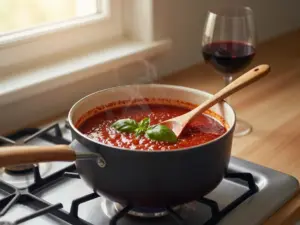
Slow-simmering the sauce is equally important. A sauce that cooks for 90 minutes to two hours develops a richness and depth that a 20-minute sauce can never match [7]. Plan your time accordingly.
Resting the meatball mixture in the refrigerator for at least 30 minutes before rolling helps the proteins bind together, resulting in meatballs that hold their shape during cooking.
The 9 Authentic Italian Spaghetti and Meatballs Recipes That Taste Like Nonna Made Them
1. Spaghetti alla Chitarra con le Pallottine (Abruzzese Style)
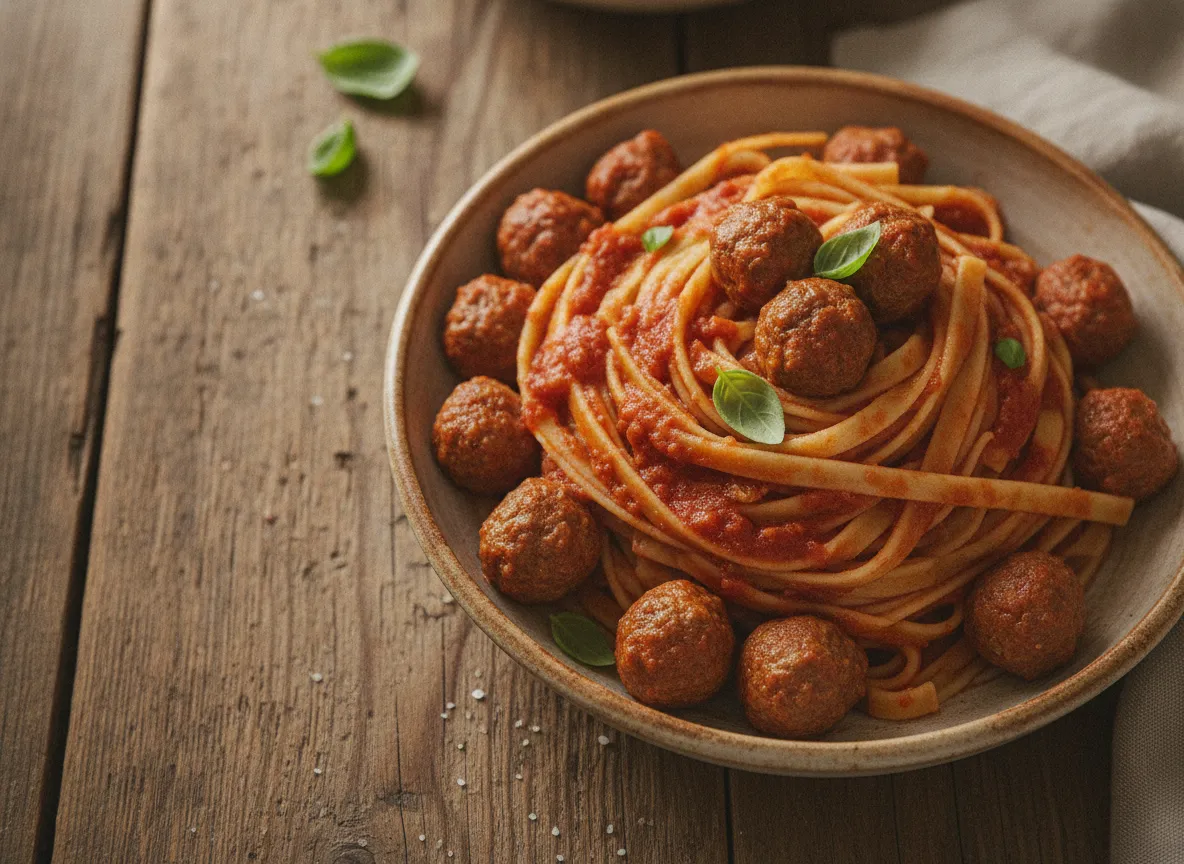
This is the most authentically Italian version of the dish and the one that surprises most people who assume the combination is purely American [1]. The pasta is made fresh using a chitarra, a rectangular wooden frame strung with parallel wires that cuts the dough into square-edged spaghetti when pressed through. The meatballs, called pallottine, are intentionally tiny, roughly the size of a large marble, so that they nestle naturally among the pasta strands.
Key details:
- Use a blend of beef and pork for the pallottine
- Season the meat with garlic, parsley, Pecorino Romano, and a pinch of nutmeg
- Simmer the pallottine directly in the tomato sauce for at least 45 minutes
- Toss the chitarra pasta in the sauce rather than plating separately
This recipe demands the most effort, but it rewards that effort with a dish that is genuinely unlike anything you have tasted before [2].
2. The Classic Italian-American Sunday Gravy Version
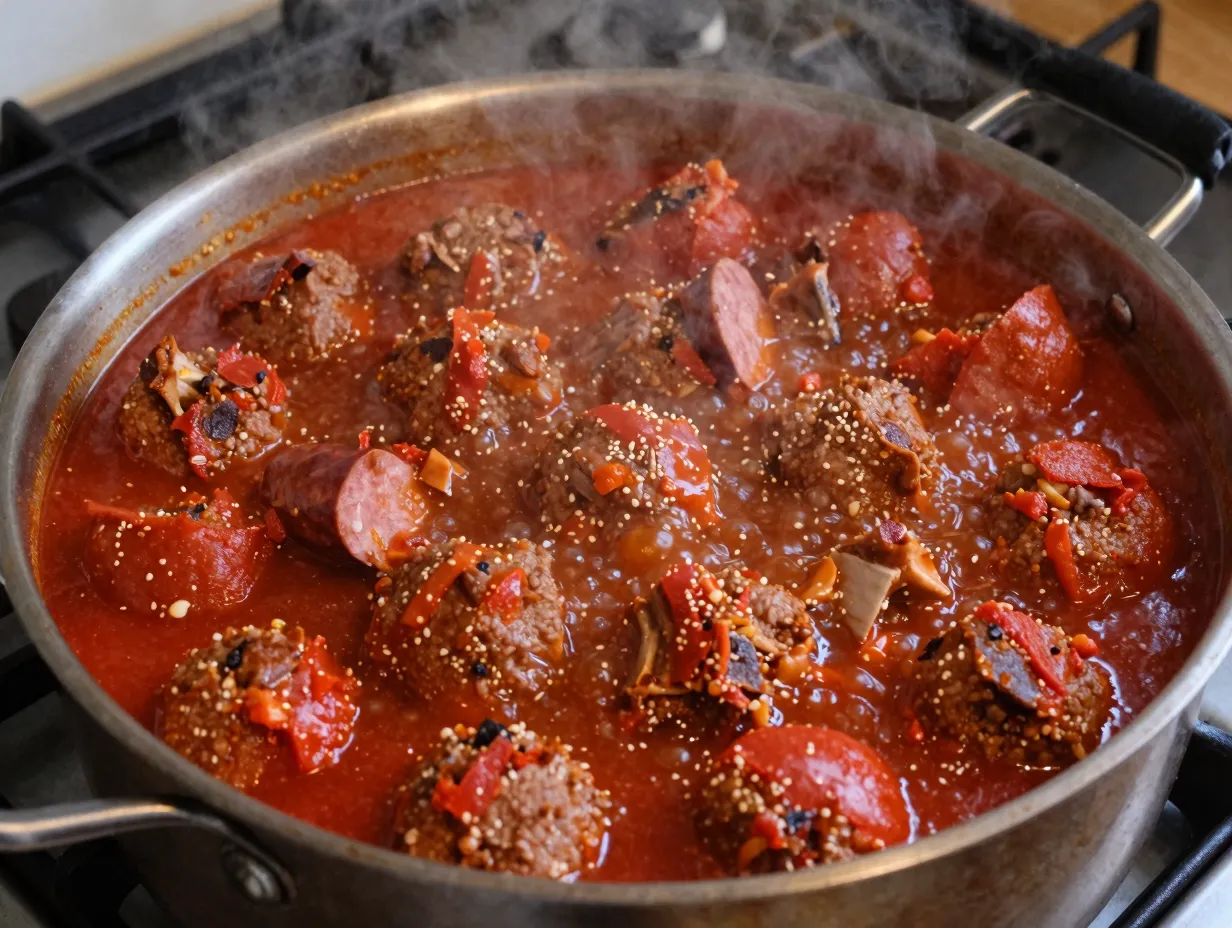
This is the recipe most Americans picture when they think of spaghetti and meatballs, and when made properly, it earns every bit of its iconic status [3]. The term “Sunday gravy” refers to a long-simmered tomato sauce that often includes not just meatballs but also sausage, braciole, and pork ribs, all cooked together for several hours.
Key details:
- Start the sauce early, it needs a minimum of two hours, ideally three
- Use San Marzano tomatoes, crushed by hand
- Brown all meats separately before adding to the sauce
- Finish with fresh basil torn by hand, never cut
The meatballs in this version are large and generous, typically 2 to 3 inches in diameter. They are rolled with a mixture of beef, pork, and veal, bound with soaked breadcrumbs, eggs, and a generous amount of Parmigiano-Reggiano [6].
3. Lidia Bastianich’s Classic Spaghetti and Meatballs
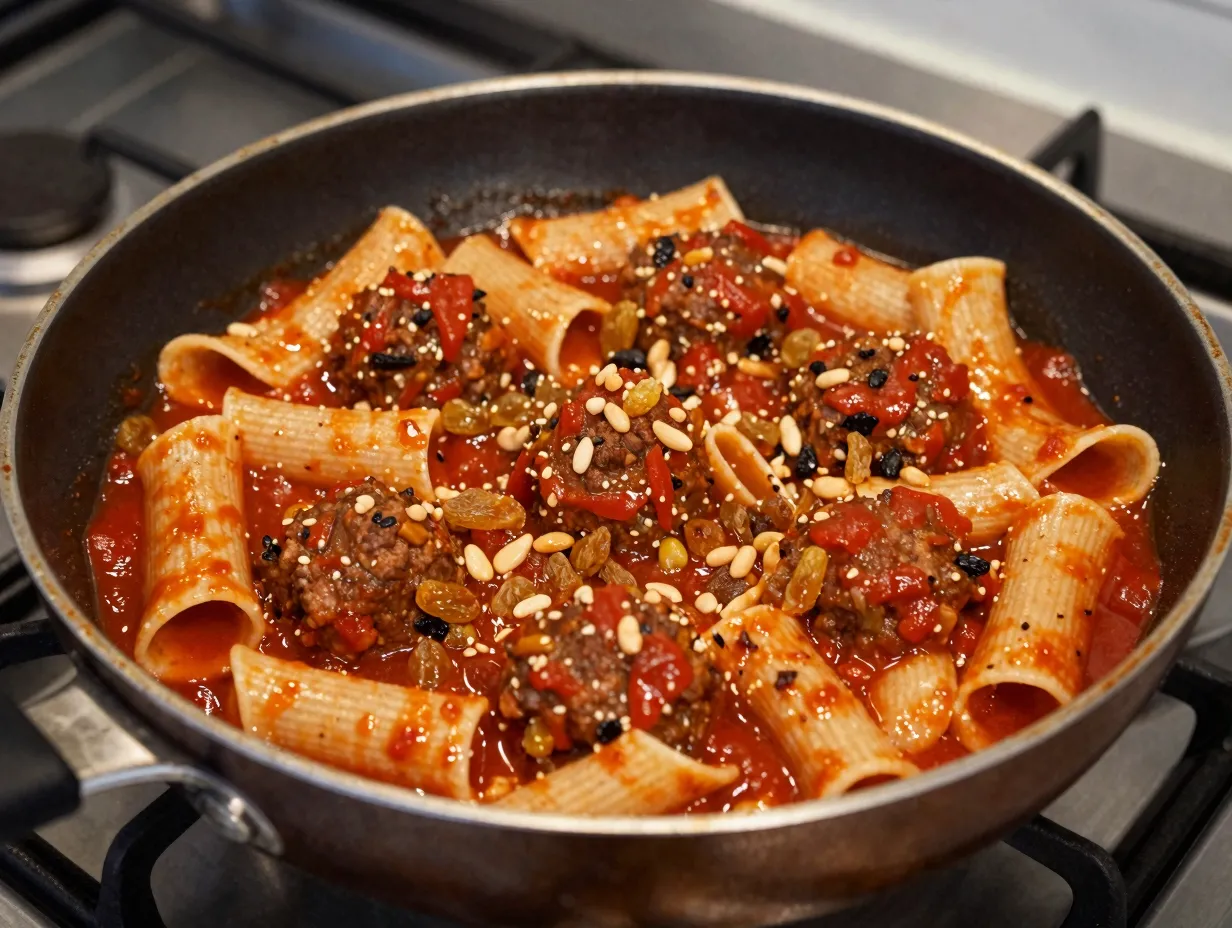
Chef Lidia Bastianich is one of the most respected voices in Italian-American cooking, and her approach to this dish reflects decades of careful attention to tradition [4]. Her recipe emphasizes the importance of using high-quality ingredients above all else, and she is particularly insistent on the three-meat blend.
Key details:
- Equal parts ground beef, pork, and veal
- Soak breadcrumbs in milk, not water, for a more tender result
- Add a small amount of pine nuts and golden raisins for a subtle Sicilian influence
- Finish the pasta directly in the sauce for the last two minutes of cooking
This technique of finishing pasta in the sauce, called mantecatura, is standard practice in Italy and creates a unified dish rather than pasta and sauce sitting separately on a plate [4][6].
4. The Neapolitan Polpette al Sugo
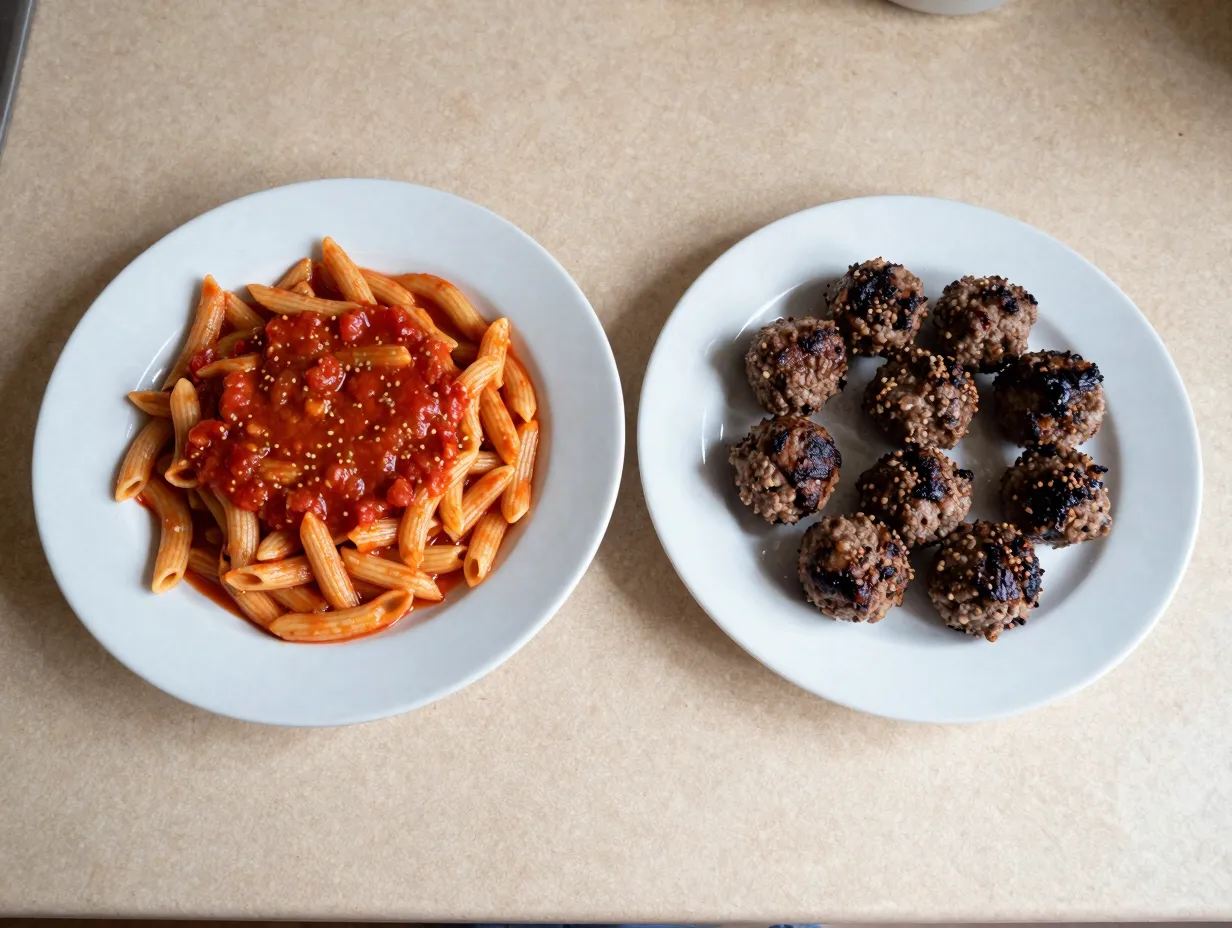
Naples has its own distinct approach to meatballs in tomato sauce, and while Neapolitans typically serve their polpette as a second course rather than with pasta, the sauce they cook in is often tossed with pasta as a first course, effectively creating a two-course meal from a single pot.
Key details:
- Use only beef, seasoned with garlic, parsley, and Parmigiano-Reggiano
- Fry the meatballs in olive oil until deeply browned on all sides
- The tomato sauce is kept simple: San Marzano tomatoes, olive oil, basil, and salt
- Serve the sauce over pasta first, then the meatballs as a separate course
This is the most historically Italian approach in the list, and it offers a fascinating window into how the dish evolved differently on either side of the Atlantic [2].
5. The Sicilian-Style Meatballs with Agrodolce Influence
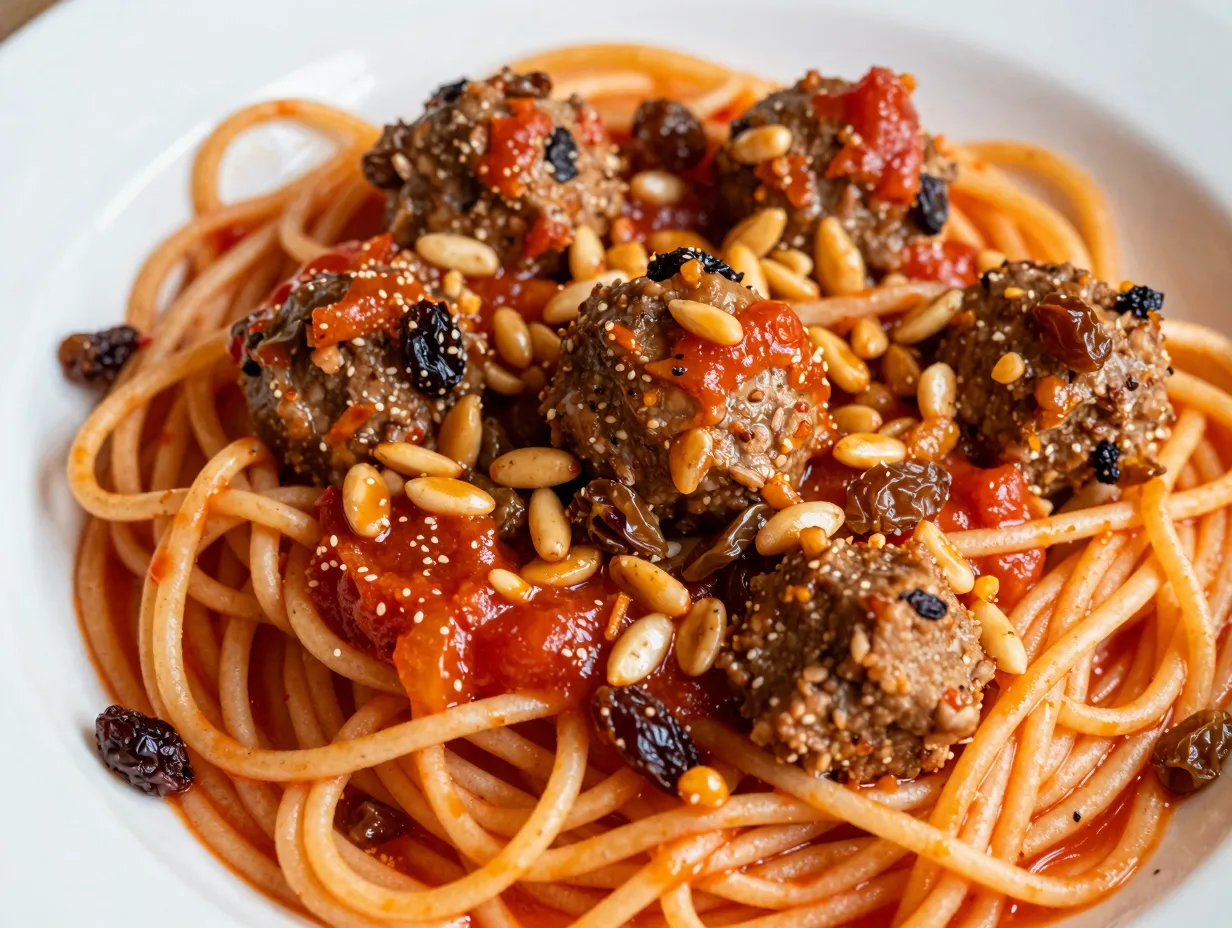
Sicily’s cuisine carries centuries of Arab, Spanish, and Greek influence, and it shows in the way Sicilian cooks season their meatballs. The agrodolce (sweet-and-sour) tradition appears subtly in the form of raisins, pine nuts, and a small amount of sugar added to the tomato sauce.
Key details:
- Ground beef or a beef-pork blend
- Add raisins, pine nuts, and fresh mint to the meat mixture
- Use a slightly sweetened tomato sauce with a splash of red wine vinegar
- Serve over thick spaghetti or bucatini
The result is a meatball that is complex, fragrant, and unlike anything you will find in a standard Italian-American restaurant.
6. The Roman-Style Polpette with Pecorino
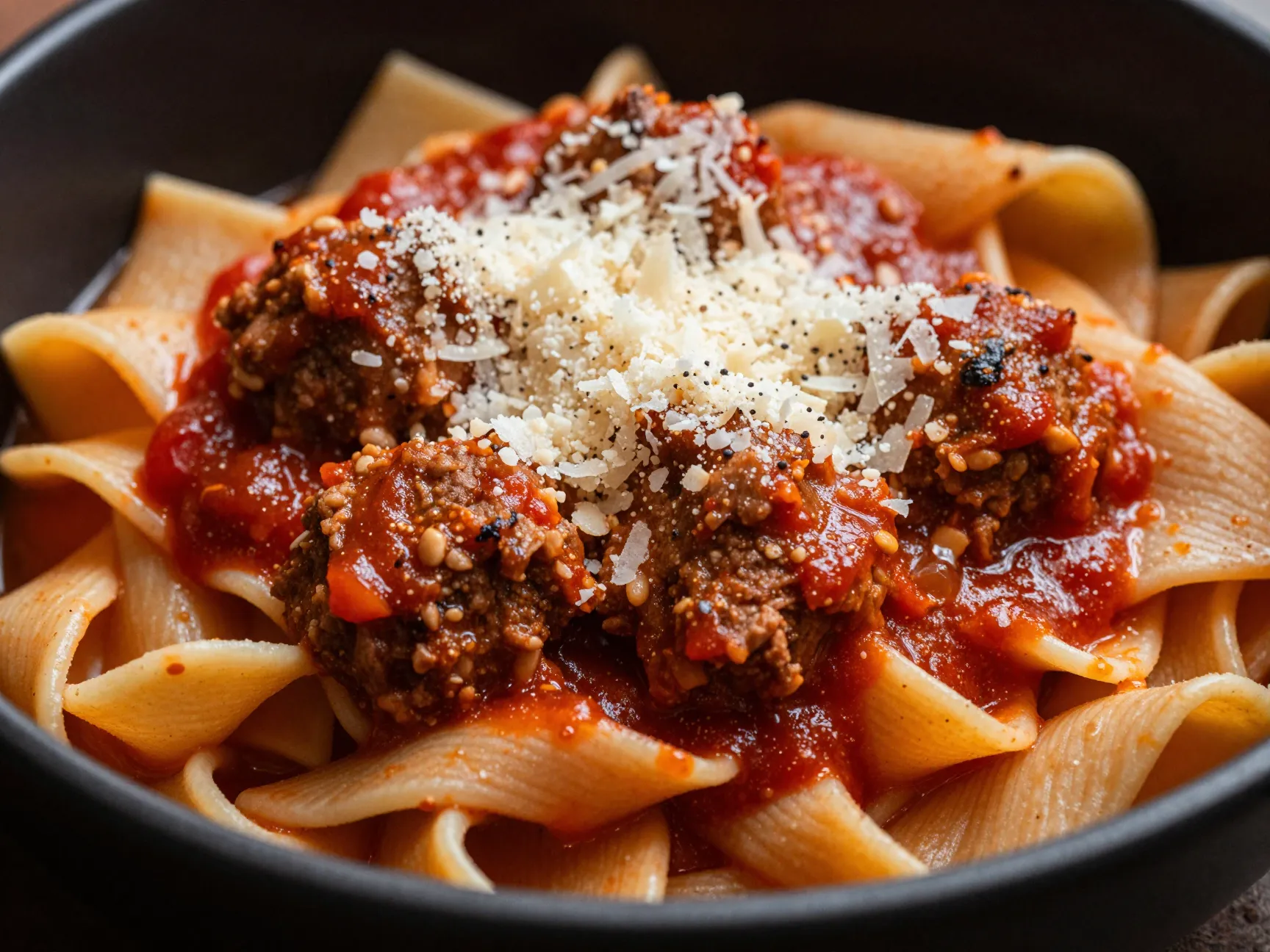
Rome’s version of the meatball leans heavily on Pecorino Romano rather than Parmigiano-Reggiano, giving the dish a sharper, saltier character. Roman cooks also tend to use a higher proportion of pork, which adds richness and moisture.
Key details:
- Blend of pork and beef (60/40 in favor of pork)
- Season generously with Pecorino Romano, black pepper, and marjoram
- Cook in a simple tomato and white wine sauce
- Serve over tonnarelli (a Roman pasta similar to spaghetti alla chitarra)
This version is bold and assertive, the kind of dish that demands a glass of robust red wine alongside it.
7. The Tuscan Herb-Forward Version
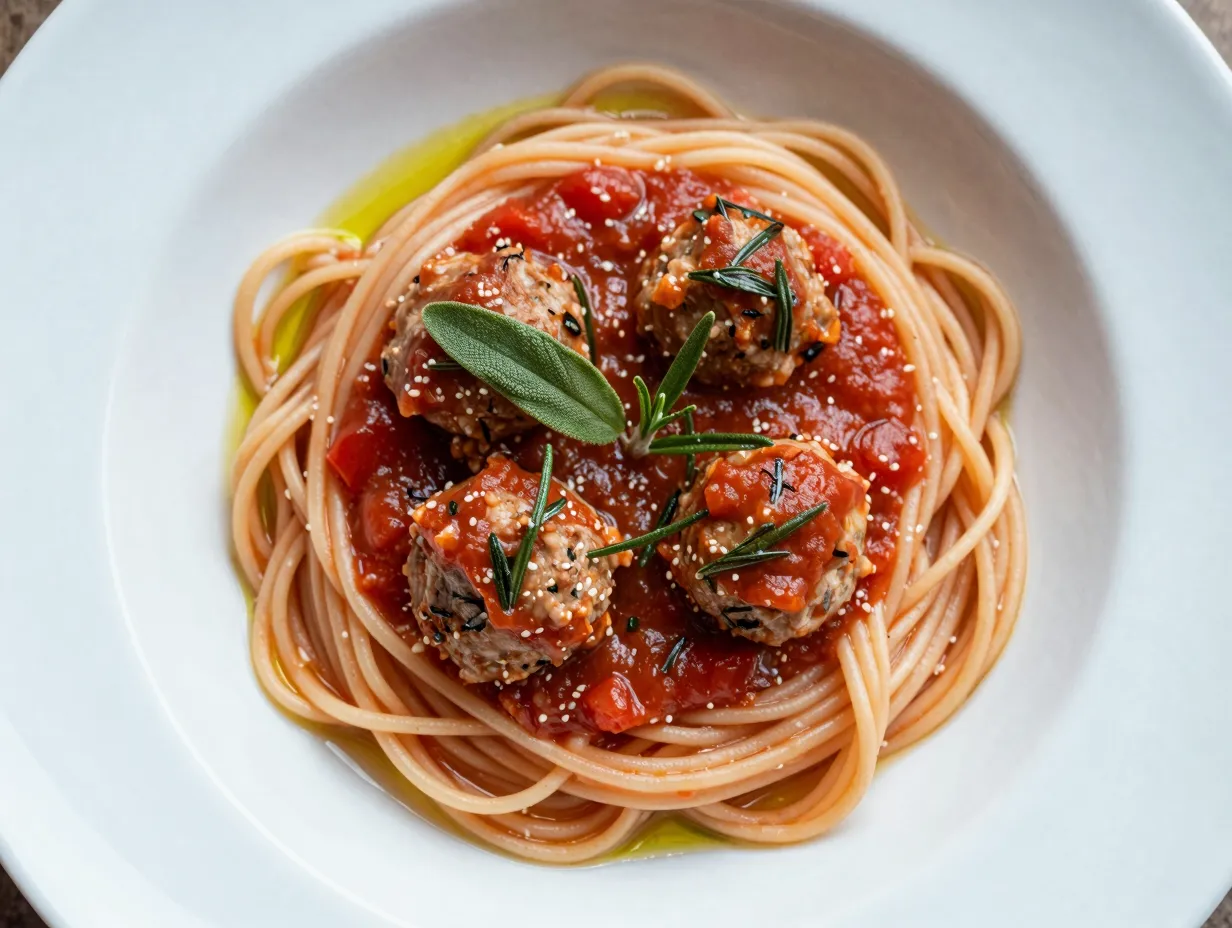
Tuscany’s cooking philosophy centers on restraint and the quality of raw ingredients, and their approach to meatballs reflects that sensibility. Tuscan polpette tend to be more herb-forward than their southern counterparts, with sage and rosemary playing prominent roles.
Key details:
- Use a blend of beef and pork
- Season with fresh sage, rosemary, and a small amount of fennel seed
- The tomato sauce is lighter and less cooked than southern versions
- Finish with a drizzle of high-quality Tuscan extra virgin olive oil
The sauce in this version is intentionally fresh-tasting, more of a quick-cooked tomato base than a long-simmered gravy [7].
8. The Giallo Zafferano Modern Italian Approach
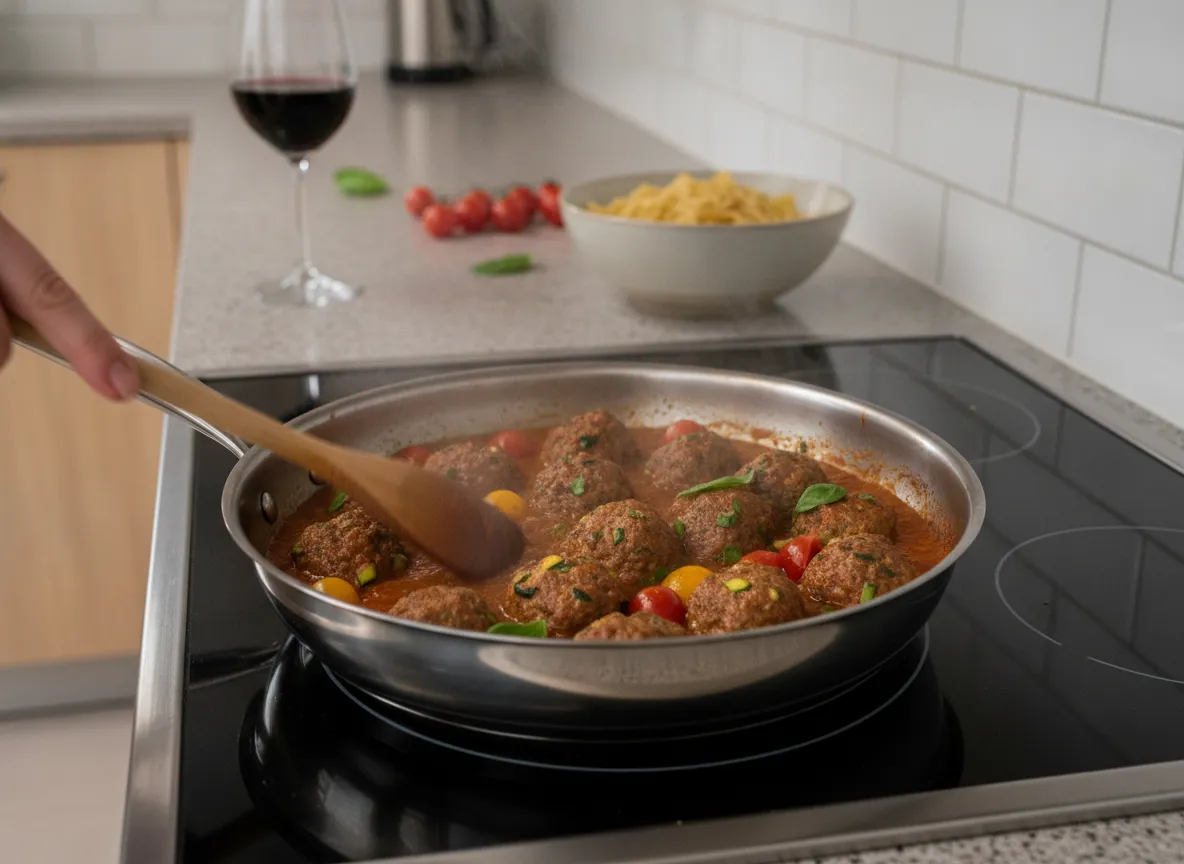
Italy’s most popular cooking website, Giallo Zafferano, represents the contemporary Italian home cook, someone who respects tradition but is not afraid to streamline and adapt [8]. Their approach to spaghetti and meatballs bridges the gap between old-world technique and modern kitchen realities.
Key details:
- Use a single-meat blend (typically beef) for simplicity
- Incorporate finely grated zucchini into the meat mixture for moisture
- The sauce uses fresh cherry tomatoes rather than canned San Marzano
- Cook the entire dish in under 45 minutes without sacrificing quality
This recipe is ideal for weeknight cooking when you want something authentic but do not have three hours to spare [8].
9. The Slow-Cooker Sunday Sauce Adaptation
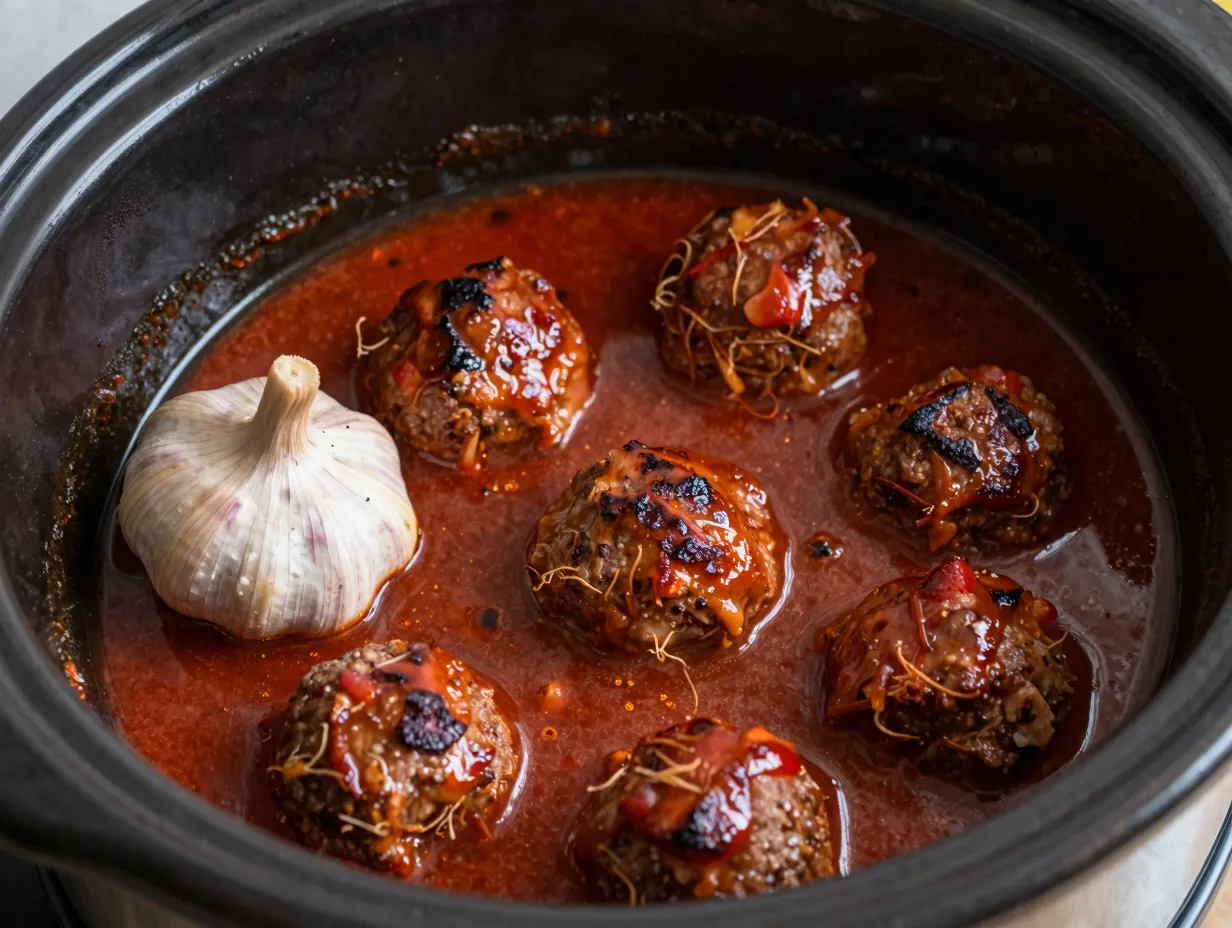
The ninth recipe in these 9 Authentic Italian Spaghetti and Meatballs Recipes That Taste Like Nonna Made Them is the most practical for modern schedules. It adapts the Sunday gravy tradition to a slow cooker, allowing the long simmer to happen unattended over six to eight hours.
Key details:
- Sear the meatballs in a pan first, do not skip this step even for the slow cooker [5]
- Use San Marzano tomatoes and a full head of garlic, left whole
- Add a Parmigiano-Reggiano rind to the sauce for extra depth
- Cook on low for 8 hours or high for 5 hours
The Parmigiano rind trick is one of the most underused techniques in home cooking. As it simmers, the rind releases umami compounds that deepen the sauce in a way that is almost impossible to describe until you have tasted it side by side with a version made without it.
Common Mistakes That Ruin Authentic Results
Even with the best recipes, certain errors consistently undermine the final dish. Here are the most common ones:
Overworking the meat mixture. Mixing the meatball ingredients too aggressively develops the proteins and produces a dense, rubbery result. Mix only until the ingredients are just combined.
Skipping the sear. Baking or poaching meatballs directly in sauce without searing first produces a pale, soft exterior and a flat flavor profile. The sear is not optional [5].
Using dried herbs throughout. Dried herbs have their place, oregano works well dried in tomato sauce, but fresh parsley in the meatball mixture and fresh basil finished into the sauce are non-negotiable for authentic flavor [7].
Cooking the pasta separately and plating without integration. The final step of tossing the pasta in the sauce for two minutes before serving is what makes the dish cohesive rather than two separate components sitting on the same plate.
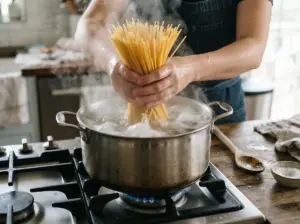
Under-seasoning the pasta water. The water should taste like the sea. This is the only opportunity to season the pasta itself, and most home cooks use far too little salt.
A Quick Reference Guide to the 9 Recipes
| Recipe | Origin | Difficulty | Time Required |
|---|---|---|---|
| 1. Spaghetti alla Chitarra con le Pallottine | Abruzzo, Italy | Advanced | 3+ hours |
| 2. Classic Sunday Gravy | Italian-American | Intermediate | 3-4 hours |
| 3. Lidia Bastianich’s Classic | Italian-American | Intermediate | 2-3 hours |
| 4. Neapolitan Polpette al Sugo | Naples, Italy | Intermediate | 2 hours |
| 5. Sicilian Agrodolce Style | Sicily, Italy | Intermediate | 1.5-2 hours |
| 6. Roman Pecorino Style | Rome, Italy | Intermediate | 1.5-2 hours |
| 7. Tuscan Herb-Forward | Tuscany, Italy | Beginner | 1-1.5 hours |
| 8. Giallo Zafferano Modern | Contemporary Italian | Beginner | 45 minutes |
| 9. Slow-Cooker Sunday Sauce | Italian-American | Beginner | 6-8 hours (hands-off) |
Frequently Asked Questions
Is spaghetti and meatballs actually Italian?
The dish as most people know it, large meatballs served on top of spaghetti, is primarily an Italian-American creation. However, the Abruzzese spaghetti alla chitarra con le pallottine is a genuine Italian version of the concept [1][2].
What is the best meat blend for authentic meatballs?
A combination of equal parts ground beef, pork, and veal produces the most complex flavor and the most tender texture. The pork adds fat and moisture, the veal adds delicacy, and the beef provides structure [6].
Can I make the meatballs ahead of time?
Yes. Rolled, uncooked meatballs can be refrigerated for up to 24 hours or frozen for up to three months. Sear them from frozen, they will take a few extra minutes but the result is excellent.
Why do my meatballs fall apart in the sauce?
The most common cause is insufficient binding. Make sure your breadcrumbs are fully soaked (in milk, not water), use enough egg, and do not skip the resting period in the refrigerator before cooking.
What pasta shape works best?
Traditional spaghetti is the classic choice, but thick spaghetti (spaghettoni), bucatini, or rigatoni all work well. The key is using a pasta with enough surface area or texture to hold the sauce.
Conclusion
The nine recipes in this guide represent the full spectrum of what spaghetti and meatballs can be, from the ancient Abruzzese chitarra tradition to the slow-cooker adaptation built for 2026 schedules. Each one carries its own history, its own regional personality, and its own set of techniques that, when followed with care, produce results that genuinely taste like something made with generational knowledge.
Here are your actionable next steps:
- Start with Recipe 8 or 9 if you are new to the dish. Both are forgiving and produce excellent results without requiring advanced technique.
- Work toward Recipe 1 once you are comfortable. The Abruzzese chitarra version is the most rewarding and the most authentically Italian of the nine.
- Invest in San Marzano tomatoes and a three-meat blend before you invest in any special equipment. Ingredient quality drives results more than anything else [6][7].
- Make the sauce a day ahead when possible. Like most slow-cooked dishes, it tastes significantly better on day two after the flavors have had time to fully integrate.
- Finish your pasta in the sauce every single time. This one step, more than any other, separates a good plate from a great one.
The secret my neighbor’s grandmother knew, and never once wrote down, was simply this: good food takes time, good ingredients, and the willingness to taste as you go. No recipe can fully replace that instinct, but these nine come as close as anything I have found.
References
[1] Authentic Italian Spaghetti Meatballs Recipe Yes You Heard That Right – https://pastagrammar.com/blogs/recipes/authentic-italian-spaghetti-meatballs-recipe-yes-you-heard-that-right?utm_source=openai
[2] How Spaghetti And Meatballs Is Made In Italy – https://www.vincenzosplate.com/how-spaghetti-and-meatballs-is-made-in-italy/?utm_source=openai
[3] Spaghetti Meatballs – https://www.lacucinaitaliana.it/ricetta/spaghetti-meatballs/?utm_source=openai
[4] Lidias Spaghetti And Meatballs 434121 – https://www.food.com/recipe/lidias-spaghetti-and-meatballs-434121?utm_source=openai
[5] Recipe – https://www.tasteatlas.com/spaghetti-and-meatballs/recipe?utm_source=openai
[6] Lidias Spaghetti And Meatballs Recipe – https://www.chefsresource.com/recipes/lidias-spaghetti-and-meatballs-recipe/?utm_source=openai
[7] Spaghetti And Meatballs – https://www.fromvalerieskitchen.com/spaghetti-and-meatballs/?utm_source=openai
[8] Spaghetti And Meatballs – https://www.giallozafferano.com/recipes/Spaghetti-and-meatballs.html?utm_source=openai
[9] Watch – https://www.youtube.com/watch?v=keD__1fvp8E&vl=en&utm_source=openai