8 Authentic Real Italian Spaghetti Sauce Recipes Straight From Nonna’s Kitchen
Every Sunday morning in southern Italy, the smell of tomatoes and garlic hits the street before 8 a.m. That is not an exaggeration. In many Italian households, the Sunday sauce has been simmering since dawn, and the recipe has not changed in three generations. Yet most of what gets sold in jars at the grocery store shares almost nothing with those slow-cooked originals. This guide to 8 Authentic Real Italian Spaghetti Sauce Recipes Straight From Nonna’s Kitchen is here to close that gap.
Disclosure: This post contains affiliate links. As an Amazon Associate, we earn from qualifying purchases, and at no extra cost to you.
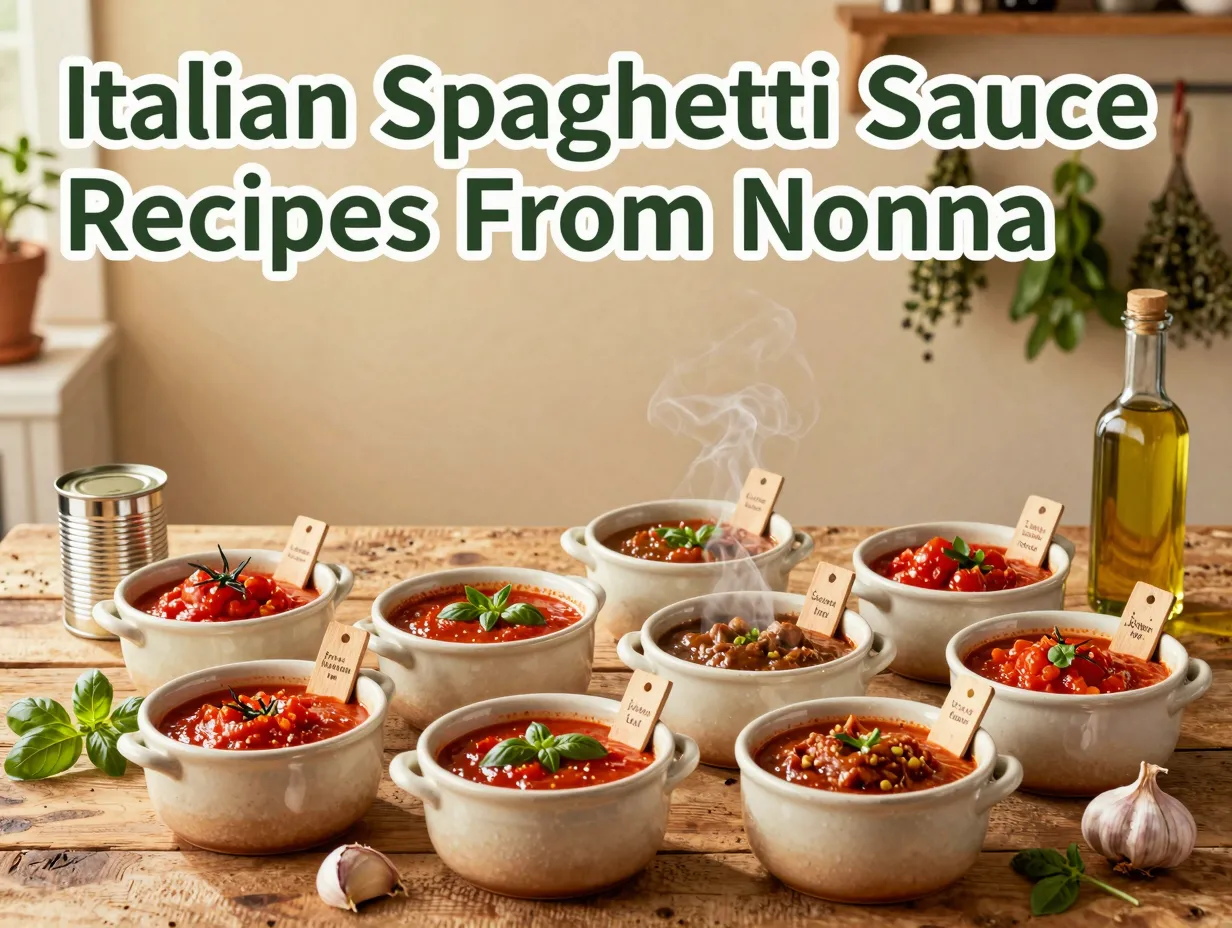
Whether you are a seasoned home cook or someone who has never made sauce from scratch, these eight recipes pull from real Italian culinary tradition. They are built on simple, quality ingredients, patient technique, and the kind of love that only a nonna can teach. I have researched each one carefully, drawing from trusted Italian food sources, so you can bring the real thing to your table in 2026.
Key Takeaways
- The foundation of every authentic Italian spaghetti sauce is quality ingredients, especially San Marzano tomatoes with the D.O.P. label [4]
- Most traditional Italian sauces require very few ingredients but reward patience and proper technique
- Regional variation is a feature, not a flaw, Italy’s 20 regions each contribute distinct sauce traditions
- Fresh basil, good olive oil, and slow simmering are the three pillars shared by nearly all nonna-approved sauces
- You do not need hours in the kitchen for every sauce, some authentic recipes come together in under 30 minutes [2]
The Secret Behind Authentic Italian Spaghetti Sauce
Before diving into the recipes themselves, it helps to understand what separates a genuine Italian sauce from an imitation. The answer is almost never complexity. Italian cooking philosophy, especially at the nonna level, is rooted in restraint. You use fewer ingredients, but you choose each one with care.
The three non-negotiables in authentic Italian spaghetti sauce:
- Tomatoes: San Marzano tomatoes, grown in the volcanic soil near Mount Vesuvius, are the gold standard. Look for the D.O.P. (Denominazione di Origine Protetta) label to confirm authenticity [4]. They are sweeter, less acidic, and meatier than standard canned tomatoes.
- Olive oil: Extra virgin only. The fruity, peppery notes of a good olive oil form the flavor base before any tomato ever hits the pan.
- Time: Even a 20-minute sauce benefits from patience. Rushing the garlic or skipping the simmer changes everything.
“The best Italian sauces are not complicated. They are honest.”, a phrase repeated in kitchens from Naples to Bologna
Italian-American red sauces carry enormous cultural weight. The Los Angeles Times noted in a 2025 feature that these recipes represent not just food, but identity, memory, and the act of passing something irreplaceable from one generation to the next [6]. That context matters when you cook them.
What Makes a Sauce “Authentic”
Authenticity in Italian cooking does not mean rigid adherence to a single recipe. It means respecting the logic of the dish. A Bolognese should be meaty and slow-cooked. An Arrabbiata should have heat and urgency. A Sugo al Pomodoro should taste like summer tomatoes, nothing more.
The recipes below honor those principles. Each one draws from documented Italian culinary tradition, and each one is something a real nonna would recognize.
8 Authentic Real Italian Spaghetti Sauce Recipes Straight From Nonna’s Kitchen
1. Sugo al Pomodoro (Classic Tomato Sauce)
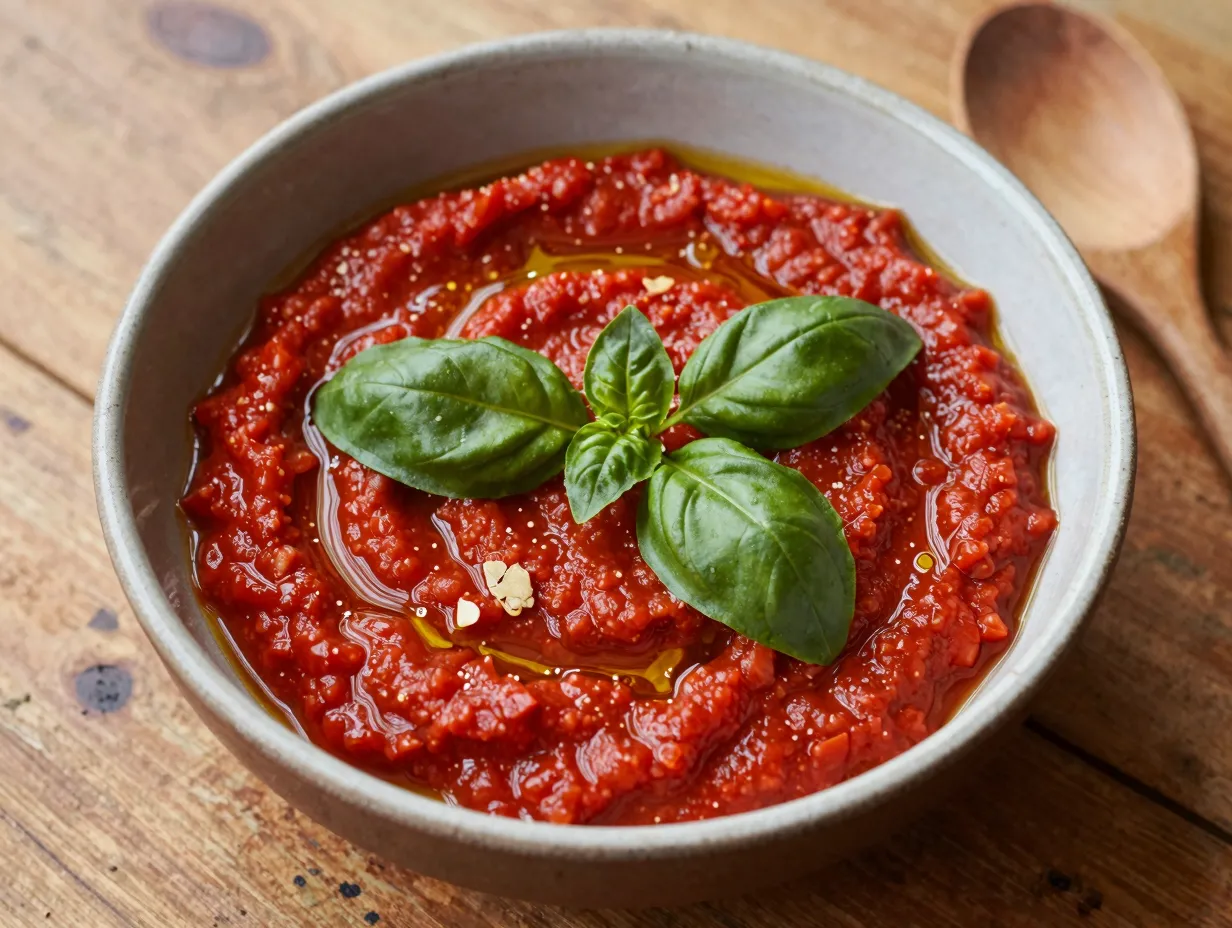
This is the mother sauce of Italian cooking. Sugo al Pomodoro strips everything back to its essentials: ripe tomatoes, fresh basil, garlic, and olive oil. Elena Davis, drawing from her own nonna’s kitchen, presents a version that comes together in under 30 minutes without sacrificing any depth of flavor [2].
Core ingredients:
- Fresh or canned San Marzano tomatoes
- Extra virgin olive oil
- 2 cloves of garlic
- Fresh basil leaves
- Salt
Technique tip: Crush the garlic gently and cook it in olive oil over low heat until fragrant but not browned. Add tomatoes, break them down with a wooden spoon, and simmer for 20 to 25 minutes. Add basil at the very end to preserve its brightness.
This sauce works on spaghetti, rigatoni, or as a pizza base. It is the recipe to master first, because everything else builds from it.
2. Nonna’s Slow-Simmered San Marzano Sauce
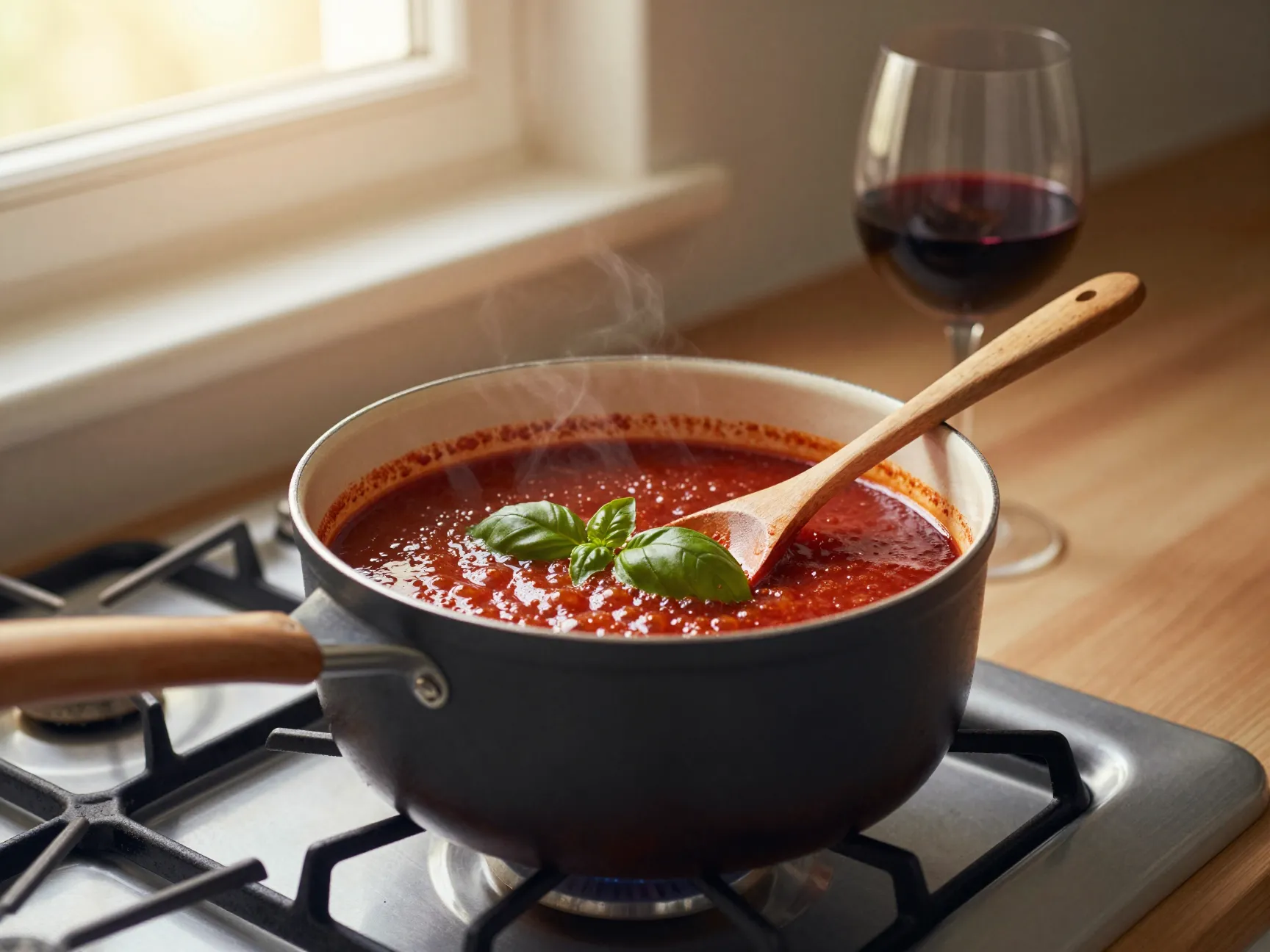
Sarah Hill’s version of her nonna’s traditional pasta sauce takes the Sugo al Pomodoro concept and adds depth through a longer simmer [1]. The key difference is time. Where the classic tomato sauce finishes in 30 minutes, this one simmers for 45 minutes to an hour, allowing the natural sugars in the San Marzano tomatoes to caramelize gently.
What sets it apart:
- A pinch of sugar to balance acidity (optional, but traditional in some southern Italian households)
- A small pour of red wine added after the garlic softens
- Fresh basil added in two stages, once during cooking, once at the end
The result is a sauce with more body and a slightly sweeter finish. It coats pasta beautifully and holds up well when reheated, which means it is ideal for batch cooking.
Pro tip: Make a double batch on Sunday and freeze half. Authentic Italian flavor on a Tuesday night takes about five minutes to reheat.
3. Ragù alla Bolognese
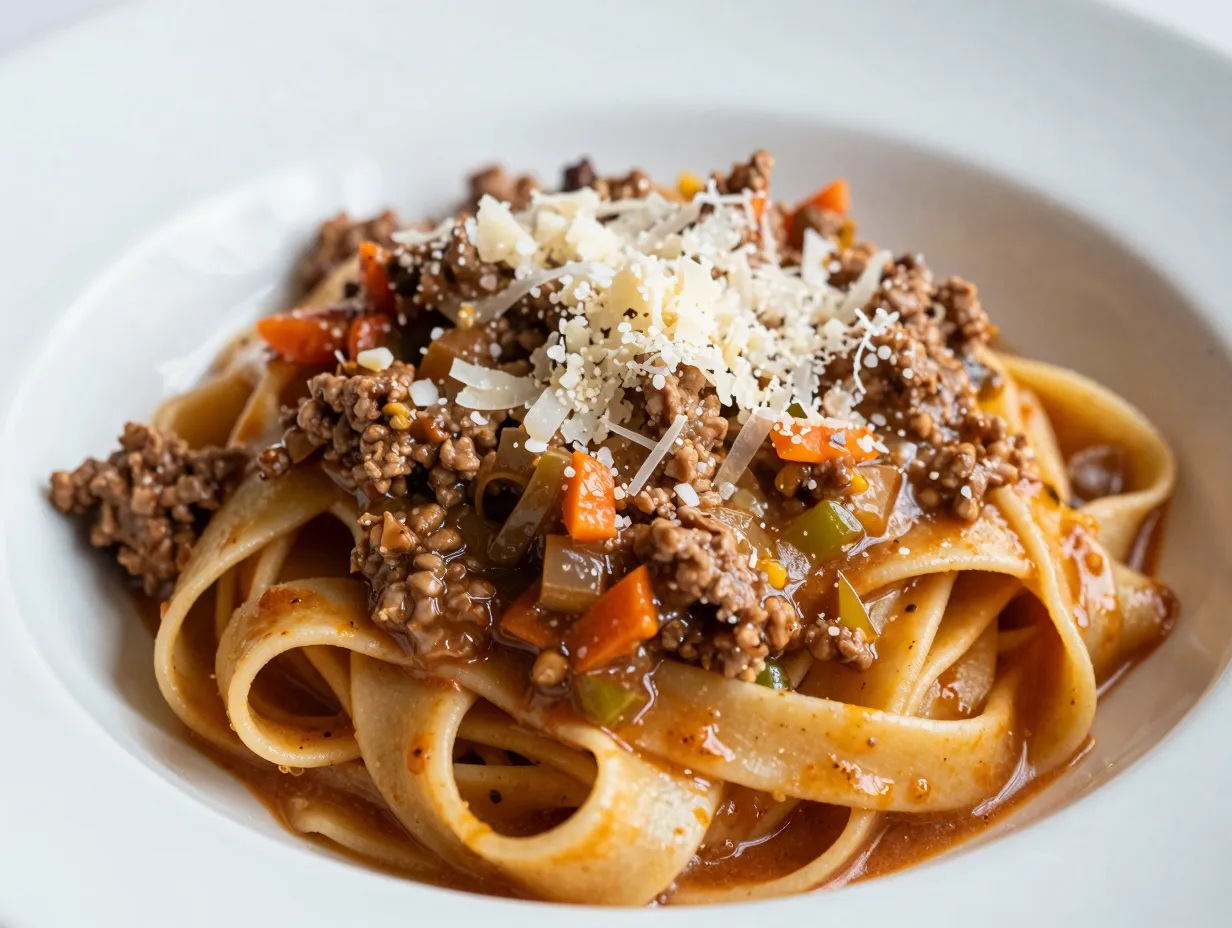
Ragù alla Bolognese is arguably the most misunderstood Italian sauce outside of Italy. The American version often drowns in tomatoes and herbs. The real Bolognese, from the Emilia-Romagna region, is a meat-forward sauce where tomatoes play a supporting role.
Traditional ingredient list:
- Ground beef and pork (50/50 blend)
- Soffritto: finely diced onion, carrot, and celery
- Whole milk
- Dry white wine
- A small amount of tomato paste (not crushed tomatoes)
- Nutmeg
The critical step: Add whole milk to the meat after browning and let it absorb completely before adding wine. This technique, unusual to many home cooks, tenderizes the meat and adds a subtle richness that defines the authentic Bolognese.
Fav Family Recipes notes that the distinction between Ragù alla Bolognese and Ragù alla Napoletana is significant, the northern Bolognese is subtle and creamy, while the Neapolitan version is bolder and more tomato-forward [4]. Both are authentic. They simply come from different parts of Italy.
Simmer time: minimum 2 hours, ideally 3.
4. Ragù alla Napoletana (Neapolitan Meat Sauce)
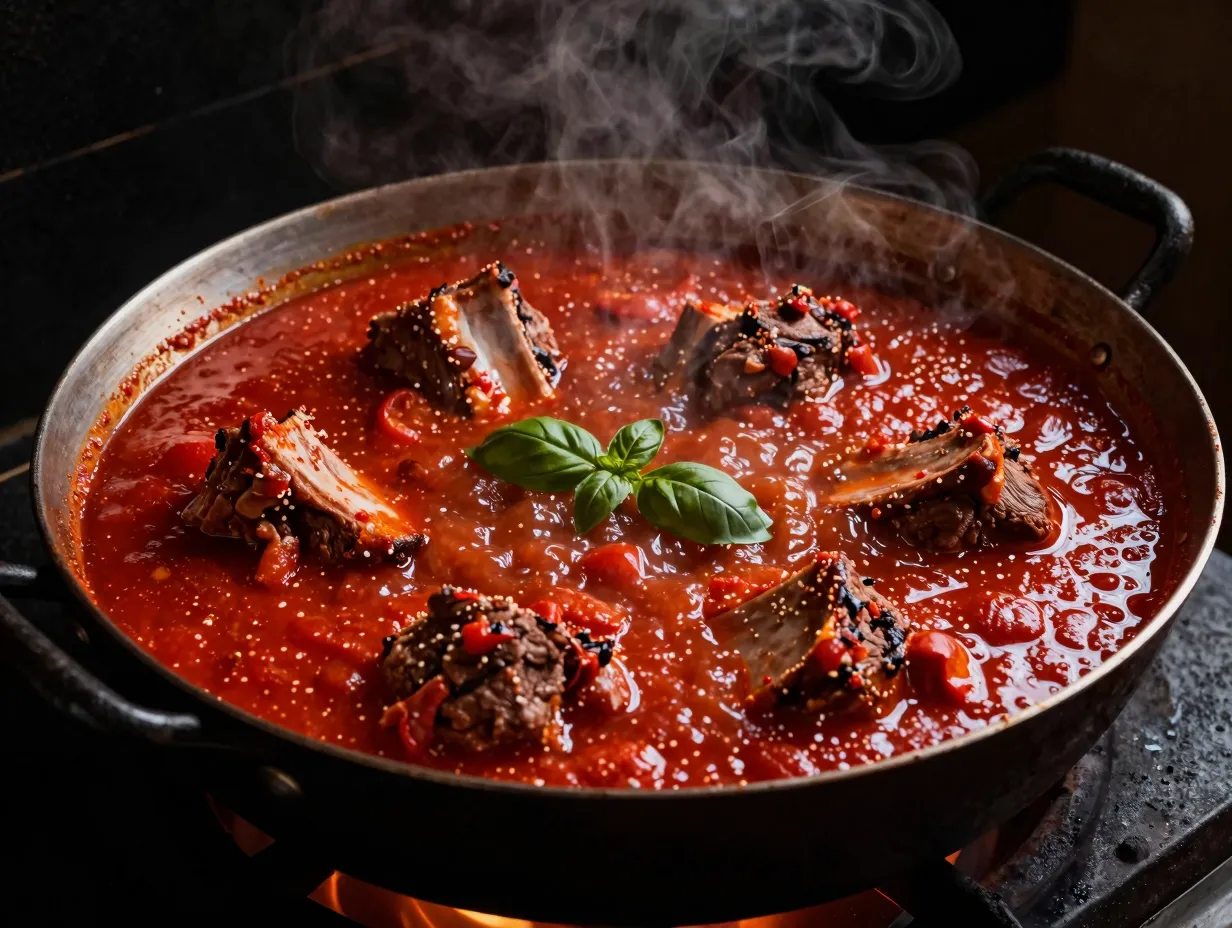
Where Bolognese is restrained, Napoletana is expressive. This southern Italian sauce uses whole cuts of meat, pork ribs, beef braciole, or Italian sausage, slow-braised in a rich tomato base for several hours. The meat is removed, served separately or shredded back into the sauce, and the result is a deeply savory, intensely flavored ragù.
Key characteristics:
- Uses whole or large cuts of meat rather than ground
- Requires 3 to 4 hours of simmering on very low heat
- Often includes a glass of red wine and a pinch of chili flakes
- Traditionally served on Sundays as a two-course meal: pasta with the sauce first, then the braised meat as a second course
This is the sauce that fills Italian streets with that unmistakable Sunday morning aroma. It is a commitment, but the payoff is extraordinary.
5. Arrabbiata (Angry Sauce)
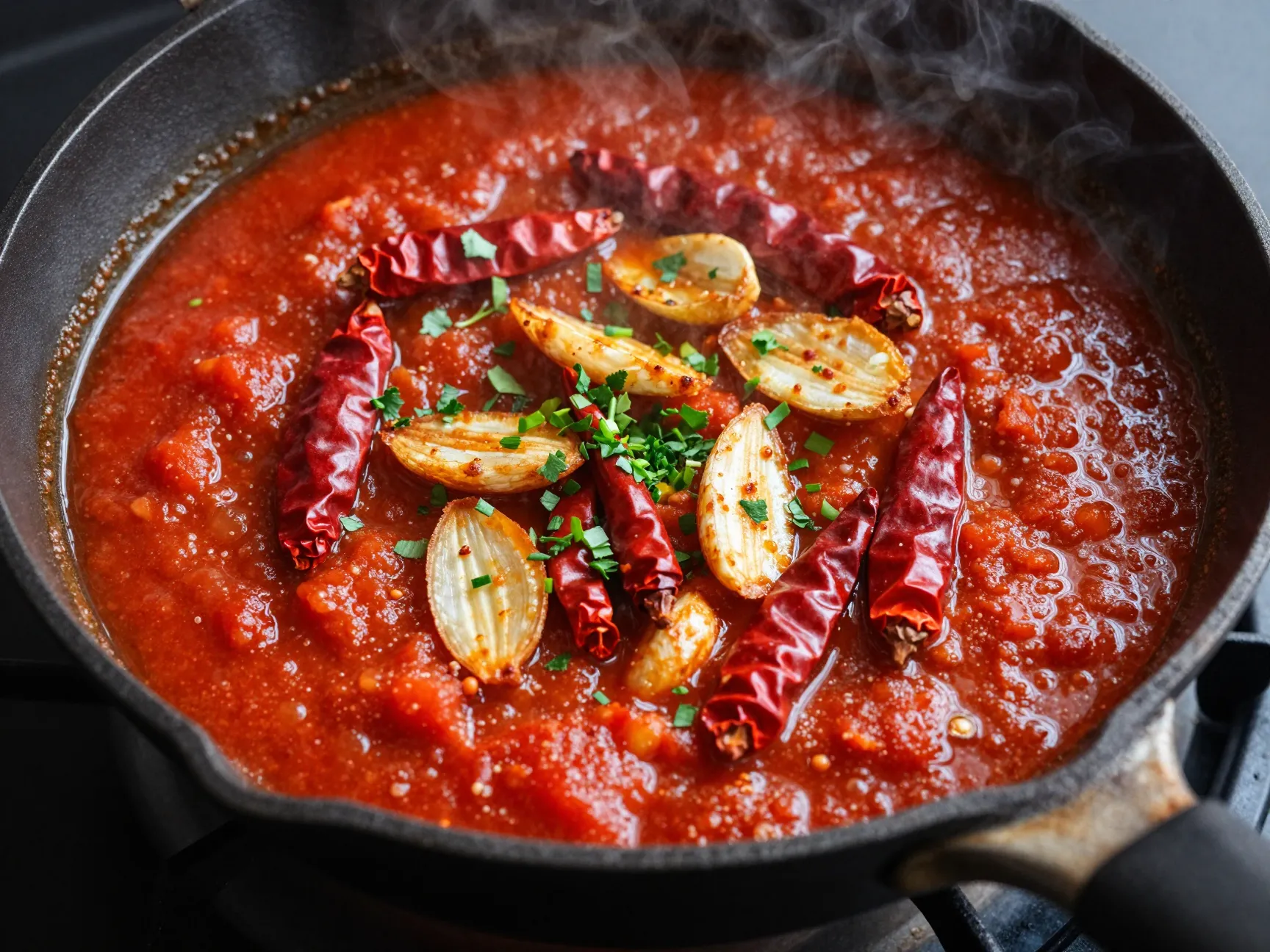
The name means “angry” in Italian, and the heat from dried red chili peppers earns that title. Arrabbiata is a Roman sauce, fast to make, and built for people who want bold flavor without a long cooking time.
Ingredient list (serves 4):
- 400g canned San Marzano tomatoes
- 3 cloves garlic
- 2 to 3 dried red chili peppers (or red pepper flakes)
- Extra virgin olive oil
- Fresh parsley (not basil, this is a Roman sauce)
- Salt
Technique: Fry garlic and chili in olive oil until the garlic is golden. Add tomatoes, crush them down, and cook on medium-high heat for 15 to 20 minutes. The sauce should be punchy and slightly chunky. Finish with fresh parsley.
Arrabbiata pairs best with penne, but it works on spaghetti too. Do not add cheese, in Rome, this sauce is traditionally served without Parmesan.
6. Puttanesca
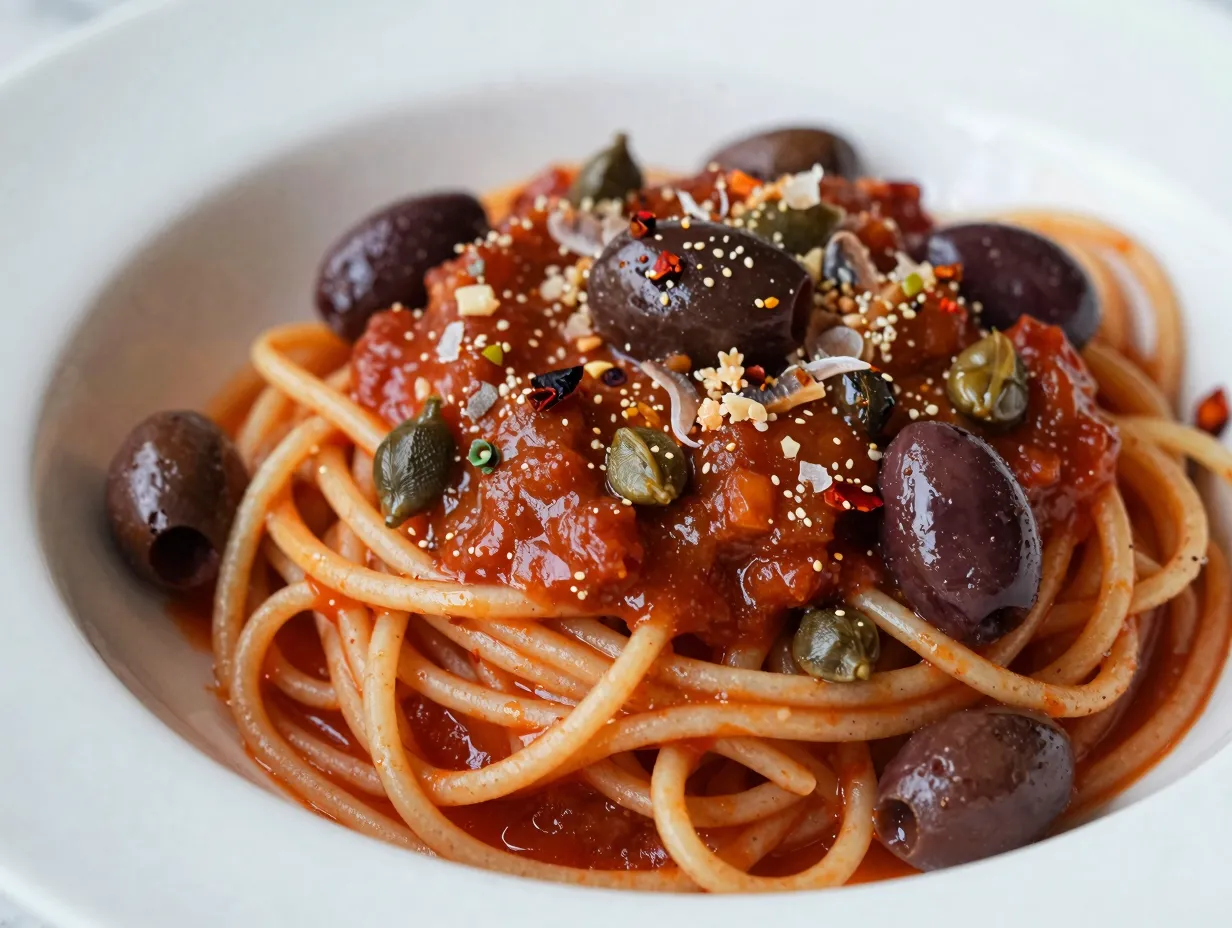
Puttanesca is the pantry sauce of Italy. It was reportedly invented in Naples in the mid-20th century as a quick, flavorful meal made entirely from shelf-stable ingredients. The combination of olives, capers, anchovies, and tomatoes creates a sauce that is salty, briny, and deeply complex despite taking under 30 minutes.
Core ingredients:
- Canned San Marzano tomatoes
- Kalamata or Gaeta olives (pitted)
- Capers
- Anchovy fillets (3 to 4)
- Garlic
- Red pepper flakes
- Fresh parsley
Why anchovies matter: Many people skip them, fearing a fishy taste. Do not. When anchovies dissolve in hot olive oil, they add umami depth, not fishiness. This is the secret ingredient that makes Puttanesca taste like it simmered for hours.
Cook time: 20 minutes. Flavor payoff: enormous.
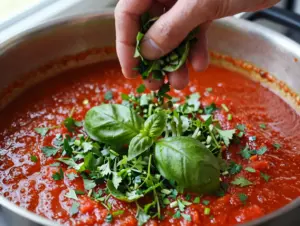
7. Marinara with Fresh Herbs
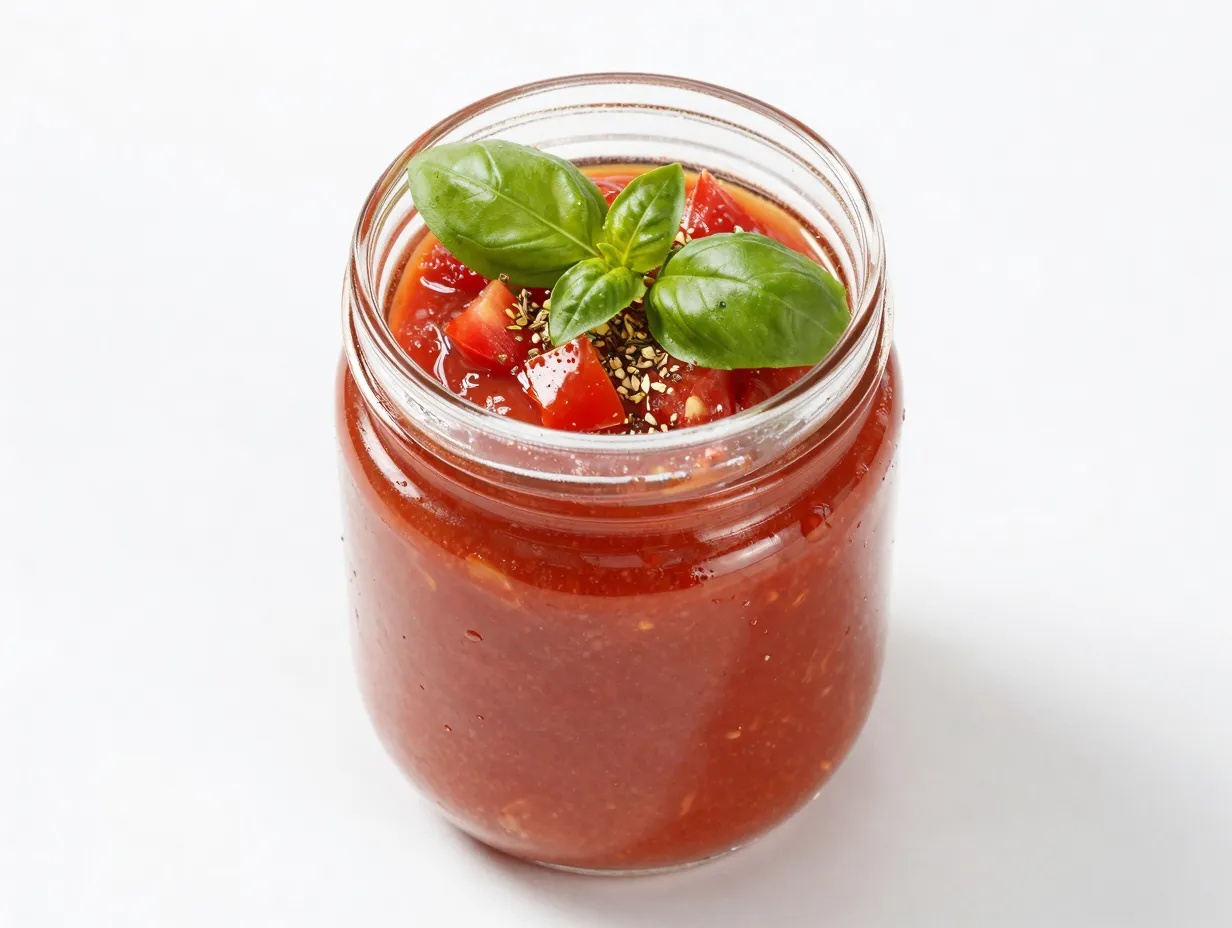
Marinara is often confused with a generic tomato sauce, but the authentic version has a specific identity. It originated with Neapolitan sailors (marinai) who needed a sauce that could be made quickly at sea using preserved tomatoes. The defining feature is its simplicity and the use of dried oregano alongside fresh basil.
Craft Meats offers a hearty version of this sauce that uses both crushed and diced tomatoes for a more textured result, blending herbs in a way that honors the original Neapolitan tradition [3].
What makes this version distinct:
- Both crushed and diced San Marzano tomatoes for texture
- Dried oregano (essential, not optional)
- Fresh basil added at the end
- A small pinch of sugar to balance acidity
- No meat, no wine, this is a pure vegetable sauce
Serving note: Marinara is the correct sauce for spaghetti alle vongole (clams), shrimp, or any seafood pasta. Its clean flavor does not compete with the seafood.
8. Pomarola (Tuscan Tomato Sauce)
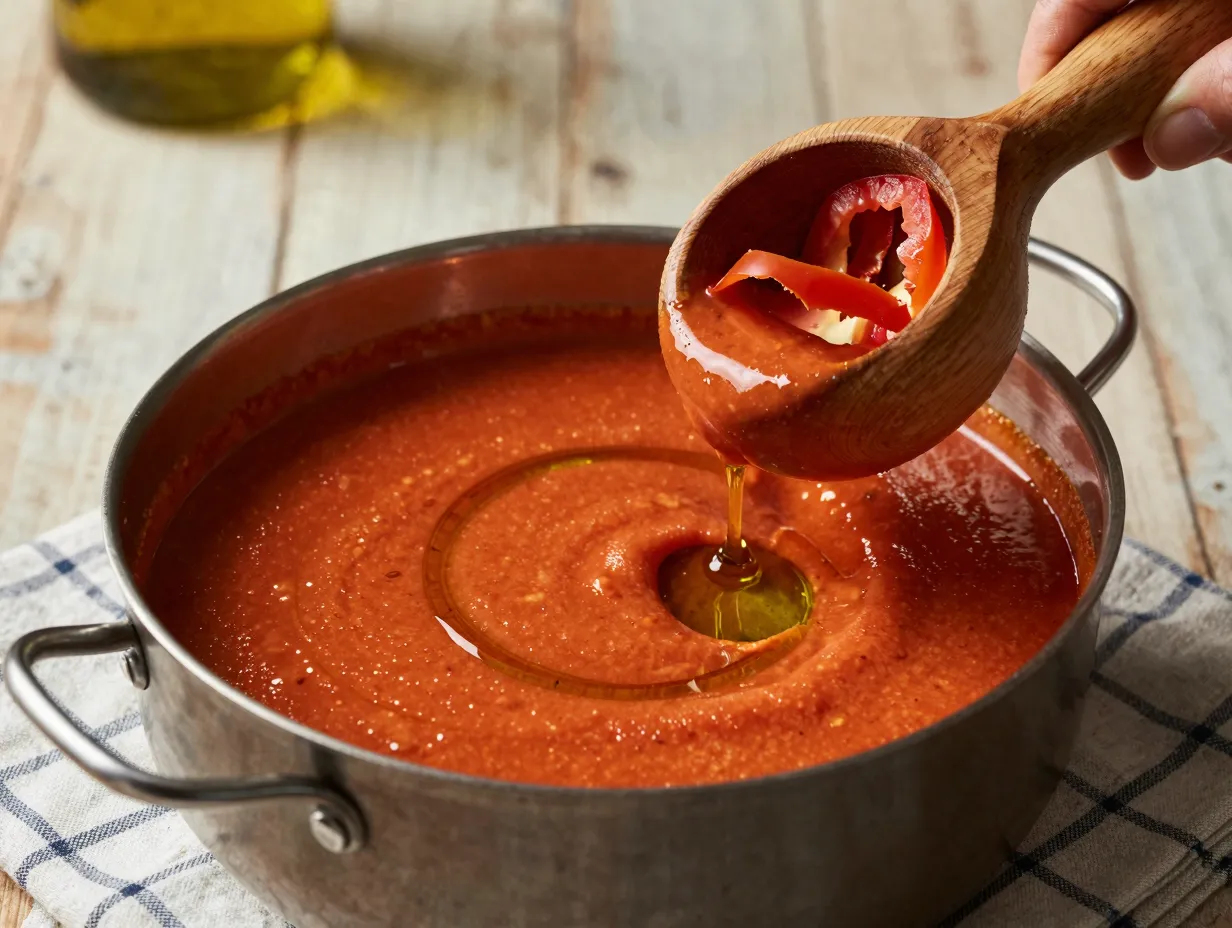
Pomarola is Tuscany’s answer to the classic tomato sauce, and it differs from the Neapolitan Sugo al Pomodoro in meaningful ways. It uses a soffritto base of onion, carrot, and celery, and it often incorporates a small amount of tomato paste alongside fresh or canned tomatoes for added depth.
Nonna Box’s documentation of traditional Italian tomato sauce highlights how this style captures the essence of Mediterranean flavors through fresh, ripe tomatoes and careful layering of aromatics [5].
The Pomarola process:
- Soften diced onion, carrot, and celery in olive oil for 10 minutes
- Add tomato paste and cook for 2 minutes
- Add crushed San Marzano tomatoes
- Simmer for 40 minutes, stirring occasionally
- Pass through a food mill for a smooth, velvety texture
- Finish with fresh basil and a drizzle of olive oil
The food mill step is what separates Pomarola from other sauces. It removes seeds and skins while keeping all the flavor, producing a sauce with a silky consistency that clings to pasta perfectly.
Quick Comparison: All 8 Sauces at a Glance
| Sauce | Region | Cook Time | Complexity | Best Pasta |
|---|---|---|---|---|
| Sugo al Pomodoro | Naples | 25 min | Beginner | Spaghetti, rigatoni |
| Slow-Simmered San Marzano | Southern Italy | 60 min | Beginner | Spaghetti, linguine |
| Ragù alla Bolognese | Bologna | 2-3 hrs | Intermediate | Tagliatelle, pappardelle |
| Ragù alla Napoletana | Naples | 3-4 hrs | Advanced | Ziti, rigatoni |
| Arrabbiata | Rome | 20 min | Beginner | Penne, spaghetti |
| Puttanesca | Naples | 20 min | Beginner | Spaghetti, linguine |
| Marinara with Fresh Herbs | Naples | 25 min | Beginner | Spaghetti, seafood pasta |
| Pomarola | Tuscany | 50 min | Intermediate | Spaghetti, penne |
Essential Tips for Cooking Like a Real Italian Nonna
Knowing the recipes is only part of the equation. The other part is understanding the habits and instincts that Italian nonnas bring to the stove every day. Here are the most important ones.
Always salt your pasta water generously. It should taste like the sea. This is where pasta gets its seasoning, not from the sauce.
Reserve pasta cooking water. A ladle of starchy pasta water added to your sauce at the end helps it cling to the pasta and creates a silky, restaurant-quality finish.
Never rinse your pasta. Rinsing removes the starch that helps sauce adhere. Drain it and add it directly to the pan with the sauce.
Finish pasta in the sauce. Pull pasta from the water 1 to 2 minutes before it is fully cooked and finish it in the simmering sauce. This technique, called “mantecare,” is how Italian restaurants achieve that perfectly integrated dish.
Taste as you go. No recipe can account for the exact sweetness of your tomatoes or the saltiness of your anchovies. Trust your palate.
“A nonna never measures. She tastes, adjusts, and tastes again.”, a truth shared by every Italian cooking teacher
Choosing the Right Tomatoes in 2026
In 2026, the market for canned tomatoes is more crowded than ever, and the quality gap between brands is significant. Here is a quick guide to making the right choice.
San Marzano D.O.P.: The authentic choice. Grown in the Agro Sarnese-Nocerino region of Italy. Look for the D.O.P. certification seal on the label [4]. Brands like Cento and La Valle are widely available.
Whole peeled tomatoes: Always preferable to pre-crushed. Crushing them yourself gives you control over texture.
Fresh tomatoes: For summer sauces, ripe Roma or plum tomatoes are excellent. Blanch and peel them before cooking [5].
What to avoid: Tomatoes with added citric acid, excessive salt, or tomato puree as a filler. Read the ingredient list, authentic San Marzano tomatoes contain only tomatoes, tomato juice, and basil.
Conclusion
The 8 Authentic Real Italian Spaghetti Sauce Recipes Straight From Nonna’s Kitchen covered in this guide represent the full spectrum of Italy’s red sauce tradition, from the lightning-fast Arrabbiata to the all-day Napoletana ragù. Each one carries a regional identity, a set of techniques, and a philosophy that has survived generations because it works.
Here are your actionable next steps:
- Start with Sugo al Pomodoro this week. Master the base before moving to more complex sauces.
- Buy San Marzano tomatoes with the D.O.P. label for your first batch. The difference is immediately noticeable.
- Try the slow-simmered version on a Sunday when you have more time. The extra 30 minutes of simmering pays off in flavor.
- Work your way through the list over the next two months. By the time you reach Ragù alla Napoletana, you will cook it with confidence.
- Share the recipes. The whole point of nonna’s cooking is that it moves from one set of hands to another.
Authentic Italian spaghetti sauce is not a secret. It is a practice. The more you make it, the more natural it becomes, and the closer you get to that Sunday morning smell drifting down an Italian street.
References
[1] Authentic Italian Pasta Sauce Recipe – https://www.realfoodwithsarah.com/authentic-italian-pasta-sauce-recipe/?utm_source=openai
[2] Sugo Al Pomodoro Classic Tomato Sauce – https://www.cucinabyelena.com/sugo-al-pomodoro-classic-tomato-sauce/?utm_source=openai
[3] Authentic Homemade Spaghetti Sauce Recipe – https://www.craftmeats.com/recipes/authentic-homemade-spaghetti-sauce-recipe/?utm_source=openai
[4] Nicks Authentic Italian Spaghetti – https://www.favfamilyrecipes.com/nicks-authentic-italian-spaghetti/?utm_source=openai
[5] Authentic Italian Tomato Sauce Recipe – https://www.nonnabox.com/authentic-italian-tomato-sauce-recipe/?utm_source=openai
[6] Recipes For Cooking Like Nonna – https://www.latimes.com/food/newsletter/2025-05-25/recipes-for-cooking-like-nonna?utm_source=openai