9 Secrets to Making the Best Guacamole Recipe Homemade Every Single Time
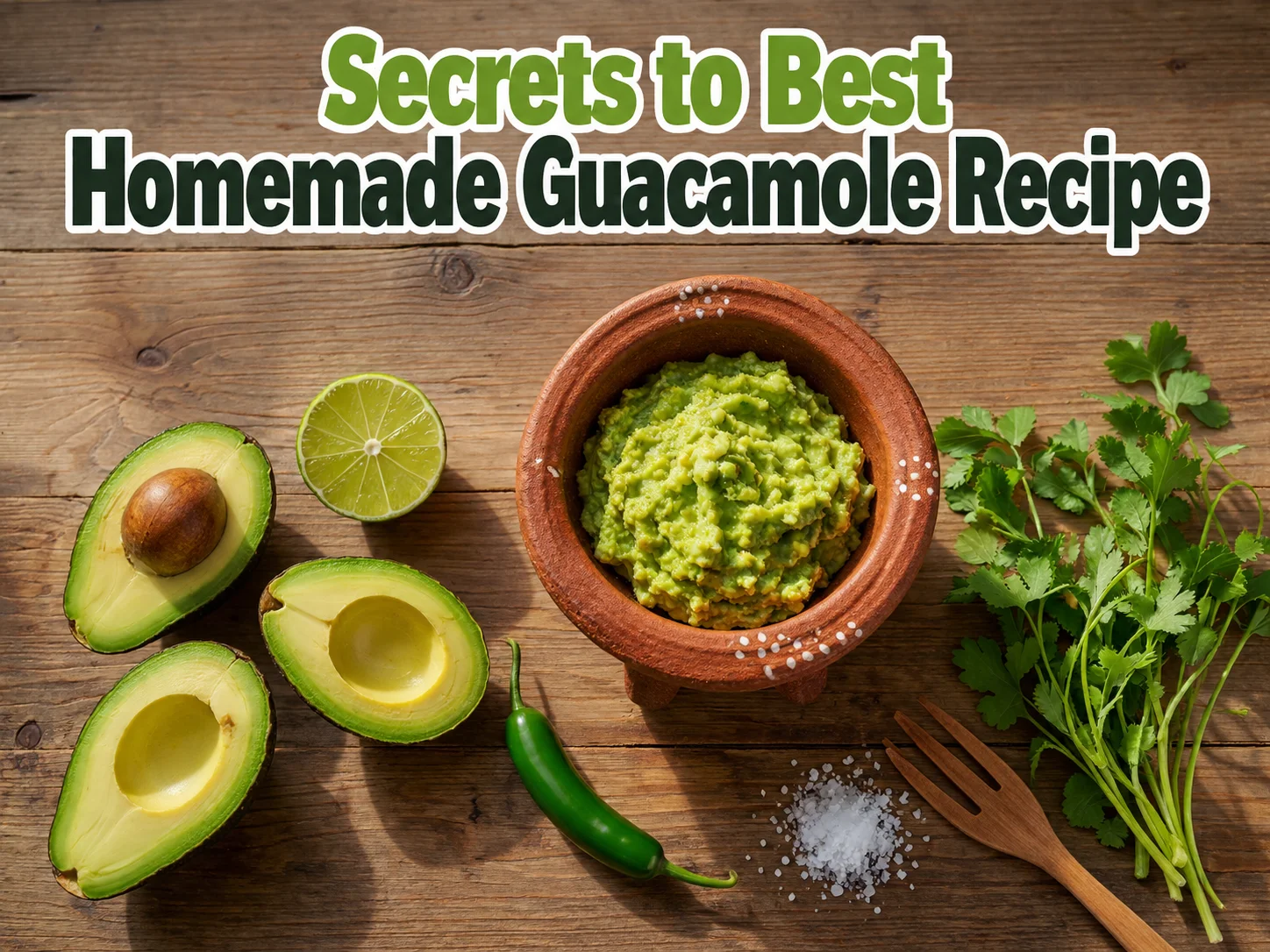
Guacamole is one of the most ordered appetizers in the United States, yet most people have eaten a version that was brown, bland, or watery at some point in their lives. That gap between a forgettable bowl of mashed avocado and a genuinely great guacamole comes down to a handful of specific, learnable techniques. The 9 secrets to making the best guacamole recipe homemade every single time are not mysterious or complicated, they are precise, repeatable, and grounded in both culinary science and generations of Mexican cooking tradition. Master them, and you will never serve a disappointing bowl again.
Disclosure: This post contains affiliate links. As an Amazon Associate, we earn from qualifying purchases, and at no extra cost to you.
Key Takeaways
- Perfectly ripe avocados are the single most important variable in any homemade guacamole recipe
- Texture matters as much as flavor, keep it chunky, not smooth
- Fresh lime juice and generous salt are non-negotiable for balanced, bright flavor
- The order in which you add and mix ingredients directly affects the final result
- A few simple storage tricks will keep your guacamole green and fresh for hours
Why Most Homemade Guacamole Falls Short
Before diving into the 9 secrets to making the best guacamole recipe homemade every single time, it helps to understand why so many home attempts miss the mark. The most common failures are predictable: under-ripe avocados that taste grassy and stiff, over-mashed texture that resembles baby food, not enough acid, and too little salt. Some cooks add too many ingredients and muddy the flavor. Others add too few and produce something flat.
The good news is that guacamole is genuinely forgiving once you understand its core logic. It is a dish built on contrast, creamy against chunky, rich against acidic, mild against spicy. When those contrasts are in balance, the result is something that disappears from the bowl before you can set down the chip bag.
I learned this the hard way at a backyard party years ago. I had made what I thought was a solid guacamole, only to watch guests politely take one chip’s worth and move on. A friend who grew up in Oaxaca watched me make it and immediately spotted three problems: my avocados were too firm, I had used bottled lime juice, and I had over-mixed everything into a paste. That conversation changed how I approach this dish entirely.
The 9 Secrets to Making the Best Guacamole Recipe Homemade Every Single Time
1. Choose Avocados at the Exact Right Stage of Ripeness
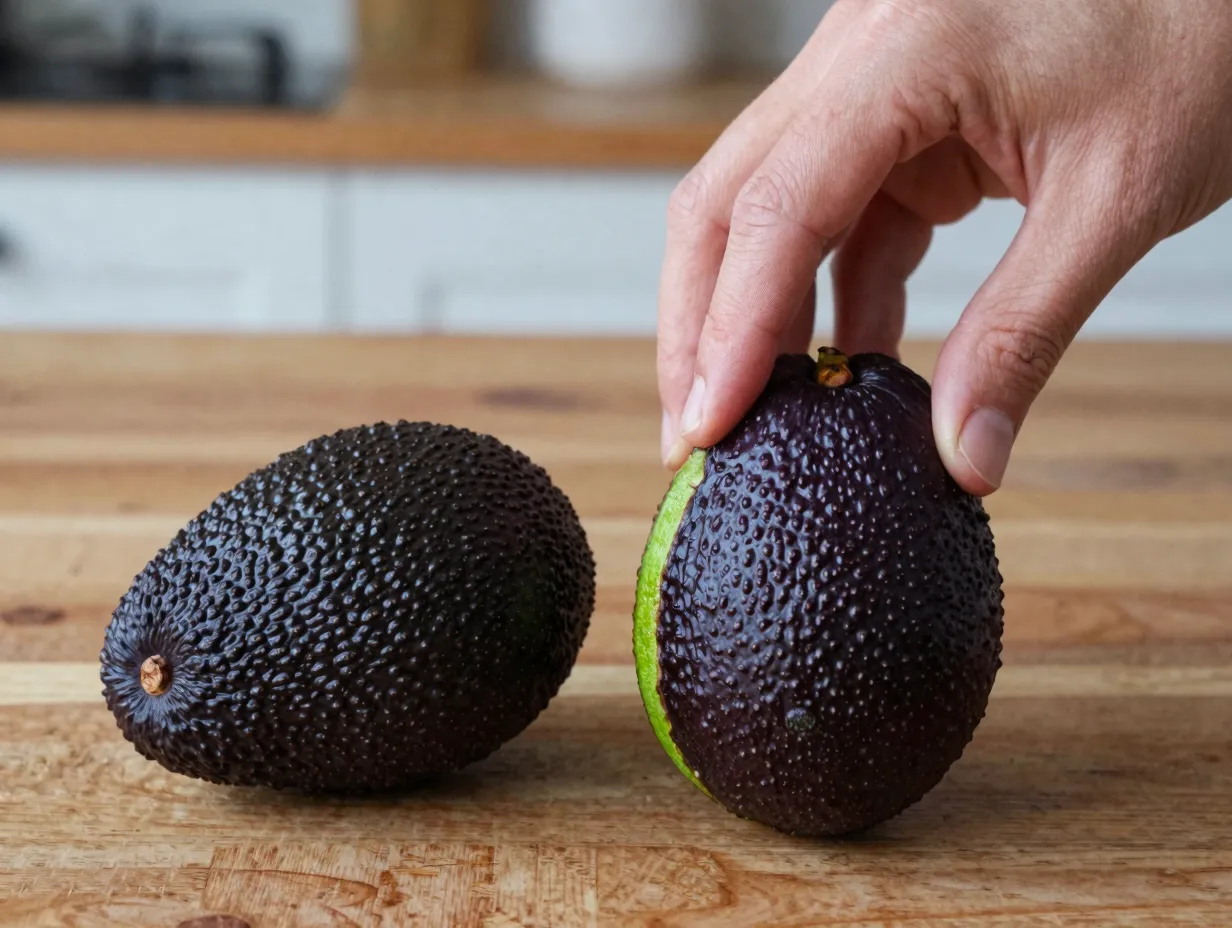
No technique, seasoning, or tool can compensate for an avocado that is not ready. Ripe avocados are the non-negotiable foundation of any great homemade guacamole recipe [1][4]. The problem is that most grocery store avocados are sold rock-hard and need several days to ripen at room temperature.
How to test for ripeness:
- Press gently near the stem end, it should yield slightly without feeling mushy
- Remove the small stem cap; if the flesh underneath is green, the avocado is ready; if it is brown, it is overripe
- The skin of a Hass avocado should be dark purple-black, not bright green
Hass avocados are the gold standard for guacamole because of their higher fat content, which produces a creamier, richer flavor than Florida or other varieties [4]. If your avocados are not ripe, place them in a paper bag with a banana overnight, the ethylene gas speeds up the process significantly.
“The difference between a good guacamole and a great one often starts at the grocery store, not the kitchen counter.”
2. Use a Molcajete or Fork, Never a Food Processor
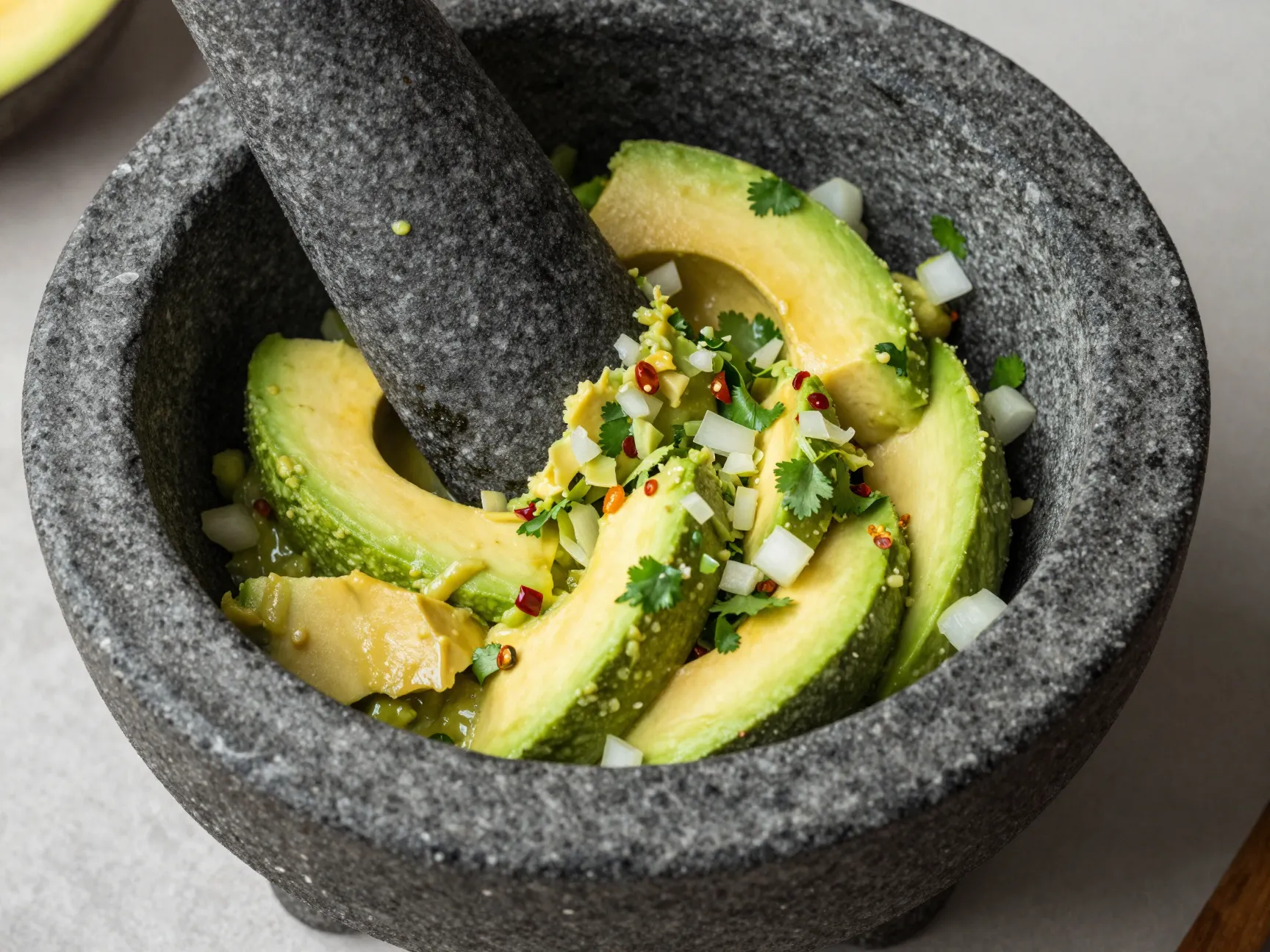
Texture is one of the most underrated elements of a great guacamole. The 9 secrets to making the best guacamole recipe homemade every single time consistently point back to one principle: keep it chunky [3][9]. A food processor or blender turns avocado into a smooth, airy mousse that lacks the satisfying bite that defines authentic guacamole.
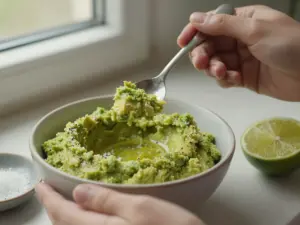
A traditional molcajete (a volcanic stone mortar and pestle) is the ideal tool because it crushes rather than cuts, releasing oils and flavor compounds without destroying the avocado’s cellular structure [3]. If you do not own one, a fork works perfectly well. Mash the avocado with deliberate, uneven strokes, leaving visible chunks throughout.
Texture guide:
| Texture Level | Description | Best For |
|---|---|---|
| Chunky | Large avocado pieces, rough surface | Authentic guacamole, dipping |
| Medium | Small pieces, some smoothness | Topping for tacos, bowls |
| Smooth | Fully mashed, uniform | Spreads, sandwiches |
For dipping with chips, chunky is always the right call.
3. Season the Base Before Adding Avocado
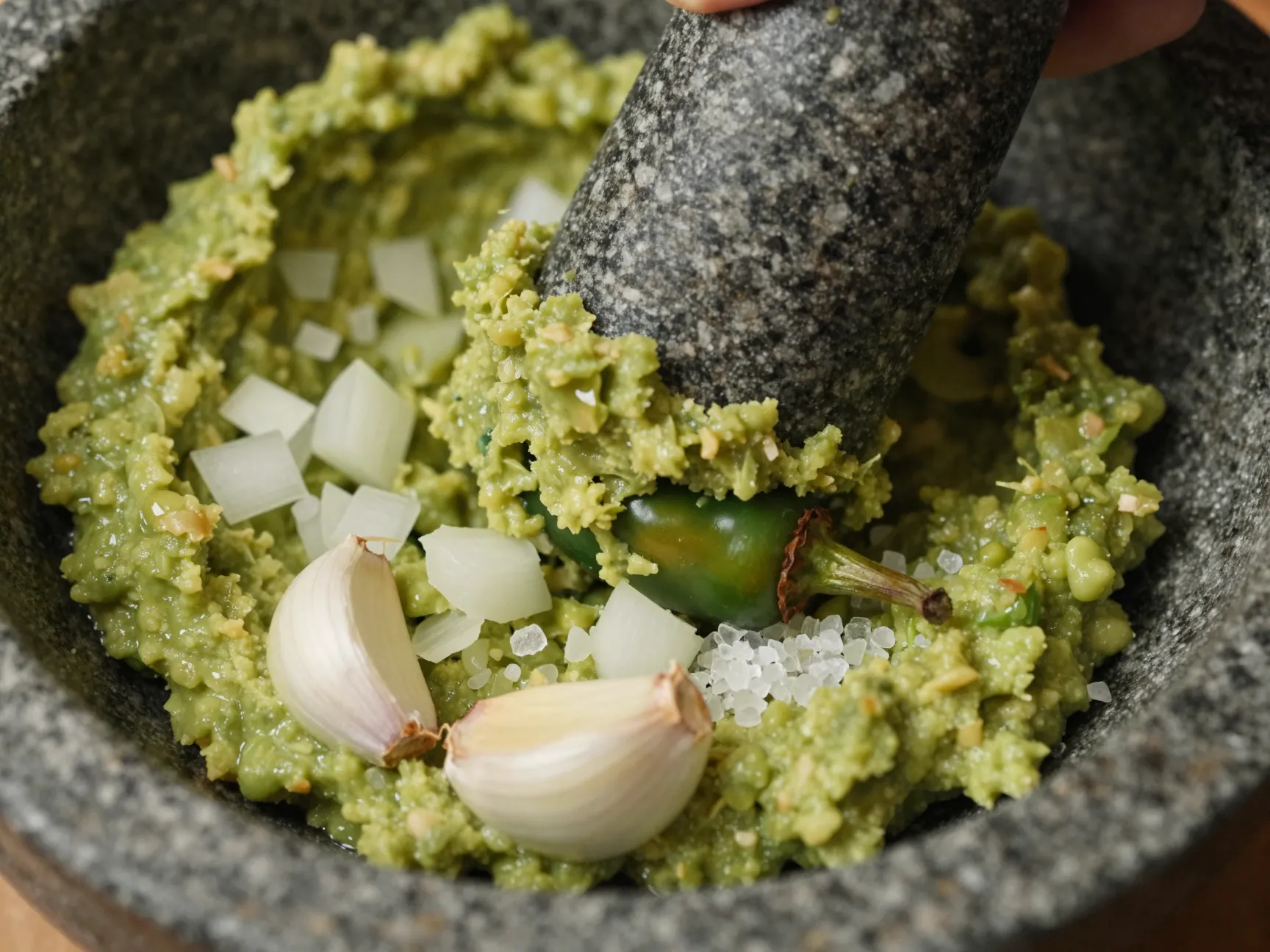
This is a technique borrowed from professional kitchens that most home cooks skip entirely. Before you add your avocado, combine your aromatics, minced garlic, finely diced white onion, serrano or jalapeño chile, and salt, and grind or mash them together first [3][5]. This step does two things.
First, the salt draws moisture out of the onion and chile, softening their raw sharpness. Second, grinding the aromatics together creates a paste that distributes flavor evenly throughout the guacamole rather than leaving pockets of intense onion or heat. Experts consistently recommend this approach because it produces a more harmonious, integrated flavor profile [5].
If you are using a molcajete, grind the garlic, chile, and salt into a paste before adding anything else. If you are using a bowl and fork, mince everything as finely as possible and mix with salt first.
4. Squeeze Fresh Lime Juice, Not the Bottled Kind
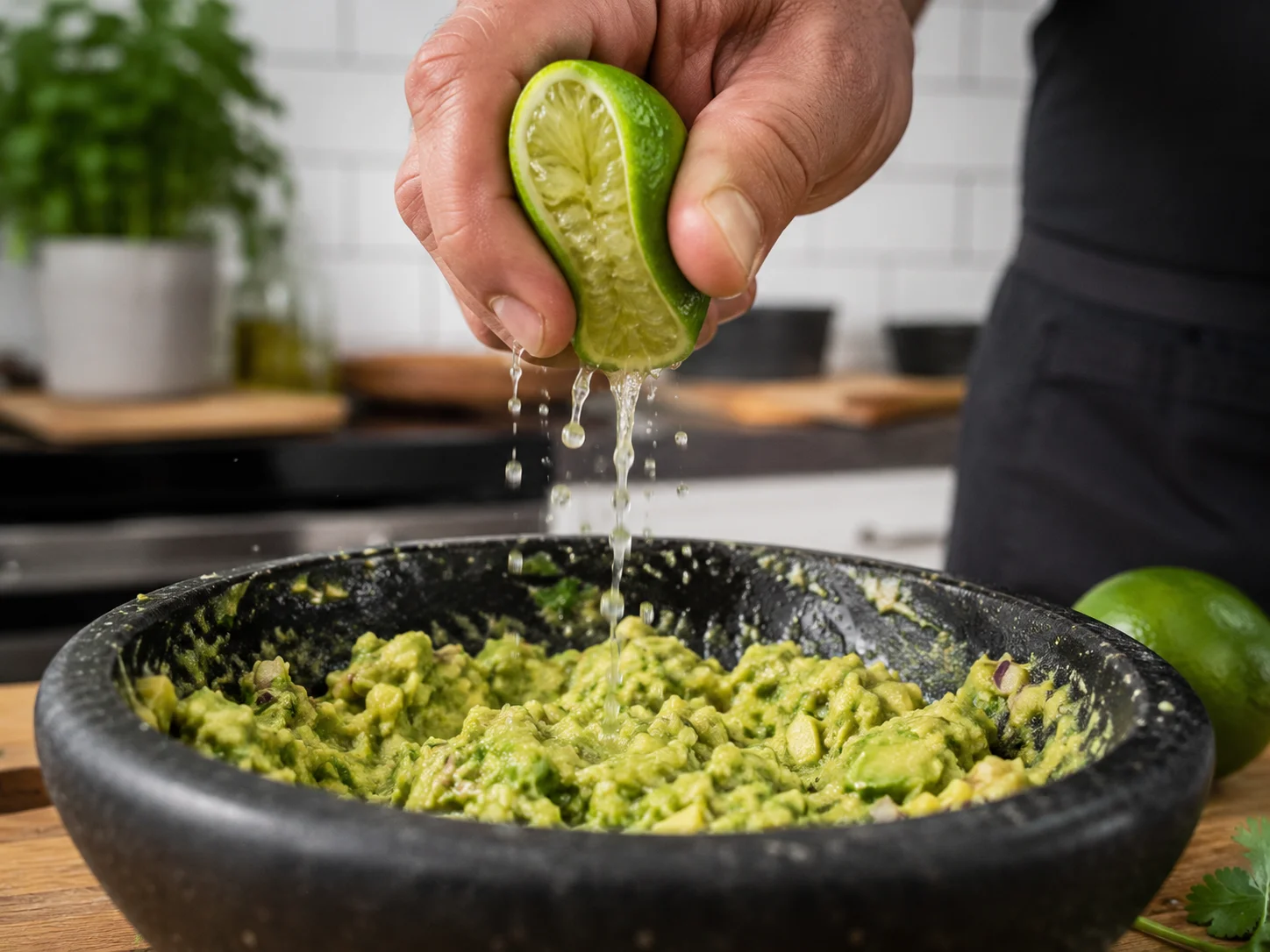
Fresh lime juice is one of the two flavor pillars of great guacamole, alongside salt. The citric acid brightens the avocado’s richness, adds a clean tartness, and, critically, slows oxidation to keep the guacamole green longer [1][6]. Bottled lime juice contains preservatives and lacks the volatile aromatic compounds that make fresh lime so effective.
Use at least one full lime per two avocados. Taste as you go, some limes are more acidic than others, and avocados vary in richness. The goal is a guacamole that tastes bright and lively, not flat or greasy [1].
Pro tip: Roll the lime firmly on the counter before cutting. This breaks down the internal membranes and produces significantly more juice with less effort.
Some recipes also call for a small amount of lime zest, which adds a floral, aromatic layer that juice alone cannot provide [10]. It is a subtle addition, but it makes a noticeable difference.
5. Salt More Generously Than You Think You Should
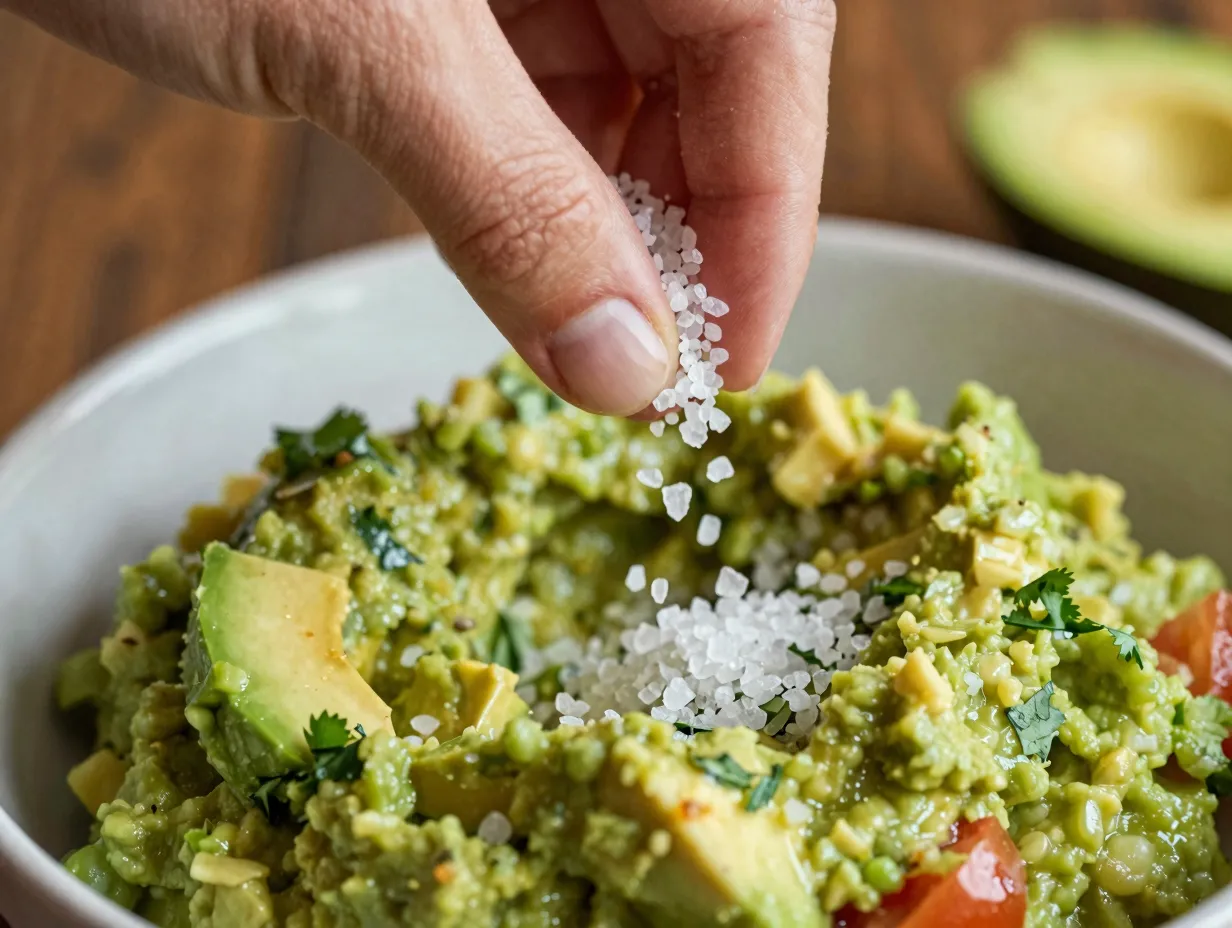
Salt is not just a seasoning in guacamole, it is a flavor amplifier. Under-salted guacamole tastes dull and one-dimensional regardless of how good the avocados are. The fat in avocado mutes flavor perception, which means you need more salt than you would expect [4][6].
Use fine sea salt or kosher salt rather than iodized table salt. Iodized salt can introduce a faint metallic note that is especially noticeable in fresh, uncooked preparations like guacamole.
Add salt in stages: once when building the aromatic base, once after adding the avocado, and once more at the very end after a final taste. This layered approach ensures even seasoning throughout the bowl [2].
“Salt is the difference between guacamole that tastes like avocado and guacamole that tastes like itself.”
6. Add Ingredients in the Right Order
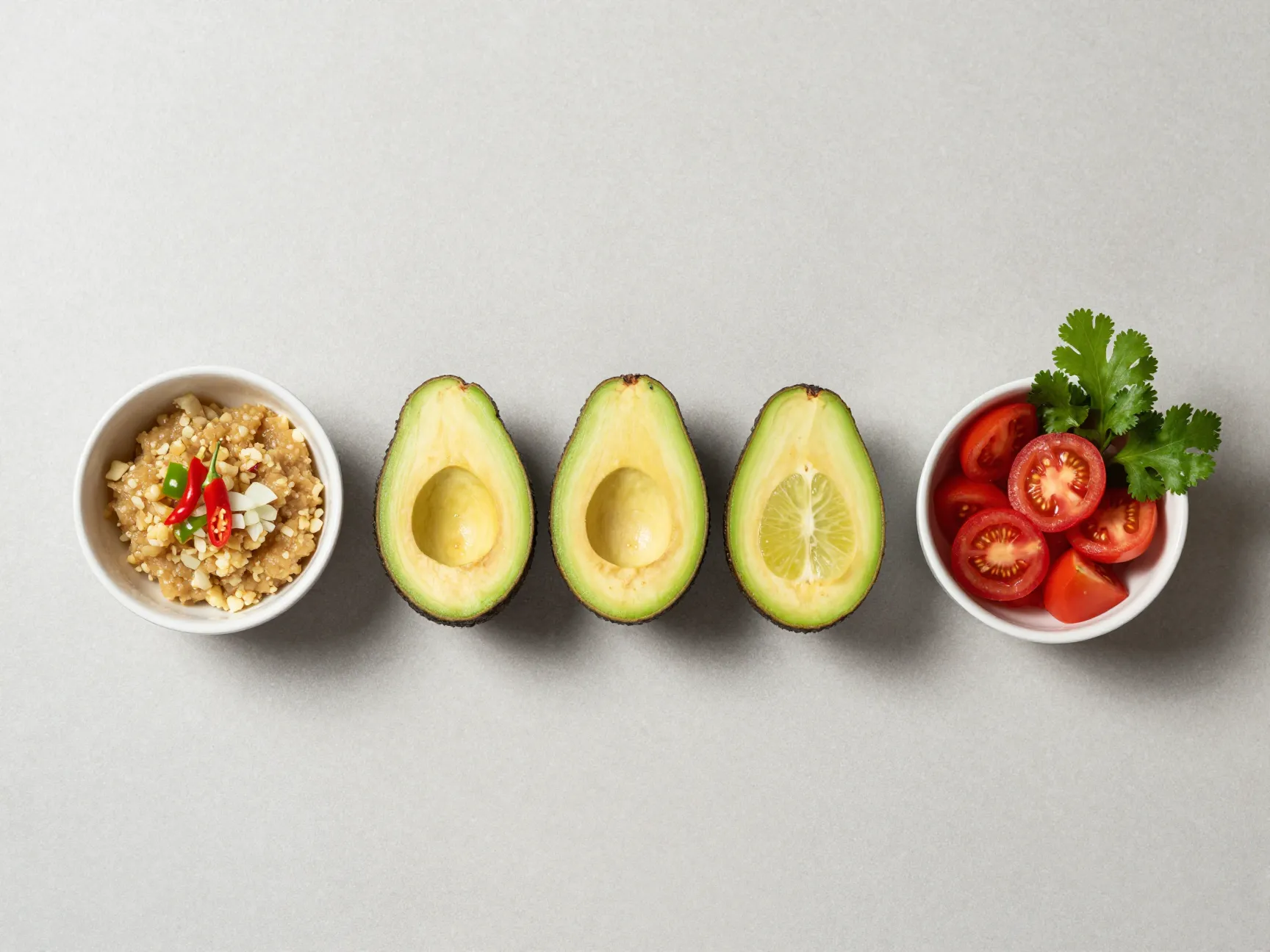
The sequence in which you build guacamole affects both texture and flavor distribution. Here is the order that produces the most consistent results [2][9]:
- Grind or mix aromatics (garlic, chile, onion) with salt
- Add avocado and mash to desired texture
- Add fresh lime juice and fold gently
- Add tomato (if using), cilantro, and any additional seasoning
- Taste and adjust salt, lime, and heat
Adding tomato too early causes it to release water into the mix, making the guacamole watery and diluted. Adding lime juice before mashing can make the avocado slippery and harder to work with. The order matters more than most people realize.
7. Choose Your Add-Ins Deliberately
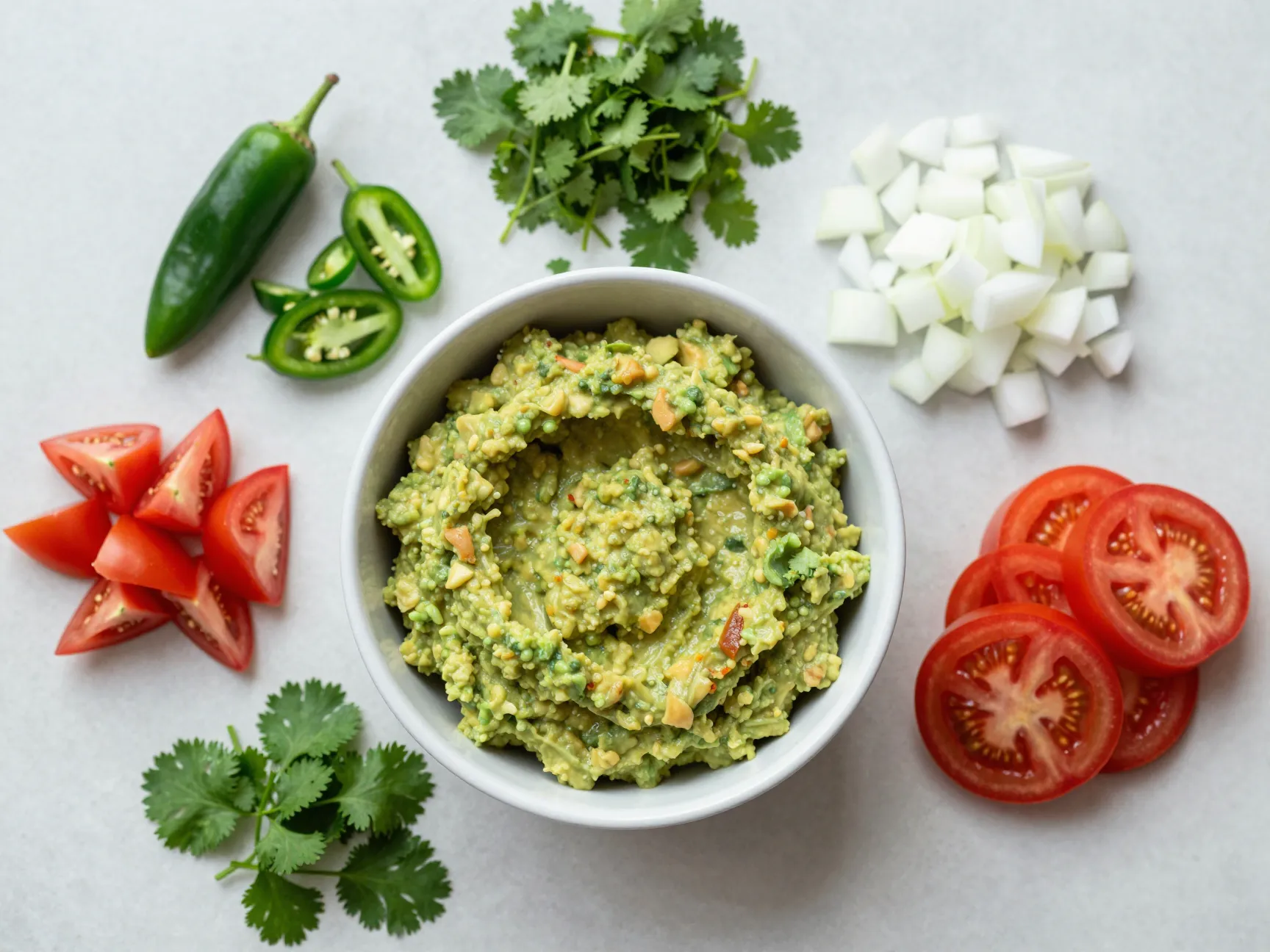
Authentic Mexican guacamole is a relatively simple preparation, avocado, lime, salt, chile, onion, cilantro, and sometimes tomato [4][9]. The temptation to add sour cream, mayonnaise, garlic powder, cumin, or other ingredients is understandable, but each addition risks muddying the clean, fresh flavor that makes great guacamole memorable.
That said, there is room for personal preference within a sensible framework. Here are add-ins ranked by how well they integrate:
Add-ins that work well:
- Finely diced white onion (essential)
- Fresh serrano or jalapeño chile (essential)
- Fresh cilantro (essential for most)
- Ripe tomato, seeds removed (optional but traditional)
- Roasted garlic (adds depth without sharpness)
- A pinch of cumin (use sparingly)
Add-ins to avoid:
- Sour cream or mayonnaise (masks avocado flavor)
- Pre-made salsa (too much liquid)
- Garlic powder or onion powder (flat, artificial taste)
- Lemon juice as a lime substitute (different flavor profile)
The Reddit cooking community has noted that one of the most common mistakes is overcomplicating the recipe with too many competing flavors [8]. Restraint is a virtue in guacamole.
8. Master the Storage Technique to Prevent Browning
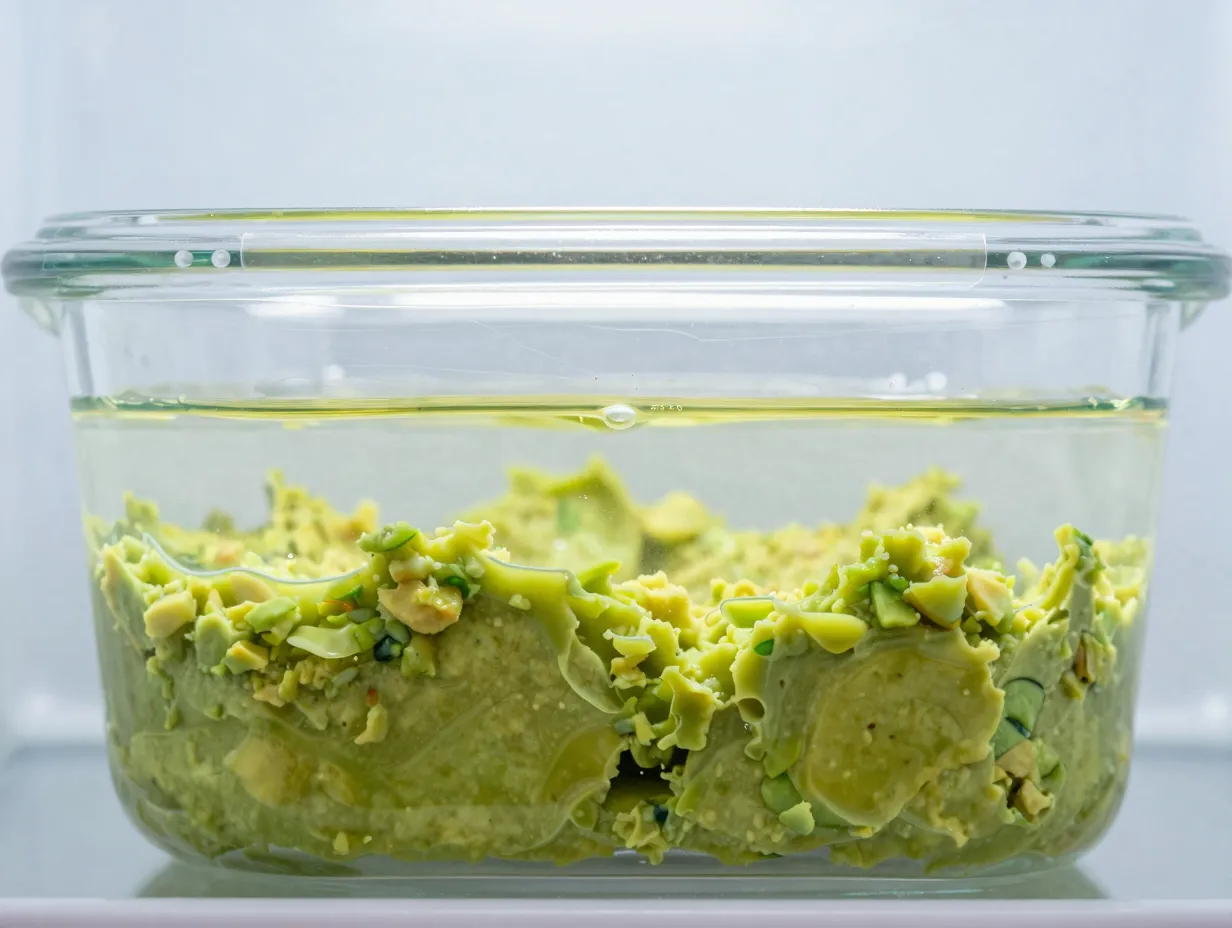
Oxidation is the enemy of leftover guacamole. The browning you see is caused by enzymes in the avocado reacting with oxygen, it is the same process that browns a cut apple. While brown guacamole is safe to eat, it is visually unappealing and signals flavor degradation.
The most effective storage methods:
- Press plastic wrap directly against the surface of the guacamole, eliminating all air contact
- Add a thin layer of water or lime juice on top before sealing, pour it off before serving
- Store the avocado pit in the bowl (this helps slightly, though the plastic wrap method is more reliable)
- Keep it in the coldest part of your refrigerator, not the door
The water layer method is particularly effective and is recommended by several recipe developers [7][9]. The water creates a physical barrier against oxygen without affecting flavor, since it sits on top and is poured off before serving.
Freshly made guacamole stored this way can stay bright green for up to 24 hours in the refrigerator.
9. Taste and Adjust Right Before Serving
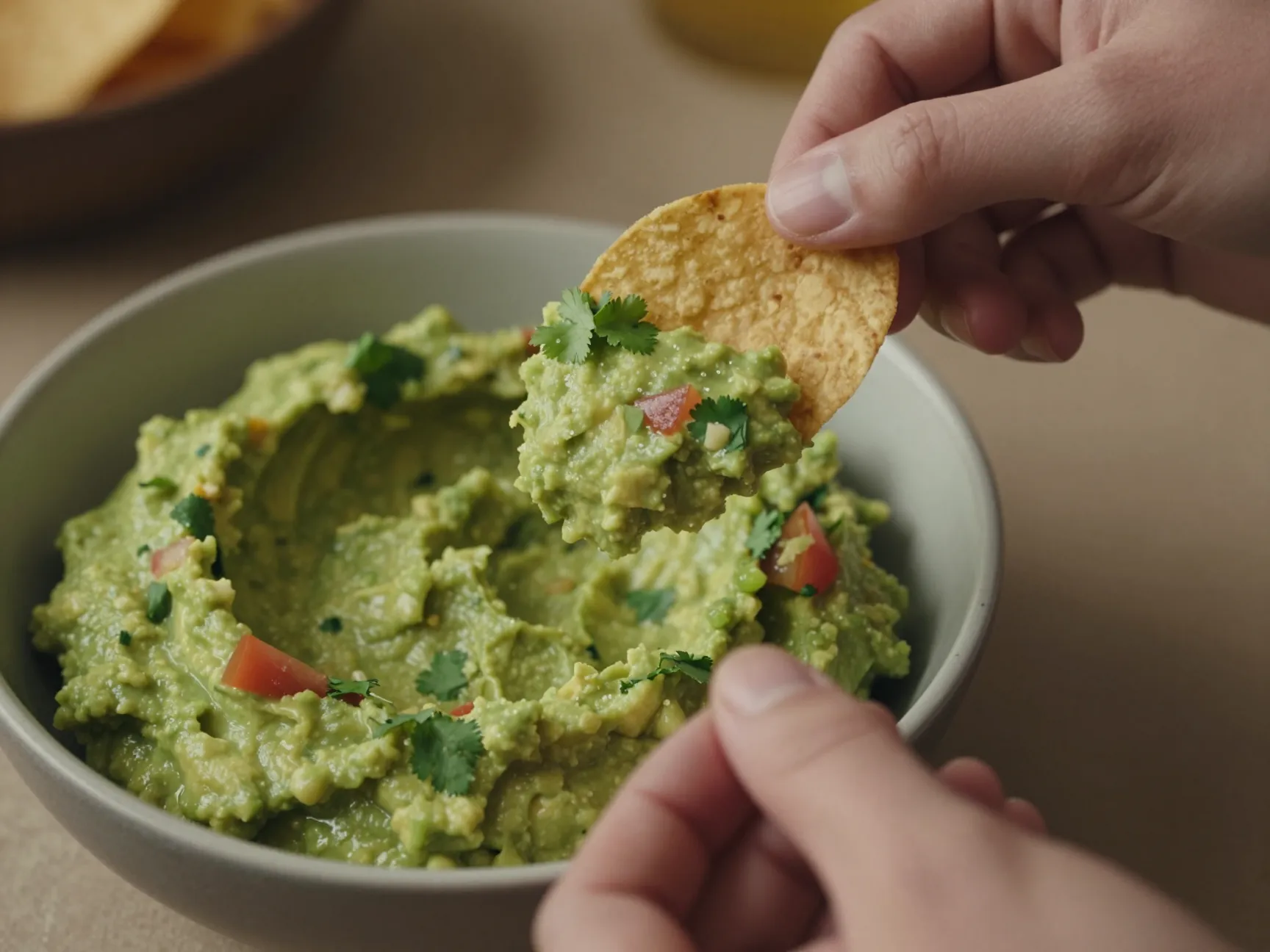
The final and arguably most important of the 9 secrets to making the best guacamole recipe homemade every single time is the habit of tasting and adjusting at the last moment before the bowl hits the table [1][10]. Flavors shift as guacamole sits, acid mellows, salt distributes, and the heat from chile can intensify or fade depending on the variety.
Before serving, taste for:
- Salt: Does it taste flat? Add more salt.
- Acid: Does it taste heavy or rich? Add more lime juice.
- Heat: Is it too mild? Add a small amount of minced fresh chile.
- Freshness: Does it taste dull? A small handful of freshly chopped cilantro added at the last moment revives the flavor.
This final adjustment step separates cooks who follow a recipe from cooks who understand what they are making. Great guacamole is a living dish, it responds to tasting and correction right up until the moment it is served [2][5].
The Core Homemade Guacamole Recipe
With all nine secrets in mind, here is a straightforward recipe that applies every principle above.
Ingredients (serves 4):
- 3 ripe Hass avocados
- 1 small serrano chile, minced (or jalapeño for milder heat)
- 1/4 cup finely diced white onion
- 1 small clove garlic, minced (optional)
- 3/4 teaspoon fine sea salt, plus more to taste
- Juice of 1 to 1.5 fresh limes
- 1/4 cup fresh cilantro, roughly chopped
- 1 small Roma tomato, seeded and diced (optional)
Method:
- In a molcajete or bowl, combine the minced chile, onion, garlic, and salt. Mash or mix into a rough paste.
- Halve and pit the avocados. Scoop the flesh into the bowl.
- Mash with a fork to a chunky consistency, folding the aromatics throughout.
- Add lime juice and fold gently to combine.
- Fold in cilantro and tomato if using.
- Taste and adjust salt and lime. Serve immediately or store using the plastic wrap method.
Common Mistakes to Avoid in 2026
Even experienced home cooks make these errors. Knowing them in advance saves a batch.
Over-mashing: Once you start mashing, it is easy to keep going. Stop when you still see avocado chunks. The guacamole will continue to soften slightly as it sits.
Using cold avocados straight from the refrigerator: Cold avocados are harder to mash and their flavor is muted. Let them come to room temperature for 15 to 20 minutes before making guacamole.
Skipping the taste test: Avocados vary enormously in fat content, water content, and flavor. A recipe is a starting point, not a final answer. Always taste before serving.
Making it too far in advance: Guacamole is at its absolute best within 30 minutes of being made. Plan accordingly when hosting.
Using the wrong tomato: Watery tomatoes like beefsteak varieties will make your guacamole soupy. Always use Roma tomatoes with the seeds removed, or skip tomato entirely.
Conclusion
The 9 secrets to making the best guacamole recipe homemade every single time are not tricks or shortcuts, they are a disciplined approach to a dish that rewards attention and care. Start with avocados at peak ripeness. Build your flavor base before adding the avocado. Keep the texture chunky and intentional. Balance acid and salt with a generous hand. Add ingredients in the right sequence. Be selective about what goes in the bowl. Store it properly if you need to. And always, always taste before you serve.
Your actionable next steps:
- Buy Hass avocados two to three days before you plan to make guacamole, and let them ripen at room temperature
- Source fresh limes, a serrano chile, white onion, and fresh cilantro, not dried or bottled substitutes
- Make a small test batch using only the core five ingredients (avocado, lime, salt, chile, onion) before adding anything else
- Practice the taste-and-adjust step at the end of every batch until it becomes instinctive
- Share the result, great guacamole is meant to be eaten with other people
The distance between a mediocre bowl and a genuinely memorable one is smaller than most people think. Apply these nine principles consistently, and the best guacamole you have ever made will be the one you make at home.
References
[1] Best Guacamole Recipe – https://cookieandkate.com/best-guacamole-recipe/
[2] How To Make The Best Guacamole Ever – https://marysnest.com/how-to-make-the-best-guacamole-ever/
[3] The Art Of Guacamole Secrets To Making The Ultimate Guacamole – https://tacotuesday.com/the-art-of-guacamole-secrets-to-making-the-ultimate-guacamole/
[4] Best Ever Authentic Guacamole – https://www.recipetineats.com/best-ever-authentic-guacamole/
[5] 7 Tips For Perfect Guacamole According To The Experts – https://www.forbes.com/sites/alywalansky/2020/09/10/7-tips-for-perfect-guacamole-according-to-the-experts/
[6] Best Guacamole Recipe – https://www.apinchofhealthy.com/best-guacamole-recipe/
[7] Best Ever Guacamole Recipe – https://www.delish.com/cooking/recipe-ideas/a45570/best-ever-guacamole-recipe/
[8] Secret To Making Better Guacamole – https://www.reddit.com/r/Cooking/comments/1f9ekfj/secret_to_making_better_guacamole/
[9] Best Ever Guacamole – https://downshiftology.com/recipes/best-ever-guacamole/
[10] Best Guacamole Recipe – https://www.ambitiouskitchen.com/best-guacamole-recipe/