9 Fine Dining Desserts You Can Recreate at Home for a Showstopping Finish
A Michelin-starred tasting menu can cost upward of $300 per person, yet the desserts that close those meals often rely on techniques any dedicated home cook can master with the right guidance. The gap between a restaurant pastry kitchen and your home oven is smaller than most people believe. This guide to 9 Fine Dining Desserts You Can Recreate at Home for a Showstopping Finish breaks down nine iconic restaurant-quality sweets, explains the science and craft behind each one, and gives you a clear path to pulling them off on your own counter.
Disclosure: This post contains affiliate links. As an Amazon Associate, we earn from qualifying purchases, and at no extra cost to you.
I still remember the first time I served a properly molten chocolate fondant at a dinner party. My guests went quiet for a full five seconds after breaking through the shell, that silence was worth more than any compliment. That moment convinced me that fine dining desserts belong in the home kitchen, not locked behind a reservation.
Key Takeaways
- Most fine dining desserts rely on a small set of repeatable techniques, ganache, spherification, brûléeing, and coulis, that home cooks can learn quickly.
- Ingredient quality is the single biggest lever you can pull; sourcing premium chocolate, fresh citrus, and real vanilla beans closes most of the gap between home and restaurant results.
- Plating is a learnable skill, not a talent; simple tools like squeeze bottles, offset spatulas, and ring molds transform presentation.
- Several of these nine desserts, including the chocolate fondant and crème brûlée tart, can be partially prepared a day ahead, making them practical for dinner parties.
- Deconstructed and “texture study” formats give home cooks creative freedom while still delivering a professional, restaurant-quality finish.
Why Home Cooks Can Master Fine Dining Desserts in 2026
The idea that Michelin-level pastry is out of reach for home cooks is, frankly, outdated. In 2026, high-quality ingredients once reserved for professional kitchens, Valrhona chocolate, food-grade gold leaf, agar-agar, sodium alginate for spherification, are available online and in specialty stores at reasonable prices. Technique tutorials are more accessible than ever. The real barrier is confidence, not equipment.
Fine dining desserts share a common DNA: they balance contrasting textures (crisp against silky, cold against warm), they layer flavors without muddying them, and they use plating to create a moment of visual surprise before the first bite. Once you understand those three principles, every dessert on this list becomes approachable.
The nine recipes below range from the approachable (molten chocolate fondant, classic crème brûlée tart) to the genuinely ambitious (lobster tail dessert, spherification-based texture studies). I have organized them in roughly ascending order of technical difficulty so you can build skills progressively.
The 9 Fine Dining Desserts You Can Recreate at Home for a Showstopping Finish
1. Valrhona Chocolate Délice with Raspberry Coulis and Gold Leaf
Difficulty: Intermediate
Wow factor: Extremely high
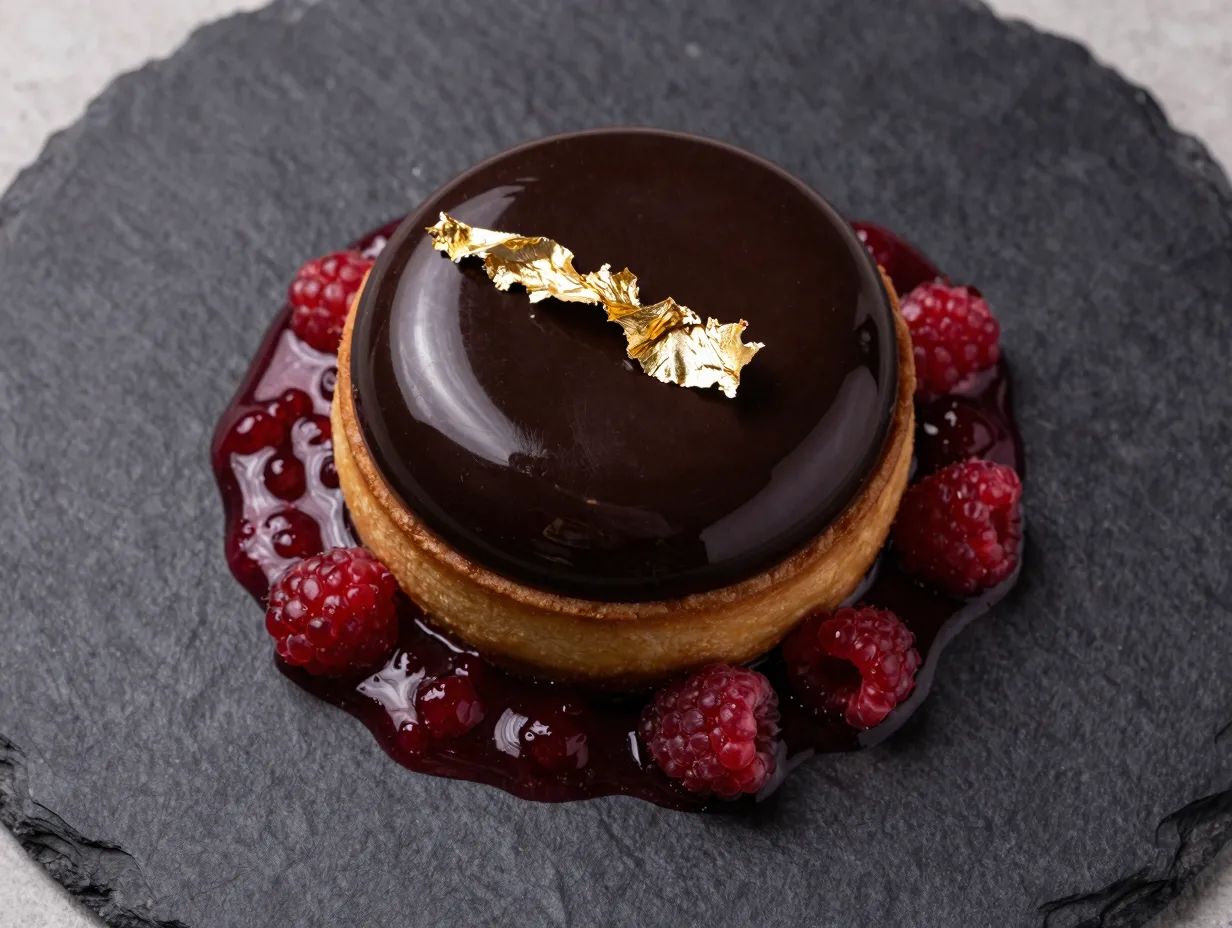
The Valrhona Chocolate Délice is arguably the most visually striking chocolate dessert in the fine dining canon. It features a silky, intensely dark ganache set inside a buttery sweet pastry shell, finished with edible gold leaf and a vibrant raspberry coulis that cuts through the richness [1]. The contrast between the deep, almost bitter chocolate and the bright, acidic raspberry is what makes this dessert memorable rather than merely indulgent.
Key technique: The ganache must be made with high-cocoa-content Valrhona chocolate (70% or above) and poured at the correct temperature, around 35°C (95°F), to achieve that perfectly smooth, mirror-like surface. Overheating the cream or adding it too quickly will cause the ganache to split.
Home cook tip: Edible gold leaf is sold in small booklets online. Apply it with a dry, fine-tipped brush to a completely set ganache surface. Even a single small sheet transforms the visual impact dramatically.
Quick reference:
| Component | Key Ingredient | Critical Step |
|---|---|---|
| Ganache | Valrhona 70% dark chocolate | Emulsify at correct temp |
| Pastry shell | Cold butter, icing sugar | Blind bake fully |
| Raspberry coulis | Fresh or frozen raspberries | Strain seeds completely |
| Garnish | Edible gold leaf | Apply to dry surface |
2. Dark Chocolate Fondant with Vanilla Bean Ice Cream
Difficulty: Intermediate
Wow factor: High (the molten center reveal never gets old)
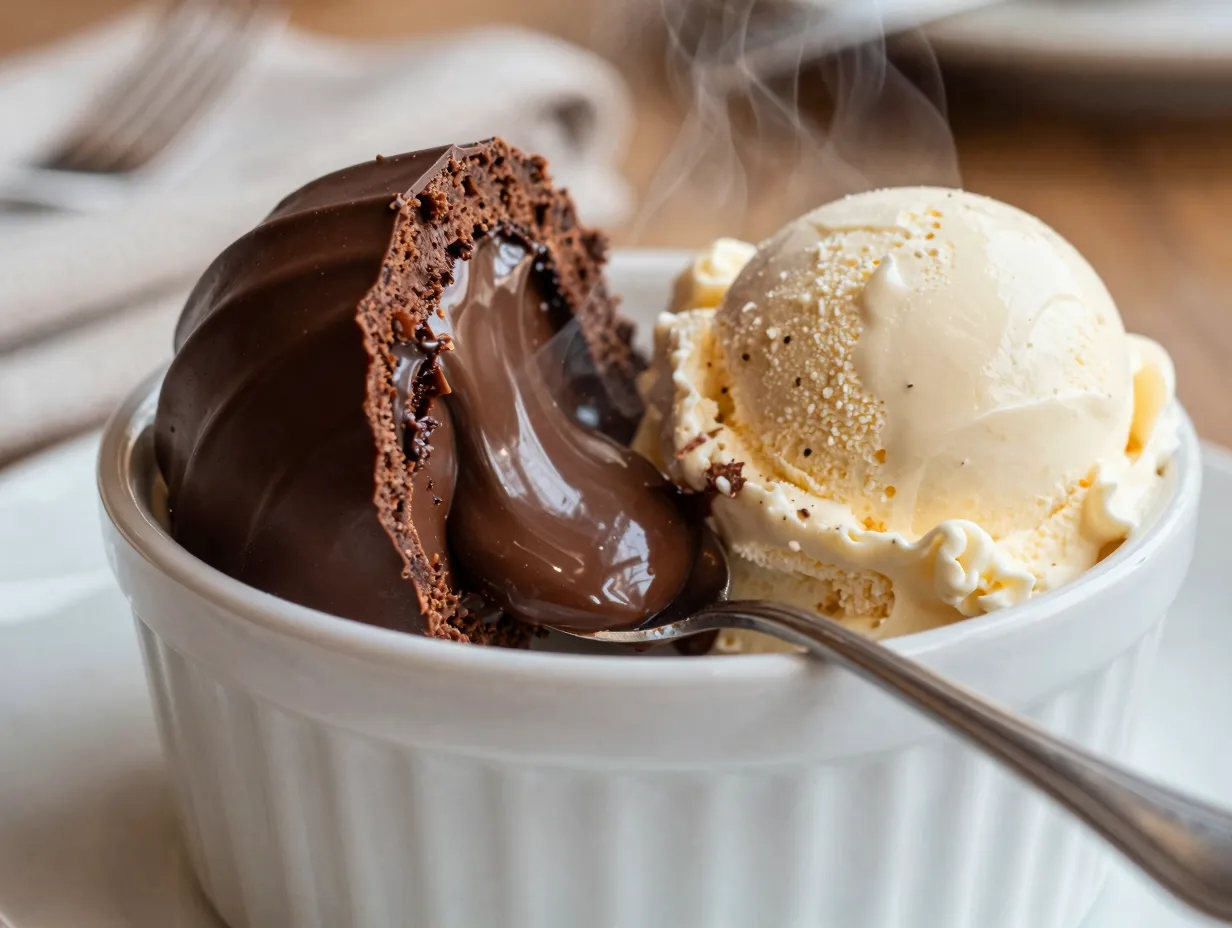
The dark chocolate fondant, sometimes called a lava cake, is one of the most requested fine dining desserts in home kitchens for good reason. When executed correctly, it delivers a perfectly set exterior that collapses inward to reveal a flowing, glossy molten center the moment a spoon breaks through [2]. Paired with a quenelle of real vanilla bean ice cream, the temperature contrast between hot and cold makes every bite dramatic.
The most common home cook mistake is overbaking. The fondant should feel barely set on the outside and still wobble slightly in the center when you remove it from the oven. A 30-second difference can mean the gap between molten and fully set.
Home cook tip: Make the batter the night before, fill your buttered ramekins, and refrigerate. Bake straight from the fridge, adding 2 extra minutes to the baking time. This make-ahead approach is exactly what restaurant kitchens use for service efficiency.
“The fondant is not a forgiving dessert, it rewards precision. But once you nail the timing, it becomes your most reliable showstopper.”, a principle every pastry chef I have spoken with agrees on.
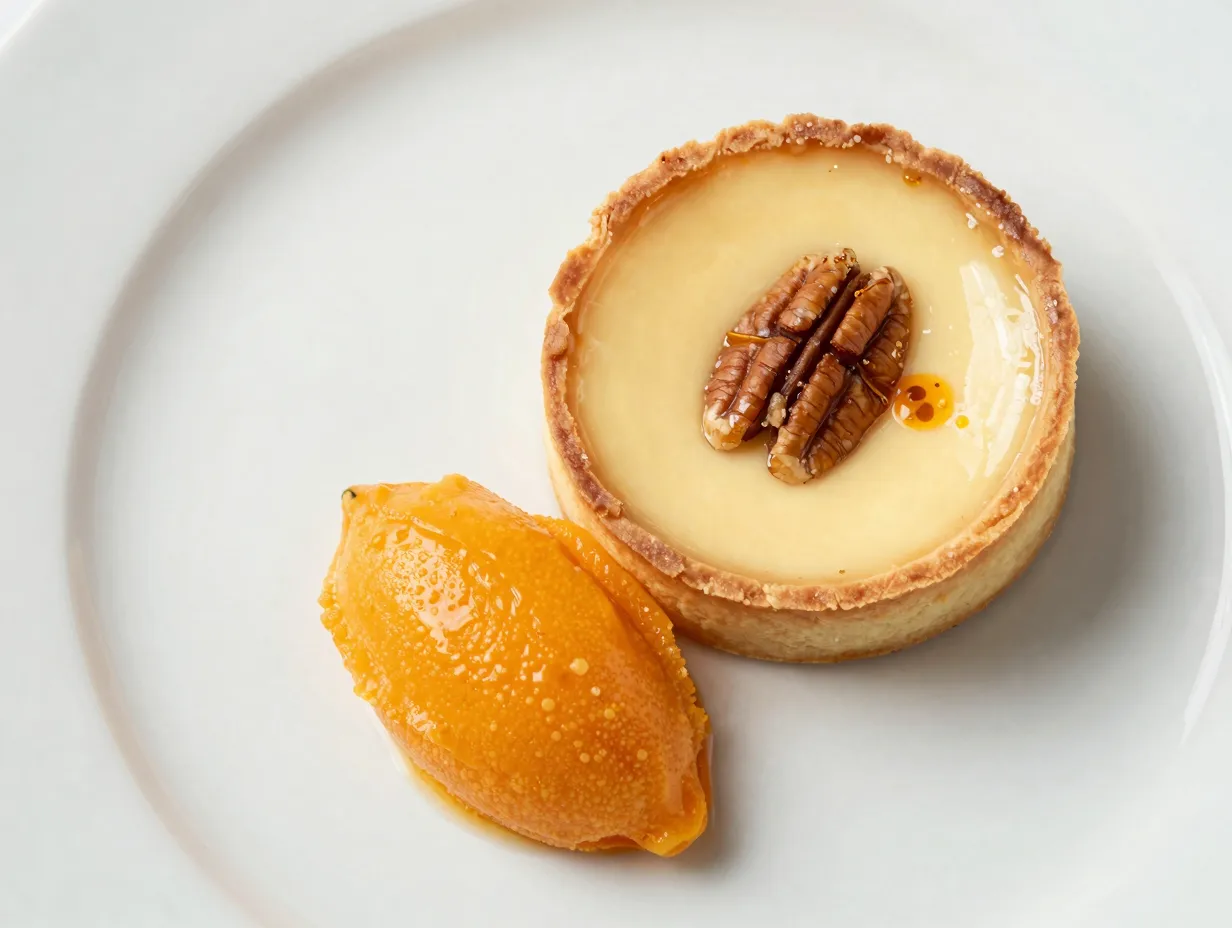
3. Pecan Crème Brûlée Tart with Tangerine Sorbet
Difficulty: Intermediate
Wow factor: High
This refined dessert elevates the classic crème brûlée by infusing the custard with toasted pecan and setting it inside a crisp tart shell rather than a ramekin [3]. The addition of tangerine sorbet on the side introduces a citrus brightness that lifts the entire plate. Some versions also include a light pumpkin espuma, an airy foam, which adds a third textural dimension.
The brûléeing step is where home cooks often hesitate. A proper kitchen blowtorch is worth the investment; it gives you far more control than an oven grill. The goal is a paper-thin, uniformly amber sugar crust that shatters cleanly with the back of a spoon.
Skill builder: Making sorbet at home without an ice cream machine is possible using the “fork method”, freezing the base in a shallow tray and scraping it with a fork every 30 minutes over 3 hours. The texture is slightly more granular than machine-churned sorbet, but the flavor is identical.
4. Deconstructed Apple Pie
Difficulty: Advanced
Wow factor: Very high (conceptually surprising)
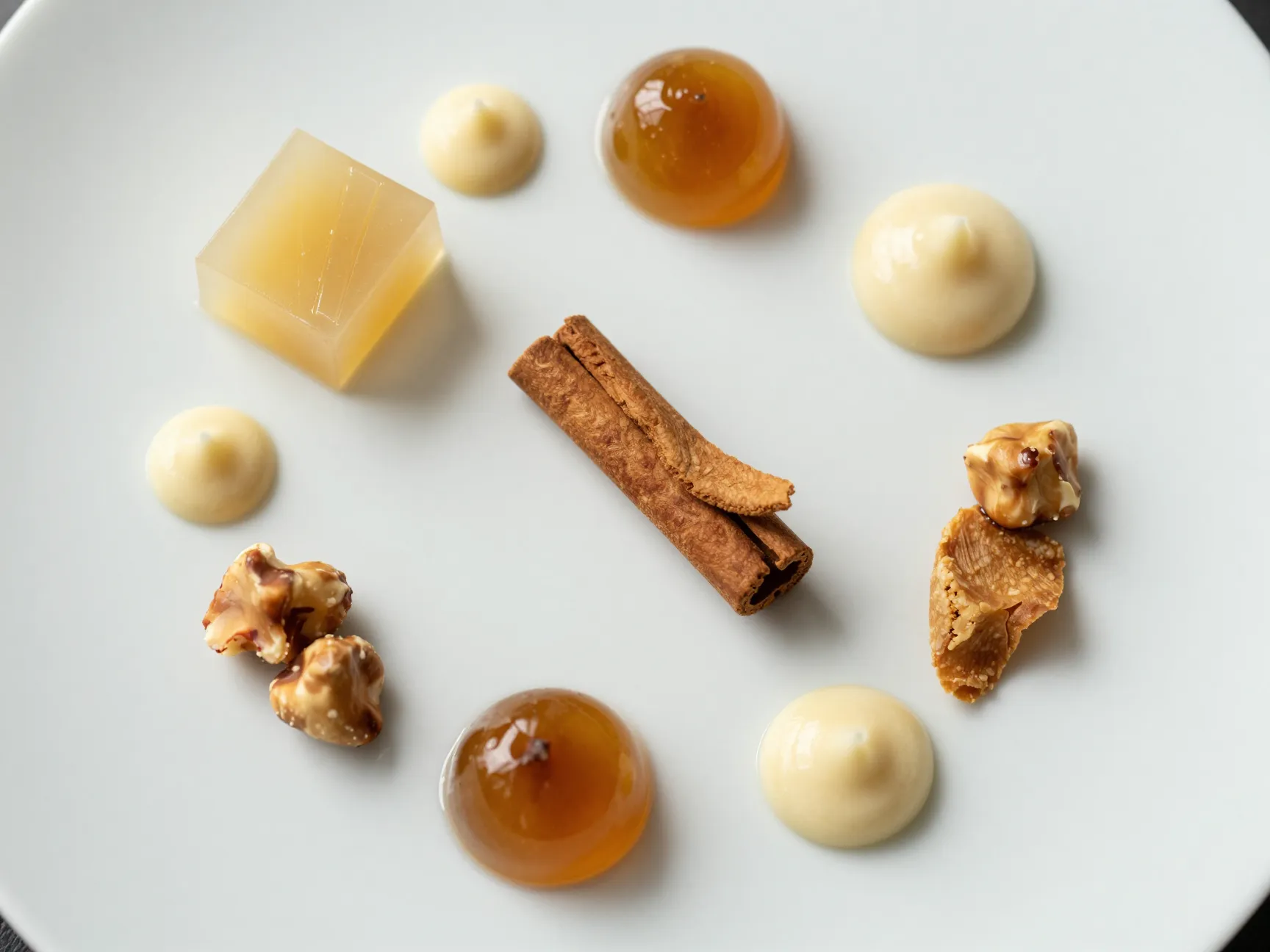
Deconstruction is one of the defining moves of modern fine dining pastry. Rather than baking a traditional apple pie, this approach separates every component, apple cubes set with pectin, apple gel, crème pâtissière, cinnamon tuile, and hazelnut praline, and arranges them artfully on the plate so each element can be tasted individually and in combination [4].
The genius of this format is that it lets the home cook showcase technique. A perfectly clear apple gel signals precision. A paper-thin cinnamon tuile signals skill. When all the components come together on the plate, the diner experiences the familiar flavor memory of apple pie but in a completely new form.
Component breakdown:
- Apple cubes set with pectin: cook apple pieces in a light syrup, add pectin, set in a mold, and cut into precise cubes
- Apple gel: blend cooked apple with a small amount of agar-agar, set flat, and cut into geometric shapes
- Crème pâtissière: classic pastry cream, piped in dots or quenelles
- Cinnamon tuile: thin batter spread on a silicone mat, baked at low heat until crisp
- Hazelnut praline: caramelized sugar and toasted hazelnuts, blitzed to a paste or left as shards
Home cook tip: Prepare each component separately over two days. The gel and praline keep well; the tuile should be made the day of service to stay crisp.
5. Lobster Tail Dessert
Difficulty: Advanced to Expert
Wow factor: Extraordinary
This is the most ambitious entry on this list. Created by Chef Claus Henriksen of Michelin-starred Restaurant MOTA in Denmark, the Lobster Tail Dessert combines lobster, chocolate, and almond ice cream into a single cohesive plate inspired by the shape of the iconic lobster tail pastry [5]. It is an award-winning dish that challenges every assumption about what a dessert can be.
The savory-sweet combination works because the natural sweetness of lobster pairs surprisingly well with dark chocolate and the nuttiness of almond. The dish is built around contrasts: oceanic and earthy, cold and room temperature, familiar pastry shape and unexpected ingredient.
Is this realistic at home? Yes, but it requires planning. The almond ice cream can be made 2-3 days ahead. The chocolate components can be prepared the day before. The lobster element, typically a small, precisely cooked portion of lobster tail, is prepared and plated to order. The result is genuinely extraordinary and will be the most talked-about course at any dinner party.
A note on sourcing: Use fresh lobster tails from a reputable fishmonger. Frozen tails work but require careful thawing to preserve texture.
6. Earl Grey and Yuzu Texture Study
Difficulty: Advanced
Wow factor: Very high (intellectually and sensorially engaging)
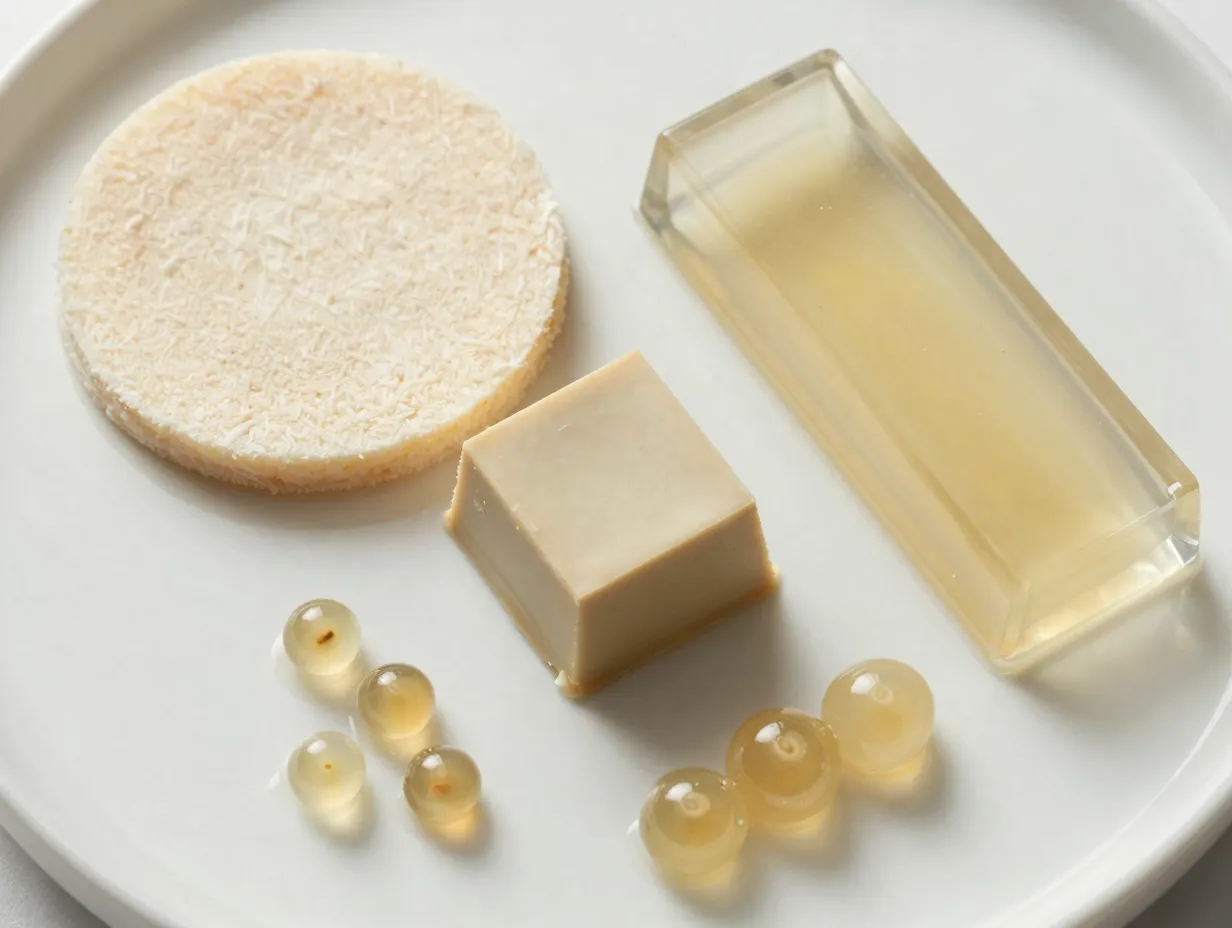
The “texture study” format is a signature of contemporary fine dining pastry. This version explores the pairing of floral Earl Grey tea and sharp yuzu citrus across multiple preparations: Earl Grey ganache, yuzu jelly, coconut dacquoise, and yuzu pearls made via spherification [6]. Every element on the plate carries the same two flavors but in a completely different form and texture.
Spherification basics for home cooks:
Spherification uses sodium alginate and calcium chloride to create liquid-filled spheres with a thin gel membrane, those “pearls” you see in high-end restaurants. The process sounds intimidating but requires only two food-grade chemicals and a syringe or squeeze bottle.
- Dissolve 0.5g sodium alginate per 100ml of yuzu juice using an immersion blender.
- Prepare a setting bath: 5g calcium chloride per 1 liter of water.
- Drop small amounts of the alginate mixture into the calcium bath using a syringe.
- Spheres form within 1-2 minutes. Rinse in clean water before plating.
The coconut dacquoise, a light, chewy meringue-based layer made with desiccated coconut, provides the structural base for the plate and can be baked up to two days ahead.
7. Mini Carrot Cake with White Chocolate
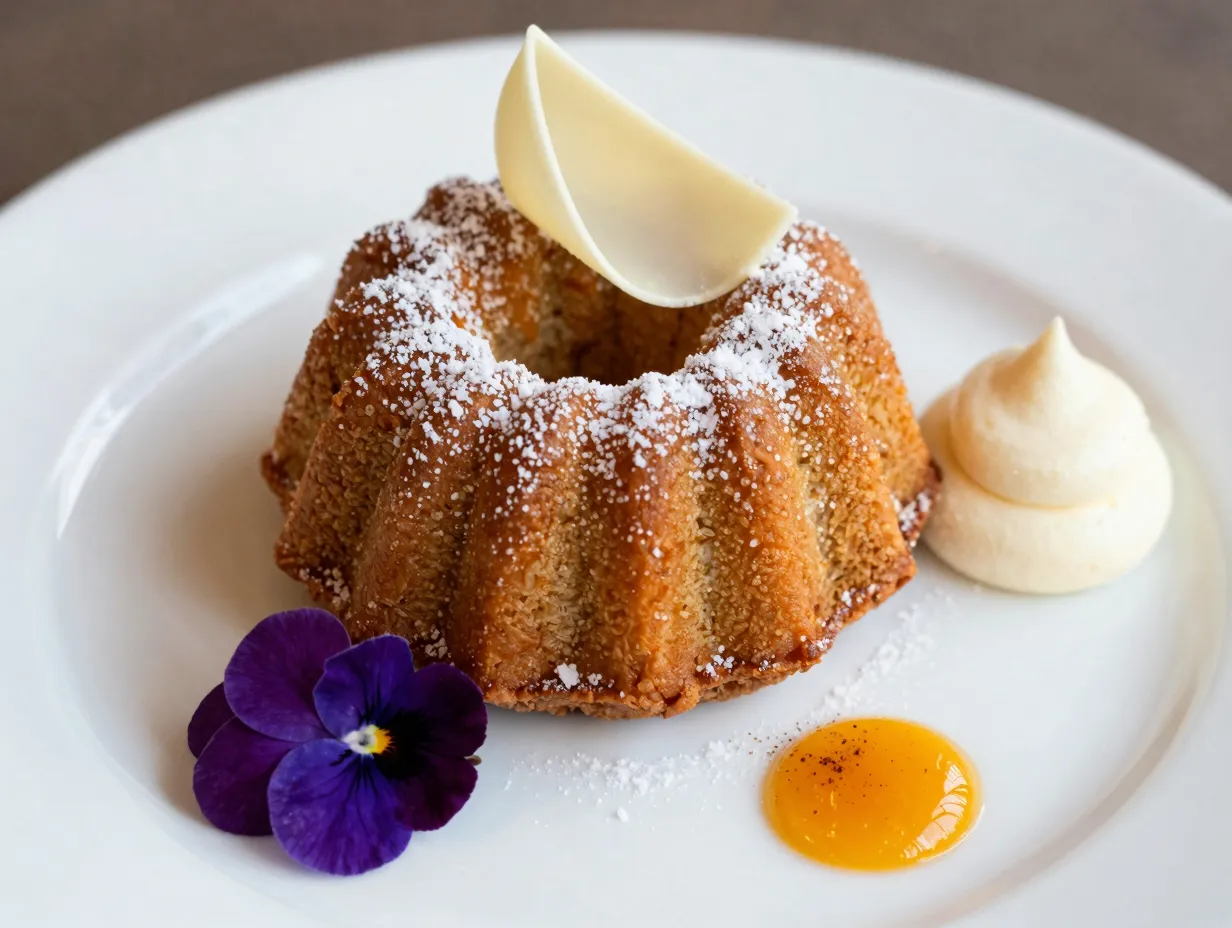
Difficulty: Beginner to Intermediate
Wow factor: Moderate to high (elegant presentation elevates a familiar flavor)
Not every fine dining dessert needs to be technically demanding. The mini carrot cake with white chocolate proves that familiar flavors, elevated through presentation and quality ingredients, can hold their own on a restaurant-quality plate [7]. Baked in mini Bundt molds for a refined shape, finished with shaved white chocolate and a light cream cheese quenelle, this dessert is accessible to most home bakers while still looking genuinely impressive.
What makes it fine dining:
- Individual portions (mini Bundt molds, approximately 8cm diameter) rather than a sliced cake
- Shaved white chocolate applied with a vegetable peeler for delicate curls
- A small dot of spiced gel or caramel sauce on the plate for color contrast
- Fresh edible flowers or microherbs as a garnish
Home cook tip: Use good-quality white chocolate (at least 28% cocoa butter) for shaving. Cheap compound white chocolate will crumble rather than curl.
8. Meringue 2.0
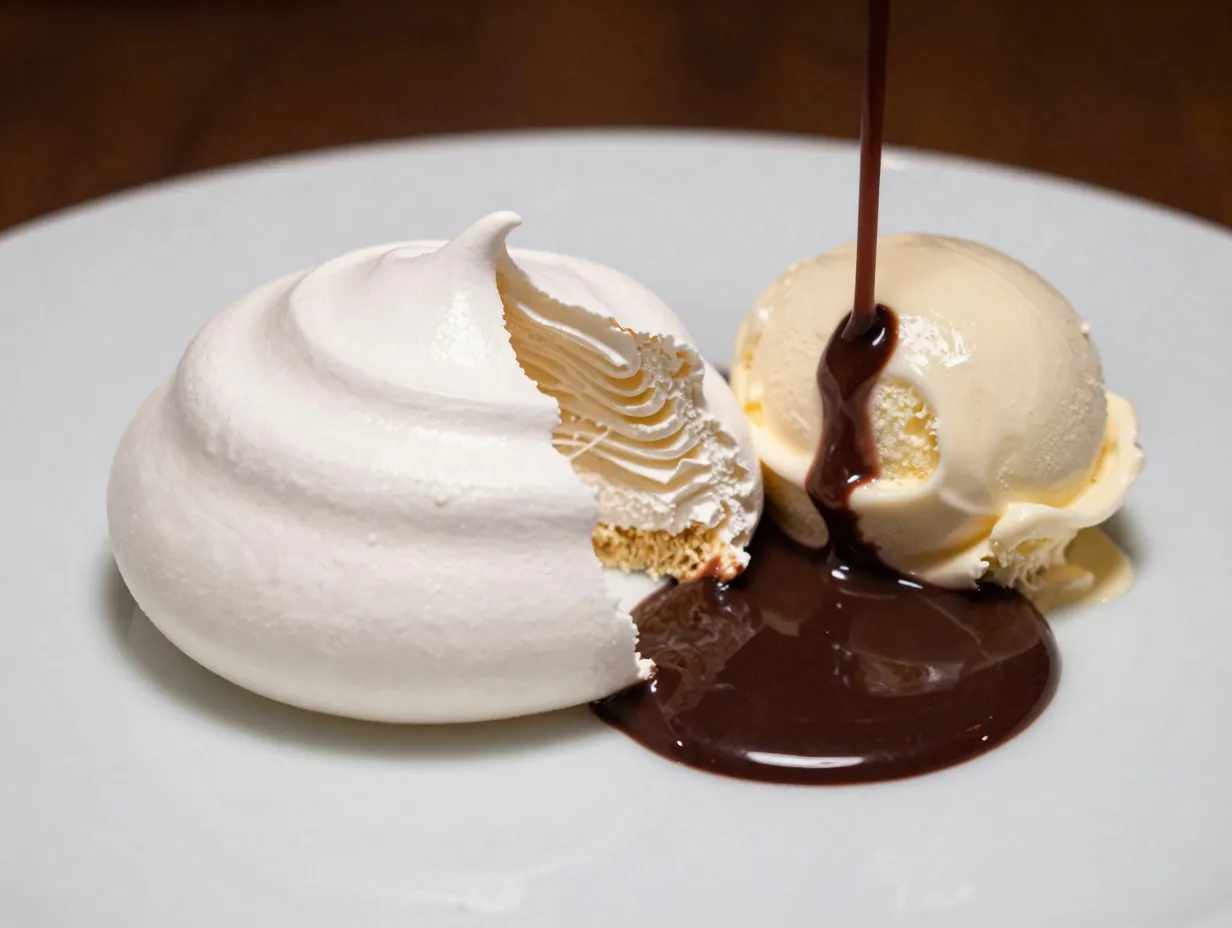
Difficulty: Intermediate
Wow factor: High (visually dramatic, texturally surprising)
The Costardi Brothers, known for their innovative approach to Italian desserts, reimagined the humble meringue as a contemporary fine dining statement [8]. Their “Meringue 2.0” features a crisp outer shell with a soft, marshmallow-like interior, served with a warm dark chocolate sauce and a quenelle of vanilla ice cream. The presentation subverts expectations: the meringue looks like a classic Italian confection but delivers a completely modern experience.
Technique focus, achieving the dual texture:
The key is a Swiss meringue base (egg whites and sugar heated over a double boiler to 60°C before whipping) piped into large domes and baked at very low heat (80-90°C) for 2-3 hours. This dries the outside completely while leaving the center soft and yielding. The result is a single piece that offers two textures in one bite.
Chocolate sauce tip: Use a 60% dark chocolate ganache thinned with a little warm cream to a pourable consistency. Serve warm, poured tableside for theatrical effect.
9. Strawberry and Champagne Vacherin
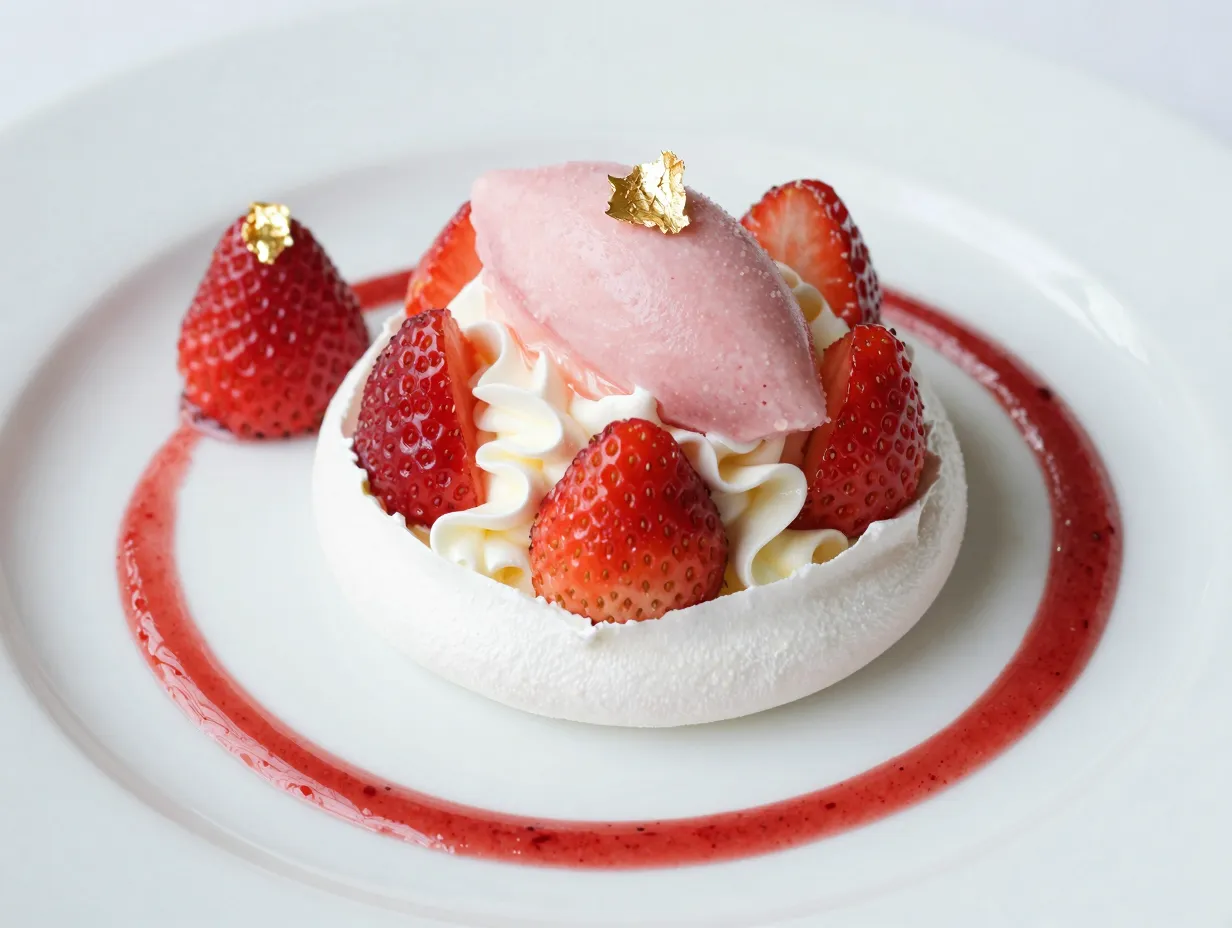
Difficulty: Advanced
Wow factor: Very high (celebratory and visually spectacular)
The vacherin is one of the great classical French desserts: a shell of crisp meringue filled with whipped cream and ice cream or sorbet, assembled to order. The strawberry and champagne version brings a celebratory quality that makes it ideal for closing a special dinner. The champagne is used two ways, as a sorbet base and as a light gel that coats the fresh strawberries, creating a layered flavor experience within a single elegant structure.
Assembly sequence (critical for home success):
- Bake meringue discs and curved side pieces 1-2 days ahead; store in an airtight container.
- Churn champagne sorbet and freeze at least 4 hours before service.
- Whip cream to soft peaks immediately before assembly.
- Assemble the vacherin shell, fill with sorbet and cream, and serve within 10 minutes to preserve the textural contrast between crisp meringue and cold filling.
Plating suggestion: Place the assembled vacherin on a smear of strawberry coulis, add three or four champagne gel cubes, and finish with a single perfect strawberry and a small piece of edible gold leaf for a genuinely restaurant-quality finish.
Essential Tools and Ingredients for Fine Dining Desserts at Home
Before attempting any of these nine recipes, a small investment in the right tools will dramatically improve your results.
Tools worth buying:
- Kitchen blowtorch (for brûléeing and chocolate work)
- Set of ring molds in 6cm, 8cm, and 10cm diameters
- Squeeze bottles (for coulis, gel, and sauce plating)
- Offset spatula (for spreading and smoothing)
- Fine-mesh sieve (for smooth coulis and custards)
- Silicone Bundt molds in mini sizes
- Instant-read thermometer (essential for ganache and custard work)
Ingredients to keep stocked:
- Valrhona or Callebaut dark chocolate (70%+)
- Real vanilla beans (not extract)
- Edible gold leaf (small booklet)
- Sodium alginate and calcium chloride (for spherification)
- Agar-agar (for gels and jellies)
- Food-grade pectin
Plating Principles That Elevate Every Dessert
Plating is where many home cooks leave points on the table. The dessert can taste extraordinary but look unremarkable if it is simply placed in the center of a white plate. Fine dining plating follows a few consistent principles that are easy to apply at home.
The rule of odd numbers: Arrange garnishes in groups of three or five, never two or four. Odd numbers feel more natural and dynamic to the eye.
Height and layering: Use at least two different heights on the plate, a flat coulis smear, a standing tuile, a quenelle of ice cream. Flat plates look unfinished.
Negative space: Do not fill the entire plate. Leave at least 40% of the plate surface clean. White space directs the eye to the food.
Color contrast: Every plate should have at least three distinct colors. A chocolate fondant benefits from the cream of vanilla ice cream and the red of a berry coulis. The color contrast signals flavor contrast.
Sauce placement: Use a squeeze bottle to place coulis in dots, swooshes, or precise pools. Never pour sauce directly from a ladle onto a composed plate.
Conclusion
The nine desserts in this guide, from the approachable Valrhona Chocolate Délice and Dark Chocolate Fondant to the ambitious Lobster Tail Dessert and Earl Grey Yuzu Texture Study, prove that fine dining desserts are not the exclusive territory of professional pastry kitchens. They are the product of good ingredients, learnable techniques, and the willingness to practice.
My recommendation is to start with Dessert 2 (the Dark Chocolate Fondant) or Dessert 7 (the Mini Carrot Cake) to build confidence, then progress to the deconstructed and texture study formats as your skills develop. Every technique you master, ganache making, spherification, brûléeing, tuile baking, is transferable across dozens of other recipes.
Actionable next steps:
- Choose one dessert from this list that matches your current skill level and commit to making it this week.
- Order any specialty ingredients (Valrhona chocolate, sodium alginate, edible gold leaf) now so they are ready when you are.
- Practice the plating principles on a simple dessert first, even a store-bought brownie plated with squeeze-bottle coulis and a quenelle of ice cream will teach you the fundamentals.
- Document your results with photos. Comparing your first attempt to your third is one of the most motivating things you can do as a home cook.
The showstopping finish to a great meal does not require a Michelin-starred kitchen. It requires exactly what you already have: curiosity, a good oven, and the confidence to try.
References
[1] Valrhona Chocolate Delice With Gold Leaf Raspberry Coulis A 1 Michelin Star Dessert You Can Make At Home – https://allcookings.com/2026/03/28/valrhona-chocolate-delice-with-gold-leaf-raspberry-coulis-a-1-michelin-star-dessert-you-can-make-at-home/?utm_source=openai
[2] Dark Chocolate Fondant With Vanilla Bean Ice Cream – https://allcookings.com/2026/03/30/dark-chocolate-fondant-with-vanilla-bean-ice-cream/?utm_source=openai
[3] Pecan Creme Brulee Tart Tangerine Sorbet – https://www.finedininglovers.com/explore/recipes/pecan-creme-brulee-tart-tangerine-sorbet?utm_source=openai
[4] Dekonstruierter Apfelkuchen – https://lacrema-patisserie.com/dekonstruierter-apfelkuchen?utm_source=openai
[5] Lobster Tail Dessert Michelin Recipe From Restaurant Mota – https://nordic-chefs.com/be-inspired/lobster-tail-dessert-michelin-recipe-from-restaurant-mota/?utm_source=openai
[6] Earl Grey Yuzu Texture Study Michelin Star Dessert – https://allcookings.com/2026/04/05/earl-grey-yuzu-texture-study-michelin-star-dessert/?utm_source=openai
[7] 15 Gourmet Fine Dining Desserts Recipes – https://www.fillmyrecipebook.com/web-stories/15-gourmet-fine-dining-desserts-recipes/?utm_source=openai
[8] Meringue Recipes – https://www.greatitalianchefs.com/collections/meringue-recipes?utm_source=openai