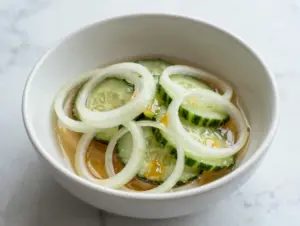
8 Ways to Make the Creamiest Asian Cucumber Salad You’ve Ever Tasted
A single bowl of cucumber salad converted me from a skeptic into a devoted fan at a small Sichuan restaurant in 2019. The cucumbers were cool, glossy, and coated in a dressing so deeply savory and creamy that I asked the server what was in it three times. The answer, it turned out, was not one secret ingredient but a precise layering of eight techniques, each one doing a specific job. That experience is exactly why I put together this guide on 8 Ways to Make the Creamiest Asian Cucumber Salad You’ve Ever Tasted, so you can recreate that same restaurant-quality result at home without guesswork.
Disclosure: This post contains affiliate links. As an Amazon Associate, we earn from qualifying purchases, and at no extra cost to you.
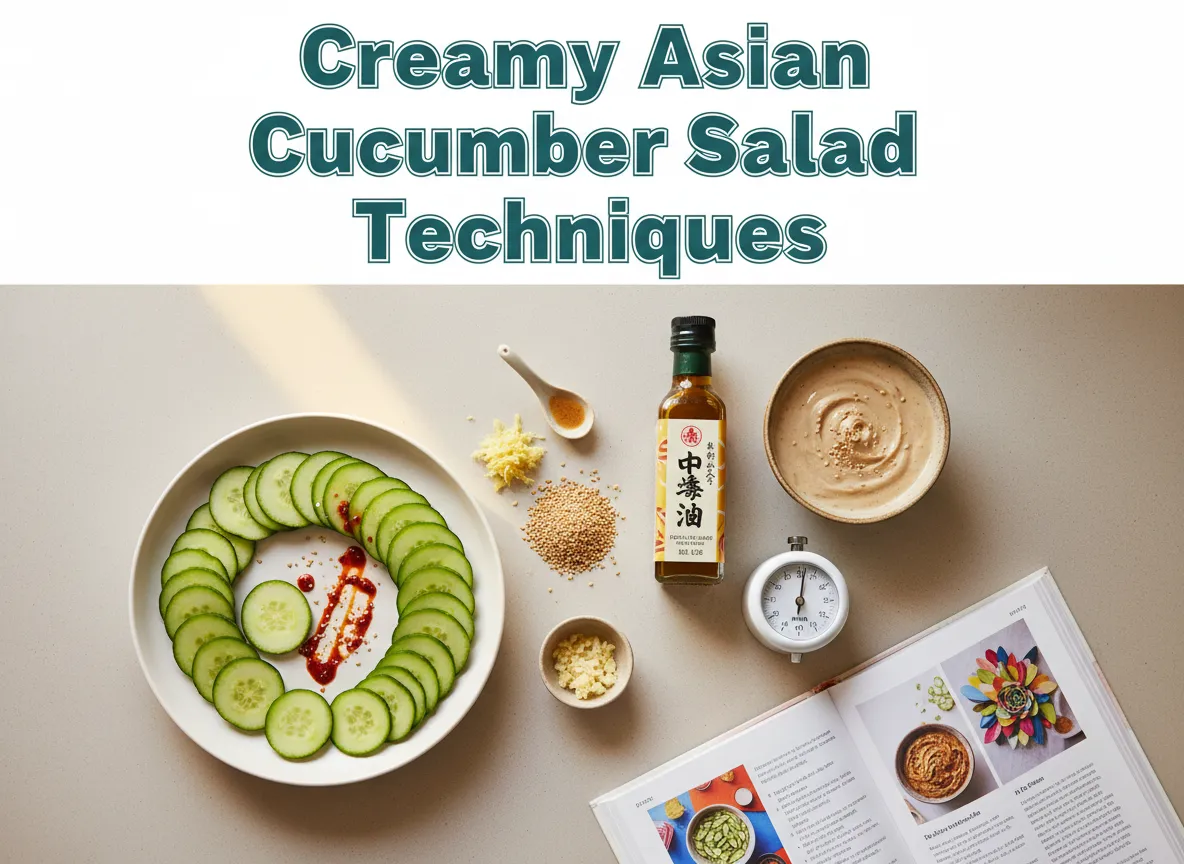
Whether you are new to Asian-inspired salads or you have been making them for years and want to level up, these eight methods address every variable: cucumber selection, moisture control, dressing balance, aromatics, heat, texture, and timing. Master all eight and you will never serve a watery, flat, or underwhelming cucumber salad again.
Key Takeaways
- Choosing the right cucumber variety is the single most important foundation for a creamy, non-watery salad.
- Salting and draining cucumbers before dressing them is a non-negotiable step that most home cooks skip.
- A balanced dressing built on toasted sesame oil, rice vinegar, and a touch of sugar creates the creamy, tangy flavor profile that defines this dish.
- Aromatics like fresh garlic and ginger, plus a drizzle of chili oil, add the depth that separates a good salad from an unforgettable one.
- Allowing the finished salad to marinate for at least 20 minutes before serving is the final step that pulls everything together.
Why Most Homemade Asian Cucumber Salads Fall Short
Before diving into the eight ways to make the creamiest Asian cucumber salad you have ever tasted, it helps to understand why so many attempts miss the mark. The most common failure is excess water. Cucumbers are roughly 96 percent water by weight. When you slice them and dress them immediately, that water bleeds into the dressing within minutes, diluting every flavor you worked to build. The result is a thin, pale, watery bowl that tastes more like a sad side dish than a vibrant salad.
The second most common problem is a one-dimensional dressing. Many recipes call for soy sauce and sesame oil and stop there. That combination is pleasant, but it lacks the acid, the sweetness, and the aromatic heat that make a truly creamy Asian cucumber salad memorable. The third issue is timing: serving the salad immediately after dressing it, before the flavors have had any chance to meld.
All three problems are solvable. The eight methods below address each one systematically.
The 8 Core Techniques for the Creamiest Results
1. Choose Persian or English Cucumbers Over Standard Varieties
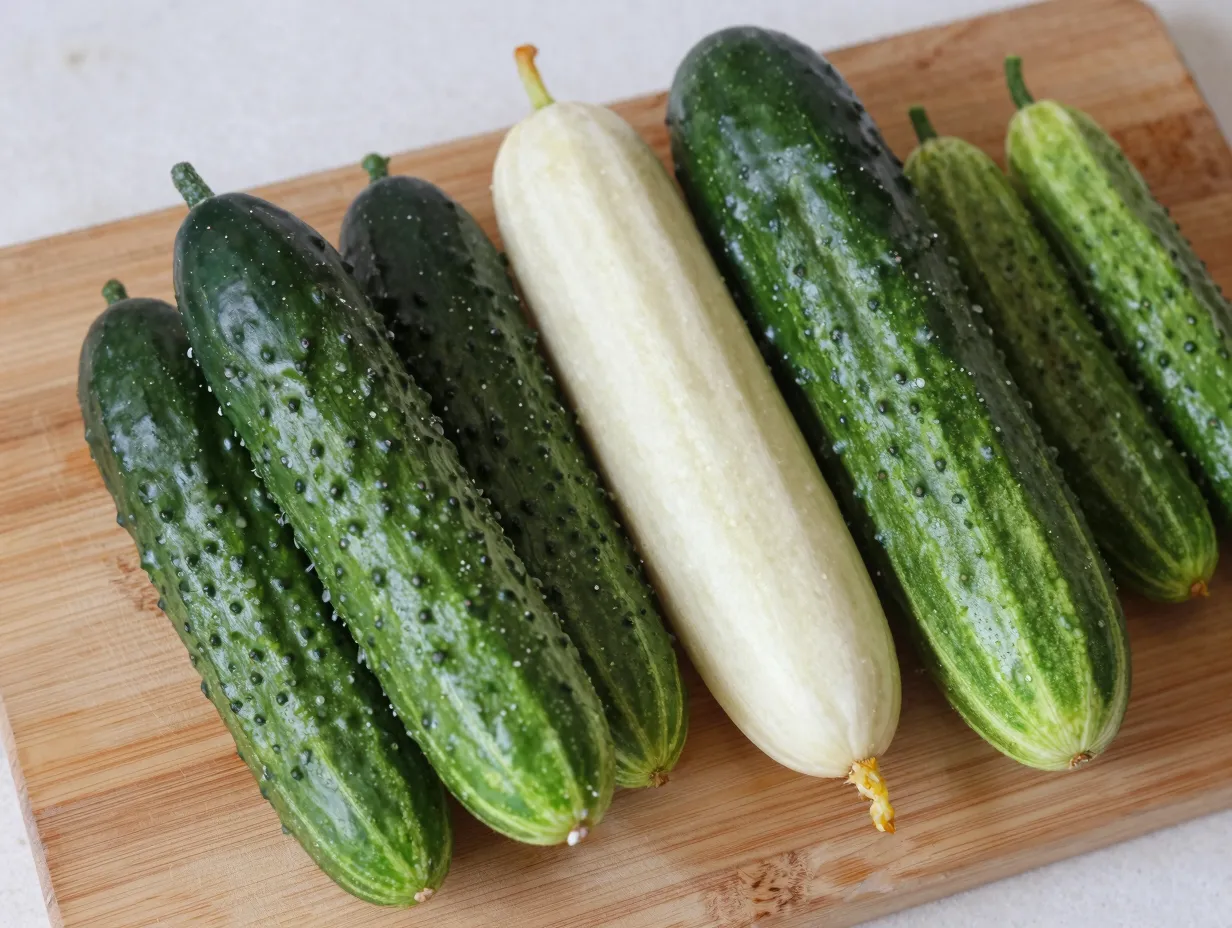
The foundation of any great salad is the right raw ingredient. Standard garden cucumbers, the large, dark-green ones common in most grocery stores, have thick, bitter skins and a core packed with large seeds surrounded by excess moisture. That combination works against everything you are trying to achieve.
Persian cucumbers are shorter, thinner-skinned, and nearly seedless. Their flesh is dense and crisp, and they hold their texture even after salting and marinating. English cucumbers are a strong second choice: longer than Persian varieties but still thin-skinned, with small, underdeveloped seeds and a mild, slightly sweet flavor that absorbs dressing beautifully [1].
| Variety | Skin | Seeds | Moisture | Best Use |
|---|---|---|---|---|
| Persian | Thin, edible | Minimal | Low | Top choice for creamy salads |
| English | Thin, edible | Small | Low-medium | Excellent substitute |
| Standard | Thick, bitter | Large | High | Not recommended |
| Kirby | Medium | Few | Medium | Acceptable in a pinch |
If neither Persian nor English cucumbers are available, Kirby cucumbers (the small pickling variety) are an acceptable substitute. Whatever you choose, avoid peeling the skin entirely, the skin adds color, a slight bitterness that balances the dressing, and structural integrity that keeps slices from turning mushy.
2. Salt the Cucumbers to Draw Out Excess Moisture
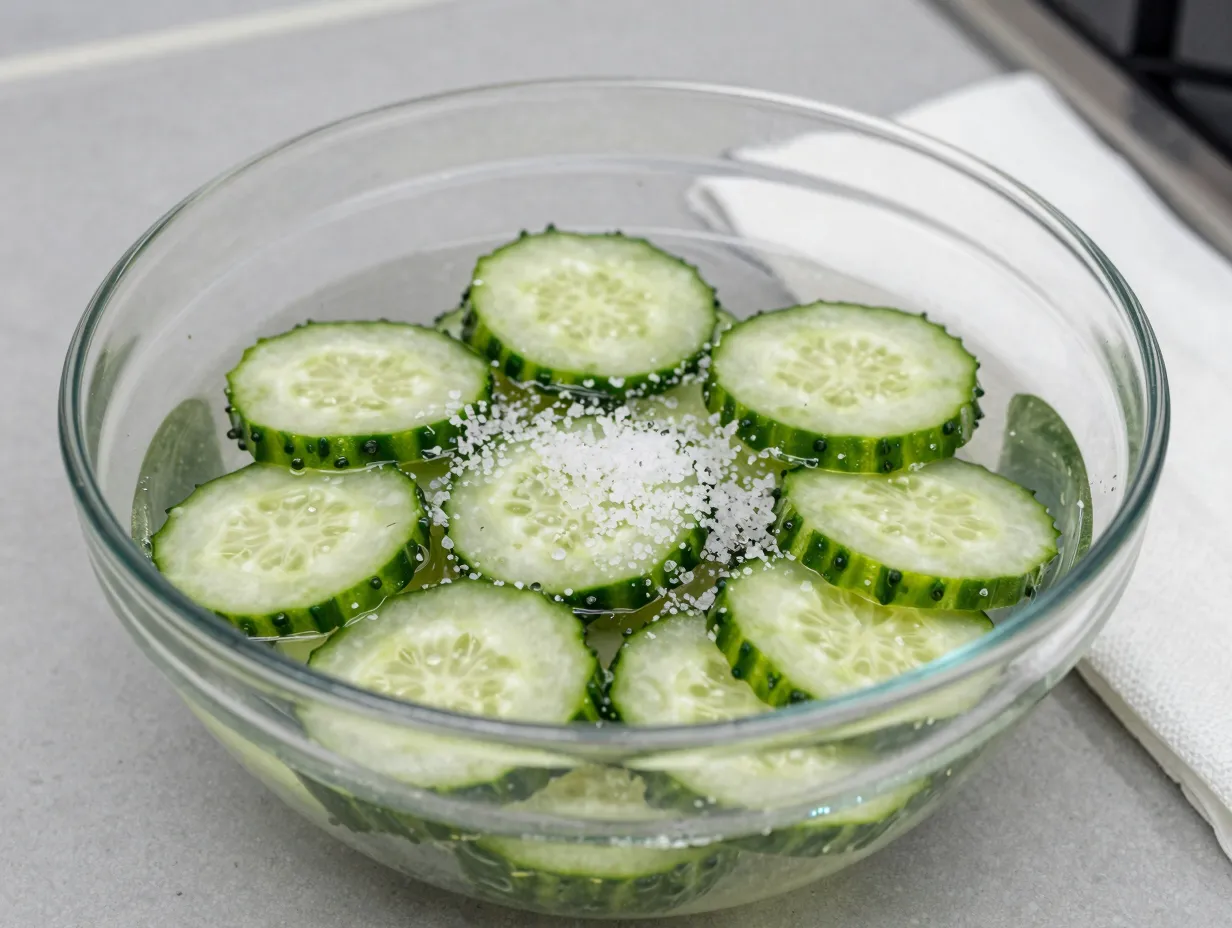
This is the step most home cooks skip, and it is the one that makes the biggest difference. After slicing your cucumbers to your preferred thickness, I prefer about one-quarter inch for a satisfying bite, place them in a colander or on a wire rack set over a bowl. Sprinkle generously with kosher salt, toss to coat, and let them sit for 15 to 20 minutes [1].
During that time, osmosis does the work. Salt draws water out of the cucumber cells, and you will be surprised by how much liquid collects in the bowl beneath. After the resting period, pat the cucumbers dry with paper towels or a clean kitchen towel. Do not rinse them, rinsing washes away the salt that has already begun seasoning the flesh from the inside out.
Why this matters for creaminess: When cucumbers are pre-salted and dried, the dressing clings to them rather than sliding off into a puddle at the bottom of the bowl. The surface of each slice becomes slightly tacky, almost like a sponge ready to absorb flavor. This is what creates that glossy, coated appearance that signals a truly creamy salad.
“The difference between a salted and an unsalted cucumber in a dressed salad is the difference between a creamy coating and a watery soup. One step, enormous impact.”
3. Build a Balanced Dressing with Rice Vinegar and Sugar
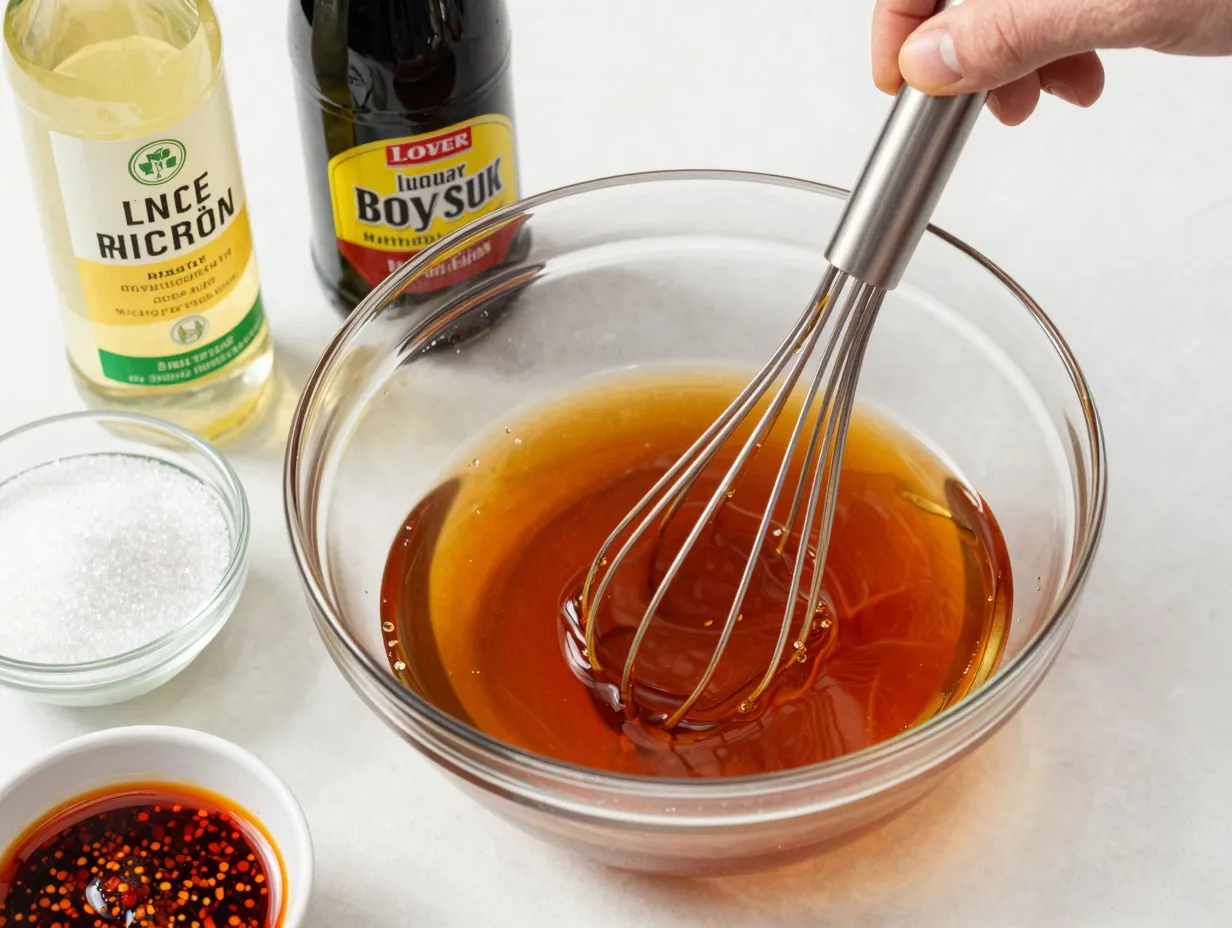
The dressing is where the creaminess lives. A common misconception is that “creamy” in this context means dairy-based. It does not. The creaminess of a great Asian cucumber salad comes from emulsification, the way oil, acid, and a small amount of sugar bind together into a cohesive, glossy sauce that coats every slice evenly.
Rice vinegar is the acid of choice for this style of salad [1]. It is milder and less sharp than white wine vinegar or apple cider vinegar, with a subtle sweetness that complements rather than overwhelms the other flavors. Use unseasoned rice vinegar so you can control the salt and sugar levels yourself.
The sugar serves two purposes: it balances the acidity of the vinegar, and it helps the dressing emulsify by giving it body. A small amount, typically one to two teaspoons per batch, is all you need. If you prefer a less sweet profile, a few drops of honey work equally well and add a faint floral note.
A reliable base dressing ratio for four servings:
- 3 tablespoons soy sauce (low-sodium preferred)
- 2 tablespoons rice vinegar (unseasoned)
- 1.5 tablespoons toasted sesame oil
- 1 to 2 teaspoons sugar or honey
- 1 teaspoon chili oil (adjust to taste)
Whisk these together vigorously before adding aromatics. The goal is a unified sauce, not separated layers of oil and vinegar.
4. Add Toasted Sesame Oil for Nutty Depth and Richness
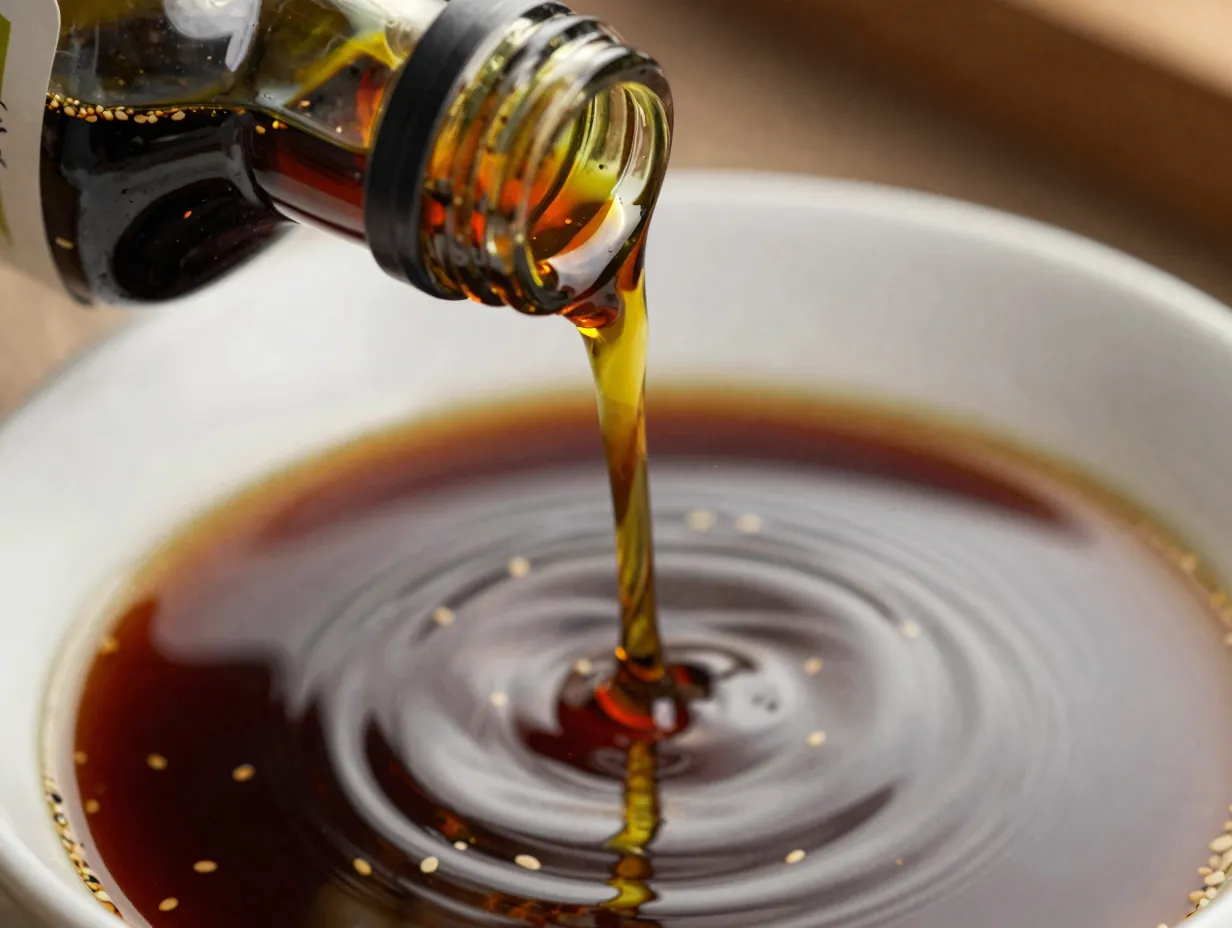
Toasted sesame oil is arguably the single ingredient most responsible for the characteristic flavor of a great Asian cucumber salad. It is important to distinguish between toasted (also called roasted) sesame oil and plain sesame oil. Toasted sesame oil is made from roasted sesame seeds and has a deep amber color with an intensely nutty, almost smoky aroma. Plain sesame oil is pale, mild, and largely flavorless by comparison [1].
Use toasted sesame oil as a finishing oil, not a cooking oil. Its flavor compounds are volatile and break down under heat. Add it to the dressing after all other ingredients are combined, or drizzle it over the finished salad just before serving for maximum aromatic impact.
A common mistake is using too much. Toasted sesame oil is powerful. One to one and a half tablespoons per four-person batch is the sweet spot. More than that and the oil can become cloying and overpower the brightness of the vinegar and the freshness of the cucumber.
5. Incorporate Fresh Garlic and Ginger for Aromatic Complexity
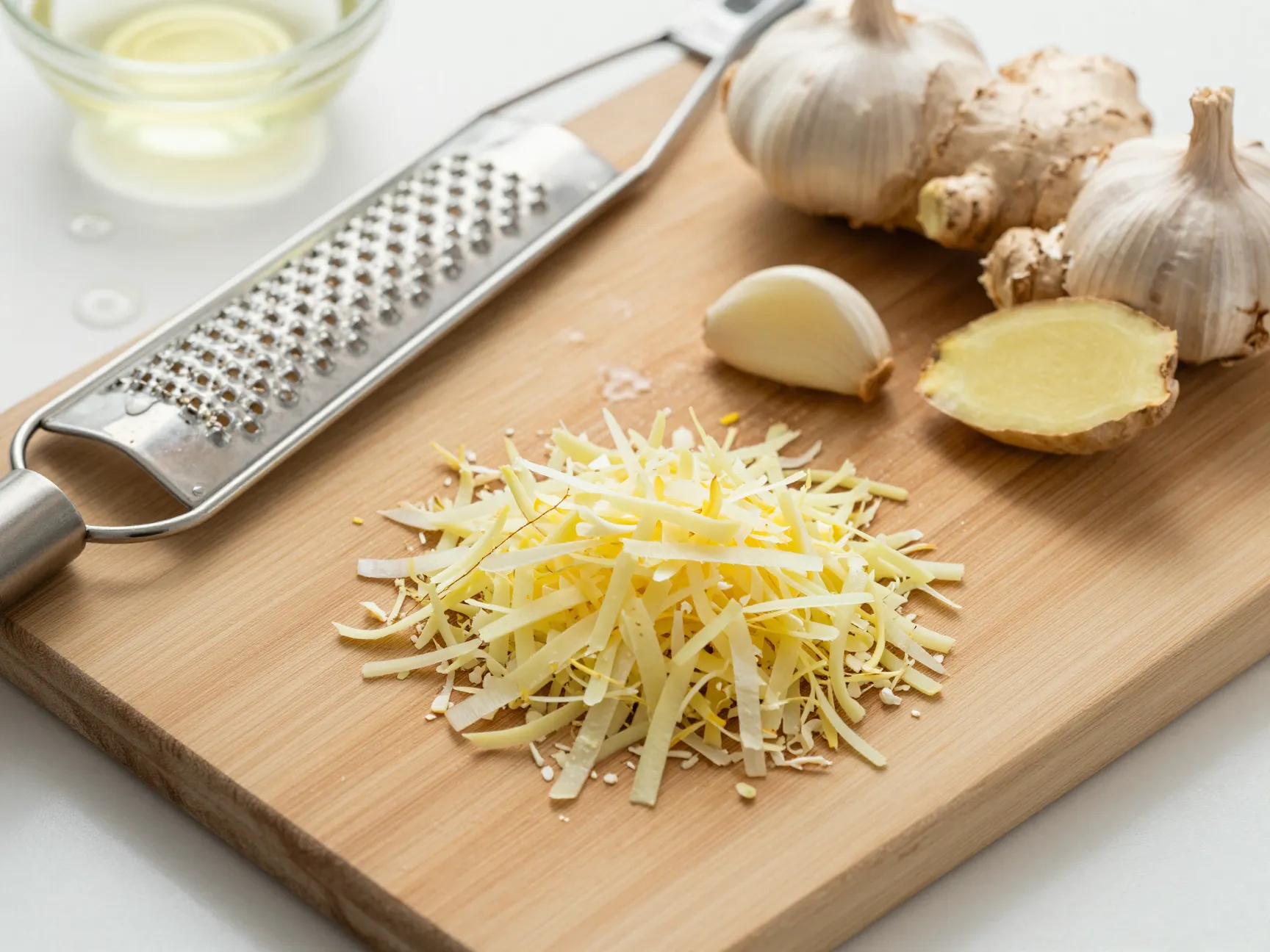
Garlic and ginger are the aromatic backbone of this salad. They are what give it that unmistakable, layered quality that makes you want to keep eating even after you are full. Dried garlic powder and ground ginger are not substitutes here, the volatile oils in fresh aromatics behave completely differently in a cold dressing than their dried counterparts [1].
For garlic, use a microplane or fine grater rather than a knife. Finely grated garlic releases more of its pungent allicin compounds and distributes more evenly through the dressing. If you prefer a milder garlic flavor, let the minced garlic sit in the rice vinegar for five minutes before adding the other dressing ingredients. The acid partially neutralizes the sharpness while preserving the flavor.
For ginger, peel a fresh knob and grate it on the same microplane. Fresh ginger adds a warm, slightly spicy note that is distinct from the heat of chili oil, it is more floral and less aggressive. Start with about half a teaspoon of grated ginger per batch and adjust upward to your preference.
The combination of garlic and ginger also contributes to the perceived creaminess of the dressing. Both contain natural emulsifying compounds that help bind the oil and vinegar together into a more cohesive sauce.
6. Drizzle in Chili Oil for Heat and Dimension
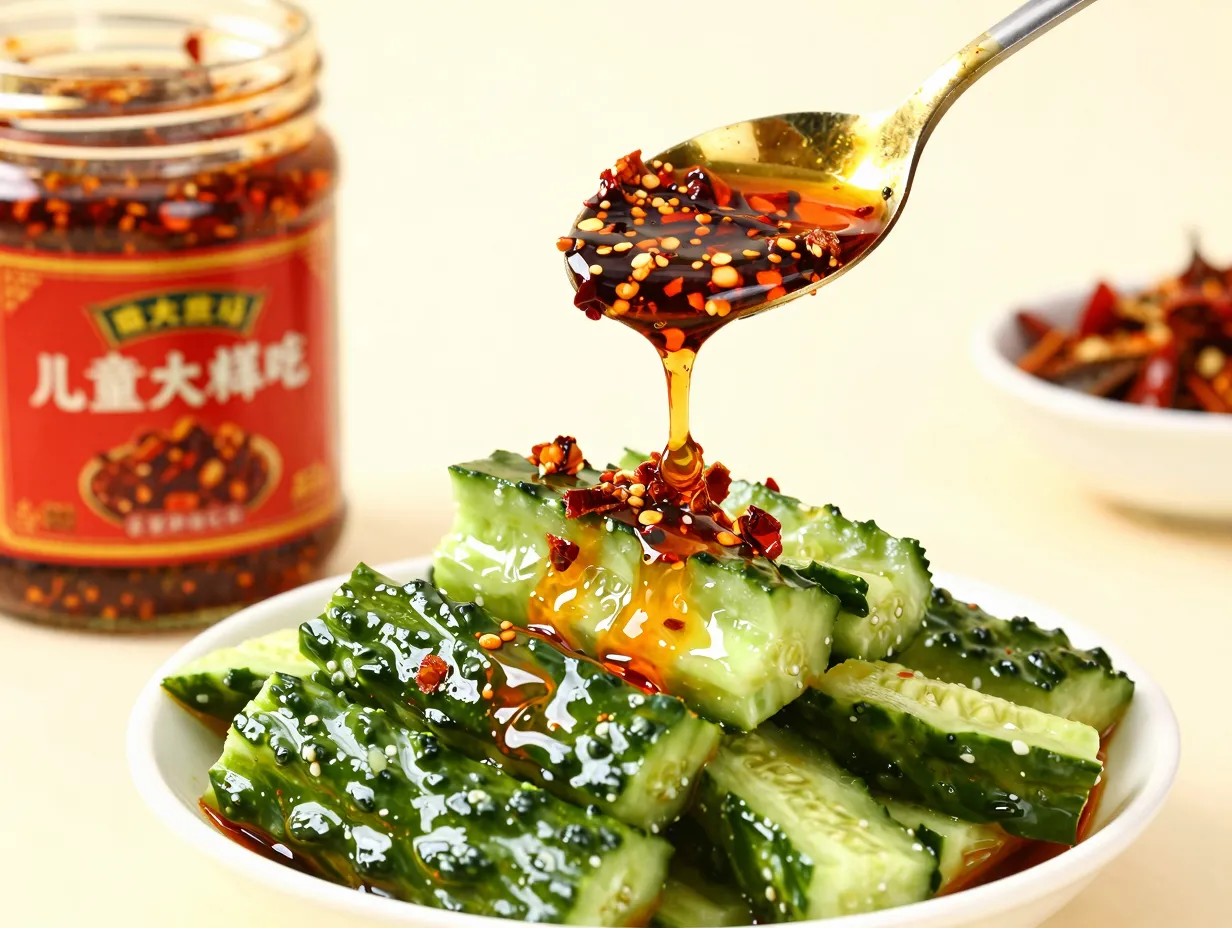
Chili oil is the ingredient that separates a pleasant cucumber salad from one that creates a genuine craving. It adds heat, yes, but more importantly it adds dimension, a warm, slow-building spiciness that interacts with the sesame oil and vinegar in ways that neither ingredient achieves alone [1].
The best chili oil for this application is a Chinese-style chili crisp, such as the widely available Lao Gan Ma brand or any artisan version made with dried chilies, garlic, and sometimes Sichuan peppercorns. The crispy bits in chili crisp add a secondary texture element that complements the crunch of the cucumber.
If you are sensitive to heat, start with half a teaspoon and taste as you go. The goal is not to make the salad spicy for its own sake, it is to add enough heat that you notice a gentle warmth on the back of your palate after swallowing. That warmth is what makes the salad feel complete rather than flat.
For those who enjoy significant heat, a full tablespoon of chili crisp plus a small amount of fresh sliced red chili as a garnish creates a salad with real fire.
7. Garnish with Toasted Sesame Seeds for Crunch and Visual Appeal
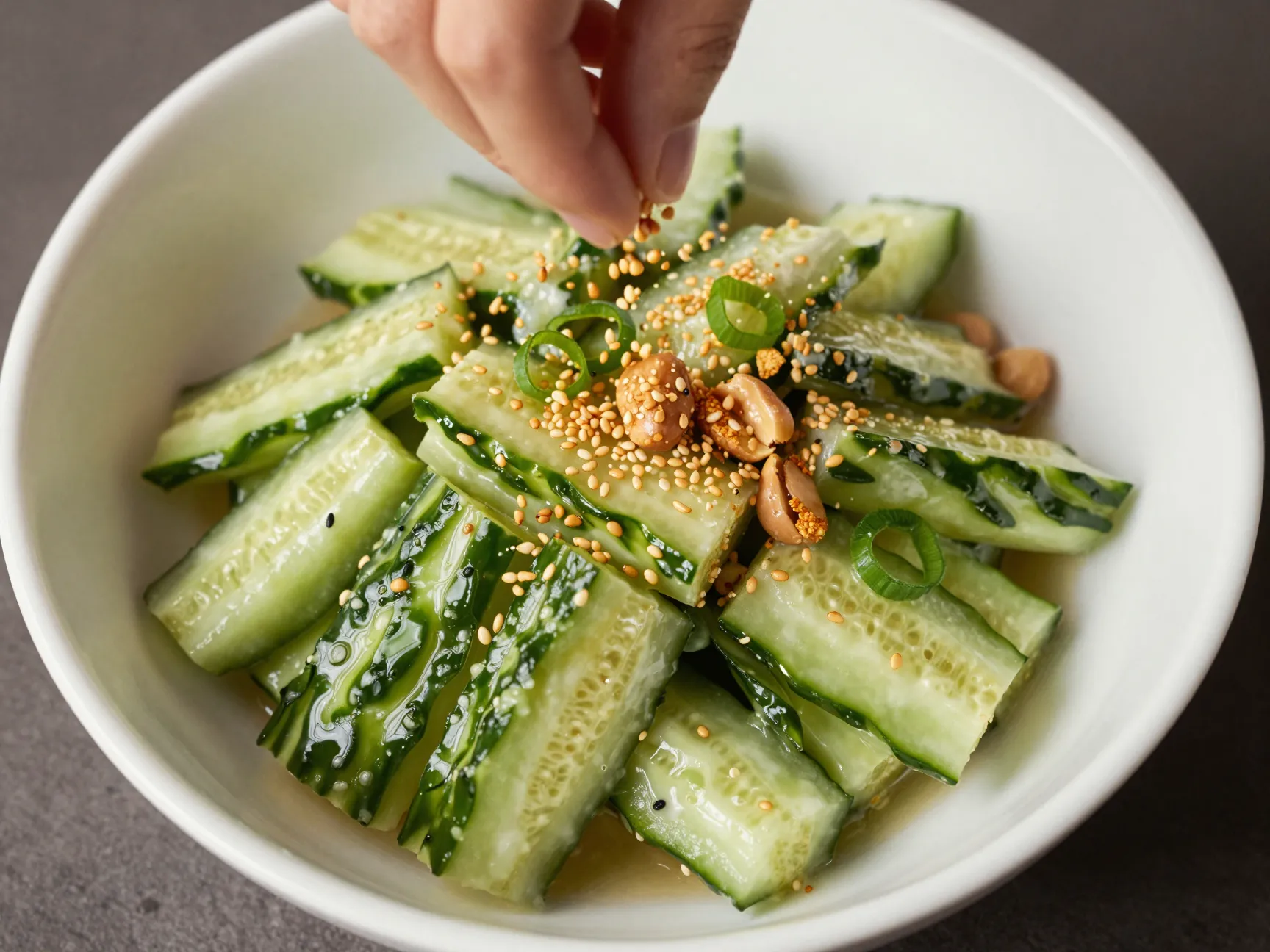
Texture contrast is one of the most underappreciated elements of a great salad. The cucumbers are cool and crisp; the dressing is glossy and smooth. What the dish needs is a third textural element, something dry and crunchy that cuts through the richness of the sesame oil and provides a pleasant contrast with every bite.
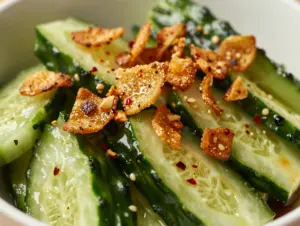
Toasted sesame seeds fill that role perfectly [1]. Raw sesame seeds are edible but largely flavorless. Toasting them in a dry skillet over medium heat for two to three minutes, stirring constantly, transforms them. They turn golden, develop a nutty fragrance, and acquire a satisfying crunch that raw seeds simply cannot provide.
A tablespoon of toasted sesame seeds scattered over the finished salad does three things:
- Adds textural contrast that makes each bite more interesting.
- Reinforces the nutty sesame flavor already present in the oil.
- Provides visual appeal, the golden seeds against the green cucumber and glossy dressing look restaurant-ready.
You can also add thinly sliced scallions and a small amount of toasted crushed peanuts for additional texture and flavor layering. Both are common additions in various regional Asian cucumber salad traditions.
8. Allow the Salad to Marinate Before Serving
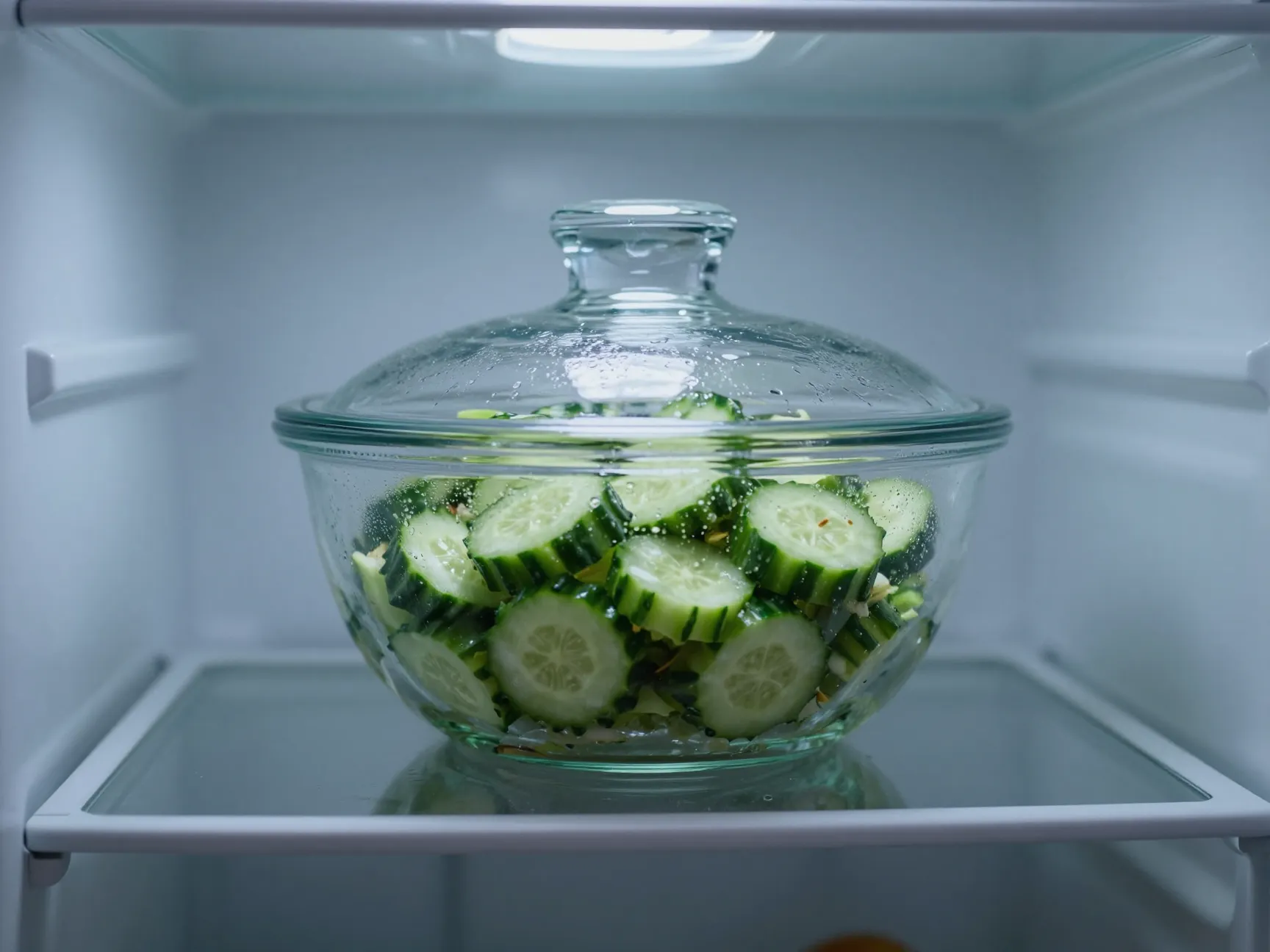
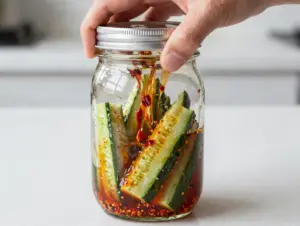
This final technique is the one that ties everything together. After combining the salted, dried cucumbers with the dressing, cover the bowl and refrigerate it for at least 20 minutes before serving [1]. Thirty minutes is better. An hour is better still, up to about two hours, beyond that, the cucumbers begin to soften too much and lose their appealing crunch.
During the marinating period, several things happen simultaneously:
- The dressing penetrates the surface of the cucumber slices, seasoning them from the outside in.
- The flavors of the garlic, ginger, sesame oil, and vinegar meld into a unified profile rather than tasting like separate components.
- The sugar in the dressing draws a small additional amount of moisture from the cucumbers, which then mingles with the dressing to create a slightly thicker, more cohesive sauce.
- The chili oil’s heat distributes evenly through the bowl rather than concentrating in one area.
The result is a salad that tastes like it was made by someone who has been cooking this dish for decades. The flavors are integrated, the texture is right, and the dressing clings to every slice in a way that simply does not happen when the salad is served immediately.
“Patience is the most underused ingredient in home cooking. Twenty minutes of marinating does more for this salad than any single ingredient swap.”
Putting All 8 Ways Together: A Complete Recipe Framework
Now that you understand each of the 8 ways to make the creamiest Asian cucumber salad you have ever tasted, here is how they work together in sequence:
Step-by-Step Framework (Serves 4)
- Select 1 pound of Persian or English cucumbers (Way 1).
- Slice to one-quarter inch thickness. Salt generously and drain for 15-20 minutes. Pat dry (Way 2).
- Whisk together soy sauce, rice vinegar, and sugar until sugar dissolves (Way 3).
- Add toasted sesame oil to the dressing and whisk to emulsify (Way 4).
- Grate garlic and ginger directly into the dressing. Stir to combine (Way 5).
- Add chili oil. Taste and adjust heat level (Way 6).
- Combine cucumbers and dressing. Toss thoroughly to coat every slice.
- Cover and refrigerate for 20-30 minutes (Way 8).
- Plate and garnish with toasted sesame seeds and sliced scallions (Way 7).
Total active time: 15 minutes
Total time including marinating: 35-45 minutes
Common Mistakes to Avoid
Even with all eight techniques in hand, a few persistent mistakes can undermine your results. Here are the most common ones and how to avoid them.
Using too much soy sauce. Soy sauce is salty and strong. More than three tablespoons in a four-serving batch will overpower the vinegar and sesame oil, turning a nuanced dressing into something that just tastes like salty soy sauce. If you want more umami depth without more salt, add a small amount of oyster sauce or a few drops of fish sauce instead.
Skipping the drying step after salting. Salting draws out moisture, but if you do not pat the cucumbers dry afterward, all that extracted water goes right back into your dressing. The drying step is as important as the salting step.
Using pre-bottled minced garlic. Jarred garlic is preserved in citric acid and has a distinctly different, and less appealing, flavor than fresh. The difference is noticeable in a cold salad where the garlic is not cooked. Always use fresh.
Dressing the salad too far in advance. While 20-30 minutes of marinating is ideal, leaving the dressed salad overnight makes the cucumbers too soft and the dressing too diluted. This salad is best made and consumed the same day.
Variations Worth Exploring in 2026
The core recipe is a starting point. Once you have mastered the eight foundational techniques, these variations are worth exploring.
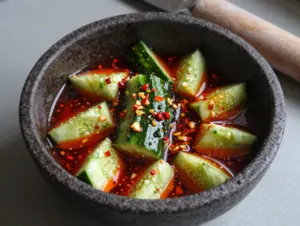
Smashed cucumber version: Instead of slicing, place whole cucumbers on a cutting board and smash them with the flat side of a knife or a heavy pan. The irregular surfaces and crevices created by smashing absorb dressing far more effectively than clean-cut slices. This is a traditional Chinese preparation that produces an even creamier result.
Creamy tahini addition: A tablespoon of tahini whisked into the dressing adds genuine creaminess in the dairy sense, thick, rich, and coating. Tahini pairs naturally with sesame oil and adds a Middle Eastern-Asian fusion note that works surprisingly well.
Miso-based dressing: Replacing half the soy sauce with white miso paste adds fermented depth and a slightly sweet, complex umami that elevates the entire salad. White miso is milder than red; start there.
Tofu addition: Cubed silken tofu added to the finished salad absorbs the dressing beautifully and adds protein, turning the salad into a more substantial dish.
Conclusion
The 8 ways to make the creamiest Asian cucumber salad you have ever tasted are not complicated individually. Choosing the right cucumber, salting and drying it properly, building a balanced dressing, adding toasted sesame oil, incorporating fresh aromatics, using chili oil for heat, finishing with toasted sesame seeds, and allowing time for the flavors to marinate, each step is straightforward. The power comes from doing all eight in sequence, letting each technique build on the last.
My recommendation: make this salad this week using the complete eight-step framework. Do not skip the salting step, do not use dried garlic, and do not serve it immediately. Those three commitments alone will produce a result that surprises you.
Once you are comfortable with the base recipe, try the smashed cucumber variation or add tahini to the dressing. The core techniques remain the same; the variations simply give you new directions to explore. In 2026, with access to high-quality ingredients at most grocery stores, there is no reason to settle for a flat, watery cucumber salad when a creamy, restaurant-quality version takes only 35 minutes and eight deliberate steps.
References
[1] Asian Cucumber Salad – https://panlasangpinoy.com/asian-cucumber-salad/?utm_source=openai