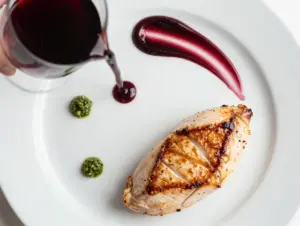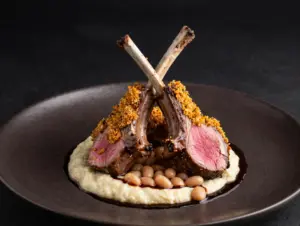
8 Fine Dining Plating Techniques That Will Transform Your Home Cooking
A study by Oxford University researchers found that diners rated the same food as tasting significantly better, up to 29% more flavorful, when it was plated with care and artistry compared to a casually assembled dish. The plate you serve on, the negative space you leave, the height you build, none of these change the recipe, but all of them change the experience. That is the quiet power behind the 8 fine dining plating techniques that will transform your home cooking, and it is why professional chefs treat presentation as a discipline equal to flavor.
Disclosure: This post contains affiliate links. As an Amazon Associate, we earn from qualifying purchases, and at no extra cost to you.
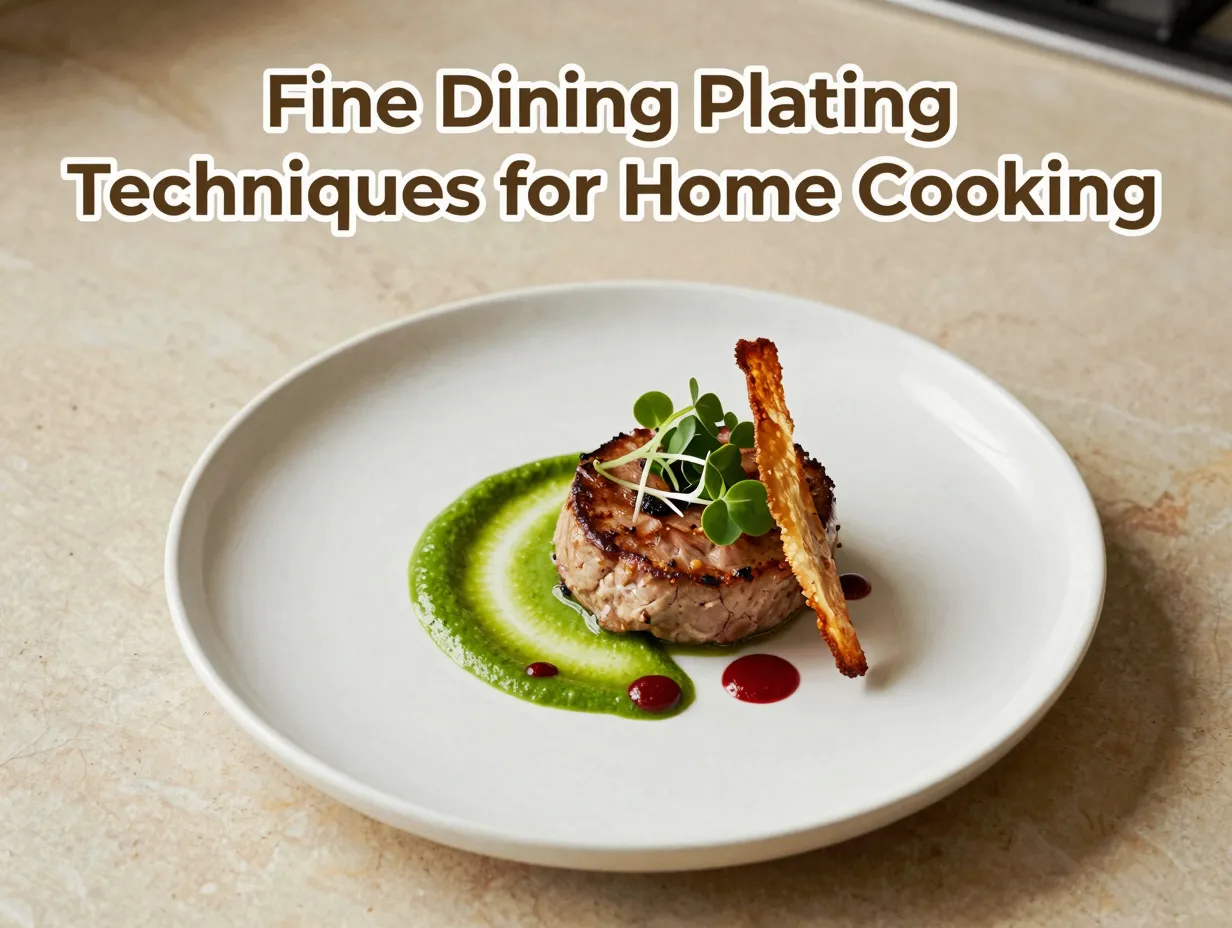
I learned this the hard way at a dinner party years ago. I had spent six hours on a braised short rib that tasted extraordinary. I dumped it into a bowl, ladled sauce over it, and watched my guests take polite, unenthusiastic bites. The food was the same. The presentation was an afterthought. The meal felt forgettable. That night changed how I approach cooking entirely.
This guide breaks down the exact techniques used in Michelin-starred kitchens, adapted for home cooks, so you can elevate every plate you serve.
Key Takeaways
- Strategic plate selection sets the visual foundation before any food touches the surface
- The rule of thirds and deliberate negative space make plated food look more intentional and refined [2]
- Height, texture, and color contrast are the three visual levers every professional chef uses
- Sauce application technique separates home cooking from restaurant-quality presentation [5]
- Garnishes must be edible, purposeful, and proportional, never decorative clutter [1]
The Foundation: Why Plating Technique Matters More Than You Think
Before diving into the 8 fine dining plating techniques that will transform your home cooking, it is worth understanding why presentation carries so much weight. Food is experienced through all five senses, and sight is the first. The brain forms an expectation of taste before the fork is ever lifted. Research consistently shows that visual presentation influences perceived flavor, portion satisfaction, and even how much diners are willing to pay for a meal [4].
Professional chefs at fine dining establishments spend as much time training their plating skills as they do perfecting their sauces. According to culinary educators at Le Cordon Bleu, plating is considered a core technical competency, not an aesthetic bonus [1]. The good news is that the core principles are learnable, repeatable, and do not require professional kitchen equipment.
What they do require is intentionality. Every element on the plate should have a reason to be there.
The 8 Fine Dining Plating Techniques That Will Transform Your Home Cooking
1. Choose Your Plate as Carefully as Your Ingredients
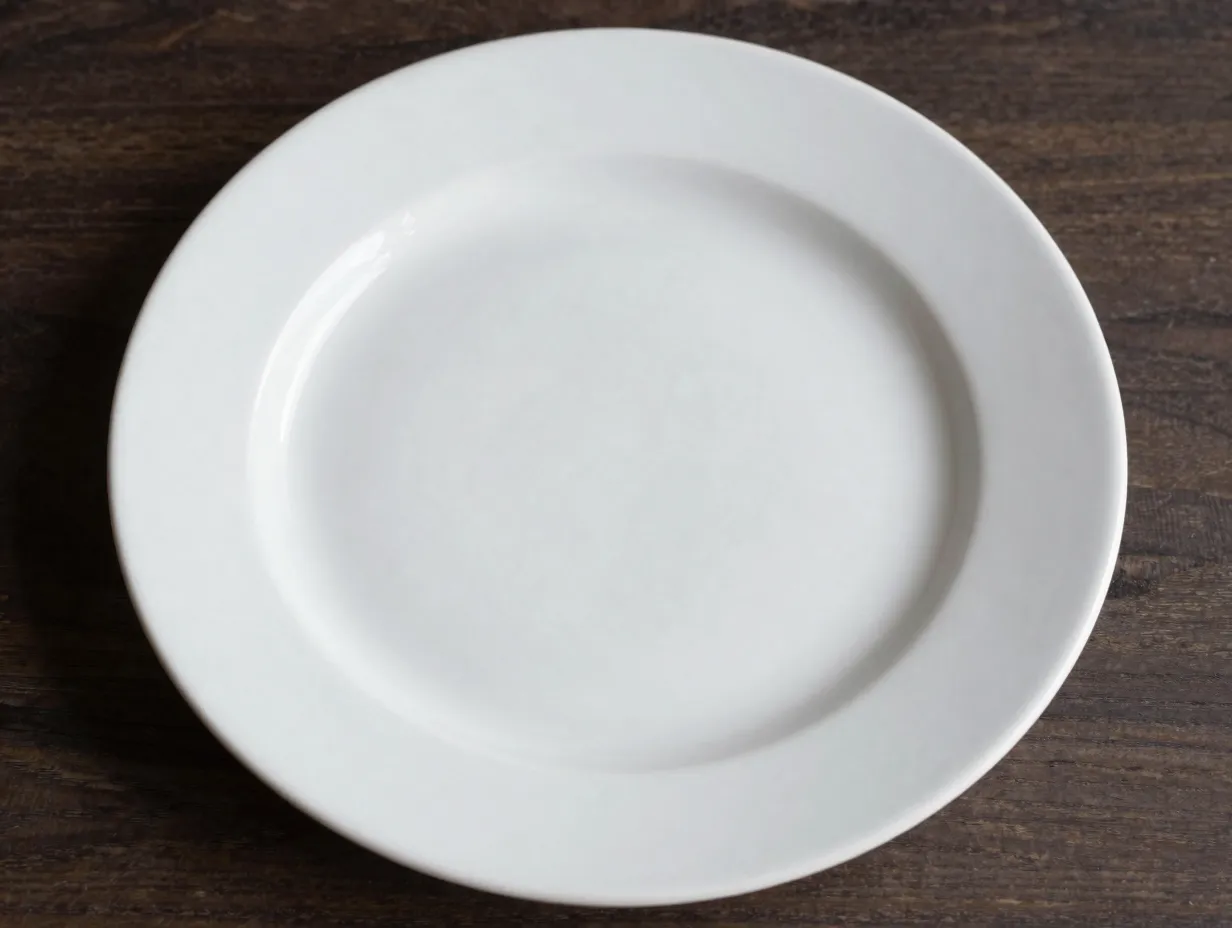
The single most overlooked variable in home cooking presentation is the plate itself. Professional chefs treat the plate as a canvas, and canvas selection matters before a single brushstroke is applied [2].
What professionals do:
- Use white or neutral-toned plates most often because they make colors pop and do not compete with the food
- Match plate size to portion size, a small portion on an oversized plate creates elegant negative space, while the same portion on a small plate looks crowded
- Choose plate shape to complement the dish, round plates for composed dishes, rectangular or slate boards for rustic or deconstructed presentations
- Consider rim depth; shallow rims allow more visible plating area, while deep bowls suit broth-based or sauce-heavy dishes
Practical tip: Invest in a set of wide, flat white plates with a generous rim. A 10- to 11-inch plate for a main course gives you room to work. Warm the plate in a low oven before service, cold plates dull flavors and cause food to cool rapidly [6].
The plate is not neutral. It is your first design decision.
2. Apply the Rule of Thirds and Embrace Negative Space
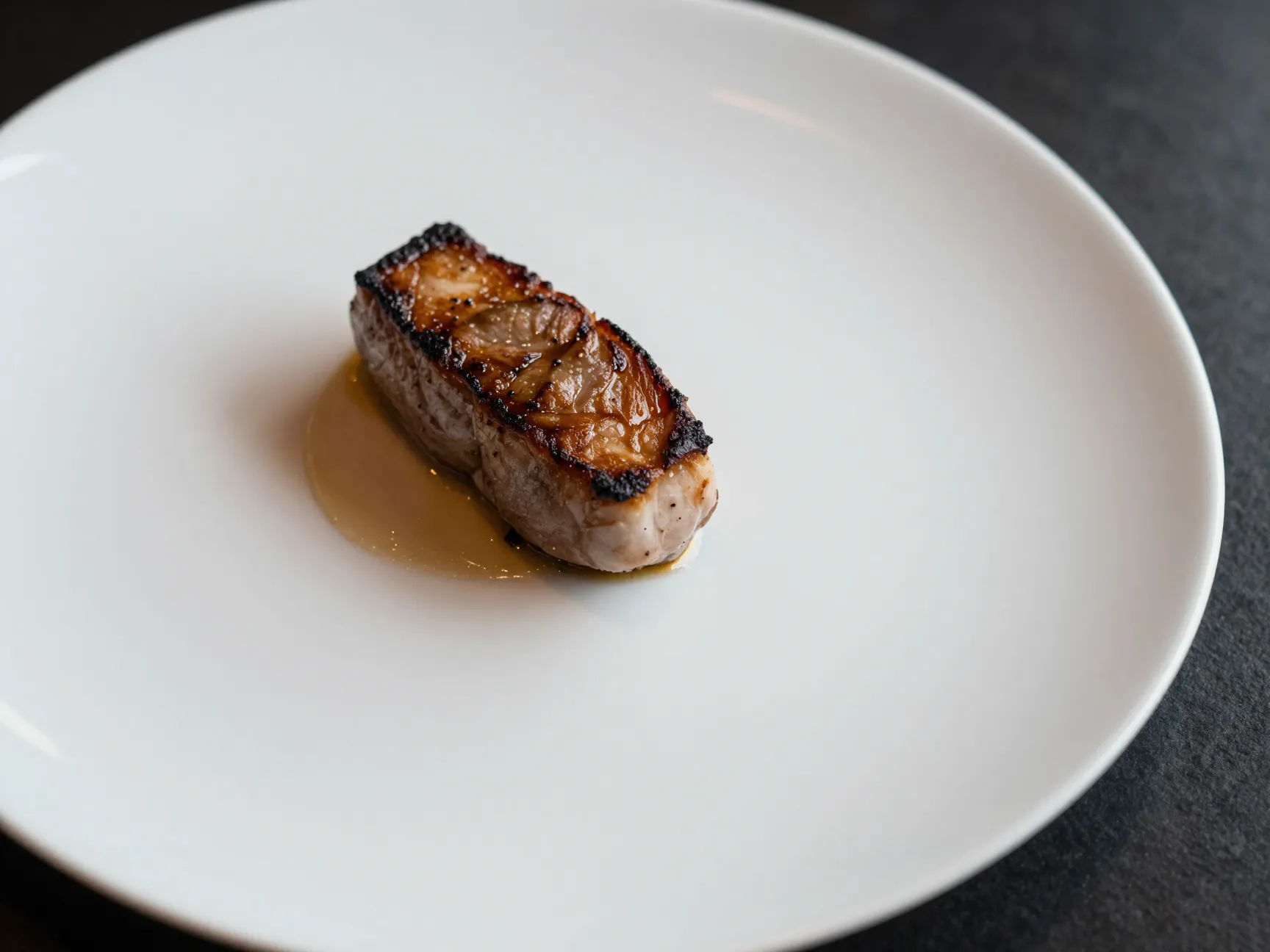
Centering food on a plate is the most common home cook instinct, and one of the first habits professional chefs unlearn. The rule of thirds, borrowed from visual art and photography, divides the plate into a three-by-three grid. Placing the focal point of your dish at one of the four intersecting points creates immediate visual tension and interest [2].
Negative space, the empty area of the plate, is not wasted space. It is breathing room. It draws the eye toward the food and signals restraint and confidence. Overcrowded plates feel anxious. Plates with deliberate negative space feel curated [7].
How to apply this at home:
- Mentally divide your plate into thirds both horizontally and vertically
- Position your protein or primary element at one of the upper third intersections
- Allow at least one-third of the plate surface to remain uncovered
- Resist the urge to fill gaps with extra sauce or garnish
This single shift, moving away from centered, filled plates, is one of the most immediately visible upgrades in the 8 fine dining plating techniques that will transform your home cooking [10].
3. Build Intentional Height and Structure
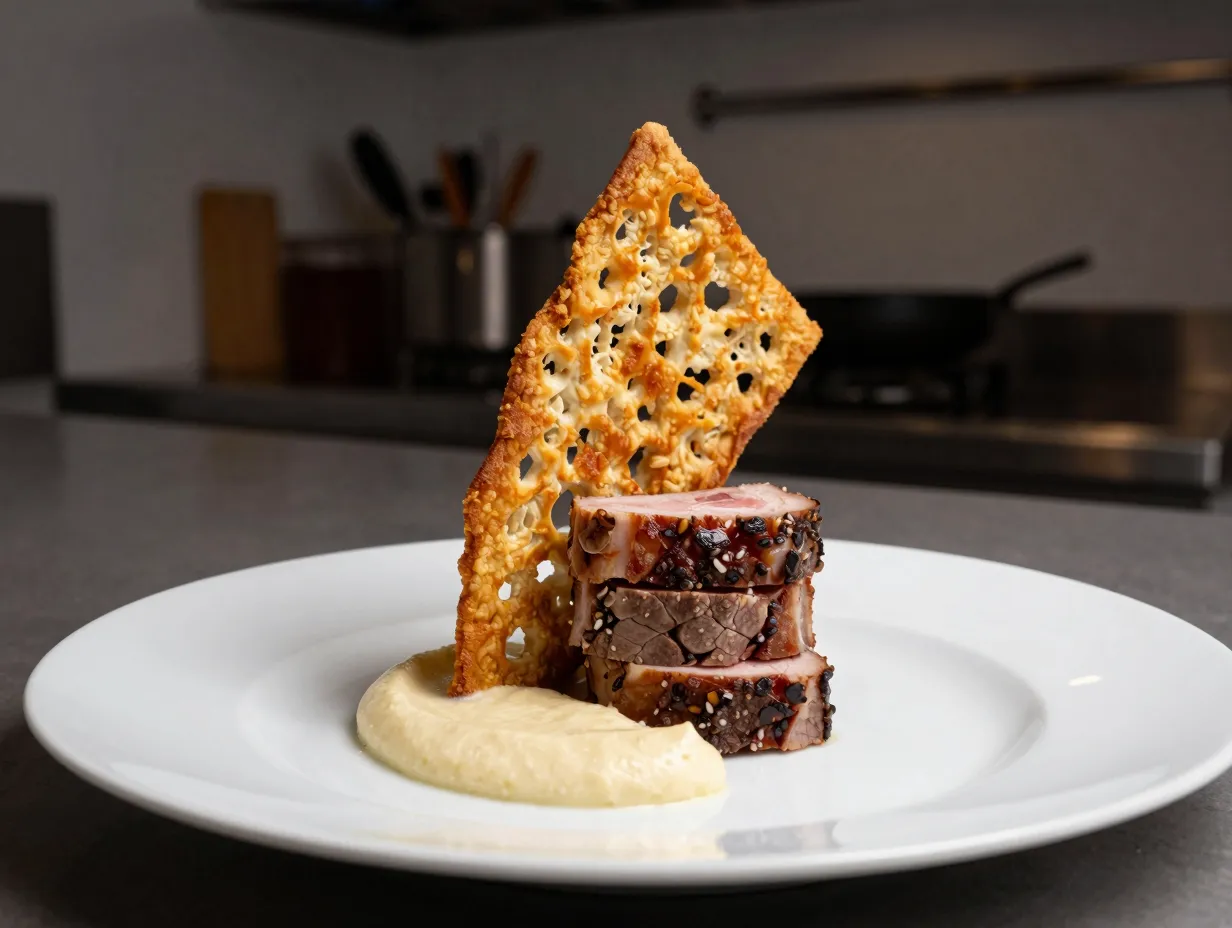
Flat food looks flat. Three-dimensional plating creates visual drama and signals that care has been taken. Fine dining kitchens build height deliberately, using stacking, leaning, and layering techniques to give dishes architectural presence [1].
Techniques for building height:
- Stack sliced proteins rather than fanning them flat
- Use a ring mold to build compressed towers of grains, vegetables, or tartare
- Lean elements against each other, a piece of fish propped against a vegetable puree quenelle creates natural height without instability
- Place a crispy element vertically, a tuile, a cracker, or a fried herb, to add upward movement
Height should feel natural, not forced. A tower of food that collapses at the table defeats the purpose. Test your structure before plating the final dish. The goal is controlled drama, not engineering anxiety.
4. Master the Sauce Swoosh, Dot, and Drag
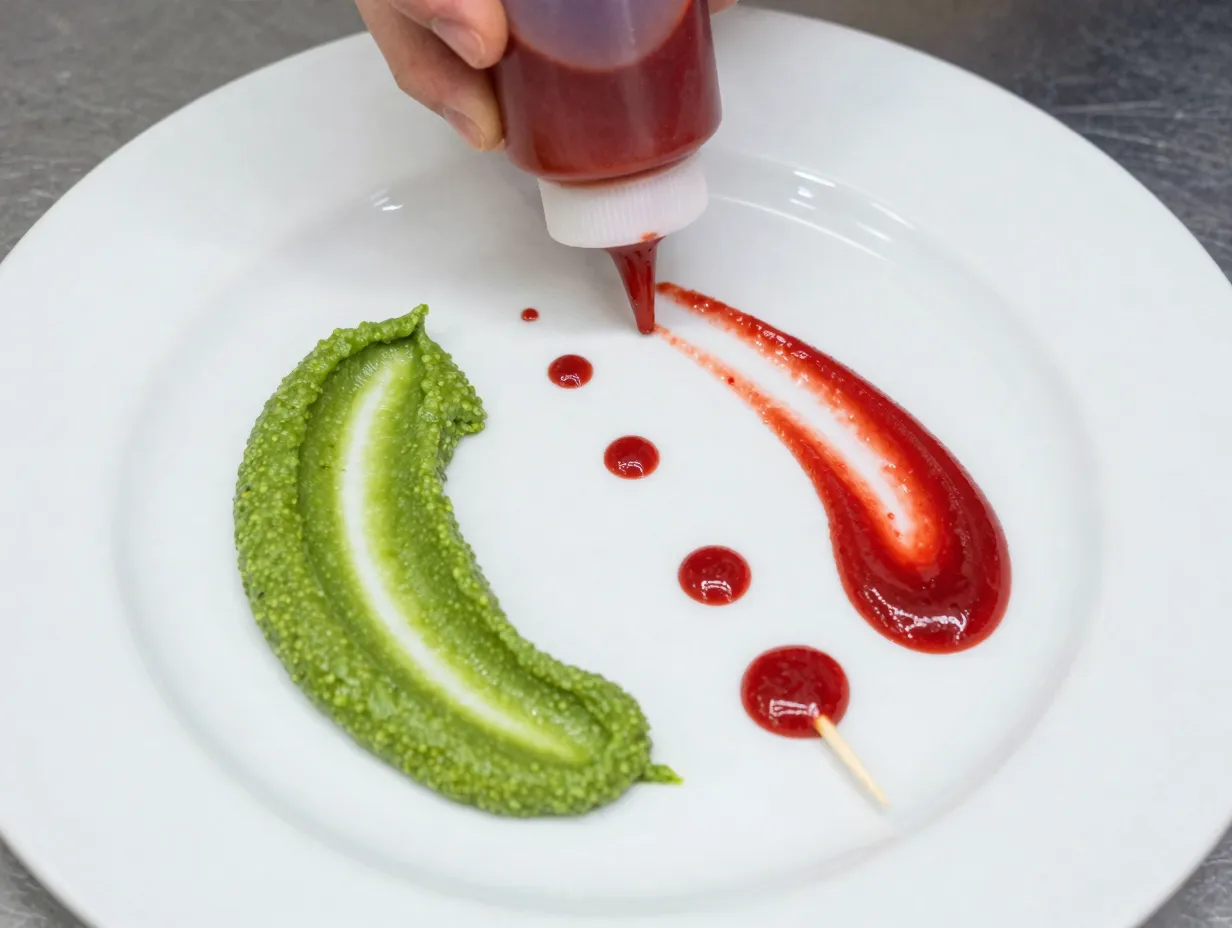
Sauce application is where many home cooks inadvertently signal inexperience. Pouring sauce over the top of a composed dish obscures the work underneath. Professional chefs apply sauce as a design element, not an afterthought [5].
The three core sauce techniques:
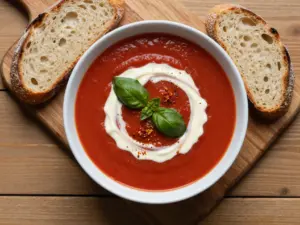
The swoosh: Spoon a dollop of puree, sauce, or emulsion onto the plate. Press the back of a large spoon into the center and drag it in a single, confident arc. This creates a tapered stroke that frames the dish without covering it.
The dot: Use a squeeze bottle to apply small, precise dots of sauce in a line, arc, or cluster. Dots work best with smooth, reduced sauces and create a clean, modern look. Varying dot sizes adds visual rhythm [6].
The drag: Place a small amount of sauce and drag a toothpick, skewer, or the tip of a knife through it to create feathered or heart shapes. This works well for contrasting-color sauces on top of each other.
Key rule: Sauce goes on the plate first, then the food is placed on or beside it. This keeps the food elevated and prevents sauce from pooling in uncontrolled ways [5].
5. Use Color Contrast as a Design Tool
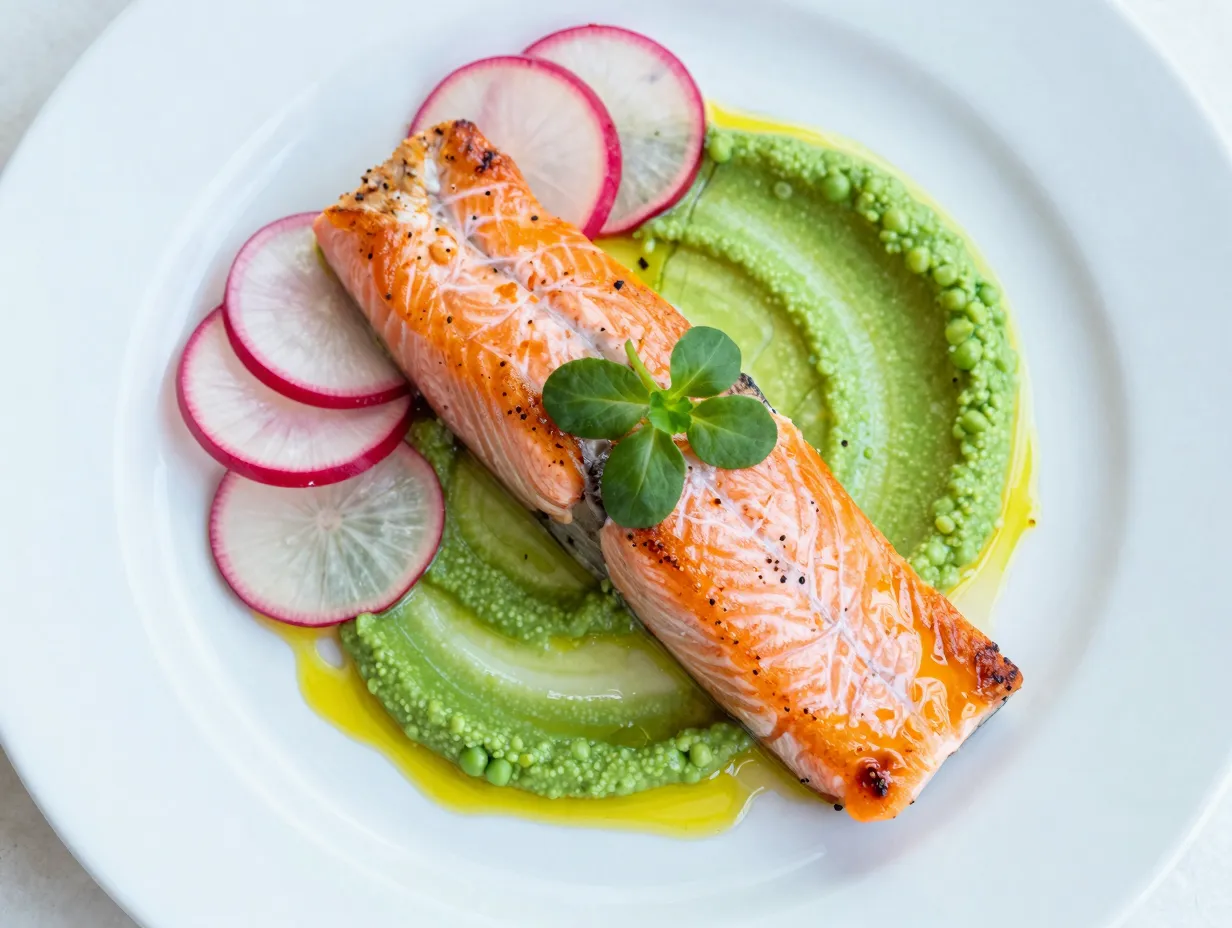
A plate of beige food is a missed opportunity. Professional chefs engineer color contrast as deliberately as they balance flavor. Color signals freshness, variety, and nutritional diversity, and it makes food visually exciting before the first bite [7].
Color principles for home plating:
- Aim for at least three distinct colors on every plate
- Use complementary colors for maximum visual impact, orange carrots against green herb oil, red beet puree against white goat cheese
- Add a pop of brightness with fresh herbs, microgreens, or edible flowers placed at the last moment
- Avoid letting brown dominate the plate; even a roasted dish benefits from a green element or a vibrant sauce
Seasonal advantage: Home cooks have access to the same seasonal produce as restaurant chefs. A summer plate of seared salmon benefits enormously from a few slices of watermelon radish, a smear of green pea puree, and a drizzle of bright herb oil. None of these require professional skill, only intention.
6. Vary Texture Across Every Element
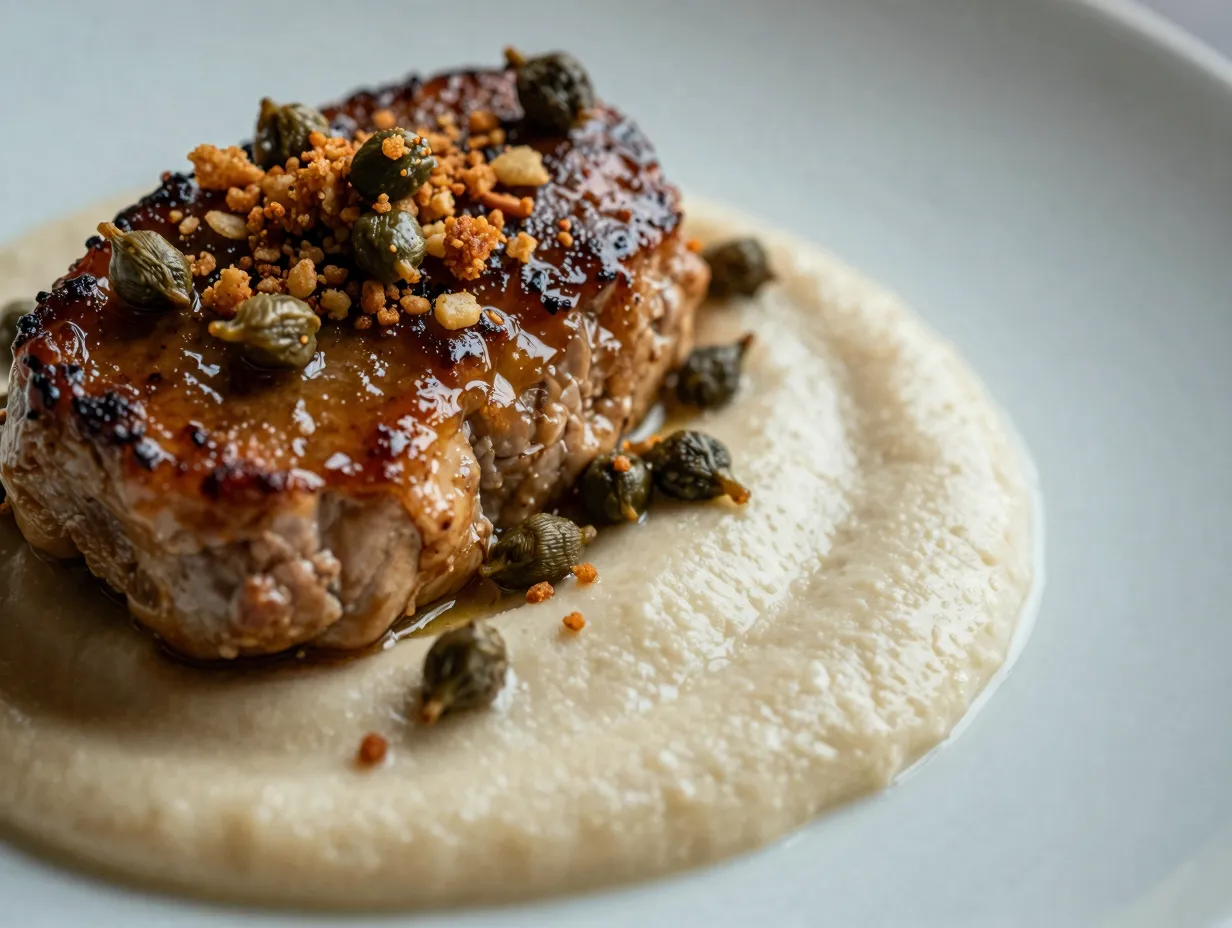
Texture is the most underutilized dimension in home cooking presentation. Fine dining plates almost always contain at least three distinct textures: something soft, something crunchy, and something silky. This variety creates a dynamic eating experience that keeps every bite interesting [4].
Building texture contrast:
- Add a crispy element to every soft dish, fried capers over a creamy pasta, toasted breadcrumbs over a braised vegetable, a puffed grain over a smooth soup
- Use smooth purees as a textural counterpoint to chunky proteins or vegetables
- Introduce gel-like or set textures through simple techniques, a soft-set egg yolk, a cold-set herb oil, a small portion of pickled gel
Texture also affects visual presentation. A rough, craggy surface catches light differently than a smooth glaze. Matte and glossy finishes on the same plate create visual complexity. When plating, consider how light will interact with each element, this is a technique professional food stylists use deliberately [6].
7. Garnish with Purpose, Not Decoration
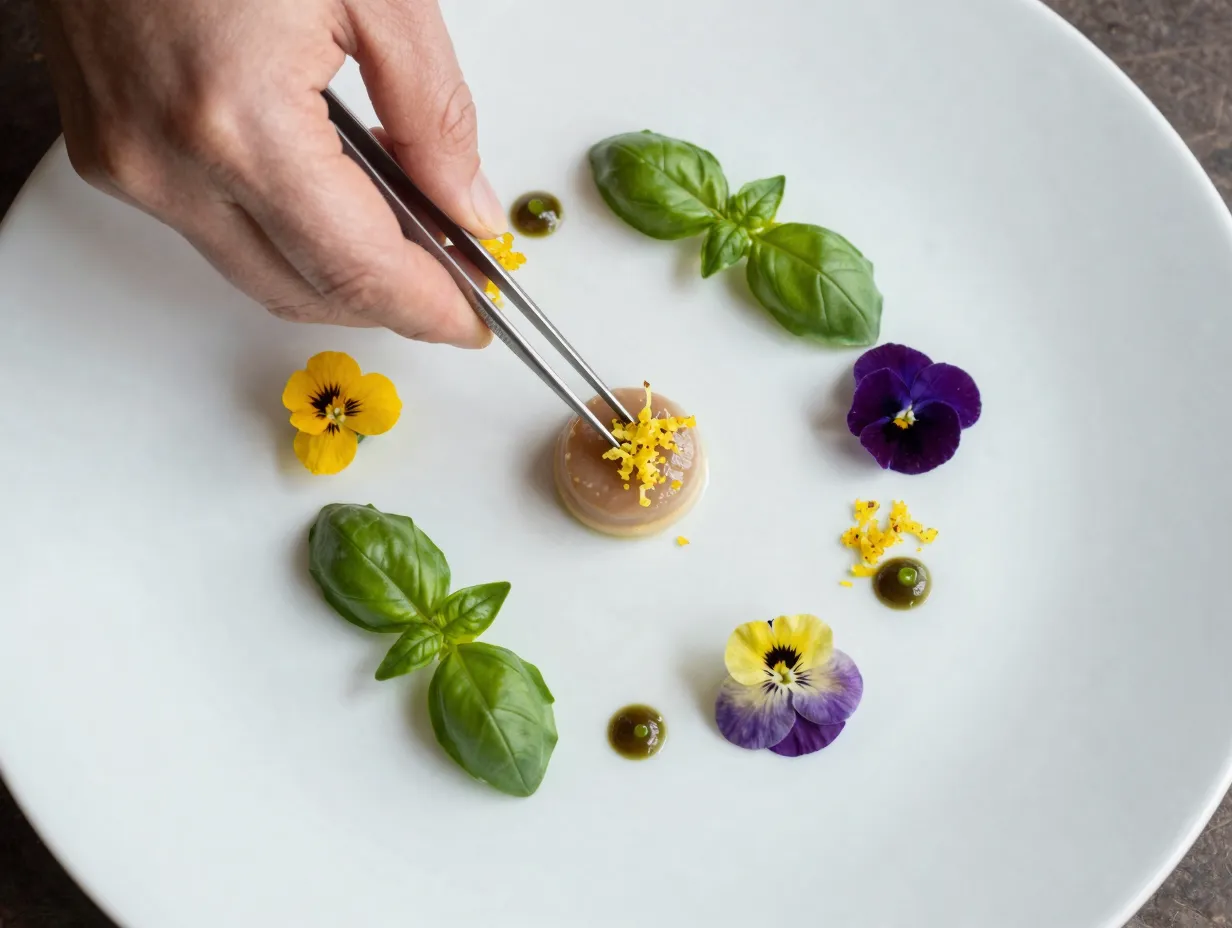
The sprig of curly parsley that has appeared on diner plates since the 1970s is the clearest example of garnish as decoration rather than purpose. In fine dining, nothing lands on the plate that does not contribute to flavor, texture, or the story of the dish [1].
The purposeful garnish test:
Ask three questions before adding any garnish:
- Does it taste good with the other elements?
- Does it add a texture or color the plate currently lacks?
- Is it proportional, neither so large it dominates nor so small it disappears?
If the answer to any of these is no, leave it off.
Garnishes that work in home cooking:
- Fresh herb leaves (not sprigs), basil, tarragon, chervil, or micro herbs placed with tweezers for precision
- Edible flowers, nasturtiums, borage, and violas are widely available and add color and mild flavor
- Citrus zest, microplaned directly over the plate at service for aroma and brightness
- Flavored oils, a few drops of herb oil, chili oil, or truffle oil applied with a dropper or small spoon
- Toasted seeds or nuts, sesame, pine nuts, or pumpkin seeds add crunch and visual texture
Precision matters. Professional chefs use tweezers or small tongs to place garnishes exactly where they intend. At home, a pair of clean kitchen tweezers costs very little and immediately elevates your plating control [10].
8. Wipe the Rim and Plate with Intention
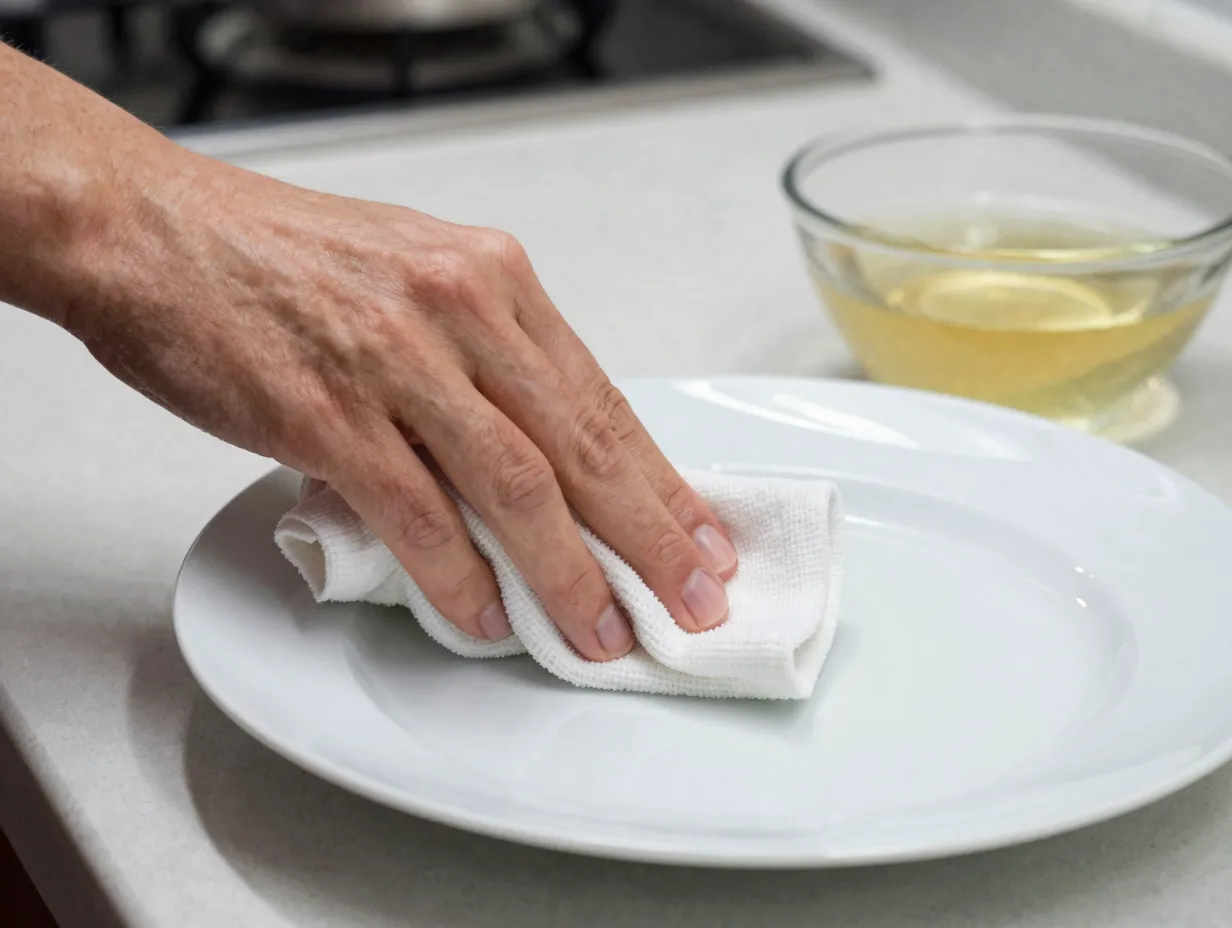
The final technique is the one most home cooks skip entirely, and it is the difference between a plate that looks finished and one that looks rushed. Professional chefs wipe the rim of every plate before it leaves the kitchen. Every smear, drip, and fingerprint is removed. The rim is the frame of the painting, it must be clean [5].
The professional finishing process:
- Keep a small bowl of warm water and a clean white cloth or paper towels at your plating station
- After composing the dish, check the rim for sauce drips, oil smears, or fingerprints
- Wipe in a single, deliberate motion around the entire rim
- Step back and look at the plate from the diner’s perspective, at table height, not from above
Plating with intention also means slowing down. Fine dining chefs plate one dish at a time, giving each plate their full attention. At home, this means resisting the urge to plate all dishes simultaneously while managing heat. Plate, wipe, assess, then serve.
This final step takes thirty seconds. It signals to every person at your table that the meal was made with care, and that signal, as the Oxford research suggests, changes how the food tastes before anyone takes a bite [4].
Quick Reference: The 8 Techniques at a Glance
| Technique | Core Principle | Difficulty at Home |
|---|---|---|
| 1. Plate Selection | Canvas sets the visual tone | Low |
| 2. Rule of Thirds | Off-center placement and negative space | Low |
| 3. Height and Structure | Three-dimensional composition | Medium |
| 4. Sauce Technique | Swoosh, dot, drag application | Medium |
| 5. Color Contrast | Three or more distinct colors per plate | Low |
| 6. Texture Variation | Soft, crunchy, silky on every plate | Medium |
| 7. Purposeful Garnish | Every element earns its place | Low |
| 8. Rim Wipe and Finish | Clean frame, intentional final check | Low |
Common Plating Mistakes to Avoid
Even with the right techniques in mind, a few persistent habits undermine home plating efforts. Recognizing these mistakes is half the battle.
Overcrowding the plate. More food does not signal generosity in fine dining, it signals a lack of editing. Trust negative space [2].
Inconsistent portion heights. If you are plating multiple dishes for the same meal, they should look like they came from the same kitchen. Practice plating one dish, photograph it, and replicate it.
Using garnishes that do not belong. A sprig of rosemary on a fish dish, a slice of orange on a beef plate, these confuse the flavor story and add visual noise without purpose [1].
Plating cold food on cold plates. Temperature management is a plating issue as much as a cooking issue. Warm plates, warm food, and swift service are non-negotiable [6].
Forgetting the diner’s perspective. Plates are viewed from above and at an angle. Plate with both perspectives in mind. What looks composed from directly above may look flat from a seated position.
Tools That Make These Techniques Easier
You do not need a professional kitchen to execute these techniques, but a few inexpensive tools make a significant difference.
- Squeeze bottles: Essential for precise sauce dots and lines. Available at any kitchen supply store for under five dollars each.
- Ring molds: Used for building compressed towers of rice, grains, or tartare. A clean tuna can with both ends removed works as a substitute.
- Kitchen tweezers: For placing microgreens, edible flowers, and small garnishes with precision.
- Offset spatula: For transferring delicate items to the plate without disturbing their structure.
- Microplane grater: For finishing with fresh citrus zest, hard cheese, or spices directly over the plate at service.
None of these tools require professional training to use. They require only the intention to use them [10].
Conclusion
The 8 fine dining plating techniques that will transform your home cooking are not secrets reserved for professional kitchens. They are principles, visual, sensory, and intentional, that any home cook can apply starting with the next meal they prepare.
Begin with the two lowest-effort, highest-impact changes: choose the right plate and apply the rule of thirds. These two shifts alone will make an immediate, visible difference. From there, work on sauce technique, then height, then garnish discipline. Each technique builds on the others, and within a few weeks of deliberate practice, plating with intention will become instinct.
Actionable next steps for 2026:
- Audit your current plate collection and identify one set of wide, flat white plates to designate as your presentation plates
- Practice the sauce swoosh technique on a spare plate before your next dinner party, use a cold puree so cleanup is easy
- Buy a set of squeeze bottles and kitchen tweezers; use them every time you plate a dish for guests
- Take a photograph of every plate you compose; reviewing your own work accelerates improvement faster than any other method
- Study the plating work of chefs you admire, Instagram, food photography books, and culinary video channels are free resources available right now [9]
The food on your plate has always deserved this level of care. Now the presentation can match it.
References
[1] 8 Types of Popular Plating Techniques Aspiring Chefs Can Learn – https://www.cordonbleu.edu/malaysia/blog-8-types-of-popular-plating-techniques-aspiring-chefs-can-learn-during-their-free-time/en
[2] Modern Plating – https://libbeyfoodservice.com/insights/modern-plating
[4] The Art Of Plating – https://www.todayonmytable.com/the-art-of-plating/
[5] Fine Dining Plating – https://pos.toasttab.com/blog/on-the-line/fine-dining-plating
[6] Professional Plating Secrets How To Make Your Home Cooked Meals Look Restaurant Quality – https://ca.bodega1900.com/professional-plating-secrets-how-to-make-your-home-cooked-meals-look-restaurant-quality/
[7] Modern Food Plating Presentation Styles – https://www.unileverfoodsolutions.us/chef-training/food-service-and-hospitality-marketing/food-photography-and-food-plating-tips-and-techniques/modern-food-plating-presentation-styles.html
[9] Instagram – https://www.instagram.com/p/DMSy4VStiC9/
[10] 10 Food Plating And Presentation Tips – https://www.lightspeedhq.com/blog/10-food-plating-and-presentation-tips/