9 Satisfying Salmon Rice Bowl Recipes That Are Healthy, Fast, and Absolutely Delicious
Salmon is the most consumed seafood in the United States, with Americans eating over 450,000 metric tons of it every year, and for good reason. It is packed with omega-3 fatty acids, high-quality protein, and essential vitamins that support heart health, brain function, and muscle recovery. When you pair it with rice and fresh toppings, you get a complete meal that checks every box: nutritious, filling, and genuinely enjoyable to eat.
Disclosure: This post contains affiliate links. As an Amazon Associate, we earn from qualifying purchases, and at no extra cost to you.
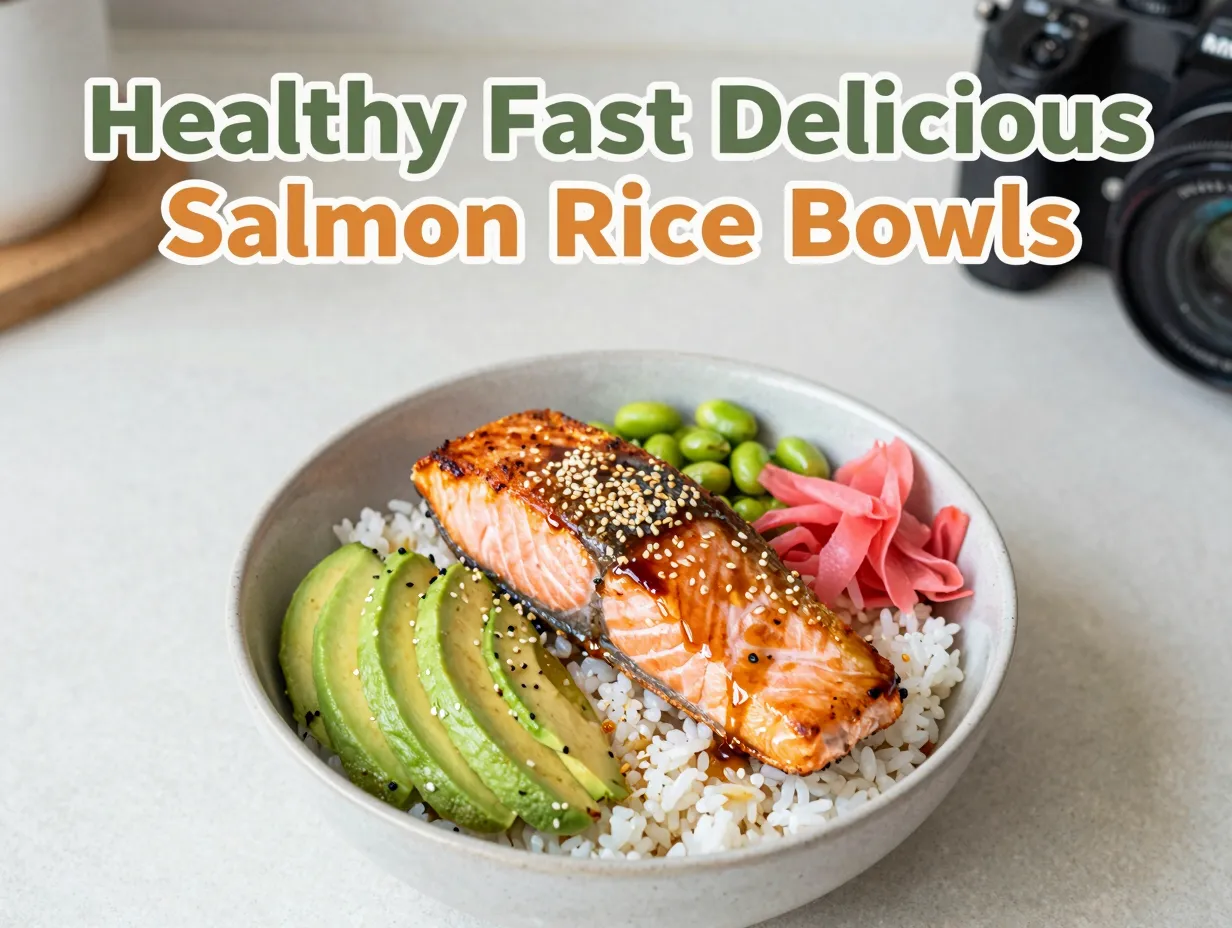
This guide to 9 Satisfying Salmon Rice Bowl Recipes That Are Healthy, Fast, and Absolutely Delicious is designed for anyone who wants to eat well without spending hours in the kitchen. Whether you are a seasoned home cook or someone who just discovered that salmon does not have to be intimidating, these recipes will become staples in your weekly rotation. Each one takes 30 minutes or less, uses accessible ingredients, and delivers bold, satisfying flavor.
Key Takeaways
- All 9 salmon rice bowl recipes in this guide can be prepared in 30 minutes or less, making them ideal for busy weeknights.
- Salmon is one of the most nutrient-dense proteins available, offering omega-3 fatty acids, vitamin D, and complete protein in a single serving.
- Rice bowls are highly customizable, you can swap white rice for brown rice, cauliflower rice, or sushi rice depending on your dietary goals.
- Meal prepping components like cooked rice, marinated salmon, and sliced vegetables in advance cuts active cooking time to under 10 minutes per bowl.
- These recipes draw from Japanese, Korean, Hawaiian, and Mediterranean flavor profiles, giving you genuine variety throughout the week.
Why Salmon Rice Bowls Deserve a Permanent Spot in Your Meal Plan
Before diving into the recipes themselves, it helps to understand why this particular combination has become so popular in 2026. The salmon rice bowl format is not a trend, it is a structure. A protein, a starchy base, fresh or pickled vegetables, a sauce, and a garnish. That formula is endlessly adaptable, which is why you will find versions of it across Japanese, Korean, Hawaiian, and Mediterranean cuisines.
Nutritional snapshot of a standard salmon rice bowl:
| Component | Approximate Nutrition (per serving) |
|---|---|
| Salmon (5 oz fillet) | 290 calories, 29g protein, 18g fat, 2.2g omega-3s |
| White rice (1 cup cooked) | 206 calories, 4g protein, 45g carbohydrates |
| Avocado (1/4 medium) | 60 calories, 5.5g healthy fat, 3g fiber |
| Mixed vegetables (1/2 cup) | 25-50 calories, 2-4g fiber, vitamins A and C |
| Sauce (1-2 tbsp) | 40-80 calories depending on type |
A well-built salmon rice bowl delivers roughly 600 to 750 calories per serving, with a macro balance that supports sustained energy. That is a meaningful advantage over fast food or processed convenience meals.
The meal prep advantage is also significant. I started batch-cooking rice and portioning salmon on Sunday evenings about two years ago, and it genuinely changed how I approached weeknight dinners. With components ready, assembling a bowl takes less time than ordering delivery.
The 9 Satisfying Salmon Rice Bowl Recipes That Are Healthy, Fast, and Absolutely Delicious
These recipes are organized to give you variety across flavor profiles, cooking methods, and dietary preferences. Each one includes a brief description, key ingredients, and preparation notes.
1. Classic Teriyaki Salmon Rice Bowl
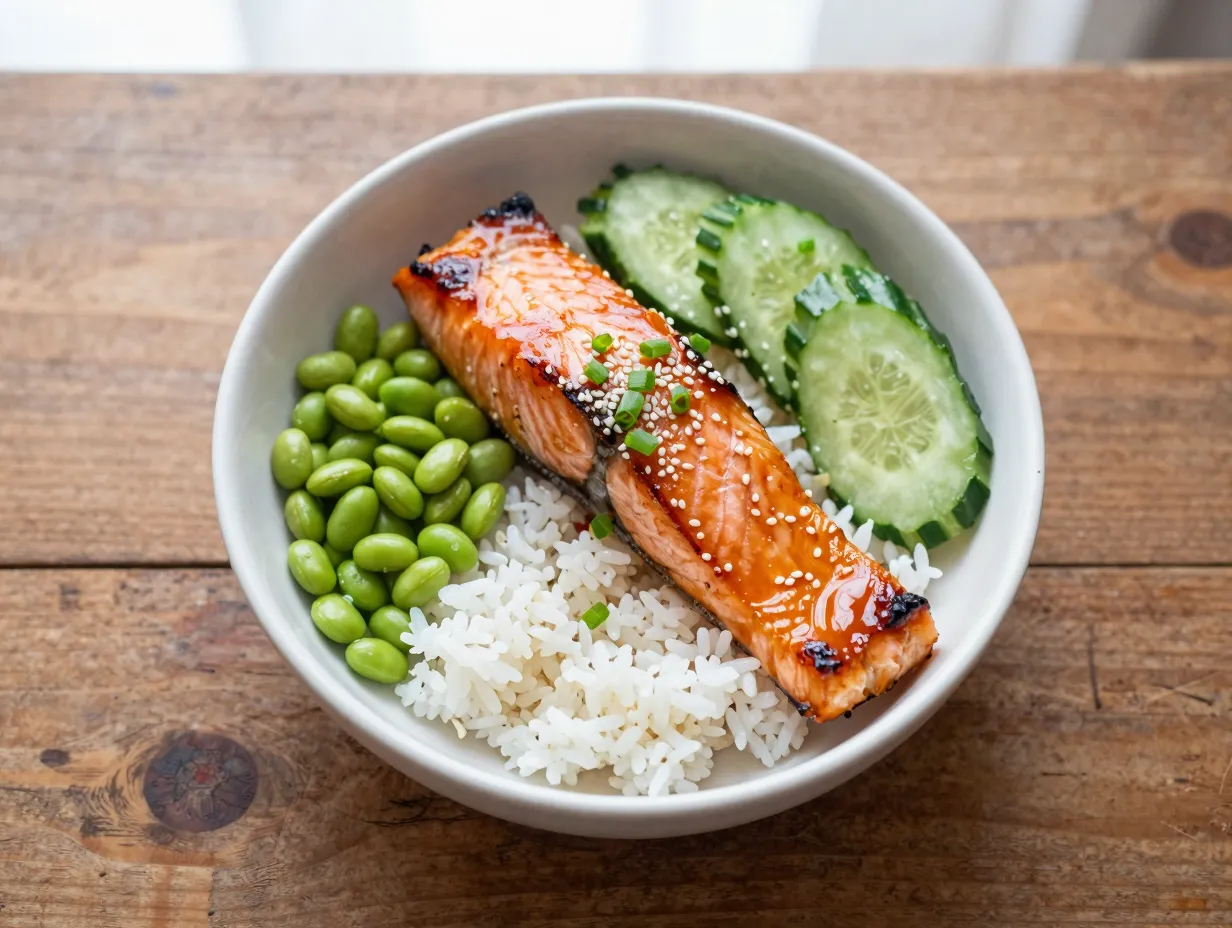
Teriyaki is the entry point for most people exploring Japanese-inspired salmon bowls, and it earns that reputation. The sauce, a combination of soy sauce, mirin, sake, and sugar, caramelizes beautifully on a hot pan, creating a lacquered glaze that is both sweet and savory.
Key ingredients: salmon fillet, soy sauce, mirin, sake, brown sugar, steamed white rice, edamame, sliced cucumber, sesame seeds, green onion.
Preparation notes: Marinate the salmon for at least 15 minutes before cooking. Cook skin-side down in a cast iron or non-stick skillet over medium-high heat for 4 minutes, then flip and glaze. Serve over warm rice with cucumber and edamame on the side. Total time: 25 minutes.
Why it works: The umami depth of teriyaki sauce complements the natural richness of salmon without overpowering it. The fresh cucumber and edamame add crunch and color, making the bowl visually appealing and texturally satisfying.
2. Spicy Salmon Sriracha Bowl
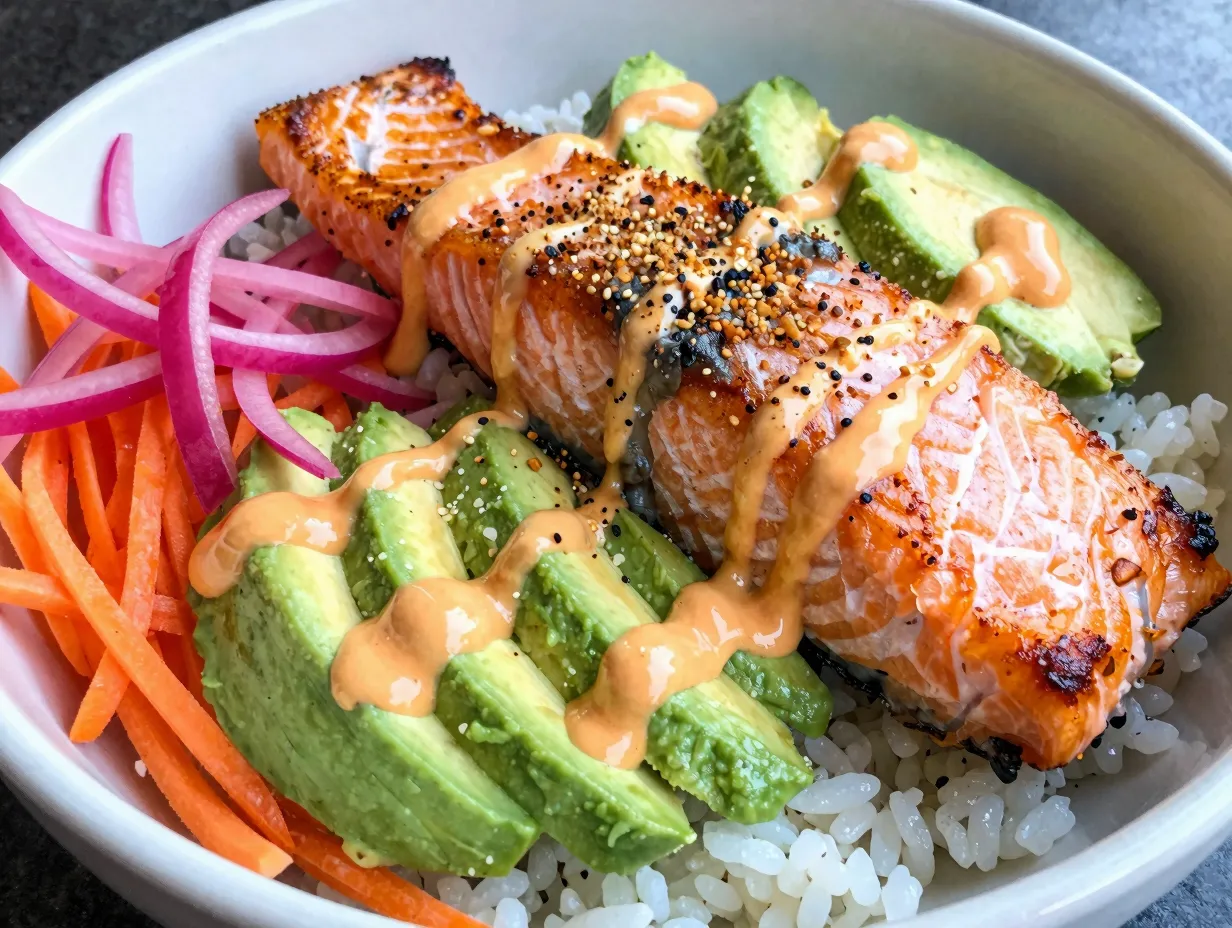
This bowl is for anyone who wants heat without sacrificing balance. The spicy mayo, sriracha blended with Japanese mayonnaise, has become a staple condiment in modern rice bowl culture, and it pairs exceptionally well with pan-seared or baked salmon.
Key ingredients: salmon fillet, sriracha, Japanese mayo (Kewpie), sushi rice, sliced avocado, shredded carrots, pickled red onion, furikake seasoning.
Preparation notes: Mix 2 tablespoons of Kewpie mayo with 1 tablespoon of sriracha and a squeeze of lime. Bake the salmon at 400°F for 12 to 14 minutes. Assemble the bowl with sushi rice as the base, top with flaked salmon, avocado, carrots, and pickled onion. Drizzle generously with spicy mayo. Total time: 20 minutes.
“The combination of creamy avocado and spicy mayo creates a sauce effect that ties the entire bowl together without any extra effort.”
3. Hawaiian Poke-Style Salmon Bowl
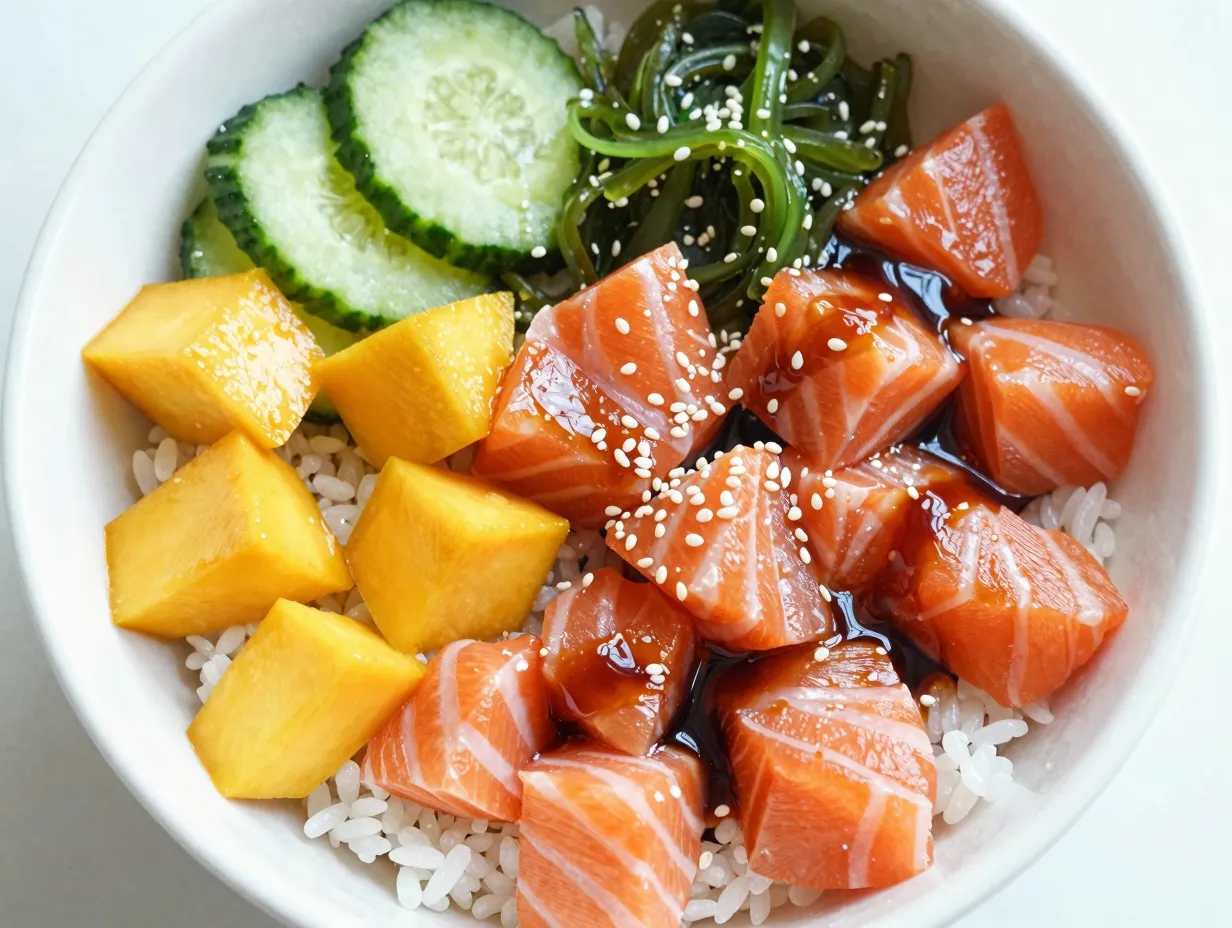
Traditional Hawaiian poke uses raw fish marinated in soy sauce, sesame oil, and green onion. This version stays true to those roots while adding a few modern touches that make it more accessible for home cooks who may be new to raw fish preparations.
Key ingredients: sushi-grade raw salmon, soy sauce, sesame oil, rice vinegar, green onion, ginger, sushi rice, mango chunks, cucumber, seaweed salad, sesame seeds.
Preparation notes: Cube the salmon into 3/4-inch pieces. Toss with soy sauce, sesame oil, a splash of rice vinegar, grated ginger, and sliced green onion. Let it marinate for 10 minutes. Serve over sushi rice with mango, cucumber, and seaweed salad. Total time: 15 minutes (no cooking required).
Important note: Always use sushi-grade or sashimi-grade salmon when serving raw. Purchase from a reputable fishmonger and consume the same day.
4. Miso-Glazed Salmon Bowl
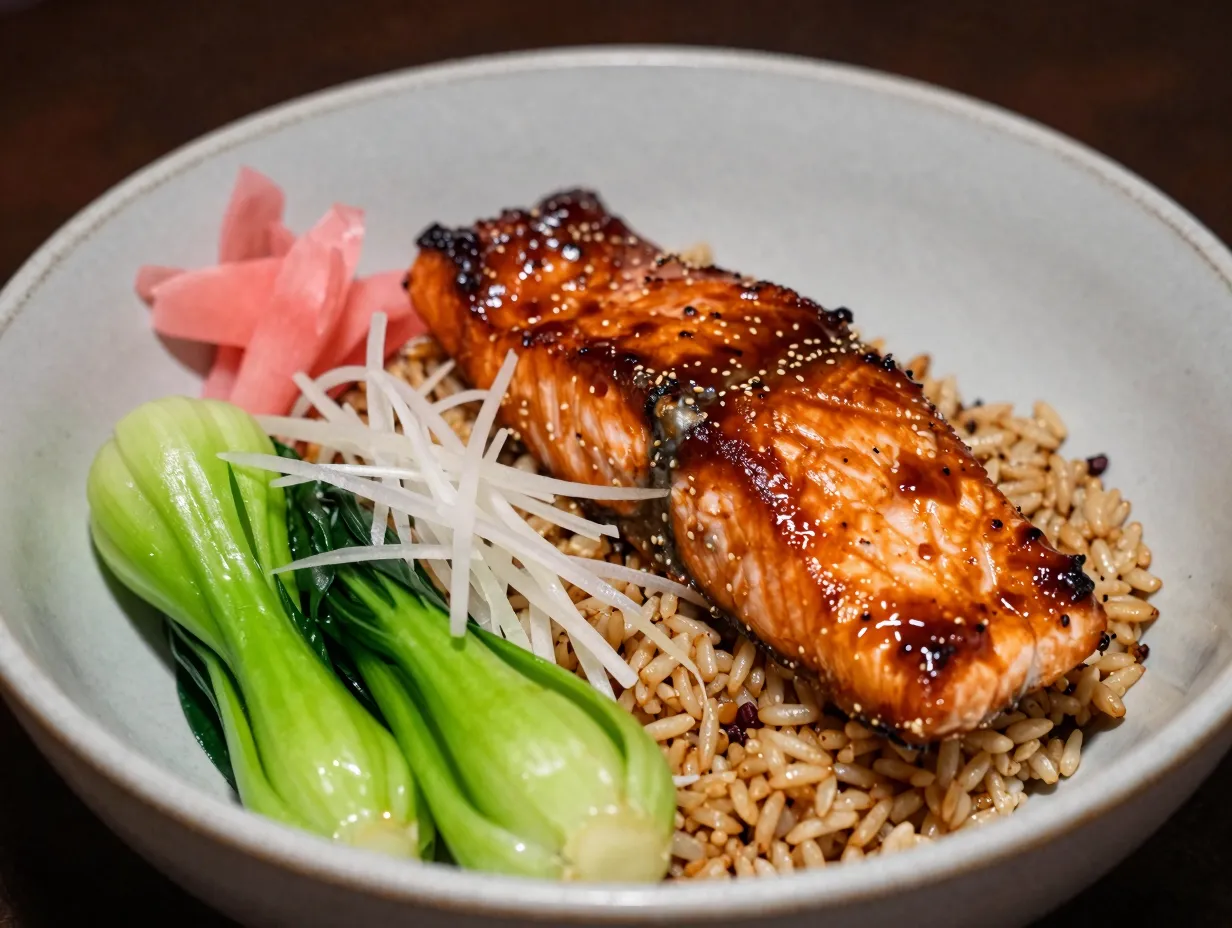
Miso paste is one of the most underused ingredients in Western home cooking. It adds a deep, fermented umami flavor that transforms a simple salmon fillet into something restaurant-worthy. This bowl draws inspiration from the classic Japanese preparation called “Saikyo yaki,” which uses white miso and mirin as the base marinade.
Key ingredients: salmon fillet, white miso paste, mirin, sake, sugar, brown rice, bok choy, shredded daikon, pickled ginger, sesame oil.
Preparation notes: Whisk together 2 tablespoons white miso, 1 tablespoon mirin, 1 tablespoon sake, and 1 teaspoon sugar. Coat the salmon and marinate for at least 20 minutes (or overnight for deeper flavor). Broil for 8 to 10 minutes until caramelized. Serve over brown rice with blanched bok choy and shredded daikon. Total time: 30 minutes.
Health note: White miso is a fermented food that contains beneficial probiotics and is lower in sodium than red miso, making it a smart choice for health-conscious cooks.
5. Korean Gochujang Salmon Bowl
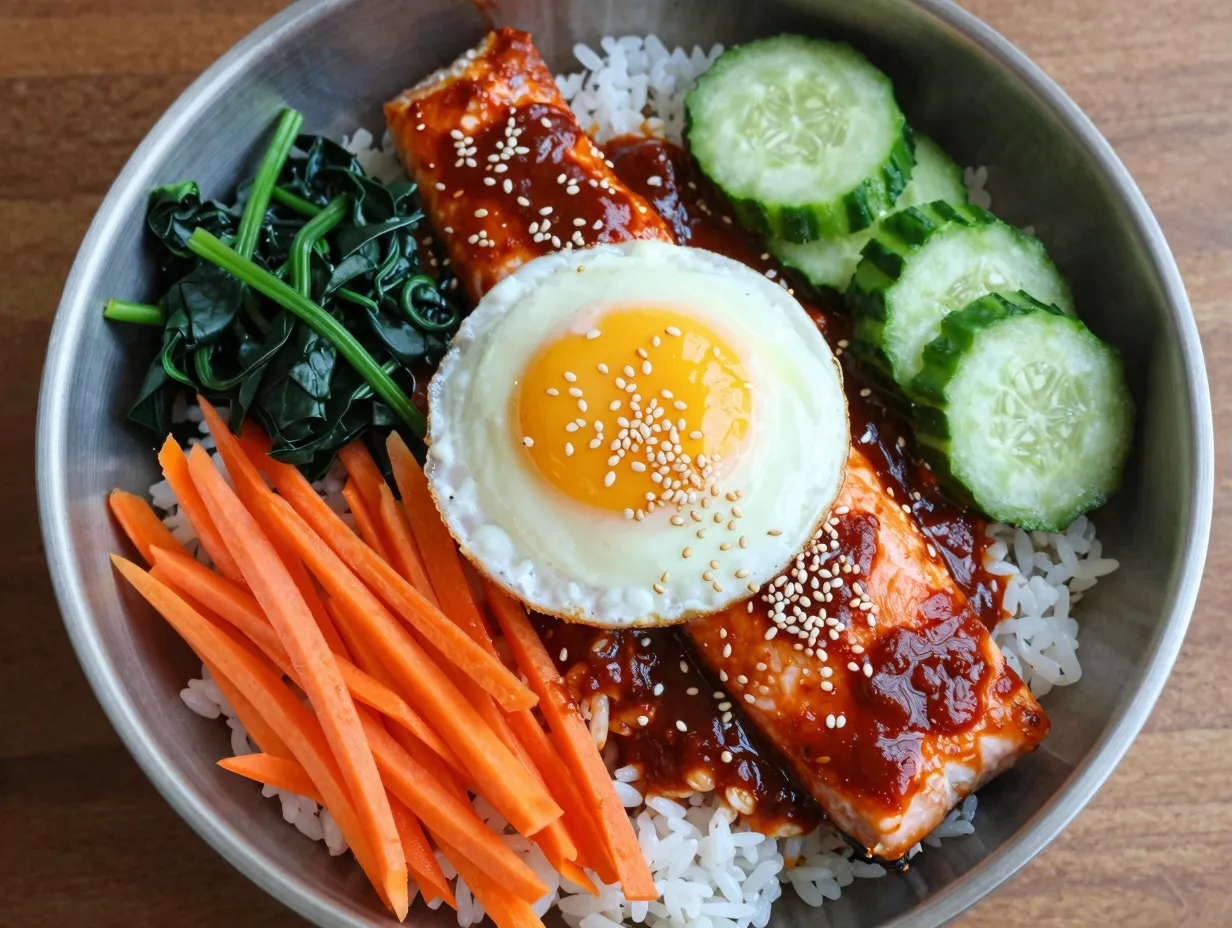
Gochujang, the fermented Korean chili paste, brings a complex heat that is different from sriracha. It is earthy, slightly sweet, and deeply savory all at once. This bowl takes clear inspiration from Korean bibimbap but streamlines the process significantly.
Key ingredients: salmon fillet, gochujang, soy sauce, sesame oil, garlic, honey, short-grain white rice, spinach, shredded carrots, cucumber, fried egg (optional), sesame seeds.
Preparation notes: Make the gochujang marinade by combining 2 tablespoons gochujang, 1 tablespoon soy sauce, 1 tablespoon sesame oil, 1 teaspoon honey, and 2 minced garlic cloves. Marinate salmon for 15 minutes, then pan-sear for 4 minutes per side. Assemble over rice with wilted spinach, raw carrots, and cucumber. Top with a fried egg if desired. Total time: 28 minutes.
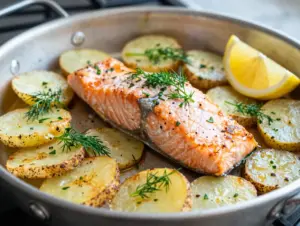
6. Lemon Herb Mediterranean Salmon Bowl
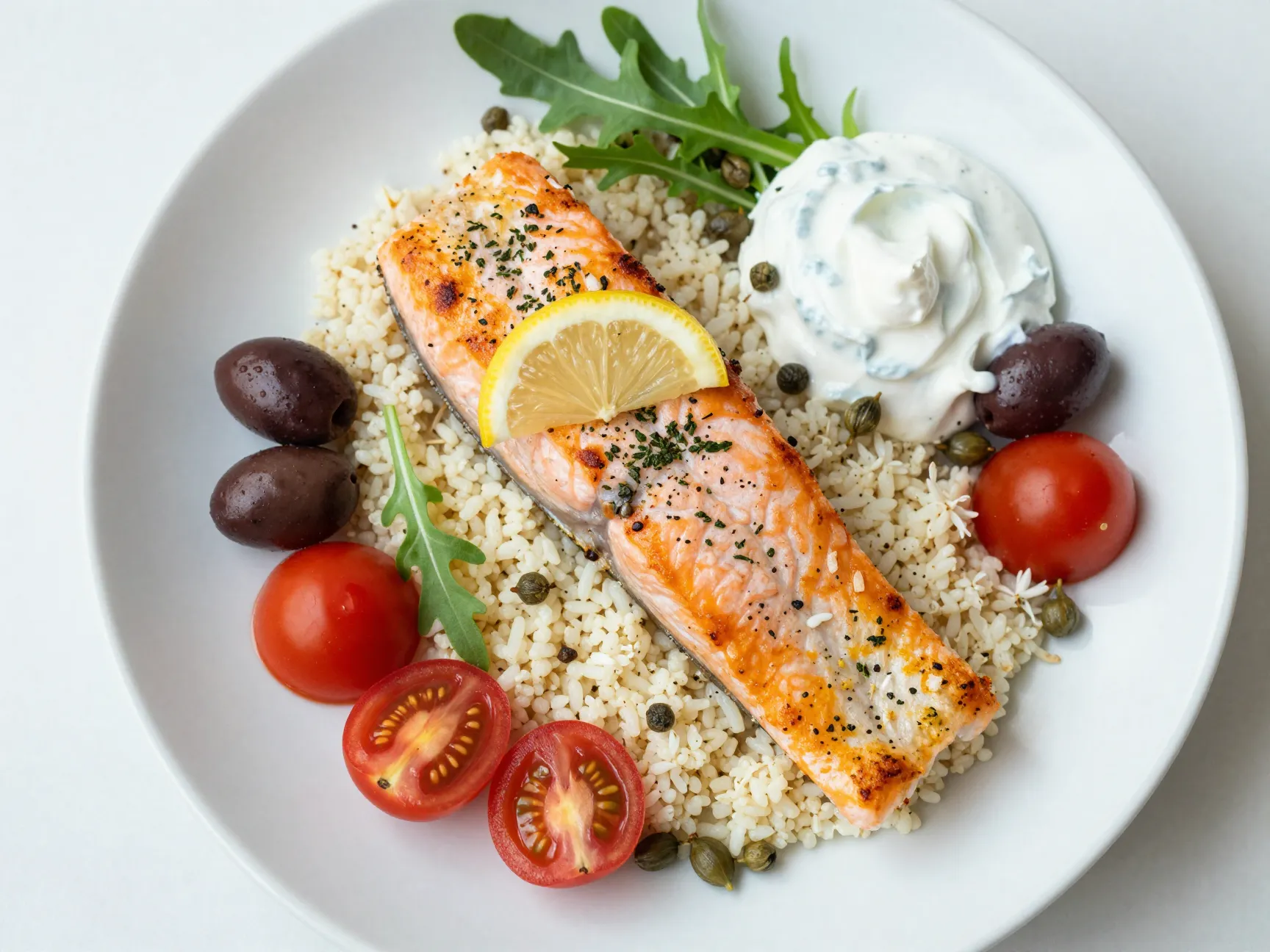
Not every salmon rice bowl needs to follow an Asian flavor profile. This Mediterranean version uses bright, herbaceous flavors, lemon, garlic, dill, and olive oil, that feel lighter and work beautifully in warmer months.
Key ingredients: salmon fillet, lemon juice, olive oil, garlic, fresh dill, capers, jasmine rice or couscous, cherry tomatoes, Kalamata olives, arugula, tzatziki sauce.
Preparation notes: Marinate salmon in lemon juice, olive oil, minced garlic, and chopped dill for 15 minutes. Bake at 375°F for 14 to 16 minutes. Serve over jasmine rice or couscous with cherry tomatoes, olives, arugula, and a generous dollop of tzatziki. Total time: 30 minutes.
Why it stands out: The capers and olives add a briny punch that cuts through the richness of the salmon. This bowl is also naturally gluten-free when served with rice rather than couscous.
7. Garlic Butter Salmon Bowl with Roasted Vegetables
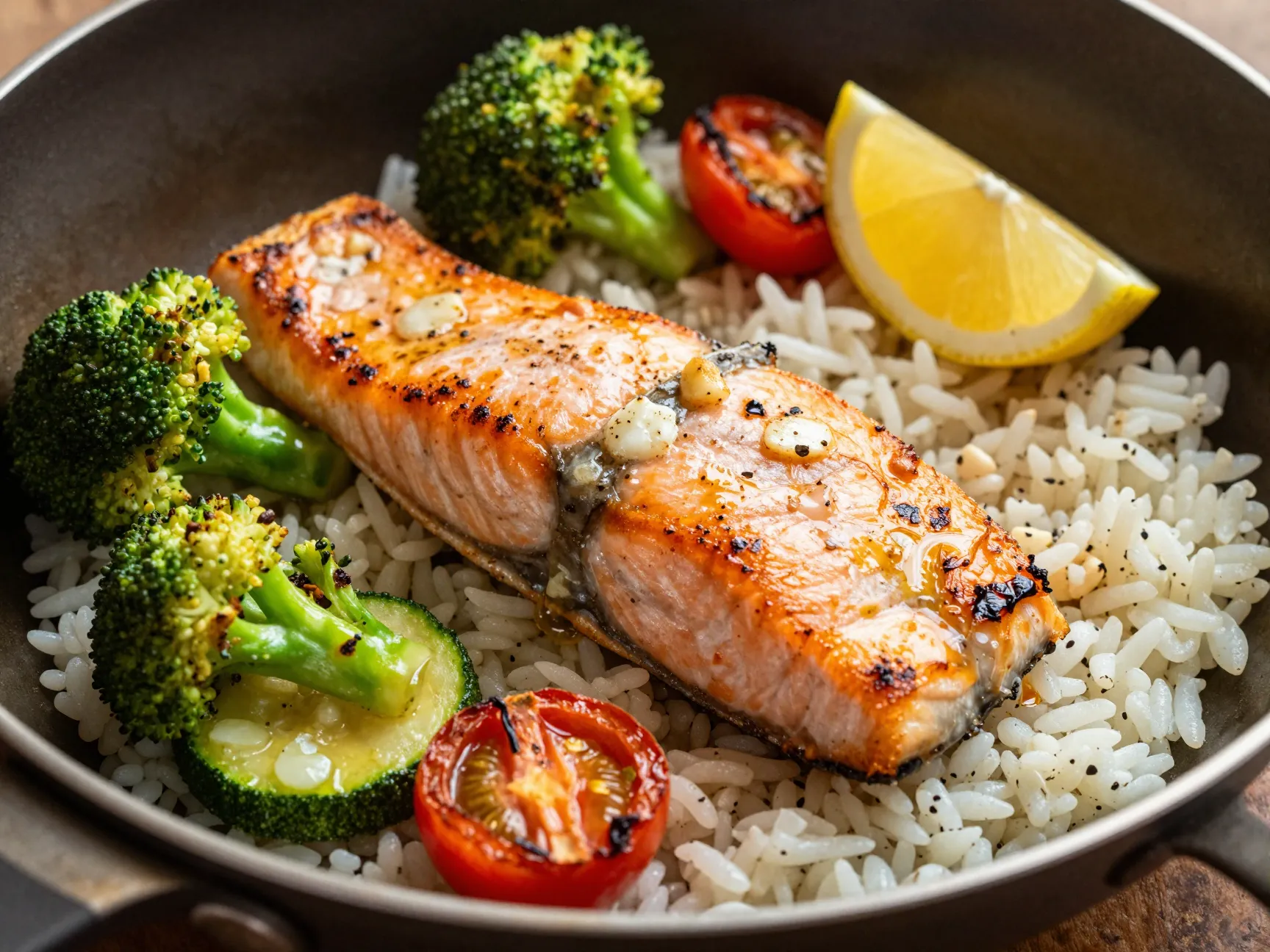
Sometimes simplicity wins. This bowl uses a classic garlic butter pan sauce, the kind that makes your kitchen smell incredible, paired with roasted seasonal vegetables and fluffy white rice.
Key ingredients: salmon fillet, unsalted butter, garlic cloves, fresh thyme, lemon zest, white rice, broccoli florets, zucchini, cherry tomatoes, salt, black pepper.
Preparation notes: Roast broccoli, zucchini, and cherry tomatoes at 425°F for 20 minutes. While vegetables roast, sear salmon in a hot skillet with butter, smashed garlic cloves, and fresh thyme. Baste the fish with the melted butter as it cooks. Serve over rice with roasted vegetables and a squeeze of lemon. Total time: 30 minutes.
“Basting the salmon with garlic butter while it cooks is the single technique that elevates this bowl from weeknight dinner to something you would order at a restaurant.”
8. Crispy Skin Salmon Bowl with Cucumber Salad
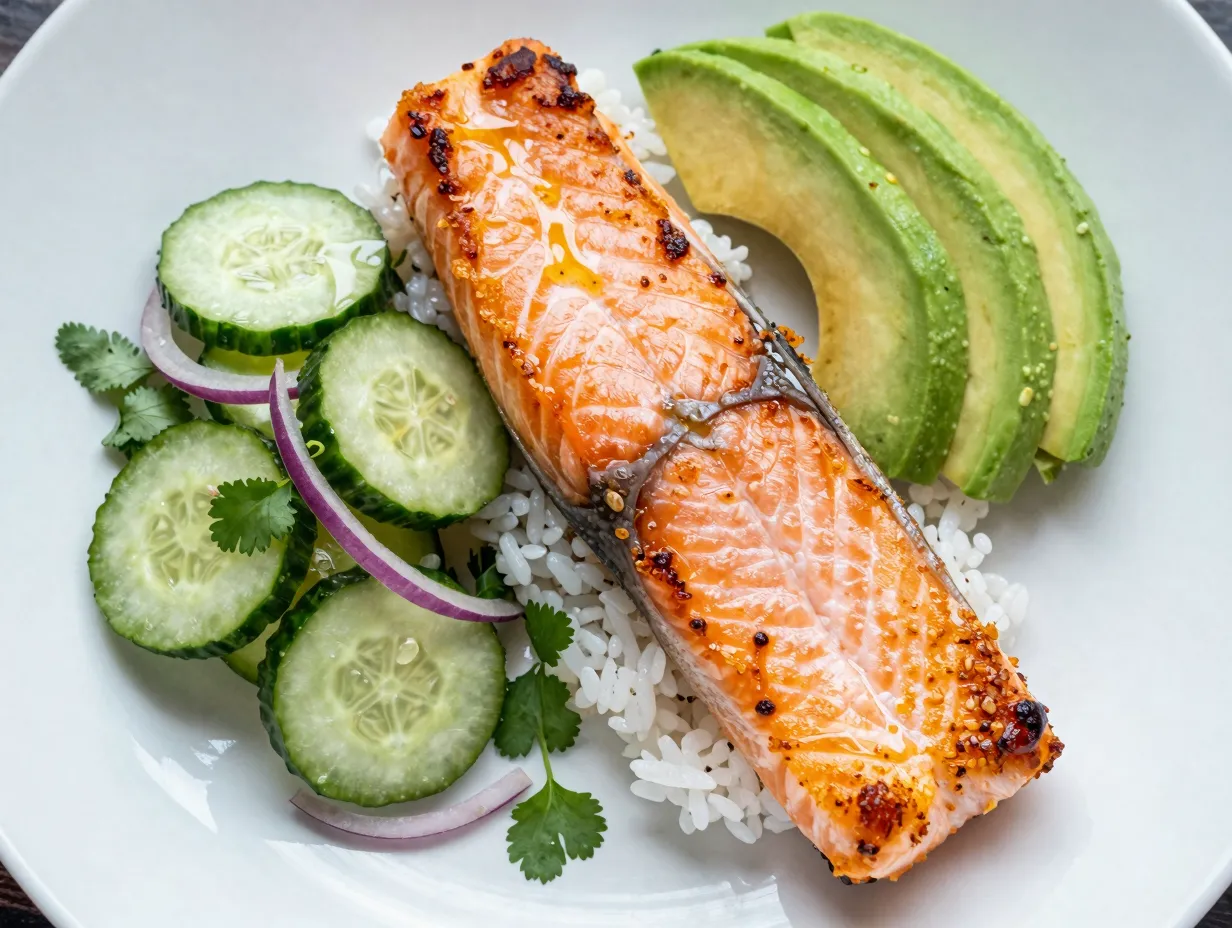
Crispy salmon skin is one of those textures that most people either love or have never tried. When cooked correctly, dry skin, hot pan, patience, it becomes almost chip-like, adding a satisfying crunch to every bite.
Key ingredients: salmon fillet (skin-on), neutral oil, soy sauce, rice vinegar, sesame oil, sugar, cucumber, red onion, cilantro, jalapeño, sushi rice, avocado.
Preparation notes: Pat the salmon skin completely dry with paper towels. Season generously with salt. Heat a stainless steel or cast iron pan until very hot, add oil, and place salmon skin-side down. Press gently for the first 30 seconds to prevent curling. Cook 6 to 7 minutes skin-side down without moving, then flip for 1 to 2 minutes. Make the cucumber salad by tossing thinly sliced cucumber with rice vinegar, sesame oil, sugar, red onion, cilantro, and jalapeño. Serve over sushi rice with avocado. Total time: 20 minutes.
Pro tip: The key to crispy skin is moisture removal. Even a small amount of surface moisture will cause the skin to steam rather than sear.
9. Furikake Salmon Bowl with Pickled Vegetables
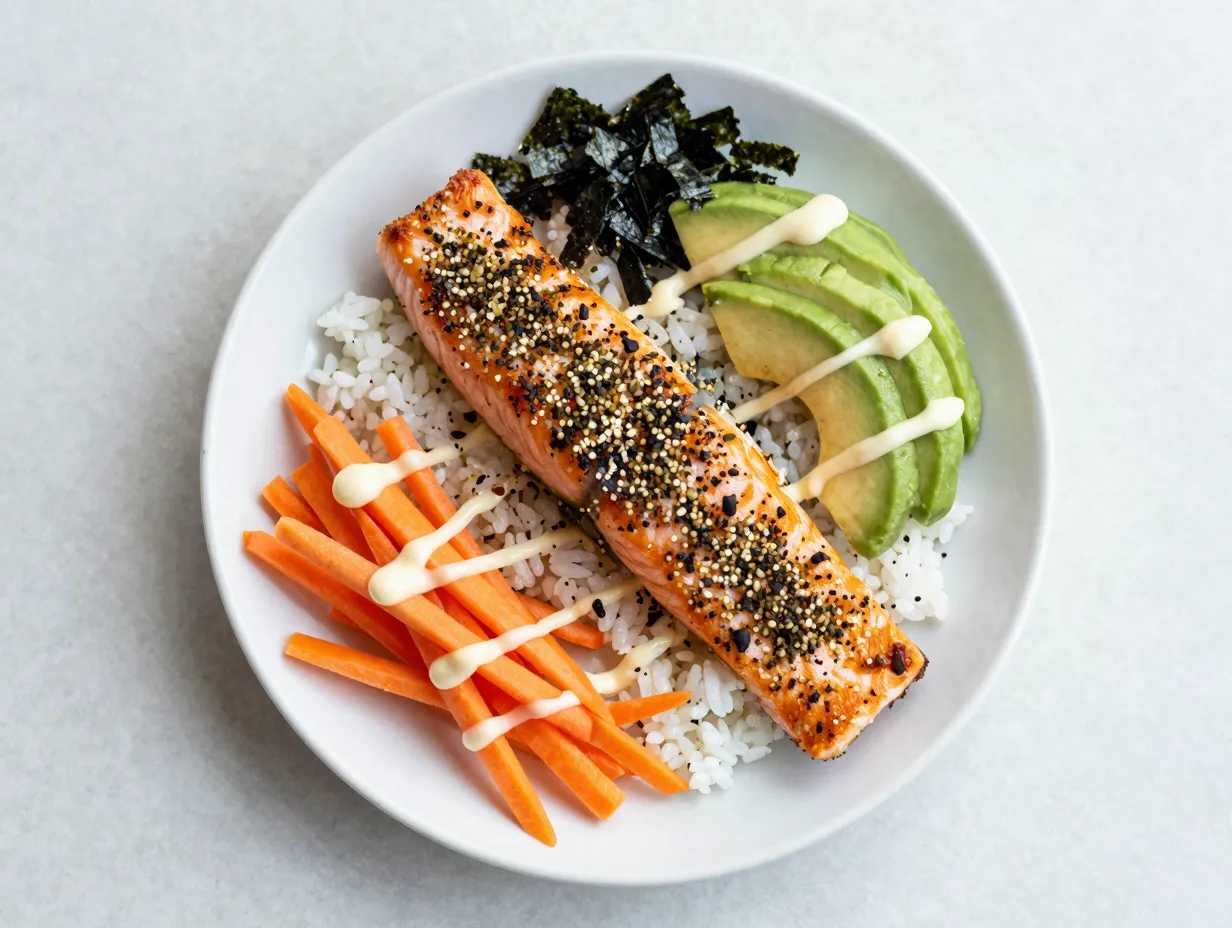
Furikake is a Japanese seasoning blend made from dried seaweed, sesame seeds, dried fish flakes, and salt. It adds a savory, oceanic depth to salmon that requires almost no effort. This bowl is the fastest of the nine and is ideal for nights when you need dinner on the table in under 20 minutes.
Key ingredients: salmon fillet, furikake seasoning, soy sauce, sesame oil, sushi rice, quick-pickled daikon, quick-pickled carrots, sliced avocado, nori sheets, Japanese mayo.
Preparation notes: Brush salmon with a mixture of soy sauce and sesame oil. Press furikake generously onto the top of the fillet. Bake at 400°F for 12 minutes. While the salmon bakes, make quick pickles by tossing thinly sliced daikon and carrots with rice vinegar, sugar, and salt for 10 minutes. Assemble over sushi rice with pickled vegetables, avocado, torn nori, and a drizzle of Japanese mayo. Total time: 18 minutes.
How to Build the Perfect Salmon Rice Bowl Every Time
Understanding the formula behind these 9 satisfying salmon rice bowl recipes that are healthy, fast, and absolutely delicious allows you to improvise confidently with whatever ingredients you have on hand.
The five-component framework:
- Base, Sushi rice, brown rice, jasmine rice, cauliflower rice, or mixed greens. The base determines the calorie density and overall texture of the bowl.
- Protein, Salmon prepared by any method: pan-seared, baked, broiled, grilled, or served raw as poke. A 4 to 6 ounce fillet per serving is standard.
- Vegetables, Aim for at least two different vegetables to add color, fiber, and nutritional variety. Mix raw and cooked for textural contrast.
- Sauce, The sauce is the soul of the bowl. It should complement the salmon’s preparation method. Teriyaki and miso work with pan-seared fish; spicy mayo works with baked or raw; tzatziki works with herb-marinated.
- Garnish, Sesame seeds, furikake, sliced green onion, pickled ginger, nori, or fresh herbs. Garnishes add the finishing layer of flavor and visual appeal.
Meal prep strategy for the week:
- Cook a large batch of rice on Sunday and refrigerate in portioned containers.
- Prepare one or two marinades and keep salmon portions in the refrigerator for up to two days.
- Slice and store vegetables in airtight containers.
- Make sauces in advance, most keep for up to a week in the refrigerator.
With this approach, assembling any of the 9 satisfying salmon rice bowl recipes that are healthy, fast, and absolutely delicious takes fewer than 10 minutes on a weeknight.
Common Mistakes to Avoid When Making Salmon Rice Bowls
Even experienced cooks make these errors. Avoiding them will immediately improve your results.
Overcooking the salmon. Salmon is done when it reaches an internal temperature of 125°F to 130°F for medium, or 145°F for well-done. Overcooked salmon becomes dry and chalky, which undermines the entire bowl. Use a meat thermometer until you develop an intuitive feel for doneness.
Using cold rice. Rice straight from the refrigerator is dense and clumpy. Always reheat it with a splash of water in the microwave or a covered pan before assembling your bowl. Warm rice absorbs sauces more effectively and creates a more cohesive eating experience.
Skipping the acid. Every great salmon rice bowl has an acidic element, pickled vegetables, rice vinegar, lemon juice, or lime. Acid brightens the entire dish and balances the richness of the fish and any creamy sauces. Do not skip it.
Under-seasoning the rice. Plain white rice is a neutral canvas. Season it lightly with rice vinegar and a pinch of salt, or use a small amount of seasoned rice vinegar, to give it flavor that complements rather than competes with the toppings.
Not drying the salmon before searing. Surface moisture is the enemy of a good sear. Pat the fillet dry with paper towels before it goes into the pan, regardless of whether it was marinated.
Salmon Selection and Sustainability in 2026
The quality of your salmon directly affects the quality of your bowl. Here is a practical guide to making smart choices at the fish counter.
Wild-caught vs. farmed: Wild-caught Pacific salmon (sockeye, king, coho) generally has a more intense flavor and higher omega-3 content than farmed Atlantic salmon. However, responsibly farmed salmon from certified operations is a nutritionally sound and more affordable option.
Freshness indicators: Fresh salmon should smell like the ocean, not like fish. The flesh should be firm and spring back when pressed. The color should be vibrant, deep orange-red for sockeye, lighter pink for Atlantic.
Sustainability certifications to look for:
- Marine Stewardship Council (MSC) certification for wild-caught
- Aquaculture Stewardship Council (ASC) certification for farmed
- Best Aquaculture Practices (BAP) four-star rating
Buying sustainably certified salmon supports responsible fishing and aquaculture practices, which matters for the long-term health of ocean ecosystems.
Conclusion
The appeal of a great salmon rice bowl is not complicated. It is a complete, balanced meal that comes together quickly, tastes genuinely good, and supports your health goals without requiring you to compromise on flavor or satisfaction. The 9 satisfying salmon rice bowl recipes that are healthy, fast, and absolutely delicious in this guide give you a full week of dinner options with genuine variety, from the sweet-savory depth of miso glaze to the bright, herbaceous lift of a Mediterranean preparation.
Your actionable next steps:
- Choose one recipe from this list and make it this week. Start with the teriyaki bowl or the furikake bowl if you want the fastest possible path to success.
- Set up a basic meal prep routine on Sunday. Cook a batch of rice, portion your salmon, and prep at least one sauce. That 30-minute investment will save you significant time and decision fatigue throughout the week.
- Build your pantry with the core ingredients that appear across multiple recipes: soy sauce, sesame oil, rice vinegar, mirin, and Japanese mayo. With these five items on hand, you can make six of the nine bowls without a special shopping trip.
- Experiment with the five-component framework once you are comfortable with the base recipes. Swap the rice for cauliflower rice, try a different sauce, or add a new vegetable. The formula is flexible by design.
The best salmon rice bowl is the one you actually make and eat. Start simple, build confidence, and let the recipes in this guide become a foundation for your own variations.
References
- National Oceanic and Atmospheric Administration (NOAA). (2023). Fisheries of the United States: 2022 Annual Report. U.S. Department of Commerce.
- U.S. Department of Agriculture (USDA). (2023). FoodData Central: Salmon, Atlantic, farmed, cooked. Agricultural Research Service.
- Mozaffarian, D., & Rimm, E. B. (2006). Fish intake, contaminants, and human health: Evaluating the risks and the benefits. JAMA, 296(15), 1885-1899.
- Marine Stewardship Council. (2024). MSC Fisheries Standard Version 3.0. MSC.
- Aquaculture Stewardship Council. (2023). ASC Salmon Standard Version 1.4. ASC.
- Kris-Etherton, P. M., Harris, W. S., & Appel, L. J. (2002). Fish consumption, fish oil, omega-3 fatty acids, and cardiovascular disease. Circulation, 106(21), 2747-2757.