8 Ways to Make Homemade Spaghetti Sauce Easy Canned Tomatoes Can Totally Pull Off
A single 28-ounce can of whole peeled tomatoes has more concentrated flavor than two pounds of out-of-season fresh tomatoes. That fact alone should change how you think about weeknight cooking. Yet millions of home cooks still reach for jarred sauce out of habit, convinced that real homemade flavor requires a garden, a grandmother’s secret recipe, or at least a Saturday afternoon. None of those things are true.
Disclosure: This post contains affiliate links. As an Amazon Associate, we earn from qualifying purchases, and at no extra cost to you.
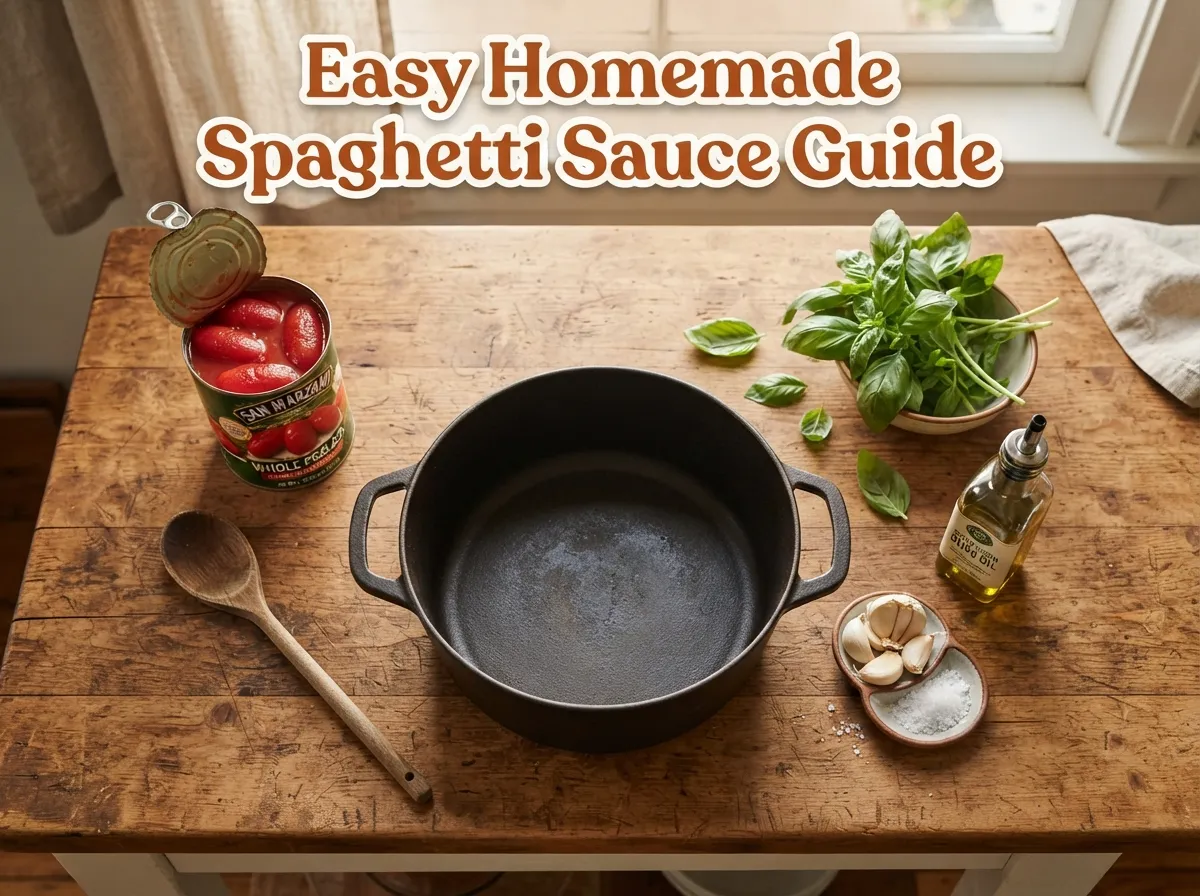
The truth is that 8 ways to make homemade spaghetti sauce easy canned tomatoes can totally pull off exist right now in your pantry, and most of them take less than 30 minutes. Whether you are cooking for one or feeding a crowd, canned tomatoes are a reliable, affordable, and genuinely delicious foundation for sauce that tastes far better than anything in a jar.
In this guide, I will walk you through each method with clear steps, honest tips, and the small details that separate a flat, forgettable sauce from one that makes people ask for the recipe.
Key Takeaways
- Sautéing aromatics before adding canned tomatoes is the single most important step for deep, layered flavor.
- A 15-to-25-minute uncovered simmer is all you need for a weeknight sauce that tastes genuinely homemade.
- Balancing sweetness and acidity is essential because canned tomatoes vary widely in natural sugar content.
- Pasta cooking water is a free, starchy upgrade that makes your sauce cling to noodles the way restaurant pasta does.
- Large-batch canning and quick pantry methods are both valid approaches, and each serves a different need.
Why Canned Tomatoes Beat Fresh for Sauce (Most of the Year)
Before diving into the 8 ways to make homemade spaghetti sauce easy canned tomatoes can totally pull off, it helps to understand why canned tomatoes are the right starting point in the first place.
Fresh tomatoes are seasonal. Outside of July and August in most of North America, the tomatoes at the grocery store are picked underripe, refrigerated during shipping, and arrive at your kitchen with muted flavor and high water content. Canned tomatoes, by contrast, are processed at peak ripeness. The heat from canning breaks down cell walls and concentrates sugars, which means the flavor is already halfway developed before you even turn on the stove [5].
San Marzano tomatoes, whether authentic DOP-certified or domestic grown in similar conditions, are the gold standard for sauce because of their low seed count, thick flesh, and natural sweetness. However, any quality whole peeled or crushed canned tomato will work well. The brand matters less than the technique.
A quick comparison of common canned tomato types:
| Type | Best Use | Texture |
|---|---|---|
| Whole peeled | Chunky or blended sauces | Firm, can be hand-crushed |
| Crushed | Quick sauces, meat sauces | Rustic, semi-smooth |
| Diced | Chunky, vegetable-forward sauces | Holds shape, less saucy |
| Tomato puree | Smooth, silky sauces | Very smooth, thinner |
| Tomato paste | Flavor booster, not a base alone | Very thick, concentrated |
The 8 Ways to Make Homemade Spaghetti Sauce Easy Canned Tomatoes Can Totally Pull Off
1. The Classic Sauté-and-Simmer Method
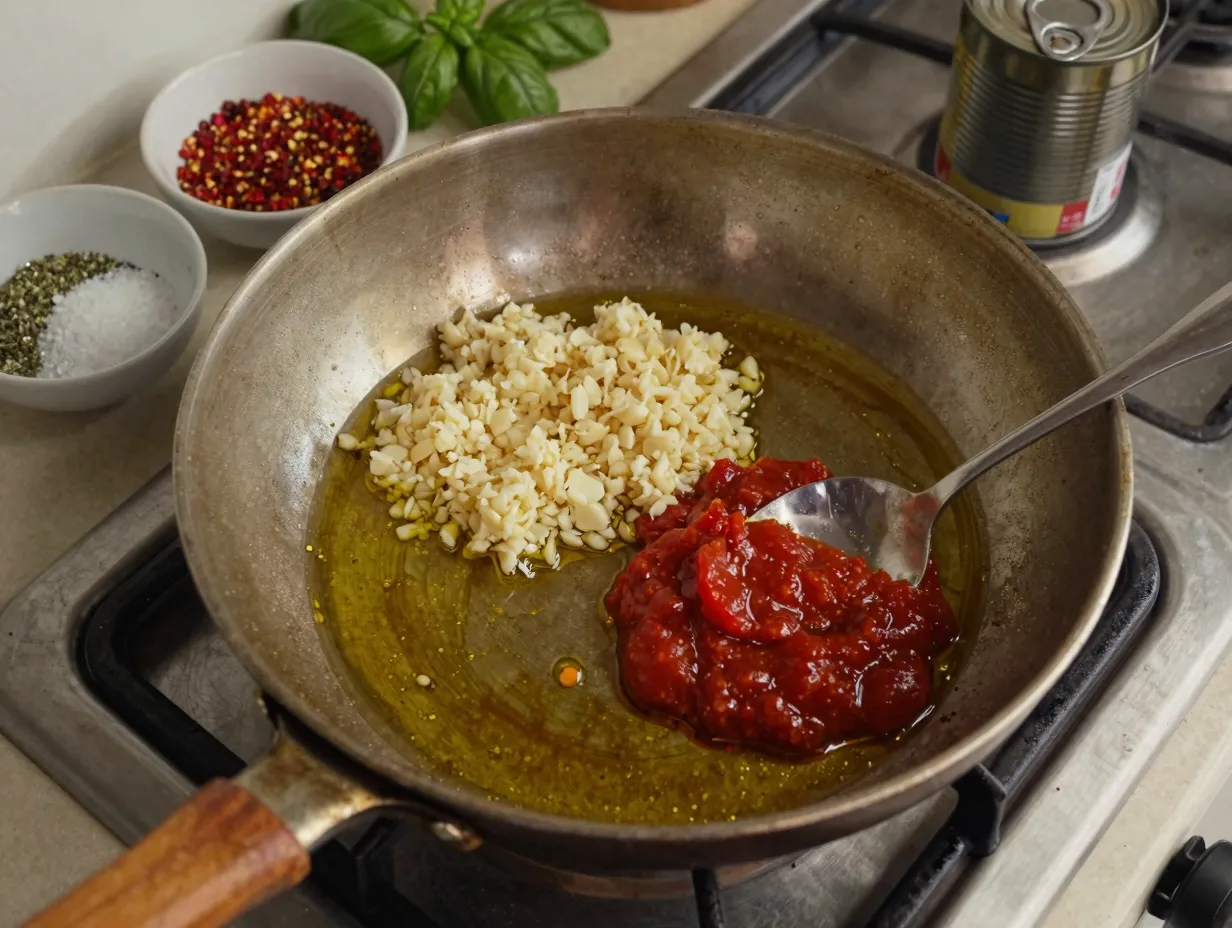
This is the foundation that every other method builds on. Start by heating two tablespoons of olive oil in a heavy-bottomed pan over medium heat. Add minced garlic, at least three cloves, ideally four, and let it soften for about 90 seconds without browning. Browning garlic at this stage creates bitterness that no amount of simmering will fix.
Once the garlic is fragrant, add a tablespoon of tomato paste and stir it into the oil. Let the paste cook for two minutes. This step, called blooming, caramelizes the sugars in the paste and adds a deep, almost meaty undertone to the finished sauce [1].
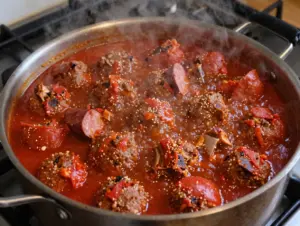
Pour in one 28-ounce can of crushed or hand-crushed whole peeled tomatoes. Add dried oregano, a pinch of red pepper flakes, salt, and black pepper. Stir well, bring to a gentle boil, then reduce heat and simmer uncovered for 15 to 20 minutes [4].
Why uncovered? Leaving the lid off allows excess water to evaporate, which concentrates flavor and thickens the sauce naturally. A covered pot will produce a thinner, more watery result.
Finish with a handful of fresh basil torn by hand. Never add fresh basil early, heat destroys the volatile oils that give it flavor. Add it at the very end, off the heat [3].
2. The Sweetness-and-Acid Balancing Method
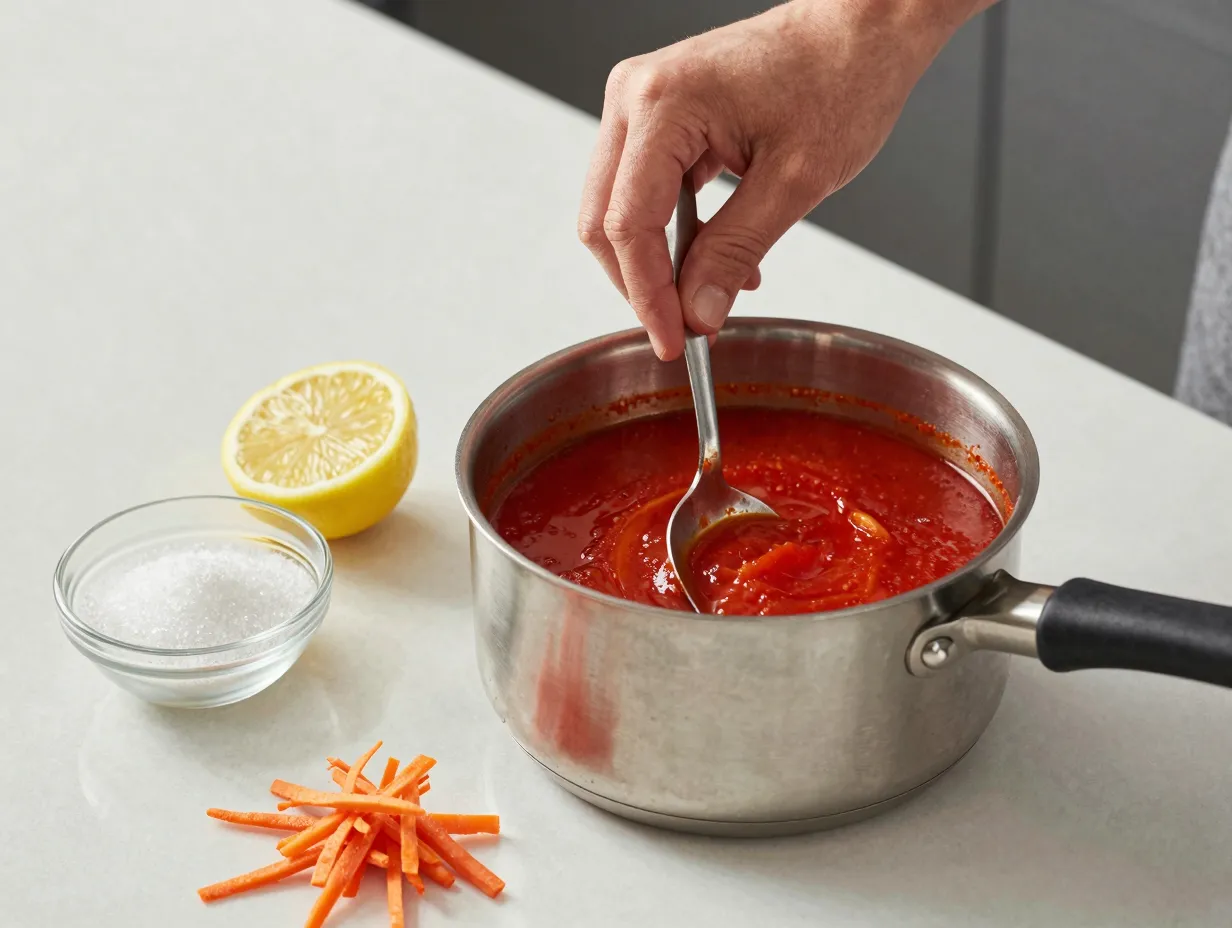
One of the most common complaints about homemade tomato sauce is that it tastes sharp or metallic. This is almost always a balance problem, not a quality problem. Canned tomatoes vary significantly in natural sugar content depending on the brand, the growing season, and the type of tomato used [2].
The fix is simple but requires tasting as you go. After your sauce has simmered for 15 minutes, taste it carefully. If it tastes harsh or acidic, add a small pinch of sugar, no more than half a teaspoon at a time, and stir well before tasting again. Sugar does not make the sauce sweet; it rounds off the sharp edges.
If the sauce tastes flat rather than sharp, it needs more acid. A small splash of red wine vinegar or a squeeze of lemon juice will brighten it immediately.
“The goal is not a sweet sauce or a tart sauce. The goal is a sauce where no single flavor dominates.”, a principle every Italian grandmother understood intuitively.
Some cooks add a small grated carrot during the sauté stage instead of sugar. The carrot releases natural sugars slowly as it cooks and dissolves into the sauce, providing sweetness without any added sugar at all [5]. Both approaches work. The carrot method is slower but more nuanced.
3. The Dried-Herbs-Early, Fresh-Herbs-Late Method
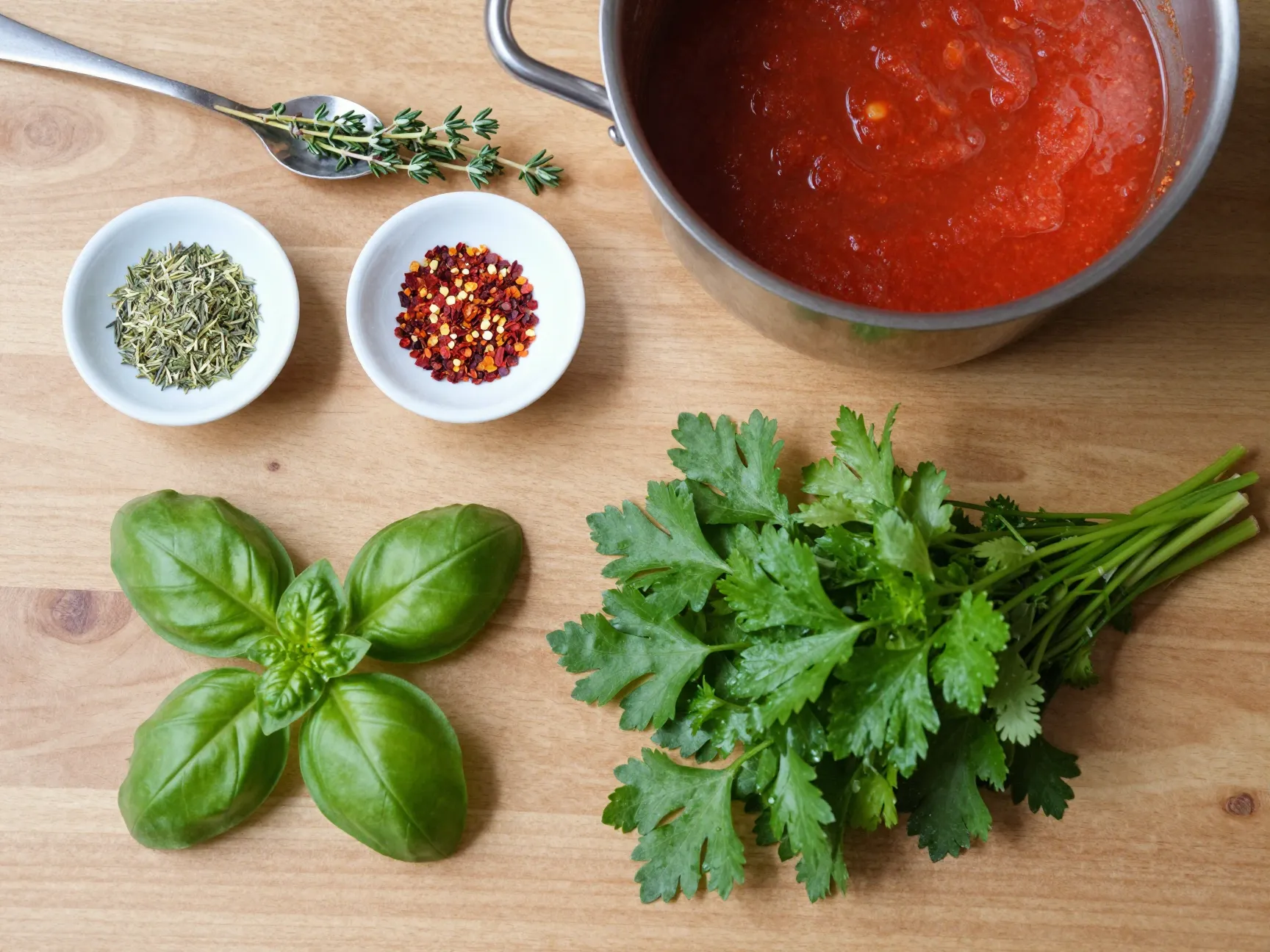
Herb timing is one of the most misunderstood elements of tomato sauce. The current consensus among recipe developers and professional cooks is clear: dried herbs go in early, fresh herbs go in at the end [3].
Dried herbs need heat and time to rehydrate and release their flavor compounds. Adding dried oregano, dried basil, or dried thyme at the beginning of the simmer gives them 15 to 20 minutes to fully bloom into the sauce. Adding them at the end produces a dusty, undercooked herb flavor that sits on top of the sauce rather than integrating with it.
Fresh herbs work in the opposite direction. Fresh basil, fresh parsley, and fresh oregano contain volatile aromatic compounds that evaporate quickly under heat. Add them in the last 60 seconds of cooking, or better yet, stir them in after you remove the pan from the heat.
A reliable herb combination for canned tomato sauce:
- 1 teaspoon dried oregano (added at the start)
- 1/2 teaspoon dried thyme (added at the start)
- 1/4 teaspoon red pepper flakes (added at the start)
- 8 to 10 fresh basil leaves, torn (added at the very end)
- 2 tablespoons fresh flat-leaf parsley, chopped (added at the very end)
This layered approach creates a sauce with both depth and brightness, two qualities that are very hard to achieve if you add everything at the same time [1].
4. The Pasta Cooking Water Upgrade
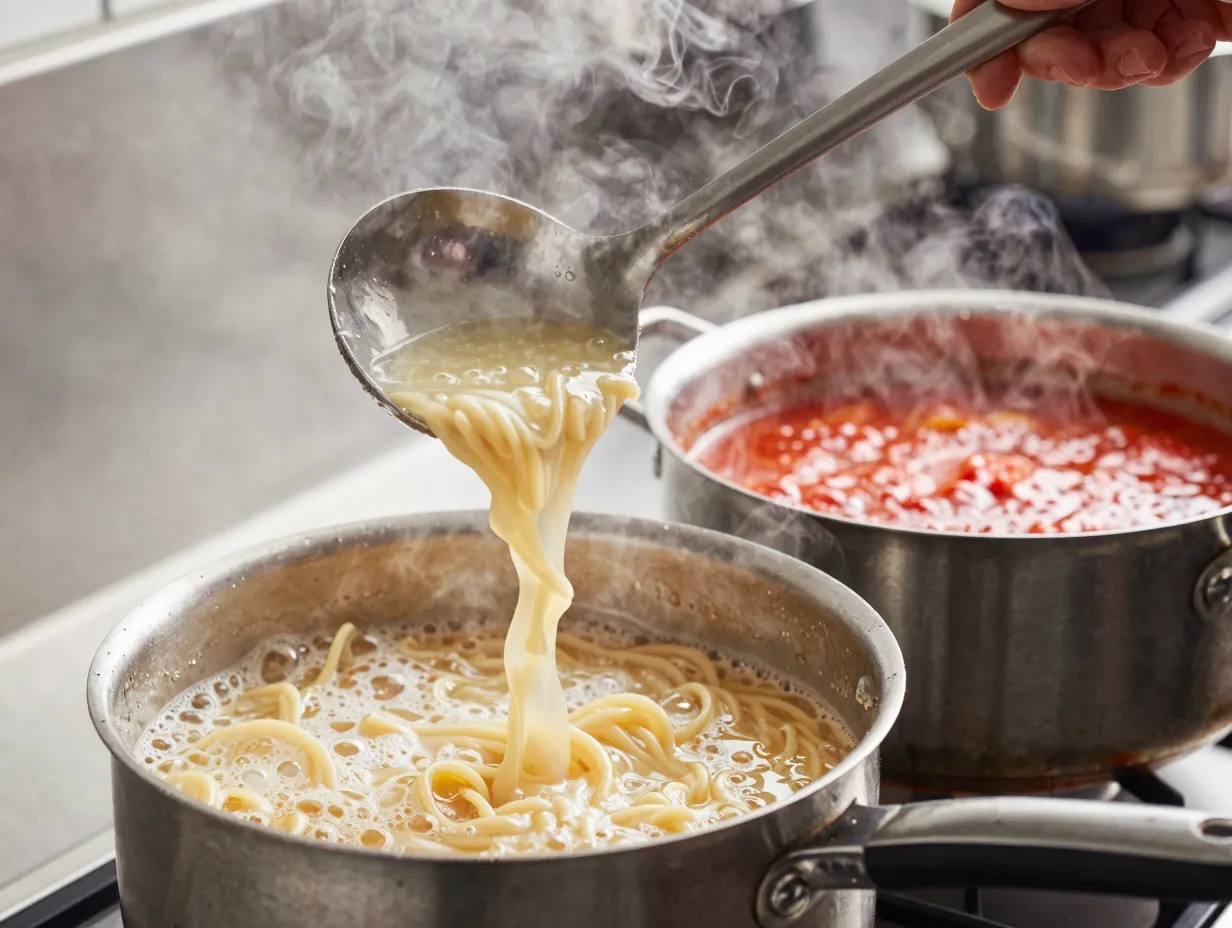
This is the single easiest upgrade most home cooks are not using, and it costs nothing. When you cook pasta, the water becomes thick with dissolved starch. That starchy water is a natural emulsifier, meaning it helps fat and water-based ingredients bind together smoothly.
Before you drain your pasta, scoop out at least one full cup of the cooking water and set it aside. When you toss the cooked pasta with the sauce, add a splash of the pasta water, start with two or three tablespoons, and toss everything together over medium heat for 60 to 90 seconds. The starch helps the sauce coat every strand of pasta evenly, and the result looks and tastes noticeably more like restaurant pasta [7].
This technique is standard practice in professional Italian kitchens. The pasta water also loosens a sauce that has thickened too much during simmering, which is a common issue when you simmer uncovered for the full 20 to 25 minutes.
Important note: Do not salt your pasta water lightly. Salt it aggressively, it should taste pleasantly salty, like mild seawater. Under-salted pasta water provides almost no flavor benefit when added to the sauce.
5. The Immersion Blender Texture Control Method
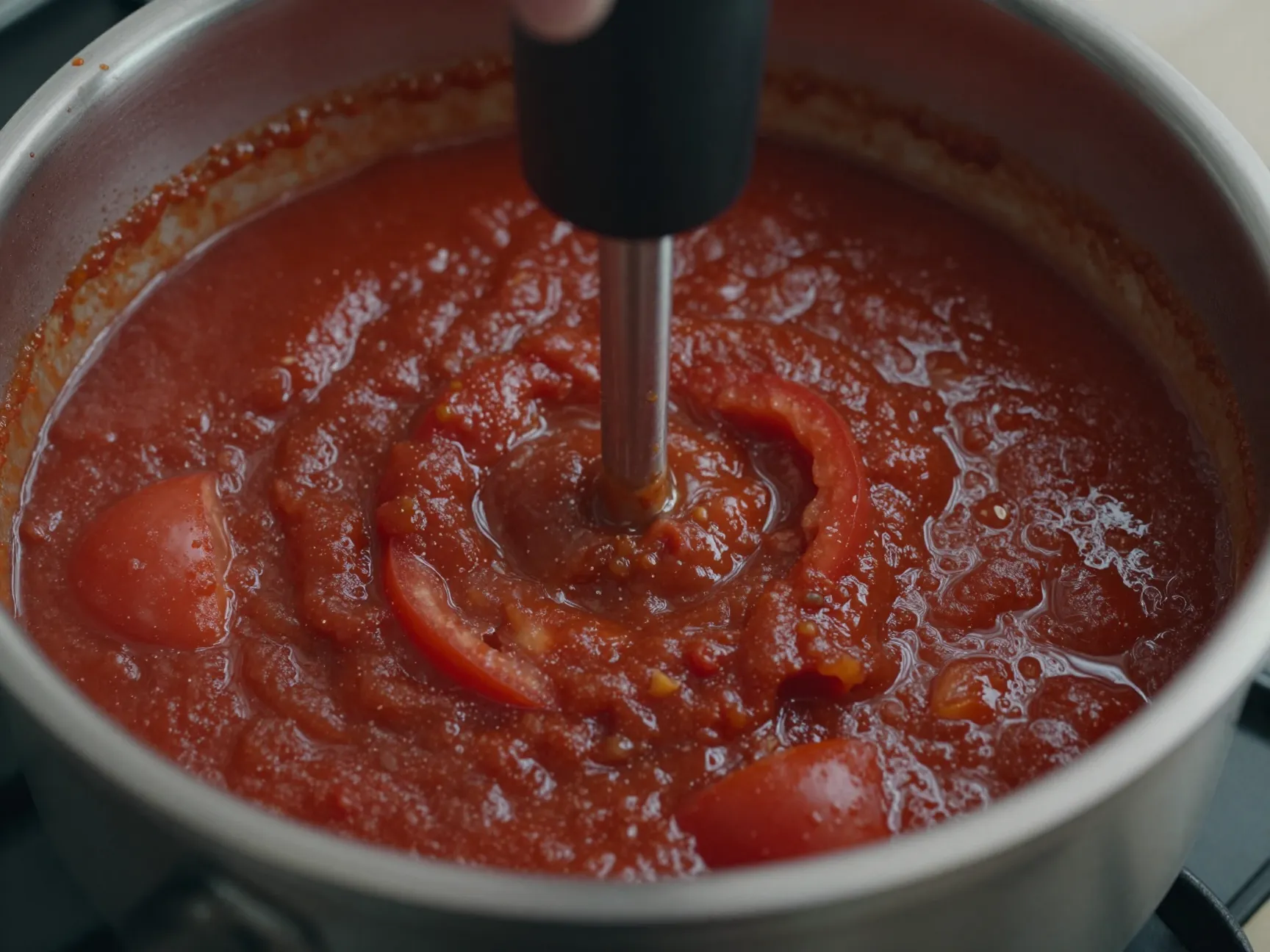
Not everyone wants the same texture in their spaghetti sauce. Some people prefer a completely smooth, silky sauce. Others want a rustic, chunky sauce with visible pieces of tomato. Most people want something in between. The immersion blender gives you precise control over exactly where on that spectrum your sauce lands [5].
After the sauce has finished simmering, remove it from the heat. Use an immersion blender directly in the pot and blend for just three to five seconds at a time, checking the texture after each pass. Stop when the sauce reaches the consistency you want.
If you do not own an immersion blender, you can transfer a portion of the sauce to a standard blender, blend it smooth, and stir it back into the chunky remainder. This hybrid approach creates a sauce that has body and smoothness at the same time.
A few cautions when blending hot sauce:
- Never fill a standard blender more than halfway with hot liquid.
- Hold the lid down firmly with a folded kitchen towel, not your bare hand.
- Start on the lowest speed setting and increase gradually.
The immersion blender method has become increasingly popular in beginner cooking tutorials because it solves the texture problem without requiring any additional ingredients or time [6].
6. The Ground Meat Addition Method
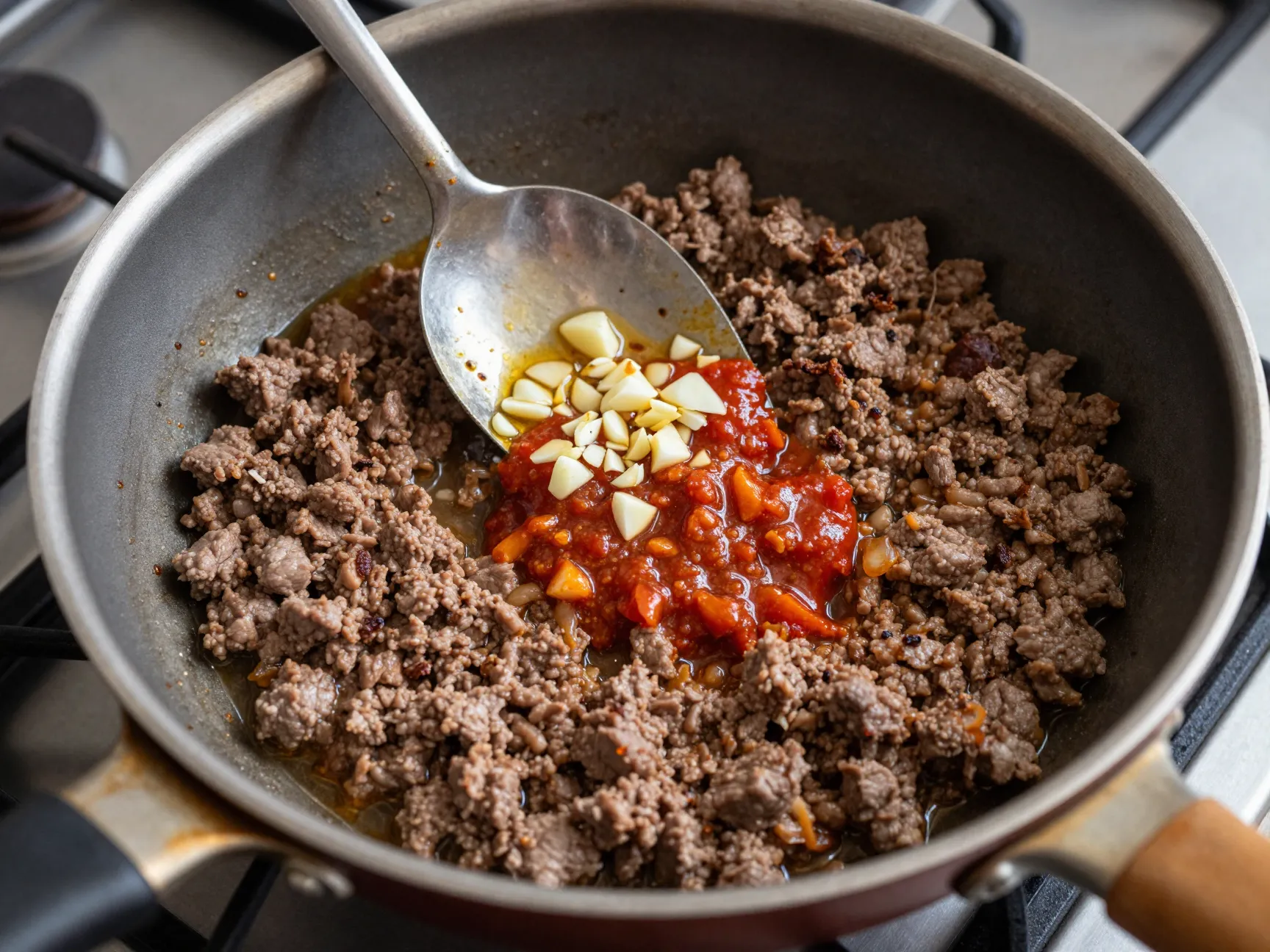
Adding ground meat to a canned tomato sauce follows the same core technique but requires one additional step: browning the meat before the tomatoes go in. This step is non-negotiable. Meat that is added directly to liquid turns gray and steams rather than browns, and you lose the deep, savory flavor that comes from the Maillard reaction.
Heat your pan over medium-high heat before adding any oil. Add one pound of ground beef, ground pork, or a 50/50 combination of both. Break the meat into small pieces and let it cook without stirring for two to three minutes. You want a brown crust to form on the bottom of the pan before you start breaking it up further [8].
Once the meat is fully browned, drain excess fat if needed, then push the meat to the sides of the pan. Add your olive oil, garlic, and tomato paste to the center of the pan and proceed with the classic sauté method from step one. The browned bits on the bottom of the pan, called fond, will dissolve into the sauce as you add the tomatoes, adding another layer of savory depth.
Simmer the meat sauce for at least 20 to 25 minutes to allow the flavors to fully integrate. Meat sauces benefit from slightly longer cooking times than plain tomato sauces [2].
7. The Quick Pantry-Style Method
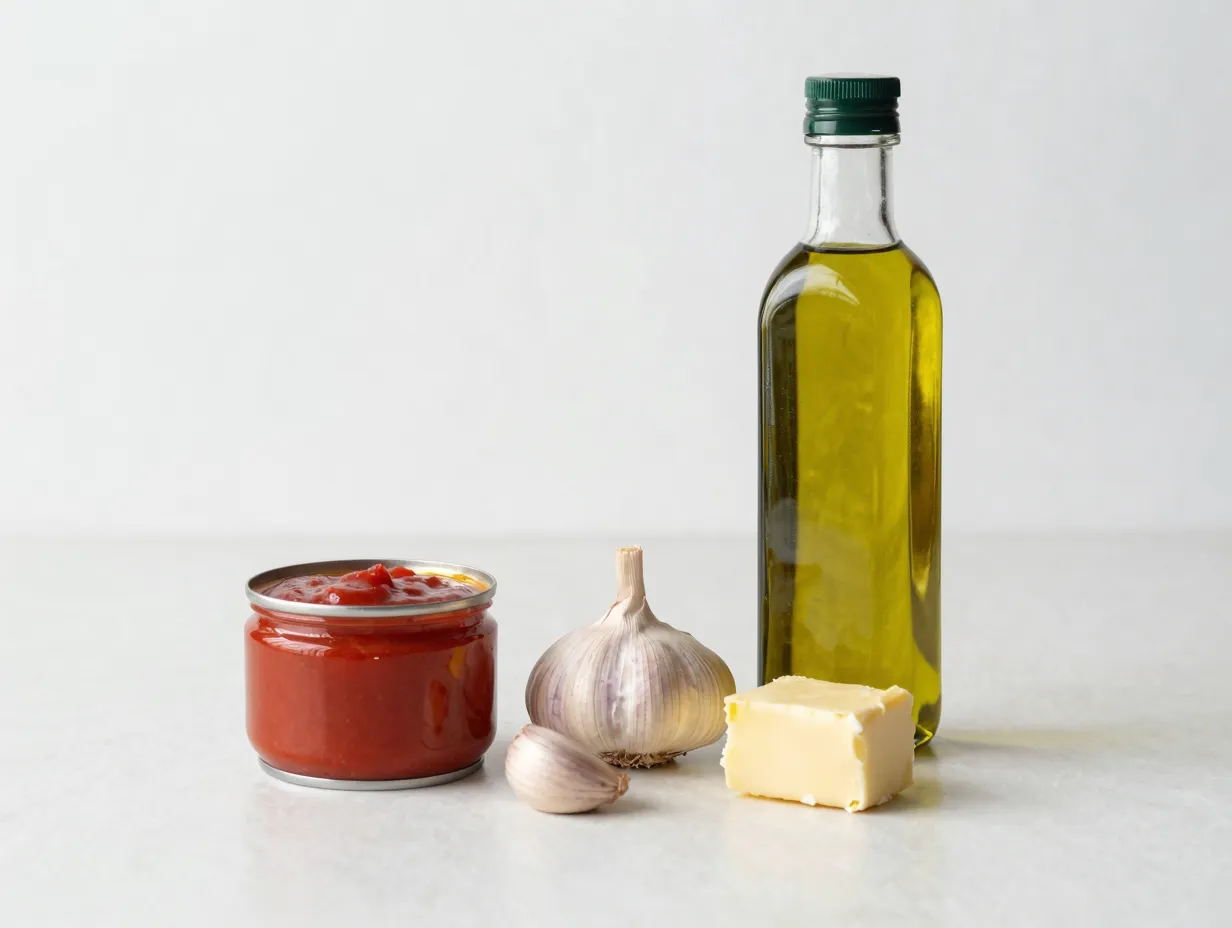
Sometimes you have 15 minutes and a can of tomato sauce, not whole tomatoes, not crushed tomatoes, but the plain, smooth tomato sauce that comes in a small can. This is the most stripped-down version of the 8 ways to make homemade spaghetti sauce easy canned tomatoes can totally pull off, and it works better than most people expect.
Sauté garlic in olive oil for 90 seconds. Add the canned tomato sauce directly. Season with salt, pepper, dried oregano, and a pinch of red pepper flakes. Simmer for 10 minutes. Finish with fresh basil and a drizzle of good olive oil [10].
The key to making this quick method taste genuinely homemade rather than like heated-up canned sauce is the quality of your olive oil and the freshness of your garlic. These two ingredients do the heavy lifting when you do not have time for a long simmer.
A tablespoon of butter stirred in at the very end adds richness and rounds out the flavor in a way that olive oil alone cannot. This is a classic French technique that translates beautifully to Italian-American tomato sauce.
A quick pantry sauce made with care will always beat a slow sauce made carelessly.
For extra depth in a short time, add a tablespoon of tomato paste along with the canned sauce and let it cook for two minutes before adding any liquid. Even in a 15-minute sauce, this step makes a noticeable difference [7].
8. The Large-Batch Canning Method
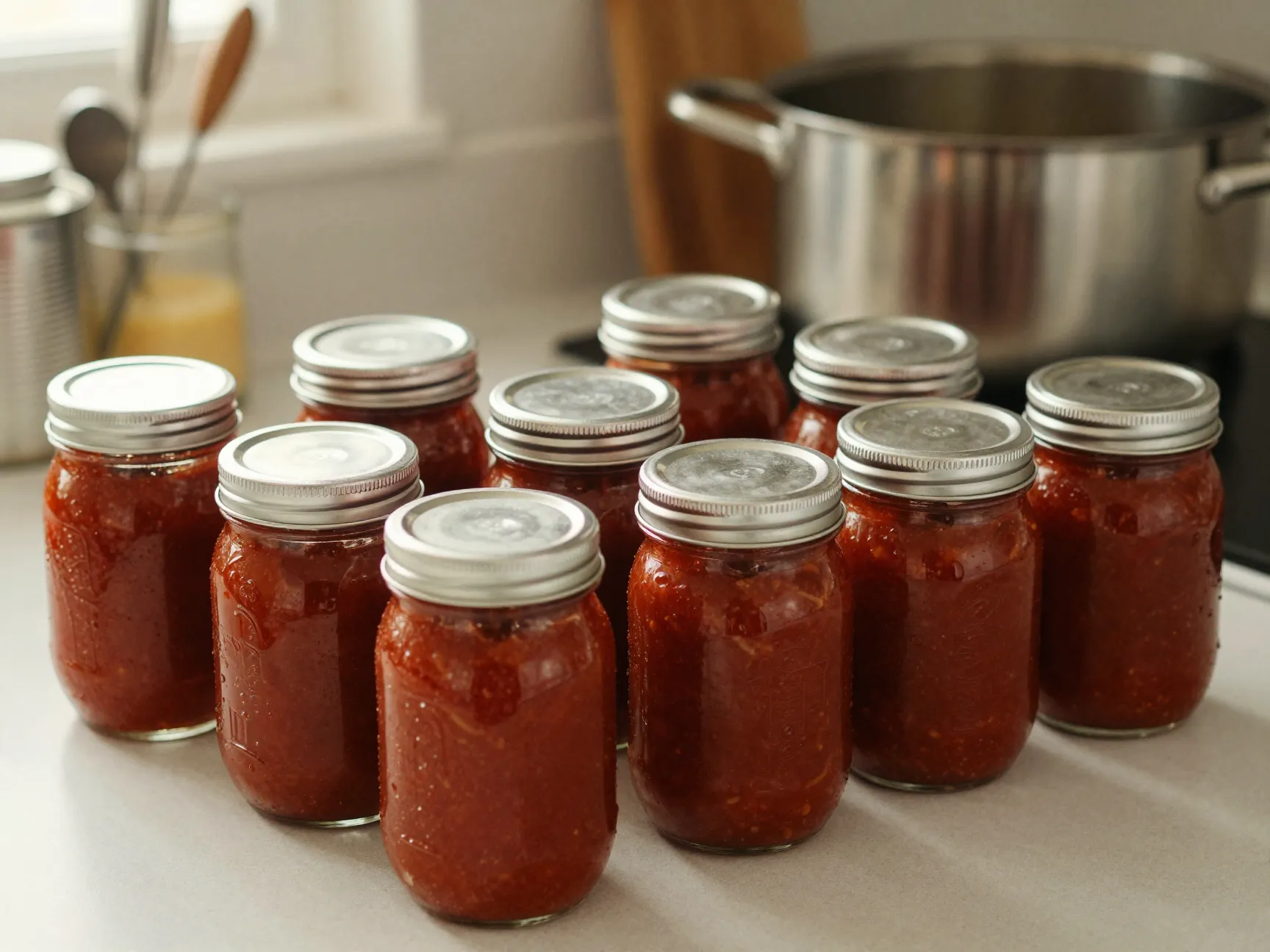
The first seven methods are weeknight solutions. This eighth method is a weekend project that pays dividends for months. Making a large batch of homemade spaghetti sauce and canning it properly means you always have a genuinely homemade sauce ready to go, no matter how busy the week gets.
The process starts with the same core technique: sauté aromatics, bloom tomato paste, add canned tomatoes, and simmer. The difference is scale. A large-batch recipe typically starts with six to eight large cans of crushed tomatoes and produces enough sauce to fill eight to ten pint jars [9].
Critical food safety notes for home canning:
- Tomato-based sauces must be acidified before canning. Add two tablespoons of bottled lemon juice per quart jar, or one tablespoon per pint jar. This ensures the pH is low enough to prevent bacterial growth [8].
- Use only tested, approved canning recipes from sources like the USDA or the National Center for Home Food Preservation.
- Process filled jars in a boiling water bath canner for the time specified in your tested recipe, typically 35 minutes for pints at sea level, adjusted for altitude.
- Do not add extra vegetables like mushrooms, peppers, or zucchini to a tested sauce recipe without re-testing, as these additions change the pH and density of the sauce in ways that affect safety.
Large-batch canning is a separate skill from weeknight cooking, but it rewards the effort. A pantry shelf lined with jars of your own sauce is one of the most satisfying things a home cook can build [9].
Troubleshooting Common Canned Tomato Sauce Problems
Even with the best technique, things sometimes go sideways. Here are the most common problems and their solutions.
The sauce is too thin. Simmer uncovered for an additional 10 minutes, or stir in a tablespoon of tomato paste. Never add flour to tomato sauce, it changes the flavor and texture in ways that are hard to fix.
The sauce is too thick. Add pasta cooking water a tablespoon at a time, stirring well between additions. Plain water works in a pinch, but pasta water adds starch and flavor.
The sauce tastes bitter. Bitter flavor usually comes from overcooked garlic or too much dried oregano. Add a pinch of sugar and a small knob of butter. Both help mask bitterness. For future batches, watch your garlic more carefully and measure your dried herbs.
The sauce has no depth. This usually means the aromatics were not properly sautéed, or the tomato paste was skipped. For the current batch, add a splash of red wine, let it reduce for two minutes, and finish with a generous drizzle of good olive oil.
The sauce is too salty. Add a raw, peeled potato cut into large chunks and simmer for 10 minutes. The potato absorbs some of the salt. Remove the potato before serving. Alternatively, add more tomatoes to dilute the salt concentration.
Storing and Freezing Your Homemade Sauce
One of the great advantages of making sauce from canned tomatoes is that it stores beautifully. A batch made on Sunday can feed you all week.
Refrigerator storage: Homemade tomato sauce keeps well in an airtight container in the refrigerator for up to five days. Let the sauce cool completely before sealing and refrigerating.
Freezer storage: Tomato sauce freezes exceptionally well. Pour cooled sauce into freezer-safe containers or zip-lock bags, leaving one inch of headspace for expansion. Frozen sauce keeps its quality for up to three months. Thaw overnight in the refrigerator or directly in a saucepan over low heat.
Avoid these storage mistakes:
- Do not store sauce in the pot it was cooked in. The metal can react with the acid in the tomatoes over time.
- Do not freeze sauce in glass jars unless they are specifically labeled as freezer-safe.
- Do not reheat sauce in the microwave without covering it, tomato sauce splatters aggressively.
Conclusion
The 8 ways to make homemade spaghetti sauce easy canned tomatoes can totally pull off are not secrets. They are techniques that have been refined over decades of home cooking and professional kitchens, and every single one of them is accessible to a beginner with a can opener and a decent pan.
Start with Method 1, the classic sauté-and-simmer, and get comfortable with the basic rhythm. Then add Method 4 (pasta cooking water) the very next time you make it. Those two changes alone will produce a sauce that is noticeably better than anything jarred.
Once you are confident with the basics, experiment with Method 2 (sweetness and acid balancing) and Method 3 (herb timing). These are the refinements that separate a good sauce from a great one. When you are ready to invest a weekend, Method 8 (large-batch canning) will give you months of homemade sauce with almost no weeknight effort.
The pantry is already stocked. The technique is now in your hands. Open the can and start cooking.
References
[1] Spaghetti Sauce Recipe – https://www.themediterraneandish.com/spaghetti-sauce-recipe/
[2] Easy Homemade Spaghetti Sauce With Canned Tomatoes – https://momwithaprep.com/easy-homemade-spaghetti-sauce-with-canned-tomatoes/
[3] Turn Your Canned Tomatoes Into A Quick Homemade Spaghetti Sauce – https://www.themakeyourownzone.com/turn-your-canned-tomatoes-into-a-quick-homemade-spaghetti-sauce/
[4] Easiest Homemade Spaghetti Sauce – https://thewholecook.com/easiest-homemade-spaghetti-sauce/
[5] Tomato Sauce From Canned Tomatoes – https://www.gettystewart.com/tomato-sauce-from-canned-tomatoes/
[6] Canned Tomatoes Homemade Spaghetti Sauce – https://www.theginghamapron.com/canned-tomatoes-homemade-spaghetti-sauce/
[7] 10738 How To Make Spaghetti Sauce From Can Of Tomato Sauce – https://food52.com/hotline/10738-how-to-make-spaghetti-sauce-from-can-of-tomato-sauce
[8] Canned Spaghetti Sauce – https://www.favfamilyrecipes.com/canned-spaghetti-sauce/
[9] Homemade Canned Spaghetti Sauce – https://cottageatthecrossroads.com/homemade-canned-spaghetti-sauce/
[10] Easy Spaghetti Sauce From Canned – https://cheapcooking.com/easy-spaghetti-sauce-from-canned/