8 Mango Cake Decoration Ideas That Make Every Celebration Look Bakery-Worthy
A single mango cake at a summer birthday party can stop an entire room mid-conversation. That is not an exaggeration. The golden-orange color, the glossy sheen, the layered fruit arrangements, they signal effort, artistry, and flavor before a single fork touches the plate. Yet most home bakers still reach for a bag of sprinkles and call it a day, leaving an enormous visual opportunity on the table.
Disclosure: This post contains affiliate links. As an Amazon Associate, we earn from qualifying purchases, and at no extra cost to you.
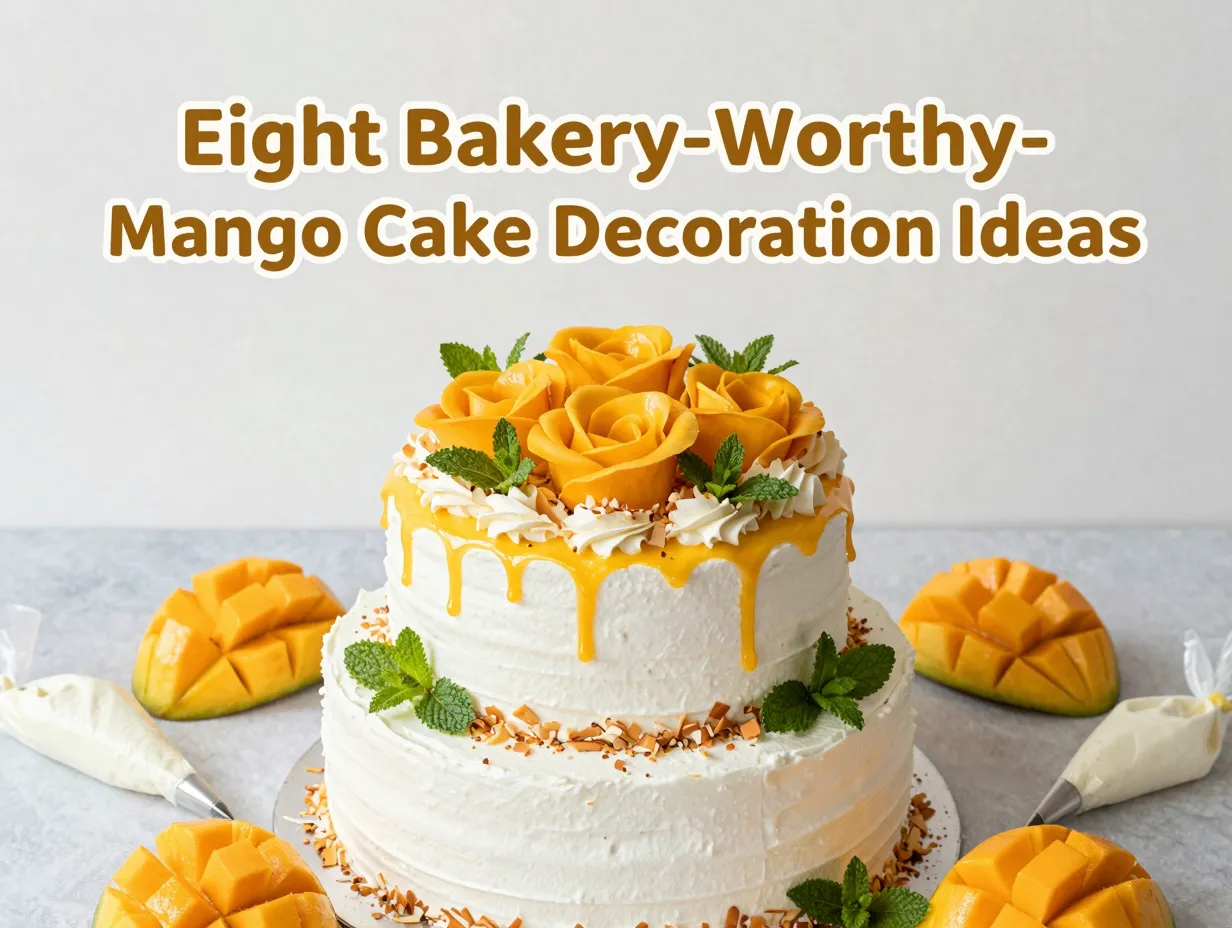
This guide covers the 8 mango cake decoration ideas that make every celebration look bakery-worthy, drawn from tested techniques that professional bakers use to transform simple sponge into show-stopping centerpieces. Whether you are planning a birthday, a baby shower, or a casual weekend gathering in 2026, these ideas will give your dessert table a level of polish that guests will photograph and remember. Each technique is accessible, scalable, and, most importantly, delicious.
Key Takeaways
- Fresh mango can be shaped, carved, glazed, and piped to create multiple distinct visual effects on a single cake.
- Mirror glazes and drip glazes deliver the highest perceived “professional” quality with relatively low skill requirements.
- Combining mango with complementary garnishes such as coconut and mint elevates both the appearance and the flavor profile.
- Buttercream piping with mango-tinted frosting allows for bold, colorful floral designs that photograph exceptionally well.
- Most of these eight decoration methods can be layered together or used individually, giving you full creative control over the final look.
Why Mango Deserves a Starring Role in Cake Decoration
Before diving into the specific techniques, it helps to understand why mango works so well as a decorating ingredient. The fruit sits at a rare intersection of color, texture, and flavor that few other fruits can match.
From a color standpoint, ripe mango ranges from pale yellow to deep amber-orange, tones that photograph beautifully under both natural and artificial light. From a texture standpoint, the flesh is firm enough to hold carved shapes but soft enough to blend into smooth glazes and creams. From a flavor standpoint, the natural sweetness pairs seamlessly with vanilla, coconut, lime, and cream-based frostings.
Professional pastry chefs have long understood this. Mango-based desserts appear on menus at high-end patisseries across Southeast Asia, the Caribbean, and increasingly across North America and Europe. Bringing that same energy to a home-baked celebration cake is entirely within reach when you have the right decoration framework.
The 8 mango cake decoration ideas that make every celebration look bakery-worthy outlined in this article are organized from the most beginner-friendly to the most technique-intensive, so you can choose based on your skill level and available time.
The 8 Mango Cake Decoration Ideas That Make Every Celebration Look Bakery-Worthy
1. Mango Rose Petals
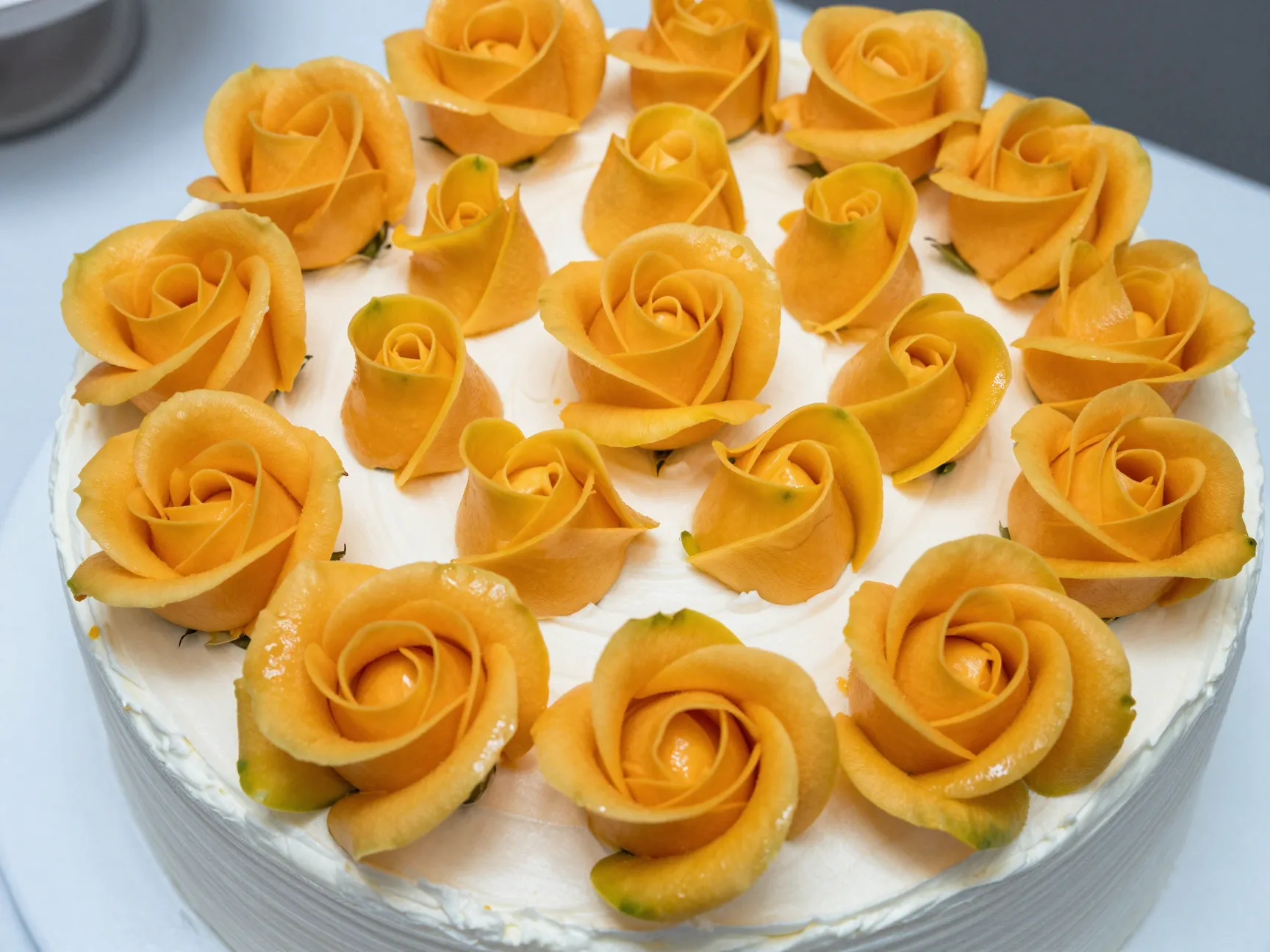
The mango rose petal technique is one of the most visually striking ways to decorate a cake, and it requires nothing more than a sharp knife, a steady hand, and a ripe mango. [1]
How it works: Peel the mango and use a vegetable peeler or a thin-bladed knife to create long, thin, flexible strips. Curl each strip into a loose spiral to form a rose shape, then arrange the roses across the top of the frosted cake. Start from the outer edge and work inward, slightly overlapping each rose to create a full, garden-style arrangement.
Pro tips:
- Use Ataulfo (Honey) mangoes for the most pliable, thin slices.
- Chill the arranged roses for 15 minutes before serving to help them hold their shape.
- Brush each rose lightly with a neutral glaze or apricot jam to add shine and prevent browning.
The result is an elegant floral presentation that looks far more complex than it actually is. This technique works especially well on white or cream-colored frosting, where the golden-orange color creates maximum contrast.
Best for: Bridal showers, Mother’s Day cakes, anniversary celebrations.
2. Mango Glaze Drip
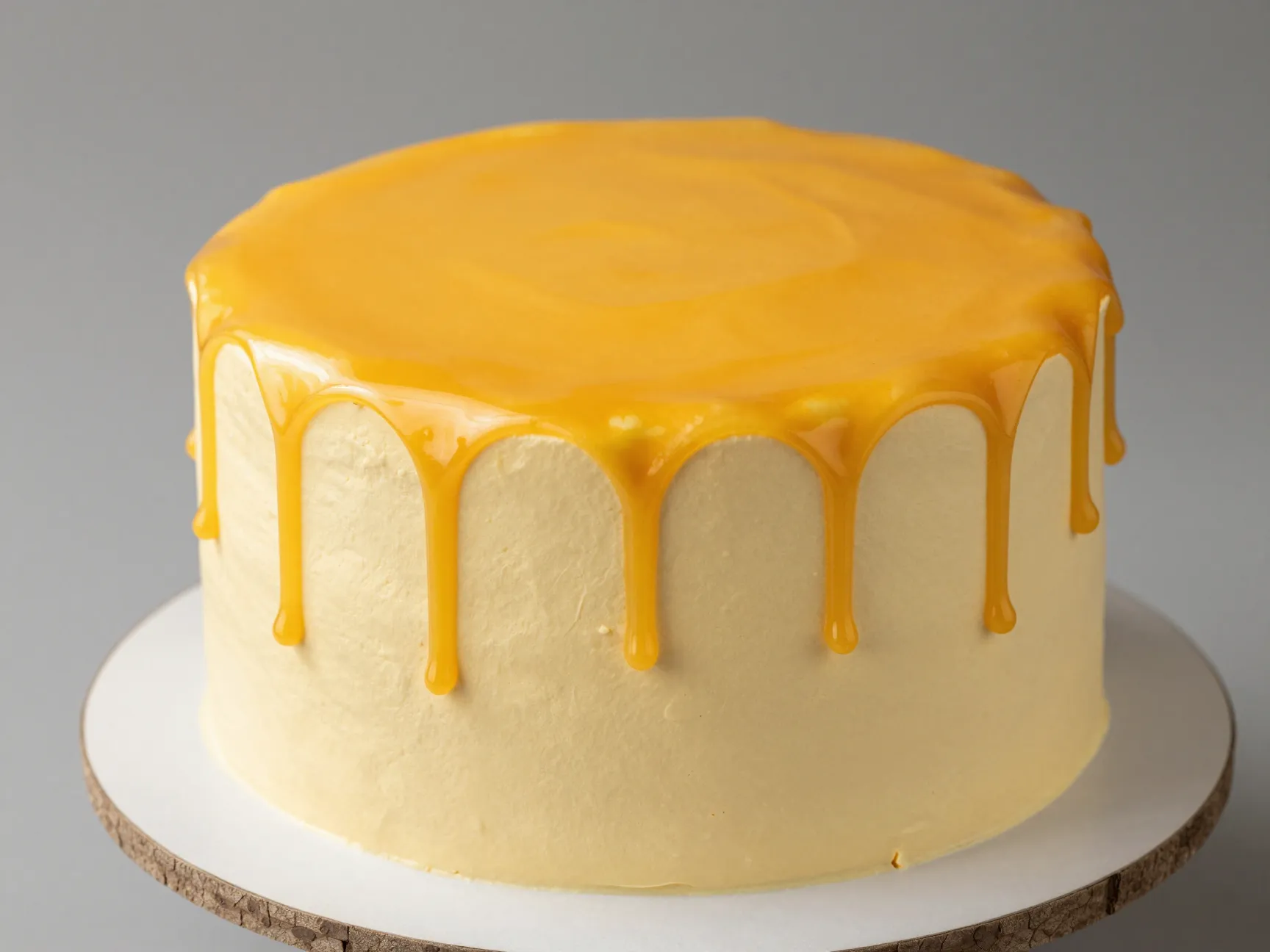
The drip cake trend has dominated bakery windows and social media feeds for several years, and for good reason, it delivers a modern, luxurious aesthetic with relatively straightforward execution. A mango glaze drip takes this concept and adds a tropical, fruit-forward dimension. [1]
How it works: Blend ripe mango into a smooth puree, then combine it with heavy cream, white chocolate, and a small amount of glucose syrup or corn syrup to create a pourable glaze. Heat the mixture gently until smooth, allow it to cool to a drizzleable consistency (around 90°F or 32°C), then pour it slowly over a chilled, crumb-coated cake. The glaze will flow over the edges and drip naturally down the sides.
Key variables to control:
- Temperature: Too warm and the glaze runs off completely; too cool and it clumps at the top.
- Cake temperature: A cold cake (straight from the refrigerator) helps the glaze set faster and creates cleaner drips.
- Consistency: Test on the back of a cold spoon before applying to the cake.
“The drip technique is essentially controlled chaos, you want the glaze to move, but you want to direct where it goes.”
The finished cake has a smooth, shiny mango glaze over the top with dramatic drips framing the sides. Paired with a white or pale yellow frosting, it looks like something from a high-end patisserie window. [1]
Best for: Birthday cakes, graduation parties, any event where visual impact is the priority.
3. Mango Cream Filling
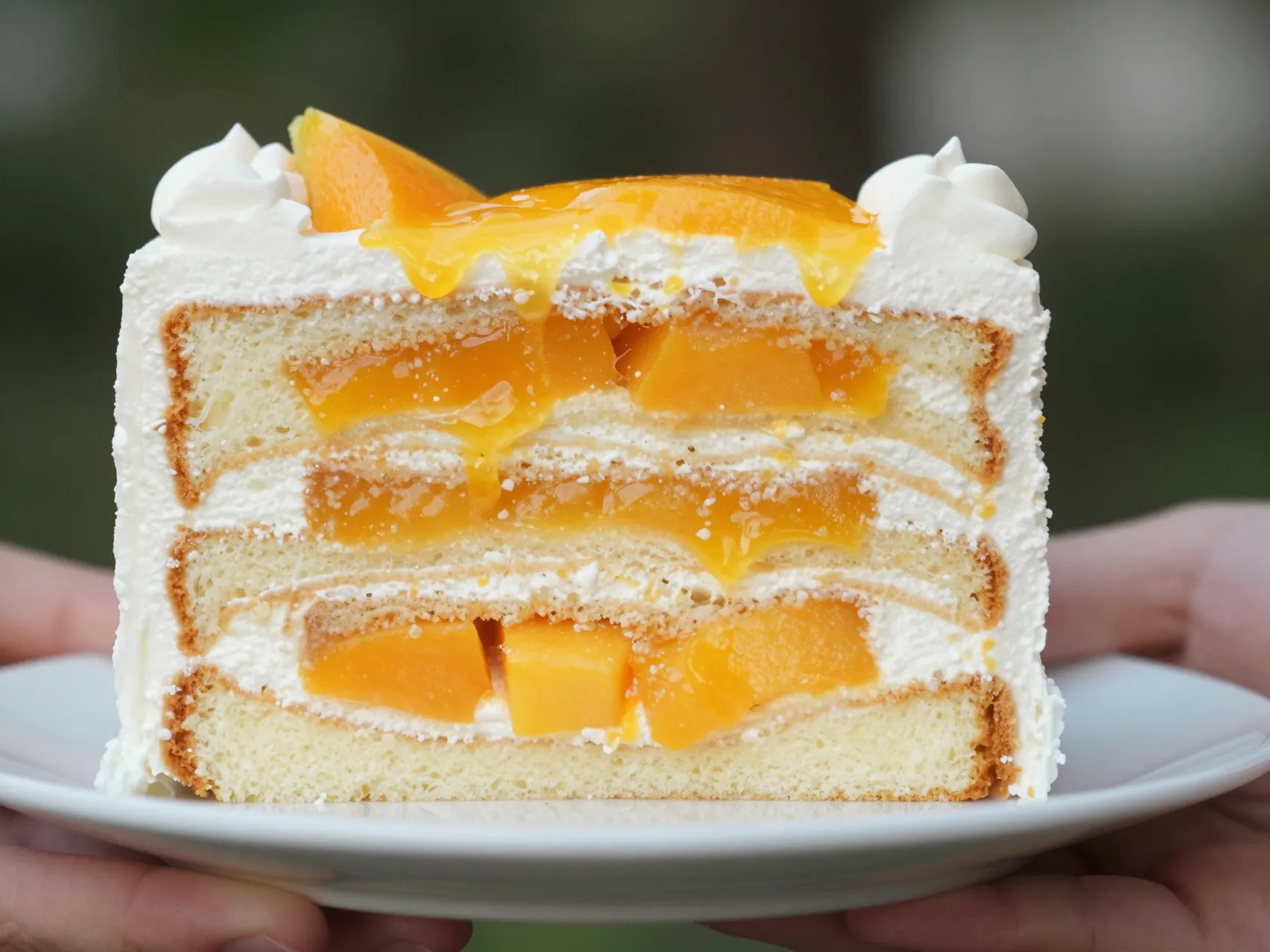
Not every decoration lives on the outside of a cake. The mango cream filling technique transforms the interior of the cake into a surprise visual element, one that reveals itself the moment a slice is cut. [1]
How it works: Fold mango puree into stabilized whipped cream or a mango-infused buttercream. Spread a generous layer between each cake tier before assembling. When the cake is sliced, the bright orange filling contrasts sharply with the pale cake layers and white frosting, creating a layered, professional-looking cross-section.
Filling options:
| Filling Type | Texture | Best Paired With |
|---|---|---|
| Mango whipped cream | Light, airy | Chiffon or sponge cake |
| Mango buttercream | Dense, rich | Vanilla or coconut cake |
| Mango curd | Silky, tangy | Almond or white chocolate cake |
| Mango mousse | Fluffy, delicate | Genoise or ladyfinger layers |
The mango cream filling technique also adds structural interest. When the cake is displayed whole, guests do not know what is inside, and that moment of revelation when the first slice is cut creates genuine excitement.
Best for: Layered celebration cakes, wedding cakes, any occasion where the “reveal” moment matters.
4. Mango Mirror Glaze
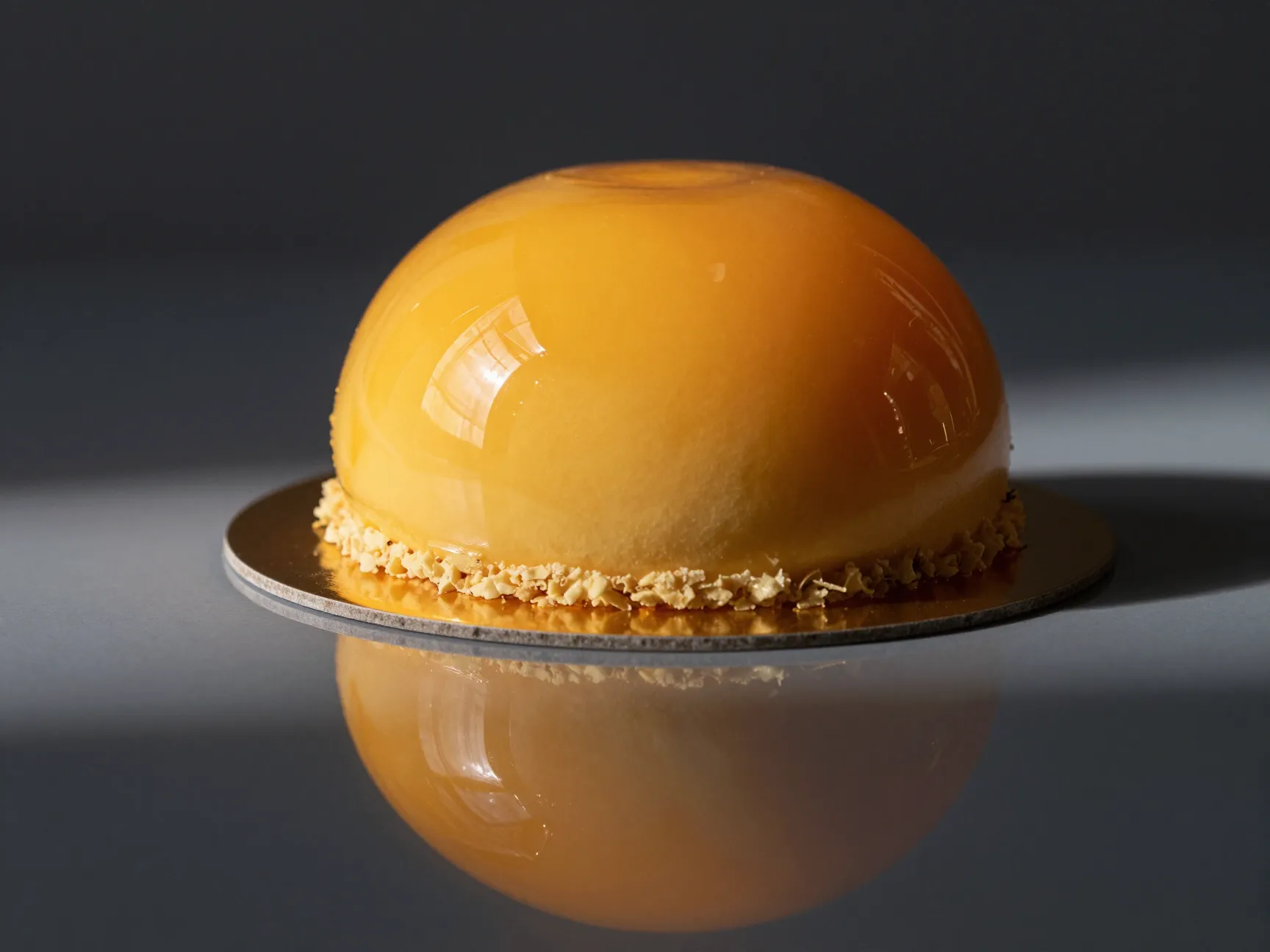
The mango mirror glaze is arguably the most technically impressive decoration on this list, but it is also the one that generates the most dramatic reactions. When done correctly, the surface of the cake reflects light like polished glass, giving it a finish that looks genuinely impossible to achieve at home. [1]
How it works: A mirror glaze is made from a combination of mango puree, sugar, condensed milk, gelatin, and white chocolate. The mixture is heated, blended until completely smooth, strained, and then cooled to approximately 95°F (35°C) before being poured over a frozen mousse cake or a well-chilled layer cake. The gelatin causes the glaze to set quickly on contact with the cold surface, creating that iconic reflective finish.
Critical steps:
- The cake must be completely frozen or very cold before pouring.
- The glaze must be poured in a single, continuous motion from the center outward.
- Do not spread or smooth the glaze with a spatula, let gravity do the work.
- Allow the glazed cake to thaw in the refrigerator for at least four hours before serving.
The mango mirror glaze produces a deep golden-orange surface that catches light from every angle. It is the decoration that makes guests ask, “Did you really make that at home?”, which is precisely the point.
Best for: Milestone birthdays, engagement parties, any event where the cake is the centerpiece.
5. Mango Flowers
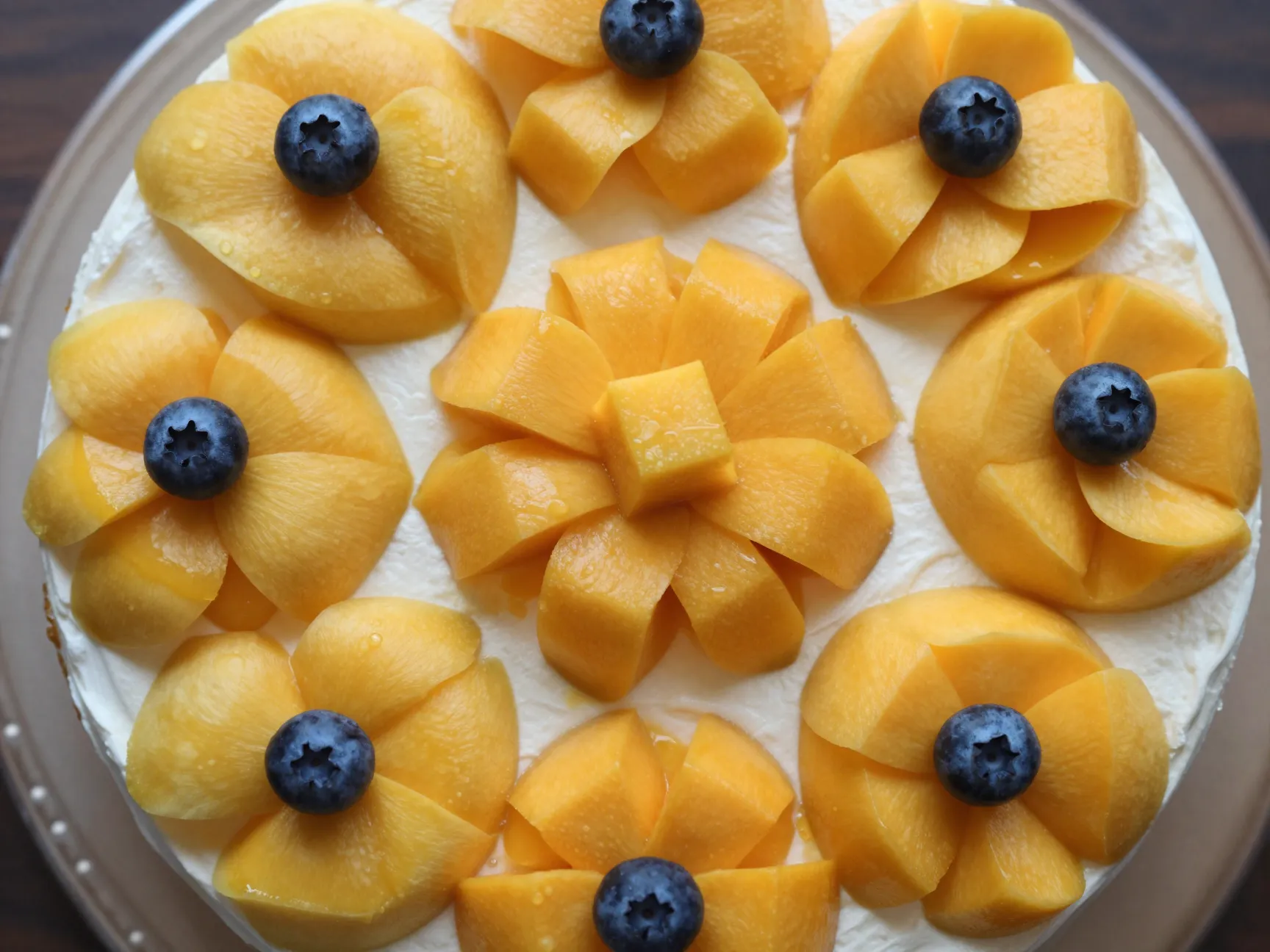
Where mango roses use thin strips rolled into spirals, mango flowers use a different carving approach to create flat, petal-shaped pieces arranged in a radial pattern, like a dahlia or a sunflower. [1]
How it works: Cut a firm, slightly underripe mango into thin, uniform slices approximately 2-3 mm thick. Use a small paring knife or a cookie cutter to trim each slice into a petal shape. Arrange the petals on the frosted cake surface starting from the outer edge, overlapping each layer slightly and working inward toward a central point. Place a small mango cube or a blueberry at the center to complete the flower.
Variation ideas:
- Use two different mango varieties (one yellow, one orange) to create two-tone flowers.
- Alternate mango petals with thin slices of kiwi or starfruit for a multi-color arrangement.
- Create a single large flower as a focal point, or scatter multiple smaller flowers across the top.
This technique rewards patience. The more precisely you cut and arrange the petals, the more the finished decoration resembles professional sugar flower work, but with the added advantage that it is edible, fresh, and far less time-consuming than sugar paste flowers.
Best for: Garden party cakes, spring and summer celebrations, artistic presentation.
6. Mango and Coconut Shredded Topping
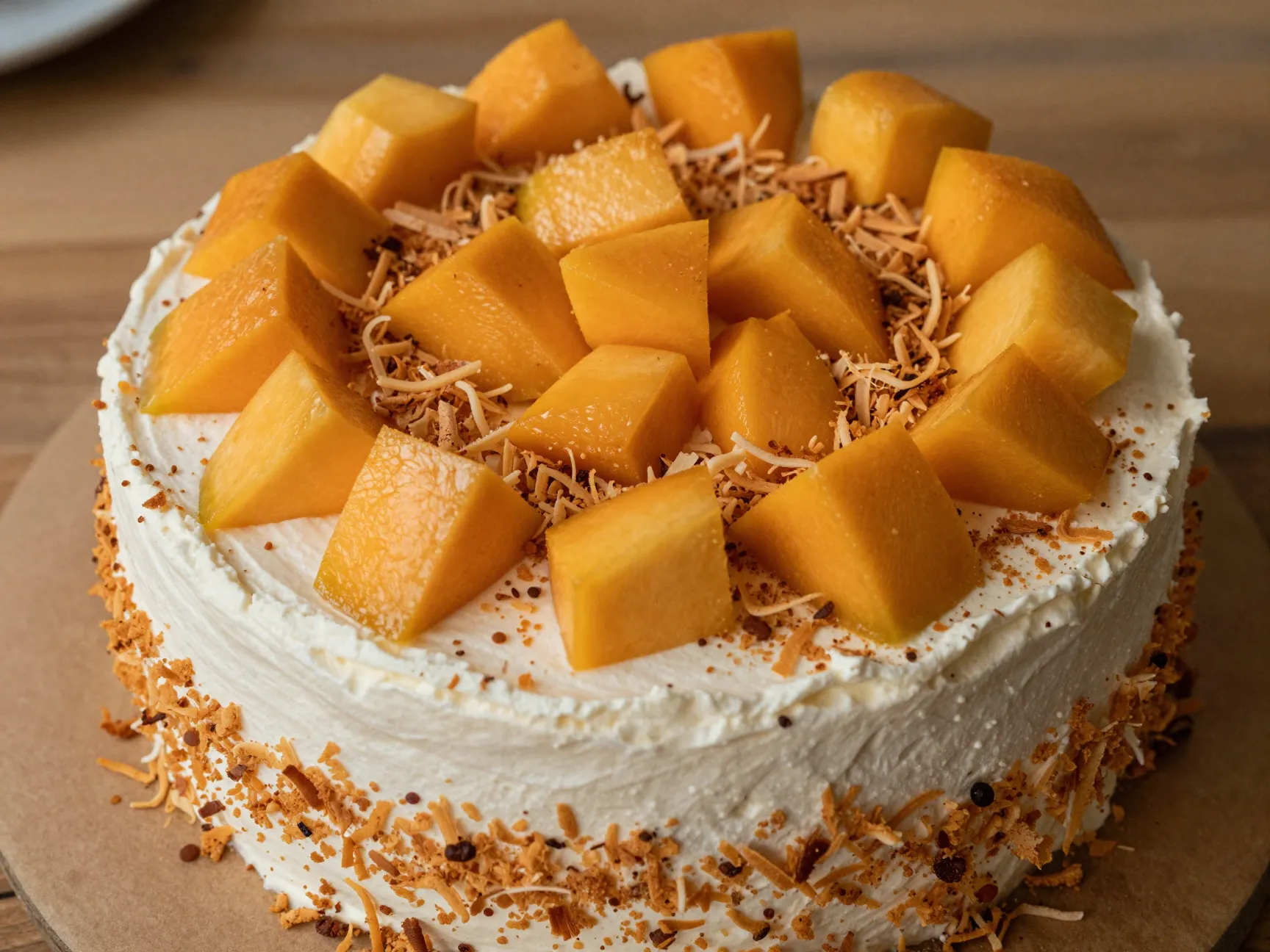
Sometimes the most effective decoration is also the most straightforward. The mango and coconut shredded topping is a rustic, textural approach that delivers strong visual and flavor impact with minimal technical skill required. [1]
How it works: Dice fresh mango into uniform cubes (approximately 1 cm) and scatter them generously across the frosted top of the cake. Follow with a liberal sprinkle of toasted shredded coconut. The combination of the bright orange mango against the golden-brown coconut creates a warm, tropical color palette that reads as both casual and intentional.
Enhancement options:
- Toast the coconut in a dry pan until lightly golden for deeper color and a nuttier flavor.
- Add a drizzle of passion fruit coulis or lime curd over the mango and coconut for additional color contrast.
- Press the coconut lightly into the sides of the cake as well as the top for a fully textured exterior.
I first tried this combination on a last-minute birthday cake when I had about 20 minutes to decorate. The result looked so deliberately styled that three people asked me which bakery I had ordered it from. The lesson: texture and color contrast do most of the visual work, regardless of how simple the technique is.
Best for: Casual celebrations, tropical-themed parties, quick decorating situations.
7. Mango Buttercream Flowers
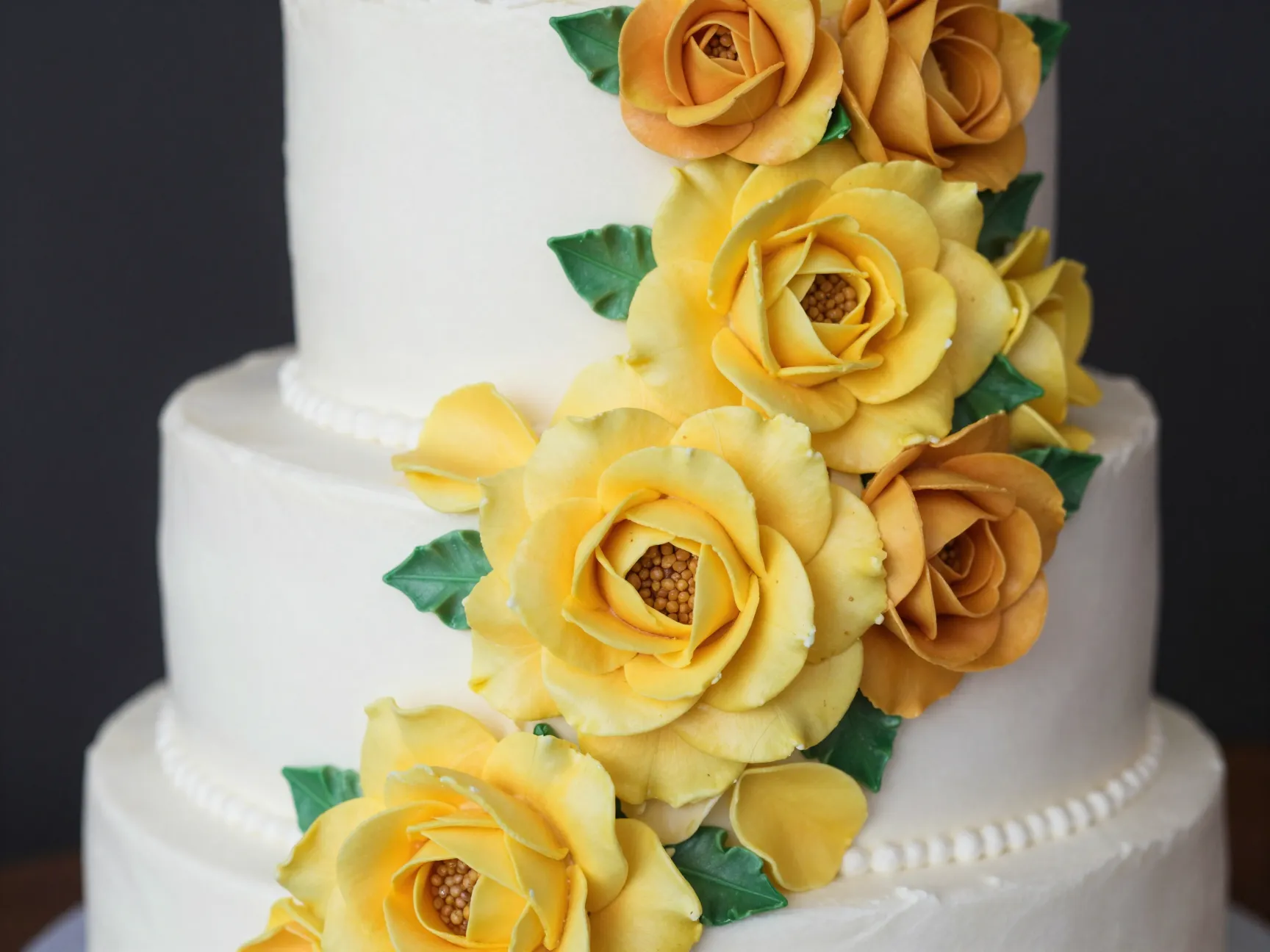
Piped buttercream flowers are a classic cake decoration technique. Adding mango flavoring and mango-tinted color to the buttercream takes this classic approach and gives it a fresh, tropical identity. [1]
How it works: Prepare a standard Swiss meringue or American buttercream, then flavor it with concentrated mango puree (reduced on the stovetop to remove excess moisture) and tint it with gel food coloring in shades ranging from pale yellow to deep amber. Load the colored buttercream into piping bags fitted with petal tips (Wilton 104 or 125) or star tips, and pipe roses, sunflowers, or open-cup flowers directly onto the cake surface or onto parchment squares for transfer.
Color gradient technique:
- Load two shades of mango buttercream into the same piping bag side by side to create ombre petals.
- Use a deeper orange at the base of each flower and a lighter yellow at the petal tips for a natural, sun-kissed effect.
- Combine with green-tinted buttercream leaves for a full botanical arrangement.
The mango buttercream flowers technique is particularly effective on tiered cakes, where flowers can cascade down from the top tier to the base. The vibrant yellow-orange tones photograph exceptionally well, especially against a white or ivory frosted background. [1]
Best for: Tiered celebration cakes, floral-themed events, any occasion where piping skill can be showcased.
8. Mango Drizzle with Mint Leaves
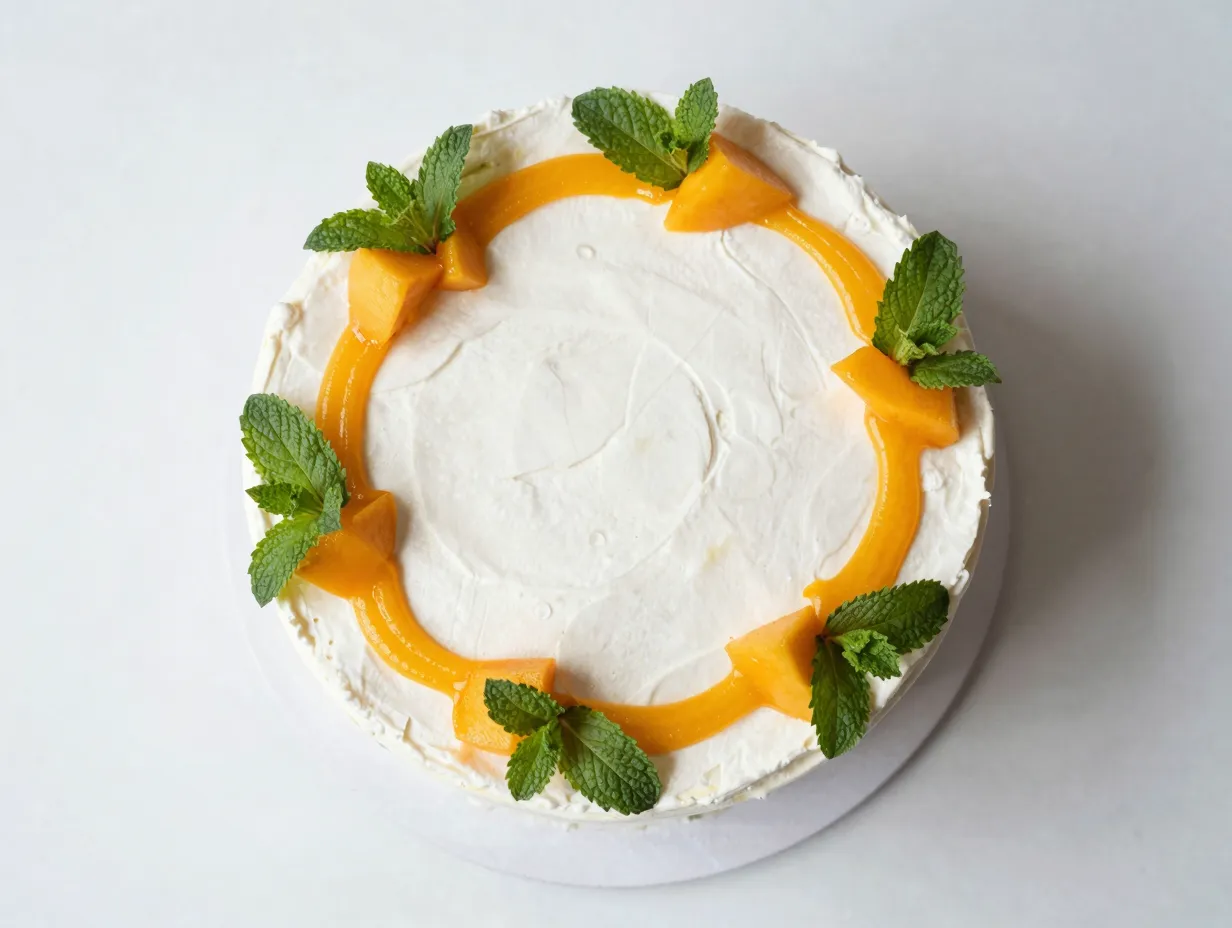
The final technique on this list is the most restrained and the most elegant in its simplicity. A mango drizzle with fresh mint leaves is the decoration equivalent of a well-tailored suit, clean, deliberate, and quietly impressive. [1]
How it works: Blend ripe mango into a smooth, pourable puree. Thin it slightly with a small amount of lime juice or simple syrup if needed. Use a spoon or a squeeze bottle to drizzle the puree across the top of the frosted cake in loose, organic lines, not perfectly parallel, but not entirely random either. Finish by placing small clusters of fresh mint leaves at intervals across the top.
Why it works:
- The bright orange puree against white frosting creates strong color contrast.
- The mint leaves add a secondary color (green) that completes a complementary color palette.
- The drizzle pattern implies artistic intention without requiring advanced technique.
- The mint aroma adds a sensory dimension that guests notice before they even take a bite.
For an elevated version, add a few edible flowers (such as violas or nasturtiums) alongside the mint leaves. The combination of the mango drizzle, the green mint, and the purple or yellow edible flowers creates a three-color composition that looks like it was designed by a professional food stylist.
Best for: Minimalist aesthetic events, dinner parties, occasions where understated elegance is the goal.
How to Choose the Right Mango Decoration for Your Event
With eight distinct techniques available, the natural question is: which one should you use? The answer depends on four variables.
1. Skill level. The mango and coconut topping (Idea 6) and the mango drizzle with mint (Idea 8) require no specialized equipment and minimal technique. The mirror glaze (Idea 4) and the buttercream flowers (Idea 7) require practice and specific tools.
2. Time available. Mango roses (Idea 1) and mango flowers (Idea 5) are time-intensive but require no cooking. The glaze techniques (Ideas 2 and 4) require cooking time plus cooling time.
3. Event formality. Mirror glaze and buttercream flowers suit formal events. The coconut topping and drizzle suit casual gatherings.
4. Flavor priority. If the decoration should also contribute significantly to flavor, the mango cream filling (Idea 3) and the mango drizzle (Idea 8) deliver the most direct taste impact.
| Decoration Idea | Skill Level | Time Required | Visual Impact |
|---|---|---|---|
| 1. Mango Rose Petals | Beginner-Intermediate | 30-45 min | Very High |
| 2. Mango Glaze Drip | Intermediate | 45-60 min | Very High |
| 3. Mango Cream Filling | Beginner | 20-30 min | High (interior) |
| 4. Mango Mirror Glaze | Advanced | 2-4 hours | Exceptional |
| 5. Mango Flowers | Intermediate | 30-60 min | Very High |
| 6. Mango and Coconut Topping | Beginner | 10-15 min | High |
| 7. Mango Buttercream Flowers | Intermediate-Advanced | 60-90 min | Very High |
| 8. Mango Drizzle with Mint | Beginner | 10-15 min | High |
Combining Multiple Techniques for Maximum Effect
One of the most powerful strategies in cake decoration is layering techniques. The 8 mango cake decoration ideas that make every celebration look bakery-worthy are not mutually exclusive, several of them work together beautifully.
Recommended combinations:
- Mango cream filling (inside) + mango glaze drip (outside) + mango rose petals (top): This three-layer approach creates a cohesive mango-forward cake that delivers visual impact at every stage, when displayed whole, when dripped glaze is noticed, and when sliced to reveal the filling.
- Mango mirror glaze (exterior) + mango flowers (top): The mirror glaze provides a sleek, reflective base, and the carved mango flowers on top add organic texture that contrasts beautifully with the smooth glaze surface.
- Mango buttercream flowers (sides and top) + mango drizzle with mint (accent): Use the piped flowers as the main decoration, then add a light drizzle and mint leaves as finishing accents to break up the formality.
The key principle when combining techniques is restraint. Choose two or three complementary ideas and execute them well, rather than applying all eight at once. The goal is a cake that looks intentional and curated, not cluttered.
Essential Tools and Ingredients for Mango Cake Decoration in 2026
Having the right tools makes every technique on this list significantly easier. Here is a practical checklist.
Tools:
- Sharp paring knife and flexible slicing knife
- Vegetable peeler (Y-peeler preferred for thin mango strips)
- Piping bags and assorted tips (petal tips 104/125, star tips 1M/2D)
- Offset spatula for smooth frosting application
- Squeeze bottle for drizzle and glaze work
- Candy thermometer for glaze temperature control
- Turntable for even frosting and decoration
Ingredients:
- Ripe Ataulfo or Kent mangoes (best for slicing and carving)
- Frozen mango puree (consistent flavor year-round)
- Gelatin sheets or powder (for mirror glaze)
- White chocolate (for glaze base)
- Gel food coloring in yellow and orange shades
- Fresh mint leaves and edible flowers
- Toasted shredded coconut
- Heavy cream and unsalted butter (for buttercream and fillings)
Sourcing high-quality mango puree is worth the extra effort. Frozen puree from specialty grocery stores or online suppliers tends to have more concentrated flavor than fresh puree made from out-of-season fruit, which matters significantly for glazes and fillings where the mango flavor needs to come through a base of cream or chocolate.
Conclusion
The 8 mango cake decoration ideas that make every celebration look bakery-worthy covered in this guide represent a full spectrum of technique, from the beginner-friendly mango and coconut topping to the advanced mirror glaze. What they share is a common foundation: the extraordinary visual and flavor potential of fresh mango, used thoughtfully and with intention.
Your actionable next steps:
- Choose one technique that matches your current skill level and the formality of your next event.
- Practice the chosen technique on a test cake before the actual celebration, even a simple practice run will dramatically improve your confidence and execution.
- Invest in two or three key tools (a good paring knife, a piping bag set, and a candy thermometer) that will serve you across multiple techniques.
- Consider combining two complementary techniques, such as mango cream filling with a mango glaze drip, to create a layered effect that rewards guests both visually and in flavor.
- Photograph your finished cake in natural light before serving. The golden-orange tones of mango decoration are among the most camera-friendly in the baking world.
The gap between a home-baked cake and a bakery-worthy cake is smaller than most people think. It is not about professional equipment or years of training. It is about choosing the right decoration technique, using quality ingredients, and giving the process the time and attention it deserves. Mango gives you a significant head start on all three fronts. [1]
References
[1] Cake Decorating Ideas – https://partyvibesfun.com/cake-decorating-ideas/?utm_source=openai
[2] Watch – https://www.youtube.com/watch?v=1a_a7d6IADo&utm_source=openai