9 Fine Dining Salad Recipes That Prove Salads Can Be Truly Elegant
The average American eats roughly 4.3 pounds of salad greens per year, yet most of those servings never venture beyond bagged romaine and bottled ranch. That gap between what salads are and what they can be is exactly what this article is here to close. The 9 Fine Dining Salad Recipes That Prove Salads Can Be Truly Elegant collected here draw on techniques used in Michelin-starred kitchens, premium ingredient sourcing, and plating principles that turn a humble bowl of leaves into a genuine showpiece. Whether you are hosting a dinner party in 2026 or simply want to elevate a Tuesday night meal, these recipes will change the way you think about salad forever.
Disclosure: This post contains affiliate links. As an Amazon Associate, we earn from qualifying purchases, and at no extra cost to you.
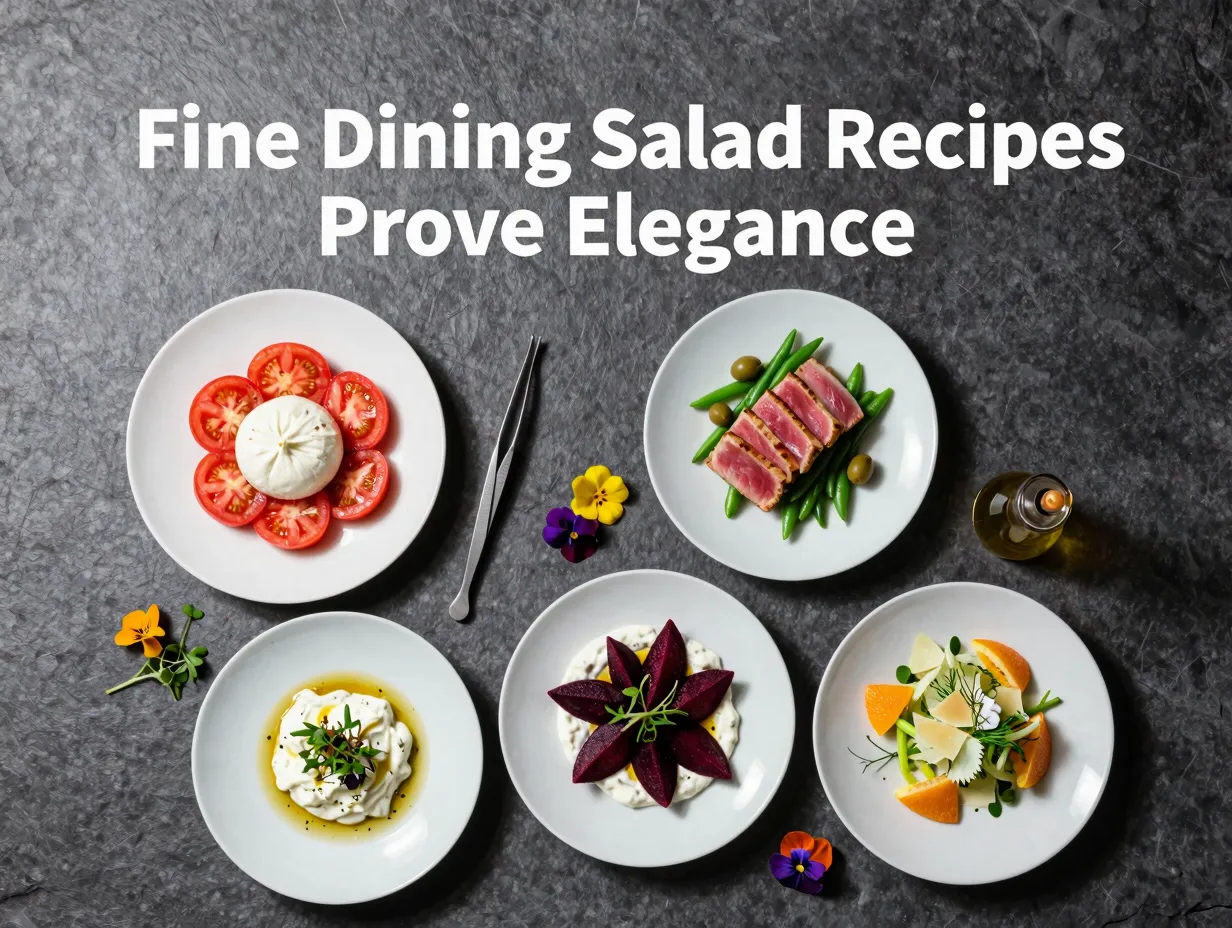
Key Takeaways
- Fine dining salads rely on contrast: contrasting textures, temperatures, and flavors working together on one plate.
- Premium ingredients such as aged cheeses, cured proteins, and house-made dressings are what separate restaurant-quality salads from everyday ones.
- Proper plating technique, height, negative space, and garnish placement, elevates any salad from casual to elegant.
- Many gourmet salad components can be prepared in advance, making them ideal for entertaining.
- The recipes below range from classic French compositions to modern fusion plates, giving you a versatile repertoire for any occasion.
Why Salads Deserve a Seat at the Fine Dining Table
There is a persistent myth that salads are filler food, a dutiful green interlude before the “real” course arrives. Professional chefs have been dismantling that myth for decades. According to culinary experts at Hitchcock Farms, fine dining salads are defined not just by ingredient quality but by the intentional layering of flavors, textures, and visual appeal that signals craft and care to the diner [1]. Paris Gourmet similarly notes that gourmet salad composition borrows directly from classical sauce and garnish theory, treating each element as a deliberate contributor to the whole [5].
I first understood this at a small bistro in Lyon, where the chef sent out a frisée aux lardons that stopped the table mid-conversation. The bitterness of the frisée, the salt-fat punch of the lardons, the runny yolk breaking across the leaves, it was architecture on a plate. That memory is the lens through which I approached every recipe below.
What makes a salad “fine dining”?
| Element | Everyday Salad | Fine Dining Salad |
|---|---|---|
| Greens | Iceberg, romaine | Microgreens, frisée, endive, watercress |
| Protein | Grilled chicken | Seared duck breast, cured salmon, burrata |
| Dressing | Bottled vinaigrette | House-made emulsions, reductions, infused oils |
| Garnish | Croutons | Candied nuts, edible flowers, tuile crisps |
| Plating | Tossed in a bowl | Composed, height-conscious, negative space |
The Homestyler culinary team frames it well: mastering fine dining salads is about understanding that every ingredient must earn its place, and that restraint is often more powerful than abundance [4].
The 9 Fine Dining Salad Recipes That Prove Salads Can Be Truly Elegant
1. Classic Lyonnaise Salad with Poached Egg and Lardons
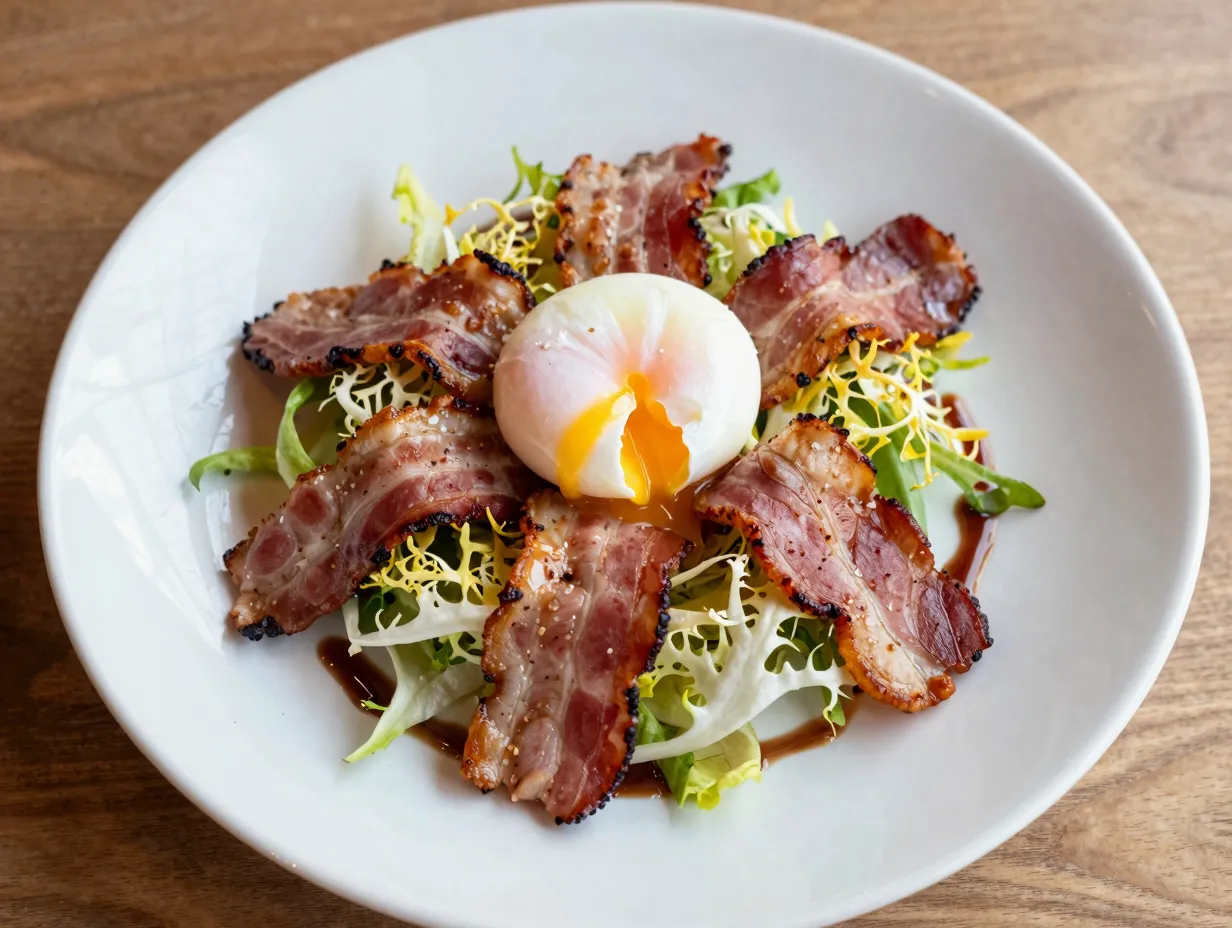
Few salads carry the cultural weight of the Lyonnaise. Frisée lettuce forms the bitter, curly base. Thick-cut lardons, ideally from a good slab of smoked bacon, are rendered until crisp and added warm directly to the greens. A soft poached egg sits at the center, and a shallot-Dijon vinaigrette made with a splash of red wine vinegar ties everything together.
The key technique: Poach the egg in water acidulated with white wine vinegar, and keep it at a gentle simmer rather than a rolling boil. The whites should be set; the yolk should run when broken. When it does, it becomes part of the dressing, a spontaneous emulsification that no recipe can fully replicate.
Serious Eats highlights this kind of warm-dressing technique as one of the most underused tools in home cooking, noting that warm fat coats greens differently than cold oil and creates a more cohesive bite [7].
2. Burrata with Heirloom Tomatoes, Basil Oil, and Aged Balsamic
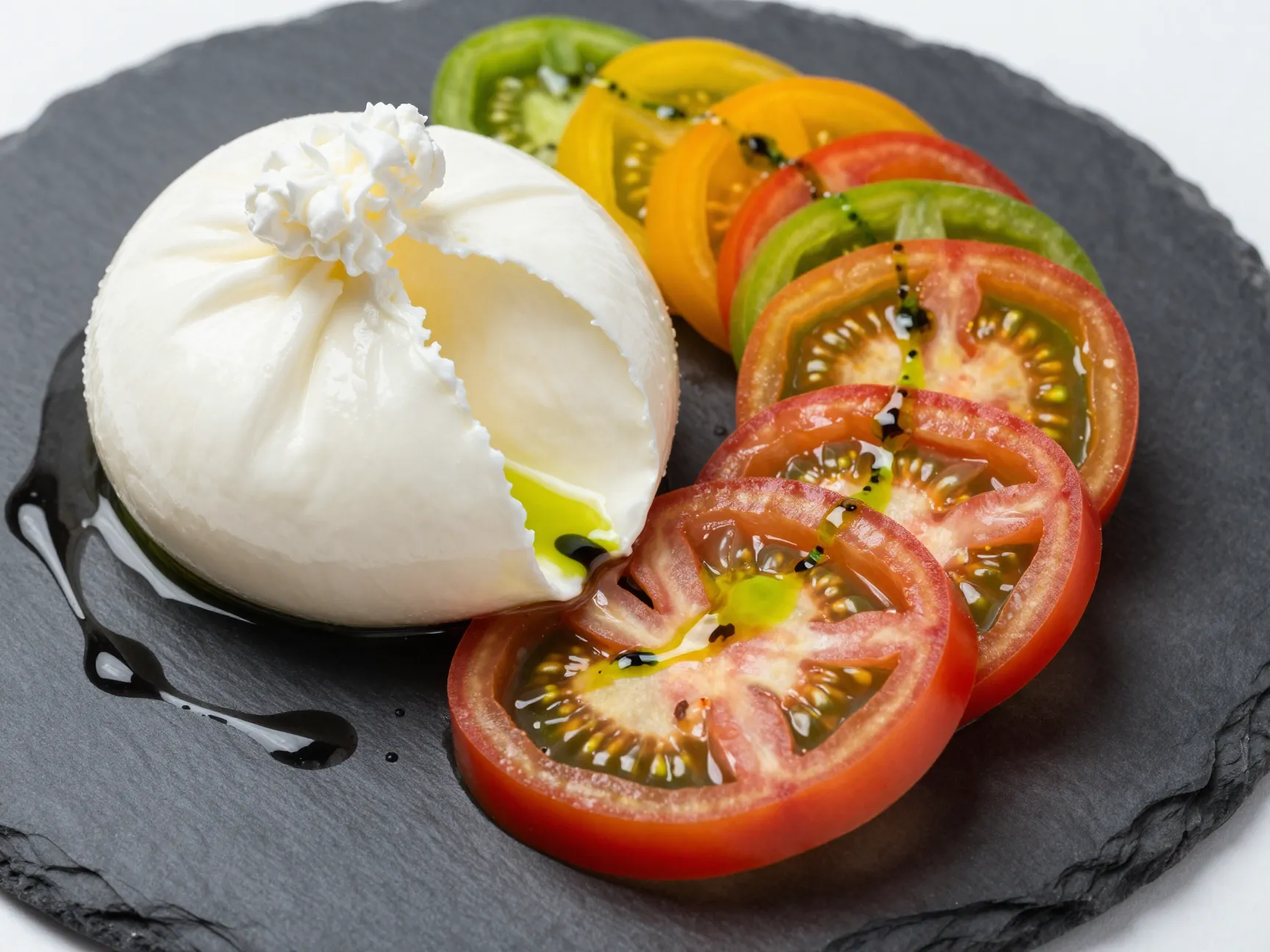
This is the salad that proves simplicity is its own form of luxury. The centerpiece is a ball of fresh burrata, that cloud of mozzarella curd and cream that collapses beautifully when cut. Surrounding it: thick slices of peak-season heirloom tomatoes in multiple colors, finished with a vibrant basil oil (blanched basil blended with extra-virgin olive oil and strained) and a few drops of aged 25-year balsamic.
“The difference between a good tomato salad and a great one is almost always the quality of the tomatoes and the restraint of the cook.”, A principle echoed across fine dining kitchens worldwide.
La Tourangelle’s gourmet salad guidance emphasizes using high-quality finishing oils as a primary flavor driver rather than an afterthought, which is exactly what basil oil does in this composition [6].
Plating tip: Arrange the tomatoes in an overlapping arc, place the burrata slightly off-center, and use a squeeze bottle for the basil oil to create clean, intentional lines.
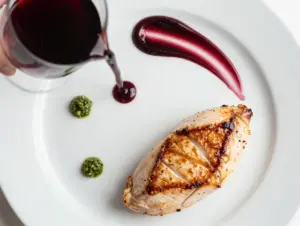
3. Seared Duck Breast Salad with Radicchio, Hazelnuts, and Orange Vinaigrette
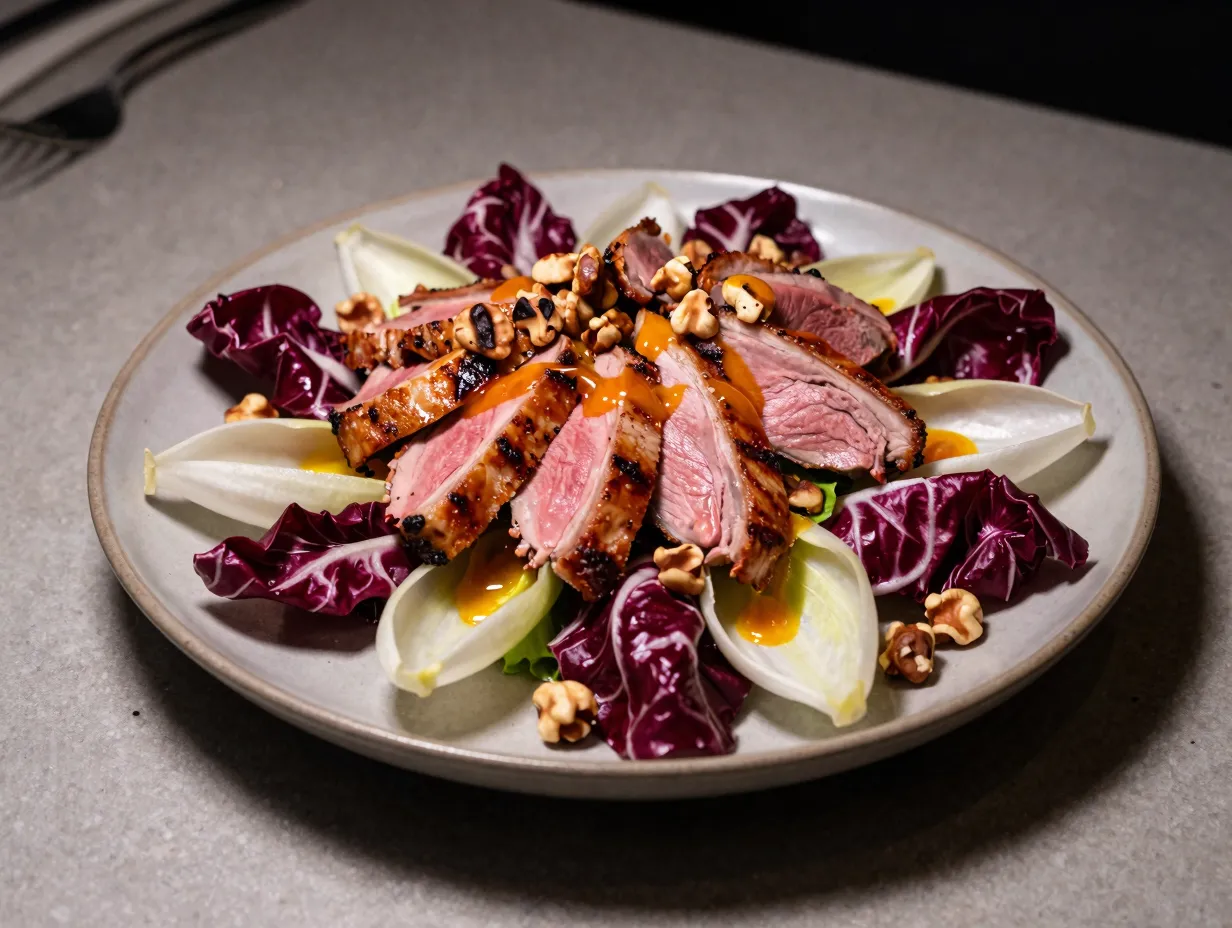
Duck and bitter greens are a pairing with deep French and Italian roots. Sear a duck breast skin-side down in a cold pan, bringing the heat up slowly to render the fat before flipping. Slice it thinly on a bias and fan the pieces over a bed of radicchio and Belgian endive. Toasted hazelnuts add crunch; a blood orange or navel orange vinaigrette (citrus juice, honey, shallot, hazelnut oil) cuts through the richness.
The contrast here is the point: the bitter leaves, the rich duck, the sweet-acidic dressing, the nutty crunch. Renee Nicole’s Kitchen notes that layering contrasting flavors is the single most reliable path to a memorable gourmet salad [9].
Ingredient note: If duck is unavailable, seared magret de canard (duck magret) or even a well-seared duck confit leg works beautifully. The bitterness of radicchio is non-negotiable, it is the counterweight to the fat.
4. Niçoise Salad with Seared Tuna and Anchovy Vinaigrette
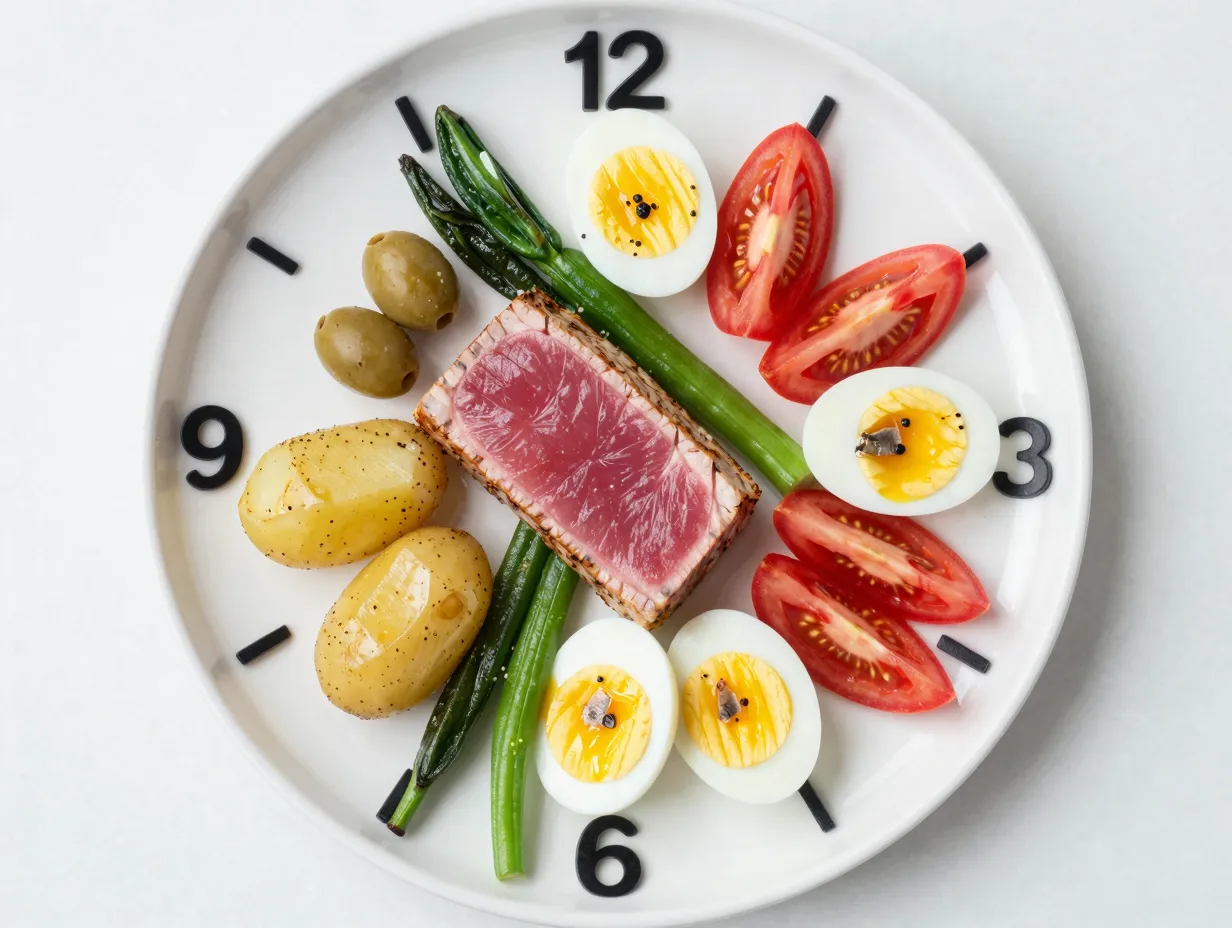
The traditional Niçoise is already a composed masterpiece. Elevating it to fine dining territory requires a few deliberate upgrades. Replace canned tuna with a thick sashimi-grade tuna steak, seared rare on all sides in a screaming-hot cast iron pan. Arrange it alongside haricots verts (blanched and shocked), halved Niçoise olives, hard-boiled eggs quartered with precision, waxy potatoes (Charlotte or fingerling), and ripe tomatoes.
The dressing is the soul of this salad: a classic anchovy vinaigrette made by pounding anchovy fillets with garlic, Dijon mustard, red wine vinegar, and olive oil. It is bold, briny, and deeply savory.
Plating approach: Use the clock-face method, arrange each component in its own section of the plate rather than mixing. This gives the diner visual clarity and lets each element speak independently.
Dinner by Six describes this kind of composed plating as the most direct way to achieve a restaurant feel at home, because it signals intentionality to anyone sitting down to eat [8].
5. Roasted Beet Salad with Whipped Goat Cheese and Candied Walnuts
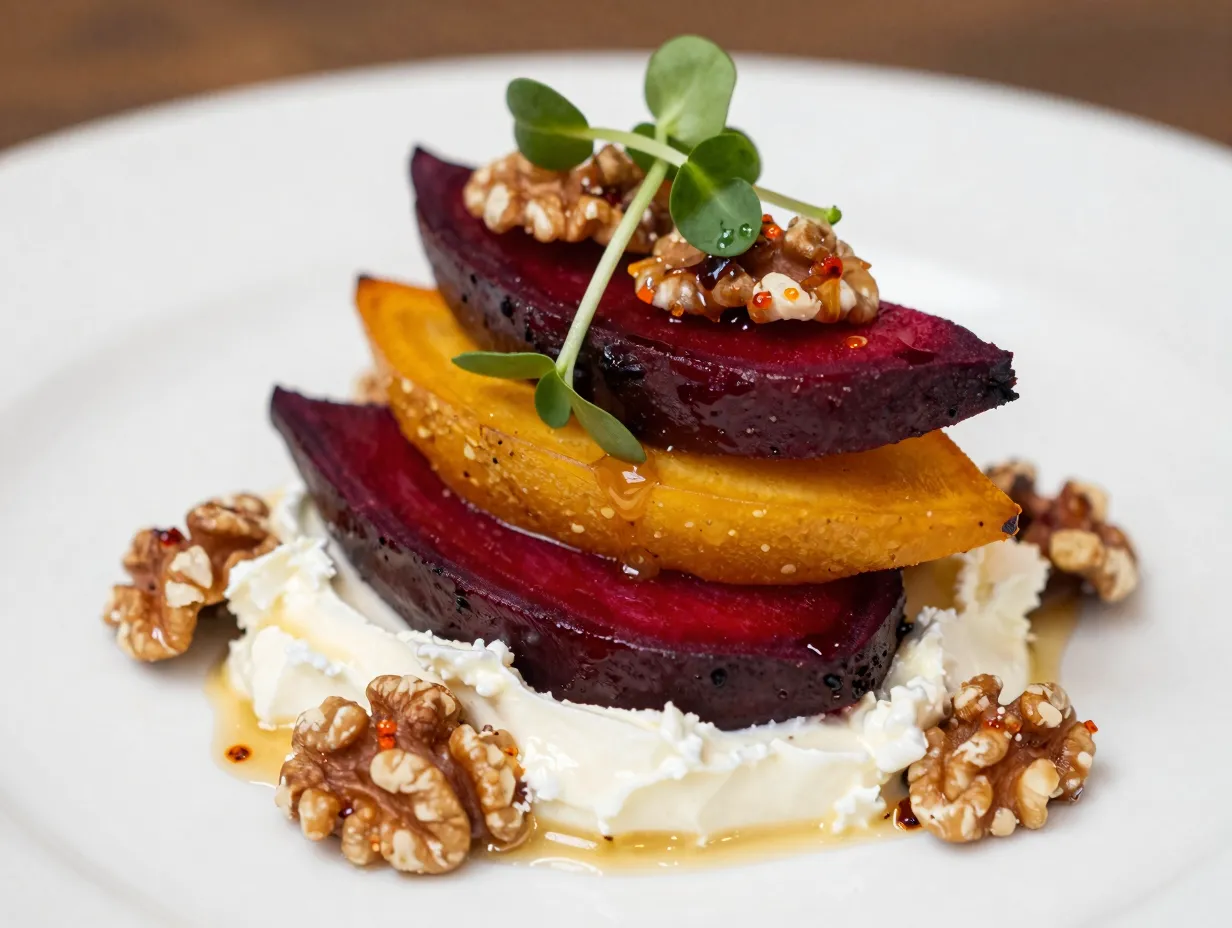
Roasted beets have earned their place on nearly every upscale menu for good reason: their earthy sweetness, jewel-toned color, and meaty texture make them a natural anchor for composed salads. Roast a mix of red and golden beets in foil with olive oil and thyme until tender, then peel and slice them into rounds or wedges.
Whip fresh goat cheese with a small amount of heavy cream and a pinch of salt until it is light and spreadable. Smear it across the plate as a base. Stack the beets on top, scatter candied walnuts (made by tossing walnut halves in egg white, sugar, and cayenne before roasting), and finish with microgreens and a sherry vinegar dressing.
Why this works: The creamy tang of goat cheese is the ideal foil for beet’s sweetness. The candied walnuts add crunch and a hint of heat. Love and Lemons points out that roasted vegetables as a salad base dramatically increase satiety and flavor complexity compared to raw greens alone [10].
6. Watermelon and Feta Salad with Mint, Cucumber, and Chili-Lime Dressing
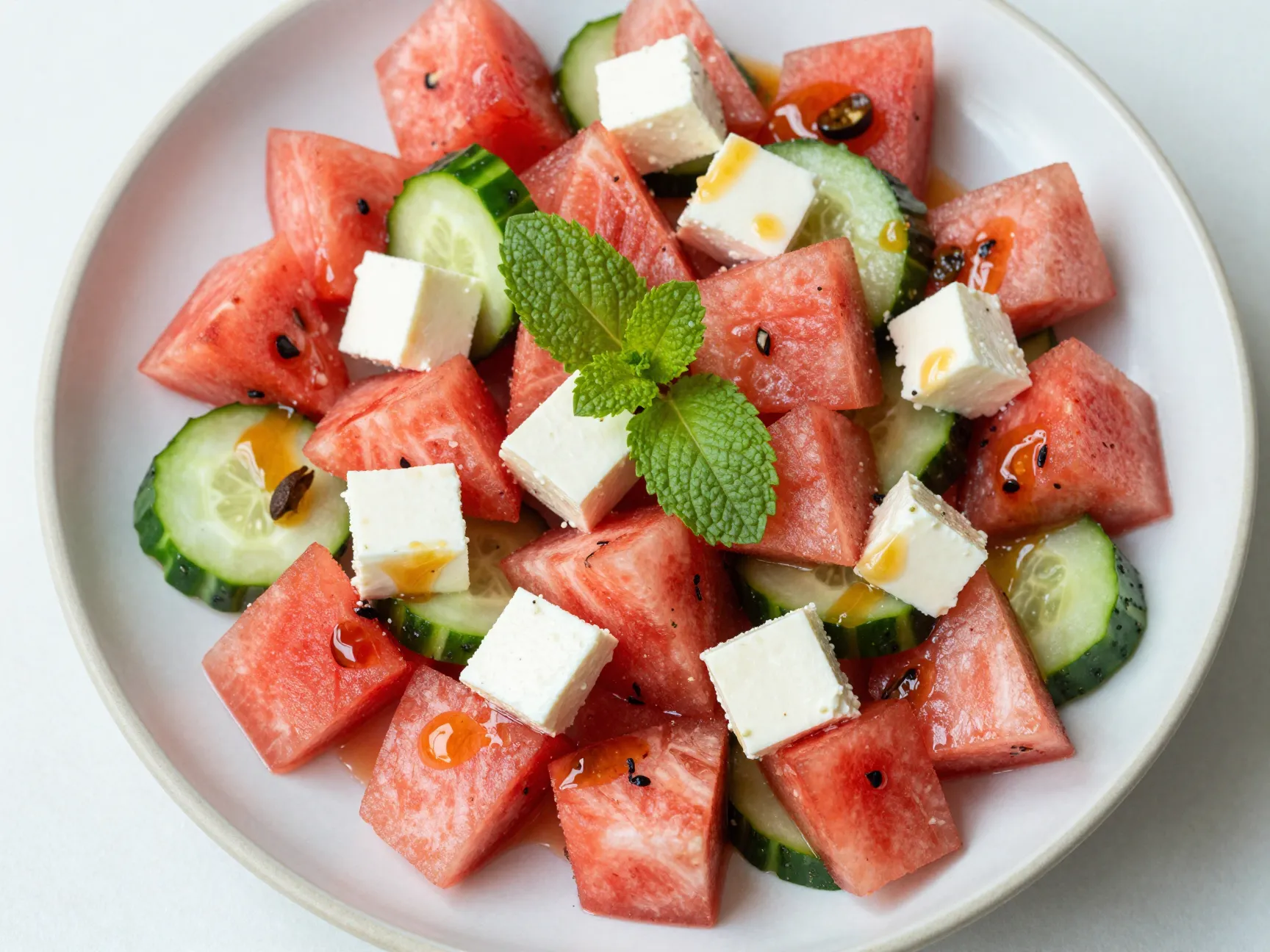
This is the salad that surprises skeptics. The combination of sweet watermelon, salty feta, and fresh mint is a classic Middle Eastern and Mediterranean pairing that translates effortlessly to a fine dining plate. Cube the watermelon into precise, uniform pieces. Use a quality barrel-aged Greek feta, the kind packed in brine, not the pre-crumbled variety.
Add thinly sliced English cucumber, fresh mint leaves, and a dressing made from fresh lime juice, a small amount of honey, fish sauce (for depth), and a pinch of Aleppo pepper or chili flakes.
The upgrade: Freeze thin slices of watermelon briefly to firm them up for cleaner plating. The chili-lime dressing adds a dimension that lifts this from a picnic salad to something genuinely sophisticated. Pinch of Yum’s approach to building salads with unexpected flavor bridges, sweet, salty, acidic, and spicy in one bite, is exactly the philosophy at work here [3].
7. Shaved Fennel and Citrus Salad with Arugula and Parmesan Crisps
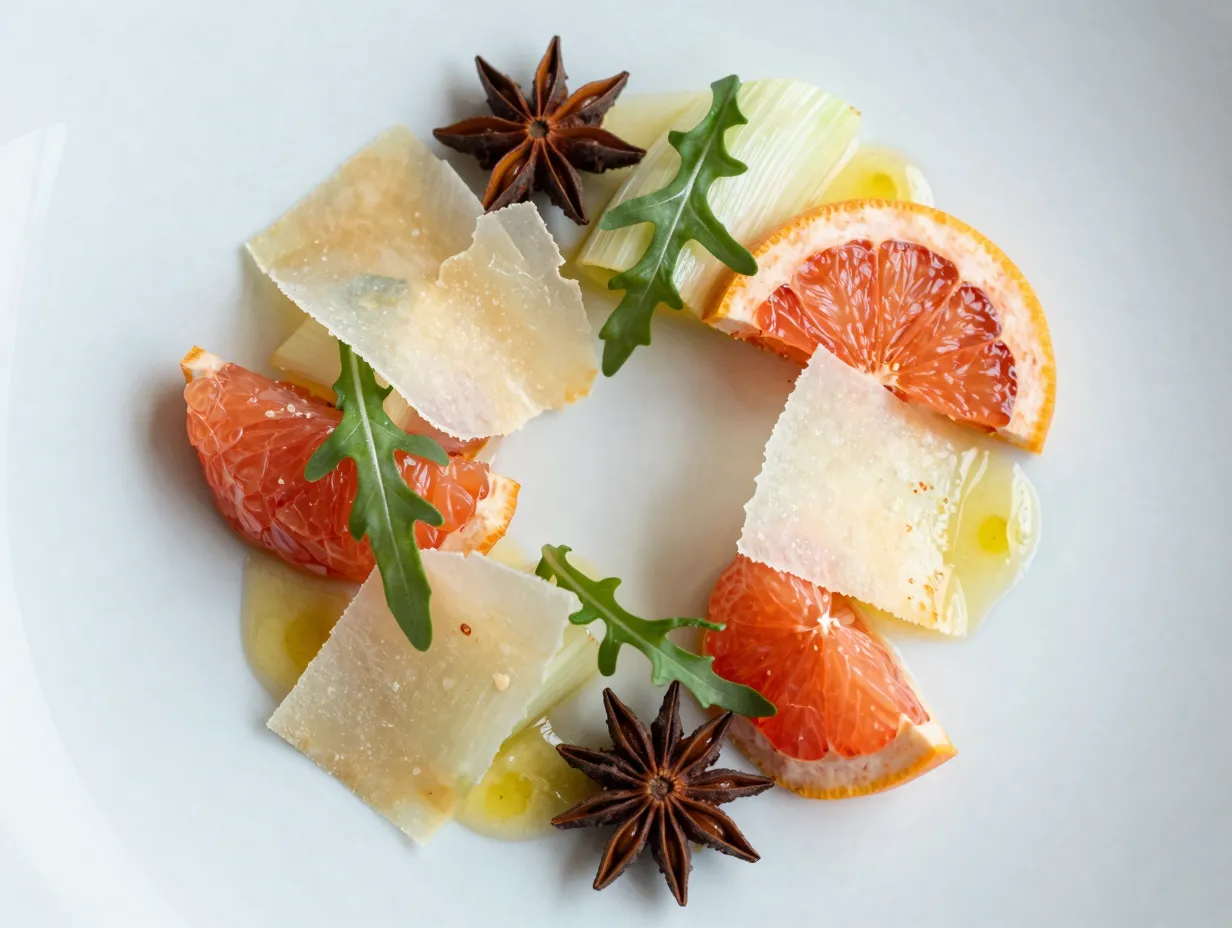
Fennel is one of the most underused vegetables in home kitchens, yet it appears constantly in fine dining because of its anise-forward freshness and the way it absorbs dressing. Use a mandoline to shave fennel paper-thin. Segment blood oranges and grapefruits, collecting any juice for the dressing. Toss with peppery arugula, a lemon-honey vinaigrette, and top with Parmesan crisps.
To make Parmesan crisps: mound small piles of finely grated Parmigiano-Reggiano on a silpat-lined baking sheet and bake at 375°F until golden and lacy. They cool into delicate, shattering wafers that add texture and umami in one element.
Hitchcock Farms notes that textural contrast, specifically the addition of a crispy element to an otherwise soft salad, is one of the hallmarks of professional salad construction [1].
Make-ahead note: Shaved fennel can be kept in ice water for up to two hours to maintain crispness. Parmesan crisps keep in an airtight container for 24 hours.
8. Warm Spinach Salad with Mushrooms, Bacon, and Hot Bacon Dressing
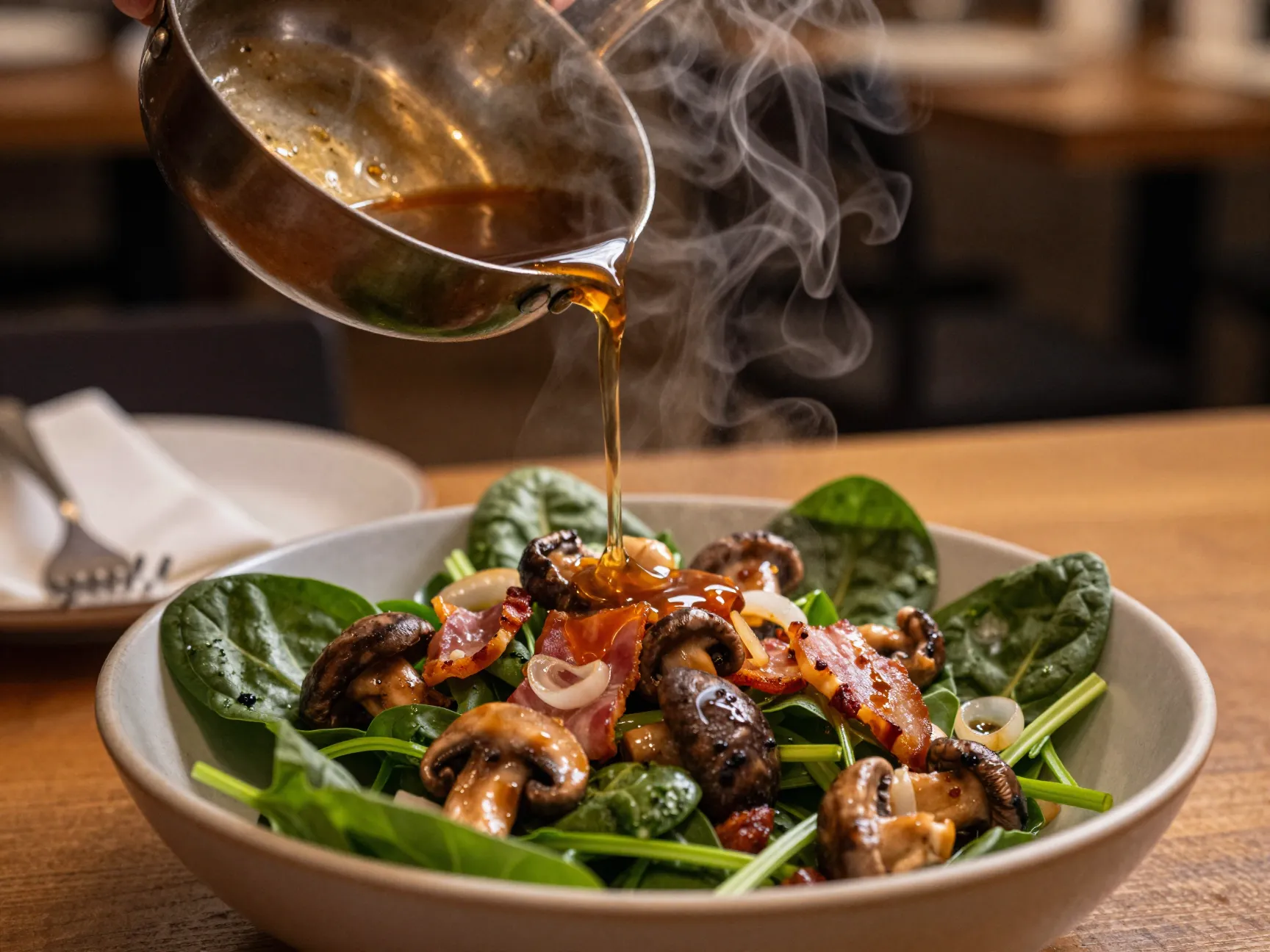
Warm salads occupy a special category in fine dining: they are comforting and sophisticated at the same time. This version uses baby spinach as the base, topped with sautéed wild mushrooms (cremini, shiitake, and oyster mushrooms work well together), crispy bacon, and a hot bacon dressing poured tableside.
The hot bacon dressing is made directly in the pan after cooking the bacon: remove most of the fat, add minced shallots, a splash of apple cider vinegar, a small amount of Dijon mustard, and a touch of maple syrup. Bring it to a simmer and pour it over the spinach immediately, allowing the heat to gently wilt the leaves.
The act of pouring warm dressing tableside is a small theatrical gesture that elevates the experience beyond what any cold salad can offer.
Paris Gourmet’s guidance on gourmet salad construction specifically calls out warm components as a way to create sensory contrast that cold salads simply cannot achieve [5].
9. Lobster and Avocado Salad with Tarragon Cream Dressing
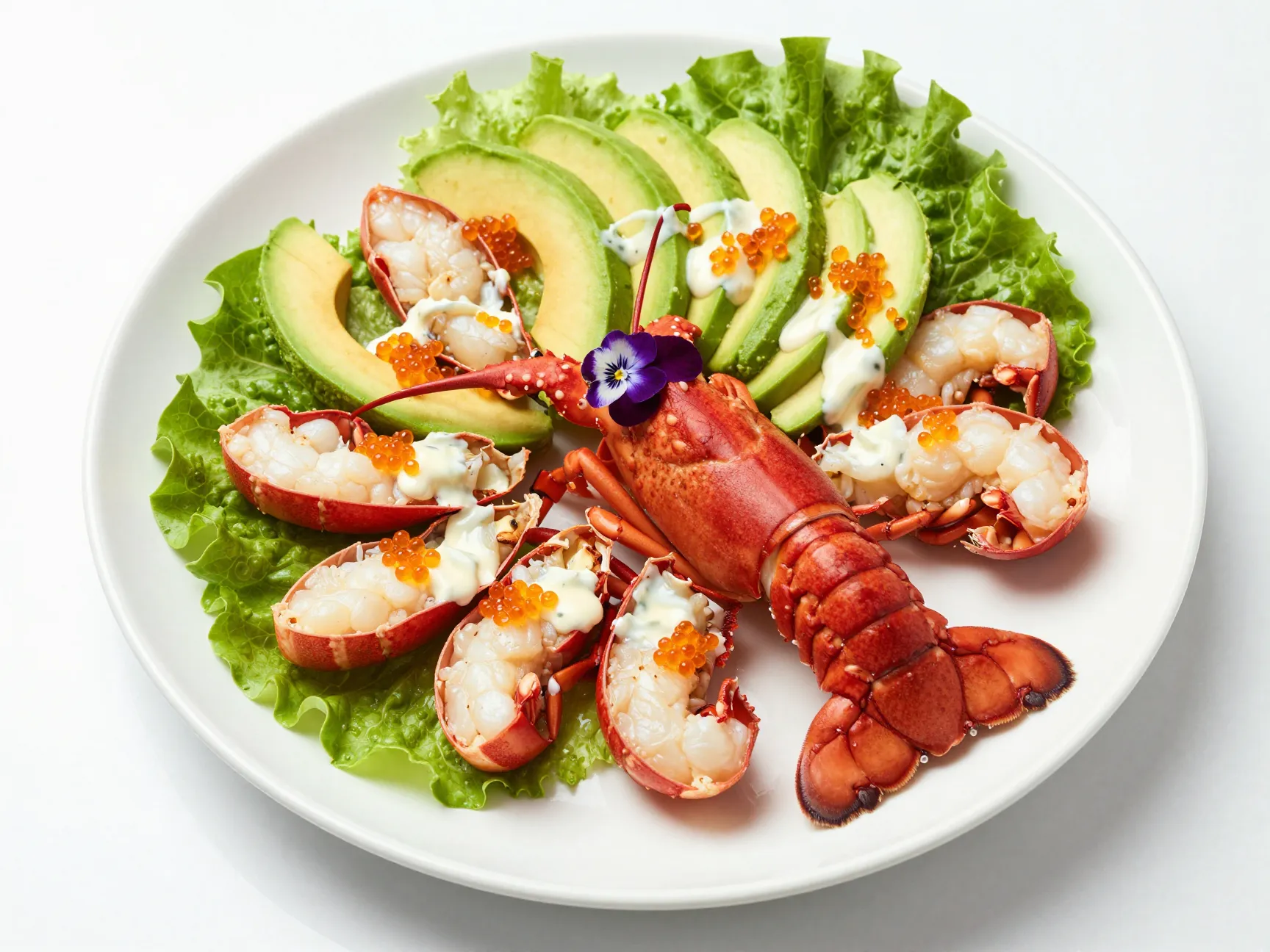
This is the crown jewel of the list, the salad that leaves no doubt that the form can be genuinely luxurious. Poach lobster tails gently in court-bouillon (water with white wine, bay leaf, peppercorns, and lemon), then chill and slice the meat into clean medallions. Fan the slices alongside ripe avocado, also sliced into clean fans.
The dressing is a tarragon cream: crème fraîche, fresh tarragon, a squeeze of lemon, a small amount of Dijon, and a touch of white wine vinegar, whisked until smooth. Finish with a few leaves of butter lettuce, a sprinkle of salmon roe if available, and a single edible flower for color.
Why this earns its place: Lobster salad at this level of execution is indistinguishable from what you would pay top dollar for in a fine dining restaurant. The tarragon cream dressing is the element that ties the richness of the lobster and avocado together without overwhelming either. Renee Nicole’s Kitchen and La Tourangelle both advocate for house-made creamy dressings as the finishing touch that separates a truly elegant salad from a merely expensive one [9][6].
Essential Techniques Behind These 9 Fine Dining Salad Recipes
Dressing Fundamentals
Every dressing in fine dining follows a basic emulsification principle: acid plus fat plus an emulsifier (mustard, egg yolk, or honey). The ratio matters. A standard vinaigrette runs at roughly 3 parts oil to 1 part acid, but fine dining dressings often push toward 2:1 to increase brightness and cut through rich proteins.
Always dress greens at the last moment. Acid begins to break down cell walls immediately, and dressed greens left to sit will wilt and lose their visual appeal. Homestyler’s fine dining salad guide makes this point explicitly, noting that timing is one of the most overlooked variables in salad quality [4].
Plating Principles
- Use chilled plates for cold salads and warmed plates for warm ones.
- Build height in the center of the plate rather than spreading flat.
- Leave negative space, do not fill every inch of the plate.
- Use odd numbers of garnish elements (3 or 5 pieces, not 4 or 6) for a more natural, organic look.
- Wipe the rim of the plate with a clean cloth before serving.
Ingredient Sourcing
The gap between a good salad and a great one often comes down to sourcing. Seek out farmers’ markets for peak-season produce, specialty grocers for aged cheeses and cured proteins, and reputable fishmongers for sashimi-grade fish. Dinner by Six emphasizes that premium sourcing is the shortcut that no technique can fully replace [8].
Building Your Own Elegant Salad: A Framework
Once you understand the logic behind the 9 Fine Dining Salad Recipes That Prove Salads Can Be Truly Elegant, you can apply the same framework to your own creations. Every elegant salad needs:
- A base that provides texture and mild flavor (frisée, arugula, butter lettuce, endive)
- A protein or anchor ingredient that carries weight and richness (duck, lobster, burrata, tuna)
- A textural contrast element (candied nuts, crisps, croutons, fried capers)
- A flavor bridge ingredient that connects the base to the protein (roasted beets, citrus segments, caramelized onions)
- A house-made dressing that is seasoned and balanced before it touches the plate
- A finishing garnish that adds color and visual height (microgreens, edible flowers, herb sprigs)
This six-part structure is not a rigid formula, it is a scaffold. The 9 Fine Dining Salad Recipes That Prove Salads Can Be Truly Elegant each use it in different ways, but all six elements are present in every one of them.
Conclusion
Salads do not have to be an afterthought. The nine recipes above demonstrate that with the right ingredients, techniques, and plating philosophy, a salad can be the most memorable course on the table. The Lyonnaise reminds us that warmth and simplicity are powerful. The lobster and avocado plate shows that luxury is achievable at home. The roasted beet and goat cheese composition proves that humble vegetables, treated with respect, can rival anything on a tasting menu.
Your actionable next steps:
- Start with Recipe 2 (Burrata with Heirloom Tomatoes), it requires no cooking and teaches you immediately how ingredient quality drives elegance.
- Practice the basic vinaigrette ratio (2:1 or 3:1 oil to acid) until it becomes instinctive.
- Invest in a mandoline for shaving vegetables and a squeeze bottle for dressing application, two tools that will immediately professionalize your plating.
- Source one premium ingredient per week: try a new cheese, a different variety of olive oil, or a seasonal green you have never used before.
- Plate your next salad on a wide, flat plate with deliberate negative space, and notice how the presentation changes your own perception of what you have made.
Fine dining salads are not about spending more money. They are about spending more attention.
References
[1] Fine Dining Salads – https://www.hitchcockfarms.com/blog/fine-dining-salads
[2] Watch – https://www.youtube.com/watch?v=en81RahhPmE
[3] Best Salad Recipes – https://pinchofyum.com/best-salad-recipes
[4] Mastering Fine Dining Salads – https://www.homestyler.com/article/mastering-fine-dining-salads
[5] Gourmet Salad Ideas – https://www.parisgourmet.com/blog/gourmet-salad-ideas
[6] 6 Gourmet Salad Recipes To Wow Your Dinner Party Guests – https://latourangelle.com/blogs/general/6-gourmet-salad-recipes-to-wow-your-dinner-party-guests
[7] Best Salad Recipes 7152214 – https://www.seriouseats.com/best-salad-recipes-7152214
[8] Salad Ideas Fancy Restaurant Feel – https://dinnerbysix.com/salad-ideas-fancy-restaurant-feel/
[9] 15 Gourmet Salad Recipes – https://reneenicoleskitchen.com/15-gourmet-salad-recipes/
[10] Salad Recipes – https://www.loveandlemons.com/salad-recipes/